Tennessee packs more variety into one state than most people realize. From misty mountain peaks to underground lakes, from music legends to Civil War history, the Volunteer State delivers experiences you won’t find anywhere else.
Whether you’re chasing waterfalls, exploring caves, or soaking up the sounds that changed American music, these 15 destinations prove why Tennessee belongs on every traveler’s must-see list.
1. Great Smoky Mountains National Park
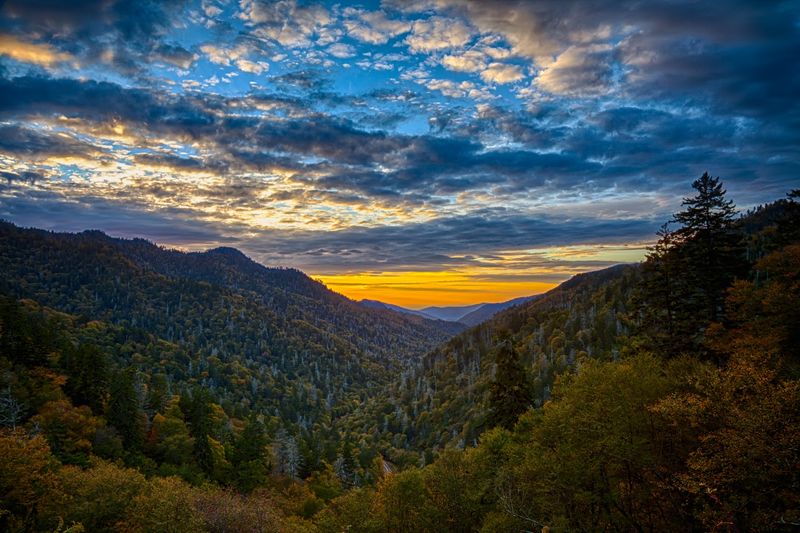
America’s most visited national park sits right on Tennessee’s doorstep, and once you see those blue-hazed ridges rolling into the distance, you’ll understand why millions make the pilgrimage every year. The Smokies offer over 800 miles of trails, from easy riverside strolls to challenging backcountry adventures that’ll test your limits.
You can spot black bears, white-tailed deer, and wild turkeys without even trying too hard.
Cades Cove remains the park’s crown jewel, where an 11-mile loop road winds past historic cabins, churches, and barns that tell stories of mountain life before the park existed. Early morning visits reward you with wildlife sightings and that magical fog that makes the valley look like something from a dream.
The preserved buildings aren’t just photo ops, they’re genuine pieces of Appalachian heritage.
Clingmans Dome towers as the highest point in Tennessee at 6,643 feet, offering 360-degree views that stretch across seven states on clear days. The half-mile paved trail to the observation tower gets steep, but the payoff makes every huffing breath worthwhile.
Winter transforms the summit into an otherworldly landscape of ice-coated trees and clouds rolling beneath your feet.
Timing matters here more than most places. Fall brings leaf-peepers by the thousands, turning the park roads into slow-moving parades of brake lights. Spring wildflowers paint the forest floor in purples and whites, while summer offers cool relief in higher elevations when the valleys turn into ovens.
Whatever season you pick, the Smokies deliver nature on a scale that reminds you how small you really are in the best possible way.
2. Beale Street, Memphis
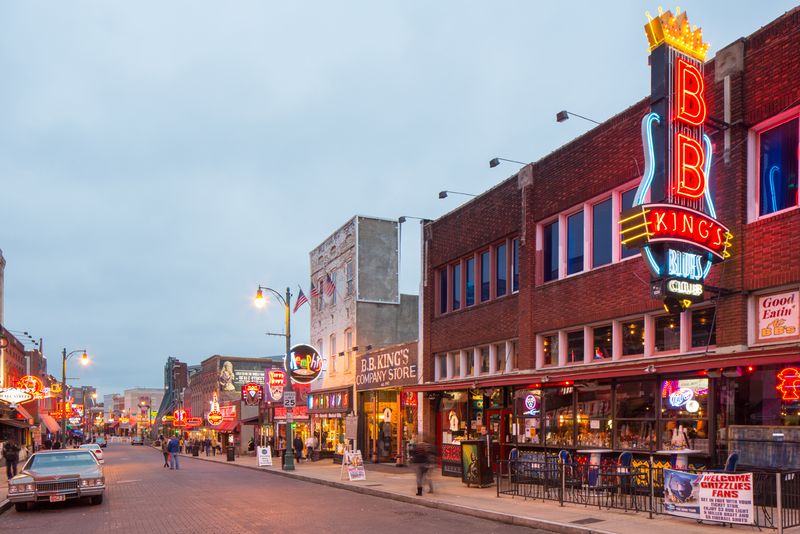
Three blocks of pure Memphis soul pulse through Beale Street, where blues legends made history and modern musicians keep that legacy breathing. Neon signs glow against brick buildings that have witnessed over a century of American music evolution, from W.C. Handy’s trumpet to B.B. King’s Lucille.
Walking these blocks feels like stepping into a living jukebox where every doorway spills different rhythms onto the sidewalk.
Live music pours from clubs seven nights a week, and you don’t need a cover charge to catch talented artists who could headline anywhere else. The street performers alone deliver shows worth the trip, playing with the kind of raw energy that only happens when musicians truly love what they do.
Grab a drink, lean against a lamppost, and let the music wash over you like it’s been doing for generations.
Blues Hall of Fame sits right on Beale, housing artifacts and stories that trace the genre’s journey from Delta cotton fields to international stages. The exhibits don’t just display old guitars and faded photographs, they connect dots between past and present, showing how this uniquely American sound shaped everything that came after.
Even folks who claim they don’t like blues find themselves tapping their feet by the time they leave.
Daytime Beale shows a different personality, with shops selling everything from custom-made guitars to hot sauce that’ll make you cry happy tears. The street’s history runs deeper than music, serving as the heart of Memphis’s African American community through decades of triumph and struggle.
Markers and plaques tell those stories between the bars and restaurants, reminding visitors that this strip of asphalt represents more than just a good time, it’s hallowed ground where culture got made and remade night after night.
3. Grand Ole Opry, Nashville

Saturday nights at the Opry have launched careers and cemented legacies since 1925, making this the longest-running radio broadcast in American history. The show that started in a radio studio now fills a 4,400-seat venue, but the spirit remains unchanged: real country music played by people who respect where it came from.
Standing in that audience, you’re not just watching a concert, you’re participating in a tradition that connects you to nearly a century of performers and fans.
The stage itself holds magic in those wooden planks, cut from the Ryman Auditorium floor and installed in the current venue so every performer still stands where legends stood before. Artists treat that circle of wood with reverence, understanding that walking into it means joining an exclusive club that includes Johnny Cash, Patsy Cline, and Dolly Parton.
Backstage tours reveal the human side of country music royalty, showing dressing rooms where stars prepare, hallways lined with photographs spanning decades, and the mail slots where members still receive fan letters. Your guide shares stories that never made it into history books, the kind of behind-the-scenes moments that make these larger-than-life figures feel real.
You might even spot current members rehearsing or grabbing coffee between shows.
The Opry doesn’t rest on its history, constantly mixing established stars with up-and-comers who represent country music’s future. One night might feature a 70-year-old legend followed by a 25-year-old newcomer, creating musical conversations across generations that you won’t find anywhere else.
That commitment to both honoring tradition and embracing evolution keeps the show feeling fresh even after all these years of Saturday night broadcasts.
4. Reelfoot Lake State Park, Tiptonville
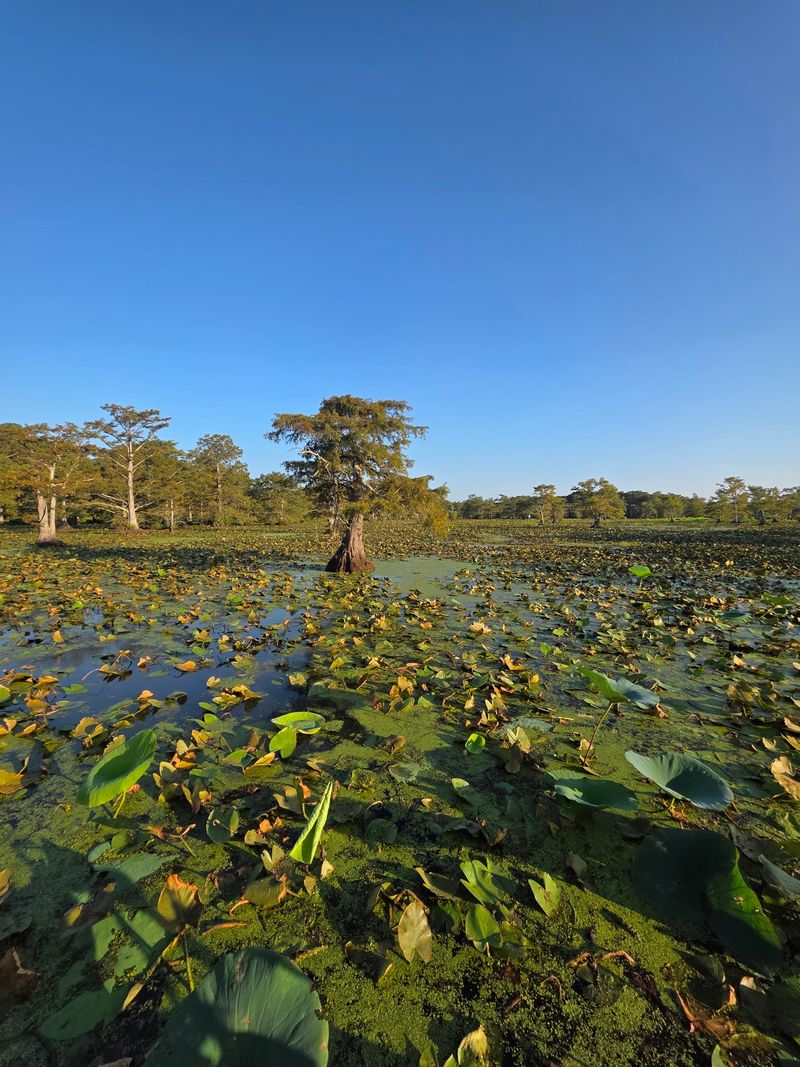
Earthquakes don’t usually create tourist destinations, but the New Madrid quakes of 1811-1812 shook the ground so violently that the Mississippi River temporarily flowed backward, forming this 15,000-acre natural lake. Bald cypress trees rise from the water like ancient sentinels, their knobby knees breaking the surface and their branches draped in Spanish moss that gives the whole place an otherworldly atmosphere.
This isn’t your typical Tennessee landscape, it’s a slice of Louisiana bayou dropped into the northwest corner of the state.
Bald eagles winter here in numbers that’ll make your neck sore from looking up, with January and February bringing the best viewing opportunities. The park runs eagle tours that put you in perfect position to watch these magnificent birds hunt, soar, and perch in the cypress trees.
Bring binoculars and a camera with a good zoom, because these aren’t zoo animals posing for pictures, they’re wild creatures living their best lives.
Fishing enthusiasts treat Reelfoot like a pilgrimage site, casting for crappie, bass, and catfish in waters that produce trophy catches with surprising regularity. The stumps and cypress knees create perfect fish habitat, though they also demand respect from boaters who don’t know the lake.
Local guides know every submerged obstacle and secret fishing hole, making their services worth every penny if you’re serious about bringing home dinner.
Spring and fall migrations turn the lake into a layover spot for thousands of waterfowl, creating scenes that belong in nature documentaries. The shallow waters and abundant vegetation provide perfect feeding grounds for ducks, geese, and shorebirds making their way along the Mississippi Flyway.
5. Lookout Mountain, Chattanooga
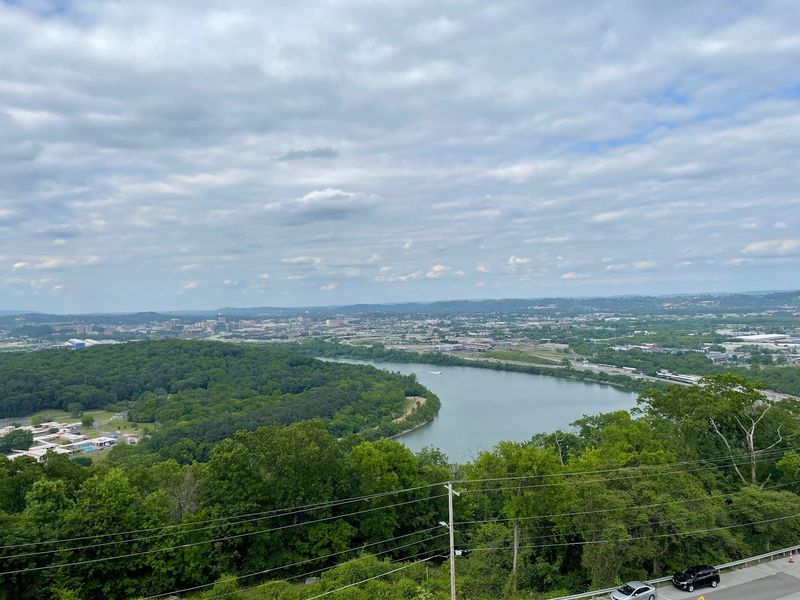
Stand at Point Park and you’re looking at seven states spread out below you like a living map, with the Tennessee River snaking through Chattanooga and mountains rolling toward every horizon. The view alone justifies the trip, but Lookout Mountain delivers so much more than just a pretty panorama.
Civil War history soaks into every rock and tree, while natural wonders hide inside the mountain itself.
Ruby Falls plunges 145 feet underground in a cavern that took millions of years to form and pure luck to discover. The guided tour leads you through narrow passages and past stunning rock formations before revealing the waterfall in a moment of theatrical lighting that never gets old.
Sure, it’s touristy, but sometimes the touristy stuff became popular for good reasons, and this waterfall inside a mountain definitely qualifies.
Rock City Gardens has been charming visitors since 1932 with its maze of ancient rock formations, gardens, and that famous Lover’s Leap overlook. The Enchanted Trail winds through massive boulders balanced in ways that seem to defy physics, while gnome statues and fairy tale scenes delight kids who might otherwise complain about all the walking.
The Swing-A-Long Bridge tests your nerve as it sways over a rocky chasm, offering views that make the wobbling worthwhile.
Battles for Chattanooga National Military Park preserves the sites where Union and Confederate forces fought for control of this strategic high ground in 1863. The “Battle Above the Clouds” earned its dramatic name honestly, with soldiers fighting through thick fog that reduced visibility to almost nothing.
Walking these battlefields with a park ranger brings those desperate struggles to life in ways that history books never quite manage, connecting you to the real people who fought and died on this mountain.
6. Shiloh National Military Park, Shiloh
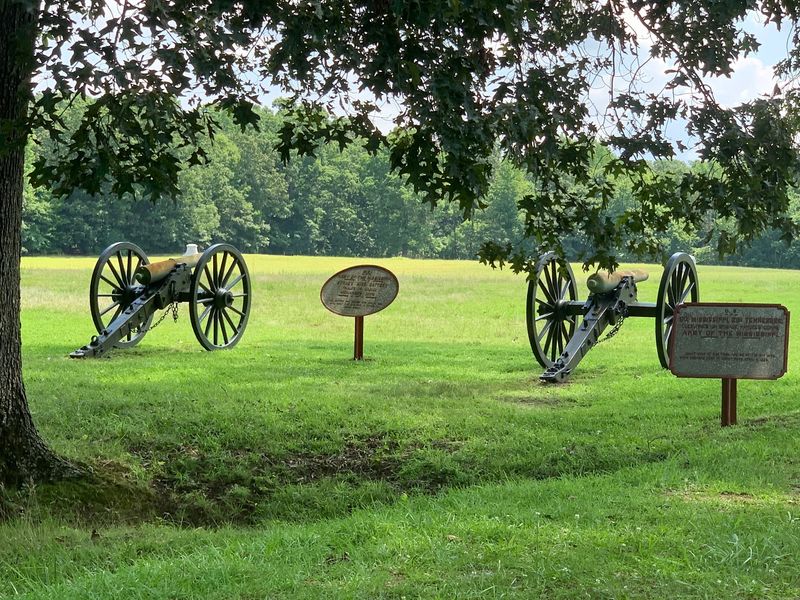
April 6-7, 1862 changed everything for the Civil War, and walking the grounds where 23,000 men became casualties in just two days hits differently than reading about it in textbooks. Shiloh preserves over 4,000 acres of battlefield, with monuments, markers, and interpretive signs that guide you through the chaos and confusion of America’s bloodiest battle up to that point.
The peaceful landscape makes it hard to imagine the horror that unfolded here, but that contrast drives home the tragedy even more powerfully.
The Hornet’s Nest stands out as the battle’s most desperate fighting, where Union soldiers held a sunken road against repeated Confederate assaults for hours. Sixty-two cannons pointed at this position, creating a storm of metal that survivors compared to angry hornets, hence the name.
Standing in that sunken road, you can almost hear the roar of artillery and the screams of wounded men, though now only birdsong breaks the silence.
Shiloh National Cemetery holds over 3,500 graves, including nearly 2,400 unknowns who died too far from home for anyone to identify their remains. The rows of white headstones stretch across manicured grass, each one representing a life cut short and a family left wondering what happened to their soldier.
It’s sobering and beautiful and heartbreaking all at once, especially when you realize most of these men were younger than today’s college students.
The visitor center doesn’t pull punches about the battle’s brutality, displaying artifacts and sharing stories that honor both sides without glorifying the violence. A film presentation sets the stage before you tour the grounds, helping you understand the strategic importance of this remote Tennessee landing.
Rangers lead programs that dig deeper into specific aspects of the battle, from medical practices to artillery tactics, giving context that transforms a pretty park into a profound history lesson.
7. Fall Creek Falls State Park, Spencer
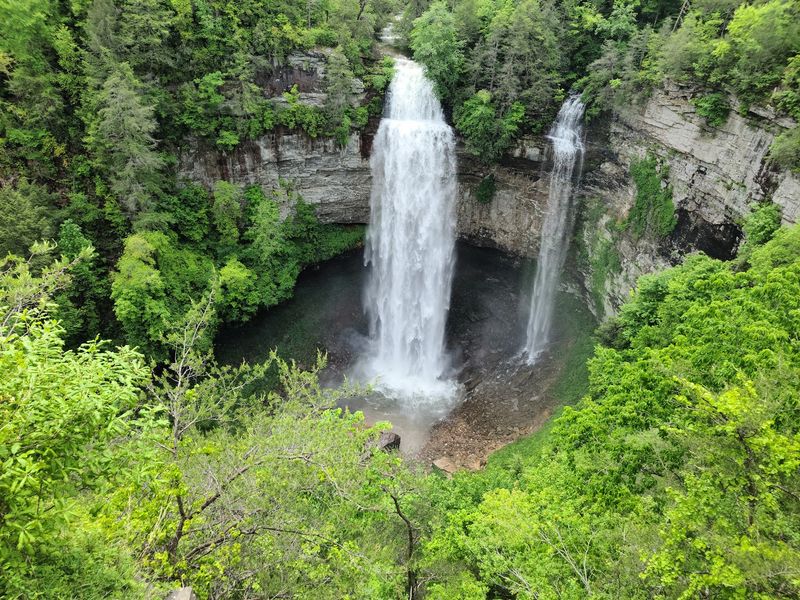
Tennessee’s highest waterfall drops 256 feet into a plunge pool that stays icy cold even in August, creating a spectacle that stops conversations mid-sentence when you first glimpse it through the trees. Fall Creek Falls anchors a park that packs more waterfalls, gorges, and natural beauty into 26,000 acres than seems physically possible.
The main falls get most of the attention, but four other major waterfalls within the park boundaries mean you could spend days chasing cascades without seeing the same one twice.
Hiking trails range from easy strolls to challenging treks that’ll leave your legs shaking, with the Woodland Trail offering a moderate 2-mile loop that hits multiple waterfalls. The Cable Trail descends into the gorge via a series of stairs and cables that aren’t for folks with height issues, but the up-close view of the falls rewards your courage.
Spring runoff turns the waterfalls into roaring monsters, while late summer reduces them to more modest flows that reveal rock formations usually hidden by water.
Cane Creek Cascades, Cane Creek Falls, and Piney Falls each deserve their own postcards, offering different personalities and photo opportunities. Some require short hikes, others demand serious effort, but none disappoint when you finally reach the viewing areas.
The park’s geology creates these waterfalls through layers of sandstone and limestone that erode at different rates, forming the overhangs and plunge pools that make each falls unique.
Beyond waterfalls, the park offers a nature center, swimming pool, golf course, and enough camping options to suit everyone from RV enthusiasts to backpackers seeking solitude. The lodge and cabins provide comfortable bases for exploring without sacrificing modern conveniences like hot showers and real beds.
8. Graceland, Memphis
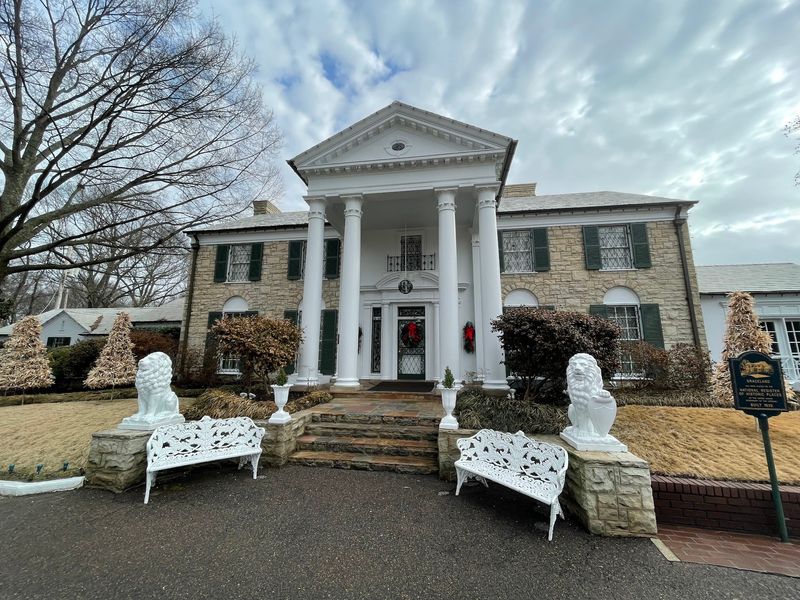
Elvis bought this Memphis mansion in 1957 for $100,000, and it’s been drawing pilgrims ever since, with over 600,000 visitors annually making it one of America’s most-visited historic homes. Walking through the rooms where the King lived, loved, and eventually died creates an intimate connection to a cultural icon who changed music forever.
The audio tour includes commentary from Lisa Marie Presley and archival Elvis recordings that make you feel like he’s personally showing you around his house.
The Jungle Room stops everyone in their tracks with its green shag carpet covering both floor and ceiling, Polynesian-inspired furniture, and the waterfall that somehow ties it all together. Elvis recorded some of his final songs in this room, using the thick carpet as makeshift soundproofing.
It’s gloriously over-the-top in a way that perfectly captures Elvis’s personality, proving he never lost that working-class kid’s delight in having nice things.
Meditation Garden serves as Elvis’s final resting place, along with his parents and grandmother, creating a peaceful spot where fans leave flowers, notes, and sometimes break down crying. The graves receive fresh flowers daily, and the eternal flame burns regardless of weather or season.
Visiting feels simultaneously sad and celebratory, mourning the loss while honoring the legacy he left behind.
The museums across the street display Elvis’s cars, planes, jumpsuits, and gold records in collections that demonstrate just how massive his success became. The Lisa Marie jet shows how the poor kid from Tupelo eventually traveled in customized luxury with gold-plated seatbelts and a queen-sized bed.
You don’t need to be an Elvis superfan to appreciate Graceland, just someone who recognizes genius when they see where it lived.
9. Roan Mountain State Park, Roan Mountain
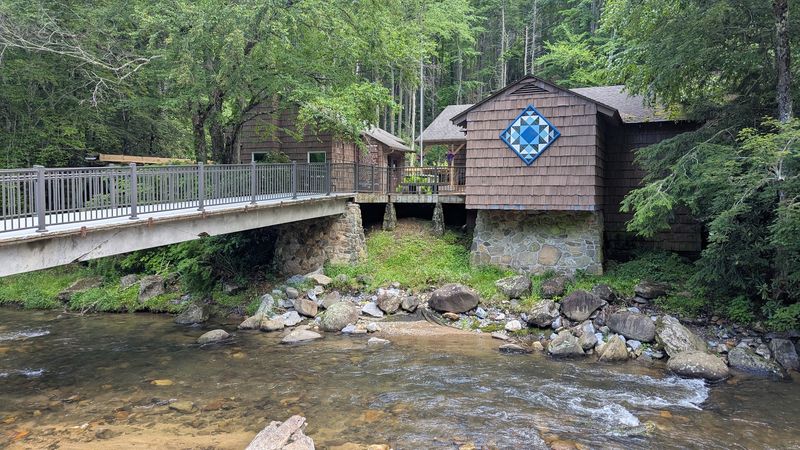
Every June, Roan Mountain explodes into what might be the world’s finest natural rhododendron garden, with 600 acres of Catawba rhododendrons painting the high-elevation balds in shades of pink and purple that don’t look real. The blooms typically peak around mid-June, drawing photographers and nature lovers who make annual pilgrimages to witness this floral spectacular.
Timing your visit right requires checking bloom reports, but hitting it perfectly rewards you with views that’ll fill your camera’s memory card in a hurry.
The Appalachian Trail crosses Roan Mountain’s grassy balds, offering 360-degree views that rank among the AT’s finest. These treeless summits create an alpine-like environment rare in the southern Appalachians, with high winds and weather that can turn nasty without warning.
Hiking to the top from the state park requires serious effort, but the Carvers Gap parking area provides much easier access for folks who prefer their stunning views without the cardiovascular workout.
Miller Farmstead preserves a collection of historic buildings that show how mountain families lived and worked in the early 1900s. The restored cabin, barn, and outbuildings don’t just sit empty, they host living history demonstrations during summer months that bring the past to life.
Kids especially love seeing how people lived without electricity, running water, or any of the conveniences we take for granted today.
Cross-country skiing and snowshoeing transform the park during winter, when the high elevation guarantees more reliable snow than most Tennessee locations. The Nordic skiing trails wind through forests that look like Christmas cards, with snow-laden branches and views that stretch for miles on clear days.
Summer’s campground becomes a quiet winter wonderland, perfect for folks seeking solitude and scenery without the crowds that pack the park during rhododendron season.
10. Country Music Hall of Fame and Museum, Nashville
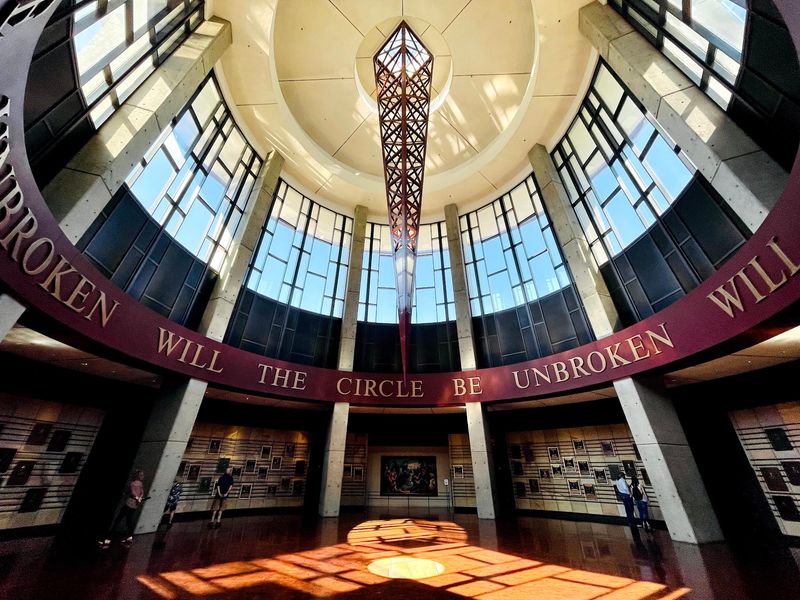
Nashville’s most important museum tells country music’s story through 350,000 square feet of artifacts, recordings, and interactive exhibits that trace the genre from Appalachian roots to stadium tours. The building itself makes a statement, with architecture designed to evoke a bass clef, piano keys, and a 1950s Cadillac fin.
Walking through these galleries isn’t just educational, it’s a journey through American culture told through the songs that soundtracked generations of lives.
Hatch Show Print operates right inside the museum, continuing a tradition of creating iconic concert posters using vintage letterpress techniques. Watching skilled printers work these antique presses connects you to the same methods that promoted shows by Hank Williams and Patsy Cline decades ago.
You can buy reproduction posters or even commission custom work, taking home a piece of Nashville history printed the old-fashioned way.
The museum rotates exhibits regularly, but certain treasures remain on permanent display, including Elvis’s gold Cadillac, Webb Pierce’s silver-dollar-encrusted convertible, and instruments played by legends who shaped the sound. Taylor Swift’s education center explores how country music evolves while honoring tradition, using interactive technology that lets visitors mix tracks and explore musical influences.
The songwriting exhibits reveal the craft behind hits that sound effortless but required countless revisions to perfect.
Studio B tours take you to the actual RCA Studio where over 35,000 songs were recorded, including classics by Dolly Parton, Willie Nelson, and countless others. Standing in that room where magic happened repeatedly gives you chills, especially when the guide plays original recordings and shares stories about the sessions.
The studio still functions occasionally, maintaining its vintage equipment and that intangible quality that made it Nashville’s hit factory for decades. Combining the museum visit with the Studio B tour creates a full day of country music immersion that satisfies even casual fans.
11. Discovery Park of America, Union City
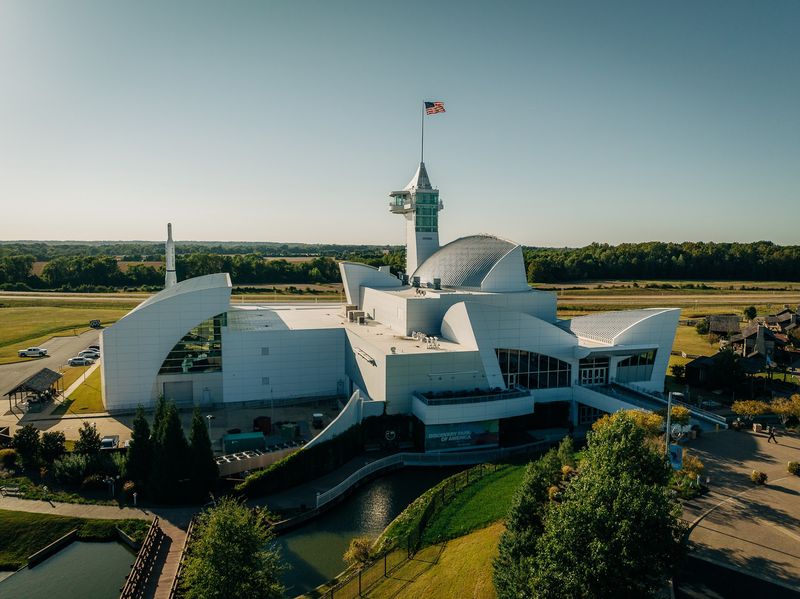
This 50-acre museum and heritage park in northwest Tennessee punches way above its weight class, offering world-class exhibits that rival anything in major cities. The 200,000-square-foot main building houses everything from a full-size replica of the Apollo 11 command module to a 20,000-gallon saltwater aquarium.
Founder Robert Kirkland wanted to create something special for rural West Tennessee, and he definitely succeeded in building a destination that keeps families engaged for entire days.
Natural history exhibits include a 70-foot-tall tree that visitors walk through, learning about ecosystems from roots to canopy. The earthquake simulator recreates the New Madrid quakes that formed nearby Reelfoot Lake, letting you experience the ground-shaking power that changed the landscape.
Military history galleries honor veterans through artifacts and personal stories, while the pioneer settlement shows how Tennessee’s earliest European settlers lived and worked.
The outdoor Heritage Park features historic buildings relocated and restored to create a village representing different eras of Tennessee history. A working blacksmith shop, one-room schoolhouse, and general store operate during peak season, with costumed interpreters demonstrating traditional skills.
The vintage train and carousel delight younger visitors, while the garden areas provide peaceful spots for picnicking between museum sessions.
Special exhibits rotate regularly, bringing traveling shows that might feature dinosaurs, space exploration, or cultural artifacts from around the world. The planetarium presents shows about astronomy and space science using projection technology that makes you feel like you’re floating among the stars.
The museum doesn’t talk down to kids or bore adults, instead finding that sweet spot where learning feels like entertainment and entertainment sneaks in education. For a town of 10,000 people, Union City hosts a remarkably sophisticated attraction that proves cultural institutions don’t require metropolitan zip codes to deliver excellence.
12. Big South Fork National River and Recreation Area, Oneida
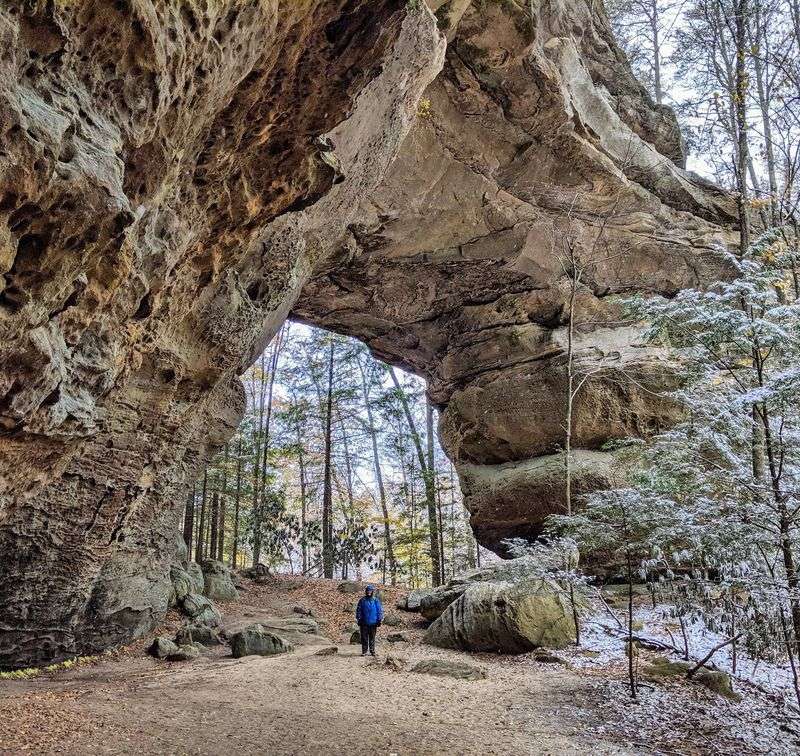
Straddling the Tennessee-Kentucky border, Big South Fork protects 125,000 acres of Cumberland Plateau wilderness where the river has carved gorges up to 500 feet deep through ancient sandstone. This isn’t the manicured, tourist-friendly kind of park, it’s rugged country that rewards adventurous souls willing to hike, paddle, or ride horses into some of the Southeast’s most spectacular scenery.
The park sees fewer visitors than the Smokies despite offering comparable beauty, making it perfect for folks seeking solitude along with their scenery.
Twin Arches ranks among North America’s most impressive natural bridge formations, with two massive sandstone arches spanning 135 feet and 93 feet. The moderate hike to reach them winds through hardwood forest before suddenly revealing these geological wonders that took millions of years to form.
You can walk across the top of the larger arch if you’re careful, though the views from below might be even more impressive as you contemplate the forces that created these spans.
Whitewater enthusiasts tackle Class II-IV rapids during spring runoff, when the river runs high and fast through boulder gardens and tight channels. Summer drops the water level, creating perfect conditions for lazy float trips where the biggest challenge is deciding which swimming hole to hit next.
The river’s remoteness means you might not see another soul all day, just cliffs towering overhead and wildlife going about their business along the banks.
Yahoo Falls, Kentucky’s tallest waterfall at 113 feet, sits just across the state line and absolutely deserves the short detour. The name comes from Native American words, not excited exclamations, though visitors often shout both when they first glimpse the cascade.
13. Tennessee Aquarium and Chattanooga Riverfront, Chattanooga
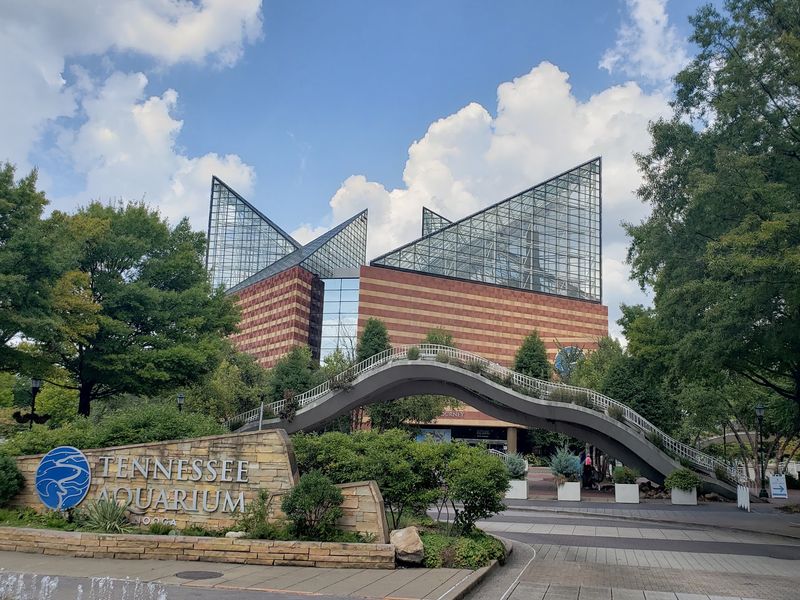
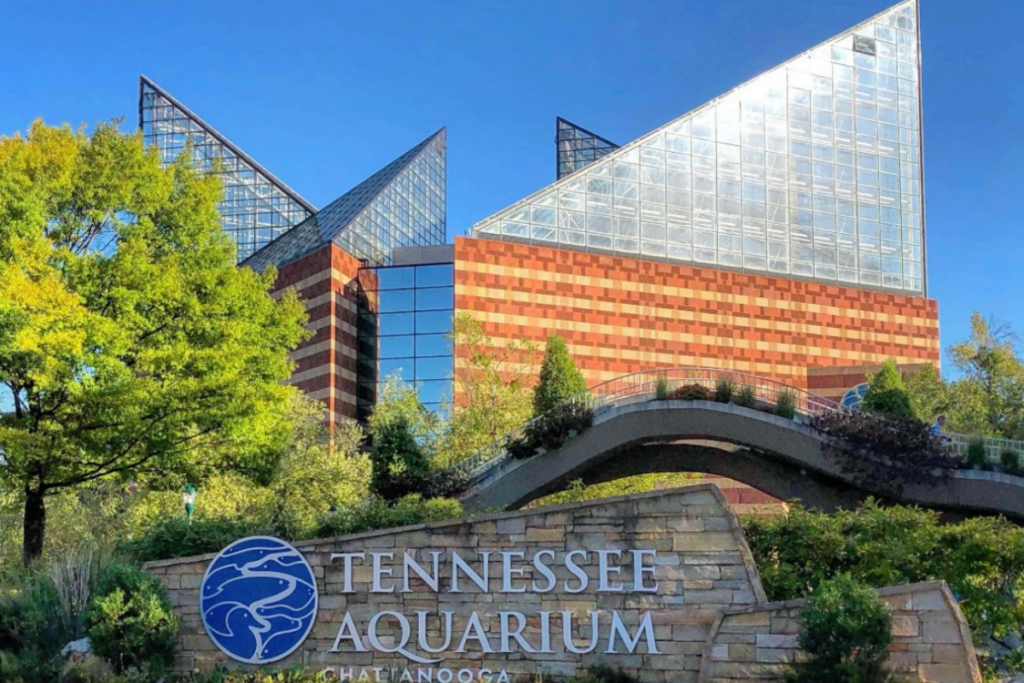
Two massive buildings house freshwater and ocean exhibits that together make this one of the world’s premier aquariums, with over 12,000 animals representing species from Appalachian streams to coral reefs. The River Journey building follows water from mountain springs to the Mississippi Delta, showcasing creatures that live in those ecosystems.
Ocean Journey takes you from tropical shores to deep ocean trenches, including a 618,000-gallon tank where sharks cruise past viewing windows that make you feel like you’re diving alongside them.
River otters steal the show in the Appalachian Cove Forest exhibit, playing and swimming with the kind of joyful energy that makes everyone smile. The giant Pacific octopus demonstrates problem-solving intelligence that’s both impressive and slightly unsettling as it manipulates objects with those sucker-covered arms.
Outside the aquarium, Chattanooga’s revitalized riverfront offers parks, walking paths, and the Walnut Street Bridge, the world’s longest pedestrian bridge at 2,376 feet. Crossing the Tennessee River on foot provides views of the city, mountains, and river traffic that make you understand why Chattanooga has become such a desirable place to live and visit.
Ross’s Landing and Coolidge Park flank the bridge, offering green spaces perfect for picnics, concerts, and just watching the river flow past.
The aquarium plaza connects directly to the riverfront, creating a seamless experience that lets you move from underwater worlds to riverside parks without getting in your car. Food trucks, restaurants, and the outdoor Passage exhibit with penguins and otters extend your visit beyond the indoor tanks.
Evening visits during summer often coincide with concerts or festivals along the riverfront, turning an aquarium trip into a full Chattanooga experience that showcases why this city has reinvented itself so successfully.
14. The Lost Sea, Sweetwater
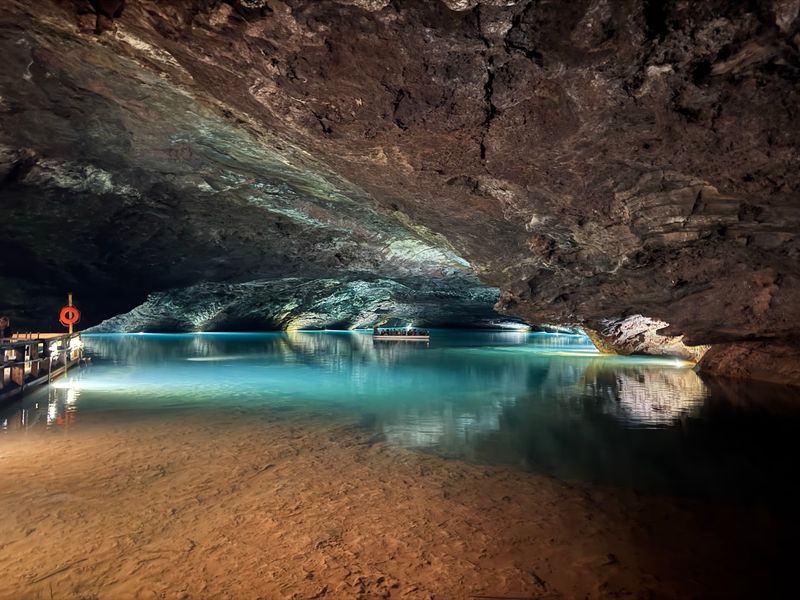
America’s largest underground lake sits 140 feet below the surface near Sweetwater, where 4.5 acres of crystal-clear water fill a massive cavern that scientists believe extends much farther than the explored sections. The Cherokee knew about these caves, Confederate soldiers mined them for saltpeter, and moonshiners hid stills in the passages during Prohibition.
Now the Lost Sea operates as a National Natural Landmark, offering tours that combine geology, history, and the surreal experience of boating on an underground lake.
The guided tour descends through passages decorated with flowstone formations, stalactites, and stalagmites that took thousands of years to grow. Your guide shares stories about the cave’s colorful past while pointing out geological features that make this cavern system unique.
The temperature stays at 58 degrees year-round, making a light jacket smart even on the hottest summer days above ground.
The boat ride across the Lost Sea reveals water so clear you can see massive rainbow trout swimming below, stocked decades ago and now thriving in this unlikely habitat. The cavern ceiling soars overhead, disappearing into darkness that even powerful lights can’t fully penetrate.
Divers have explored over 13 acres of the lake, but much remains unknown, with passages extending into areas too tight or dangerous for human exploration.
Above ground, the Sweetwater Valley Farm offers a petting zoo, gem mining, and other activities that make this a full-day destination for families. Kids love the cave tour’s adventure-movie vibe, while adults appreciate the genuine geological and historical significance of what they’re seeing.
The tours run rain or shine, making this a perfect backup plan when weather ruins outdoor activities, though it’s worth visiting regardless of conditions. The Lost Sea proves Tennessee hides wonders both on its surface and deep beneath the mountains.
15. Jonesborough
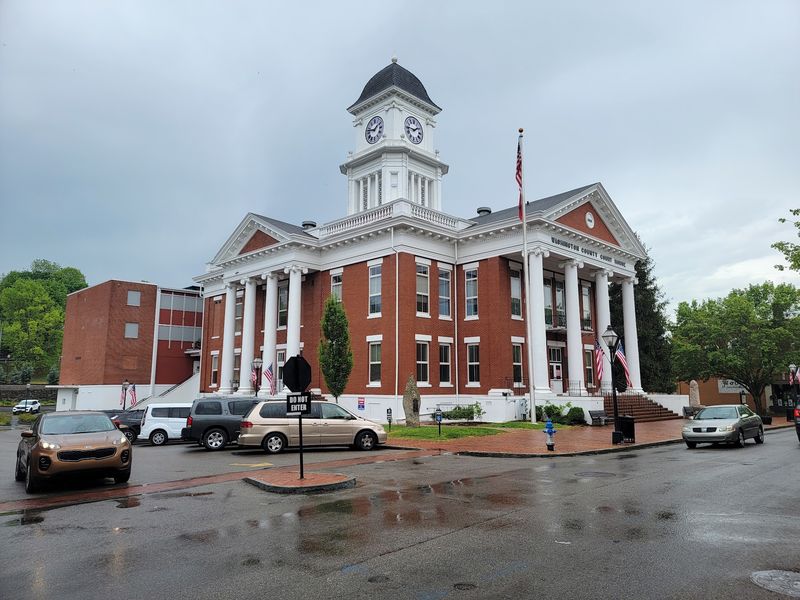
Tennessee’s oldest town wears its history proudly, with a downtown that looks like it time-traveled from the 1700s and landed in the 21st century without losing its soul. Founded in 1779, Jonesborough served as capital of the short-lived State of Franklin and has been collecting stories ever since.
The National Storytelling Festival transforms this quiet town every October, drawing thousands of visitors who pack the streets to hear master storytellers weave tales that range from hilarious to heartbreaking.
Main Street’s brick buildings house antique shops, art galleries, and restaurants that serve food worth driving across the state to try. The Jonesborough Repertory Theatre operates in a restored church, presenting plays that range from classic dramas to original works by local playwrights.
Walking these sidewalks feels like stepping into a Norman Rockwell painting, except the town isn’t preserved in amber, it’s a living community that happens to respect its past.
The Chester Inn Museum and Visitor Center occupies a building that once hosted Andrew Jackson, James K. Polk, and other notables traveling through East Tennessee.
The museum’s exhibits explore local history through artifacts and documents that bring the frontier era to life. Staff members share stories about the town’s role in various historical moments, from the State of Franklin to the Civil War to the modern storytelling movement that made Jonesborough famous again.
Outside town, the Nolichucky River offers whitewater rafting that ranks among the East’s finest, with Class III-IV rapids that’ll get your heart racing without being suicidal. The surrounding mountains provide hiking, camping, and scenery that explains why pioneers settled this valley despite its remoteness.
Jonesborough proves you don’t need theme parks or manufactured attractions when you’ve got authentic history, genuine community, and natural beauty right outside your door. This town figured out sustainable tourism before it became a buzzword, staying true to itself while welcoming visitors who appreciate the real deal.
Share this story