There is a certain kind of New Jersey restaurant where the marketing department appears to consist of somebody’s uncle saying, “You gotta try this place.”
That is apparently enough. By dinner, cars are circling for parking, regulars are greeting servers by name, and newcomers are studying everyone else’s table to figure out what they should have ordered.
These restaurants have something more valuable than a slick campaign: a dish people crave enough to tell their friends about, sometimes for generations. A few specialize so relentlessly that ordering anything but the signature item almost feels rebellious.
Others have menus worth studying before you leave home. Some look nearly unchanged from decades ago; others are comparatively new.
What connects all 15 is the ability to fill seats without needing to manufacture excitement. From sizzling steaks and tiny sliders to old-school Italian dinners and obsessive pizza, these are the New Jersey restaurants whose customers handle the promotion themselves.
1. Belmont Tavern – Belleville
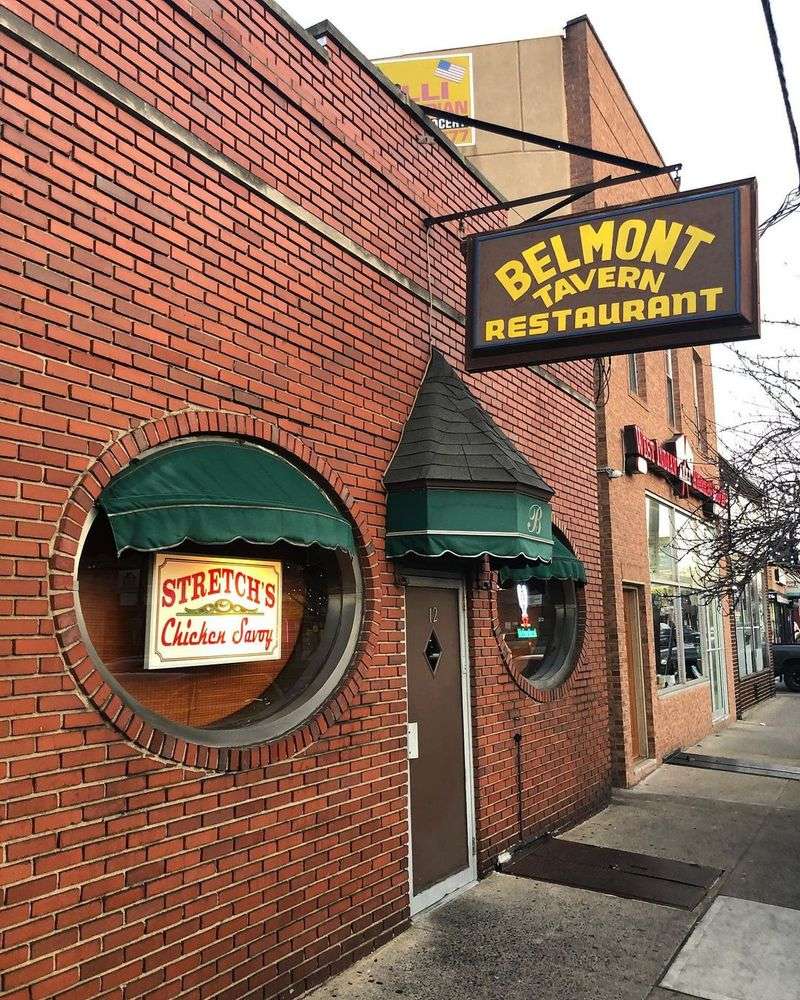
You can smell the garlic before Stretch’s Chicken Savoy reaches the table, which is a pretty effective introduction to one of North Jersey’s great regional dishes. The Belleville tavern has been serving its unapologetically old-school Italian-American menu since 1967, and the famous chicken remains the order that explains the place.
Bone-in pieces are roasted until the skin develops plenty of character, then hit with the garlicky, cheesy, herb-heavy, vinegary combination that has inspired countless imitations around the state. The sharpness is the point; this is not shy food.
Shrimp Beeps provides another Belmont initiation, pairing shrimp with a spicy red sauce that begs for bread, while cavatelli with pot cheese, pork chops with vinegar peppers, and Chicken Murphy round out a menu built more for regulars than trend chasers. The room fits the food.
Framed photos cover the walls, the bar feels comfortably preserved rather than designed to look retro, and nobody seems particularly interested in reinventing anything. Belmont is a dinner destination, not an all-day drop-in, and seating is first come, first served, so showing up early is the sensible move.
Bring an appetite and a group willing to share. Ordering one plate of Chicken Savoy for yourself may sound reasonable now, but you will want access to everybody else’s food too.
2. Steve’s Sizzling Steaks – Carlstadt
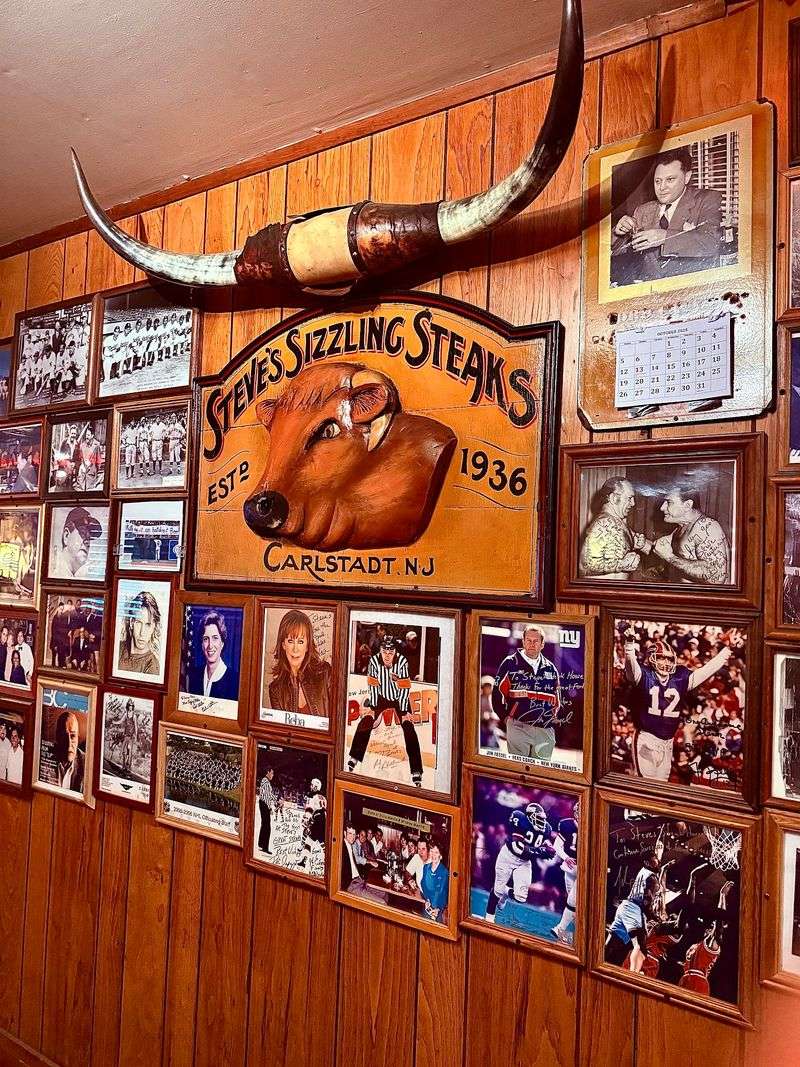
The soundtrack at this Carlstadt institution includes an unmistakable hiss. Steaks arrive still sizzling, sending the smell of beef and Steve’s salty house sauce across the table before anyone has picked up a knife.
That presentation has been part of the restaurant’s appeal for generations: Steve’s dates to 1936 and still feels more like a beloved roadside steakhouse than somewhere trying to compete with polished Manhattan dining rooms. The classic move is straightforward.
Pick a steak—the New York strip, ribeye, filet, or enormous bone-in cuts when hunger demands escalation—and let the kitchen season it in the signature sauce. Entrées come with a garden salad, steak fries, and Steve’s mushrooms, a combination that removes any temptation to overthink dinner.
If you are sensitive to salt, ask for the steak without the house sauce; the restaurant itself warns that people tend either to become addicted to it or find it too assertive. Lunch has its own strong argument in the form of a half-pound Angus ribeye cheesesteak with provolone.
The building, right along Route 17 South, carries the personality of a place that has accumulated stories rather than décor concepts. There is wood, memorabilia, and nearly a century of customers who came primarily because somebody else told them to.
For a steakhouse approaching its hundredth birthday, that system seems to be working just fine.
3. Chef Vola’s – Atlantic City
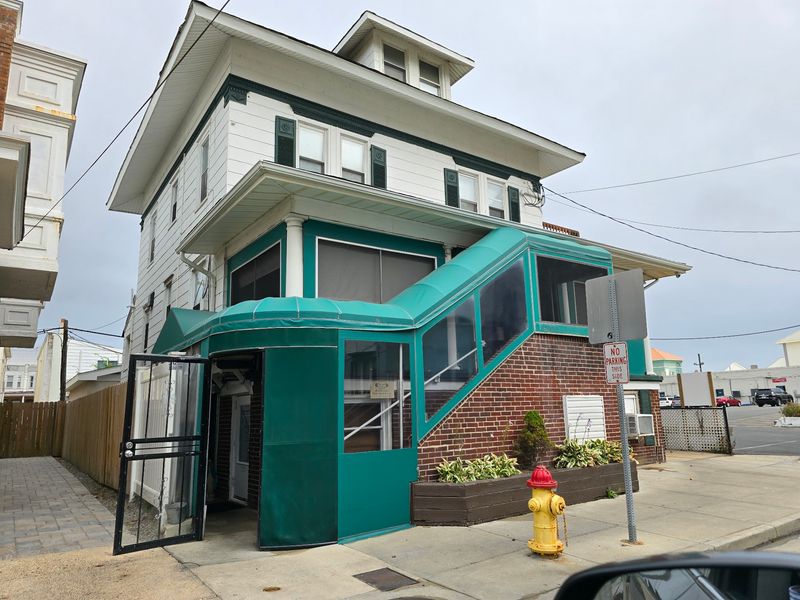
Half the fun is finding the place. Hidden on a residential street near the Atlantic City Boardwalk, this legendary Italian dining room occupies a house rather than a glowing casino complex, creating the delicious feeling that everyone inside knows something the crowds outside do not.
Chef Vola’s traces its history to 1921, but its reputation is not sustained by nostalgia alone. The bone-in veal parmigiana is the plate many diners spend weeks anticipating: a substantial veal chop beneath marinara and melted cheese, equal parts special-occasion indulgence and red-sauce comfort.
Chicken scarpariello is another favorite, while the restaurant’s homemade desserts deserve strategic stomach space. The chilled banana cream pie has a following of its own and makes a particularly good ending after a table full of rich Italian dishes.
Nothing about dining here is spontaneous. Reservations must currently be made by phone, confirmed by the restaurant, and held with a valid credit card; changes and cancellations are governed by specific notice requirements because the dining room has limited seating.
That difficulty is part logistics, not theater. Once you are inside, the experience is intimate, personal, and far removed from the giant restaurants a few blocks away.
Atlantic City offers countless ways to spend money under flashing lights. Chef Vola’s keeps filling its tables with an older trick: make dinner memorable enough that getting a reservation becomes somebody else’s recommendation project.
4. Donkey’s Place – Camden
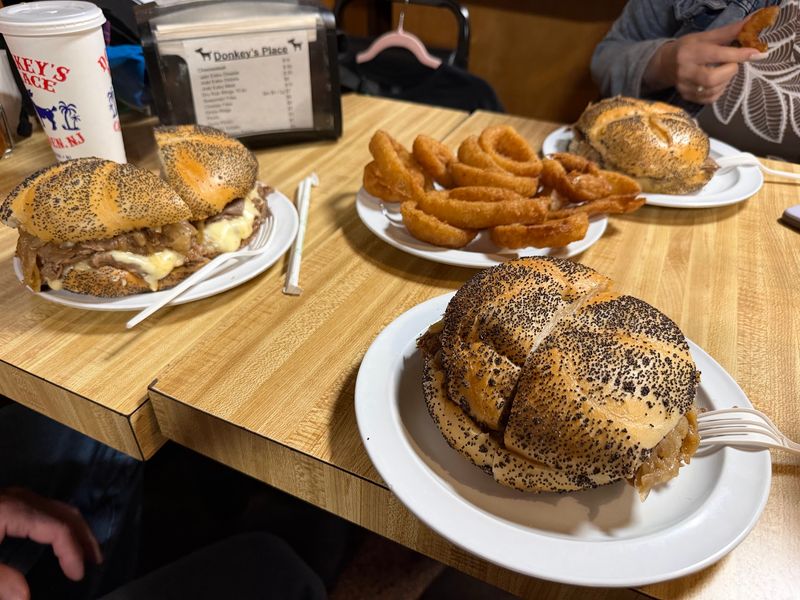
Philadelphia can keep arguing about cheesesteaks. Camden has been calmly serving its rebuttal on a round poppy-seed roll since 1943.
The sandwich at Donkey’s Place ignores the long-roll convention completely: chopped steak and a serious quantity of onions are piled onto a seeded round roll, producing something messier, juicier, and unmistakably its own. Those onions matter.
They cook down until sweet and deeply savory, soaking up beefy flavor and becoming almost as important as the steak itself. Add cheese if that is your preference, grab plenty of napkins, and do not expect to finish with clean hands.
Onion rings make a useful sidekick if you have room. The original Haddon Avenue location still operates more like a neighborhood bar that happens to serve a nationally famous sandwich than a polished food-tour attraction, and that is precisely why a visit works.
You are coming for the grill, the bar, and a sandwich people have crossed bridges to eat. One planning note is important: Donkey’s keeps unusually daytime-heavy hours, currently closing at 6 p.m. on weekdays and opening only on the first Saturday of each month, so this is better treated as lunch than a late-night cheesesteak run.
Plenty of restaurants would turn this level of fame into a branded empire. Donkey’s seems happier putting steak and onions on the griddle and letting everyone else debate where it ranks.
5. Rutt’s Hut – Clifton
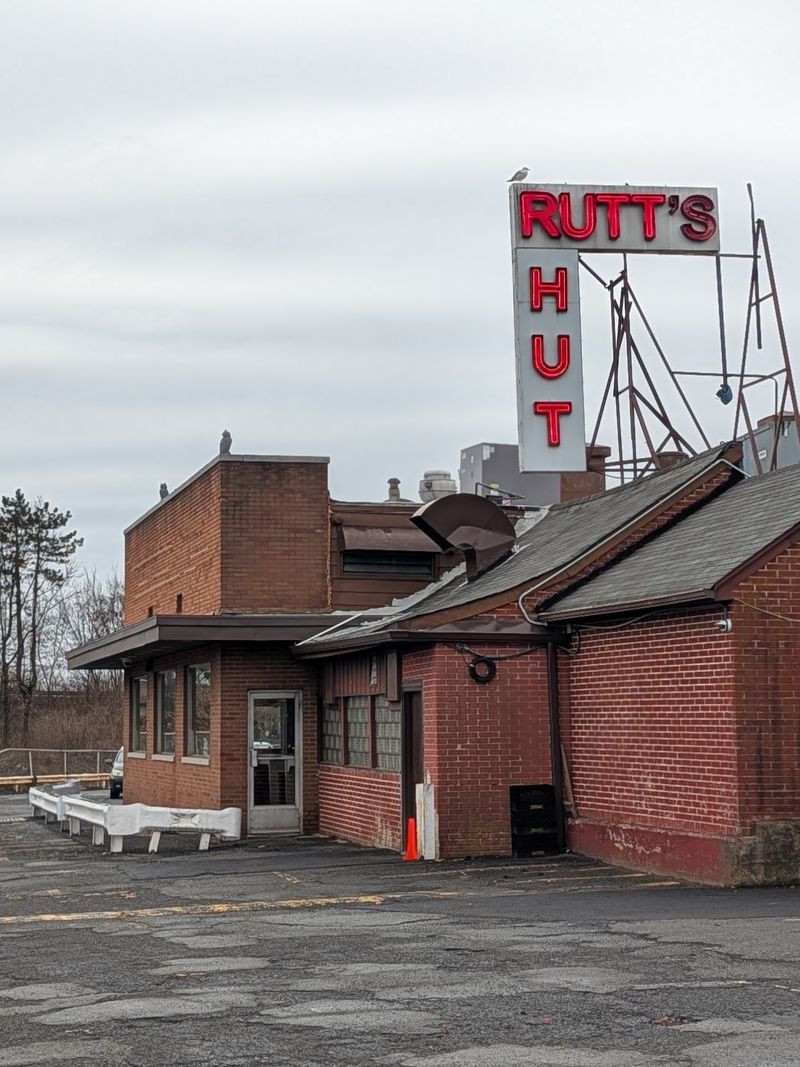
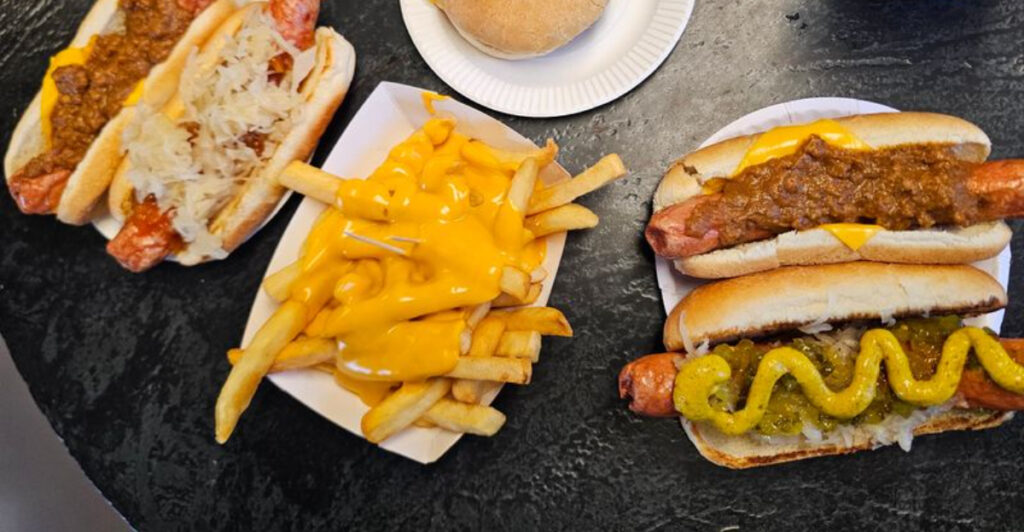
Order a “Ripper” and nobody at the counter will need an explanation. The Clifton landmark built its reputation on hot dogs plunged into hot fat until their casings split, producing those ragged edges that gave the signature dog its nickname.
It is the opposite of a chef-driven reinvention: take a good hot dog, fry it aggressively, put it on a bun, and let nearly a century of repetition prove the idea. The correct next move is to investigate the house relish.
Its tangy, cabbage-and-pickle character cuts through the richness of the fried dog, especially with a streak of mustard. One Ripper is a snack; two starts feeling like lunch, and at the relatively low menu price, ordering another is an easy decision.
Rutt’s also serves burgers, chili, fried seafood, sandwiches, and various diner-style plates, but newcomers who bypass the hot dog are missing the reason people have been making pilgrimages to River Road. The physical setup adds to the charm.
There is a takeout-counter side for an efficient dog-and-fries mission and a more conventional restaurant-and-bar experience when you want to stay. Do not expect carefully curated vintage styling.
The place simply looks like a place that has been around a very long time. That distinction matters.
Plenty of restaurants spend heavily trying to manufacture nostalgia. Rutt’s only has to drop another batch of hot dogs into the fryer.
6. White Manna – Hackensack
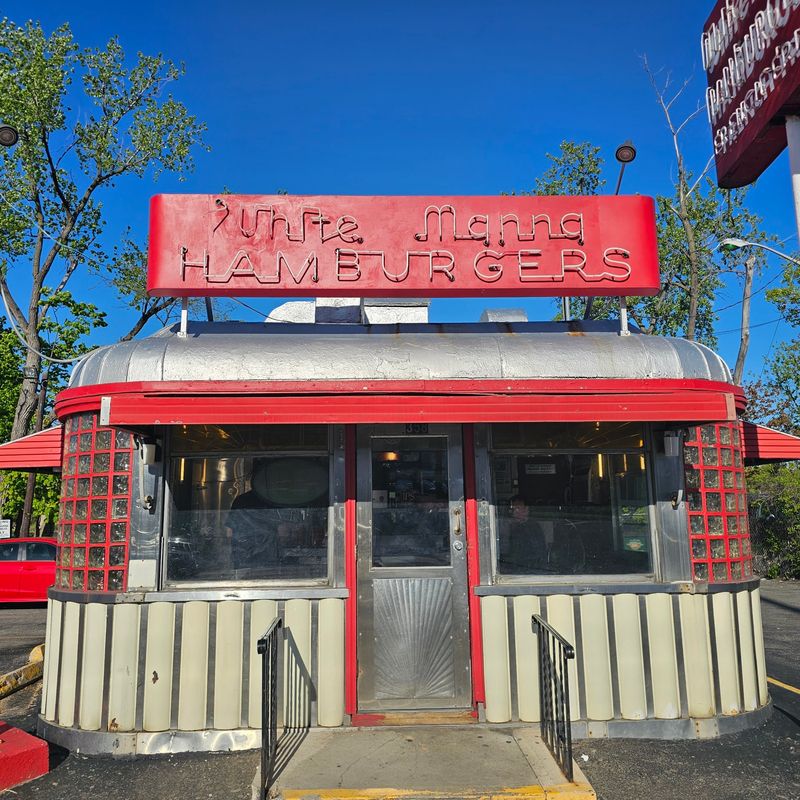
First you notice the size of the diner. Then you notice the size of the burgers.
Finally, you notice how many of those little burgers everybody is ordering. White Manna’s Hackensack operation is compact enough that the griddle feels like part of the dining room, and watching cooks smash fresh beef with onions is essentially the floor show.
The restaurant began at the 1939 World’s Fair before moving to Hackensack in 1946, and the slider has remained its language ever since. Each one is deliberately modest: thin beef, plenty of griddled onion, cheese if you have good sense, pickles, and a soft potato roll that compresses neatly around everything.
The mistake is ordering one. Three is a reasonable opening position, four is easy to justify, and watching someone nearby demolish twice that number can suddenly make you question your own ambition.
Fries keep the meal uncomplicated. Part of White Manna’s appeal is how little distance exists between ordering and cooking; the burgers are assembled right in front of you, with onions perfuming the tiny room.
Crowds can mean a wait, particularly around busy lunches, and the restaurant recommends scheduling online pickup ahead when timing matters. Eating inside is more fun when you can manage it, though.
White Manna proves that a restaurant does not need a large dining room, giant burger, or sprawling menu to become a destination. Sometimes it just needs a hot griddle and decades of people saying, “Get a few more than you think you need.”
7. Hobby’s Delicatessen & Restaurant – Newark
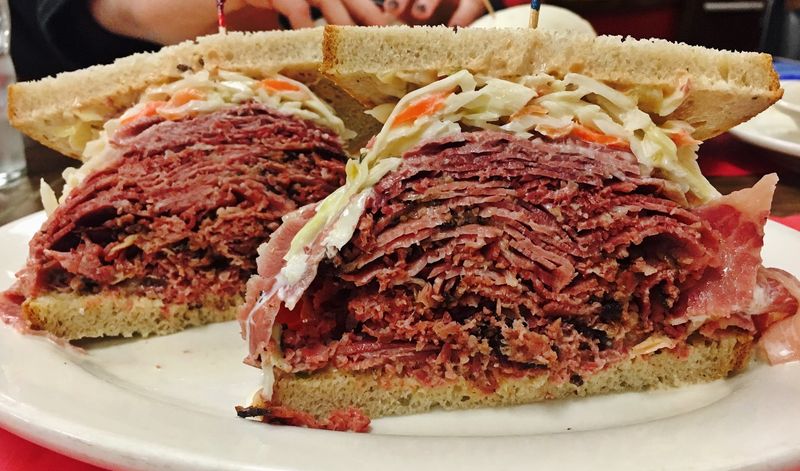
A proper pastrami sandwich should make you briefly wonder how you are supposed to bite it. Hobby’s understands the assignment.
This downtown Newark delicatessen has been run by the Brummer family since 1962, preserving the sort of Jewish deli traditions that require patience behind the scenes: the corned beef is still pickled in large stainless-steel vats, and the resulting sandwiches arrive with enough meat to make lunchtime feel like a commitment.
Pastrami is the obvious first order, either on its own or worked into one of the deli’s combinations, but corned beef deserves equal attention.
Add a potato pancake and you have exactly the kind of lunch that renders ambitious afternoon plans questionable. Hobby’s sits at 32 Branford Place, close enough to the Prudential Center that it has long made sense as a pregame stop, and hockey nights bring their own surge of customers.
The deli has also developed some playful newer specials without losing the fundamentals; a pastrami cheesesteak, for example, feels like Newark’s culinary neighborhoods shaking hands.
What keeps Hobby’s compelling is that the food still feels constructed around the habits of a real deli rather than a nostalgia-themed version of one.
Its regular operating hours lean heavily toward breakfast and lunch, with early afternoon closing times, so check the schedule rather than assuming you can wander in for dinner. This is the kind of institution that has survived by giving generations of Newark customers a reason to develop a usual order.
8. Jimmy Buff’s – West Orange
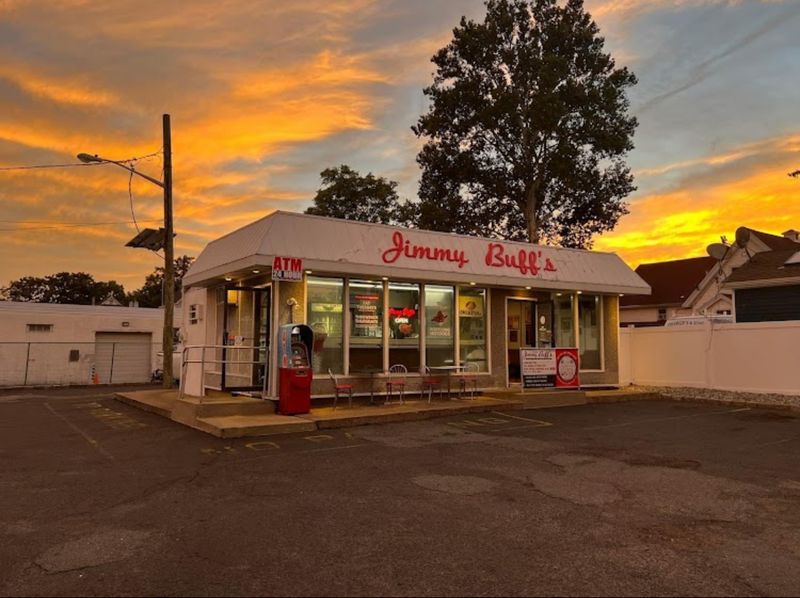
Few foods announce North Jersey quite as effectively as a Jimmy Buff’s Italian hot dog. The sandwich is architecture more than assembly: thick pizza bread is opened into a pocket and loaded with fried hot dogs, potatoes, peppers, and onions, creating a meal so substantial that calling it a “hot dog” feels almost misleading.
The story goes back to Newark in 1932, when James “Buff” Racioppi introduced the style that would become a regional specialty. Today, the West Orange shop carries that tradition forward without trying to make the food dainty.
Order a single if you want to maintain some dignity; order a double if you have arrived hungry and accept the consequences. Italian sausage can replace the hot dog, and a dog-and-sausage combination solves the problem for anyone unwilling to choose.
Mustard belongs inside the bread, while ketchup is a personal decision best handled without involving the rest of New Jersey in the argument.
The fried potatoes are not a garnish—they are a major structural component, absorbing juices from the meat and vegetables and turning the sandwich into something closer to an entire cookout stuffed into bread.
The West Orange location at 60 Washington Street is casual, quick, and built for cravings rather than ceremonies. Jimmy Buff’s does not need to convince newcomers that this is refined dining.
It needs one regular to bring a friend, watch that friend attempt the first enormous bite, and allow another lifelong customer to be created.
9. Dickie Dee’s – Newark
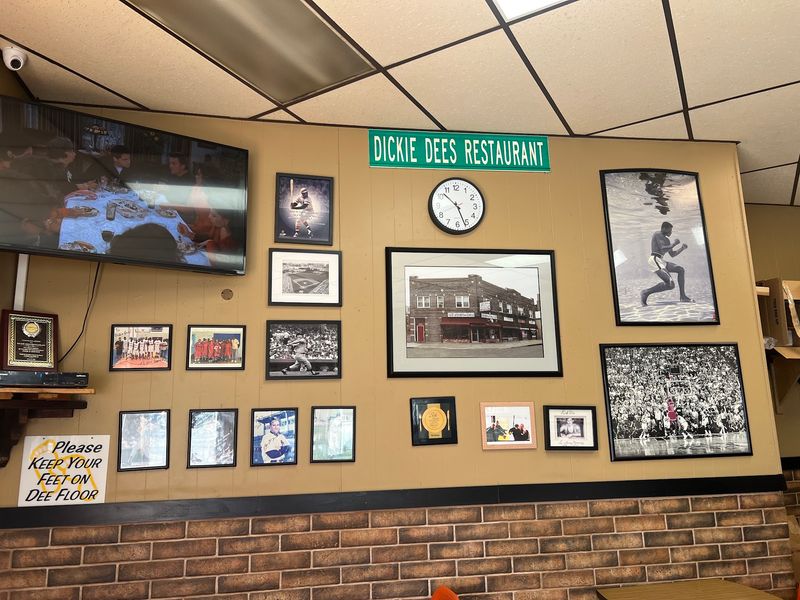
The first challenge is deciding whether you want your potatoes with a hot dog, sausage, cheeseburger, steak, or—because restraint is optional—some combination of them.
Dickie Dee’s has been feeding Newark from Bloomfield Avenue for decades, and its menu reads like a crash course in the city’s contribution to Italian-American fast food.
The classic Italian hot dog is the sensible introduction. It comes buried beneath peppers, onions, and potatoes, with hot cherry peppers available when the sandwich needs an extra jolt.
A double dog increases the ratio of meat to bread, while the sausage version brings more spice and richness. Then things get creative.
The Super Steak combines steak, cheese, peppers, onions, and potatoes; the Italian cheeseburger applies the same vegetable-and-potato logic to a burger; and the Italian hot dog pizza turns the entire local specialty into a pie. None of this is designed for delicate eating.
The bread gets compressed, the potatoes wander, and at some point a pepper will almost certainly escape onto the wrapper. That is part of the experience.
Dickie Dee’s remains refreshingly affordable, with many of its core sandwiches sitting well below the price of a fashionable lunch elsewhere in North Jersey. The setup is simple and the menu is broad enough for a group, but newcomers should resist distraction and begin with the food that made the place a Newark institution.
Fancy can wait. Get the double dog with everything and understand the neighborhood first.
10. Tacconelli’s Pizzeria – Maple Shade
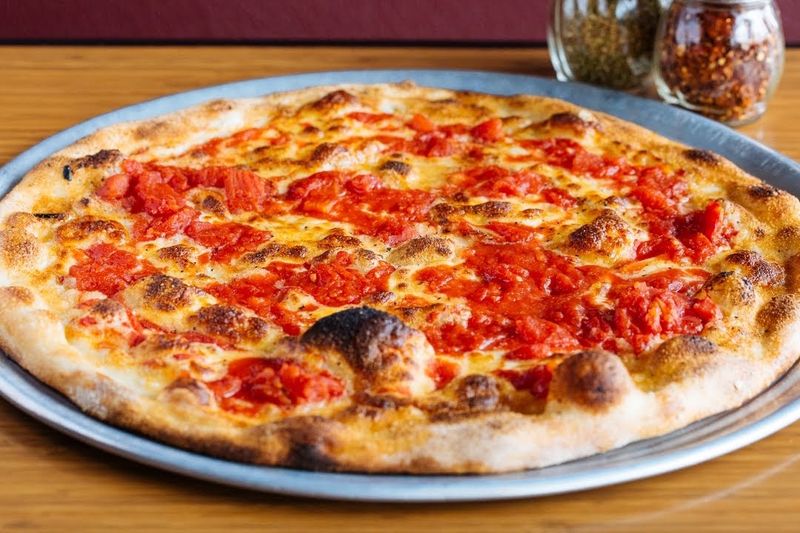
Some pizza families chase novelty. The Tacconellis have spent generations chasing consistency.
Their pizza story reaches back to a brick oven and old-world tomato pies in Philadelphia, and the Maple Shade location, opened in 2003, carries that tradition across the Delaware with the same basic obsession: thin crust, a hot oven, and toppings that do not bury the pie.
A plain tomato-and-cheese pizza is the best diagnostic tool here because there is nowhere for weak dough to hide.
The crust comes thin and crisp with enough chew to keep it from becoming a cracker, while the sauce, cheese, and char get room to operate independently. From there, add pepperoni, sausage, mushrooms, or whichever topping usually defines your personal pizza test.
Unlike the famously stripped-down origins of the operation, Maple Shade also offers salads, desserts, and fresh pasta, making it easier to turn pizza night into a longer dinner. Still, the pie is why tables fill.
The restaurant sits on West Main Street and currently keeps a compact weekly schedule: it opens Wednesday through Sunday, with Friday lunch as the main daytime exception. That is worth remembering before making an impulsive Monday pizza run.
There is something almost stubborn about a restaurant whose central promise is essentially, “We still make it the way the family taught us.” In a food world constantly advertising the next new thing, Tacconelli’s has discovered that a properly blistered thin-crust pie is a pretty convincing marketing strategy by itself.
11. Del Porto Italian Restaurant – Elizabeth
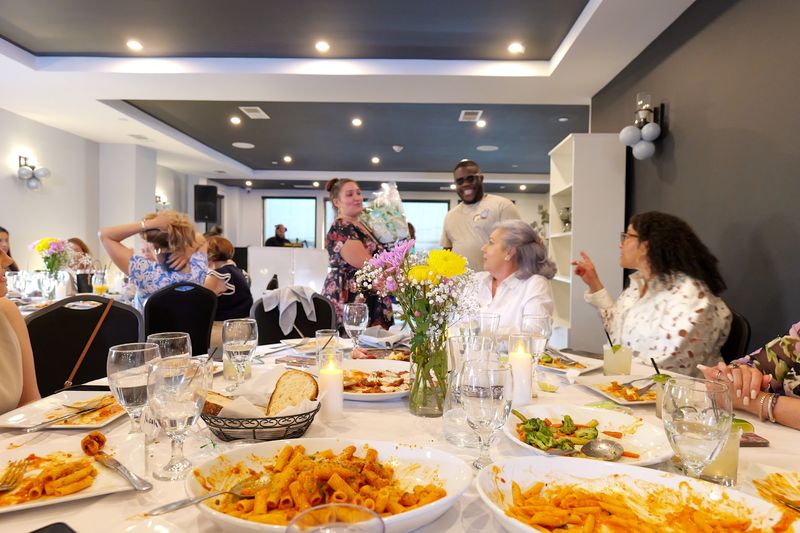
Dinner at Del Porto can begin with handmade pasta and somehow end with somebody ordering another round because nobody is ready to leave the patio. That gives the Elizabeth restaurant a different energy from the older institutions on this list.
Rather than survive unchanged for generations, Del Porto has built its following by making a neighborhood Italian dinner feel like an occasion without pushing it into special-occasion-only territory.
Homemade pasta anchors the menu, supported by antipasti, seafood, meat entrées, cocktails, and a wine list broad enough to keep a table occupied.
This is a good place to order communally: start with a few antipasti, put pasta in the middle, then add a secondi instead of making everyone defend a single entrée.
The restaurant also offers separate vegan, vegetarian, gluten-free, and kids’ options, which makes organizing a mixed group considerably less complicated than it can be at a traditional Italian restaurant.
Weekend brunch adds another personality altogether, including an à la carte menu and an option built around free-flowing mimosas. The setting on Elizabeth Avenue is polished, with a full bar and outdoor space that can turn a warm evening into a much longer dinner than planned.
Reservations are available and make sense for prime weekend times. Del Porto earns its crowds by understanding that “Italian restaurant” can mean date night, family dinner, cocktails with friends, or Sunday brunch—and doing enough of each that different groups keep independently arriving at the same address.
12. Clemmy’s – Waretown
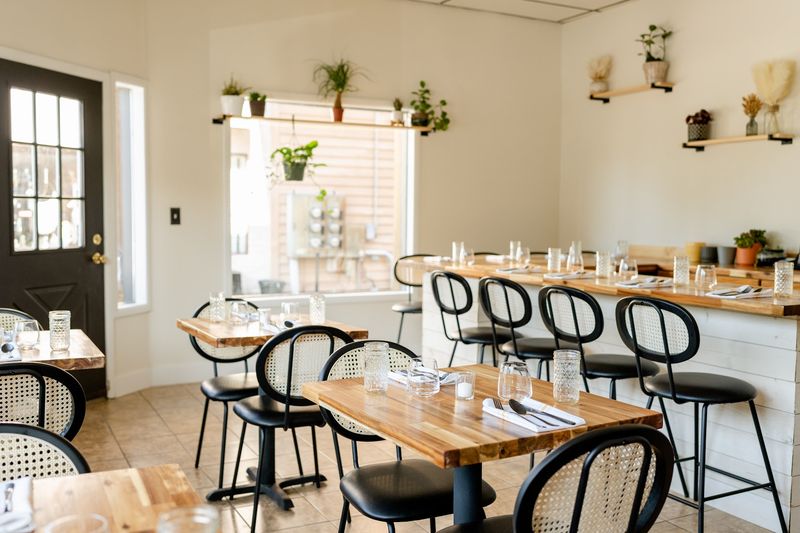
A strip mall on Route 9 is not where most people expect to encounter scallop crudo with watermelon agua fresca and chiles. That small surprise captures the appeal of Clemmy’s.
Opened in Waretown in 2023 by chef Allen Walski and his wife, Carolyn, this seasonal New American BYOB has become the kind of restaurant diners whisper about precisely because it feels out of scale with its surroundings. The menu is concise and changes with ingredient availability, which means there is little room for filler.
Recent offerings have paired Viking Village scallops with zucchini fritters and lemon-caper aioli, roasted chicken with fresh corn polenta and salsa roja, and a Kurobuta pork chop with romesco, arugula, and melon.
The Old Bay crab bucatini is especially easy to love: familiar Shore flavors translated into a pasta dish without losing their casual spirit.
Start with the housemade ricotta on sourdough if it is available, then save room for Grammy’s Famous Orange Cake with vanilla gelato. Because the menu moves with the seasons, treating any specific dish as guaranteed would miss the point.
Check what is being served and lean into whatever sounds unexpected. The BYOB format keeps dinner comparatively relaxed, and the small dining room suits couples and modest groups better than a spontaneous crowd.
Clemmy’s is proof that word of mouth does not require decades to develop. Sometimes all it takes is giving Waretown a restaurant people cannot believe is sitting next to the places they drive past every week.
13. Razza – Jersey City
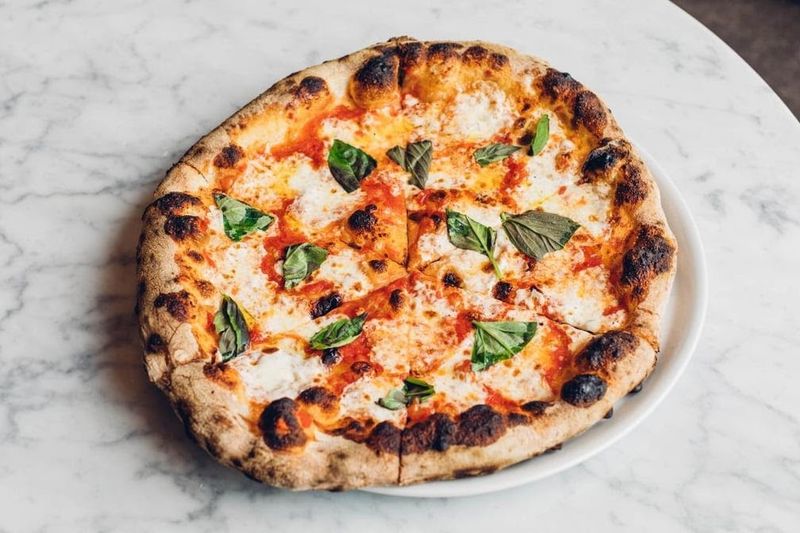
Plenty of pizza restaurants talk about ingredients. Razza reaches the point where you suspect chef-owner Dan Richer has personally interviewed every grain of flour.
The Jersey City restaurant mills no marketing gimmick into that obsession: its flour is sourced from a mill in Clifton, bread is made in-house, butter is made in-house, and even salt receives deliberate consideration before anything reaches the wood-burning oven. That attention becomes obvious in the simplest pies.
A Margherita exposes the dough, tomato, cheese, fermentation, and char with nowhere to hide; it is an ideal first order before moving toward whatever seasonal pizza happens to be on the daily-changing dining room menu. Do not ignore the non-pizza opening act.
Bread and cultured butter became famous for a reason, and ordering it at a pizzeria sounds unnecessary only until the first bite. Razza sits on Grove Street in downtown Jersey City, where the room feels polished but never formal enough to make pizza an occasion requiring a dress code.
Reservations are smart, particularly at desirable dinner times. Outdoor seating works differently: it is first come, first served and intended for takeout customers rather than full table service.
The menu changes according to season and availability, so rigidly planning your toppings weeks ahead defeats the purpose. Trust the kitchen.
Razza became one of New Jersey’s hardest pizza tables to ignore by treating an everyday food with almost unreasonable seriousness while still remembering that, ultimately, everybody came to eat a pie.
14. Star Tavern – Orange
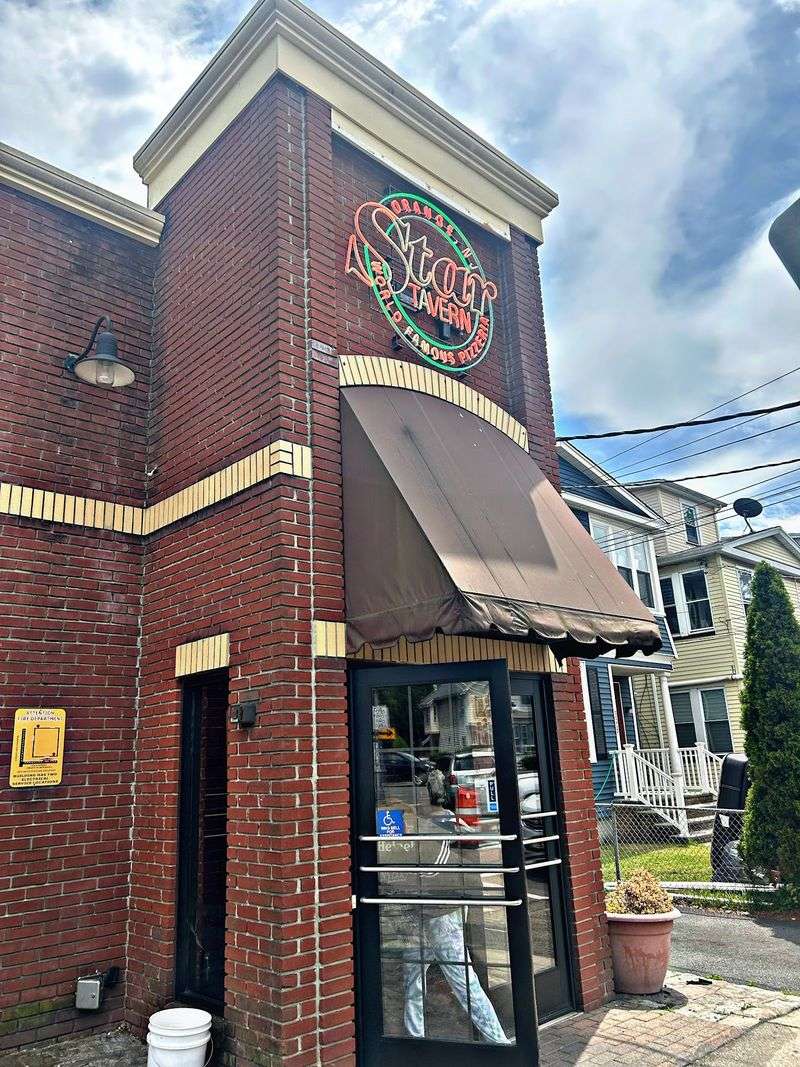
The pizza lands on the table looking almost too thin to support itself, and then somehow disappears faster than a thicker pie ever could. Star Tavern’s signature is classic North Jersey bar pizza: crisp, thin, aggressively shareable, and built to make ordering “one more” seem completely rational.
The Orange institution has been around since 1945 and operated by the Vayianos family since 1980, with an open, busy kitchen helping create the sort of room where dinner sounds like clattering plates, shouted orders, and several generations talking at once. Start with a plain cheese pie before branching out.
A simple pizza makes the crust-and-sauce balance easiest to appreciate, though pepperoni and other familiar toppings suit the style beautifully. Because the pies are thin, a group can order multiple combinations without turning dinner into an endurance event.
Star’s menu extends well beyond pizza—Italian entrées, sandwiches, wings, and an Italian-style hot dog all appear—but the bar pies command the room.
This is especially useful when bringing children or a mixed group: nobody has to negotiate a precious tasting menu, and the table can keep adding food until everyone stops reaching for another slice.
Star currently opens seven days a week, beginning at 11 a.m. most days and noon on Sunday, making it easier to visit than many destination pizzerias. Nearly eight decades of neighborhood loyalty have done more for its name than any campaign could.
15. Tops Diner – East Newark
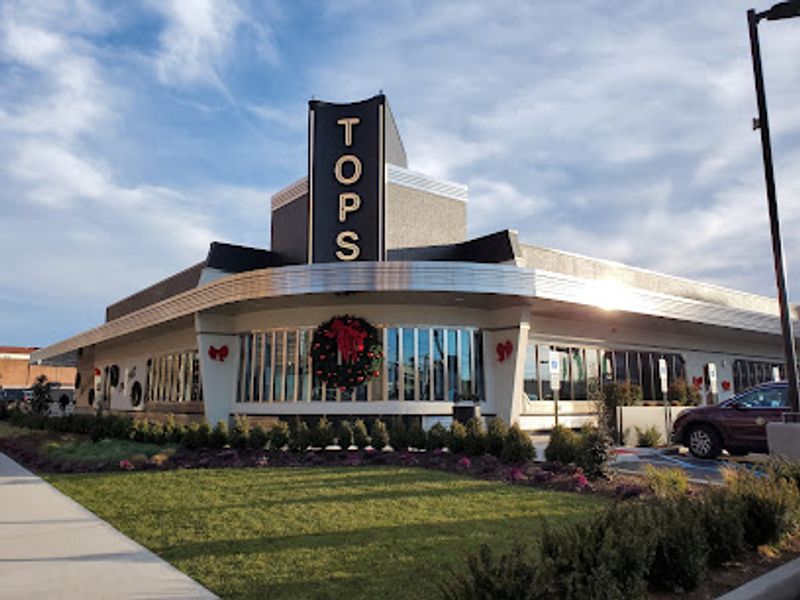
Only in New Jersey could a diner become so popular that making a reservation starts sounding like responsible adult behavior. Tops has operated in East Newark since 1942, but the current version is far removed from the image of a tiny chrome counter serving only eggs, burgers, and coffee.
Its menu is enormous even by Jersey diner standards, wandering confidently from pancakes and omelets to steaks, tacos, lobster, pasta, salads, burgers, seafood, cocktails, and a whole collection of elaborate mac and cheeses.
The lobster mac is a maximalist favorite, folding Maine lobster into five-cheese sauce with cognac, shallot, tomato, and garlic crumbs.
For something more recognizably diner-ish, disco fries remain on duty with mozzarella and the restaurant’s brown gravy. Breakfast can become equally excessive, and desserts are built for the person who said, 20 minutes earlier, that they were completely full.
The renovated dining room feels bigger and flashier than the diner many longtime customers remember, but the core attraction remains unchanged: a group of five people can arrive craving five unrelated things and probably all find them on one menu.
Tops is open daily from 8 a.m. to 11 p.m., and reservations are strongly recommended during busy hours and weekends, though walk-ins are accepted when space allows.
That sentence alone explains its place on this list. When a Jersey diner requires advance planning, advertising is clearly not the problem.
Share this story