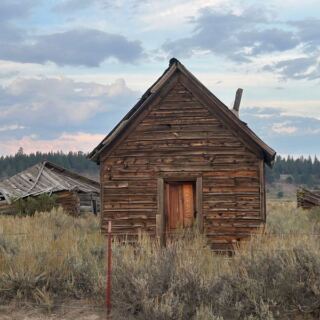
Tennessee is famous for Nashville’s music scene and the Great Smoky Mountains, but there’s a whole other side to the state that most visitors never discover. Scattered across small towns and tucked away in surprising places are underground lakes, ghost towns, cave concerts, and even a towering metal sculpture that looks like it belongs in a science fiction movie.
These hidden gems are waiting for anyone willing to look beyond the typical tourist path and explore the quirky, fascinating, and sometimes downright strange side of Tennessee.
1. Cruise Across America’s Largest Underground Lake in Sweetwater
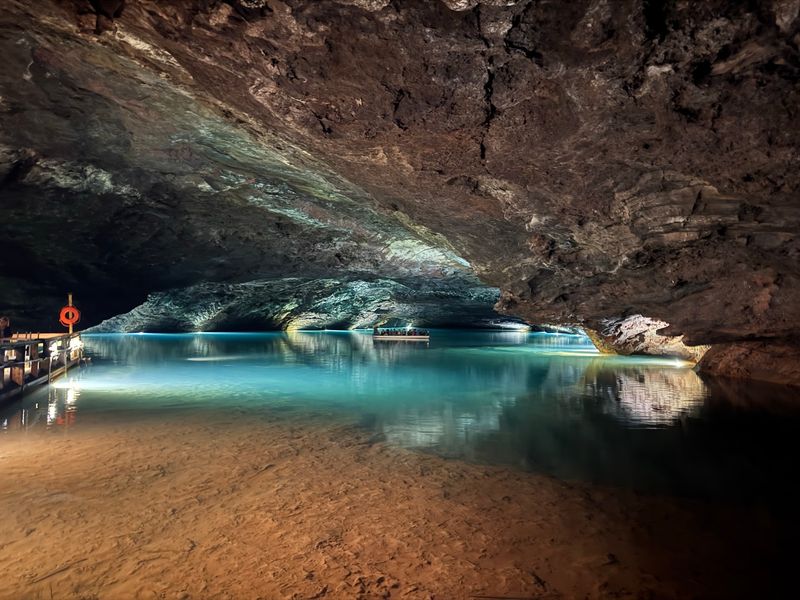
Most people think of Tennessee lakes as outdoor destinations with sunshine and fishing boats, but The Lost Sea flips that expectation completely upside down. Buried 140 feet beneath the surface near Sweetwater, this massive underground lake stretches across 4.5 acres of surveyed water, though divers believe it extends much farther into unexplored cavern systems.
Walking down into the cave feels like entering another world entirely.
The tour guides lead you through winding passageways filled with stalactites and flowstone formations before you reach the lake itself. Then comes the best part: you board a glass-bottom boat and glide across water so clear and still it mirrors the cave ceiling above.
Rainbow trout swim beneath the boat, descendants of fish stocked decades ago that have adapted to life in total darkness.
The cavern stays a constant 58 degrees year-round, so bring a light jacket even in summer. The tour takes about an hour and fifteen minutes total, with plenty of fascinating geology and history woven into the experience.
This cave system has been used for everything from storing moonshine during Prohibition to serving as a Civil War campsite.
The Lost Sea holds a spot in the Guinness Book of World Records, yet it remains surprisingly off the radar for many Tennessee visitors. It’s the kind of place that makes you realize how much hidden beauty exists right beneath your feet, waiting to be explored in the most unexpected ways.
2. Tour a Former Maximum-Security Prison in Petros

Walking into Brushy Mountain State Penitentiary feels like stepping onto a movie set, except everything here is disturbingly real. This former maximum-security prison operated from 1896 until 2009, housing some of Tennessee’s most dangerous criminals in conditions that would shock modern sensibilities.
The thick stone walls and cramped cells tell stories that tour guides deliver with just the right mix of respect and raw honesty.
James Earl Ray, the man convicted of assassinating Dr. Martin Luther King Jr., was imprisoned here and even attempted a daring escape in 1977. You can walk the same yard where inmates spent their limited outdoor time, see the punishment cells where men endured solitary confinement, and hear accounts of prison breaks that read like thriller novels.
The guards’ perspective gets shared too, painting a complex picture of life on both sides of the bars.
What makes this attraction particularly fascinating is how recently it closed. Some of the guards who worked here actually lead tours now, offering firsthand accounts that no history book could match.
They’ll point out details you’d never notice otherwise, like how inmates communicated between cells or where contraband was commonly hidden.
The property has expanded beyond just tours to include a distillery, restaurant, and even overnight accommodations in renovated sections. Still, the cellblocks remain the main draw, preserved in a state that feels frozen in time.
It’s heavy material, definitely more appropriate for older kids and adults who can handle the grim realities of incarceration history. But for anyone interested in criminal justice, Tennessee history, or just incredibly unique attractions, Brushy Mountain delivers an experience that sticks with you long after you leave.
3. See Tennessee’s Version of the Eiffel Tower in Paris
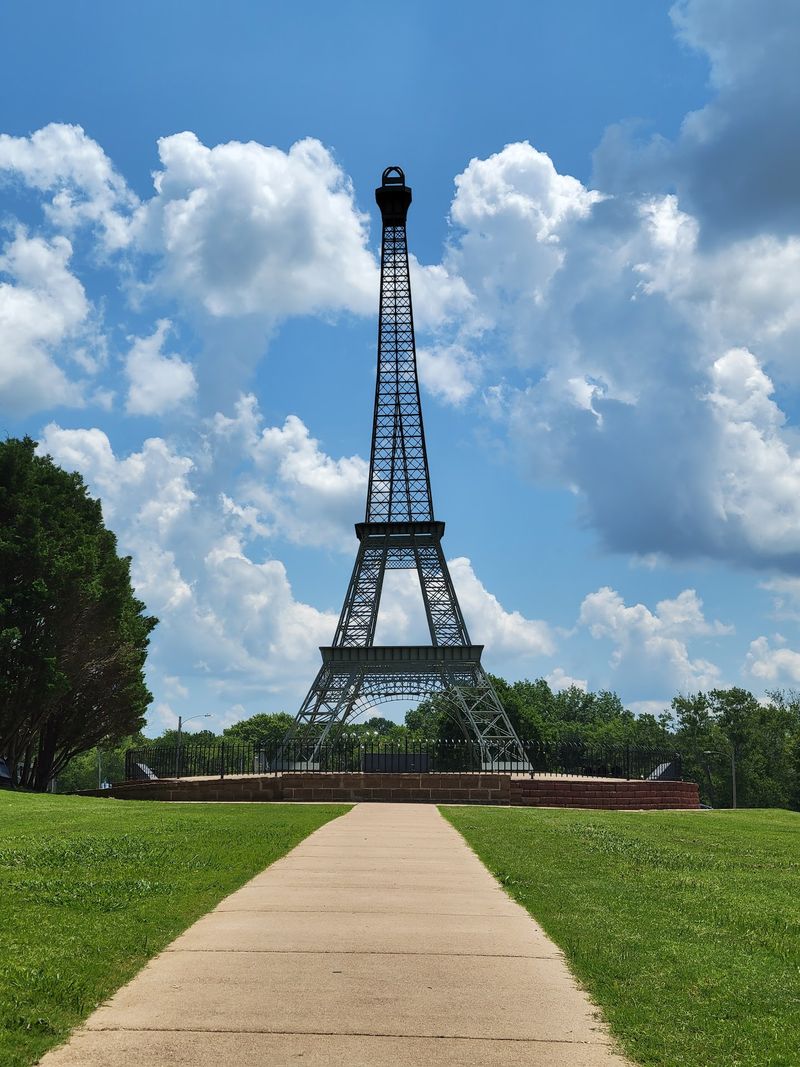
Forget expensive flights to France because Paris, Tennessee has its own Eiffel Tower standing proudly in Memorial Park. At 60 feet tall, it’s obviously smaller than the original, but this replica makes up for its size with pure small-town charm and a uniquely American twist.
The tower is painted in patriotic red, white, and blue, and it’s topped with a red star that would never appear on its Parisian counterpart.
The story behind this tower is classic small-town pride. When Paris, Texas built their own Eiffel Tower replica, the folks in Paris, Tennessee couldn’t let that stand without a response.
So they built their version and made sure to add that distinctive star on top, just to drive home the point that their Paris has its own identity.
It’s completely free to visit, and you can walk right up to the base for photos. The surrounding park offers a pleasant spot for a picnic, with walking paths and benches where you can sit and contemplate the amusing fact that you’re in Paris without crossing an ocean.
The tower is especially photogenic at sunset when the light hits the painted metal just right.
This isn’t a destination that will occupy your entire afternoon, but it’s absolutely worth the detour if you’re driving through West Tennessee. Locals have embraced the quirky landmark with good humor, and you’ll often see it featured in community events and celebrations.
It represents that particular brand of Tennessee creativity where someone has a slightly ridiculous idea and the community says, “Why not?” The result is a roadside attraction that makes people smile, snap a photo, and appreciate the playful spirit that thrives in small Southern towns.
4. Search for the Bell Witch in Adams
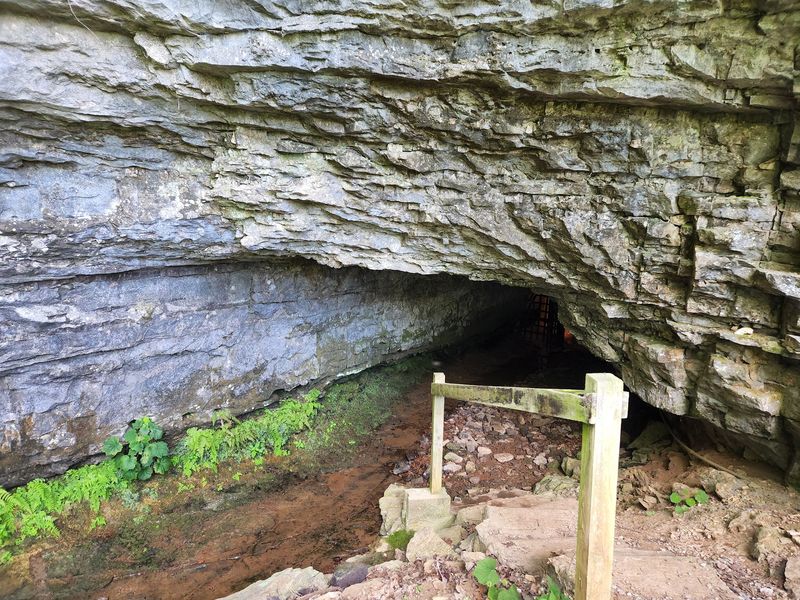
Tennessee’s most famous ghost story centers on a small Robertson County farm where the Bell family experienced events so disturbing they attracted nationwide attention in the early 1800s. The Bell Witch legend tells of an entity that tormented John Bell and his family with physical attacks, mysterious voices, and supernatural phenomena that even Andrew Jackson allegedly encountered during a visit.
The cave on the former Bell property is said to be a focal point of the haunting’s energy.
Today, Bell Witch Cave operates as a tourist attraction where you can explore the limestone cavern and hear the full story from guides who know every twist in the tale. The cave itself extends about 490 feet into the hillside, with a stream running through it and rock formations that would be interesting even without the supernatural element.
But the witch legend is what draws most visitors, and the atmosphere inside definitely feels eerie.
Some people report strange occurrences during their visit, from unexplained cold spots to electronic devices malfunctioning. Whether you believe in ghosts or not, the historical documentation of the Bell Witch case is genuinely intriguing.
The events were witnessed by numerous community members, and the story was taken seriously enough that it became part of Tennessee folklore.
The tour includes both the cave exploration and a walk through the outdoor area where the Bell cabin once stood. Guides share details about the family’s experiences, the various theories about what really happened, and how the legend has evolved over two centuries.
It’s a short tour overall, maybe 30 to 45 minutes, but it packs in plenty of local history and spine-tingling stories. Come with an open mind and decide for yourself whether something truly supernatural happened here or if it’s just a really good ghost story that got out of hand.
5. Walk Through a Victorian-Era English Colony in Rugby
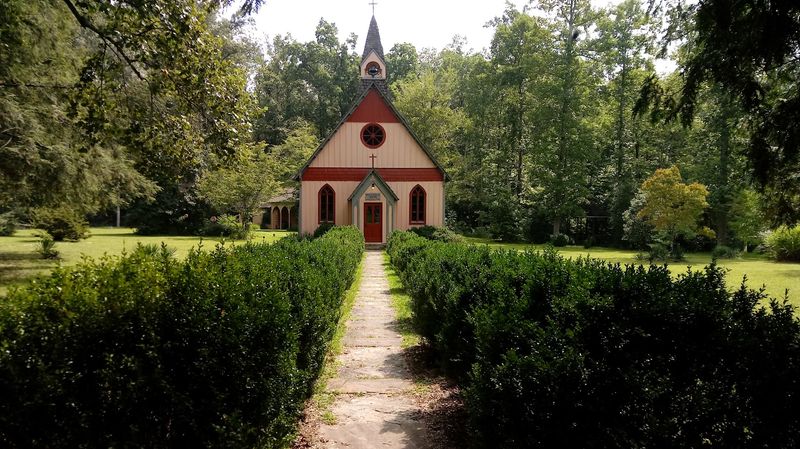
In the mountains of East Tennessee sits a remarkably preserved Victorian village that feels completely out of place and utterly fascinating. Historic Rugby was founded in 1880 by British author and social reformer Thomas Hughes, who envisioned a utopian community where younger sons of English gentry could build new lives without the rigid class restrictions of Victorian England.
The experiment didn’t last long as a thriving colony, but the buildings and stories remain frozen in time.
Walking through Rugby today means stepping into 17 restored Victorian structures, including the original library that still houses 7,000 volumes from the 1880s. The Board of Aid to Land Ownership building, Christ Church Episcopal, and several historic homes give visitors a genuine sense of what life was like for these transplanted English settlers.
The architecture is distinctly British, which creates a surreal contrast against the Tennessee mountain landscape.
What’s remarkable is how much original material survives. The church still holds services, and the library functions as it did 140 years ago, with the same books on the same shelves.
Tours are led by knowledgeable guides who explain both the idealistic vision behind Rugby and the practical challenges that ultimately caused most colonists to leave within a few years.
The village offers more than just buildings to examine. You can hike trails through the surrounding nature, visit the historic cemetery, and browse a gift shop housed in one of the original structures.
The Harrow Road Cafe serves lunch in a restored building, offering a chance to rest and reflect on this unusual chapter of Tennessee history. Rugby represents an ambitious social experiment that failed in its original mission but succeeded in leaving behind a cultural treasure that continues educating and fascinating visitors more than a century later.
6. See an Enormous Sculpture Rising From a Small Town in Brownsville

Rising above the rooftops of downtown Brownsville is something that looks like it belongs in a post-apocalyptic art museum rather than a quiet West Tennessee town. Mindfield, created by artist Billy Tripp, stands as Tennessee’s tallest freestanding sculpture, a constantly evolving tower of welded steel that reaches over 125 feet into the sky.
Tripp has been working on this piece since 1989, adding new elements and expanding the structure as his vision develops.
The sculpture is built entirely from found materials and scrap metal, transformed through welding into a complex lattice of beams, shapes, and symbolic elements. Tripp works on it regularly, and locals have grown accustomed to seeing him up on the structure with his welding equipment, adding another piece to his decades-long project.
He doesn’t accept donations or charge admission, viewing Mindfield as a personal artistic journey that happens to unfold in public view.
Interpreting the sculpture is left entirely to viewers. Some see religious symbolism, others find political commentary, and many simply appreciate it as an impressive feat of engineering and artistic dedication.
The structure includes stairs and platforms, though climbing it isn’t allowed for safety reasons. Walking around the base and viewing it from different angles reveals new details and perspectives.
What makes Mindfield especially interesting is its location in a small town that has embraced this unconventional landmark. Brownsville isn’t a tourist destination otherwise, which makes stumbling upon this towering metal sculpture all the more surprising.
Tripp has said the piece represents his life’s journey and philosophical explorations, making it a deeply personal work that has become a community fixture. It’s the kind of outsider art that reminds you how creativity can emerge anywhere, transforming an ordinary town square into something genuinely extraordinary and thought-provoking.
7. Go to a Concert Inside a Cave in Pelham
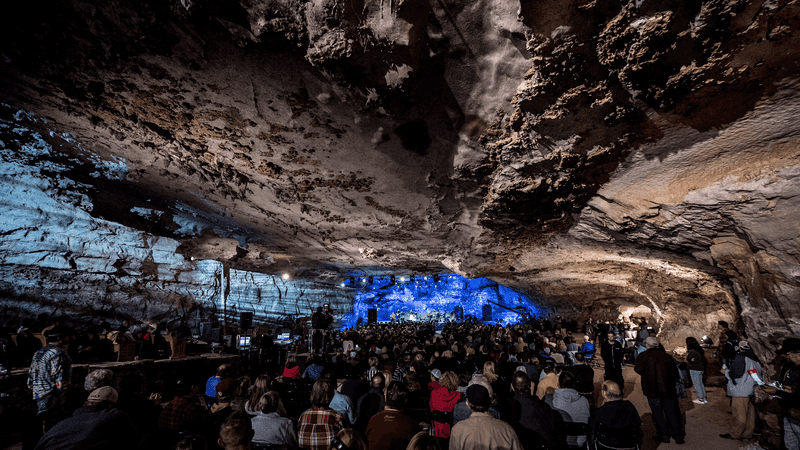
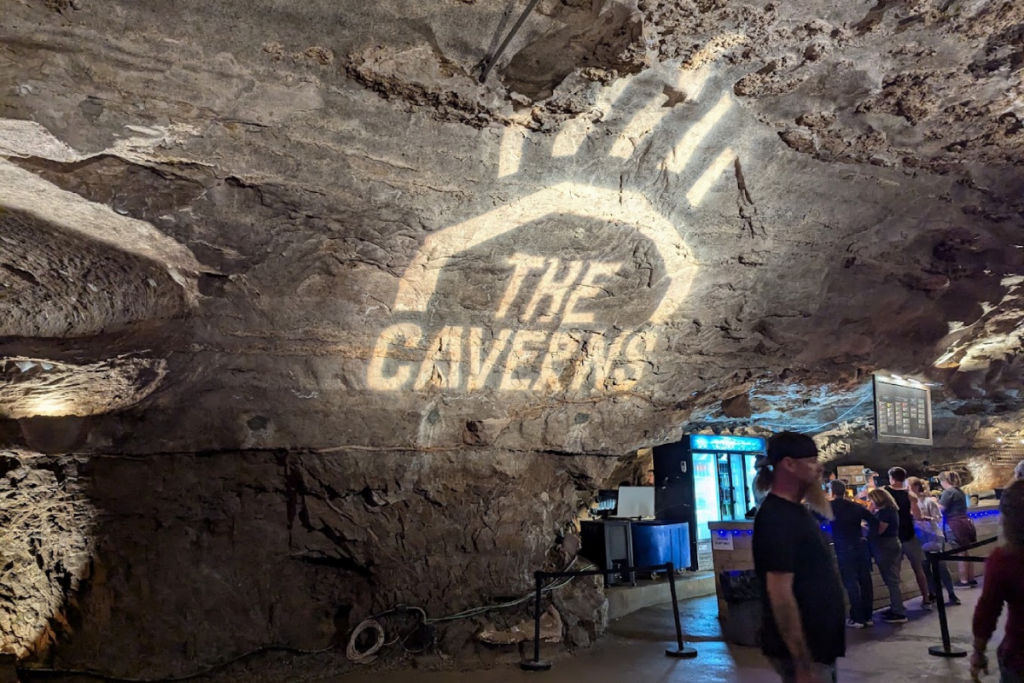
Imagine watching your favorite band perform with ancient limestone formations as the backdrop and natural cave acoustics enhancing every note. The Caverns in Pelham offers exactly that experience, hosting concerts inside Volcano Room, a massive underground chamber that serves as one of the most unique music venues in America.
The cave stays at 60 degrees year-round, creating a comfortable environment regardless of the weather above ground.
The venue attracts both established acts and rising artists who want to perform in such a distinctive setting. The natural acoustics are genuinely impressive, with the cave walls and high ceiling creating a sound quality that even sophisticated audio engineers struggle to replicate artificially.
Seats are arranged on platforms that give everyone a good view of the stage, and the intimate capacity means even larger acts feel like private performances.
Beyond concerts, The Caverns offers guided walking tours of the cave system for those who want to explore without the music element. The formations include massive columns, delicate soda straws, and flowstone curtains that have developed over millions of years.
The cave extends far beyond the concert chamber, with miles of passages that serious spelunkers can explore through special adventure tours.
Getting tickets to popular shows requires planning ahead since the limited capacity means events often sell out quickly. The venue has hosted bluegrass legends, indie rock bands, and everything in between, with the cave’s atmosphere adding an element of magic to every performance.
There’s something primal about experiencing live music underground, surrounded by geology that predates human civilization by incomprehensible spans of time. It’s a reminder that Tennessee’s creative spirit extends beyond Nashville’s recording studios into the literal bedrock of the state, creating experiences that visitors remember for years afterward.
8. Paddle Through a 100-Year-Old Flooded Forest in Tiptonville
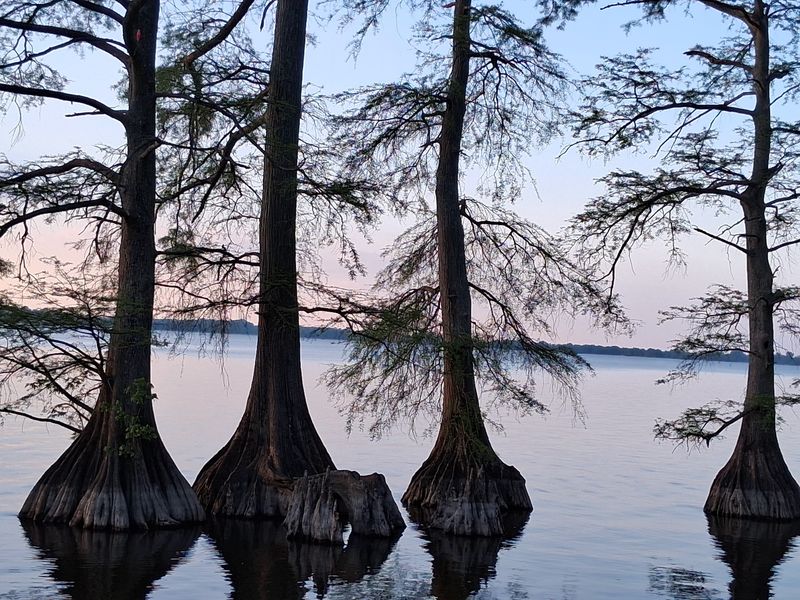
Reelfoot Lake looks nothing like typical Tennessee lakes because it wasn’t created by dam construction or natural basin formation. A series of massive earthquakes struck the region in 1811 and 1812, causing the Mississippi River to temporarily flow backward and flooding vast areas of forest.
The water never drained, leaving thousands of cypress trees standing in the shallow lake that formed. Over 200 years later, those trees and their descendants create a hauntingly beautiful landscape unlike anywhere else in the state.
Paddling through Reelfoot means navigating between cypress trunks and around their distinctive “knees,” the root projections that stick up above the waterline. The lake averages only five feet deep, making it perfect for kayaking and canoeing.
Wildlife thrives here, with bald eagles nesting in winter, great blue herons stalking the shallows, and American white pelicans stopping during migration. The bird watching opportunities rival anywhere in the Southeast.
Several outfitters around the lake offer kayak and canoe rentals, and there are multiple launch points depending on which section you want to explore. Early morning paddles offer the best wildlife viewing and the most atmospheric conditions, with mist rising off the water and filtering through the cypress forest.
The lake spans about 15,000 acres, so you can easily spend an entire day exploring different areas.
Fishing is hugely popular here, with crappie and bass attracting anglers year-round. The combination of shallow water, abundant structure from submerged trees, and healthy fish populations makes for excellent fishing conditions.
Even if you’re not interested in fishing or paddling, the scenic drives around the lake and the visitor center offer ways to appreciate this geological oddity. Reelfoot represents nature’s ability to create beauty from catastrophe, turning an earthquake disaster into an ecological treasure that supports incredible biodiversity and offers recreation opportunities found nowhere else in Tennessee.
9. Visit a Museum Dedicated to Cast-Iron Cookware in South Pittsburg

Cast-iron skillets might not seem like museum-worthy subjects until you visit the Lodge Cast Iron Museum in South Pittsburg and discover the surprisingly rich history behind these kitchen workhorses. Lodge Manufacturing has been producing cast-iron cookware in this small Tennessee town since 1896, making it America’s oldest family-owned cookware foundry still in operation.
The museum showcases how these pans are made, the company’s evolution over more than a century, and cast iron’s role in American cooking culture.
The exhibits include vintage cookware pieces, historical photographs of the foundry operations, and explanations of the casting process that hasn’t changed fundamentally in over 100 years. You’ll see how molten iron gets poured into sand molds, how the rough castings get cleaned and seasoned, and why cast iron remains relevant in an age of nonstick coatings and high-tech cookware.
The museum also explores regional cooking traditions and how cast iron became essential to Southern kitchens.
What makes this museum genuinely engaging is how it connects industrial manufacturing to everyday life. Most people have used a cast-iron skillet without thinking about the craftsmanship and history behind it.
Seeing the vintage pieces and learning about the manufacturing process creates appreciation for what’s often taken for granted. The museum is small, so it won’t take hours to explore, but it’s packed with interesting information.
The adjacent Lodge Factory Store is dangerous for cookware enthusiasts, offering factory seconds at discounted prices alongside the full product line. You can stock up on skillets, Dutch ovens, and specialty pieces while supporting a Tennessee manufacturer that’s kept production local for over 125 years.
South Pittsburg celebrates its cast-iron heritage with an annual National Cornbread Festival, further cementing the town’s identity around this specific culinary tradition. The museum proves that even the most ordinary household objects have fascinating stories when you take time to explore their origins.
10. Discover an Entire Museum of Whiskey Decanters in Granville
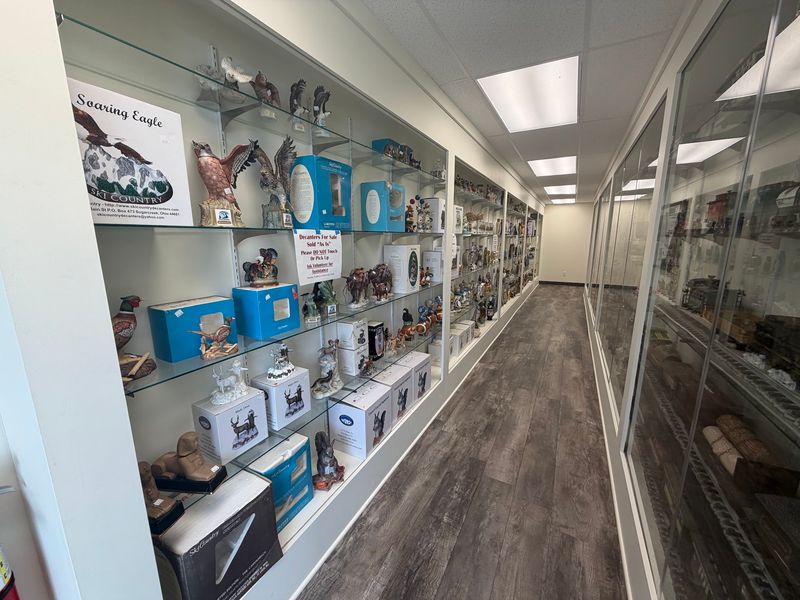
Granville is already known for preserving a slice of old Tennessee with its cluster of antique shops and historic storefronts, but the Whiskey Decanter Museum takes small-town quirkiness to another level entirely. This specialized collection focuses on decorative whiskey bottles and decanters, particularly the ornate ceramic pieces that liquor companies produced from the 1950s through the 1980s.
What started as one person’s collecting obsession has become a surprisingly comprehensive look at American consumer culture and marketing history.
The decanters come in every imaginable shape, from classic cars and animals to famous buildings and historical figures. Jim Beam, Wild Turkey, and other distilleries commissioned these special bottles as collectibles, creating limited editions that now command serious money among dedicated collectors.
The museum displays hundreds of examples, organized by theme and manufacturer, with information about their production and cultural significance.
For visitors who aren’t whiskey enthusiasts or collectors themselves, the museum still offers plenty of entertainment value. The sheer variety of designs reveals changing American tastes and interests across several decades.
Some decanters are beautiful examples of mid-century design, while others are wonderfully tacky artifacts of their era. Either way, they provide a window into marketing strategies and consumer trends that have largely disappeared.
Granville itself deserves exploration beyond just the museum. The town has positioned itself as an antique destination, with multiple shops occupying restored buildings along the main street.
The Cumberland River location adds scenic beauty to the historic preservation efforts. After touring the Whiskey Decanter Museum, you can browse for vintage treasures, grab lunch at a local spot, and enjoy the slower pace that defines small Tennessee river towns.
It’s the kind of place where someone decided to celebrate something incredibly specific, and the result is an attraction that makes people smile while teaching them something they never expected to learn.
11. Learn the Story Behind the Cherokee Writing System in Vonore
Sequoyah accomplished something that many linguists consider nearly impossible: he single-handedly created a complete writing system for a spoken language. Born around 1770, Sequoyah was a Cherokee silversmith who became fascinated with the “talking leaves” that white settlers used to communicate through writing.
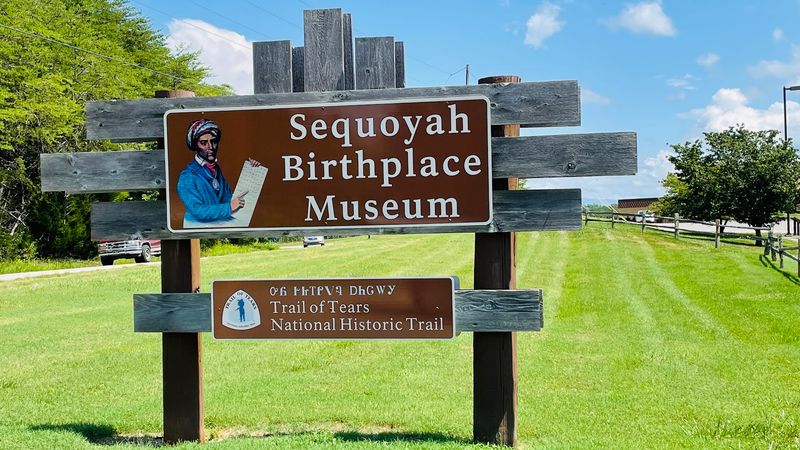
Despite being illiterate in English, he spent years developing a syllabary of 86 characters that represented all the sounds in the Cherokee language. The Sequoyah Birthplace Museum in Vonore tells his remarkable story and explores Cherokee culture and history in East Tennessee.
The museum sits near Sequoyah’s traditional birthplace in the Overhill Cherokee territory, an area rich with Native American history that predates European settlement by thousands of years. Exhibits cover Cherokee daily life, spiritual beliefs, political structures, and the tragic removal period that culminated in the Trail of Tears.
Sequoyah’s syllabary receives special attention, with displays showing how quickly it spread through Cherokee communities once introduced. Within just a few years, the Cherokee Nation achieved higher literacy rates than the surrounding white population.
What makes Sequoyah’s achievement even more impressive is that he created the syllabary without formal education or knowledge of linguistic principles. He simply observed, experimented, and persisted until he developed a system that worked.
The Cherokee Phoenix, published starting in 1828, became the first Native American newspaper, printed in both Cherokee and English using Sequoyah’s syllabary. His writing system is still used today by Cherokee speakers and learners.
The museum also addresses difficult history honestly, including the forced removal of Cherokee people from their ancestral lands and the lasting impacts of colonization. It’s educational without being preachy, presenting historical facts and Cherokee perspectives that often get overlooked in traditional American history narratives.
For anyone interested in linguistics, Native American history, or Tennessee’s complex cultural heritage, this museum offers essential context and celebrates an intellectual achievement that deserves far more recognition than it typically receives.
12. Hike to a Tunnel Carved Through a Bluff in Kingston Springs
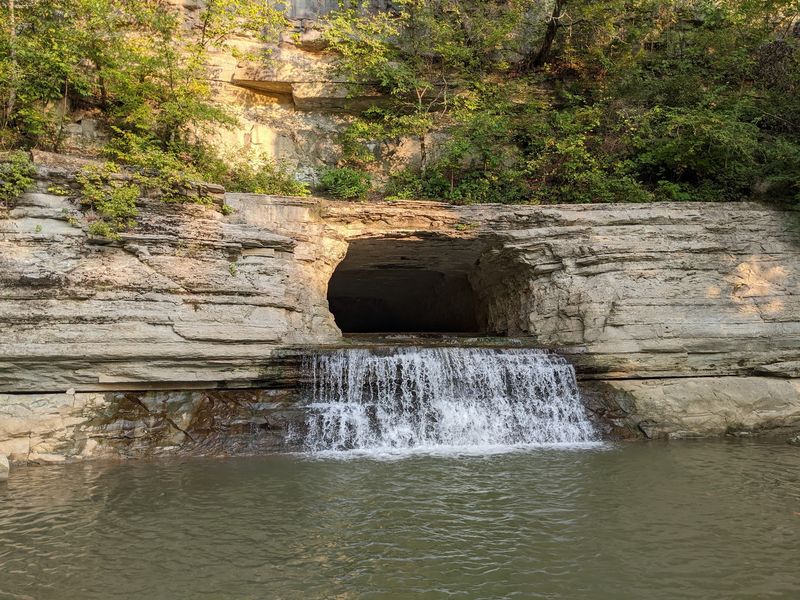
The Narrows of the Harpeth holds one of Middle Tennessee’s most unusual historical sites: a 50-foot tunnel hand-carved through solid limestone in the early 1800s. Montgomery Bell, an iron industrialist, directed enslaved workers to dig this passage to redirect the Harpeth River and power his forge operations.
The engineering required to accomplish this with only hand tools and black powder blasting is staggering to consider. Today, the tunnel and surrounding area form part of Harpeth River State Park, offering hiking, paddling, and a tangible connection to Tennessee’s industrial past.
The hike to reach the tunnel is relatively easy, following a trail that parallels the river through hardwood forest. The path offers nice views of the Harpeth as it winds through the limestone bluffs that characterize this section of the river.
When you reach the Narrows, you’ll see where the river makes a dramatic bend, nearly circling back on itself before continuing downstream. The tunnel cuts through the narrow neck of land, creating a shortcut that once diverted water to power Bell’s iron forge.
You can walk through the tunnel, which is tall enough to stand in and wide enough for comfortable passage. Water still flows through during wet periods, so expect damp conditions and possibly ankle-deep water depending on recent rainfall.
The experience of standing inside this hand-carved passage, knowing it was created more than 200 years ago without modern machinery, creates a powerful sense of historical connection.
The park offers additional trails and river access for paddlers who want to experience the Narrows from water level. Canoeing or kayaking this section means navigating around the peninsula that the tunnel bypasses, giving you perspective on why Bell chose to dig through rather than work around the river’s natural course.
It’s not the most famous state park in Tennessee, which means it stays relatively uncrowded even on nice weekends. For anyone interested in industrial history, geology, or just finding a peaceful spot along a pretty Middle Tennessee river, the Narrows of the Harpeth delivers on all counts.
13. Find the World’s Largest Cedar Bucket in Murfreesboro
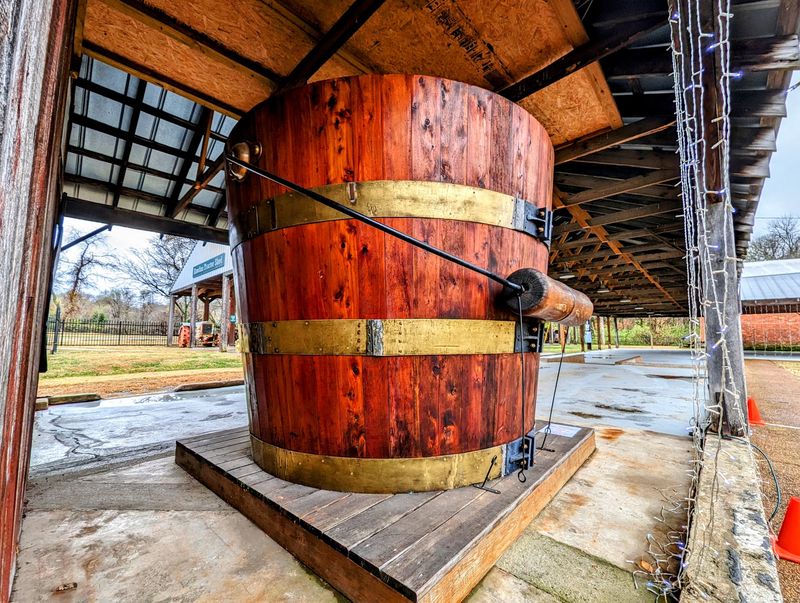
Murfreesboro’s claim to roadside attraction fame is exactly what it sounds like: an enormous cedar bucket that stands as a monument to local industry and small-town pride. The bucket measures 10 feet tall, stretches 8 feet across, and weighs over a ton.
It was built in 1887 to advertise a cedar bucket manufacturing company that operated in the area, capitalizing on Middle Tennessee’s abundant cedar forests. The oversized bucket served as a advertisement that was impossible to miss, drawing attention to the company’s products in an era before modern marketing techniques.
The original bucket deteriorated over the decades, but community members recognized its historical and cultural value. A replica was constructed and placed in a prominent location where visitors can easily find and photograph it.
The bucket represents an era when cedar bucket manufacturing was serious business in this part of Tennessee, with multiple companies producing everything from water buckets to churns for household and farm use.
Like many oversized roadside attractions, the bucket’s appeal lies partly in its absurdity and partly in what it represents about American roadside culture. These giant objects served as pre-billboard advertising, using scale and novelty to capture travelers’ attention.
The cedar bucket fits into a broader tradition of towns celebrating local industries through outlandish monuments, from giant balls of twine to enormous fruit sculptures.
Visiting the bucket won’t take long, but it makes for a fun photo opportunity and a quirky addition to any Murfreesboro itinerary. The town has plenty of other attractions, including significant Civil War history sites and the Stones River National Battlefield, so the bucket can easily be incorporated into a broader day of exploration.
It’s the kind of attraction that makes people smile, snap a picture, and appreciate the creative ways that communities celebrate their heritage. The fact that Murfreesboro has preserved and honored this unusual piece of local history says something positive about the town’s character and its willingness to embrace the quirky alongside the serious.
14. Explore the Remains of a Smoky Mountain Ghost Town in Elkmont
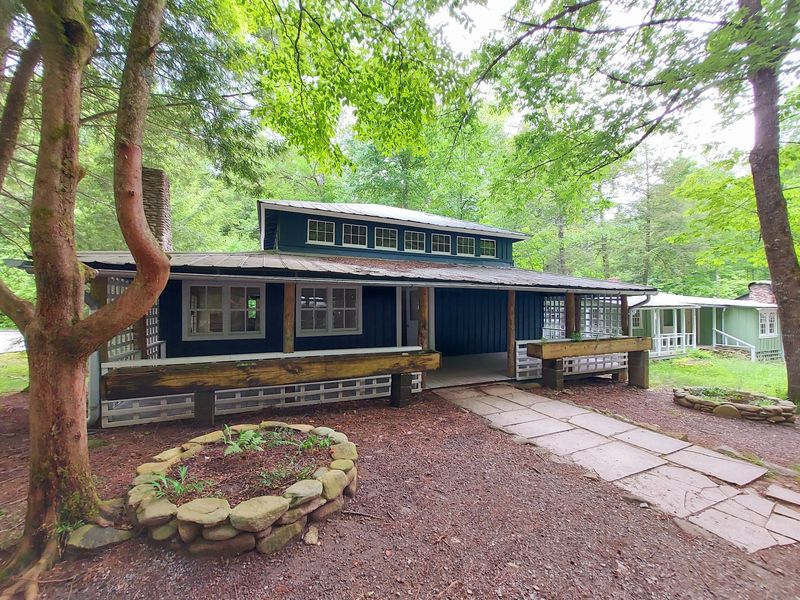
Before the Great Smoky Mountains became a national park, Elkmont thrived as a logging town and later transformed into an exclusive vacation community where wealthy families built summer cottages. The area’s transition from industrial site to resort destination to abandoned ghost town tells a fascinating story about changing land use and the complicated process of creating America’s most visited national park.
Today, visitors can wander among the remaining structures, some restored and others left in various states of decay, creating an atmospheric glimpse into the mountains’ pre-park history.
The Wonderland Hotel, once the centerpiece of Elkmont’s resort era, stood empty for decades before the Park Service stabilized it. While it no longer operates as a hotel, the building has been preserved as a historic structure.
The surrounding cottages, built by the Appalachian Club and Wonderland Club members, range from fully restored to barely standing. Some have been stabilized to prevent further deterioration, while others remain as they were when abandoned, with nature slowly reclaiming them.
Walking through Elkmont feels like exploring a place frozen between past and present. The structures sit among mature forest, with trees growing through porches and vines covering walls.
It’s beautiful in a melancholy way, representing both the privilege of those who could afford mountain retreats and the democratic ideal of public lands that eventually replaced private ownership. The Park Service offers interpretive information about Elkmont’s history, explaining the legal battles and compromises that allowed some families to retain lifetime leases even after the park was established.
The best time to visit is during the synchronous firefly viewing season in late spring, when Elkmont becomes the park’s primary location for watching this natural phenomenon. The combination of historic structures and thousands of fireflies blinking in perfect coordination creates an almost magical atmosphere.
Even outside firefly season, Elkmont offers a quieter alternative to the park’s busiest areas, with hiking trails leading deeper into the mountains and the Little River providing a scenic backdrop. It’s a reminder that the Smokies have layers of human history beneath the wilderness image, and that creating protected public lands required complex negotiations and sacrifices from the people who lived here before the park existed.
15. Visit an Elephant Sanctuary’s Discovery Center in Hohenwald
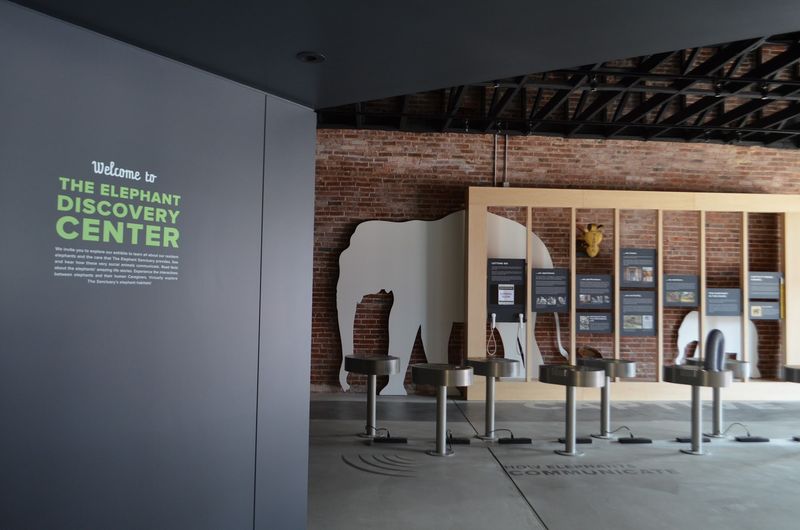
The Elephant Sanctuary in Tennessee operates as a refuge for retired elephants from zoos and circuses, providing them with natural habitat and specialized care for the rest of their lives. The sanctuary spans over 3,000 acres of protected land in Hohenwald, making it the largest natural-habitat elephant refuge in the United States.
The elephants themselves aren’t available for public viewing, which is intentional and central to the sanctuary’s mission of prioritizing elephant welfare over human entertainment. Instead, visitors can learn about the elephants and the sanctuary’s work at the Discovery Center in downtown Hohenwald.
The Discovery Center features exhibits about elephant biology, behavior, intelligence, and the challenges they face in captivity and in the wild. Interactive displays explain the differences between African and Asian elephants, the complex social structures of elephant herds, and the physical and psychological needs that sanctuaries work to meet.
Video feeds occasionally show the sanctuary’s residents, though these are carefully managed to avoid disturbing the elephants. The center also addresses the ethical questions surrounding elephant captivity and the entertainment industry’s historical use of these intelligent animals.
What makes the Discovery Center valuable is its educational mission without exploitative viewing. It teaches visitors about elephants while respecting the animals’ need for privacy and dignity.
The sanctuary’s approach recognizes that elephants who spent years performing or living in inadequate zoo conditions deserve retirement from human observation. Staff members are knowledgeable and passionate, answering questions about specific resident elephants and explaining the sanctuary’s daily operations and long-term goals.
The center also includes information about global elephant conservation, habitat loss, poaching threats, and what individuals can do to support elephant welfare. It’s appropriate for all ages, though younger children might be disappointed that they can’t see actual elephants.
The visit works best when you frame it as learning about elephant care and conservation rather than expecting a traditional zoo experience. Hohenwald has embraced its role as elephant sanctuary town, and the Discovery Center serves as an accessible entry point into understanding why this work matters and how Tennessee became home to such an important refuge for these remarkable animals.
Share this story