A Cold War missile site sits within earshot of crashing waves. A five-story observation deck rises above the Pine Barrens near a road most Shore traffic races past.
Down in Cumberland County, an elevated wooden walkway slips into a marsh where the loudest summer visitors may be ospreys and red-winged blackbirds. These are not the Jersey Shore stops advertised by towering billboards or announced by the smell of funnel cake.
They are quieter discoveries hiding between familiar beach towns: maritime museums packed with shipwreck artifacts, conservation beaches left deliberately wild, historic lighthouses surrounded by flowers, and waterfront parks where the Manhattan skyline appears across the bay.
Some require sturdy shoes, a tide check, or a little advance planning.
Others are hiding almost embarrassingly close to places everyone already knows. Together, they reveal a stranger, calmer, and far more interesting side of the coast—one well worth exploring before summer 2026 slips away.
1. Civil Rights Garden – Atlantic City
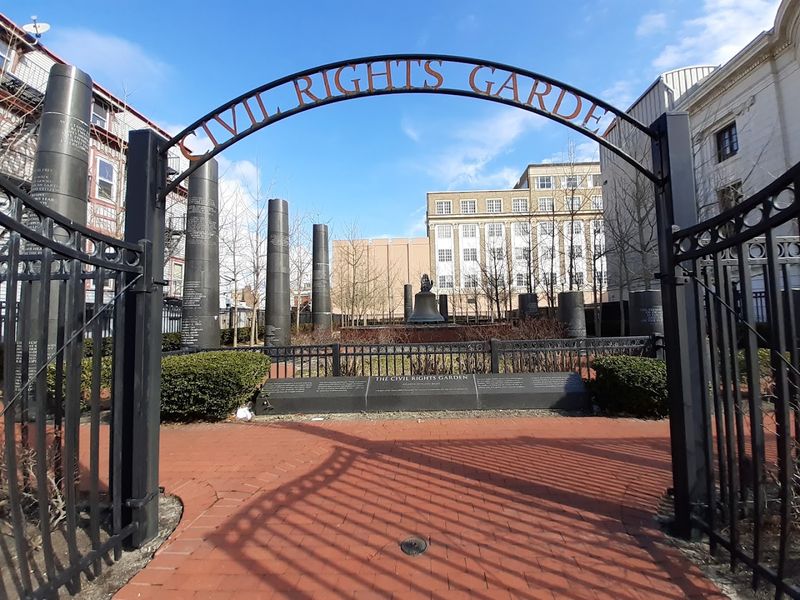
A few blocks from Atlantic City’s casino lights, 11 granite columns rise among gingko trees, flowers, brick paths, and carefully placed sculptures. The contrast is part of what makes this garden so powerful.
While the surrounding city races between beach plans, restaurants, shows, and gaming floors, this small public space asks visitors to slow down and read. Inscriptions throughout the garden recall people, events, and ideas connected to the Civil Rights movement, turning a peaceful walk into a compact history lesson.
Artist Larry Kirkland designed the memorial with historian Clement Price serving as a historical consultant, and the garden opened in the early 2000s as a major Northern memorial dedicated to the struggle for civil rights. Its Atlantic City location also carries extra weight.
The city hosted the 1964 Democratic National Convention, where the Mississippi Freedom Democratic Party challenged an all-white delegation and brought the fight over voting rights onto a national political stage. Visit during the quieter part of the morning, when the paths are less likely to have other people moving through them.
It does not take hours to explore, but rushing defeats the point. Read the words carved into the stone, notice how the columns frame the space, and let this be more than a quick photograph between louder attractions.
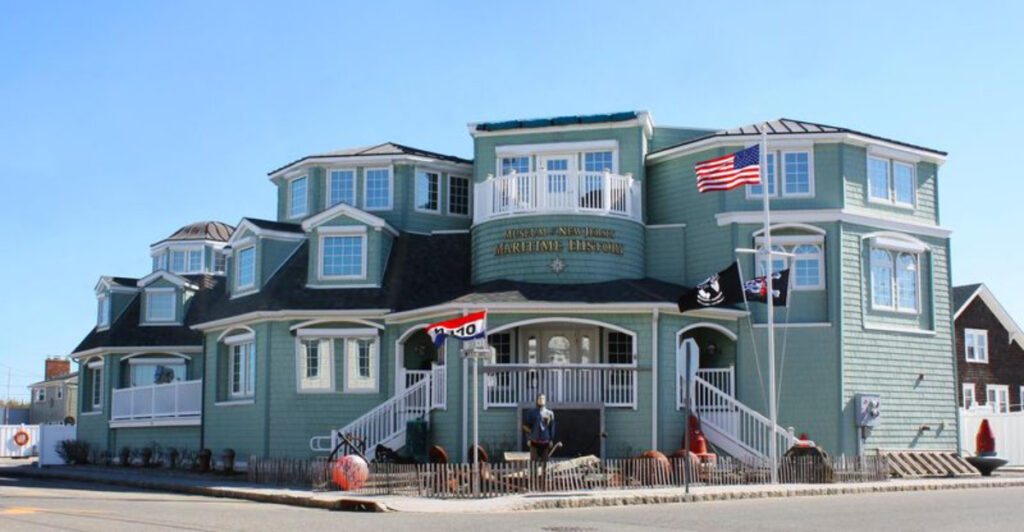
2. New Jersey Maritime Museum – Beach Haven
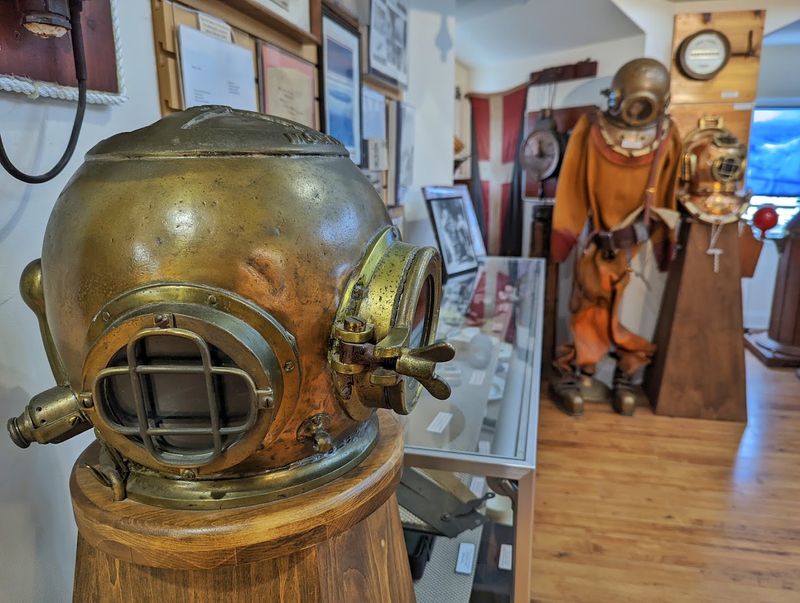
Shipwreck bells, recovered coins, diving equipment, old photographs, and artifacts pulled from beneath the Atlantic fill two floors of this Beach Haven museum.
It is the kind of place where a planned 30-minute visit can quietly stretch into an entire afternoon, especially once the stories behind New Jersey’s offshore wrecks begin piling up.
The collection grew from a long-running effort to document maritime disasters and preserve objects connected to the state’s coastal history. Today, displays cover everything from commercial fishing and recreational diving to historic vessels and Beach Haven’s head boats of the 1930s.
The museum works particularly well on a gray beach day, but saving it only for rain would be a mistake. Its rooms add context to the water surrounding Long Beach Island, reminding visitors that the ocean here has always been a workplace, transportation route, graveyard, and source of local legends.
Allow time to look beyond the largest displays; some of the most interesting finds are tucked into cases crowded with small objects and handwritten explanations. Families visiting in July or August can also watch for Friday children’s programs focused on shellfish and Barnegat Bay.
The museum is open daily from 10 a.m. to 4 p.m. during June, July, and August, making it easy to combine with lunch or an evening in Beach Haven.
3. Jakes Branch County Park – Beachwood
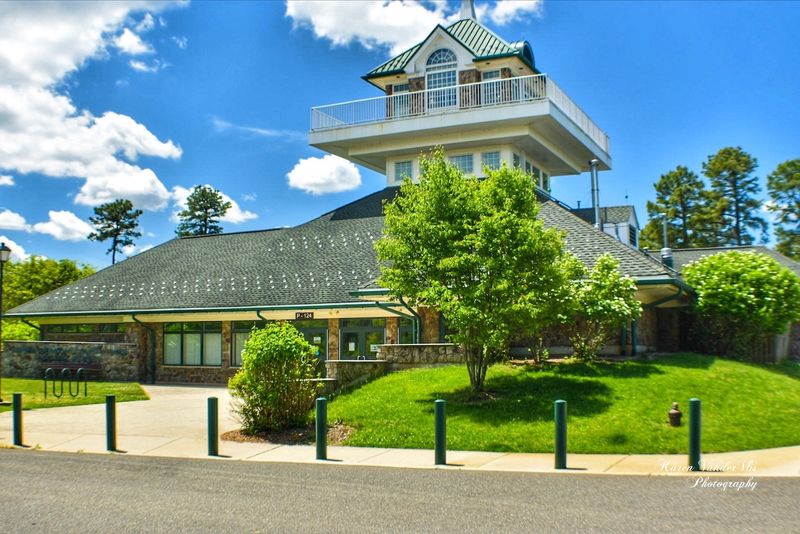
The reward for climbing to the top of the nature center is a view that makes Ocean County look almost completely undeveloped. From an observation deck five stories above the ground, pine forest stretches toward the horizon with barely a boardwalk, condo building, or traffic light in sight.
That panorama alone makes this 400-acre Beachwood park worth finding, but there is plenty to explore after coming back down. The nature center introduces the Pine Barrens through exhibits, live animals, and environmental programs that are accessible without feeling watered down for younger visitors.
Outside, more than eight miles of trails pass through sandy woodland typical of the region. Routes can be combined into a longer hike or kept short enough for a relaxed family walk.
A discovery play trail, regular playground, picnic areas, and open recreation spaces give mixed-age groups options when not everyone wants the same kind of outing.
This is also a useful Shore stop on especially hot days because stretches of the woodland trails stay shaded, although Pine Barrens humidity and ticks still make water and repellent smart additions.
Admission and parking at Ocean County parks are free, and many environmental programs cost nothing or only a small fee. Pick up a current printed trail map at the kiosk rather than relying entirely on an older screenshot saved to your phone.
4. Delaware Bay Museum at the Bayshore Center – Bivalve
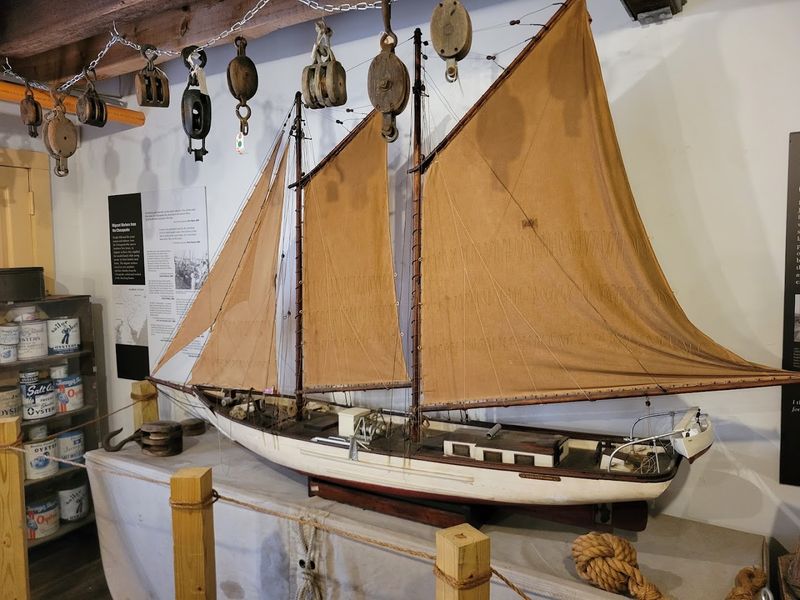
Oyster country looks very different from the polished marinas farther north. In Bivalve, weathered shipping sheds sit beside the Maurice River, surrounded by wetlands and the remnants of an industry that once made neighboring Port Norris an astonishingly prosperous place.
The Delaware Bay Museum occupies historic oyster shipping buildings dating to the early 1900s and tells the story of the workers, boats, communities, and environmental changes tied to the bay’s oyster trade.
Exhibits explain how oysters moved from riverbeds to sorting houses and markets, but the setting does nearly as much work as the displays.
Step outside and the river, wharves, marshes, and old industrial structures make it easier to picture this waterfront in its working prime. The campus is also the home port of the A.J.
Meerwald, a restored 1928 oyster schooner that now serves as New Jersey’s official tall ship and a floating classroom. When sailing schedules line up, pairing the museum with a trip aboard the schooner turns the visit into one of South Jersey’s most memorable history outings.
Museum admission is modest, with reduced pricing for seniors and veterans and free entry for children. Look for special second-Friday evenings held during much of the year, when the museum and other parts of the waterfront campus stay active later than usual.
5. Corson’s Inlet State Park – Ocean City
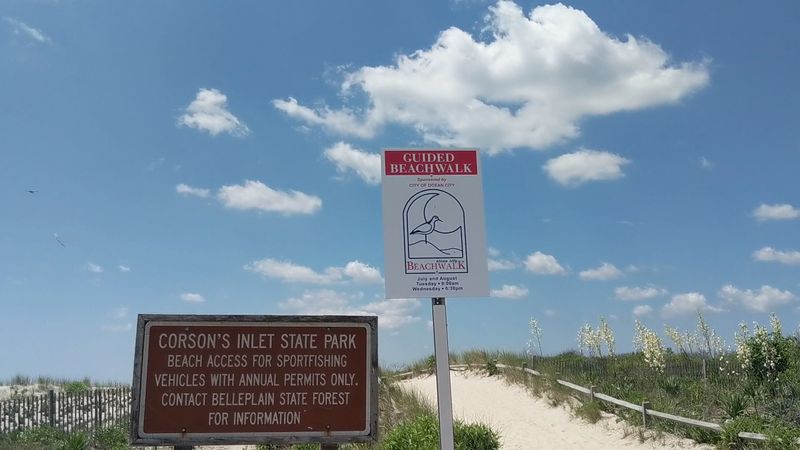
At the southern edge of Ocean City, the neat line of guarded beaches gives way to dunes, tidal water, shifting sand, and an inlet that refuses to look manicured. This protected tract was established in 1969 to preserve one of New Jersey’s last undeveloped stretches of oceanfront, and it still feels pleasantly unruly.
Walkers encounter primary and secondary dunes, overwash areas, marshy edges, and broad views across the inlet toward Strathmere. The outing changes with the tide, which can expose wide flats, narrow the walkable shoreline, or alter the easiest route through the sand.
Fishing, crabbing, boating, hiking, wildlife watching, and sunbathing are popular, but swimming is prohibited. That distinction matters because the water near an inlet can move far more forcefully than it appears from shore.
Come for a walk rather than a conventional beach day, wear shoes that handle soft sand, and expect very little shade. Summer nesting protections may also place fencing around sensitive areas, so give marked sections a wide berth instead of treating them as inconvenient shortcuts.
Photographers and birders often get the most from an early visit before the heat builds and boat activity increases. The park shows what barrier-island coastline looks like when natural forces, rather than beach rakes and rows of umbrellas, are allowed to set the terms.
6. North Brigantine Natural Area – Brigantine
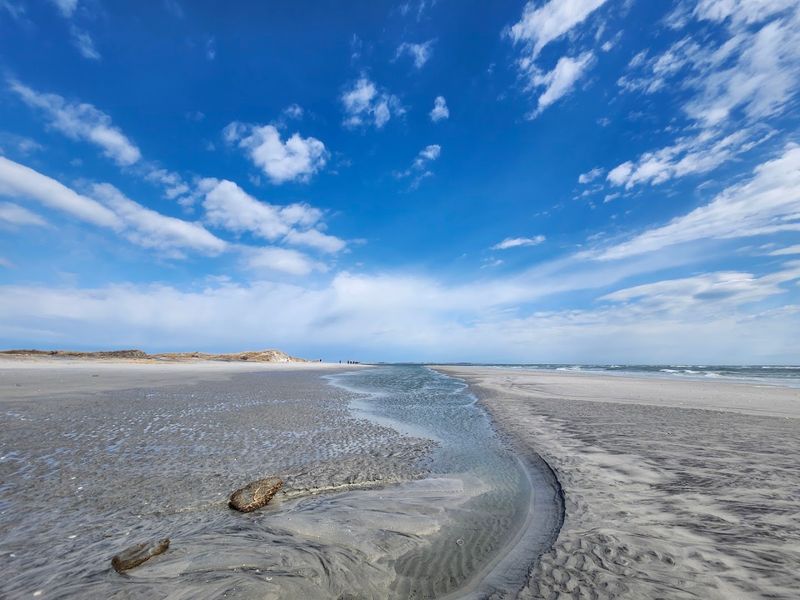
Shells crunch underfoot, dune grass bends in the wind, and the northern end of Brigantine seems to shrug off almost everything associated with a typical resort beach. There are no carefully arranged rows of rental chairs here.
Instead, visitors find an unmanicured shoreline, open shell-covered areas, dunes, and an inlet habitat shaped for wildlife rather than convenience. Beach-nesting birds lay their eggs directly in the sand, while diamondback terrapins use the dune environment for nesting.
That makes the experience special, but it also comes with responsibility. Fencing, temporary restrictions, and marked travel paths are not suggestions; they protect nests and young animals that can be almost impossible to see until someone is too close.
Bring binoculars, walk slowly, and watch the wrack line for shorebirds feeding where the tide has left shells and seaweed behind. The natural area is best approached as a conservation visit with beach scenery, not as a place for loud games or a fully equipped family beach setup.
Conditions and access can shift during nesting season, so read every sign at the entrance before heading out. Even a short walk can feel surprisingly remote, particularly when wind and surf drown out the sounds from the developed part of the island.
Few places demonstrate the Shore’s wild side so close to a busy beach town.
7. Sedge Islands Marine Conservation Zone – Berkeley Township
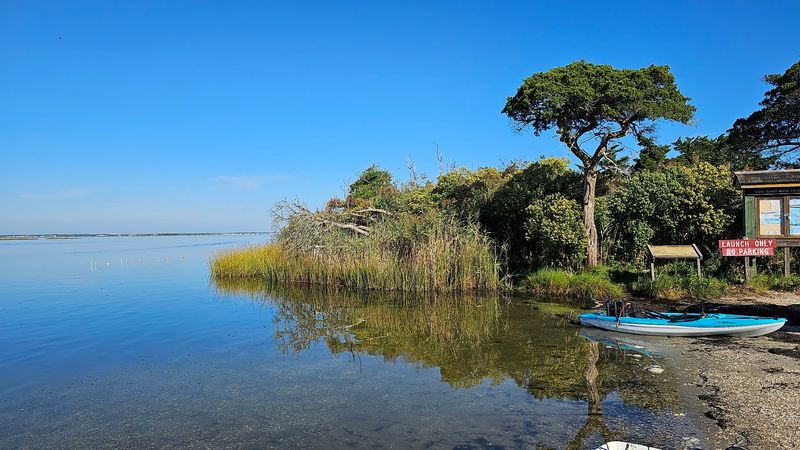
Reaching this corner of Barnegat Bay requires more intention than pulling into a beach parking lot. The protected zone lies beside the southern end of Island Beach State Park and spreads across tidal marshes, narrow creeks, ponds, shallow water, and small islands.
Kayakers and other careful boaters can follow water routes through a landscape that feels far removed from the traffic on the barrier island.
Ospreys are the obvious stars—roughly 30 nesting platforms have been placed around the conservation zone—but peregrine falcons, wading birds, fish, crabs, and other marsh wildlife also depend on the habitat.
Traditional activities such as fishing, clamming, crabbing, and birding remain part of the area’s identity, though regulations are designed to reduce conflicts and protect its fragile resources. Visitors without their own boat should look into scheduled programs at the Sedge Island Natural Resource Education Center.
The center is reached by a short boat ride from Island Beach State Park and hosts educational experiences centered on salt-marsh ecology, conservation, fishing, and clamming. Some programs are intended for specific age groups and require advance registration, so this is not a spontaneous walk-in attraction.
Plan carefully, check wind and tide conditions, and treat the marsh as living habitat rather than scenery. The payoff is one of the most immersive coastal environments available anywhere along the Jersey Shore.
8. Higbee Beach Wildlife Management Area – Lower Township
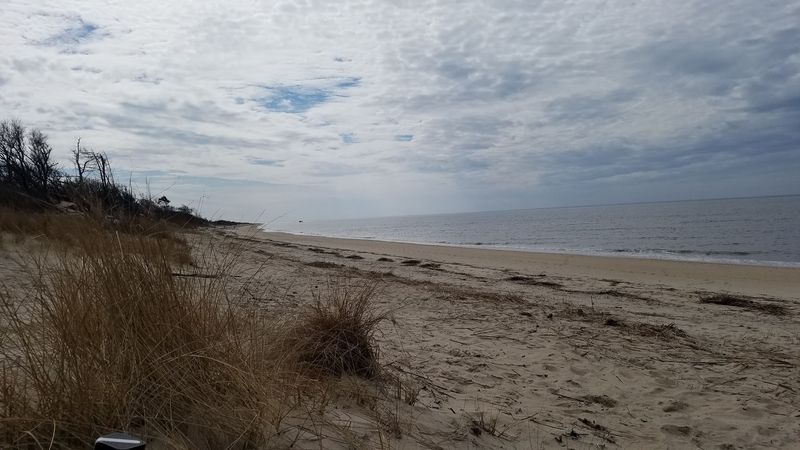
Birders know this Lower Township landscape as one of Cape May’s most valuable migration stops, but the combination of beach, dune, scrub, forest, fields, and wetlands makes it interesting even when binoculars are not involved.
The wildlife management area covers roughly 1,160 acres and includes about a mile and a half of shoreline along Delaware Bay.
During migration periods, enormous numbers of birds concentrate on the Cape May Peninsula before continuing their journeys, using places like Higbee for food and shelter. Summer is quieter than peak fall migration, yet the varied habitat still rewards patient walking and wildlife watching.
There is one major 2026 caveat: portions of the property remain closed for the Pond Creek restoration project, with work expected to continue until approximately December. The project is restoring tidal flow and improving habitat that had been damaged by former industrial activity.
Visitors must use only open trails, parking areas, and shoreline sections, following current closure maps rather than directions from an old hiking post. The parking lot behind Sunset Beach Gifts remains outside the main closure, while another lot near the World War II lookout tower has been affected.
Because conditions can change as construction progresses, check current notices before leaving home. Higbee remains worth including precisely because restoration, wildlife protection, and public access are all visible parts of its story.
9. Strawberry Avenue Boardwalk – Commercial Township
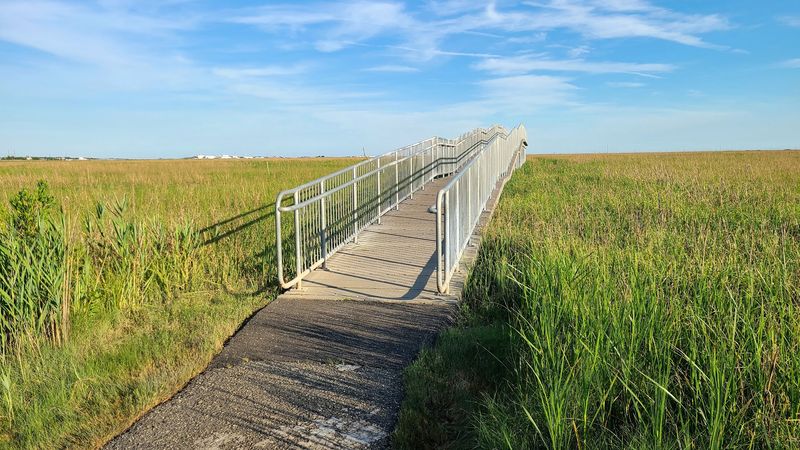
A narrow road running toward the marsh ends at a small parking area and a wooden path that seems to head directly into the reeds. This is the Strawberry Avenue access to the Commercial Township Wetland Restoration Site, one of the quietest walks near the Maurice River.
An elevated boardwalk crosses the wetland and reaches an observation area where visitors can scan broad marsh views without slogging through mud or disturbing the habitat below.
Egrets, herons, ospreys, marsh wrens, and red-winged blackbirds are among the creatures that may appear, though the pleasure comes as much from the openness as from checking species off a list.
Wind moves visibly across the grass, boats pass in the distance, and Bivalve’s working-waterfront history feels close even when the boardwalk is empty. The site is remote enough that planning ahead is sensible.
Cell service can be inconsistent, the dirt parking area is small, and there are no boardwalk arcades, snack stands, or beach-town conveniences waiting nearby. Bring water, sun protection, insect repellent, and binoculars.
Morning and late afternoon generally offer softer light and more comfortable temperatures than the middle of a July day. Pair the walk with the nearby Bayshore Center and Delaware Bay Museum to turn a tucked-away boardwalk into part of a fuller exploration of Cumberland County’s maritime landscape.
10. Pearl Beach – Cape May Point
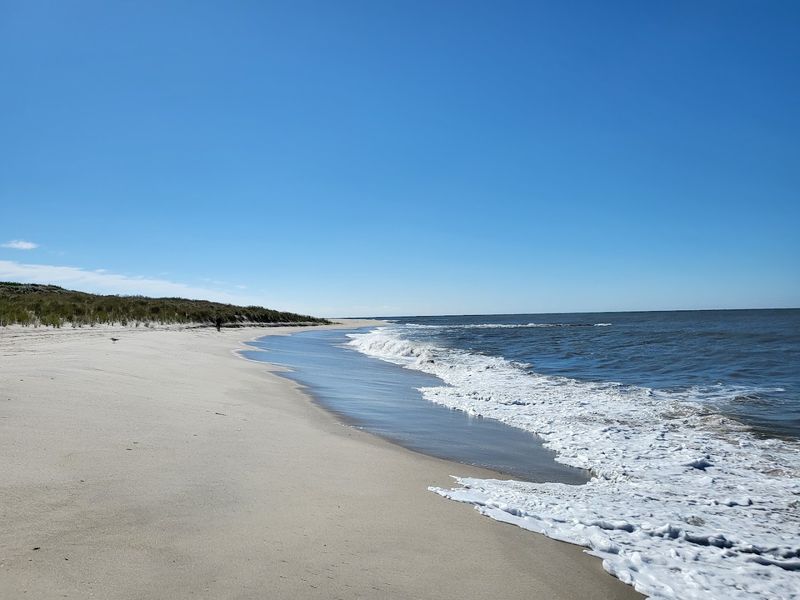
Sunset crowds often gather just down the road, leaving this Cape May Point access feeling like the neighbor that never learned to advertise itself. Reached from Pearl Avenue, the beach offers a quieter alternative to the borough’s more popular family gathering spots while still receiving lifeguard coverage during the 2026 season.
There is no commercial boardwalk pressing against the dunes, and the residential surroundings help keep the experience low-key. Settle in with a book, watch for dolphins, or stay late enough to see the sky change over the water.
Because Cape May Point curves toward the Delaware Bay side of the peninsula, evenings can produce especially warm light and broad western views.
The borough itself has noted that Pearl and Surf beaches tend to be less crowded than St. Peter’s and Brainard/Stites, making this a strong choice for visitors who want guarded water without squeezing into the busiest access points.
Beach tags are required during the borough’s enforcement season, so purchase the appropriate daily, weekly, or seasonal badge rather than assuming a quieter entrance means a free one. Parking is limited and woven into the small residential community; arrive early, follow posted restrictions, and avoid blocking driveways.
Pearl Beach is not secret because it is unreachable. It is secret because so many people continue driving toward the places they have already heard about.
11. Stone Harbor Point – Stone Harbor
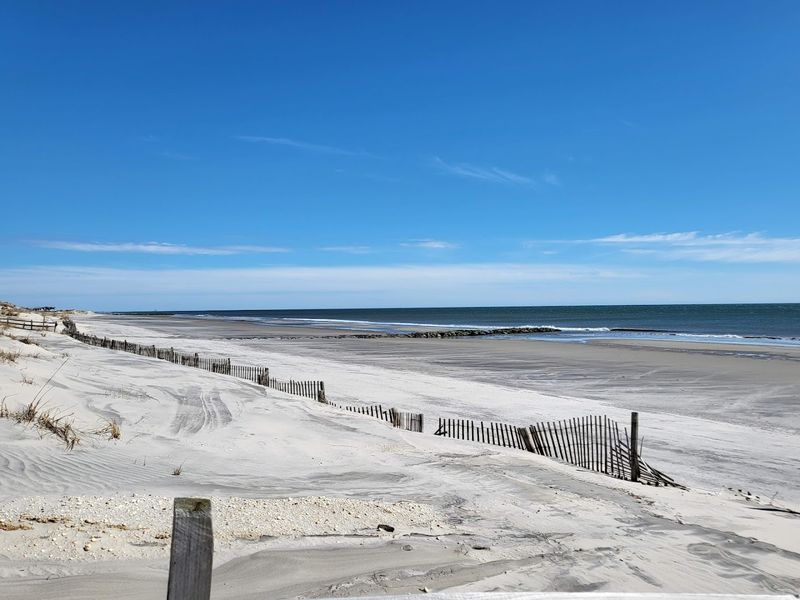
The island seems to loosen its collar at the southern end of Stone Harbor. Streets and houses fall away, leaving a broad conservation area where sand, inlet water, dunes, and nesting birds dominate the view.
This is not an overflow swimming beach, and treating it like one misses both the appeal and the rules. Swimming and dogs are prohibited, while nature walking, fishing, birdwatching, and beachcombing are encouraged in areas open to visitors.
Beach tags are still required, and temporary fencing protects nesting colonies and resting shorebirds. Common terns and black skimmers are among the birds that use the point, creating plenty of activity for anyone willing to stop and watch instead of charging down the shoreline.
Bring binoculars, a shell bag, and shoes suitable for a longer walk through soft sand. The exposed location can become intensely hot by midday, so mornings and evenings are more comfortable and usually better for wildlife observation.
Anglers often work the inlet edge, while beachcombers search areas where currents collect shells and driftwood. Stay outside roped-off zones even when the open beach looks empty; eggs and chicks blend remarkably well with sand and shells.
Stone Harbor Point offers an increasingly rare Shore experience: a dramatic piece of coastline where recreation remains clearly secondary to the needs of the habitat.
12. Fisherman’s Cove Conservation Area – Manasquan

Manasquan gets plenty of summer attention, but the final undeveloped tract along its inlet still surprises visitors who expect every waterfront acre here to be lined with houses or businesses. The 55-acre conservation area combines a sandy shoreline, fishing access, natural habitat, and an easy place to walk beside the water.
Sunbathers use the beach, anglers cast toward the inlet, kayakers arrive near the shoreline, and dog owners have access to a designated section. Dogs must remain leashed throughout the park, and another portion of the beach is kept dog-free for visitors who prefer more separation.
The boundaries are posted, making it worth checking the signs before choosing a spot. Families can watch for free Tidal Tuesdays programs running on select summer mornings, when naturalists pull a seine net through the cove and examine the small creatures living in the shallows.
Parking requires more strategy than the walk itself. A limited number of signed, free conservation-area spaces sit at the south end of Manasquan’s gravel lot, but they have a two-hour limit.
The surrounding municipal spaces may require payment during beach season and can fill quickly. Arriving early removes much of the hassle.
Once parked, the cove provides a refreshingly unpolished counterpoint to the nearby oceanfront—a place to watch boats, feel the inlet breeze, and linger without needing a full beach-day production.
13. Cattus Island County Park – Toms River
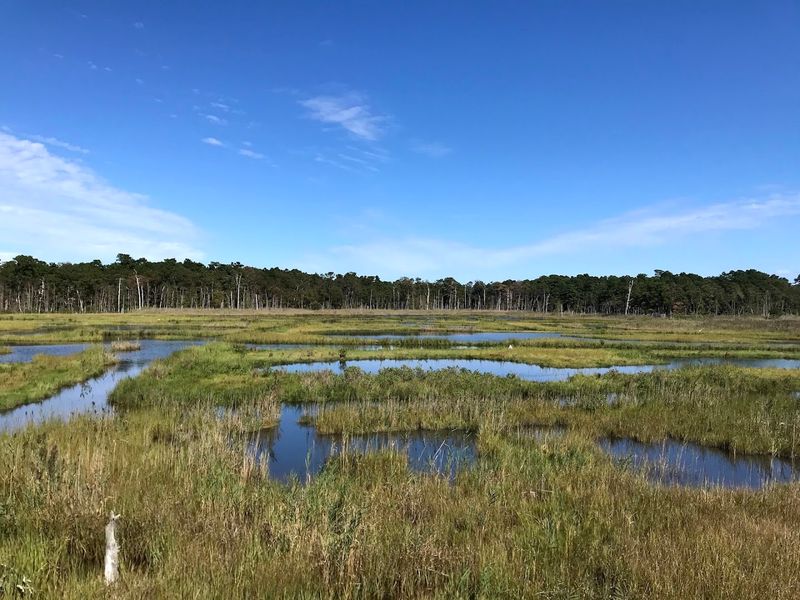
Salt air reaches the trails long before the shoreline comes into view at this 530-acre preserve on Silver Bay. The park’s paths move through maritime forest, wetlands, and open salt-marsh scenery, allowing visitors to experience several coastal habitats without committing to a difficult hike.
Some routes are short and forgiving, while others can be linked for a longer walk toward bay overlooks. At the center of the park, the Cooper Environmental Center provides exhibits, live-animal encounters, restrooms, and educational programs covering the reptiles, birds, plants, and tidal ecosystems found around Ocean County.
A butterfly garden adds an easy stop during summer, when flowering plants attract pollinators just outside the main facilities. The park works especially well for families because a visit can be adjusted on the fly.
Spend most of the time indoors during a hot spell, take a quick nature walk, or head deeper onto the trail system when the weather cooperates. Birdwatchers should scan the marsh for ospreys and wading birds, while younger visitors may be more interested in turtles and snakes discussed at the center.
Admission and parking are free. Pick up a printed map before starting because the trail network has several junctions, and county officials recommend using the newest version.
Bug spray is not optional in humid weather, but the marsh views are worth sharing space with a few determined mosquitoes.
14. Cedar Bonnet Island Environmental Trail – Stafford Township
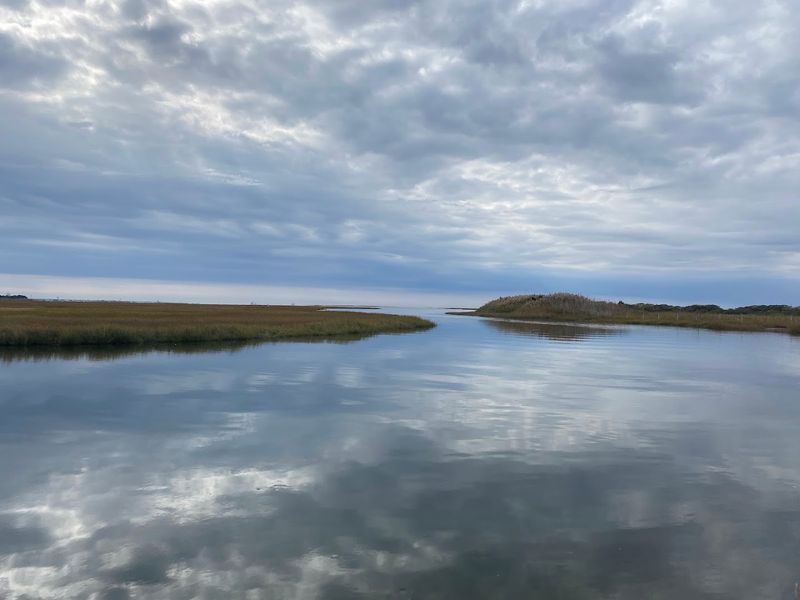
Route 72 traffic streams toward Long Beach Island while this refuge trail quietly waits beside the causeway. Drivers who know the turn can leave the beach-bound rush and step into a landscape of tidal marsh, coastal shrubs, channels, and open bay views within minutes.
Part of the Edwin B. Forsythe National Wildlife Refuge, the Cedar Bonnet Island trail forms a short, accessible loop suitable for walkers who want scenery without a demanding hike.
The route is under two miles and includes viewing areas, fishing access, a pavilion, and places to pause over the marsh. Sea lavender and other wetland plants add color in season, while black ducks, seaside sparrows, egrets, ospreys, and other coastal birds use the surrounding refuge.
Because much of the terrain is open, shade is limited and summer sun reflects strongly from the water. Bring a hat and water even though the walk is brief.
The entrance is easy to miss amid causeway traffic, particularly when approaching from Long Beach Island, where drivers use a designated U-turn between bridges to reach the trail. Read the directions before the trip rather than trying to improvise at highway speed.
This is an ideal first or final stop for an LBI day: close enough to the main route to require little detour, yet calm enough to reset the mood after miles of traffic.
15. Hereford Inlet Lighthouse and Gardens – North Wildwood
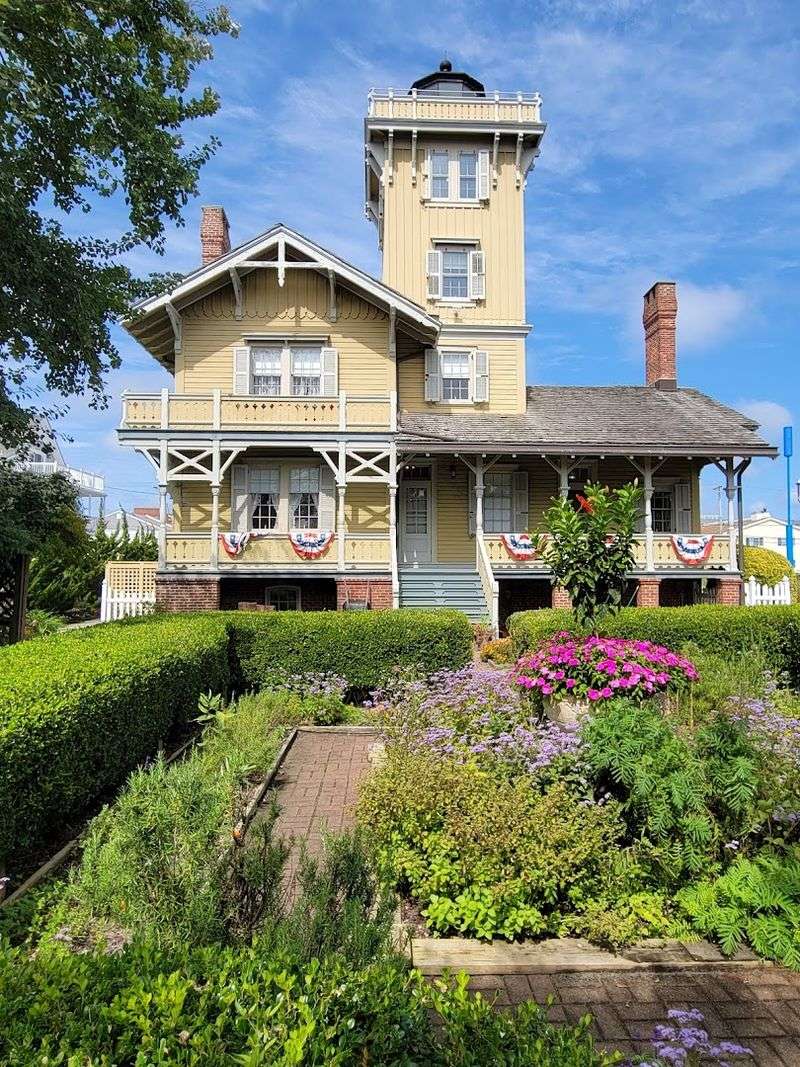
Victorian gingerbread trim makes this North Wildwood lighthouse look more like an elaborate seaside home than a stern navigation tower. That resemblance is intentional: the wood-frame structure was designed in a residential style and first illuminated in 1874 to guide vessels near the entrance to Hereford Inlet.
Its architect, Paul J. Pelz, later became known for his work on the Library of Congress.
Visitors can explore the lighthouse and then wander through a Victorian-style park containing more than 200 species of plants and flowers. The garden is not an afterthought.
Curving paths, benches, a gazebo, seasonal blooms, and views toward the inlet make it one of the most pleasant free stops in the Wildwoods. From the grounds, walkers can continue onto the seawall and AngleseaWalk for a breezy coastal stroll.
Photographers should come early, when the garden is quieter and the morning light catches the building’s red roof and cream-colored details. Admission to the lighthouse is free, and it is scheduled to open daily from 9 a.m. to 5 p.m., with the final tour beginning at 4.
The gardens remain accessible from dawn until dusk. That generous schedule makes the site easy to fit around breakfast, beach time, or dinner without turning the day into a race.
16. Cape May Point Arts and Science Center – Cape May Point
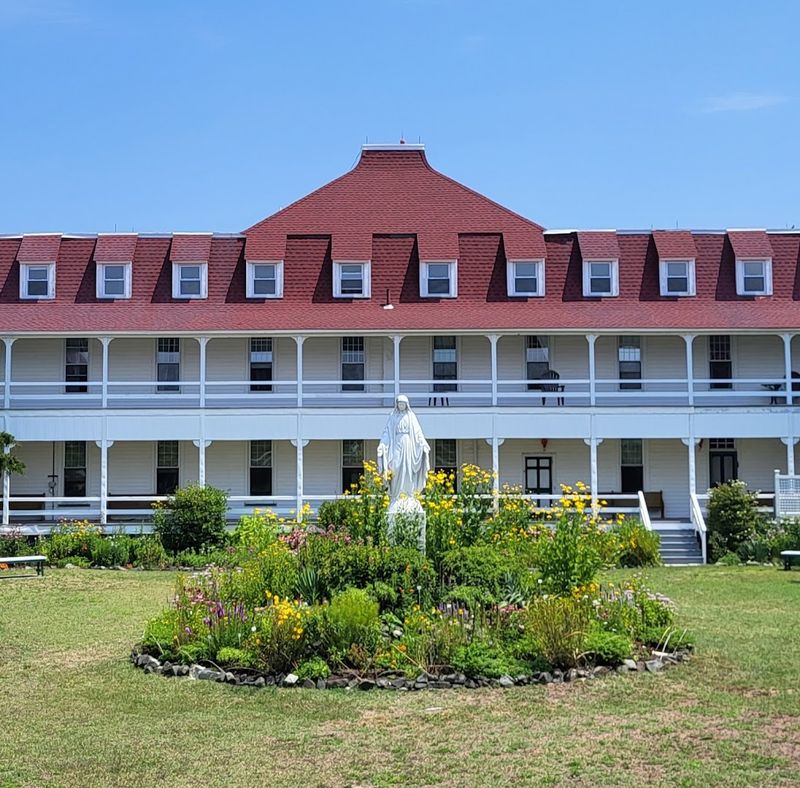
Art galleries, monarch research, stargazing, native plants, concerts, and nature workshops share one address near the southern tip of the state. That unlikely mix is exactly what makes the center interesting.
Rather than operating as a conventional museum with a fixed collection, it brings creative and scientific programs together in a landscape where migration, coastal weather, and conservation are impossible to ignore.
Summer 2026 offerings include guided tours, stargazing events, nature journaling, art experiences, and workshops examining patterns found in the natural world.
Visitors arriving before a scheduled tour can explore the native pollinator garden, which connects the center’s educational mission to something visible and alive outside the building. The program calendar matters here; this is not a place where every activity runs continuously from morning to evening.
Check dates, reserve a spot when registration is required, and build the visit around a particular tour, lecture, concert, or workshop. The center’s location on Lehigh Avenue also makes it easy to combine with Cape May Point’s beaches, birding areas, or a walk near the lighthouse.
Families with curious children will find plenty to discuss, but the programming is not aimed only at kids. Adults interested in local ecology, painting, climate, photography, or astronomy can find equally strong reasons to visit.
It is a reminder that Shore culture can involve far more than sand and seafood.
17. Tuckerton Seaport and Baymen’s Museum – Tuckerton
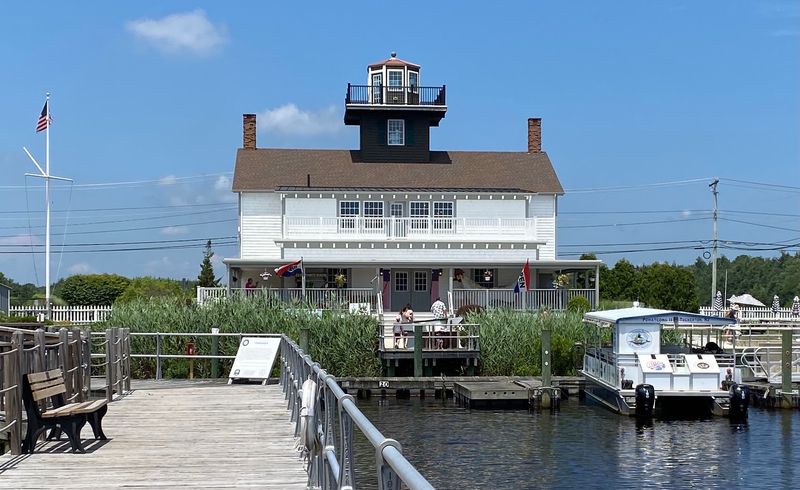
Barnegat Bay traditions take physical form across this 40-acre waterfront campus, where decoy carving, boatbuilding, fishing, folklore, and marsh ecology are treated as living culture rather than dusty history.
Replica and historic buildings line the grounds, and interactive exhibits introduce the people who made their living from South Jersey’s bays, creeks, forests, and wetlands.
Visitors can climb the lighthouse-style building, see aquatic displays, browse craft demonstrations, and learn why sneakboxes, carved decoys, basketry, and other regional skills mattered. The best visits also include time on the water.
Creek tours aboard the Pohatcong II reveal Tuckerton from a different angle, while scheduled ferry trips connect the seaport with Beach Haven across the bay. Departure points vary, so confirm exactly where a booked trip begins rather than assuming every boat leaves from Tuckerton.
During summer 2026, the museum grounds are open daily from 10 a.m. to 4 p.m. General admission is inexpensive, with free entry for young children, active military members, veterans, and museum members.
Boat experiences cost extra and should be reserved ahead during busy periods. Leave enough time to walk the entire property; people who visit only the main building miss much of the seaport’s character.
This is one of the Shore’s best places to understand that local history did not happen only on oceanfront boardwalks.
18. Sandy Hook Nike Missile Site – Highlands

Beach towels and Cold War missiles make strange neighbors, yet both belong to Sandy Hook’s history. During the 1950s, military planners built Nike missile installations here as part of the air-defense network protecting New York City from Soviet bomber attacks.
Radar equipment at the Integrated Fire Control area tracked potential targets, while missiles waited at a separate launch site farther along the peninsula.
Guided programs explain how crews coordinated the two locations and how nuclear-capable Nike Hercules missiles could be raised from underground storage during periods of heightened alert.
The missiles now displayed at the launch area are representative examples rather than original Sandy Hook weapons, but their scale still lands with a thud.
Tours are the best way to understand the site because much of its significance lies in procedures, technology, and stories that are not obvious from looking at concrete pads and aging military buildings.
Some programs include a car caravan between locations, while radar-site open houses may feature veterans who once worked within the Nike system. Dates are limited and can change, so consult the current park calendar before making a special trip.
Even without a tour, seeing the launch area adds an unsettling layer to a Sandy Hook day. One moment offers dunes and seabirds; the next reveals how seriously the military once prepared for an attack on the metropolitan skyline visible across the water.
19. Twin Lights State Historic Site – Highlands

From the bluff above Highlands, New York Harbor, Sandy Hook, and the Atlantic approaches spread out beneath two brownstone towers joined by a fortress-like central building. The view explains immediately why this ridge became such an important navigational site.
For generations, the lights helped vessels identify their position before entering one of the busiest harbors in the country.
Although the station no longer guides ships, its museum explores lighthouse keeping, maritime navigation, technological experiments, and the lives of the people responsible for keeping the beacons operating from sunset to sunrise.
The site also holds several surprises beyond lighthouse history. Early military radar experiments took place here, and an 1893 ceremony is associated with the first official public recitation of the Pledge of Allegiance.
Tower access varies, so check current operating information before arriving with a climb as the main goal. Even when only part of the complex is open, the grounds and overlook justify the drive up the hill.
The buildings are listed on the state and national historic registers, and the station is recognized as a National Historic Landmark. Pair the visit with lunch in Highlands or continue to Sandy Hook, but resist treating Twin Lights as a five-minute photo stop.
The museum’s odd collection of navigation, military, and civic history deserves a slower look.
20. Bayshore Waterfront Park – Port Monmouth
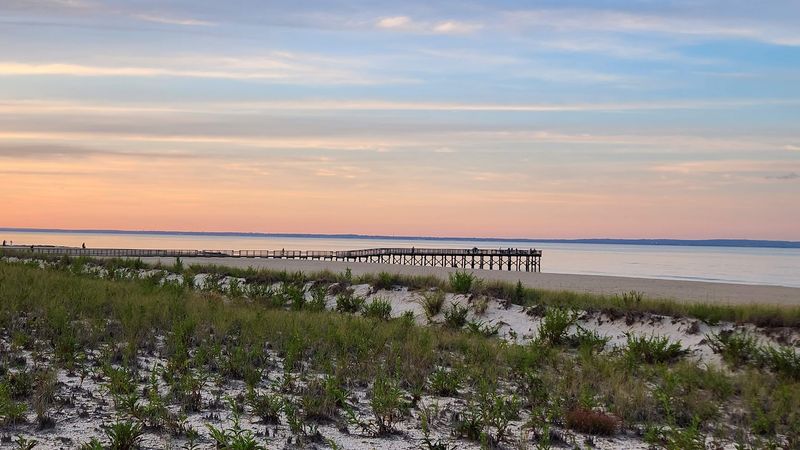
Across Sandy Hook Bay, Manhattan appears as a thin, improbable skyline beyond dunes, marsh grass, fishing boats, and a mile of quiet shoreline. That layered view is the signature of this 229-acre Port Monmouth park, where tidal creeks, maritime shrublands, salt marshes, beach, and city scenery all occupy the same frame.
Anglers head to the fishing pier, walkers follow the shore, and families spread out near the historic Seabrook-Wilson House. Dating in part to the early 1700s, the restored house is one of the oldest surviving buildings in the Bayshore region and now serves as the park’s activity center.
Free open-house hours are scheduled on select days through October 2026, although repairs currently limit tours and interior exhibits. Summer naturalist programs provide another reason to time a visit carefully.
On certain Monday, Wednesday, and Friday mornings, visitors can join free seining sessions and help examine fish, crabs, and other small creatures pulled from the shallows of Sandy Hook Bay. The park opens at 7 a.m., with evening closing times shifting as daylight shortens.
Come near sunset for cooler temperatures and a skyline beginning to glow, or arrive in the morning when the water is calmer and the beach quieter. Bayshore Waterfront Park is neither classic ocean beach nor urban overlook.
It borrows the best elements of both and leaves out most of the crowds.
Share this story