The first surprise is the sound. One minute, you are standing near a city street, a county park lot, or a quiet road that looks like it leads to somebody’s mailbox, and the next you hear water throwing itself over stone like New Jersey has been hiding a secret kingdom behind the deli counter.
That is the fun of waterfall hunting here: the drama often shows up where you least expect it. Some falls roar beside old mill towns and ironworks.
Others slip through hemlock ravines, tumble over mossy ledges, or hide behind university buildings like they are waiting for the right local to point them out. This is not a list of faraway wilderness dreams.
These are real Garden State places with muddy trails, small parking lots, steep stairs, slippery rocks, and views that make the whole effort feel wildly worthwhile.
1. Paterson Great Falls
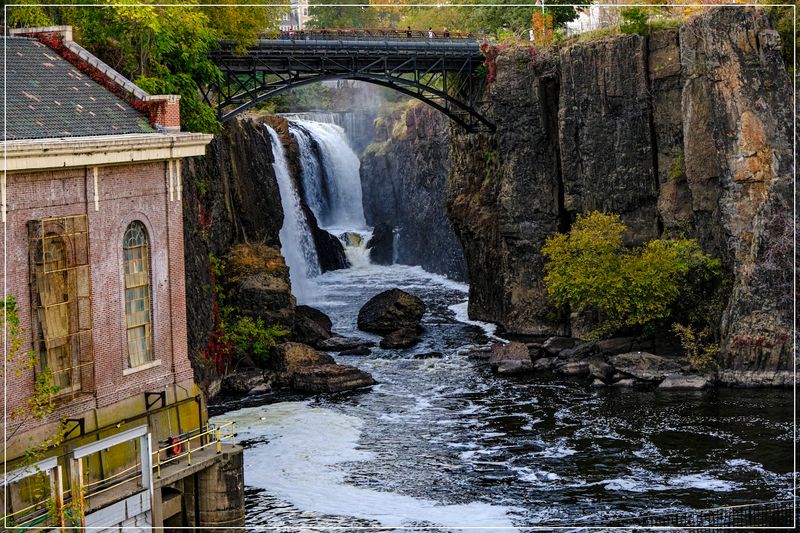
The mist at Paterson Great Falls does not politely drift; it charges upward from the gorge like the Passaic River has something to prove. This is the big, cinematic one, a 77-foot drop in the middle of Paterson that somehow feels both urban and ancient.
You get brick mills, bridges, raceways, roaring water, and that strange Jersey magic where history and grit make the view even better.
The falls were central to Paterson’s rise as America’s first planned industrial city, and Alexander Hamilton’s manufacturing vision still hangs over the place in the best possible way: dramatic, ambitious, and a little loud.
Come after rain if you want the full thunderous version, but even on a quieter day, the scale is impressive. The paved viewing areas make this one of the easiest waterfalls in the state to visit, which is part of its charm.
You do not need hiking boots or a packed trail lunch; you need curiosity, a camera, and maybe a little patience if the overlook is busy. It is the rare waterfall that can anchor both a nature outing and a history-minded afternoon, and it earns its spot because it feels less like a “stop” and more like a New Jersey origin story with spray in the air.
2. Buttermilk Falls
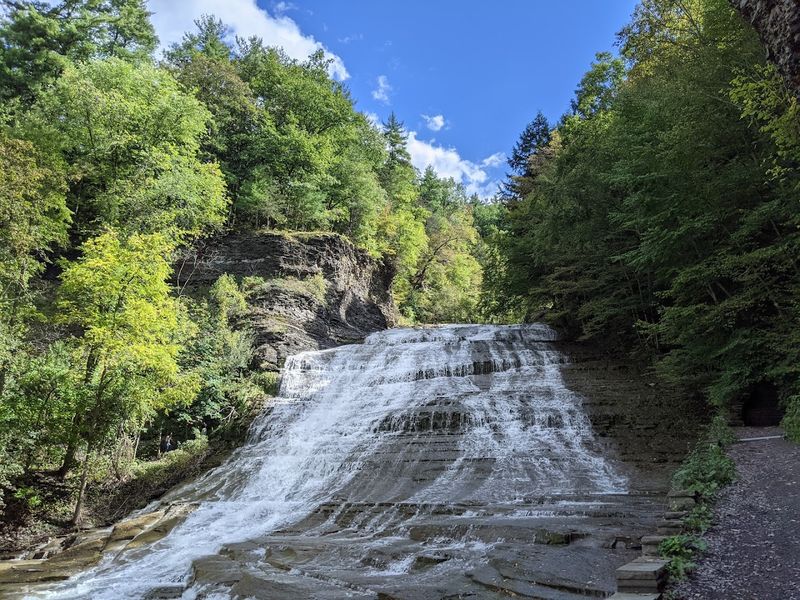
There is a funny little trick at Buttermilk Falls: it feels remote, wild, and almost impossible, and then you realize the main view is basically right by the parking area.
Located near Walpack in the Delaware Water Gap area, this tall, silvery waterfall is one of New Jersey’s most beloved because it gives you instant drama before asking whether you want to work for more.
The water slides down a broad rock face in a white ribbon that looks especially good after rain or during spring runoff, and the stairs beside the falls let you climb for different angles without bushwhacking your way into trouble.
It is often described as New Jersey’s highest easily viewed waterfall, and while waterfall rankings can spark more debate than you would expect, nobody argues that Buttermilk looks the part.
The practical move is to arrive early, especially on nice weekends, because the access feels simple but the parking scene can get very Jersey very fast. Ambitious hikers can continue up toward Crater Lake, Hemlock Pond, and Appalachian Trail connections; casual visitors can admire the falls, take the stairs, and call it a win.
Either way, it has the full fantasy-book entrance: steep woods, rushing water, and a curtain of white dropping through green.
3. Silver Spray Falls
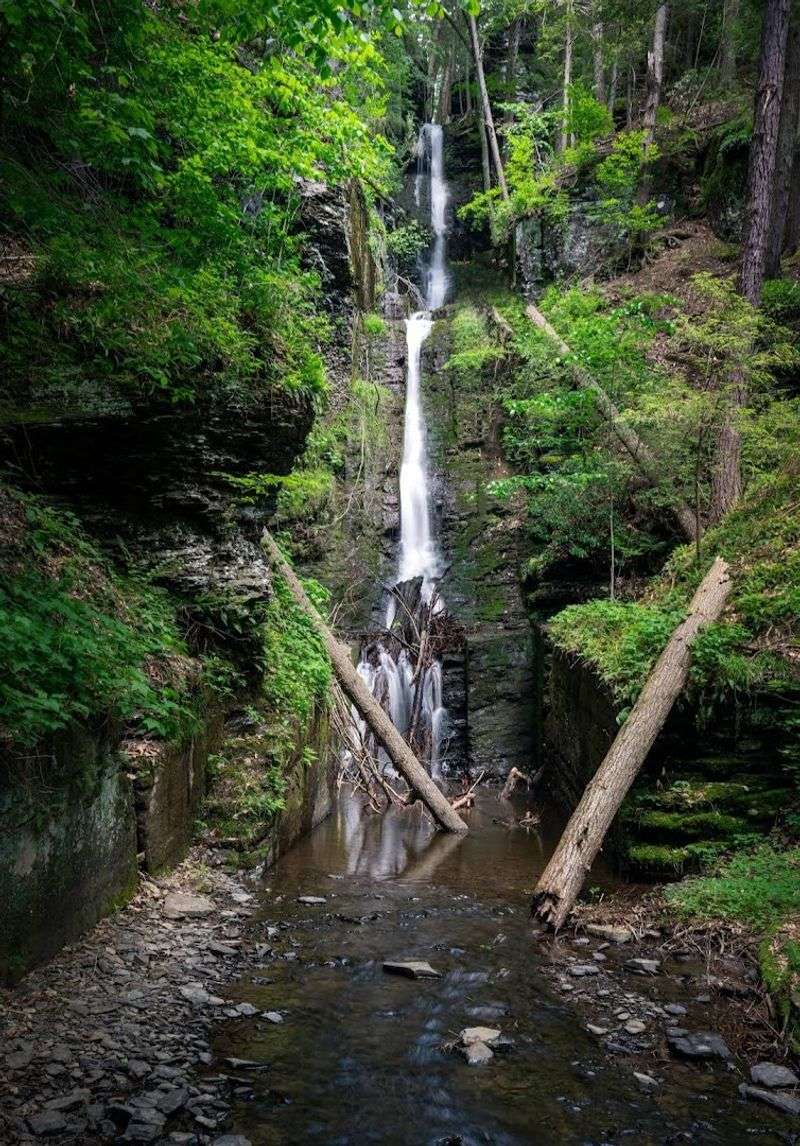
Silver Spray Falls has a name that sounds made up by a woodland sprite, which is fitting because finding it can feel like being let in on a local secret. Also called Hidden Falls, this one sits near Buttermilk Falls, but the experience is completely different.
Buttermilk announces itself from the road; Silver Spray asks you to pay attention. The route is short, but it is not the same as an easy paved stroll, and the path can be faint enough that you will want proper footwear, a map, and a healthy respect for slippery streamside rocks.
What makes it worth including is the mood. The falls spill down layered stone in a way that feels delicate until a storm has recently passed through, when the whole thing wakes up and earns its dramatic nickname.
It is a great second stop if you are already in the Buttermilk Falls area and want something quieter, more tucked-away, and more personal. This is not the waterfall for someone who wants railings, signs, and a snack stand.
It is for the friend who says, “Let’s see what’s around that bend,” and means it. Visit in spring or after a decent rain, and Silver Spray becomes exactly the kind of hidden cascade people hope to stumble onto but usually do not.
4. Hemlock Falls
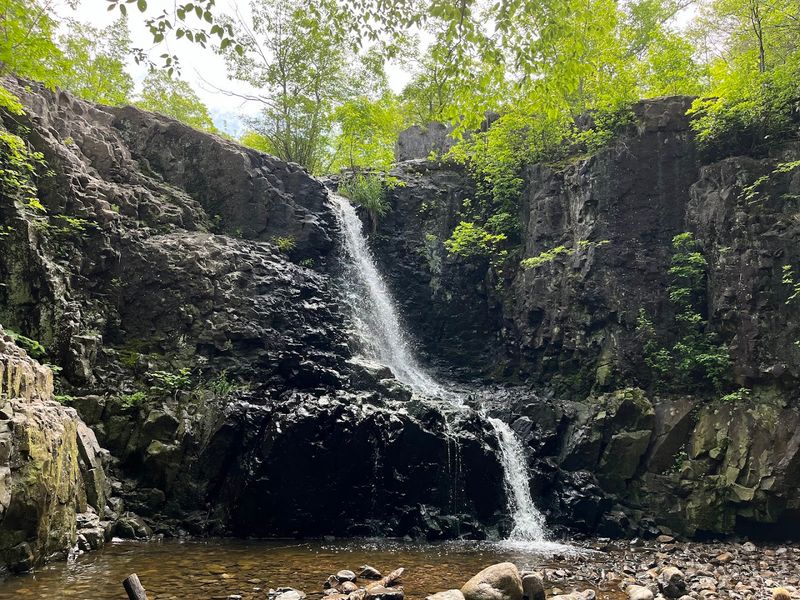
A waterfall in the middle of Essex County should not feel this tucked away, but Hemlock Falls pulls it off. South Mountain Reservation covers more than 2,000 acres across parts of Millburn, Maplewood, and West Orange, and Hemlock Falls is one of its prettiest payoffs.
The approach can be as easy or as ambitious as you make it: some visitors do a short loop from the Locust Grove area, while others fold the falls into a longer ramble through the reservation’s web of trails. The waterfall itself drops over dark rock with enough height to feel dramatic, especially after rain or when winter turns the edges into ice.
What makes Hemlock special is the contrast. You are close to suburban streets, schools, restaurants, and all the usual Essex County motion, but then the path bends and suddenly there is water falling through a rocky pocket of woods.
Families like it because it is reachable. Hikers like it because it connects to bigger routes. Photographers like it because the stone and water cooperate without much effort. If you go on a weekend, expect company; this is not exactly a secret.
Still, the falls hold their charm because the setting delivers that quick shift every good local escape needs: five minutes ago, errands; now, a ravine.
5. Greenbrook Falls
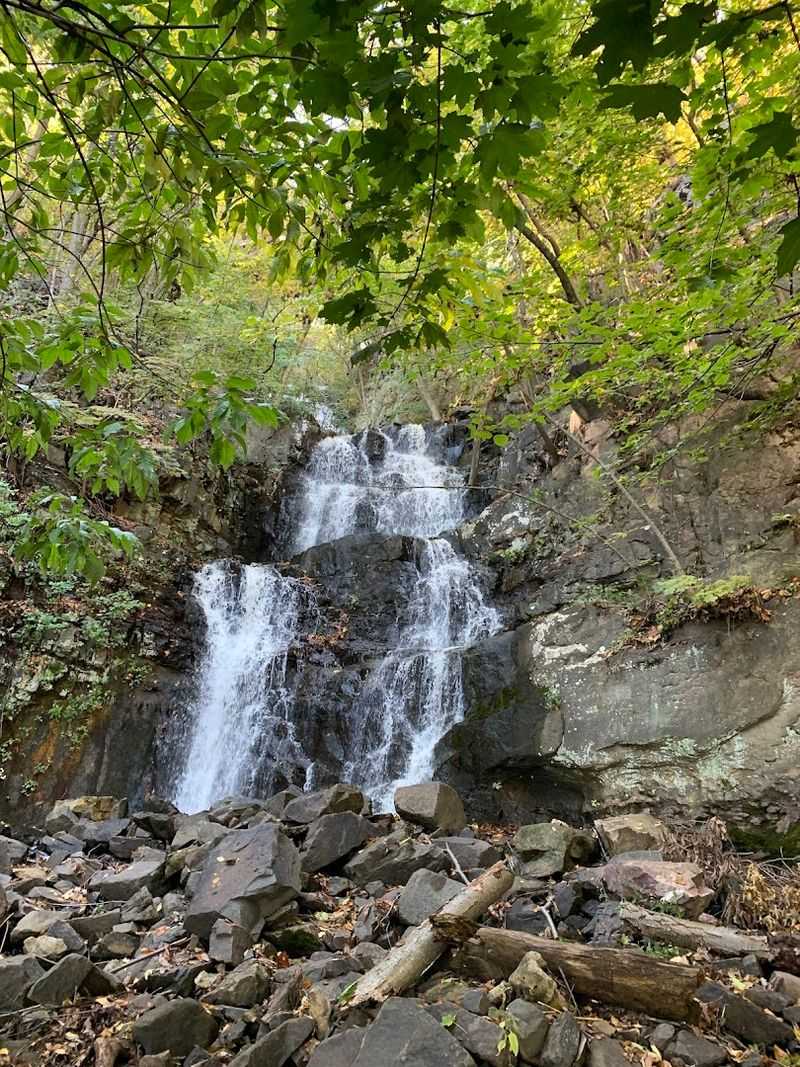
Greenbrook Falls is one of New Jersey’s most unusual waterfalls, partly because of its height and partly because it refuses to be simple. Dropping through the Palisades near the Hudson River, it is often described as the state’s tallest waterfall, though its full form is difficult to view in one clean look.
That limitation actually adds to its mystique. Greenbrook is not the friendly roadside cascade that poses nicely for everyone.
It is long, steep, and partially hidden by terrain, like a waterfall that belongs to the cliffs first and visitors second. Access is also different from many public park falls, because the area is associated with Greenbrook Sanctuary, where visitation requires attention to the sanctuary’s rules and membership or permitted access.
The payoff is a Palisades setting that feels worlds away from the traffic just beyond it: tall trees, steep slopes, glimpses of the Hudson, and water moving down a dramatic vertical landscape. This is a waterfall for people who enjoy the idea of earning permission and perspective rather than just checking off a stop.
It belongs in a fantasy-themed article because it has the quality of something half-seen in the woods. You may not get the entire waterfall in one perfect frame, but that is part of why it stays interesting.
6. Peanut Leap Cascade
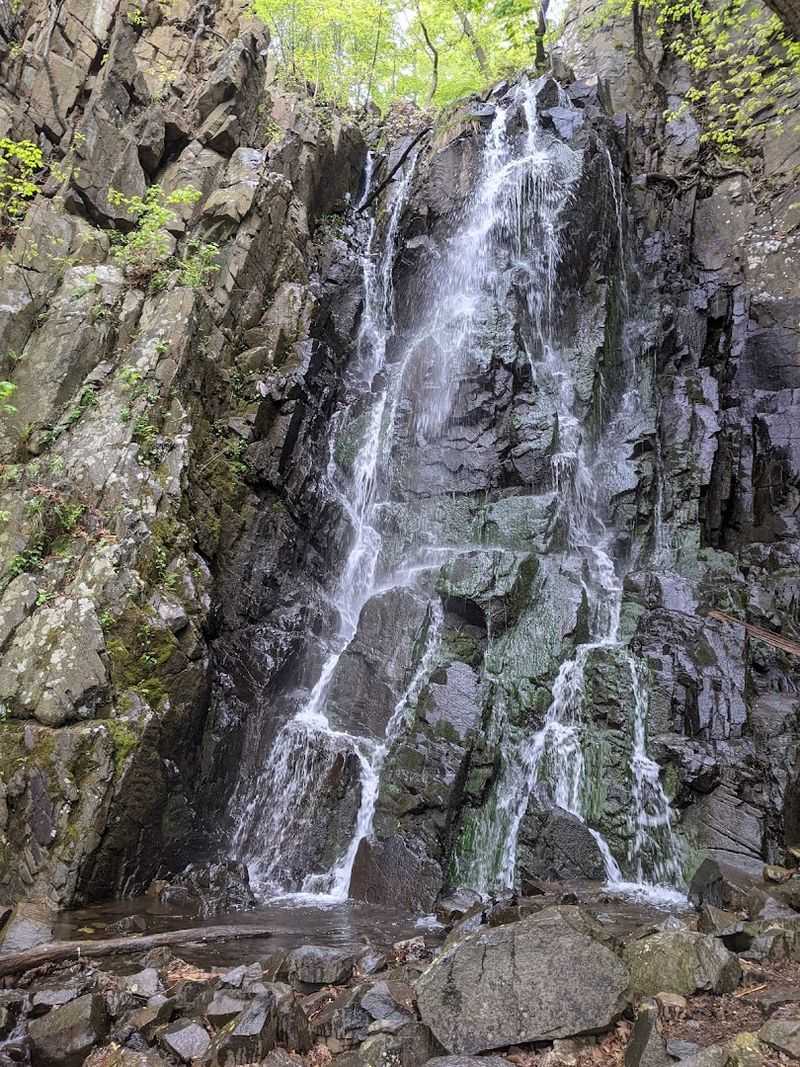
Peanut Leap Cascade sounds cute until the Palisades remind you that cute can still involve steep trails. This waterfall sits along the New Jersey side of the Hudson River, where the cliffs, river views, stone ruins, and wooded paths combine into one of the most unexpectedly cinematic settings in the state.
The cascade itself tumbles through a rocky hollow, but the larger experience is what makes it memorable: glimpses across the Hudson, the sense of descending into a hidden pocket below the cliffs, and the odd thrill of finding falling water so close to New York City’s skyline.
This is a good pick for hikers who want more than a quick look from a platform.
The approach can be steep, and nearby routes like the Giant Stairs are challenging, so it is not the place for flimsy shoes or a casual “we’ll figure it out” attitude. After heavy rain, the cascade has the most personality, but the terrain can also be slick, so choose common sense over heroics.
What earns Peanut Leap a fantasy-tale spot is the mix of elements: cliffside forest, old stonework, a waterfall, and a river that opens wide like a stage curtain. It feels hidden in plain sight, which is exactly the kind of trick New Jersey does well.
7. Boonton Falls
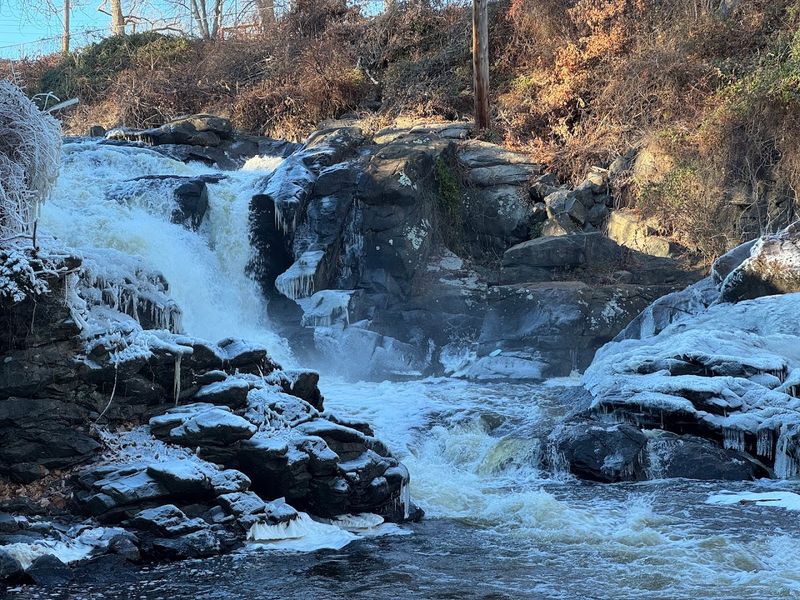
Before you even see Boonton Falls, you can usually hear the Rockaway River getting serious. Grace Lord Park gives this waterfall an old-town setting that feels more storybook than expected: stone walls, wooded paths, a historic downtown nearby, and water throwing itself through a rocky channel with real force.
Boonton has iron-industry history in its bones, and the falls fit that personality perfectly. They are not dainty.
They churn, shove, foam, and remind you that even a river that looks calm upstream can change its attitude quickly. The best way to do it is to park near Grace Lord Park and follow the trail system toward the overlooks, making time for the stonework and the old railroad bridge views along the way.
This is one of those outings where you can pair a waterfall walk with coffee, lunch, or a Main Street wander, which makes it especially easy to recommend to people who like nature but do not want to disappear into the woods for half a day.
Stay on the marked paths and respect the barriers; the river below can be fast and dangerous. The reward is a waterfall that feels powerful without requiring a mountain hike, and that balance is very New Jersey in the best way.
8. Bridal Veil Falls
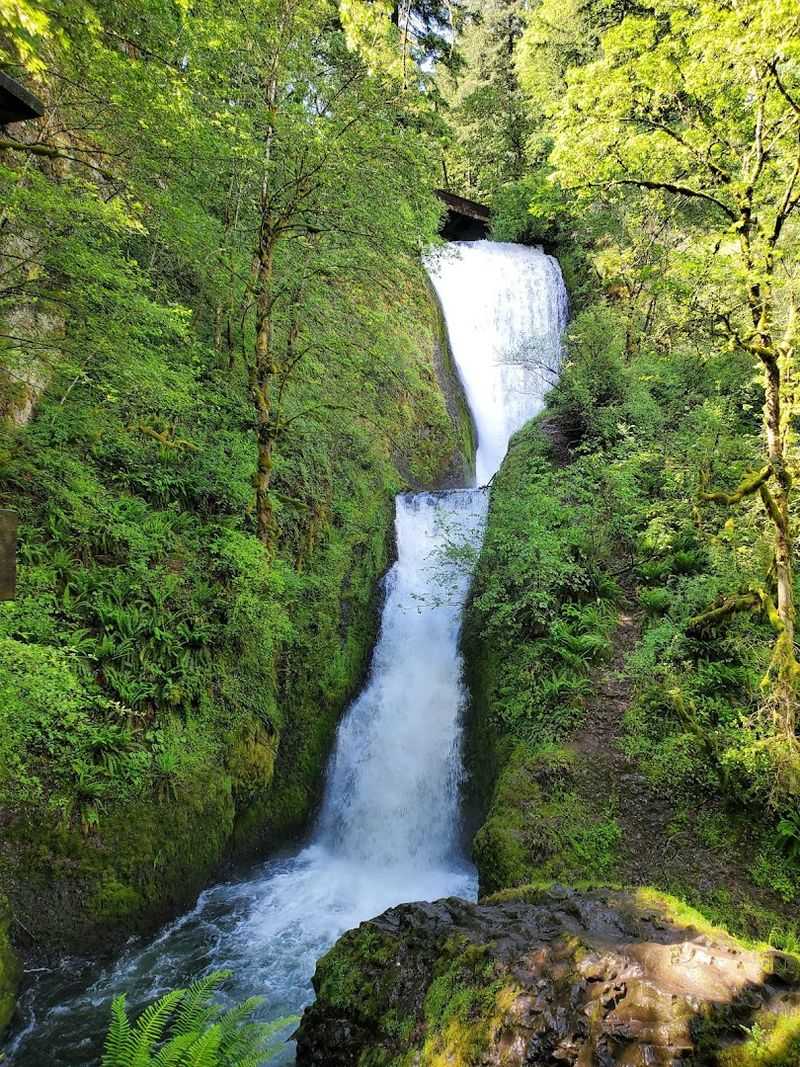
The best detail about Bridal Veil Falls is the one that sounds least like New Jersey: you can walk behind it. Set near the edge of William Paterson University in North Haledon, the waterfall drops from an old sandstone quarry area, and the trail allows visitors to pass into a cave-like space behind the falling water.
That alone puts it in fantasy territory. Most waterfalls ask you to admire them from the front; this one lets you peek behind the curtain.
The falls are especially striking in winter, when ice can form around the drop and make the whole scene feel like a frozen doorway. That said, icy conditions also demand caution, so do not treat it like a playground.
The approach can be uneven, and the area has the rugged, unpolished feel of a place that is loved more by word of mouth than by glossy signage. Go after rain for stronger flow, or in cold weather if you are experienced and properly equipped for slippery ground.
Bridal Veil is not the easiest waterfall to categorize. It is part hike, part hidden landmark, part quarry oddity.
That is exactly its appeal.
It feels like the sort of place a friend tells you about quietly, then adds, “Seriously, you have to see it.”
9. Tinton Falls
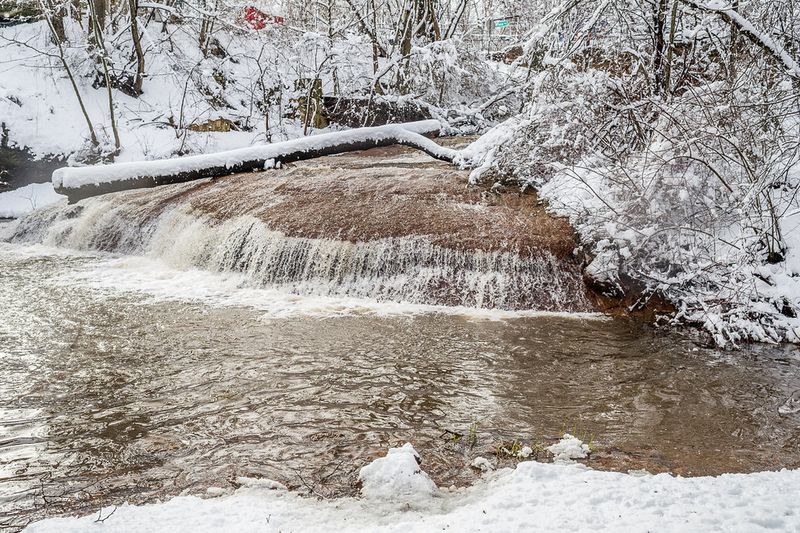
The town and the waterfall share a name, which makes Tinton Falls feel less like a destination you hunt down and more like a local landmark hiding in everyday life. This is a smaller waterfall, but its location in the coastal plain makes it unusual for New Jersey.
In a region better known for flatter land, sandy soil, and shore-bound habits, a real cascade feels like a pleasant glitch in the map. The viewing platform near Tinton Avenue gives visitors a straightforward way to see the falls without turning the outing into a full hike.
That accessibility is part of the appeal: you can fold it into a Monmouth County day, stop by after errands, or bring someone who likes pretty views but not muddy climbs. The falls have a historic, tucked-in quality rather than a wilderness feel, with water dropping through a compact rocky space that looks best after rain.
It is not the biggest waterfall on this list, and it does not pretend to be. Its charm comes from being a little unexpected, a reminder that even close to the Shore, New Jersey still has pockets where water finds a ledge and makes a scene.
Go for the novelty, stay for the quiet satisfaction of discovering a waterfall where the land says there should not be one.
10. Lake Solitude Falls
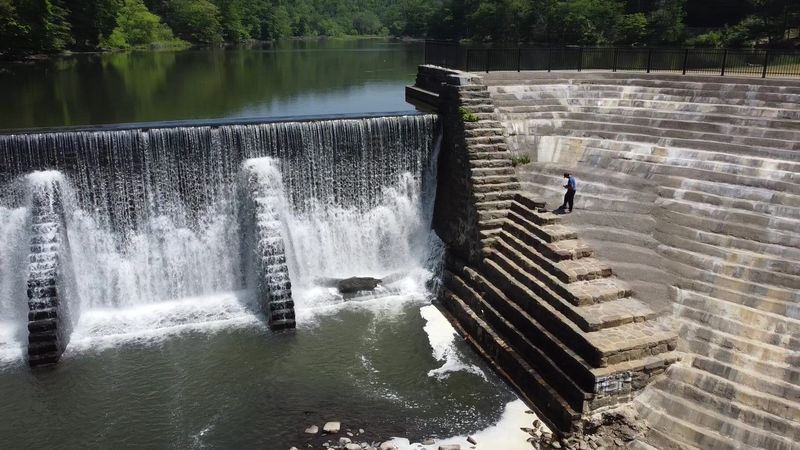
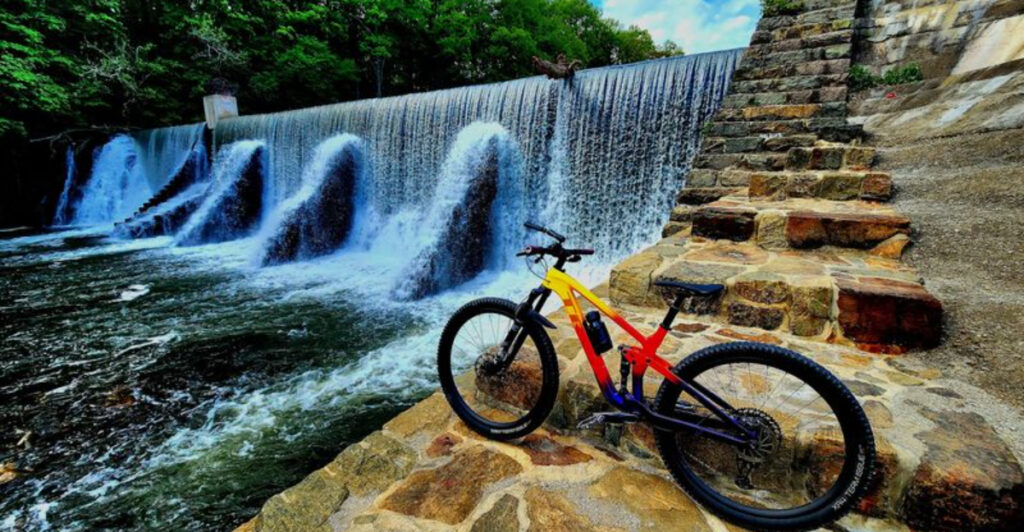
Lake Solitude Waterfall looks like an old stone staircase built for giants, which explains why it made such a splash with visitors. In High Bridge, the waterfall effect comes from the historic Lake Solitude Dam on the South Branch of the Raritan River, a site tied to the area’s iron-industry past and long-running preservation interest.
Instead of a natural cliff hidden in deep forest, you get water spreading across stepped stonework in a way that feels architectural, dramatic, and slightly unreal. It is especially photogenic because the structure gives the water shape, turning the whole face of the dam into a textured cascade.
The visit is usually easy compared with many trail waterfalls, and the nearby Columbia Trail can make it part of a longer walk or bike ride. The tradeoff is popularity.
When a spot becomes famous online, it needs visitors to act like decent guests: stay where access is allowed, do not leave trash, and remember that a pretty place is not improved by treating it like a prop. Lake Solitude belongs on this list because it proves fantasy does not always mean untouched wilderness.
Sometimes it looks like old industry, stone steps, river water, and a small Hunterdon County town with a surprisingly dramatic secret.
11. Ramapo Valley Falls
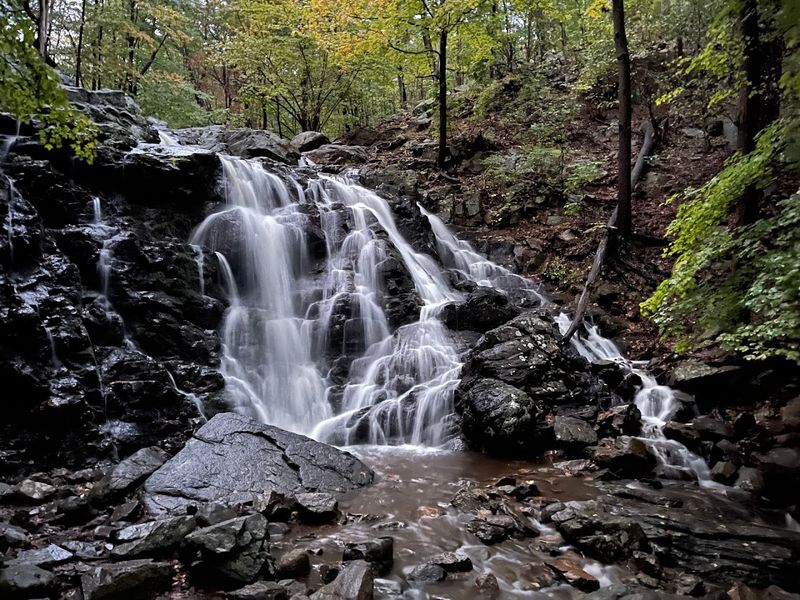
The easiest waterfall in Ramapo Valley County Reservation is often called MacMillan Falls, though plenty of hikers simply think of it as the Ramapo Valley waterfall.
Either way, it is one of Bergen County’s friendlier waterfall payoffs: close enough to the parking area for a casual visit, but connected to enough trails that it can also anchor a bigger hike.
The falls step down through the woods along MacMillan Creek, with the best flow in spring or after rain. What makes the place especially useful for an article like this is the setting around it.
Ramapo Valley has lakes, viewpoints, rocky trails, and the kind of north Jersey mountain scenery that makes you forget how close you are to highways and suburbs. If you want the simple version, walk to the falls, enjoy the water, and loop back before lunch.
If you want more adventure, continue toward Hawk Rock, Cactus Ledge, or Bear Swamp Lake. Parking can fill on beautiful weekends, so early is smart, and muddy trail sections are common after weather.
This waterfall feels fantasy-adjacent not because it is huge, but because it sits at the doorway to a larger landscape. The falls are the invitation; the reservation is the rest of the tale.
12. Bear Swamp Brook Falls
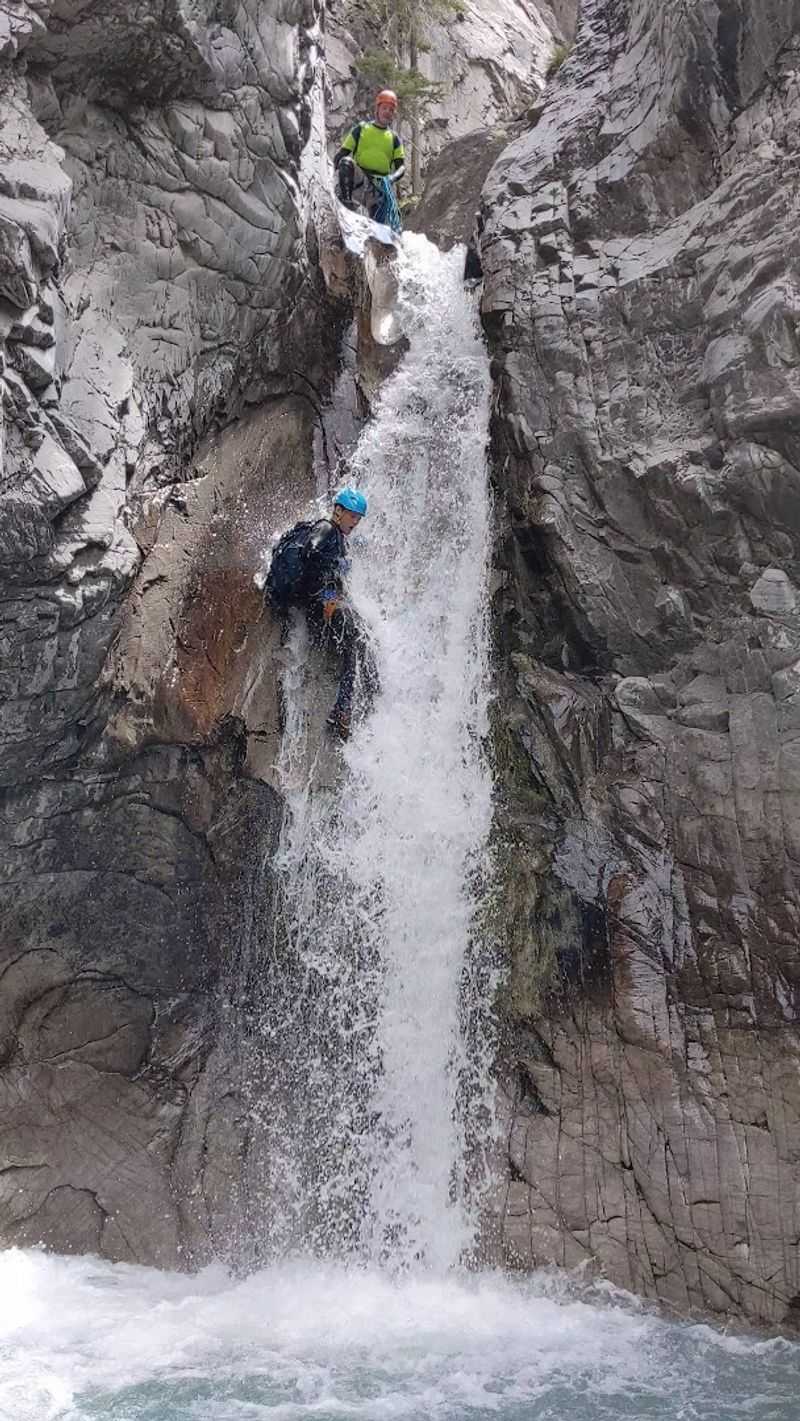
Bear Swamp Brook Falls is the quieter cousin in Ramapo Valley County Reservation, and that is exactly why it deserves attention. While MacMillan Falls gets the easy-access love, Bear Swamp Brook takes more effort and sees fewer casual visitors.
The waterfall sits near Bear Swamp Road within the reservation, and reaching it can be trickier than simply following the crowd to the better-known cascade. That extra effort changes the mood.
The woods feel more private, the route feels more like exploration, and the waterfall arrives without the same “everybody take your turn for a photo” energy. It is a good fit for hikers who already know Ramapo Valley and want to go a little deeper into the map.
Expect a modest waterfall rather than a blockbuster, but also expect the satisfaction of finding something many visitors miss. Spring and wet periods are best, since smaller streams can lose their drama when the weather has been dry.
The practical advice is to go with a reliable trail map and enough time to avoid rushing. Bear Swamp Brook Falls has a fantasy-story name and a fitting personality: a little hidden, a little rugged, and much more rewarding when you treat the route like part of the experience rather than an obstacle.
13. Maple Falls
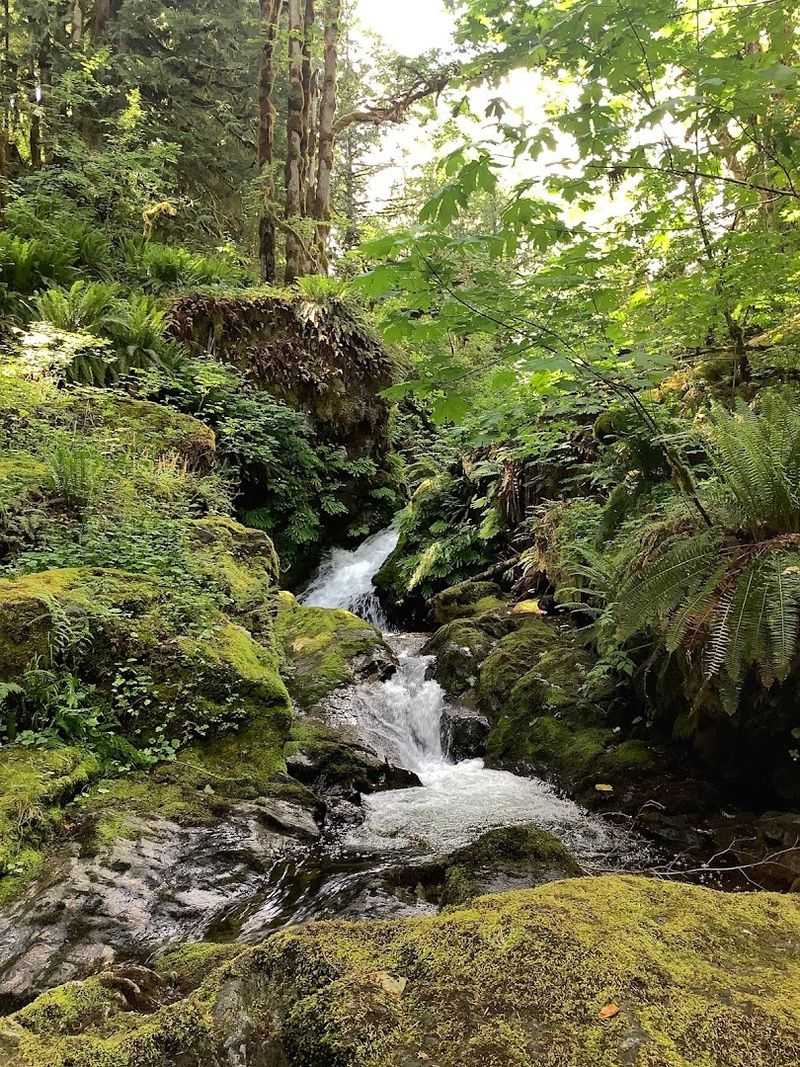
Maple Falls is the kind of South Mountain Reservation secret that makes regular visitors feel smug in the nicest way. Hemlock Falls gets most of the attention, and fairly so, but Maple Falls offers a quieter, more tucked-away scene in the same broad Essex County preserve.
It is described as a hidden waterfall within South Mountain Reservation, which already tells you the main appeal: this is not the place everyone automatically finds on their first visit.
The falls are smaller and more dependent on rainfall than the reservation’s marquee cascade, but when the water is moving, the setting feels intimate and unexpectedly wild for such a suburban-adjacent park.
This is a good waterfall for people who enjoy exploring familiar places from a new angle. Pair it with a longer South Mountain walk, or use it as the excuse to wander beyond the most popular routes.
Because it is less obvious, you will want a good map and sensible footwear, especially after wet weather. The charm is not in grand height; it is in discovery.
Maple Falls feels like a footnote that turns out to be the best sentence on the page. In a reservation full of trails, fairy-house whimsy, rocky paths, and river sounds, this little waterfall adds one more reason to keep looking past the obvious.
14. Apshawa Waterfall
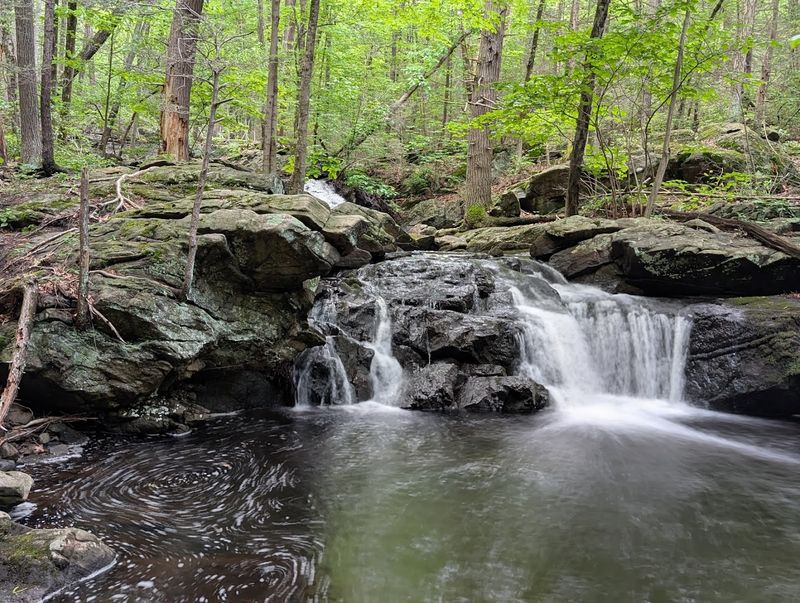
Apshawa Falls makes you work just enough to feel like you have done something, but not so much that the day turns into a survival story. Located in Apshawa Preserve in West Milford, the falls sit along Apshawa Brook, with two main drops separated by a pool and smaller cascades nearby.
The trail system can roll up and down more than first-timers expect, so bring water, wear shoes made for dirt, and do not assume “preserve” means flat.
The reward is a waterfall that feels properly hidden, tucked into a wooded landscape that also includes reservoir views, old water infrastructure, and enough trail variety to make the hike feel full.
This is a good choice for hikers who like a little navigation and do not want every pretty spot handed to them from a parking lot. The falls are best after rain or in spring, when the brook has the flow to show off, but the preserve’s broader scenery helps carry the outing even when the water is calmer.
Apshawa belongs on this list because it has the ingredients of a local legend: a brook, a dam, ruins, a forested approach, and a waterfall that seems to appear only after you have followed the right clues.
15. Schooley’s Falls
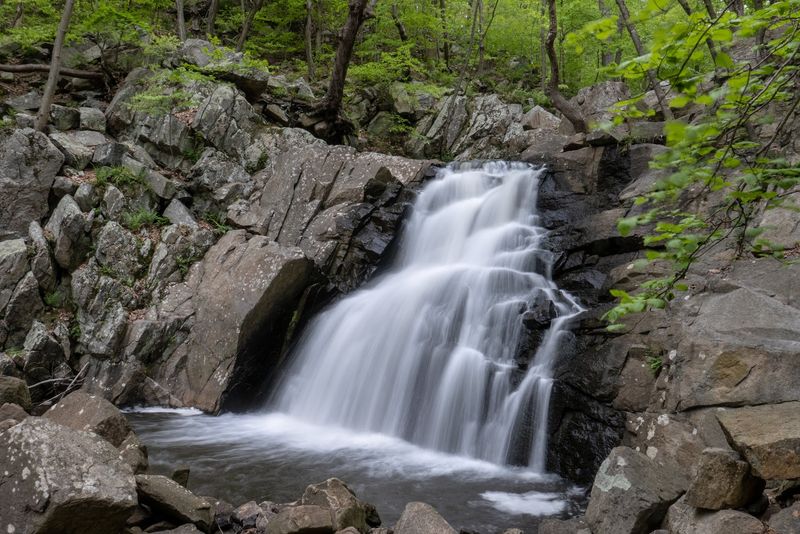
The path to Schooley’s Mountain Falls has a satisfying crunch to it: rocks underfoot, shade overhead, and the sense that the gorge is narrowing around you as the water gets louder. Located in Schooley’s Mountain County Park near Long Valley, this is one of those hikes where the effort-to-reward ratio feels wonderfully fair.
The falls sit along the Falling Waters Trail, and the route is short but rocky enough to make you pay attention. That texture is part of the charm.
You are not simply strolling to a viewpoint; you are moving through a little ravine that makes the final cascade feel more dramatic. The waterfall drops into a pool in a wooded setting that stays especially pleasant in warm weather, though after rain the water has much more presence.
It is a strong pick for people who want a real hike without signing up for an all-day climb. The park also offers broader trail options and scenic overlooks, so you can keep going if the falls only whet your appetite.
What makes Schooley’s Mountain feel fantasy-worthy is its compact drama. It does not need enormous height.
The shaded gorge, rocky footing, and falling water create the feeling of entering a side passage in a much larger story, which is exactly why locals keep recommending it.
16. Speedwell Dam Waterfall
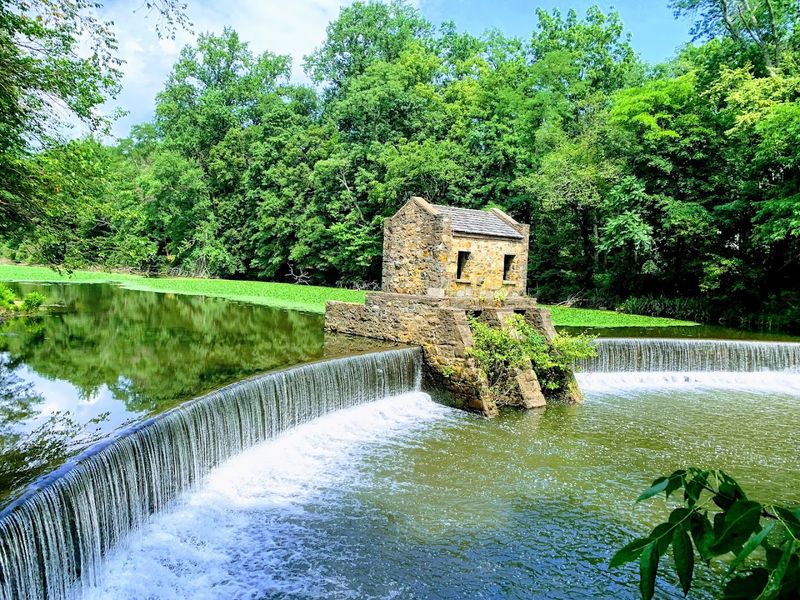
Speedwell Dam Waterfall has a polished, almost theatrical look that makes it feel larger than life. Water spills over the dam in a wide, steady sheet, creating a strong visual line that is both orderly and dramatic.
There is something about that combination of human-made structure and moving water that feels unexpectedly cinematic.
This is a great pick if you enjoy scenery with a little built-in character. The dam adds form and shape, while the water brings motion and softness, so the overall effect lands somewhere between historic and enchanted.
If your idea of fantasy includes old maps, weathered stone, and places where nature has taken the final word, this waterfall absolutely fits.
I also think Speedwell Dam Waterfall works because it is so easy to read at a glance. You arrive, you see that sweep of water, and the mood is immediate.
It may not be deep in the wilderness, but it still gives you that lovely moment of transport. The setting feels composed yet alive, which makes it memorable.
For a stop with structure, texture, and plenty of visual payoff, it delivers beautifully.
17. Hacklebarney State Park Waterfalls
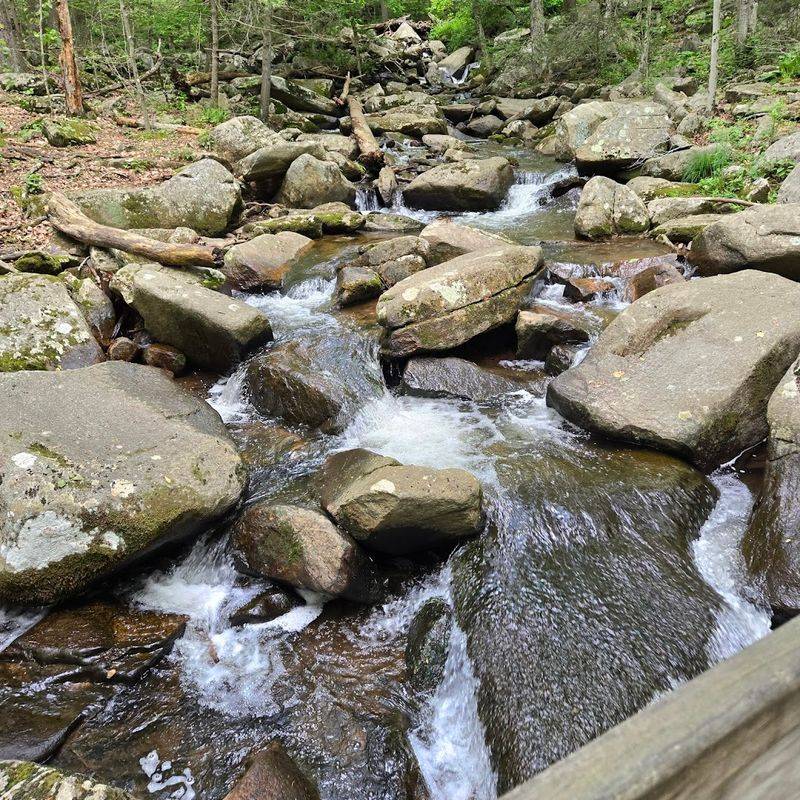
Hacklebarney does not need one giant waterfall to make its case. Its magic comes from movement everywhere: the Black River running through a rocky ravine, smaller brooks feeding into it, and cascades slipping around boulders under tall trees.
The state describes the Black River as cutting briskly through the park, with Rinehart and Trout Brooks feeding the glacial valley, and that is exactly the feeling on the ground: water in conversation with stone from almost every direction.
Trout Brook Falls is one of the better-known drops here, but the real pleasure is walking the trails and letting the smaller cascades stack up into a full experience.
Hacklebarney is especially good in fall, when the leaves turn the ravine into a warm-colored tunnel and the dark water makes everything look sharper. It can get busy because it is beautiful and approachable, so early mornings are your friend.
Wear sturdy shoes, especially if you plan to linger near the rockier sections, and keep in mind that wet leaves can be sneaky. This park belongs on the fantasy list because it feels like a place drawn in layers: river, brook, boulder, bridge, tree, cascade.
Instead of one big reveal, Hacklebarney gives you a whole chapter of water scenes.
18. Lockatong High Falls
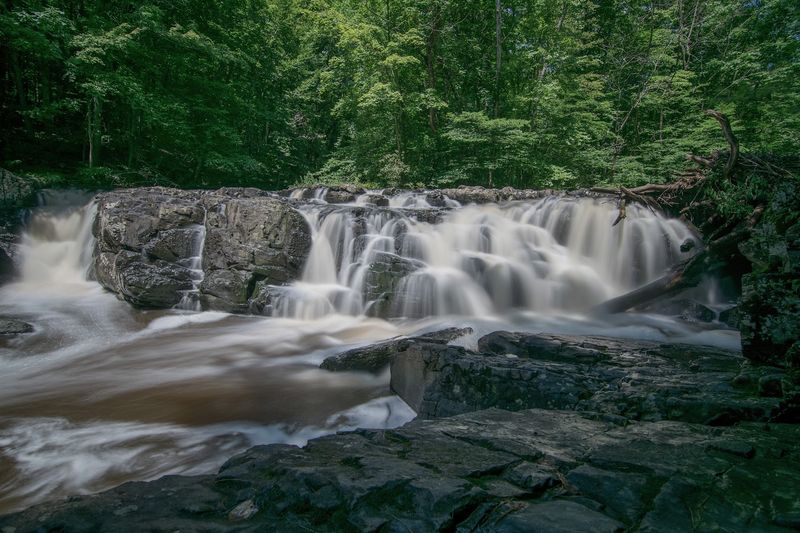
Lockatong Falls feels like a secret the creek has been keeping from the road. Located in the Lockatong Wildlife Management Area near Kingwood, it is also known as High Falls and is reached by a short but less polished route than the state’s more popular waterfall walks.
That slightly rough-around-the-edges quality is part of the appeal. The water cascades over a rocky drop into a pool, and because Lockatong Creek has a bigger drainage area than many small seasonal falls, it can look good more consistently than some flashier but fussier spots.
This is not a place for people who need tidy signage and smooth paths. It is better for hikers who are comfortable with uneven ground, wildlife-management-area practicality, and the understanding that “short walk” does not always mean “flip-flop friendly.”
The reward is a waterfall that still feels under the radar, especially compared with better-known Delaware Water Gap stops.
Summer greenery gives it a hidden-cove feel, while spring flow brings out the sound and movement. Lockatong belongs on this list because it has the slightly enchanted quality of a place not trying to become famous.
It is there, doing its thing, waiting for people curious enough to follow the creek and careful enough to respect the landscape.
19. Tillman Ravine Falls
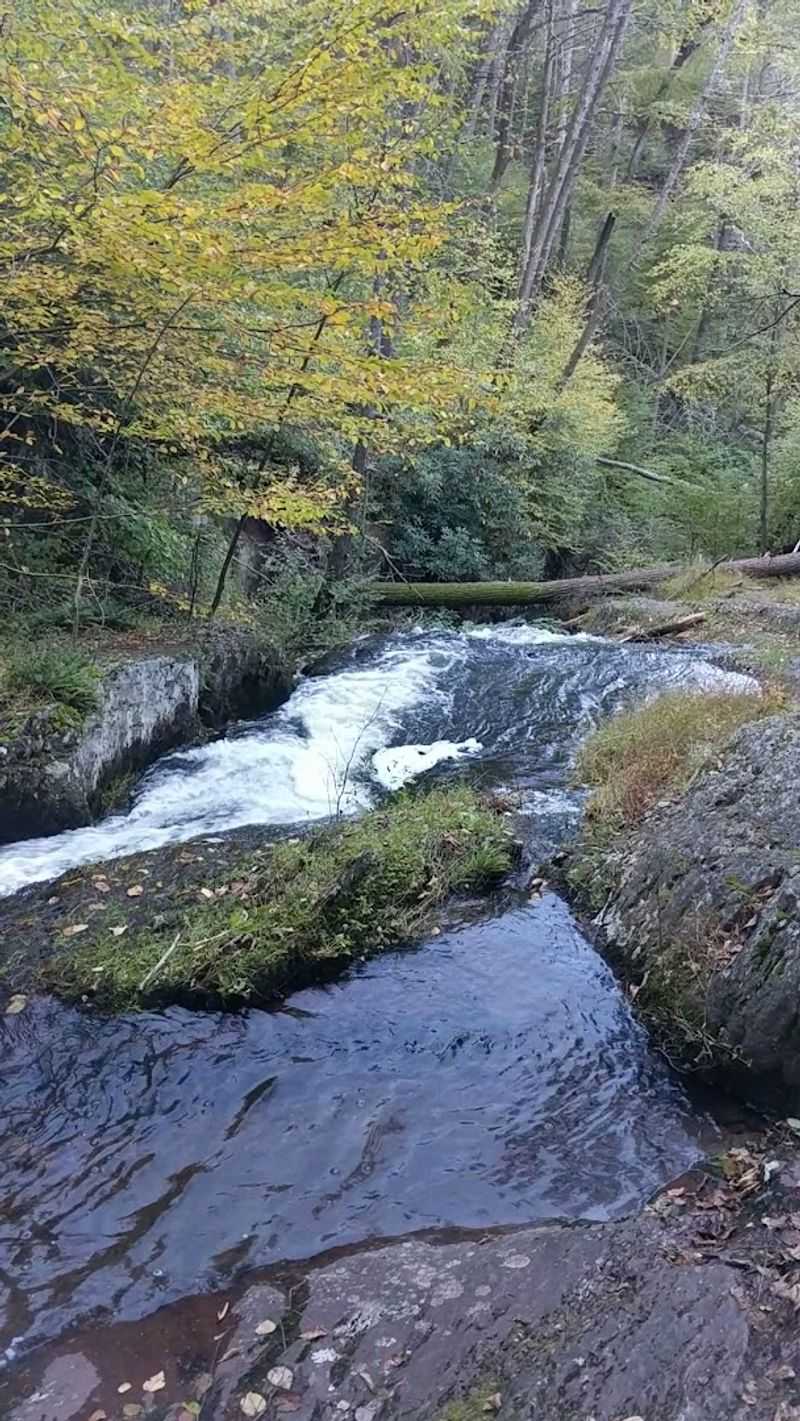
The hush is the first thing that gets you in Tillman Ravine. The hemlocks soften the light, the creek keeps close company with the trail, and the small falls feel less like one grand spectacle and more like a string of quiet scenes.
Located in the Stokes State Forest area near Branchville, Tillman Ravine is ideal when you want a waterfall outing that is gentle, shaded, and a little moody without being overly difficult. The cascades here are not trying to out-roar Paterson or out-height Buttermilk.
Their strength is atmosphere: water slipping over stones, moss on the banks, old forest around you, and the feeling that the temperature drops a few degrees as soon as you step into the ravine. The walk is short enough for a relaxed morning but rewarding enough that it never feels like filler.
It also pairs beautifully with nearby Buttermilk and Silver Spray if you are building a Sussex County waterfall day. The practical advice is simple: wear shoes with grip, expect damp spots, and give yourself permission to slow down.
Tillman Ravine is not a race-to-the-view kind of place. It is the one where you pause by a cascade, listen for a minute, and understand why small waterfalls sometimes feel more enchanted than the famous ones.
20. Stony Brook Falls
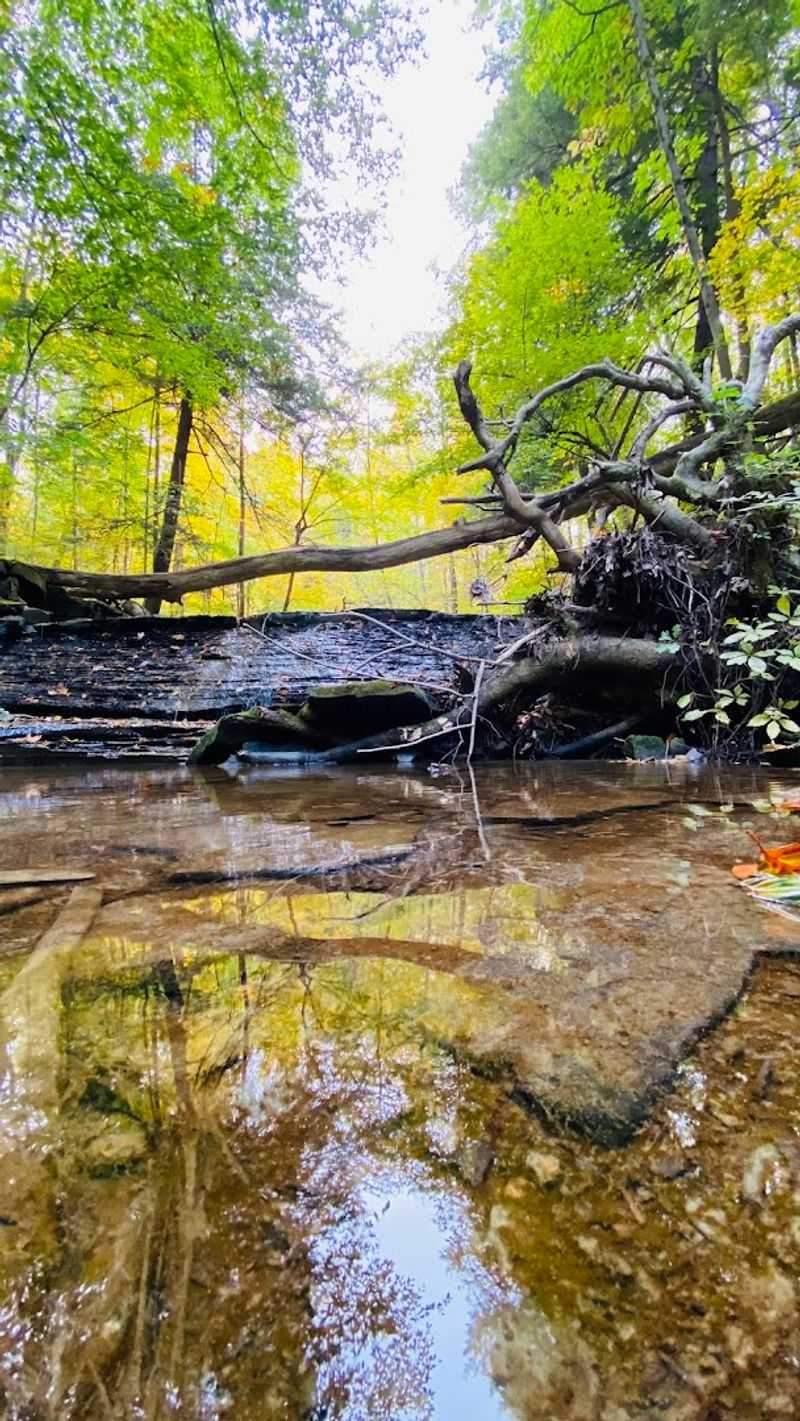
Stony Brook Falls is for people who like their waterfalls with a side of forest calm rather than a crowd of overlook photographers. Located in Stokes State Forest, the falls are reached on a relatively easy hike, with two pretty drops along Stony Brook that give the outing more variety than you might expect from a short walk.
One cascade steps down in a way that feels neat and composed; another angles over the rock with a looser, wilder shape. That contrast keeps the visit interesting, especially if you slow down and look at how the water moves around roots, stones, and fallen branches.
The surrounding forest gives the place a classic northwest Jersey feel: quiet, green, and better after a stretch of rain. It is a great option for hikers who want something gentler than the big climbs near the Delaware Water Gap but still want real woods and real water.
You can extend the route with nearby trails if you want a longer day, or keep it simple and let the falls be the main event. Stony Brook’s fantasy quality is understated.
It does not shout. It waits in the trees, lets the brook do the talking, and reminds you that sometimes the prettiest waterfalls are the ones that feel like they were placed there for anyone patient enough to listen.
21. Van Campens Glen Falls
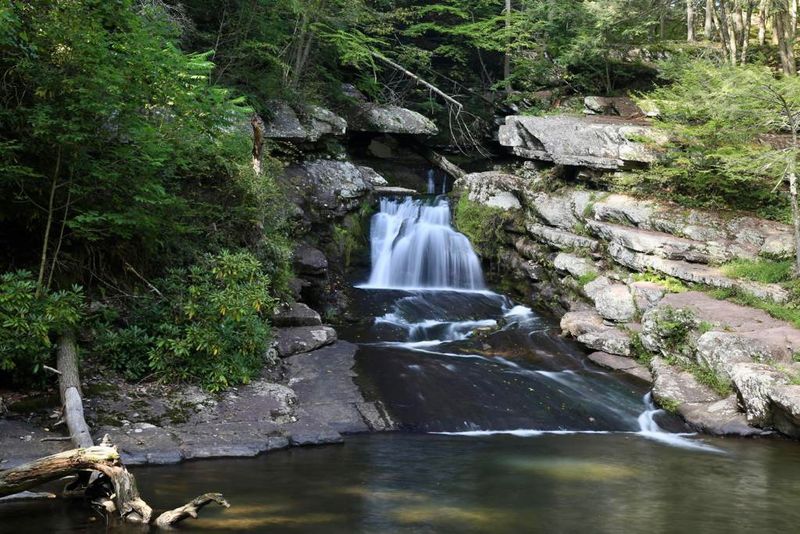
Van Campens Glen has the kind of cool, shaded air that makes you instinctively lower your voice. The trail follows Van Campens Brook through a narrow, green corridor in the Delaware Water Gap National Recreation Area, with several cascades and waterfall spots tucked along the way.
The main Van Campens Falls is the star, dropping into a broad pool that looks almost too inviting on a hot day, though swimming is prohibited and visitors should stick to enjoying it from safe spots along the trail. The appeal here is the rhythm of the place.
You do not just hike to one waterfall, take a picture, and leave. The glen keeps offering little scenes: water over stone shelves, mossy banks, bends in the brook, and filtered light that makes the forest feel older than it is.
The hike is short enough to feel friendly, but the payoff is generous, which is why it gets so much love from people who know northwest Jersey. Weekdays are best if you want quiet.
After rain, the water gets livelier, but the rocks also get less forgiving, so slow feet beat fast ones. Van Campens Glen feels like a fantasy trail because the landscape does not reveal itself all at once.
It keeps handing you one small spell after another.
22. Upper Van Campens Falls
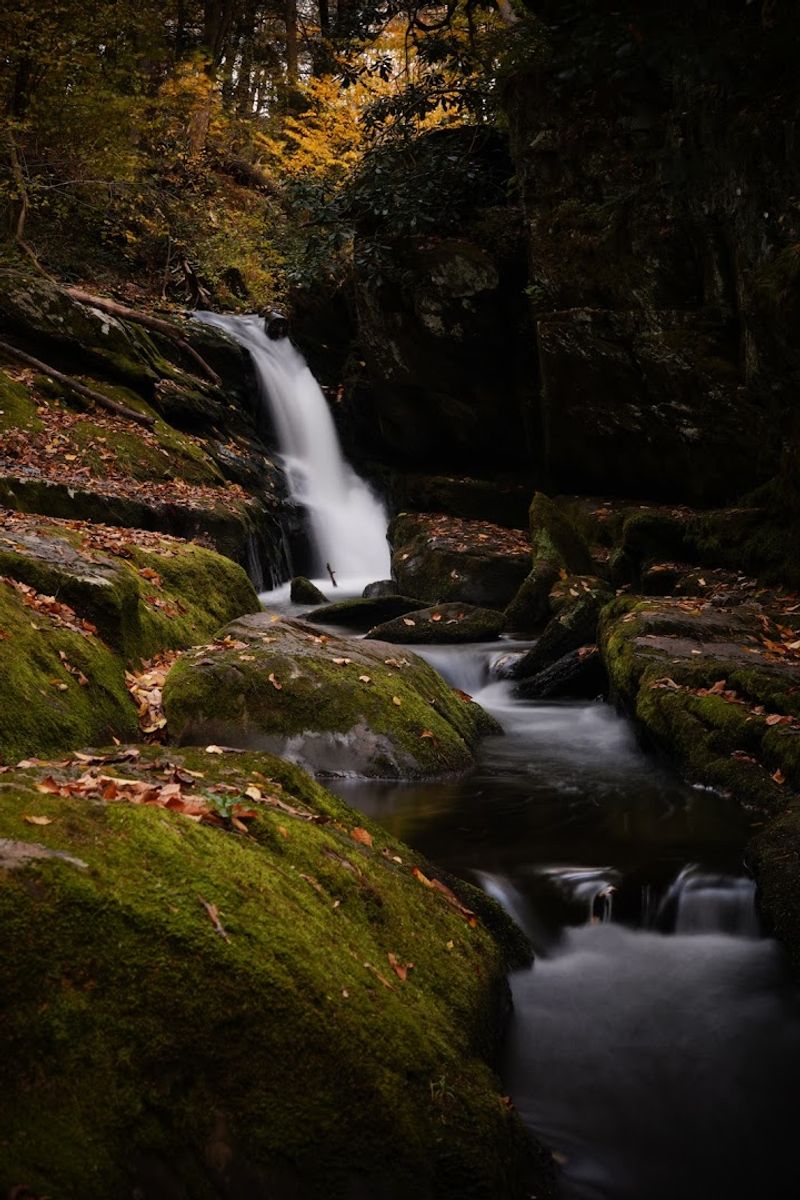
Upper Van Campens Falls has that satisfying sense of being part of a larger woodland story. The upper section feels a little more tucked in, which gives it a quieter, more secretive mood than a single standalone waterfall might have.
You get the pleasure of a scene that seems discovered rather than announced.
What I enjoy here is the intimacy. The water works through rock in a way that feels detailed and close-up, making the surrounding glen just as important as the cascade itself.
If you love places where every wet stone and patch of moss adds to the atmosphere, Upper Van Campens Falls is easy to appreciate.
It also benefits from the name recognition of the glen while keeping its own distinct personality. This feels like the spot in a fantasy tale where the path narrows, the air cools, and someone tells you to listen carefully.
The scale may be modest, but the mood is strong. Upper Van Campens Falls rewards attention, and that makes it especially good for visitors who prefer a layered, immersive experience over one quick dramatic overlook.
23. Lower Van Campens Glen Falls
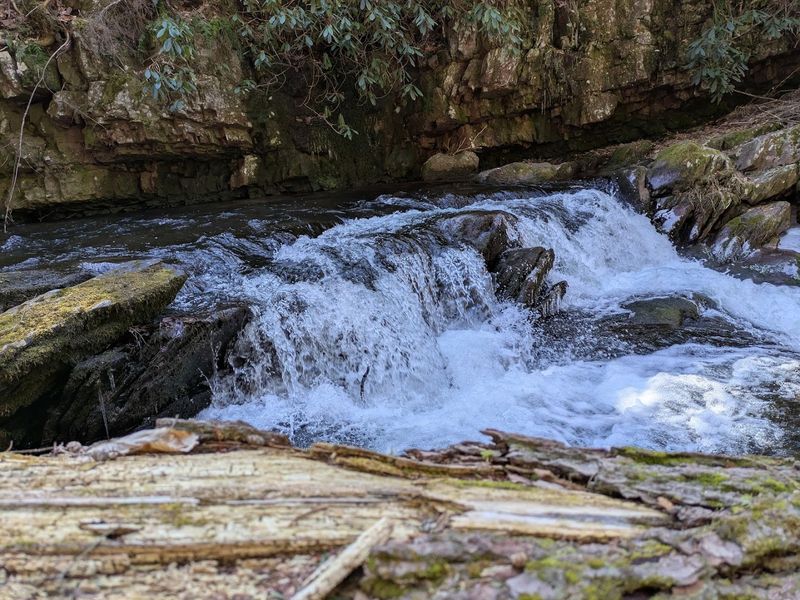
Lower Van Campens Glen Falls has a slightly more open, flowing feel while still keeping that glen-born magic intact. The water moves through the rocky setting with an easy natural rhythm, and the surrounding forest helps the whole place feel sheltered, cool, and quietly dramatic.
It is the kind of waterfall that settles into your memory without forcing it.
I like how this spot rounds out the glen experience. There is a continuity to the landscape that makes the lower falls feel like part of a beautifully connected scene rather than a separate attraction.
If you appreciate waterfalls that work as chapters in a larger hike, this one adds depth and charm.
Fantasy-wise, Lower Van Campens Glen Falls feels like the scene after the big reveal, where the trail softens and the story turns reflective. The water still gives you movement and sound, but the mood is gentler, almost companionable.
That makes it especially appealing for people who want atmosphere without constant drama. It is scenic, grounded, and rich in woodland texture, which is really all a place needs to feel a little enchanted.
24. Laurel Falls
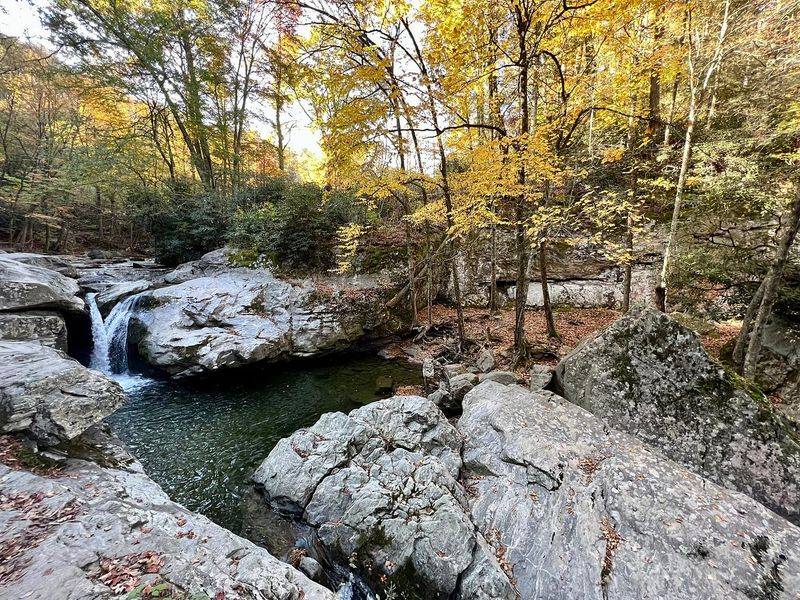
Laurel Falls feels like a reward for people who know that Old Mine Road is full of small wonders if you stop treating it like just a way through the Delaware Water Gap.
Set near Worthington State Forest, the falls are part of the Sunfish Creek area, with lower, middle, and upper drops creating a compact waterfall hunt rather than one single grand reveal.
The lower falls are the easiest to appreciate, while the upper sections can take a little more attention and care, especially where the path grows less obvious or the ground turns slick. What makes Laurel Falls especially appealing is its scale.
It is intimate, wooded, and photogenic without feeling overproduced. You get the sound of water, the shade of the forest, and the option to connect the visit to a bigger Worthington outing, including trails toward Sunfish Pond if you are feeling ambitious.
This is the kind of place where the best plan is not to rush. Let the first cascade pull you in, then decide how much more exploring conditions allow.
Spring is especially good, but a rainy week can make the whole little system sparkle. Laurel Falls belongs here because it has that layered, secret-staircase feeling: one drop leads to another, and suddenly a short stop becomes the most memorable part of the day.
25. Dunnfield Creek Falls
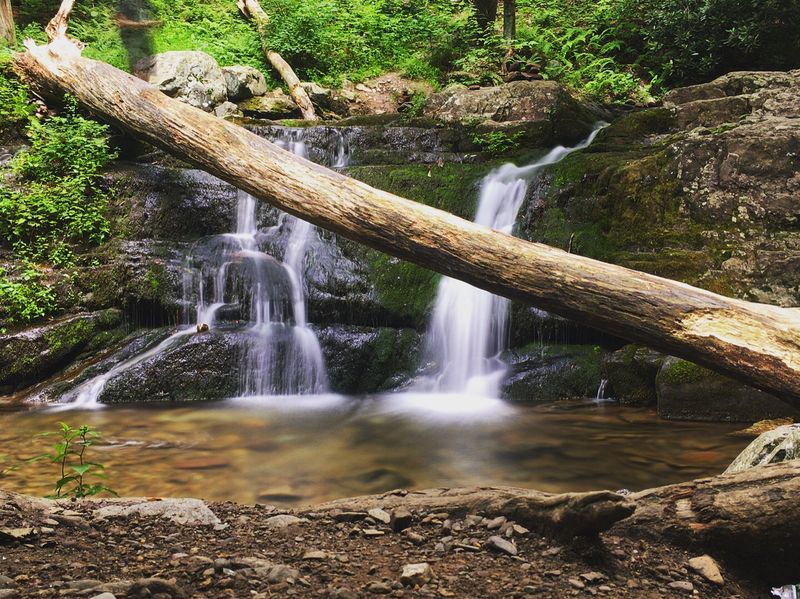
Dunnfield Falls makes a strong case for slowing down near the Delaware Water Gap instead of treating the area as just a gateway to bigger climbs. Located in Worthington State Forest near the Appalachian Trail and Dunnfield Creek routes, this waterfall is broad and characterful, with two main cascades separated by exposed rock.
In lower water, one side can fade, but when the creek is healthy, the double-drop effect gives the falls a satisfying, almost symmetrical drama. The approach is part of the appeal because Dunnfield Creek is one of those classic New Jersey trail corridors where water, stone, and forest keep trading places beside you.
Hikers can make this a focused waterfall visit or fold it into a much longer day involving Sunfish Pond, the Appalachian Trail, or other Gap-area routes. Conditions matter here: after storms, creek crossings and rocks can be slick, while dry stretches reduce the water’s personality.
Go prepared, start early if you are combining trails, and do not underestimate the popularity of the Water Gap on weekends. Dunnfield Falls earns its fantasy-tale spot by feeling like a woodland threshold.
The trail pulls you away from road noise, the creek starts telling the story, and the falls arrive as the scene where the forest finally speaks up.
26. Bass Lake Falls
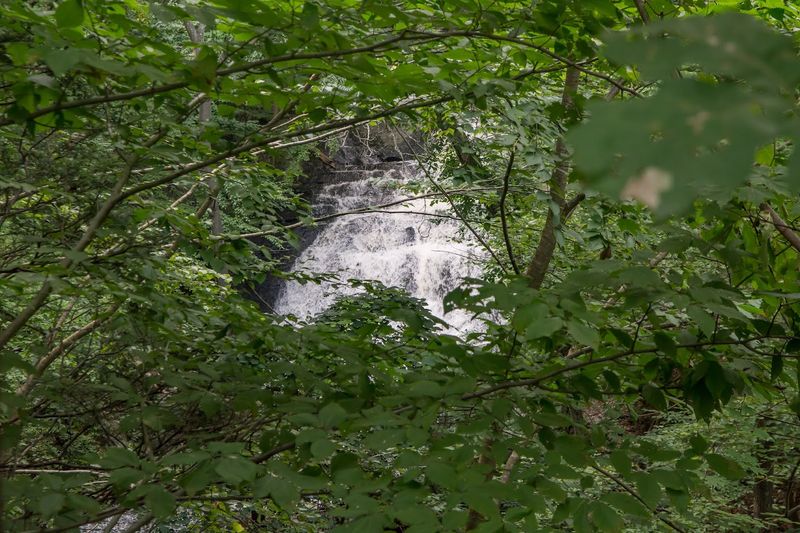
Bass Lake Falls has a calmer, more reflective kind of beauty that feels especially appealing if you are not chasing maximum drama. The connection to the lake gives the whole setting a nice contrast between still water and moving water, which instantly makes the scene feel more layered.
It is peaceful, but not dull, and that balance matters.
I tend to like spots like this because they offer a broader atmosphere. You are not just looking at a waterfall.
You are taking in the relationship between the lake, the spill of water, the surrounding trees, and whatever light the day is giving you. If your favorite outdoor places feel more like mood pieces than attractions, Bass Lake Falls is a strong contender.
Fantasy-wise, this one feels like the edge-of-the-kingdom kind of place. Quiet, scenic, and just a little watchful.
It would be easy to imagine morning mist here, or a path skirting the water toward somewhere deeper in the woods. Bass Lake Falls is not trying to overpower you.
It wins by being serene, balanced, and pleasantly evocative, which can be even more magical than something louder.
27. Big Tocks Creek Falls
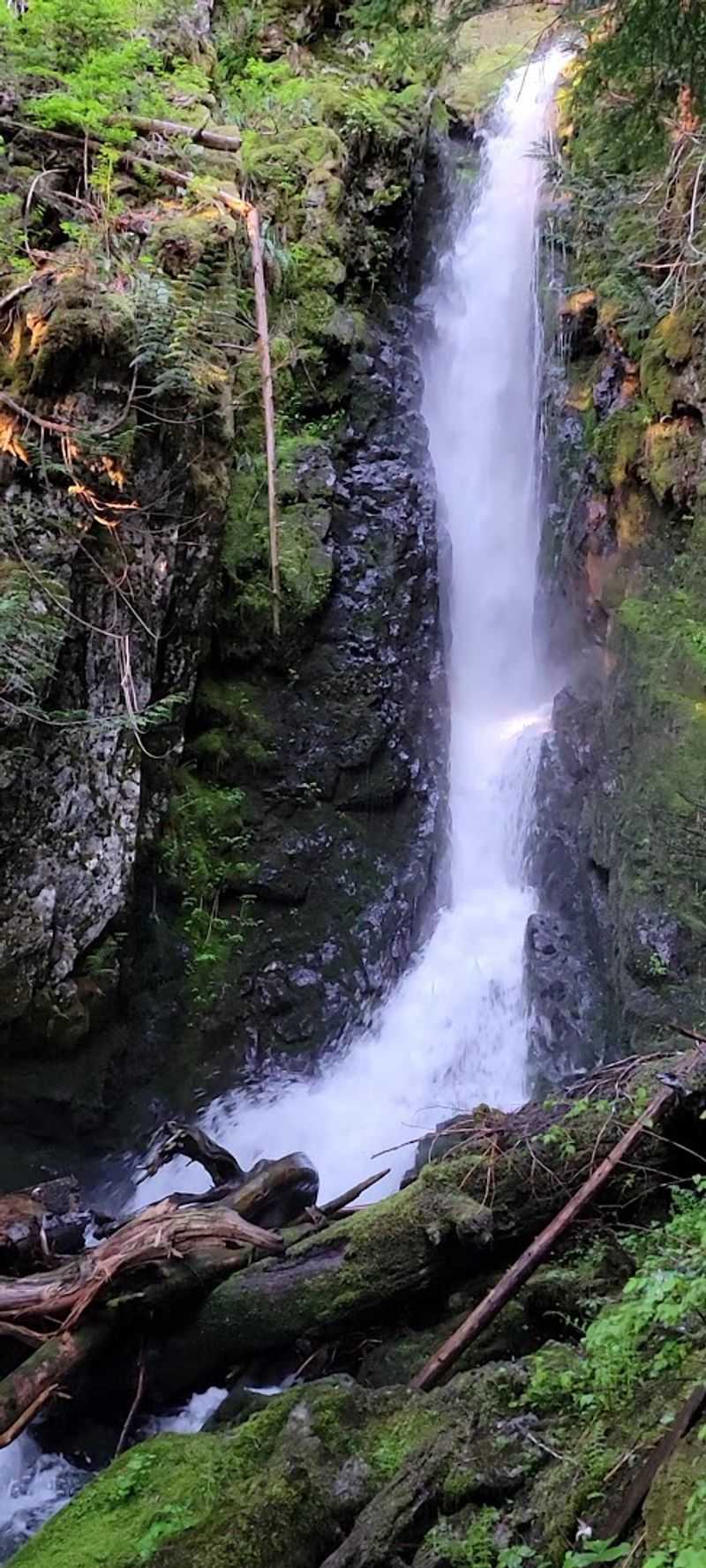
Big Tocks Creek Falls has a bold name and a satisfying sense of backcountry character. The creek setting gives the waterfall a wilder personality, with water tumbling through rock in a way that feels active, fresh, and slightly unpredictable.
It is the kind of place that appeals most when you want scenery that feels earned rather than staged.
The landscape around a creek like this does a lot of heavy lifting. Boulders, wet ledges, dense vegetation, and the constant movement of water create that immersive environment where a waterfall becomes part of a bigger outdoor story.
If you enjoy places that feel rugged and a bit less polished, Big Tocks Creek Falls is an excellent fit.
I would not call this one delicate, and that is the point. Its fantasy appeal comes from its rawness, the sense that you have entered a landscape where nature still feels fully in charge.
You can imagine old footpaths, hidden crossings, and one very important map folded in someone’s pocket. Big Tocks Creek Falls has grit, motion, and just enough mystery to keep it feeling special long after you leave.
28. Coppermine Falls
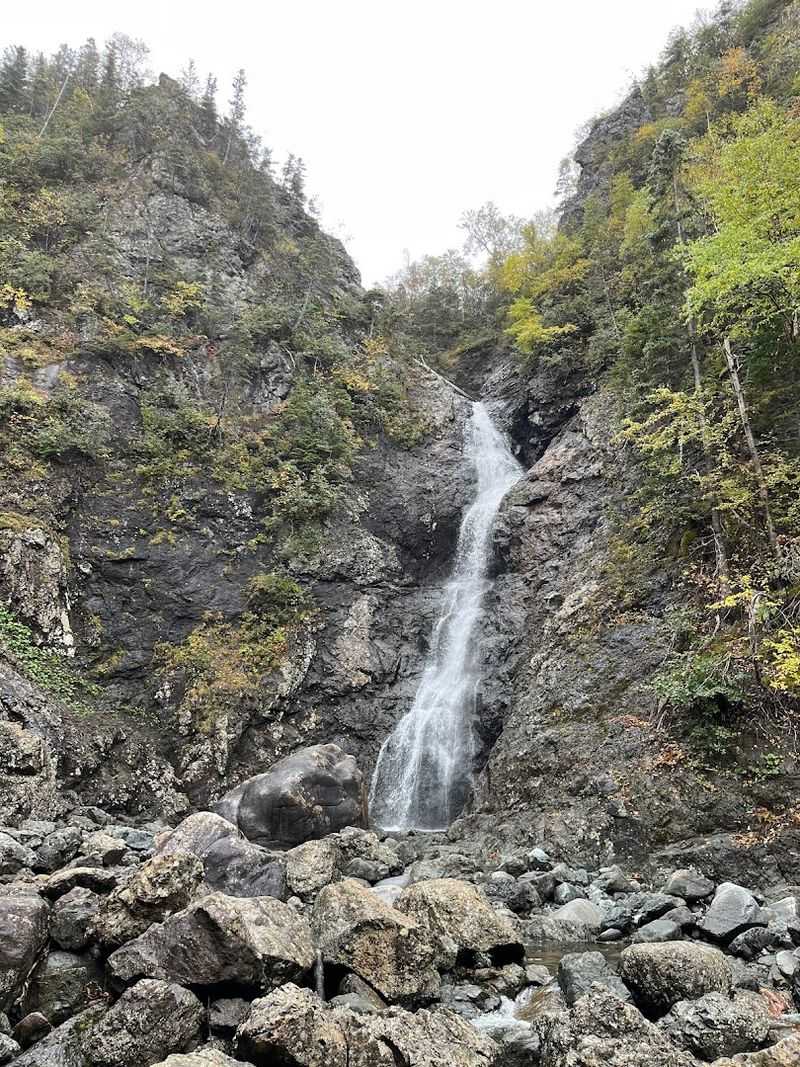
Coppermine Falls has the advantage of a name that already sounds like a chapter title. Set along Coppermine Brook in the Delaware Water Gap region, the falls are tied to the area’s old copper-mining history, with nearby mine shafts adding a rugged, slightly mysterious edge to the outing.
The waterfall itself is not just a pretty water feature; it is part of a landscape shaped by geology, industry, and forest regrowth. That mix gives the place texture.
You can imagine miners, old paths, rocky slopes, and the brook continuing to do its work long after the human activity faded. This is a better choice for hikers who like a little history with their scenery and do not mind a route that feels more exploratory than polished.
Water volume varies, so spring or a recent rainy stretch will show it at its best. The practical move is to research your route before heading out, bring a proper map, and avoid entering or messing around near old mine openings, which are dangerous and not part of the fun.
Coppermine Falls belongs here because it has atmosphere in abundance. The name, the brook, the old shafts, and the falling water combine into something that feels less like a standard hike and more like following a clue through the woods.
29. Kugler Falls
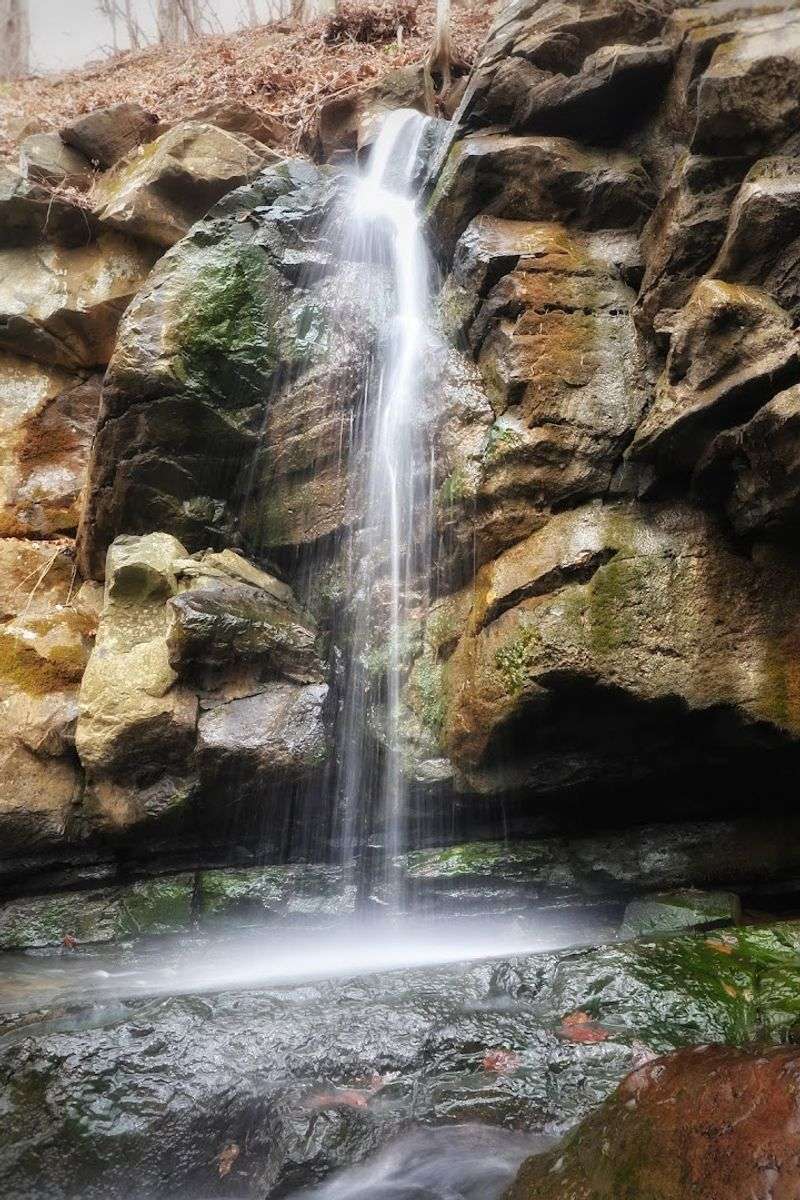
Kugler Woods Falls is proof that a waterfall does not need to be enormous to feel like a find. Located in Kugler Woods Preserve, this small seasonal cascade is reached by a short, rocky hike of about a quarter mile, making it approachable but not entirely effortless.
The key word is seasonal. Visit after a dry spell and you may get more rocks than rush; visit after rain and the little falls come alive, turning a modest walk into a genuinely charming stop.
That makes it a great recommendation for locals who enjoy timing their outings with the weather. The preserve setting gives the visit a quiet, neighborhood-woods feel rather than a big state-park production.
It is the kind of place you choose when you want a quick dose of trees and water without driving half the day. Because the trail is rocky, sturdy shoes still matter, especially when wet leaves or mud enter the picture.
Kugler Woods Falls earns its place through intimacy. It is not the waterfall you use to impress someone with statistics.
It is the one you use to remind them that small preserved places can hold lovely surprises. In the right conditions, it feels like the forest has opened a tiny door and let you peek in.
30. Otter Hole Falls
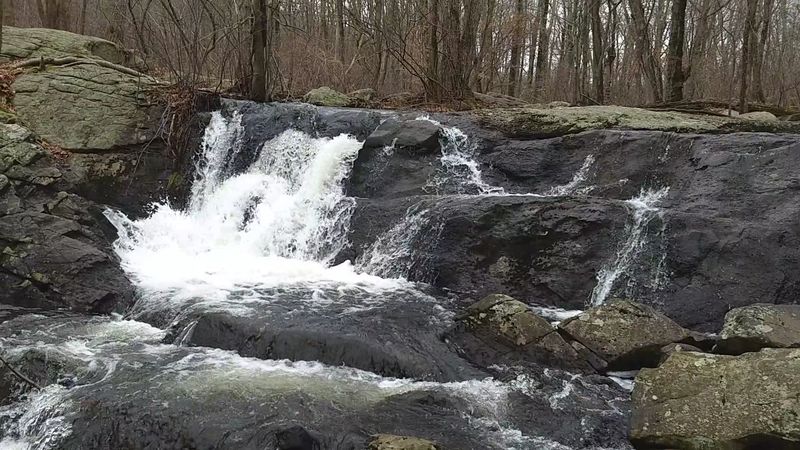
A name like Otter Hole already does half the work, but the waterfall itself finishes the job nicely. Found in Norvin Green State Forest, this is one of the easier waterfalls to reach in the area, sitting only a short distance from the Otterhole Road access compared with some of the more demanding routes nearby.
The falls drop in steps rather than one clean plunge, giving the water a playful, broken pattern as it moves over rock ledges. It is a great choice if you want a taste of Norvin Green without committing to the full rocky workout of longer hikes, though you should still expect real trail conditions rather than a manicured park path.
Otter Hole also works beautifully as part of a bigger loop with Chikahoki Falls, letting you build a waterfall-focused hike with variety. The scene feels especially good after rain, when the brook has enough volume to make the drops feel lively, but it has charm even when the flow is gentler.
This is not the largest waterfall in the state, and that is fine. Its appeal is in the name, the setting, and the way it appears quickly enough to feel like a secret you were lucky to learn.
Some places impress by size; Otter Hole wins by personality.
Share this story