Central Texas barbecue owes more to German immigrants than most folks realize. When German settlers arrived in the mid-1800s, they brought centuries-old meat smoking traditions that transformed how Texans cook beef. Today, a handful of historic meat markets still practice these time-honored techniques, wrapping briskets in butcher paper and smoking them low and slow over post oak, just like their founders did generations ago.
The lines stretching out the door prove that sometimes the old ways really are the best ways.
1. City Meat Market (Giddings)
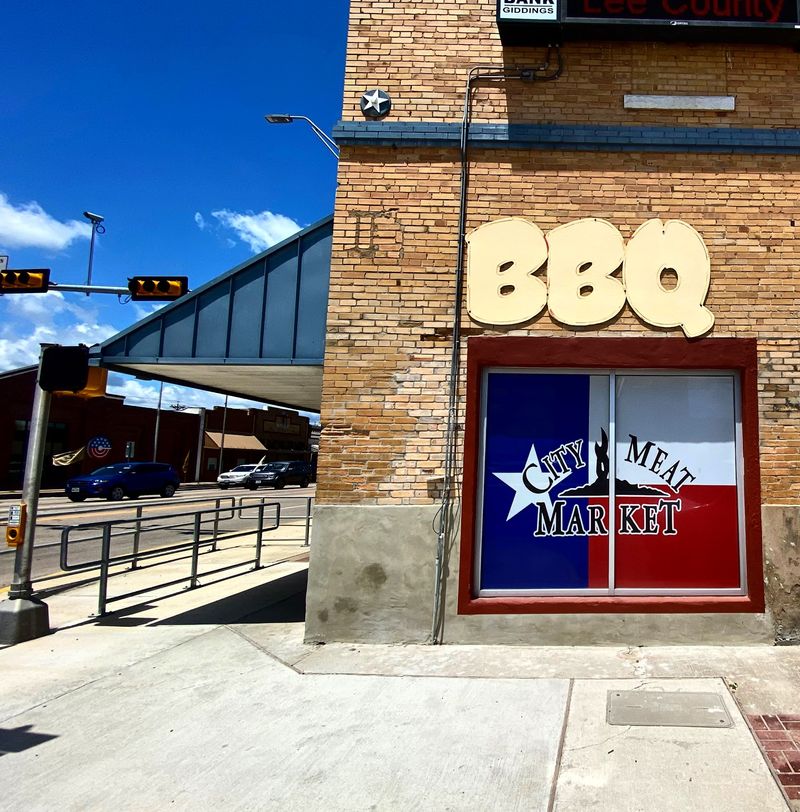
Walk into this unassuming spot on a Saturday morning and you’ll find yourself transported back to 1928. The same brick pits that Frank Mikeska built nearly a century ago still pump out smoke seven days a week. Locals know to arrive early because once the brisket sells out, that’s it until tomorrow.
The German influence shows up in every detail here. Briskets get rubbed with nothing but salt and pepper, then wrapped tight in pink butcher paper halfway through the smoke. That paper lock keeps the meat moist while the bark develops into something special.
The post oak burns clean and steady, never too hot, never rushed.
What sets this place apart is the patience baked into every step. Most commercial operations crank up the heat to speed things along, but not here. The pitmasters still believe in 12-hour smokes at 225 degrees, the way German meat market owners taught their sons for generations.
That slow render turns the fat cap into liquid gold.
The building itself hasn’t changed much since Eisenhower was president. Wooden counters worn smooth by decades of elbows, vintage meat scales, hand-written price boards. It’s not trying to be retro or Instagram-worthy.
This is just how it’s always been done.
Don’t expect fancy sides or craft beer here. You get brisket, sausage, maybe some pork ribs if you’re lucky. White bread, pickles, onions.
The focus stays laser-sharp on the meat, which is exactly how those German butchers would have wanted it. Cash only, no reservations, no shortcuts. Just honest smoke and time doing what they do best.
2. Smithy’s Market (Lockhart)
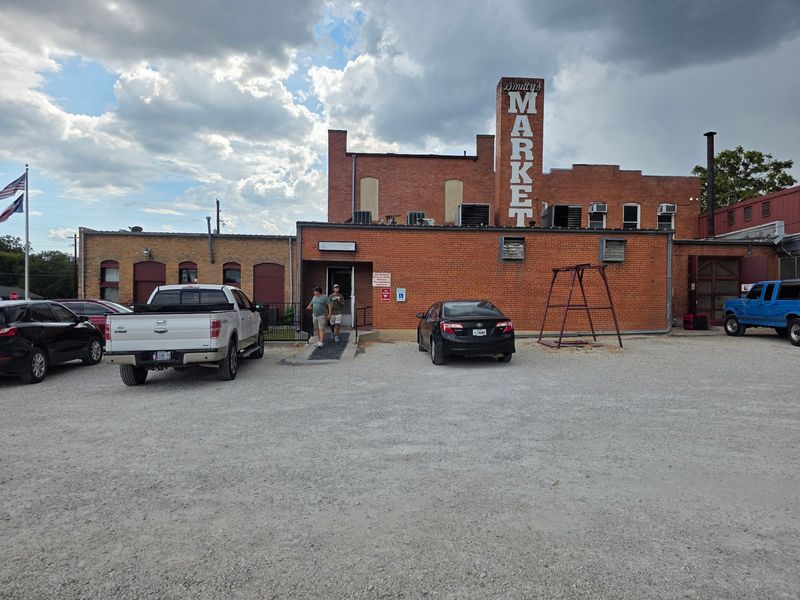
Step through that screen door and you’re hit with a century’s worth of smoke embedded in every brick. The Schmidt family opened this joint in 1948, but the building goes back even further. Those soot-blackened walls aren’t painted that color.
That’s genuine patina from thousands of briskets.
Here’s something most people miss: the pits sit right in the dining room. No separate smoke shack, no hidden kitchen. You eat surrounded by the same brick chambers where your lunch spent the night slowly transforming.
The heat radiating off those pits keeps the whole room toasty even on cold January mornings.
The German method shines brightest in how they handle the meat before it ever sees smoke. Briskets get trimmed just enough to let smoke penetrate, but never stripped bare like some modern joints do. That fat cap renders down during the long smoke, basting the meat from the inside out.
No mops, no spritzes, no gimmicks.
You’ll notice they don’t sauce the brisket here. That’s not an oversight. When you smoke meat properly for 14 hours over post oak, sauce just gets in the way.
The beef speaks for itself, with a smoke ring that runs deep pink and bark that shatters when you bite it.
The ordering system confuses first-timers but locals love it. You walk straight to the pit, point at what you want, and the pitmaster slices it right there on butcher paper. No plates, no forks unless you ask.
Just meat, bread, and maybe some cheese and crackers if you’re feeling fancy. It’s meat market dining stripped to its essential core.
3. Southside Market & Barbeque (Elgin)
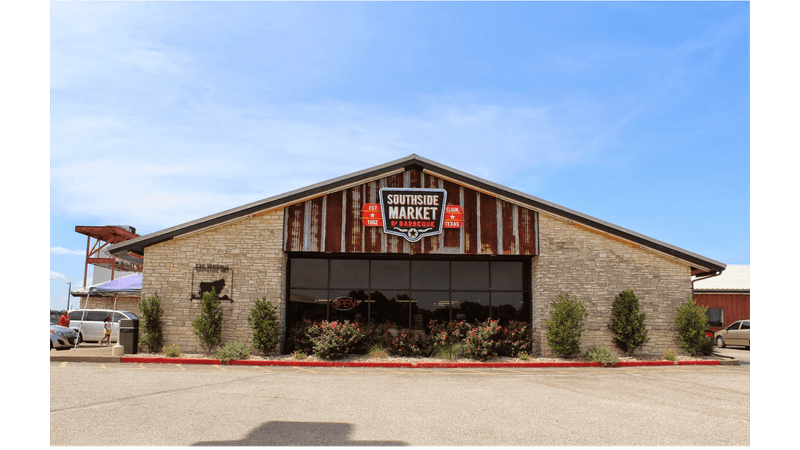
Founded in 1882, this place has been smoking meat longer than Texas has had paved roads. The Bracewell family started as a general store and meat market, serving German and Czech farmers who needed a place to process their livestock. Those farmers taught them the sausage recipes that made Elgin famous across the state.
While most folks come for the legendary hot guts, the brisket program runs deep here too. They still use the same post oak-fired brick pits that anchored the original market. The wood gets sourced from the same ranch families who’ve supplied them for decades.
Consistency matters when you’re feeding four generations of the same customers.
The German influence shows up strongest in their approach to time and temperature. Modern barbecue joints often push temps to 275 or even 300 degrees to speed things up. Not here.
The thermometers hover right around 225, same as always. That extra time lets the collagen break down completely, turning tough brisket into something you can pull apart with your fingers.
They’ve expanded over the years, sure, but the core operation stays true to meat market roots. You can still buy raw briskets and sausage to take home, just like customers did in 1882. The butcher counter runs parallel to the barbecue line, a reminder that this started as a place where ranchers brought whole animals.
The dining room might seat 200 people now, but the kitchen philosophy hasn’t budged. Salt, pepper, smoke, time. No shortcuts, no trends, no fusion experiments.
Just the same German-Texas techniques that turned a small-town meat market into a barbecue institution that ships sausage worldwide.
4. Kreuz Market (Lockhart)
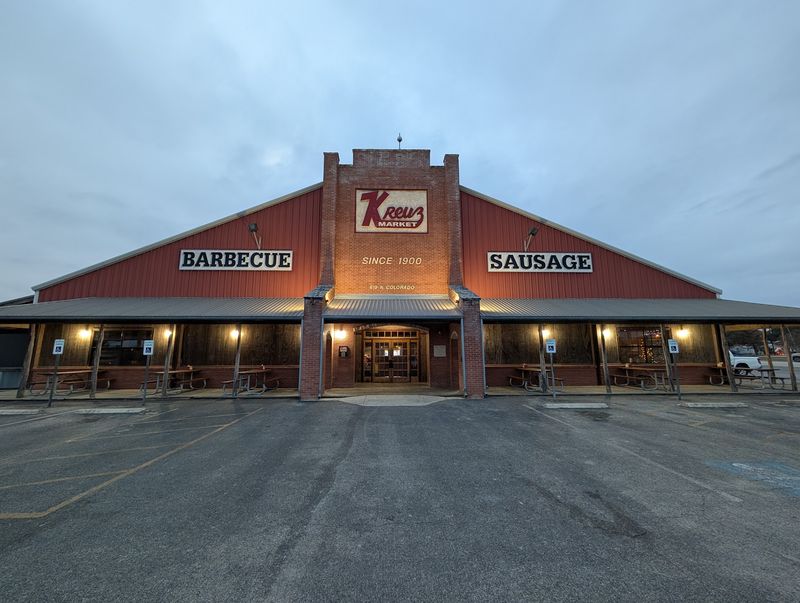
Charles Kreuz opened his meat market in 1900, and his descendants still run the pits using his exact methods. The family moved to a larger building in 1999, but they literally dismantled and rebuilt the original brick pits brick by brick. You don’t mess with 120 years of seasoning and smoke residue.
The no-fork, no-sauce policy isn’t some hipster affectation. That’s how German meat markets operated. You bought meat by the pound, they wrapped it in butcher paper, and you ate it with your hands.
Kreuz never served barbecue sauce because properly smoked meat doesn’t need it. The family sees no reason to start now.
Their brisket technique follows old-school German principles to the letter. Meat goes on the pit fat-side up, gets smoked for 12 to 14 hours, never wrapped. The fat cap slowly melts, dripping through the meat as it cooks.
By morning, you’ve got a mahogany crust and interior so tender it barely holds together when sliced.
The pit room alone measures 10,000 square feet, with massive brick chambers that can hold hundreds of briskets at once. During busy weekends, they’ll smoke 2,000 pounds of beef in a single night. That kind of volume requires serious fire management skills passed down through four generations of pitmasters.
Walk up to the counter and you’ll see whole briskets, pork loins, and prime ribs waiting to be sliced. No steam tables, no holding ovens. Everything comes straight off the pit, gets sliced to order, and lands on butcher paper still steaming.
It’s the same system Charles Kreuz used when customers were arriving by horse and wagon instead of SUVs.
5. Meyer’s Elgin Smokehouse (Elgin)
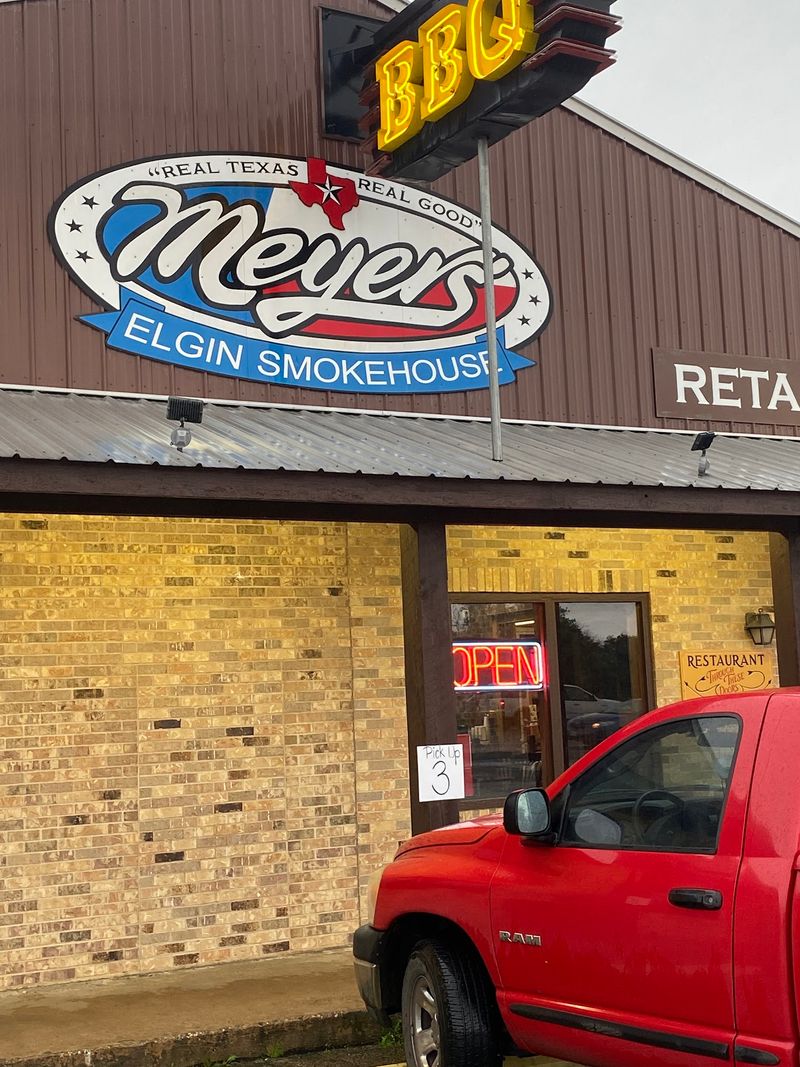
The Meyer family has been making sausage in Elgin since before barbecue was trendy. This third-generation operation keeps things simple on purpose. When your great-grandfather’s recipes still pack the house, why change?
The building might look modest from the highway, but locals know better than to judge a smokehouse by its storefront.
Their brisket benefits from the same attention to detail that goes into their famous sausage. Every morning before dawn, pitmasters load the brick chambers with post oak and beef. The wood comes from a supplier they’ve used for 40 years.
Same species, same seasoning time, same consistent burn. Small details add up when you’re smoking hundreds of briskets every week.
The German meat market tradition shows up in unexpected ways here. They still offer butcher services, cutting custom orders for families and restaurants. That means the folks smoking your brisket know beef inside and out.
They’re not just cooks; they’re butchers who understand muscle structure, fat distribution, and how different parts of the animal respond to heat and smoke.
Meyer’s doesn’t wrap their briskets in foil or paper during the smoke. The meat sits naked on the grates for the entire cook, developing a bark that crunches when you bite it. That exposed surface absorbs more smoke, creating deeper flavor than you get with wrapped meat.
It’s a riskier method that requires constant attention, but the results speak for themselves.
The dining room feels more like someone’s backyard than a restaurant. Picnic tables, paper towels, sweet tea in plastic cups. Nobody’s trying to impress food critics or win awards.
They’re feeding the same families who’ve been coming here since the 1960s, plus the occasional barbecue pilgrim who’s done their homework and knows Elgin has more to offer than just its most famous joint.
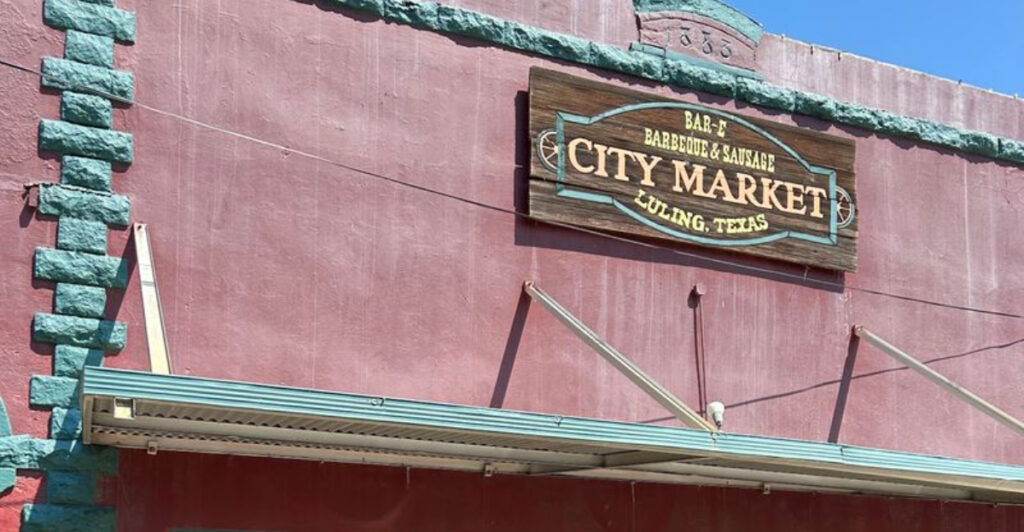
6. City Market (Luling)
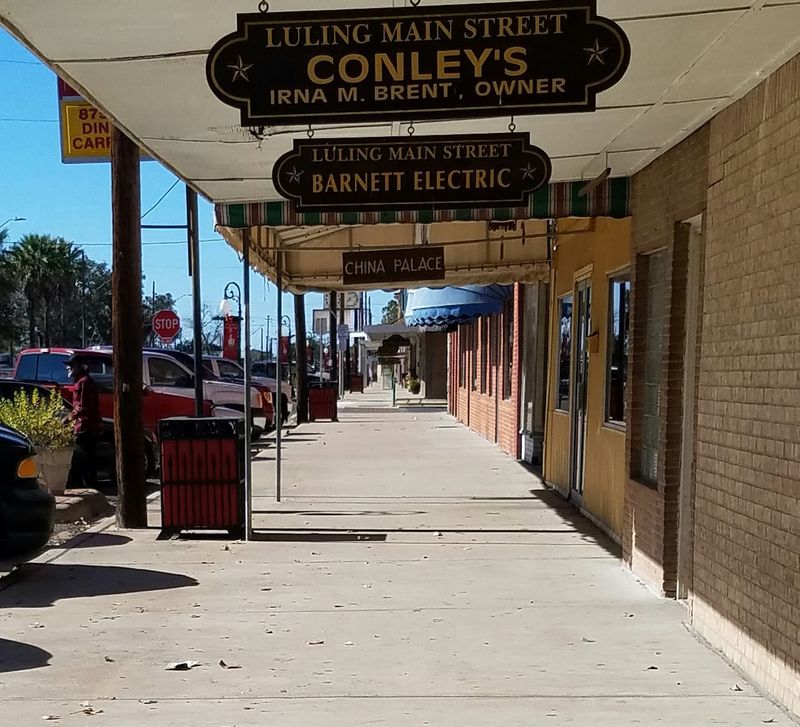
Since 1958, this family operation has been smoking meat in a building that started life as an actual city market. The name isn’t cute branding. Luling’s city fathers really did run a municipal meat market here, serving local ranchers and farmers.
When the Lemons family took over, they kept the name and the commitment to old-fashioned smoking methods.
The pits here date back to the market’s earliest days, modified and rebuilt over decades but never replaced. Those brick chambers have developed a seasoning that can’t be replicated in new construction. Every brisket that comes out carries traces of thousands of smokes that came before.
Pitmasters call it flavor memory, and it’s worth more than any fancy equipment.
German influence runs through the whole operation, from the butcher paper-wrapped servings to the no-nonsense meat focus. You won’t find 15 different sauces or Instagram-worthy loaded baked potatoes here. The menu centers on brisket, sausage, and ribs, with basic sides that don’t compete for attention.
It’s meat market logic: let the protein be the star.
They still use the offset smoking method that German butchers brought to Texas. Fire burns in one chamber, heat and smoke travel through to where the meat hangs. This indirect cooking prevents flare-ups and keeps temperatures steady throughout the long smoke.
Modern pellet smokers can’t replicate the flavor you get from real wood burning in brick pits.
The counter service moves fast even when the line stretches out the door. Order by the pound, watch them slice it fresh, grab your butcher paper bundle and find a table. The whole transaction takes maybe two minutes.
That efficiency comes from 60-plus years of doing the same thing the same way, perfecting every step until it becomes second nature.
7. The Original Black’s Barbecue (Lockhart)
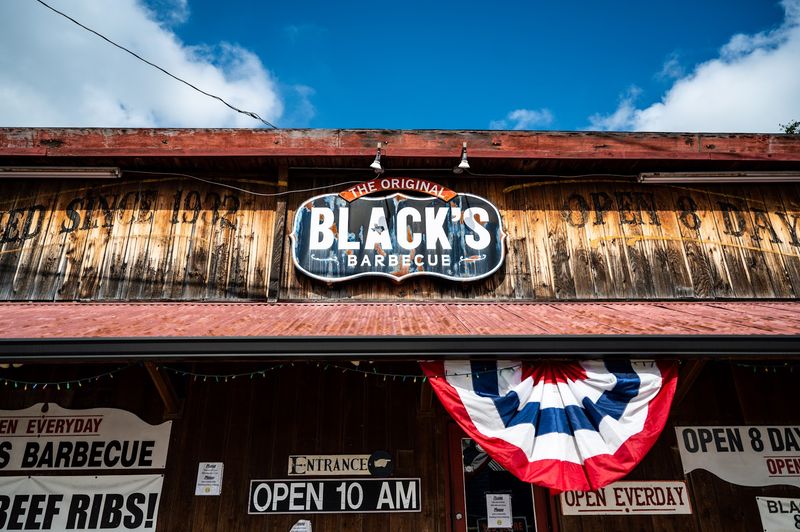
Edgar Black Sr. opened this meat market in 1932, making it the oldest family-run barbecue joint in Texas still operated by the same family. Four generations later, his great-grandchildren still show up before sunrise to tend the pits. That kind of continuity creates institutional knowledge you can’t learn from books or YouTube videos.
The German meat market DNA runs strong here, starting with the building itself. The original structure served as a full-service butcher shop where ranchers brought whole animals. The same brick pits that smoked custom cuts for Depression-era customers now handle hundreds of briskets weekly.
They’ve been rebuilt and maintained, but never replaced or modernized away from their essential character.
Black’s follows the traditional Central Texas approach: heavy on the smoke, light on the rub. Briskets get seasoned with coarse salt and black pepper, nothing more. Then they spend 12 to 14 hours in post oak smoke, developing that signature pink ring and dark mahogany bark.
The family has never wavered from this formula, even as barbecue trends come and go.
What separates this place from imitators is the refusal to scale up beyond what the pits can handle properly. They could easily double capacity with modern equipment, but that would mean abandoning the brick chambers that define their product. Instead, they stick with traditional methods and accept that some days they’ll sell out early.
Quality trumps quantity, every single time.
The dining room mixes old and new in ways that somehow work. Historic photos cover the walls, showing four generations of Blacks standing by the same pits. But the tables stay full of young families, barbecue tourists, and third-generation regulars who remember when Edgar Sr. was still slicing brisket himself.
It’s living history that happens to serve the best lunch in Lockhart.
Share this story