Tennessee holds treasures beyond Nashville’s neon lights and Memphis’s blues scene. Tucked into rolling hills and quiet valleys, you’ll find small towns where history isn’t just preserved but genuinely lived.
These communities offer a window into the South’s storied past, with architecture that whispers tales of bygone eras and traditions that refuse to fade with time.
1. Jonesborough
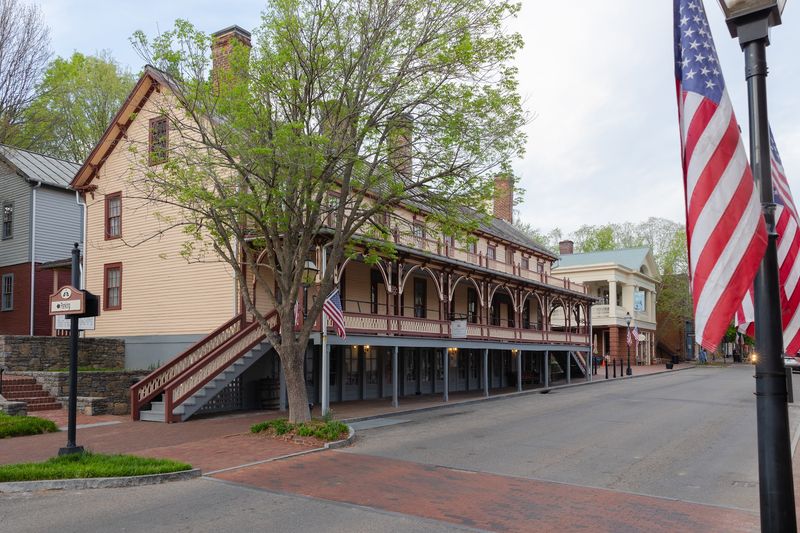
Walking through Jonesborough feels like stepping onto a movie set, except everything here is authentically old. Founded in 1779, this gem holds the title of Tennessee’s oldest town, and boy, does it wear that badge with pride.
The downtown district stretches along a perfectly preserved Main Street where brick buildings from the 1700s and 1800s stand shoulder to shoulder, their facades lovingly maintained by folks who understand what they’ve got.
The architecture tells stories if you know how to listen. Federal-style homes with their symmetrical windows peer down tree-lined residential streets.
The Chester Inn, built in 1797, once hosted presidents and now serves as a museum where you can practically hear the echoes of Andrew Jackson’s boots on the wooden floors.
But Jonesborough’s real magic isn’t just in its buildings. This town practically invented the art of storytelling as a formal tradition.
Every October, thousands descend on the International Storytelling Center for the National Storytelling Festival, transforming the quiet streets into a celebration of oral history that would make your grandparents weep with joy.
You can wander the entire historic district on foot in an afternoon. Pop into the Jonesborough Repertory Theatre for live performances in an intimate setting. Browse locally-owned shops selling everything from handmade quilts to Tennessee honey.
The town square hosts farmers markets where actual farmers sell actual produce they grew themselves. Revolutionary War history buffs get goosebumps here because this was Tennessee’s first capital, back when the state was still trying to figure out what it wanted to be.
What makes Jonesborough special isn’t just that it’s old. Plenty of places are old.
This town managed to keep its soul intact while the world rushed past. No chain stores clutter the landscape.
No modern eyesores break the visual timeline. Just authentic Southern heritage, preserved not as a museum piece but as a living, breathing community where people actually live, work, and carry forward traditions their great-great-grandparents started.
2. Franklin
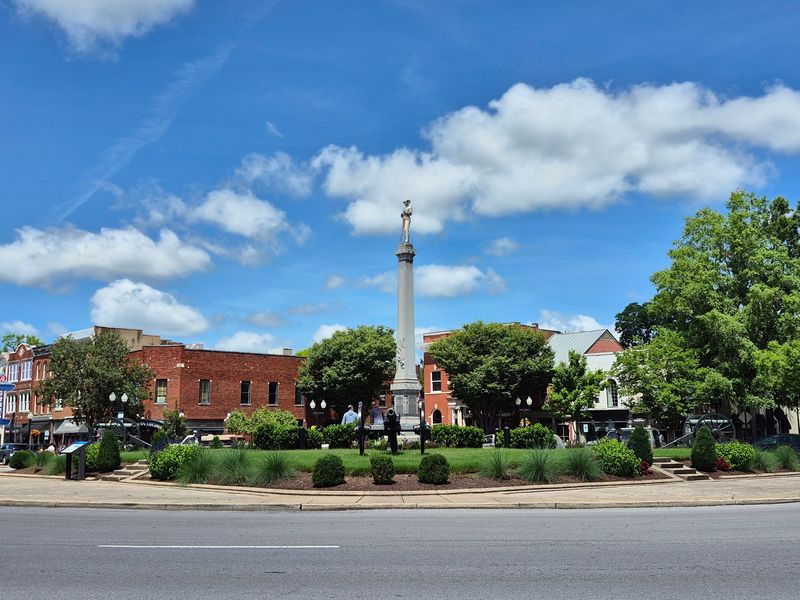
Franklin’s downtown could grace a thousand postcards without breaking a sweat. This isn’t some accidentally charming place that stumbled into beauty.
Every corner, every storefront, every historic marker tells you this town knows exactly what it’s doing when it comes to preserving Southern elegance while staying vibrant and relevant.
The Battle of Franklin in 1864 left scars that never fully healed, and honestly, the town doesn’t want them to. Carter House and Carnton Plantation stand as sobering reminders of the Civil War’s brutal reality.
Walking those grounds, you can almost hear the cannon fire that once shook these streets during one of the war’s bloodiest five hours.
But Franklin refuses to be defined solely by tragedy. The downtown square buzzes with energy that feels both historic and contemporary.
Boutiques occupy buildings that witnessed history, selling everything from designer clothes to artisan chocolates. Restaurants serve elevated Southern cuisine in dining rooms where Confederate and Union officers once strategized.
Main Street deserves its own fan club. Brick buildings from the 1800s create a streetscape so perfectly proportioned it almost hurts.
Gas lamps still light the sidewalks at night, casting that golden glow that makes evening strolls feel romantic even if you’re just grabbing ice cream alone.
The town’s commitment to preservation goes beyond slapping plaques on old buildings. Strict zoning keeps modern chain architecture from polluting the historic viewshed.
New construction must harmonize with existing structures, which is why Franklin looks cohesive rather than like a theme park.
Music lovers know Franklin as a Nashville suburb where artists actually live, not just work. You might spot a Grammy winner grabbing coffee on a Tuesday morning, no bodyguards, no fuss.
Live music spills from venues most nights, continuing Tennessee’s proud tradition of making beautiful noise.
Families flock here for good reason. The schools rate highly, parks offer actual green space, and the sense of community runs deeper than surface pleasantries. People genuinely seem to like living here, which shows in how well they maintain their slice of Tennessee heritage.
3. Bell Buckle
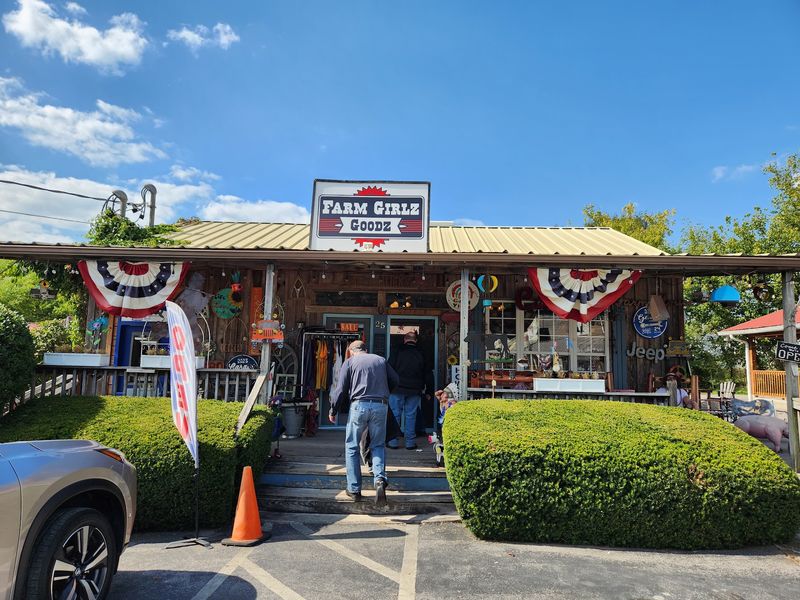
Population barely cracks 500, but Bell Buckle packs more old-fashioned charm per square foot than towns ten times its size. This tiny railroad community hasn’t just preserved its past; it’s living in it, happily, without apology or pretense.
The downtown stretches maybe two blocks if you’re generous with your measuring. Yet those blocks contain more antique shops, quirky boutiques, and nostalgic atmosphere than you’d think physically possible.
Store owners actually know your name by your second visit, and they mean it when they ask how you’re doing.
Bell Buckle’s origin story involves the railroad, naturally. Most small Tennessee towns owe their existence to those iron rails that once connected rural communities to the wider world.
When the trains stopped being the economic lifeline, many towns withered. Bell Buckle adapted by leaning into its vintage appeal rather than chasing modern development that would’ve destroyed what made it special.
The annual RC Cola and Moon Pie Festival perfectly captures the town’s personality. Where else would thousands gather to celebrate a soft drink and a marshmallow snack? Only in a place that understands the value of simple pleasures and doesn’t take itself too seriously. The festival turns sleepy streets into a carnival of Southern nostalgia every June.
Webb School, a prestigious prep school founded in 1870, gives Bell Buckle an unexpected intellectual dimension. The campus buildings add architectural gravitas to a town that might otherwise be dismissed as merely cute.
Students from across the country study here, bringing fresh energy to a community deeply rooted in tradition.
Antique hunters make pilgrimages to Bell Buckle’s shops, which overflow with everything from Depression glass to Civil War memorabilia. You’re not getting ripped off by savvy dealers who know tourists when they see them.
Prices stay reasonable because the owners genuinely love sharing treasures, not just extracting maximum profit.
Walking these streets feels like visiting your grandmother’s hometown, assuming your grandmother lived somewhere impossibly charming. No Starbucks, no Target, no traffic lights.
Just authentic small-town Tennessee life, preserved not through forced nostalgia but through a community that never saw reason to change what already worked perfectly.
4. Rugby
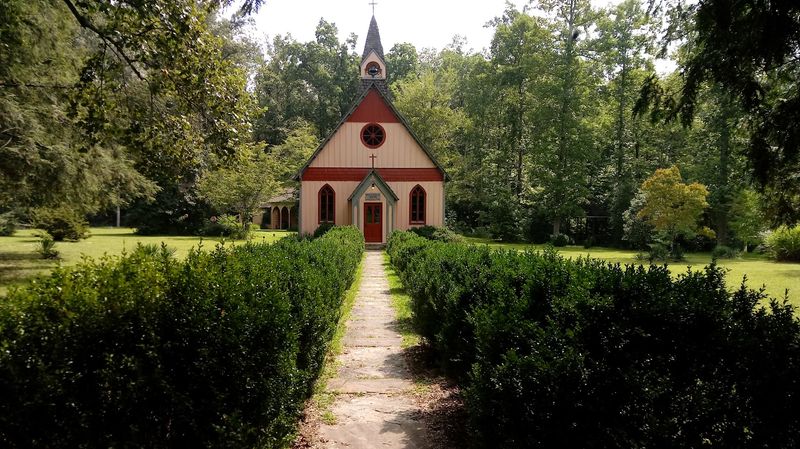
Rugby stands alone in Tennessee’s historic town lineup because it’s genuinely, authentically English. Not Southern with English influences.
Actually English, transplanted to the Cumberland Plateau in 1880 by British author Thomas Hughes, who dreamed of creating a utopian colony for younger sons of English gentry who wouldn’t inherit their family estates.
The experiment failed economically within a generation, but the buildings survived. Walking through Rugby today means encountering Victorian Gothic cottages that look airlifted from the English countryside. Christ Church Episcopal, completed in 1887, still holds services with its original hanging lamps and 1849 rosewood organ imported from London.
This isn’t a reconstruction or a replica village. These are the actual structures built by English colonists who brought their architectural traditions across the Atlantic.
The preservation work has been meticulous, maintaining authenticity while ensuring buildings don’t crumble into romantic ruins.
Hughes Public Library contains 7,000 original Victorian volumes, many brought by the colonists themselves. You can browse titles that English gentlemen once read by candlelight, dreaming of their social experiment succeeding.
The collection includes first editions that would make rare book collectors weep.
The town’s population never recovered from the colony’s collapse, which ironically preserved its character. No commercial development pressured the community to tear down old buildings for strip malls.
Rugby remained frozen in time partly through economic necessity, partly through residents who recognized the treasure they’d inherited.
Modern Rugby operates as a historic site, but people actually live here. Bed and breakfasts occupy restored colonist homes. Craftspeople demonstrate traditional English crafts. You can attend workshops on Victorian cooking or attend concerts in the historic Schoolhouse Cafe.
The surrounding wilderness adds to Rugby’s otherworldly appeal. Dense forests press close to village boundaries, creating an isolated feeling that must mirror what colonists experienced arriving here 140 years ago.
Hiking trails wind through the Cumberland Plateau’s rugged terrain, offering solitude rarely found in more developed historic sites.
Old-world charm isn’t marketing speak when applied to Rugby. This town literally represents another world, another time, preserved through accident and intention in equal measure.
Nowhere else in Tennessee offers quite this combination of authentic Victorian architecture and English cultural heritage.
5. Greeneville
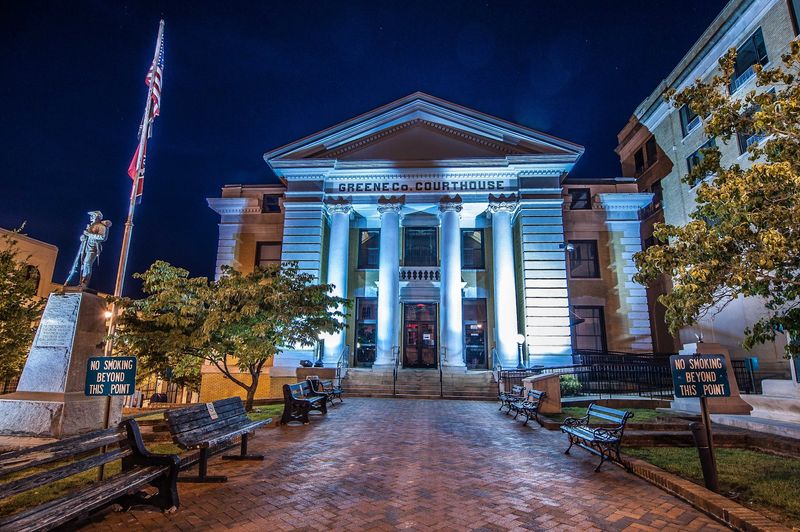
Andrew Johnson probably wouldn’t recognize modern America, but he’d feel right at home in Greeneville. This East Tennessee town has carefully preserved the president’s legacy while maintaining the kind of historic downtown that actually functions as a community gathering place rather than a tourist trap.
The Andrew Johnson National Historic Site anchors Greeneville’s historic credentials. You can tour Johnson’s tailor shop, where he stitched suits before stitching together a political career that led to the White House.
His homestead and the national cemetery where he’s buried offer tangible connections to a president often overlooked in history classes.
But Greeneville’s appeal extends far beyond one controversial president. The entire downtown district showcases architecture spanning the 1800s and early 1900s.
Brick commercial buildings with cast-iron facades line Main Street, housing businesses that serve locals, not just heritage tourists passing through.
Tusculum University, founded in 1794, makes Greeneville one of Tennessee’s educational pioneers. The campus adds collegiate energy to a town that might otherwise skew heavily toward retirees and history buffs.
Students fill coffee shops and restaurants, keeping the downtown from feeling like a museum after 5 PM.
The town square follows the traditional Southern pattern, with a courthouse commanding the center and businesses radiating outward. Farmers markets bring actual farmers selling actual produce.
Local musicians perform on summer evenings. Community events happen here because the community actually uses this space, not because some tourism board mandates programmed authenticity.
East Tennessee’s landscape provides Greeneville with a gorgeous natural setting. The town sits nestled in a valley with mountain views that remind you why settlers chose this spot.
Historic homes climb gentle hillsides, their porches offering vistas that haven’t changed much since the Civil War.
Greeneville avoided the economic devastation that hollowed out many small Southern towns. Manufacturing provided jobs when agriculture declined.
That economic stability allowed preservation efforts to succeed because people could afford to maintain old buildings rather than abandoning them for cheaper modern construction.
What strikes visitors most is Greeneville’s authenticity. This town isn’t performing Southern heritage for tourists. It’s living its history naturally, incorporating preservation into daily life rather than treating the past as a separate attraction requiring admission fees and gift shops.
6. Lynchburg
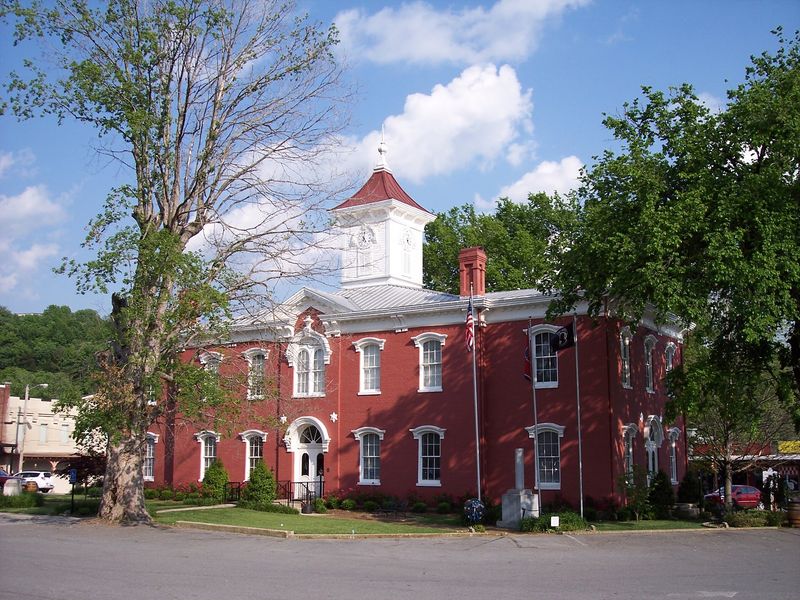
Jack Daniel’s Distillery dominates Lynchburg’s identity, and the town makes no apologies for that relationship. When you’ve been making whiskey since 1866 in a dry county, you’ve earned the right to build your entire tourism economy around the irony.
The town square looks like set designers for a 1950s movie got everything exactly right. The Moore County Courthouse, built in 1885, anchors the square with its red brick and white trim practically glowing with small-town wholesomeness.
Lynchburg’s population hovers around 6,000, but millions visit annually for distillery tours. Somehow the town absorbed this tourist influx without losing its soul.
Sure, some shops cater to visitors, but locals still conduct actual business on the square. The hardware store sells real hammers to real contractors, not decorative vintage tools to collectors.
That dry county situation deserves explanation. Moore County voted to stay dry, meaning you can’t buy alcohol for off-premises consumption. You can tour the distillery and sample whiskey, but buying a bottle requires visiting neighboring wet counties.
This quirk adds to Lynchburg’s charm rather than detracting from it, proving Tennessee’s relationship with alcohol remains complicated and entertaining.
Miss Mary Bobo’s Boarding House serves Southern lunch family-style, continuing a tradition started in 1908. You sit with strangers at communal tables, passing platters of fried chicken, green beans cooked with ham hocks, and cornbread that could convert Yankees.
Reservations book months ahead, testament to food that justifies the hype.
The town’s architecture maintains remarkable consistency. No jarring modern buildings disrupt the historic streetscape.
Strict design guidelines keep new construction harmonious with existing structures. Walking these streets genuinely feels like time travel, minus the smallpox and lack of air conditioning. Lynchburg’s pace runs slower than modern life permits most places. People actually stop to chat.
Store owners remember faces. The town refuses to rush, even when tour buses disgorge hundreds of visitors simultaneously.
That unhurried Southern atmosphere isn’t performed for tourists; it’s just how things work here.
Beyond whiskey, Lynchburg offers genuine small-town Tennessee culture. High school football matters. Church on Sunday matters. Community ties run deep through generations of families who never saw reason to leave.
7. Columbia
James K. Polk’s ancestral home gives Columbia presidential credibility, but this town’s heritage runs deeper than one political figure.
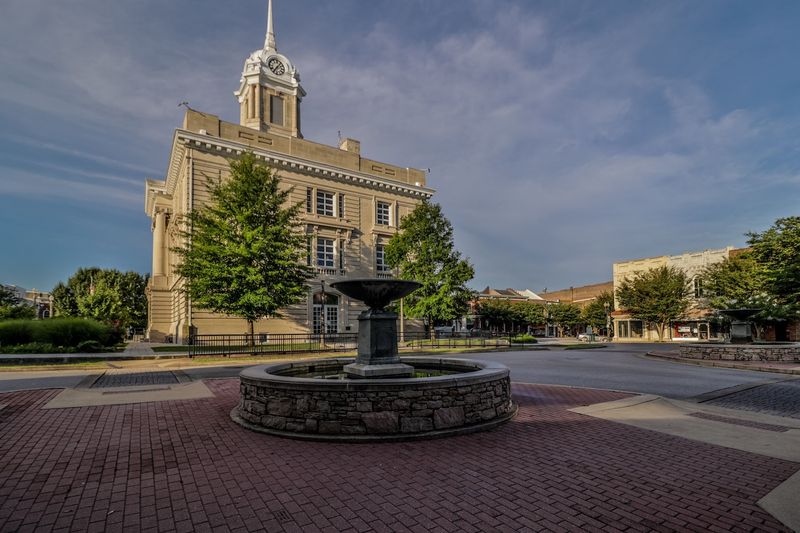
The downtown square represents small-town Tennessee architecture at its finest, with a collection of 19th-century buildings that survived wars, economic shifts, and misguided urban renewal efforts.
The Maury County Courthouse dominates the square with Second Empire architecture that demands attention. Built in 1904, its mansard roof and central clock tower create a focal point that organizes the entire downtown.
Surrounding commercial buildings from the 1800s create a cohesive streetscape where each structure contributes to the overall historic character.
Columbia calls itself the Mule Capital of the World, which sounds ridiculous until you learn the town once hosted the largest mule market in existence. The annual Mule Day celebration continues this tradition every April, proving Tennesseans will celebrate anything with enough enthusiasm and fried food.
Thousands attend, demonstrating that heritage tourism doesn’t require European castles or Revolutionary War battlefields.
The James K. Polk Home offers more than presidential history. The house represents early 19th-century domestic architecture and provides context for understanding how Tennessee’s political class lived. Polk’s parents built this home in 1816, and the preserved interiors show period furnishings and family possessions that humanize a president often reduced to textbook footnotes.
Downtown Columbia avoided the fate of many Southern town squares that became parking lots surrounded by empty buildings. Active businesses occupy historic storefronts. Restaurants serve locals and visitors alike. The square functions as genuine public space where community events happen naturally rather than through forced programming.
Columbia’s residential neighborhoods contain architectural treasures beyond the commercial downtown. Antebellum homes line shaded streets, their Greek Revival columns and wide porches embodying Southern domestic architecture.
Many remain private residences, lived in and loved rather than converted to museums or bed-and-breakfasts.
The town’s location along Highway 31 helped preserve its economic viability. Traffic passing between Nashville and Alabama provided customers for businesses that might otherwise have failed.
That steady commerce allowed building owners to maintain properties rather than letting them deteriorate.
Columbia demonstrates how heritage preservation succeeds when combined with economic sustainability. You can’t preserve history if nobody can afford to maintain buildings.
This town figured out that balance, keeping its past alive while allowing enough change to remain relevant and prosperous.
8. Wartrace
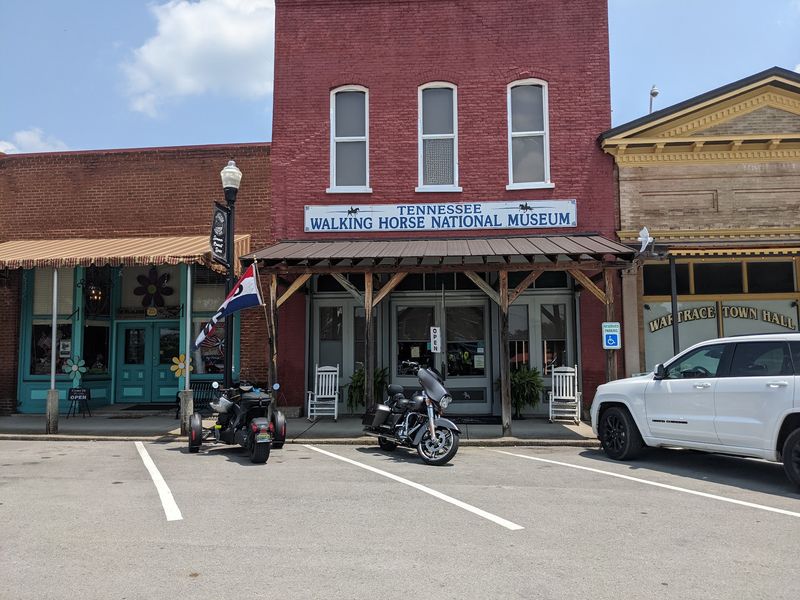
Midnight Sun, the Tennessee Walking Horse that defined the breed’s championship standards, came from Wartrace. That fact tells you everything about this tiny railroad town’s outsized importance to Tennessee heritage.
When your population barely reaches 600 but your horses achieve international fame, you’ve accomplished something special.
The railroad created Wartrace in the 1850s, and the tracks still run through the center of town. The historic depot stands as a reminder of when trains represented cutting-edge transportation rather than nostalgic tourism.
That depot now serves as a museum, because of course it does, but the building’s preservation means modern visitors can understand how railroad architecture shaped small-town development.
Walking Horse culture permeates Wartrace in ways outsiders might not immediately recognize. Training stables dot the surrounding countryside.
Locals discuss bloodlines and gaits with the expertise city folks reserve for sports statistics. The Walking Horse National Celebration headquarters operated here for years, cementing Wartrace’s reputation among equestrian enthusiasts worldwide.
Downtown Wartrace stretches maybe two blocks, but those blocks contain enough vintage atmosphere to satisfy anyone seeking authentic small-town Tennessee. Buildings from the late 1800s house businesses that come and go, but the structures themselves persist.
No chain stores, no franchises, just locally-owned establishments serving a community that values independence.
The pace here runs so slow it’s almost comedic. Traffic jams don’t exist. Rush hour means three cars at the stop sign. People wave at strangers because not waving would be rude.
This isn’t performed hospitality for tourists; it’s genuine small-town culture where everybody really does know everybody.
Wartrace never experienced significant growth spurts that might have destroyed its historic character. Economic limitations that frustrated residents actually preserved the town’s appearance.
No developer bought up Main Street to build modern commercial strips. No population boom demanded suburban expansion. Wartrace stayed small, and that smallness became its greatest asset.
The Walking Horse Hotel, built in 1917, represents the town’s brief moment of prosperity when the railroad and horse industry intersected perfectly. The building still stands, a tangible reminder of when Wartrace mattered to the wider world.
Visiting Wartrace means accepting its limitations and appreciating its authenticity. You won’t find luxury accommodations or fine dining. What you’ll find is genuine Tennessee heritage, unpretentious and unhurried, preserved not through tourism dollars but through stubborn community pride.
Share this story