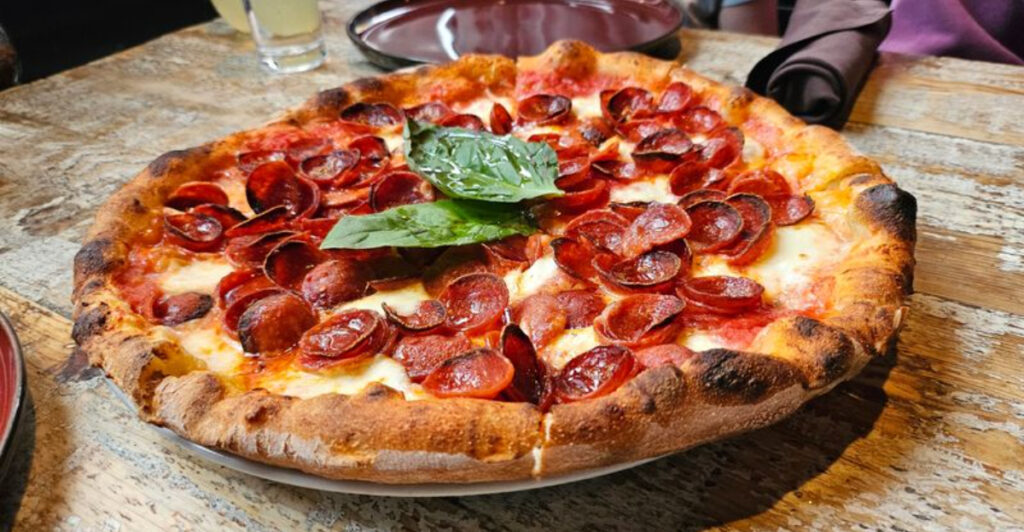
A few blistered spots around the crust can tell you plenty about a pizza before the first bite. Across Illinois, wood-fired pizzerias use blazing-hot ovens to transform carefully prepared dough into pies with crisp edges, chewy centers, and the smoky character that conventional ovens struggle to match.
The intense heat works quickly, making timing and technique just as important as the toppings scattered across each pie. Some restaurants stay close to traditional Italian methods, while others bring their own personality to the fire. These 8 Illinois pizzerias show just how much flavor can develop when dough meets flame.
1. Rip’s Brick Oven Pizzeria (Carbondale)
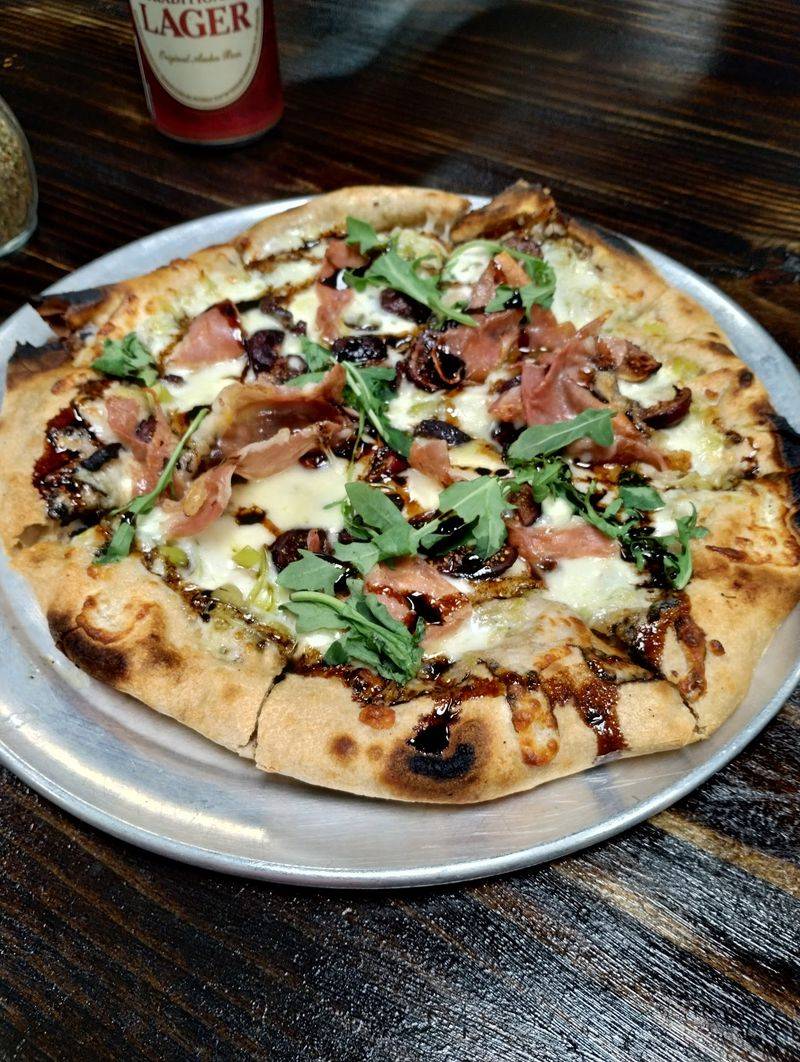
Down in Southern Illinois, Rip’s Brick Oven Pizzeria gives wood-fired pizza fans a style that stays focused on the dough as much as the toppings.
The pies lean Neapolitan, so the crust is meant to be lively, with puffed edges, a tender middle, and those dark little blisters that tell you the oven did its job. That balance matters, because a good char should add flavor, not take over the whole slice.
One detail that stands out here is the use of organic, stone-milled flour. That choice can give the dough a fuller, slightly rustic taste, and it pairs well with a hand-mixed, hand-shaped approach.
Instead of aiming for a stiff, uniform crust, the pizza comes across with a more natural look, the kind where no two pies need to be exactly alike to be right.
The brick oven plays a huge role in the final result. High heat cooks fast, helping the outer edge pick up that cooked, leopard-spotted finish while the center stays soft enough to fold.
For diners, that means it helps to eat these pizzas fresh and hot, because wood-fired crust shows its best texture right after it leaves the oven.
Toppings do not need to be overloaded on a pie like this. Lighter combinations let the flour, fermentation, and fire show through, which is part of the fun.
A classic cheese pie or a simple tomato-based option often gives the clearest picture of how the crust performs. Carbondale has plenty of casual places to grab a meal, but Rip’s sets itself apart by treating pizza like a craft instead of a routine.
Anyone curious about charred crust without a lot of fuss can start here. Order with an open mind, look at the edge before the first bite, and let the oven-made flavor tell the story.
2. Strapoli Pizzeria (Chicago)
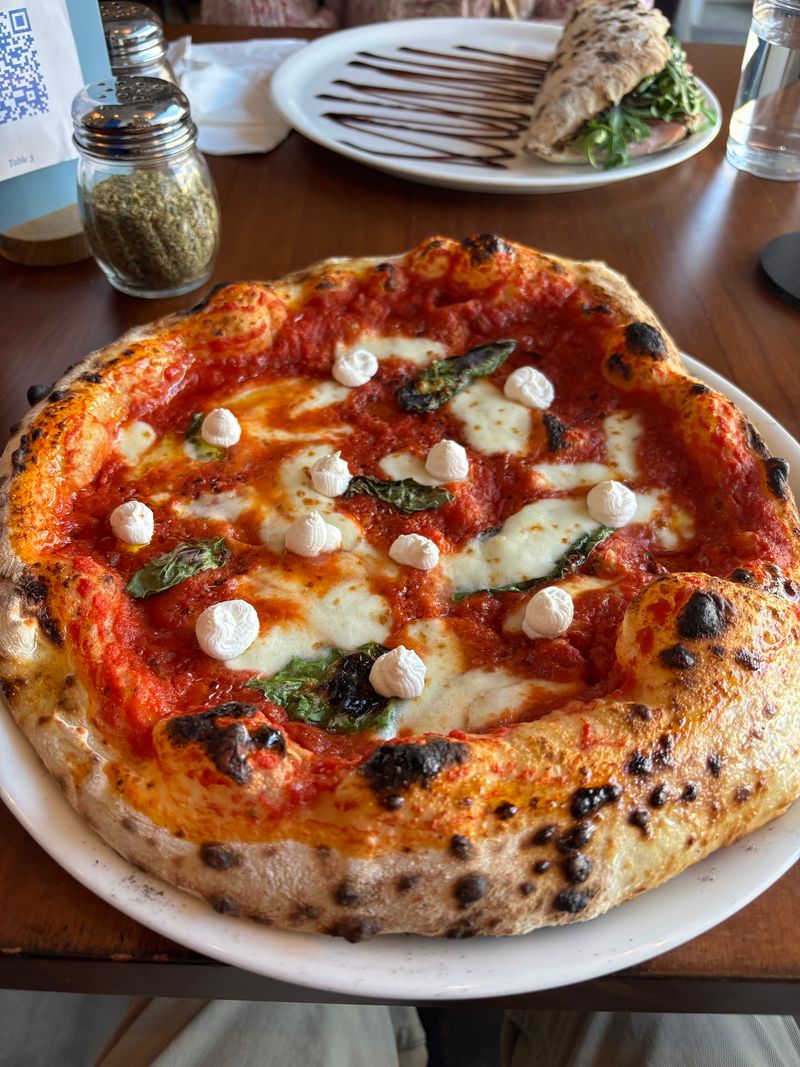
Chicago has no shortage of pizza styles, which is exactly why Strapoli stands out by keeping its attention on Italian-style pies with strong crust character.
The first thing many people notice is the rim, which turns bubbly and chewy once it meets the oven heat. That texture gives each slice a nice contrast between a light interior and a darker, crisped edge.
Instead of burying the dough under too many toppings, Strapoli appears to let the crust stay in the spotlight. Straightforward combinations can be a smart move at a place like this, because the fire-kissed flavor deserves room to come through.
Tomato, cheese, and a few well-chosen additions often do more for a pizza than a long list of extras. Good wood-fired crust should bring a little drama to the table. A puffed border, scattered char marks, and that chewy pull in the bite all work together to make the pie more memorable.
At Strapoli, that style seems to be the point, not an accident, and it gives the pizza an identity separate from thicker, heavier Chicago favorites.
For anyone ordering here, a useful strategy is to start simple before moving into more loaded options. Doing that lets you notice how the dough tastes on its own and how the oven shapes the final texture.
Once you know the baseline, every topping choice becomes easier to judge. Another reason this approach works is that a restrained pizza can still feel complete. The oven adds smokiness, the crust supplies chew, and the toppings act more like support than distraction.
Strapoli makes a strong case that wood-fired pizza does not need tricks to be exciting. Sometimes the smartest move is letting the dough speak first, then letting the char finish the sentence for hungry Chicago diners.
3. La Crosta Woodfire Pizzeria Italiana (Chicago)
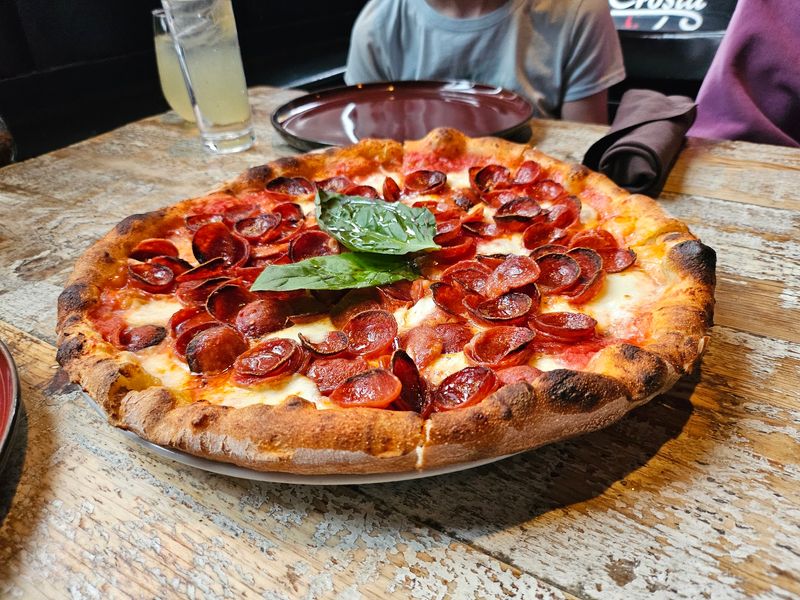
Fresh dough can change the whole pizza experience, and La Crosta Woodfire Pizzeria Italiana builds around that idea from the start. Making dough each day gives the crust a better chance to bake up with a soft interior and a nicely cooked outer edge.
When that pie hits high heat, the result is the kind of char that adds depth without turning harsh. La Crosta also puts care into ingredients brought in from Italy, including tomatoes, cheeses, and flour. For diners, that matters because traditional toppings work best when each part has a clear role.
A simple pizza can taste more layered when the crust is airy, the sauce stays bright, and the cheese melts without overwhelming everything else.
Texture is where a wood-fired pie often wins people over. Here, the goal appears to be a fluffy center supported by a crust that still has enough structure to hold its shape.
That means you get the soft bite many people want from Italian-style pizza, plus the darker baked spots that signal real oven heat.
A smart way to order at a place like this is to choose at least one classic combination. Margherita-style pizzas, or other traditional builds, make it easier to taste the dough and see how the imported ingredients work together.
Bigger topping piles can be fun, but they can also hide the very details that make a wood-fired pizzeria memorable.
Chicago diners often chase bold food, yet La Crosta shows the appeal of balance instead of overload. The crust does not need to shout when it already carries gentle smokiness, lift, and a little char around the rim.
For anyone learning the difference between ordinary pizza and carefully fired pizza, this is the kind of place that helps the lesson stick after the first slice.
4. Fiamma Napoletana (Bartlett)
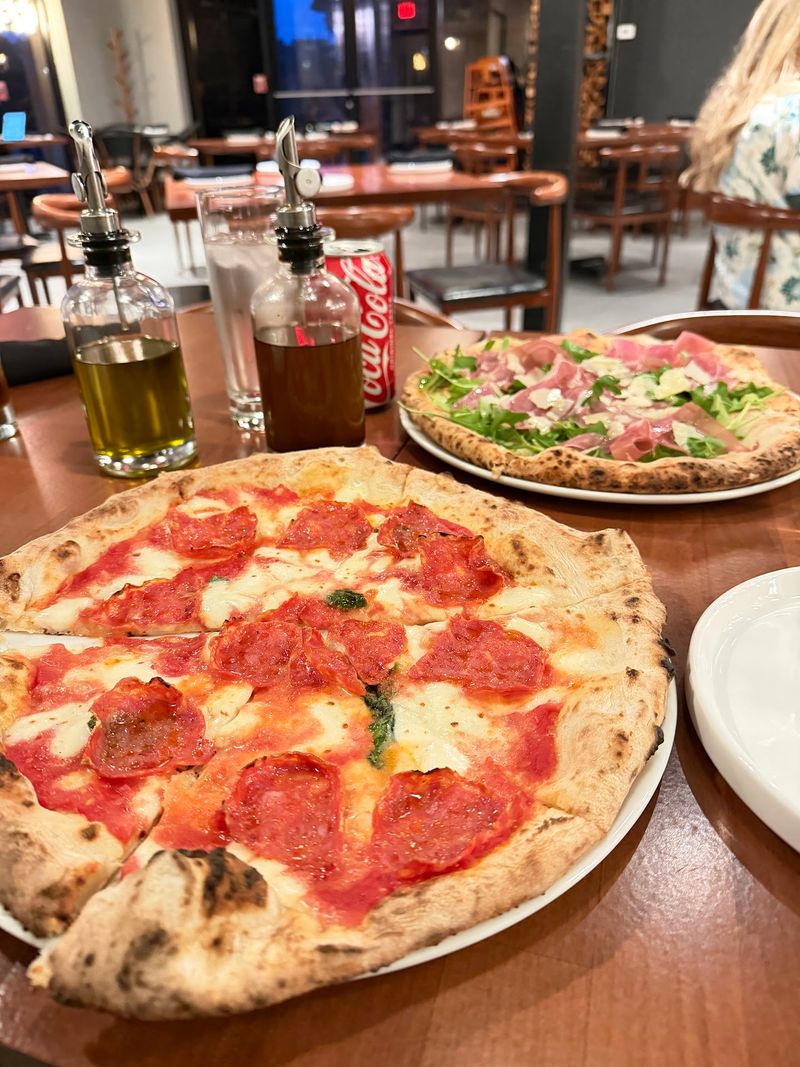
Heat is the star at Fiamma Napoletana, and that changes everything about the pizza. With a custom Italian mosaic wood-fired oven that reaches about 800 degrees, the cooking process moves fast and leaves very little room for dull crust.
A pie can finish in roughly 90 seconds, which helps create the blistering and char tied to traditional Neapolitan pizza.
That kind of speed matters because it affects both texture and flavor. The dough gets enough time to rise and puff at the edge while the center stays soft and flexible.
Meanwhile, the outside picks up those spotted, dark marks that bring a light bitterness and a toasted note many pizza fans actively look for.
Hand-stretched dough also shapes the final product in an important way. Since the pizza is formed by hand, the crust can come out with subtle variation rather than a perfectly even ring.
That slightly irregular look is often part of the appeal, because it shows the pie was built for the oven, not for a factory-like finish.
Anyone trying Fiamma for the first time may want to skip extra-heavy toppings. Neapolitan pizza bakes so quickly that simple ingredients usually fit the style best.
They allow the dough, sauce, cheese, and live-fire effect to stay in balance without turning the center soggy or covering up the charred edge.
Bartlett may not be the first place every traveler thinks about for this style, but a hot oven can shift that conversation quickly. Fiamma gives diners a close look at how intense heat shapes a pizza in under two minutes.
Watch the crust, notice how little time it spends inside, and the whole idea of wood-fired baking starts making a lot more sense on the plate.
5. Legno (Chicago)
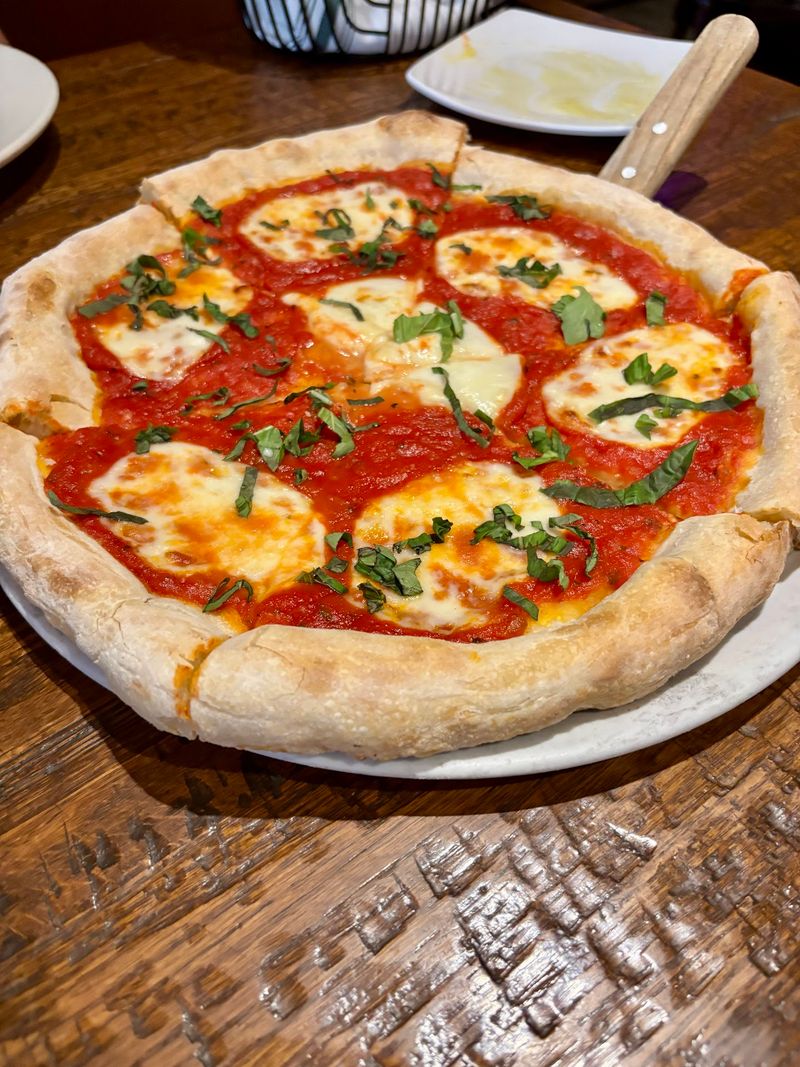
Some restaurants put the oven in the background, but at Legno the wood-burning fire is part of the whole experience. That glow matters for more than looks, because live-fire baking gives Neapolitan pizza a texture that standard ovens struggle to copy.
The crust comes out with quick-rise puff, clear blistering, and a flavor shaped by real heat instead of just time. Legno focuses on traditional wood-burning Neapolitan pizzas, which usually means the dough remains central to the meal.
A proper bite should move from a soft center to an airy rim with a little chew and char. That contrast keeps the slice interesting, especially when the toppings are chosen to work with the crust rather than bury it.
Since the menu also includes homemade pastas and other Italian dishes, pizza lovers may be tempted to split attention. Still, the wood-fired pies deserve focus because this style changes fast after baking.
The crust is often at its best right away, when the edge is still lively and the center has not had time to cool and firm up.
Ordering thoughtfully helps here. One classic pizza can give a clean read on the oven’s work, while a second pie with richer toppings adds range without turning the table into a guessing game.
That approach makes it easier to notice the subtle smokiness and the way the char deepens each bite. Chicago has many places serving Italian food, but not all of them build such a direct connection between fire and finished crust.
Legno makes that connection easy to notice with every puffed edge and darkened bubble. For diners who want pizza that shows the hand of the oven clearly, this is a solid stop where technique stays visible right on the plate.
6. Spacca Napoli Pizzeria (Chicago)
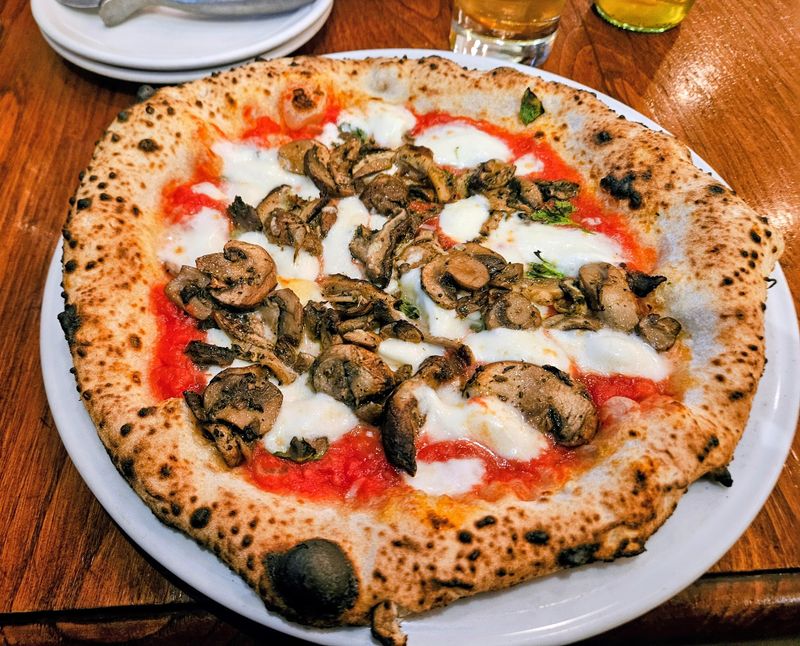
Plenty of places borrow from Neapolitan pizza, but Spacca Napoli is known for staying very close to the tradition. The dough is tended daily, and the pizzas are baked in an oven constructed by artisans from Naples.
That pairing helps produce the airy, charred crust many people picture when they think of classic Neapolitan pie. Daily dough work may sound like a small detail, yet it shapes nearly every bite.
Fermentation affects how the crust rises, how it browns, and how easy it is to digest for some diners. When the process is handled well, the result can be a rim that puffs dramatically while keeping the inside light instead of dense.
The Naples-built oven adds another key piece. A proper wood-fired bake leaves scattered blisters, a touch of blackened spotting, and a flexible center that still supports the toppings.
Those features are not flaws to be corrected. They are signs that the pizza was cooked in the style it was intended to have.
Because the restaurant has long been a destination for traditional Neapolitan pizza in Chicago, first-time visitors may do best by starting with familiar combinations. Simple toppings make the structure of the pie easier to understand.
Once that crust clicks, the rest of the menu makes more sense, because every choice sits on the same careful foundation.
Spacca Napoli works well for readers who want to compare textbook tradition with more modern wood-fired interpretations elsewhere in the state. The pizza shows how restraint can be powerful when dough, oven, and timing line up.
Look for the airy edge, notice the soft center, and pay attention to how the char adds a finishing note instead of stealing the whole performance from the rest of the slice.
7. Peel Wood Fired Pizza (Edwardsville)
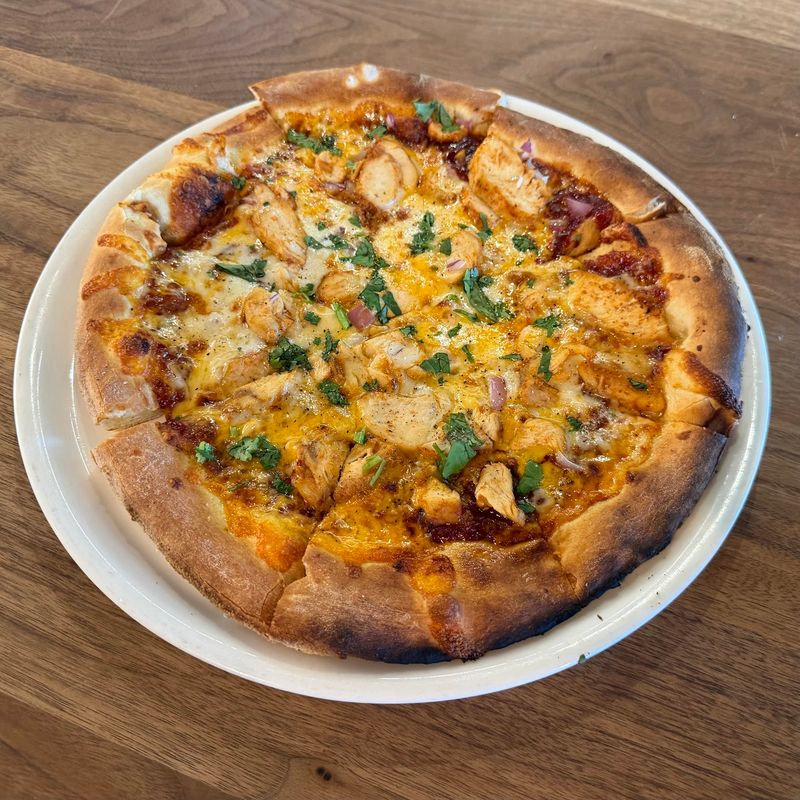
Fire does more than simply cook the pizza at Peel Wood Fired Pizza in Edwardsville. The restaurant uses a Mugnaini-built wood-burning oven fired with white and red oak, creating the intense heat needed to give each pie the blistered, charred crust that makes this style so distinctive.
The oven runs at around 800 degrees, so pizzas spend far less time baking than they would in a conventional setup. That concentrated heat helps the dough develop color quickly while creating the contrast that makes wood-fired crust so satisfying.
Look around the edge of a freshly baked pie and you can see where the fire has done its work. Darkened bubbles and toasted patches add character to the crust, while the wood contributes another layer to the overall flavor.
Peel does not limit its wood-fired approach to pizza, either. The oven is central to the restaurant’s cooking, handling everything from wings and appetizers to other dishes on the menu.
For a first visit, starting with a relatively straightforward pizza makes it easier to appreciate what the oven brings to the table. With fewer competing flavors, the texture and char of the crust have more room to stand out.
That does not mean diners have to stick with the basics. Peel offers plenty of room to explore once you have a feel for its style, making it easy to compare how different toppings work against the same intensely heated crust.
Edwardsville may sit well outside Chicago’s famous pizza scene, but Peel gives Southern Illinois diners a convincing reason to look closer to home for wood-fired pies.
Between the oak-fed oven, high-temperature bake, and signature charred bubbles, the restaurant fits comfortably among Illinois spots where the crust deserves just as much attention as whatever goes on top.
8. Woodfire Rockford (Rockford)
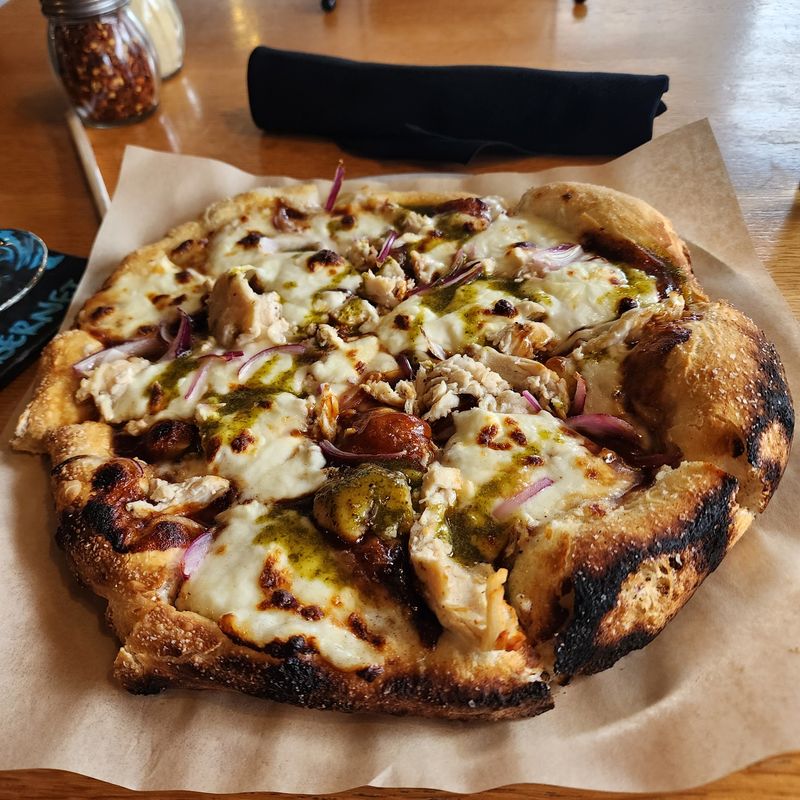
Woodfire Rockford has a backstory that fits its name well. It started with a mobile wood-fired oven in 2010, then opened its first permanent downtown Rockford restaurant five years later.
That path gives the place a practical, oven-first identity, where pizza seems shaped by the fire before anything else enters the picture.
Today the menu ranges from a simple Margherita to more inventive topping combinations, all coming from the brick oven. That range is useful for diners because it lets them choose between studying the basics and trying something more playful.
Either way, the crust remains the common thread, bringing char, chew, and a lightly smoky finish. A Margherita is often the smartest benchmark at a wood-fired restaurant like this.
With fewer toppings in the way, it becomes easier to judge whether the dough has enough lift and whether the edge picked up the right amount of color. Once that test slice lands well, the more creative pies become easier to trust.
The brick oven also helps tie the menu together. Inventive toppings can sometimes overpower pizza if the crust is weak, but a well-fired base holds the whole pie in place.
That is especially important when a slice needs to support extra ingredients while still staying crisp enough around the outer edge.
Rockford diners looking for wood-fired pizza do not have to sort through big-city noise to find it. Woodfire Rockford offers a clear look at how a locally owned restaurant can keep live-fire cooking front and center while still giving customers options.
Start simple, compare it with one bolder pie, and the oven’s influence becomes easy to track across the meal, from the first blistered bite to the last crisp bit of crust.
Share this story