Pennsylvania’s past lives on in quiet cabins, crowded meeting rooms, old prison cells, historic battlefields, and fields where history changed course. Visiting these places helps us understand how people built communities, fought for their beliefs, faced hardship, and shaped the country we know today. From Philadelphia to the hills of western Pennsylvania, these historic sites preserve stories from different eras and offer a closer look at the people and events that helped define the state.
Walking through these places can make history feel less distant. The buildings, landscapes, and artifacts provide a tangible connection to the past, turning familiar names and dates into experiences you can see and explore for yourself.
1. Valley Forge National Historical Park – King of Prussia
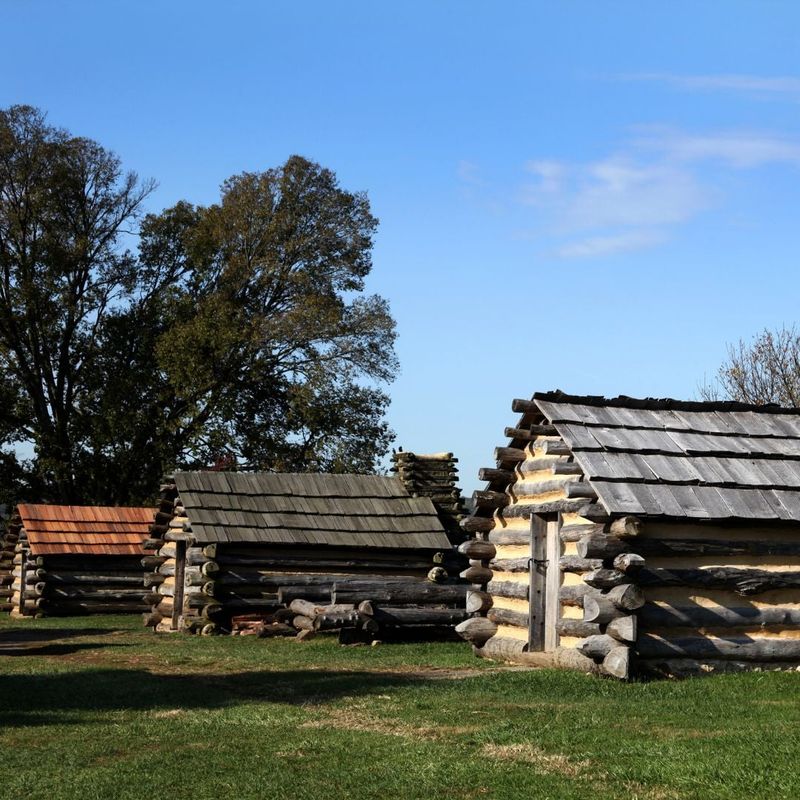
No major battle took place here, yet the struggle to survive helped shape the American Revolution.
During the winter of 1777 to 1778, George Washington and the Continental Army camped at Valley Forge, facing shortages, sickness, and bitter weather.
The park tells a story of endurance rather than a simple tale of victory.
Soldiers built wooden huts, searched for supplies, and worked to keep an army together while the British occupied nearby Philadelphia.
Disease killed far more men than the cold alone.
Walking among the reconstructed huts makes those hardships easier to picture.
Their plain walls and tight spaces offer a strong contrast to the broad, peaceful fields around them.
Remember that these structures help explain camp life but are not the original shelters.
Washington’s Headquarters adds another layer to the visit.
The stone house served as a busy center where officers planned, wrote letters, and handled military business.
Check current hours before arriving, since access to buildings and ranger programs can change with the season.
Training was another turning point at the encampment.
Baron von Steuben helped teach soldiers useful drills and better camp practices, making the army more organized.
The story reminds visitors that patience, teamwork, and basic skills can matter as much as bravery.
Start at the visitor center for exhibits, maps, and advice about routes.
Comfortable shoes, drinking water, and weather protection are useful because the grounds are large and much of the experience is outdoors.
A driving tour can help connect widely separated stops.
Families can balance history with a walk along the park’s trails.
Give yourself time to pause instead of treating every landmark as a quick photo stop.
The landscape becomes more meaningful when you imagine thousands of people trying to hold onto hope through one difficult winter, far from the comforts of home and family.
2. Gettysburg National Military Park – Gettysburg
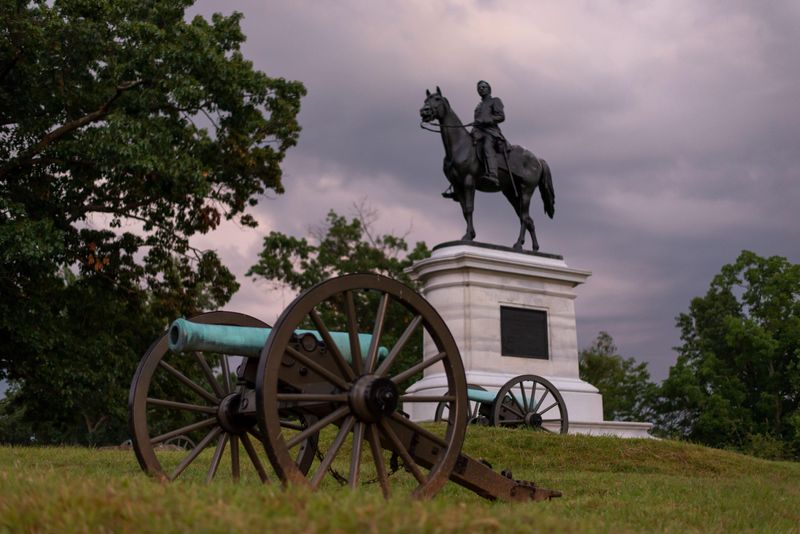
A quiet field can hold a very loud story.
At Gettysburg, the fighting of July 1 through July 3, 1863, left about 51,000 soldiers killed, wounded, captured, or missing.
The battle became a major turning point in the Civil War.
Today, roads and walking paths connect places where the struggle unfolded.
Cemetery Ridge, Little Round Top, and other landmarks help explain how hills, fences, and open ground affected decisions.
Looking across the landscape makes a battlefield map feel less like a school assignment.
Begin with the museum and visitor center if you want a clear introduction.
The exhibits explain the war’s causes, the battle, and its effects on soldiers and civilians.
The Gettysburg Cyclorama, a huge circular painting, offers another way to understand part of the fighting.
A licensed battlefield guide can make the visit especially useful.
Guides connect individual stories with troop movements and help answer questions that signs cannot fully cover.
Reserve ahead when possible, particularly during busy travel periods and around the battle anniversary.
The Gettysburg National Cemetery deserves a slower pace.
Abraham Lincoln delivered the Gettysburg Address at its dedication in November 1863, connecting the war to freedom and democratic government.
Keep voices low and remember that the grounds are a burial place, not simply another sightseeing stop.
Choose a few areas to explore carefully rather than rushing through every monument.
Bring water, sun protection, and shoes suited to uneven paths.
Before walking across fields, check posted rules and stay away from fragile features or closed areas.
Gettysburg also asks visitors to think beyond military tactics.
Enslavement, freedom, loss, and the future of the nation were all part of what brought armies here.
Leaving with a better understanding of those issues matters more than remembering every regiment, road, or date mentioned during your visit to this deeply significant Pennsylvania landscape.
3. Eastern State Penitentiary – Philadelphia
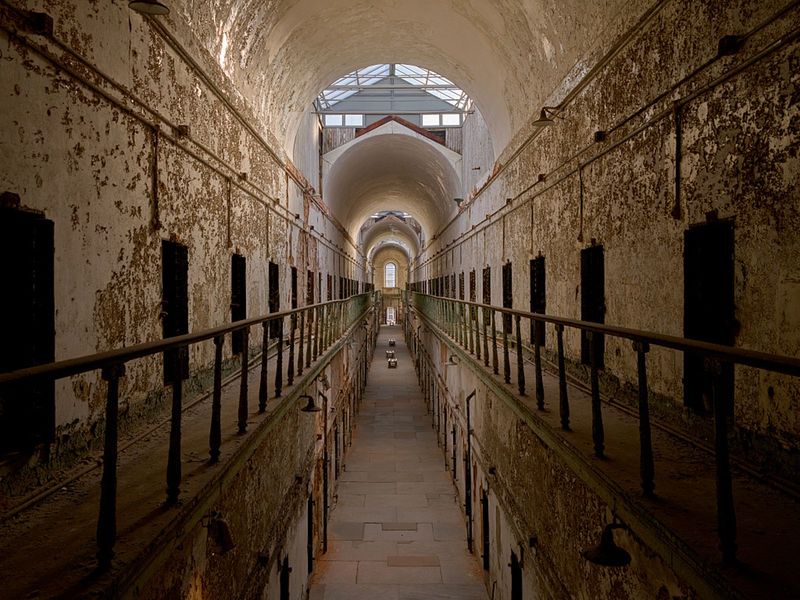
Heavy doors and empty corridors make the silence feel almost physical.
When Eastern State Penitentiary opened in 1829, its designers believed that isolation could lead prisoners to regret their actions.
The building became famous, but its methods also caused serious harm.
Located in Philadelphia’s Fairmount neighborhood, the prison looks almost like a stone fortress.
Inside, cellblocks spread outward from a central hub.
That layout helped staff watch several corridors and influenced prison design in many other places.
Early prisoners spent much of their time alone, working and reflecting in separate cells.
Many cells included small exercise yards and skylights meant to bring in light from above.
The system’s harsh effects challenged the idea that silence automatically helped people change.
The site now presents both its own history and wider questions about punishment.
Exhibits discuss prison life, changing policies, and the people affected by incarceration.
Visitors are encouraged to consider what a fair system should accomplish, not just admire an unusual building.
Al Capone’s connection often draws attention, since he served time here in 1929 and 1930.
Still, the stories of less famous prisoners are equally valuable.
Their experiences help keep the visit from becoming only a collection of celebrity facts.
Allow enough time for the audio tour and selected exhibits.
Much of the property is preserved as a stabilized ruin, so temperatures can feel close to outdoor conditions.
Wear sturdy shoes, dress for the weather, and check accessibility details before booking.
Some subjects may be unsettling for younger visitors, including confinement and unequal treatment.
Talking afterward can help families sort through what they saw and heard.
Rather than offering easy answers, the prison leaves you with thoughtful questions about human dignity, responsibility, and whether society can protect people while also giving those who have caused harm a meaningful chance to change their lives.
4. Drake Well Museum – Titusville
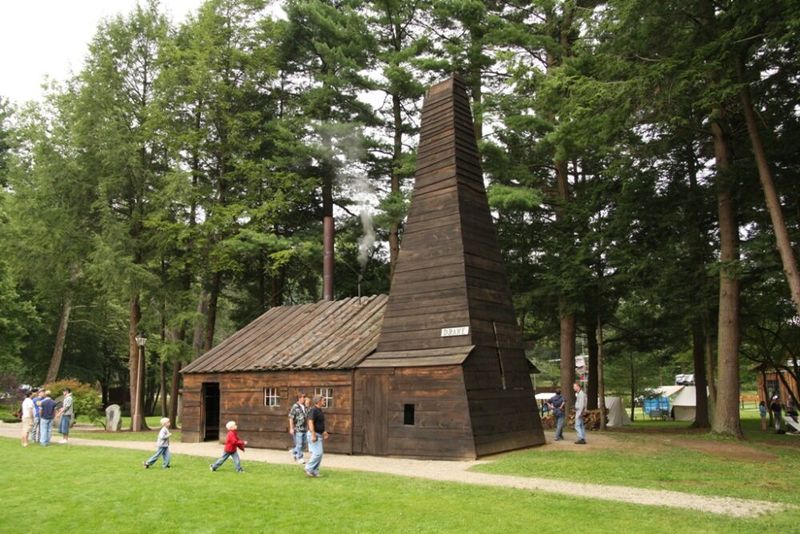
Before oil helped power modern life, one drilling project changed what people thought was possible.
Near Titusville, Edwin Drake’s well struck oil in August 1859.
Its success helped launch the commercial petroleum industry in the United States.
Drake Well Museum and Park explains that breakthrough without treating it as the work of one person alone.
Workers, investors, local knowledge, and earlier uses of petroleum all belong in the story.
Salt well drilling methods also helped make the project possible.
A replica of the engine house and derrick marks the historic well location.
Nearby equipment shows how early producers pumped oil and moved it through a growing industrial network.
Even visitors who usually avoid machinery displays can enjoy seeing how separate parts worked together.
Inside the museum, exhibits connect the oil boom with daily life.
Petroleum was refined into products such as kerosene, which became widely used for lighting.
Later uses expanded far beyond lamps, helping reshape transportation, manufacturing, and communities across Pennsylvania.
The boom brought opportunity, but it also brought problems.
Rapid growth, dangerous working conditions, fires, and environmental damage were part of the industry’s early years.
Keeping those costs in view gives the story more depth than a simple celebration of invention.
Check the museum’s current schedule before traveling, especially if you hope to see equipment demonstrations.
Outdoor displays and indoor exhibits offer different experiences, so plan time for both.
Shoes with good grip are helpful when walking around the grounds after rain.
The surrounding Oil Creek landscape adds useful context to the visit.
It is easier to understand an industrial rush when you can picture a quiet valley suddenly filled with wells, workers, and businesses.
Ask children to spot something in modern life that depends on petroleum, then discuss how energy choices have changed and what challenges Pennsylvania communities still face today.
5. Hopewell Furnace National Historic Site – Elverson
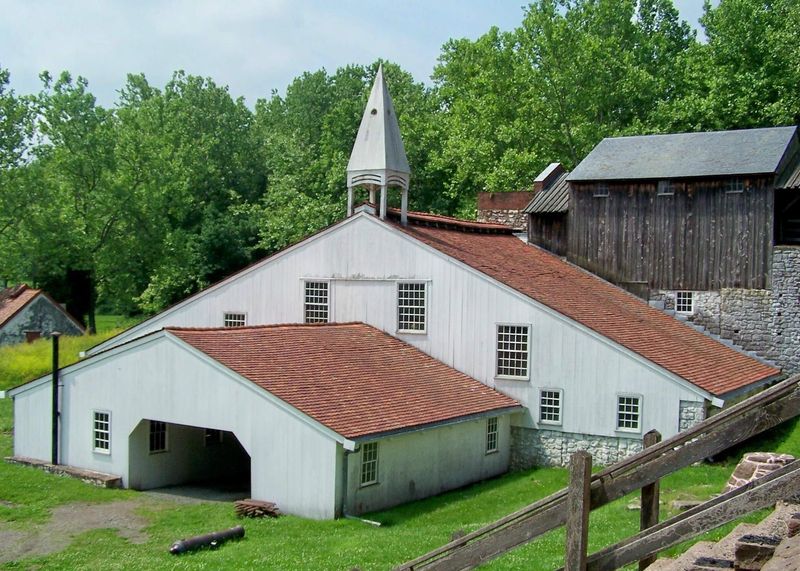
Long before giant steel mills dominated Pennsylvania’s industrial image, smaller iron communities kept furnaces burning.
Hopewell Furnace began operating in 1771 and continued until 1883.
Its surviving village reveals how work, family life, and natural resources were closely connected.
Near Elverson, the historic site preserves the setting of a charcoal fueled ironmaking community.
Workers needed iron ore, limestone, and large supplies of charcoal to produce iron.
Surrounding forests were therefore part of the operation, not merely a pretty backdrop.
The furnace stack is the center of the story, but do not stop there.
Other buildings help explain storage, business, housing, and the tasks that supported production.
Moving between them gives a clearer picture of a workplace that also served as a home.
Imagine the heat, noise, and steady labor that once filled this peaceful valley.
Furnace work required careful timing and practical knowledge, while farming and household chores continued nearby.
Women, children, skilled workers, and laborers all contributed to the community in different ways.
Hopewell became known for making iron products, including stove plates.
Those objects linked a rural Pennsylvania village to customers well beyond its boundaries.
A stove in someone’s home could carry the results of many workers’ efforts, from cutting wood to shaping molten metal.
Visit the visitor center first to learn which buildings and demonstrations are available that day.
Paths include outdoor surfaces, and weather can affect your comfort.
Bring water and allow time for a relaxed walk rather than expecting a single indoor museum.
The nearby woods also offer a chance to think about the cost of production.
Making charcoal required enormous amounts of wood, showing how industry could change a landscape before modern factories appeared.
By the end of your visit, a simple iron object may seem less ordinary and much more connected to people, resources, and hard work.
6. Fort Necessity National Battlefield – Farmington
At twenty two, George Washington faced a defeat that would follow him through history.
On July 3, 1754, his force fought French troops and their Native allies at Great Meadows.
The encounter ended with Washington surrendering Fort Necessity.
The battlefield near Farmington preserves a small place connected to a much larger struggle.
Britain and France both sought influence in the Ohio Country, where Native nations had their own interests and alliances.
The fighting helped widen the conflict known as the French and Indian War.
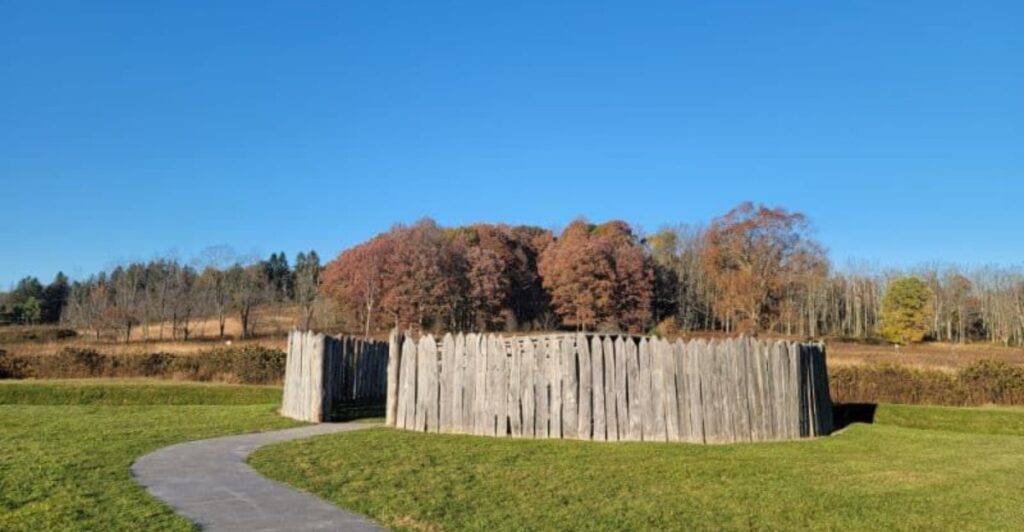
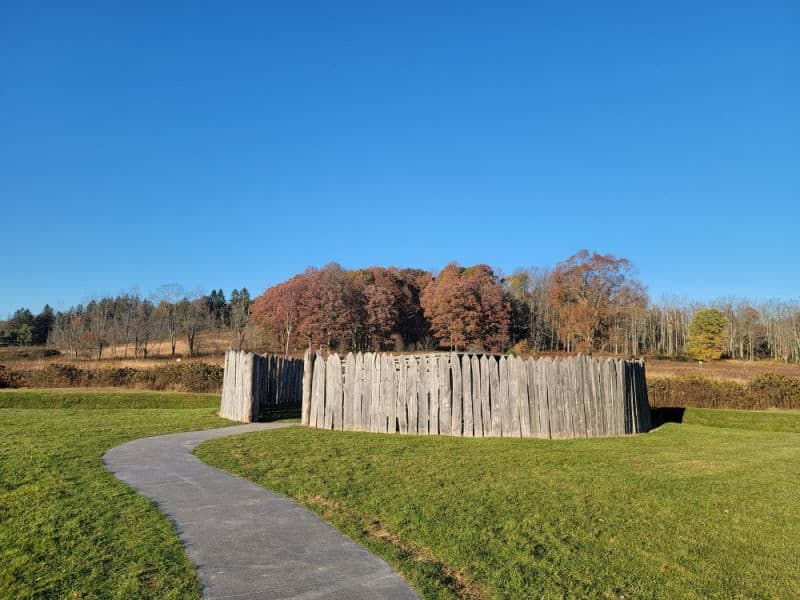
A reconstructed circular stockade stands in the meadow today.
Its modest size can surprise visitors who expect a towering fortress.
Looking at the surrounding ground helps explain why the position offered limited protection during a wet and difficult battle.
Start with the visitor center exhibits to understand the competing claims behind the conflict.
The story is not simply about two European powers moving pieces on a map.
Native communities were defending their lands, making choices, and responding to threats that affected their futures.
Washington’s early mistakes make this site especially interesting.
The future president was still learning how to lead, judge terrain, and handle dangerous situations.
His experience here offers a useful reminder that famous leaders did not begin their careers with every answer.
The park also explores the National Road, which later helped travelers and trade cross the region.
Nearby Mount Washington Tavern adds another chapter when open to visitors.
Check building access and ranger schedules before planning your route through the grounds.
Bring a light rain jacket and shoes suitable for grass and trails.
Walking from the exhibits to the fort gives you time to notice distances, slopes, and the landscape around the clearing.
Instead of viewing the stockade as an isolated wooden structure, picture a young officer facing decisions whose effects reached far beyond this corner of Pennsylvania.
7. Historic Ephrata Cloister – Ephrata
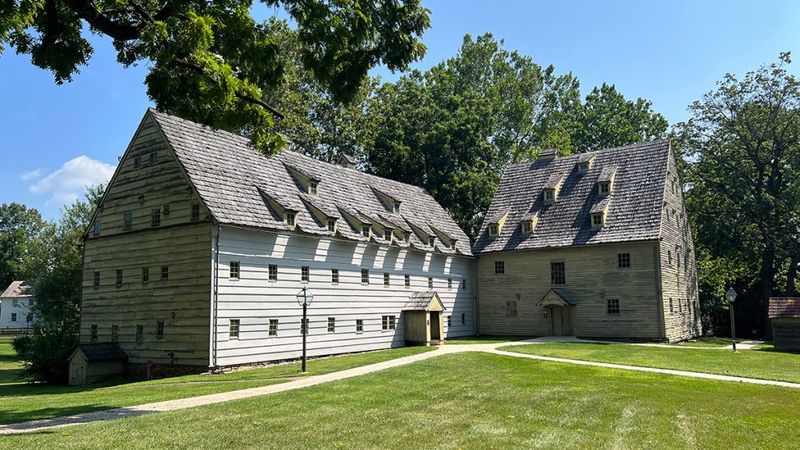
Daily life once followed a very unusual rhythm behind these wooden walls.
Founded in 1732 by Conrad Beissel, the Ephrata community brought together people seeking a deeply religious life.
Some members chose celibacy, simple clothing, limited sleep, and a strict routine.
The surviving buildings in Ephrata offer a rare look at that experiment.
Their steep roofs, small rooms, and plain interiors reflect the community’s values.
A guided tour can help explain details that might otherwise seem merely old or strange.
Not everyone lived by the same rules.
Alongside celibate brothers and sisters were married householders who supported the wider community while living with their families.
Understanding those differences prevents the mistaken idea that every resident followed an identical daily schedule.
Music, printing, and skilled handwork were important parts of life here.
Members created distinctive writing and decoration known as fraktur, and the community became known for its printing work.
Their creative achievements show that a strict lifestyle did not mean a lack of artistic expression.
The sleeping arrangements often catch visitors’ attention.
Narrow beds and wooden headrests reflected an effort to avoid comfort and remain focused on faith.
Rather than laughing at those choices, consider what people were willing to give up for beliefs they held deeply.
Check tour times before arriving because access to historic interiors may depend on guided visits.
Uneven surfaces, stairs, and older building layouts can affect accessibility.
Ask staff about suitable options if anyone in your group has difficulty walking or climbing steps.
A quiet stroll around the grounds gives the architecture room to speak.
Families might compare the community’s routine with their own meals, sleep, work, and free time.
The visit becomes especially rewarding when you see the residents not as odd characters from long ago, but as real people trying to build lives around shared ideas about faith and purpose.
8. Independence Hall – Philadelphia
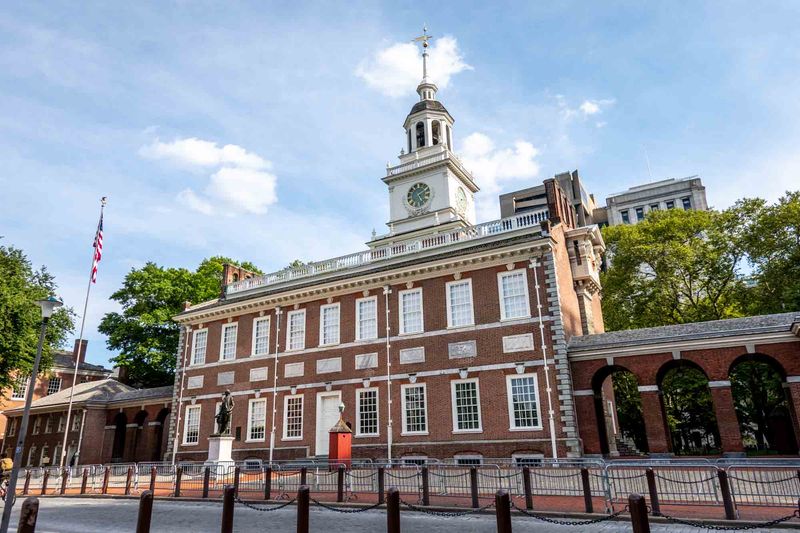
Some of America’s biggest decisions happened in rooms that feel surprisingly ordinary.
In Philadelphia, delegates approved the Declaration of Independence inside Independence Hall in 1776.
Eleven years later, the Constitutional Convention met here to create a new framework for national government.
The red brick building began as Pennsylvania’s State House, not as a monument to a future nation.
Its original purpose helps explain why public business and major political debates took place here.
History grew out of a working government building.
The Assembly Room is the main focus for many visitors.
A ranger’s explanation can help you picture arguments, compromises, and uncertain choices rather than a perfectly smooth founding story.
The people meeting here disagreed sharply about power and how government should work.
Those debates also left serious problems unresolved.
The nation’s founding promises did not bring equal rights to enslaved people, women, or Native peoples.
Holding that truth beside the achievement makes the visit more honest and gives the famous documents greater meaning.
Plan ahead for entry instead of assuming you can walk straight inside.
Tour reservations, ticket rules, security procedures, and seasonal arrangements can change.
Check the National Park Service’s current guidance and allow extra time to reach the entrance.
The Liberty Bell is nearby, but it has its own visitor arrangements.
Separating the two stops in your plan helps avoid confusion.
Comfortable shoes are useful because the surrounding historic district rewards walking, with other important buildings and exhibits close at hand.
Before leaving, take a moment in Independence Square to think about what happened indoors.
Ideas about liberty and government were debated by people who could not fully predict the future.
That makes the building more than a backdrop for photographs: it is a place to consider how public choices shape everyday life and how each generation interprets the promises made here.
Share this story