Texas is massive, and most folks only scratch the surface of what this state has to offer. Sure, everyone knows about Big Bend National Park or South Padre Island, but scattered across our 268,000 square miles are wild places that feel like your own personal discovery. These hidden gems offer adventures that range from ancient rock art to singing sand dunes, and the best part is you won’t be fighting crowds to experience them.
1. Hueco Tanks State Park & Historic Site (El Paso)
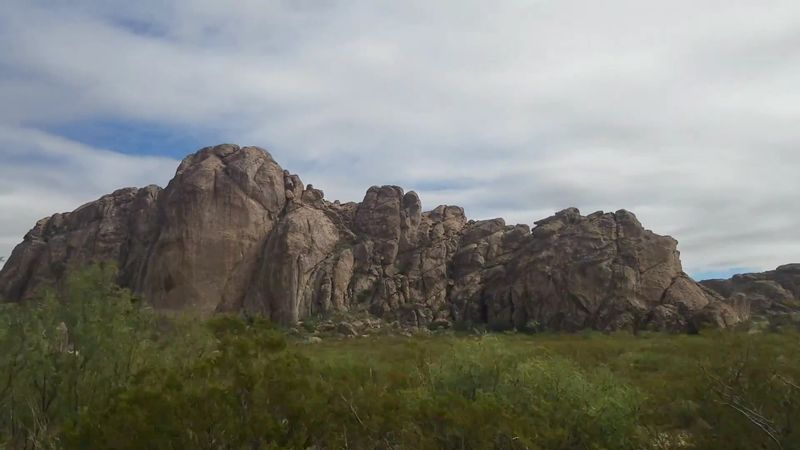
Rock climbers whisper about this place like it’s sacred ground, and honestly, it kind of is. Hueco Tanks sits just outside El Paso, where massive boulders rise from the desert floor like natural fortresses. These aren’t your typical Texas rocks—they’re packed with natural water-catching basins (huecos) that have sustained life here for thousands of years.
What really sets this spot apart is the incredible collection of pictographs covering the rock faces. Over 200 sites showcase artwork from Native American groups who camped here over the centuries. You’ll need to book a guided tour to see most of these ancient paintings, but trust me, it’s worth the planning.
The park limits daily visitors to protect both the fragile rock art and the sensitive desert ecosystem.
Beyond the history, Hueco Tanks has become a world-famous bouldering destination. Climbers travel from across the globe to tackle these unique rock problems. Even if you’re not into climbing, watching experts navigate the boulder fields is pretty mesmerizing.
The park requires reservations, especially on weekends, so don’t just show up hoping to get in. Tours fill up fast during cooler months when the desert weather is perfect. Bring plenty of water, wear sturdy shoes, and prepare for some moderate hiking.
This isn’t a place you’ll stumble upon by accident, which is exactly why it feels so special. The combination of cultural significance, unique geology, and restricted access creates an experience that feels genuinely off the beaten path. When you’re standing among those ancient boulders, surrounded by artwork that’s survived centuries in the desert, you’ll understand why some secrets are worth keeping.
2. Monahans Sandhills State Park (Monahans)
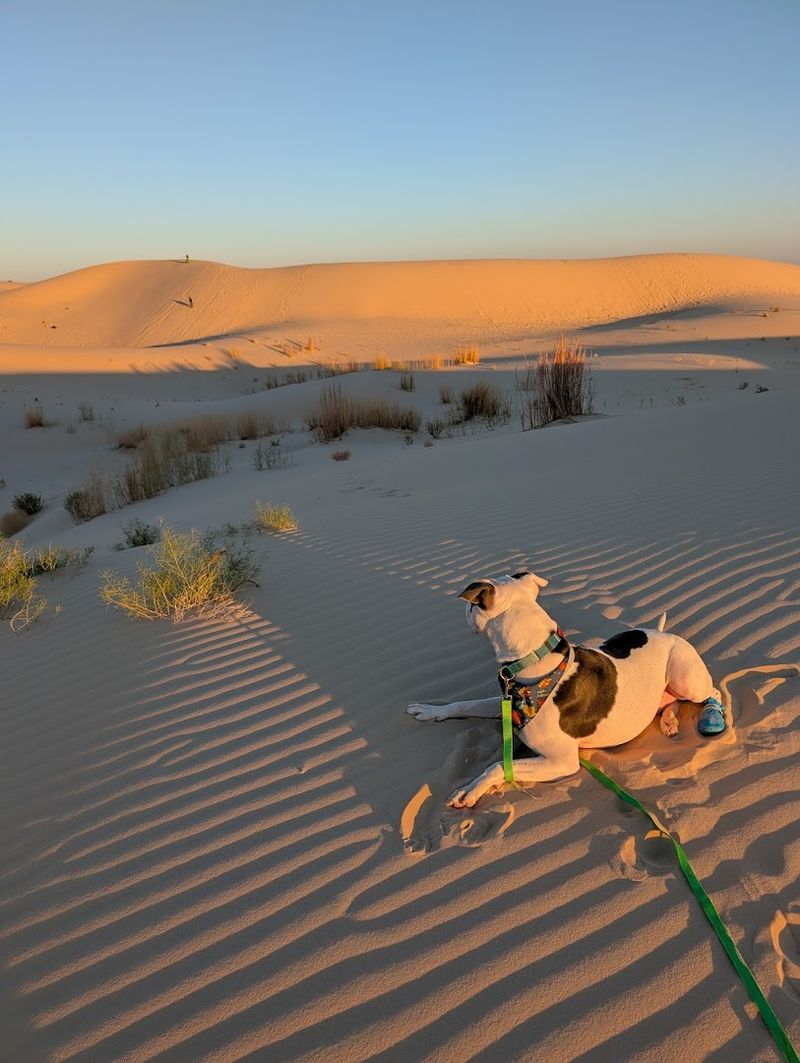
Picture the Sahara Desert dropped right in the middle of West Texas. That’s basically what you get at Monahans Sandhills, where 3,840 acres of sand dunes stretch across the landscape like an ocean frozen mid-wave. These aren’t small hills either—some dunes tower up to 70 feet high, constantly shifting and reshaping with the wind.
Here’s something wild: you can rent sand disks at the park headquarters and sled down these massive dunes. Adults and kids alike spend hours hiking up and sliding down, and it never gets old. The sand stays surprisingly cool even in summer because of its light color and composition.
Just don’t expect it to feel like snow—sand in your clothes is definitely part of the authentic experience.
The dunes support a unique ecosystem that’s tougher than it looks. Shin oak trees somehow survive here, their roots reaching deep for underground water. During spring, wildflowers pop up in unexpected places, adding splashes of color to the golden landscape.
Keep your eyes open for lizards, roadrunners, and the occasional mule deer that call this sandy world home.
Sunrise and sunset transform this place into something magical. The low light creates dramatic shadows across the rippled sand, and the temperature drops to comfortable levels. Photographers love these golden hours, and you’ll understand why the moment you see that first light hit the dunes.
Most Texans zoom past Monahans on I-20 without realizing this desert wonderland exists just minutes from the highway. The park sees visitors, sure, but nothing like the crowds at more famous destinations. You can easily find your own dune and feel like you’ve discovered a private corner of the Sahara, right here in Texas.
3. Big Thicket National Preserve (Kountze)
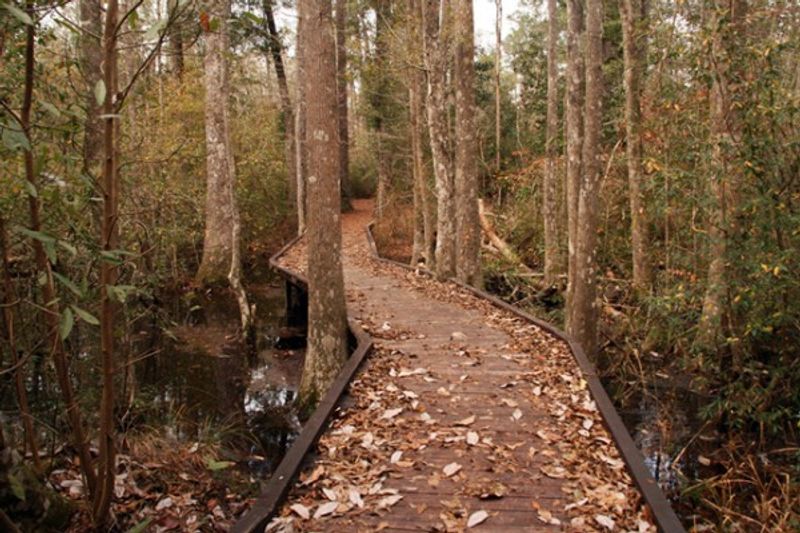
They call it the “biological crossroads of North America,” and that’s not tourism hype. Big Thicket crams an impossible variety of ecosystems into one preserve—desert plants grow next to swamp cypress, and cacti somehow coexist with orchids. Scientists have documented over 1,000 flowering plant species here, plus countless animals that shouldn’t logically share the same zip code.
Walking these trails feels like channel-surfing through different biomes. One minute you’re in a pine forest that could be anywhere in East Texas. Turn a corner and suddenly you’re surrounded by palmetto plants and Spanish moss that scream Deep South.
The preserve protects nine different ecosystems, each with its own personality and weird collection of plants and critters.
The Kirby Nature Trail offers an easy introduction to this biological chaos. It’s a short loop with a boardwalk section that takes you right through a cypress slough. During spring and fall, the birdwatching here is absolutely bonkers—over 300 species have been recorded.
Bring binoculars and prepare to see birds you won’t spot anywhere else in Texas.
Here’s something cool: Big Thicket has a dark sky designation, making it perfect for stargazing. The preserve is huge enough that light pollution barely reaches the interior. On clear nights, the Milky Way stretches overhead like someone spilled glitter across the sky.
Local legends talk about ghost lights and mysterious sounds in the thicket, adding an eerie charm to evening visits. Whether you believe in that stuff or not, there’s definitely something primeval about this place. The dense vegetation, strange plant combinations, and wild diversity create an atmosphere that feels genuinely unexplored, even though trails wind throughout the preserve.
4. Caprock Canyons State Park & Trailway (Quitaque)
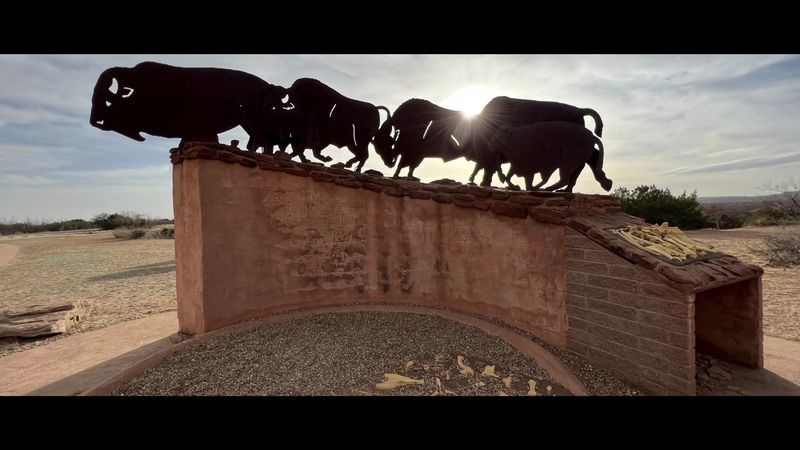
Most people associate bison with Yellowstone or the Great Plains, not Texas. But Caprock Canyons is home to the official Texas State Bison Herd, descendants of the Southern Plains bison that once thundered across this region by the millions. Seeing these massive animals against a backdrop of red canyon walls is surreal—like stepping into a scene from 200 years ago.
The park sits where the flat High Plains suddenly drop away into a maze of colorful canyons. Erosion has carved the landscape into dramatic formations, exposing layers of red, orange, and white rock that tell millions of years of geological history. The contrast between the flat prairie above and the rugged canyons below is stark and beautiful.
Hiking here ranges from easy strolls to challenging backcountry adventures. The Upper Canyon Trail is particularly stunning, winding through narrow passages between towering rock walls. During wildflower season, the canyon floors explode with color—Indian blanket, bluebonnets, and dozens of other species carpet the ground.
The Caprock Canyons Trailway follows an old railroad bed for 64 miles, making it perfect for mountain biking or horseback riding. The trail crosses the Clarity Tunnel, a 742-foot railroad tunnel that’s now a cool, dark passage through solid rock. Riding through that tunnel is an experience—pitch black in the middle, with circles of light at each end.
Night skies here rival anything you’ll find in West Texas. The combination of high elevation, dry air, and minimal light pollution creates perfect stargazing conditions. Camping in the canyons, surrounded by ancient rock walls with the Milky Way overhead, feels wonderfully isolated.
This park doesn’t get the attention that Palo Duro Canyon receives, which means more space for you to explore without tripping over other visitors.
5. Devils River State Natural Area (Del Rio)
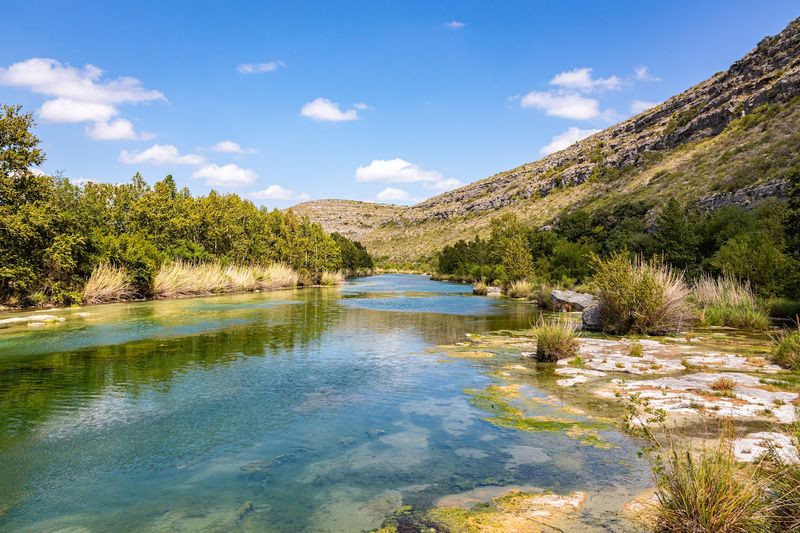
Getting to Devils River requires commitment—this is one of the most remote state natural areas in Texas. The nearest town is Del Rio, but even from there, you’re looking at miles of rough roads through ranch country. The isolation is exactly the point.
This river has remained virtually unchanged for centuries because it’s so darn hard to reach.
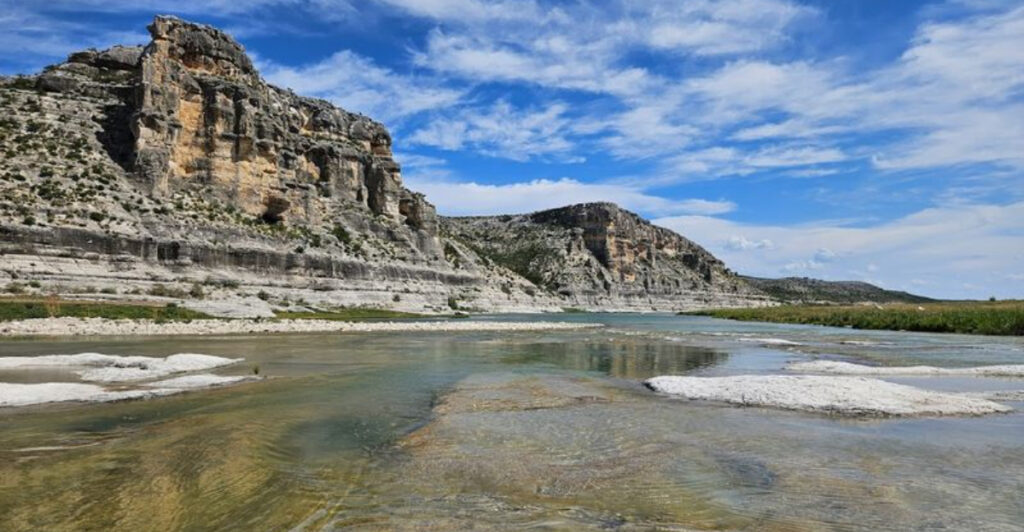
The water is ridiculously clear, fed by springs that pump out millions of gallons daily. You can see 20 feet down in some spots, watching fish dart between underwater rocks. The river carved deep canyons through limestone over millennia, creating towering walls that shelter the water from wind and sun.
Paddling through these canyon sections feels like exploring a hidden world.
Kayaking and canoeing are the main attractions, but you’ll need to be self-sufficient. There are no concessions, no rentals, no easy access points. You carry in everything you need and carry out everything you bring.
The reward for this extra effort is having one of Texas’s most pristine waterways almost entirely to yourself.
The natural area also protects significant archaeological sites. Rock shelters along the river contain ancient pictographs, some dating back thousands of years. Access to these sites is restricted to protect them, but guided tours occasionally run during cooler months.
Seeing artwork that old in such a remote setting drives home just how long humans have been drawn to this special place.
Wildlife thrives in this protected corridor. Black bears occasionally wander through from Mexico. Mountain lions prowl the canyon rims.
The Devils River minnow, found nowhere else on Earth, swims these waters. Rare birds nest in the riverside vegetation. This level of biodiversity exists precisely because the area has stayed so remote and undeveloped.
If you’re willing to put in the effort to reach it, Devils River offers a Texas adventure that feels genuinely wild.
6. Bentsen-Rio Grande Valley State Park (Mission)
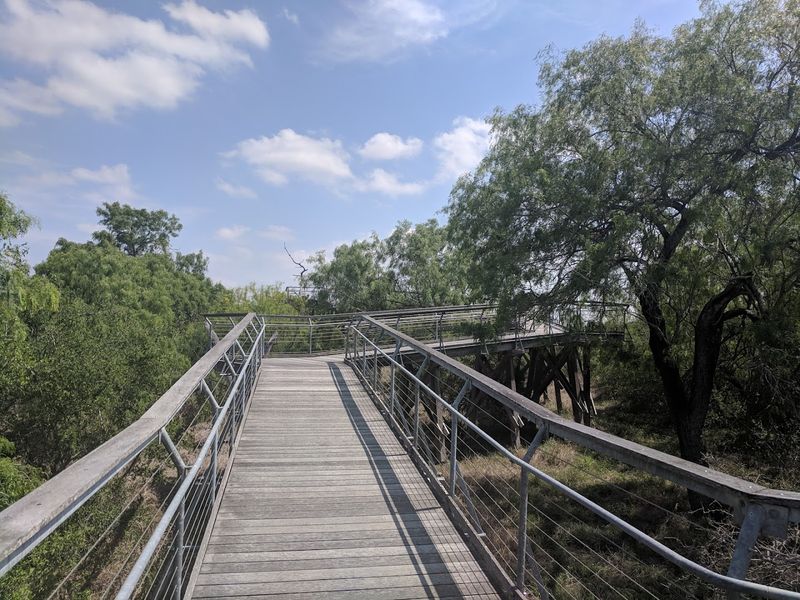
Birders treat this park like a pilgrimage site, and for good reason. Bentsen sits in the Rio Grande Valley, where North and South American ecosystems collide. Species from Mexico cross the border here, mixing with North American birds to create one of the most diverse birding hotspots in the United States.
Over 500 species have been recorded, including rarities that send twitchers scrambling from across the country.
The park’s observation tower rises above the forest canopy, offering views across the treetops toward the Rio Grande. Early morning up there is prime time—birds are most active, and the light is perfect. Even if you’re not a hardcore birder, watching colorful species like green jays and altamira orioles flit through the subtropical vegetation is pretty captivating.
Beyond birds, the park showcases the unique ecosystem of the Lower Rio Grande Valley. Native plants like Texas ebony and anacua create dense thickets that provide habitat for everything from butterflies to bobcats. The trails wind through this subtropical forest, giving you a taste of what the entire valley looked like before agriculture transformed the landscape.
Butterfly enthusiasts find plenty to love here too. The park lies along major migration routes, and during peak season, you’ll see clouds of butterflies moving through. Some tropical species only occur this far north in the Rio Grande Valley, making Bentsen one of the few places in the U.S. where you can spot them.
The park offers tram tours if you’d rather ride than hike, which is smart during hot summer months. The guides know where birds are nesting and which trails currently have the most activity. They’ll point out species you’d definitely miss on your own.
Most Texas state parks focus on traditional outdoor recreation, but Bentsen carved out a niche as a nature observation destination, protecting a slice of ecosystem that’s rapidly disappearing elsewhere in the valley.
7. Big Bend Ranch State Park (Terlingua)
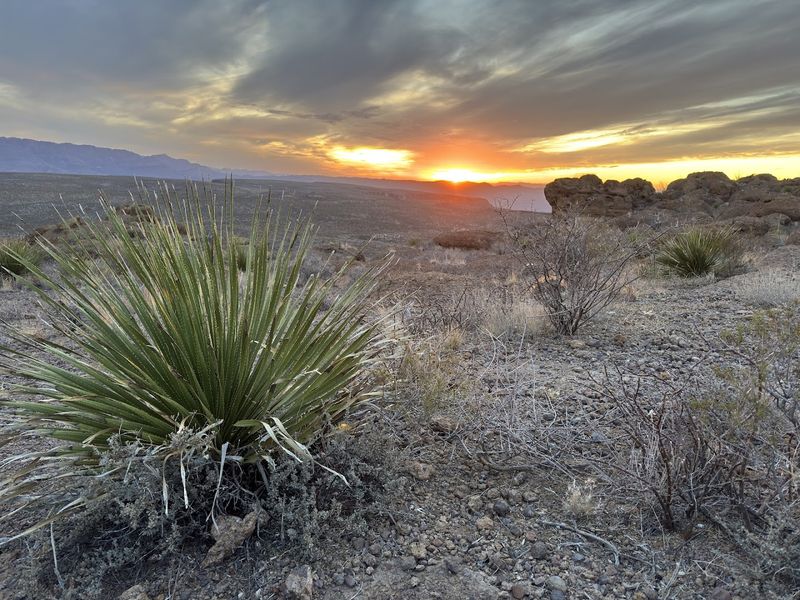
Everyone knows Big Bend National Park, but its neighbor to the west—Big Bend Ranch State Park—flies under the radar despite being Texas’s largest state park. We’re talking about 311,000 acres of Chihuahuan Desert wilderness that feels even more remote than the national park. There are fewer facilities, fewer visitors, and way more opportunities to feel like a genuine explorer.
The geology here is absolutely wild. Ancient volcanic activity created bizarre formations like the Solitario, a massive circular uplift that looks like a crater from space but isn’t. Hiking into the Solitario requires a permit and serious preparation, but standing in the center of that geological oddity is worth every sweaty step.
The colorful rock layers tell stories of volcanic eruptions, inland seas, and millions of years of erosion.
River access along the Rio Grande offers some of the best paddling in Texas. The Colorado Canyon section features challenging rapids and towering canyon walls that make you feel incredibly small. Outfitters in Terlingua run guided trips if you’re not comfortable navigating Class III rapids on your own.
Floating through those canyons, with Mexico on one side and Texas on the other, provides perspective you can’t get from a car.
The park’s primitive nature means you need to be prepared. Cell service is nonexistent. Water sources are scarce.
Summer temperatures can kill the unprepared. But if you come ready for serious backcountry adventure, Big Bend Ranch delivers experiences that feel genuinely untamed. The night skies here rank among the darkest in the continental United States—so dark you can see your shadow by starlight alone.
Terlingua, the quirky ghost town near the park entrance, serves as base camp for adventures. It’s got just enough services (food, gas, lodging) without feeling touristy. The locals are characters with stories about desert living that’ll keep you entertained for hours.
8. Enchanted Rock State Natural Area (Fredericksburg)
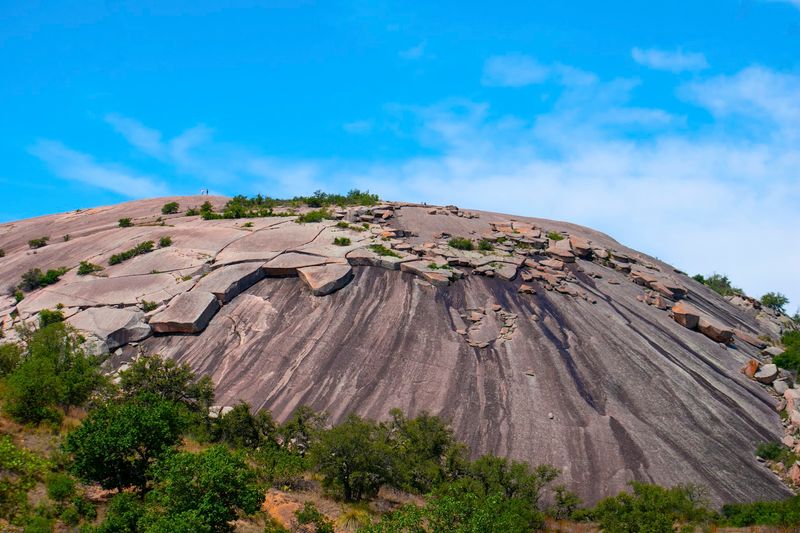
A giant pink granite dome rising 425 feet above the Hill Country—Enchanted Rock dominates the landscape like nature’s own monument. It’s one of the largest batholiths (underground rock formations exposed by erosion) in the United States, and climbing to the summit is a Texas rite of passage. The hike isn’t terribly difficult, but that exposed granite gets slick when wet and scorching hot in summer.
Native American legends surround this place, giving it an mystical reputation that the name reflects. Some say the rock makes creaking and groaning sounds at night as it cools and contracts—science explains this as thermal expansion, but it’s still eerie to hear. Spanish explorers wrote about the indigenous peoples’ spiritual connection to the rock, and you can understand why.
Standing on top feels powerful, almost sacred.
The summit views stretch for miles across the Hill Country. On clear days, you can see the hills rolling away in every direction, dotted with oak trees and cut by creek valleys. Sunrise and sunset are particularly spectacular, when the granite glows even pinker and the sky puts on a show.
Photographers and Instagram enthusiasts flock here for those golden hour shots.
Rock climbing routes cover the dome’s face, ranging from beginner-friendly to seriously challenging. Climbers appreciate the high-quality granite and the variety of routes. Even if you’re not climbing, watching people scale the rock face adds entertainment while you’re resting on the summit.
The park gets crowded, especially on weekends, and they often close the gates when capacity is reached. Reservations are strongly recommended. Arrive early or visit on weekdays for a better experience.
Despite the crowds, Enchanted Rock maintains its appeal because that massive pink dome is simply impressive. It’s been drawing people for thousands of years, and it’s easy to see why—some natural features just demand to be explored and experienced firsthand.
Share this story