Maps can be deceiving, especially when it comes to Texas state parks. A tiny green patch on your GPS might represent hundreds of acres packed with trails, caves, waterfalls, and hidden corners you could spend days exploring. Some of the best outdoor adventures in the Lone Star State happen in places that look modest on paper but reveal their true scale only after you lace up your boots and start wandering.
1. Balmorhea State Park (Toyahvale)
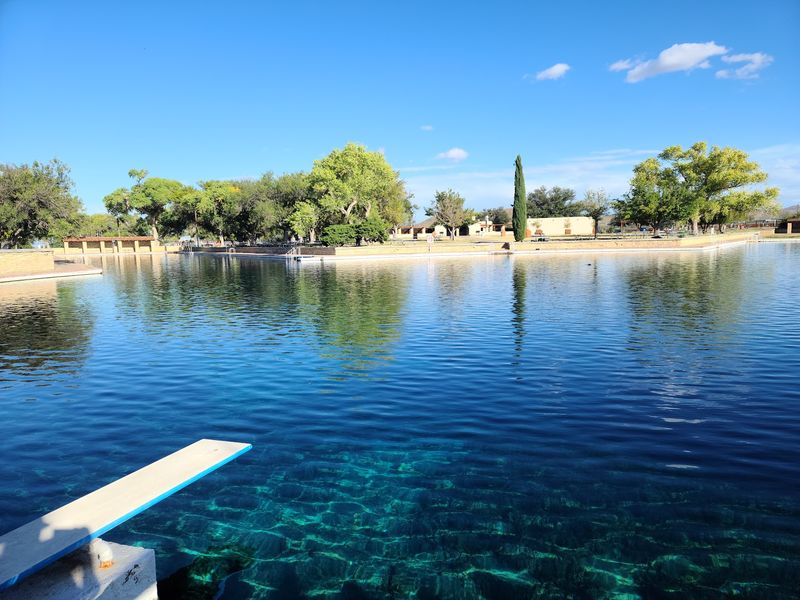
Out in the middle of West Texas desert, you’ll find one of the most unexpected swimming holes in the entire state. The spring-fed pool here stretches nearly two acres and holds over 3 million gallons of water that stays a refreshing 72 to 76 degrees year-round. What looks like a simple roadside stop on the map becomes an aquatic wonderland once you see it in person.
The pool reaches depths of 25 feet in some spots, making it popular with scuba divers who come to practice their skills. You can rent snorkel gear and float above underwater rock formations while tiny fish dart around you. The water is so clear that visibility extends for dozens of feet, creating an almost surreal swimming experience in the middle of arid ranch country.
Beyond the famous pool, the park spreads across 46 acres with camping areas, wetlands, and desert trails. The San Solomon Springs that feed the pool produce around 15 million gallons of fresh water daily, creating a unique ecosystem that supports endangered species like the Comanche Springs pupfish. Early morning visits offer the best chance to spot these rare creatures before crowds arrive.
The surrounding landscape feels vast and empty, with views stretching to distant mountain ranges. Walking the grounds reveals how this oasis contrasts sharply with the Chihuahuan Desert beyond the park boundaries. Many visitors plan for just a quick dip but end up staying much longer, captivated by the combination of cool water and hot desert sun.
Pack underwater goggles and plan to spend more time than you expect. The park’s true size becomes apparent when you realize how many different micro-environments exist within its borders, from the deep pool to shallow wading areas to the natural wetlands that stretch beyond the developed swimming zone.
2. Colorado Bend State Park (Bend)
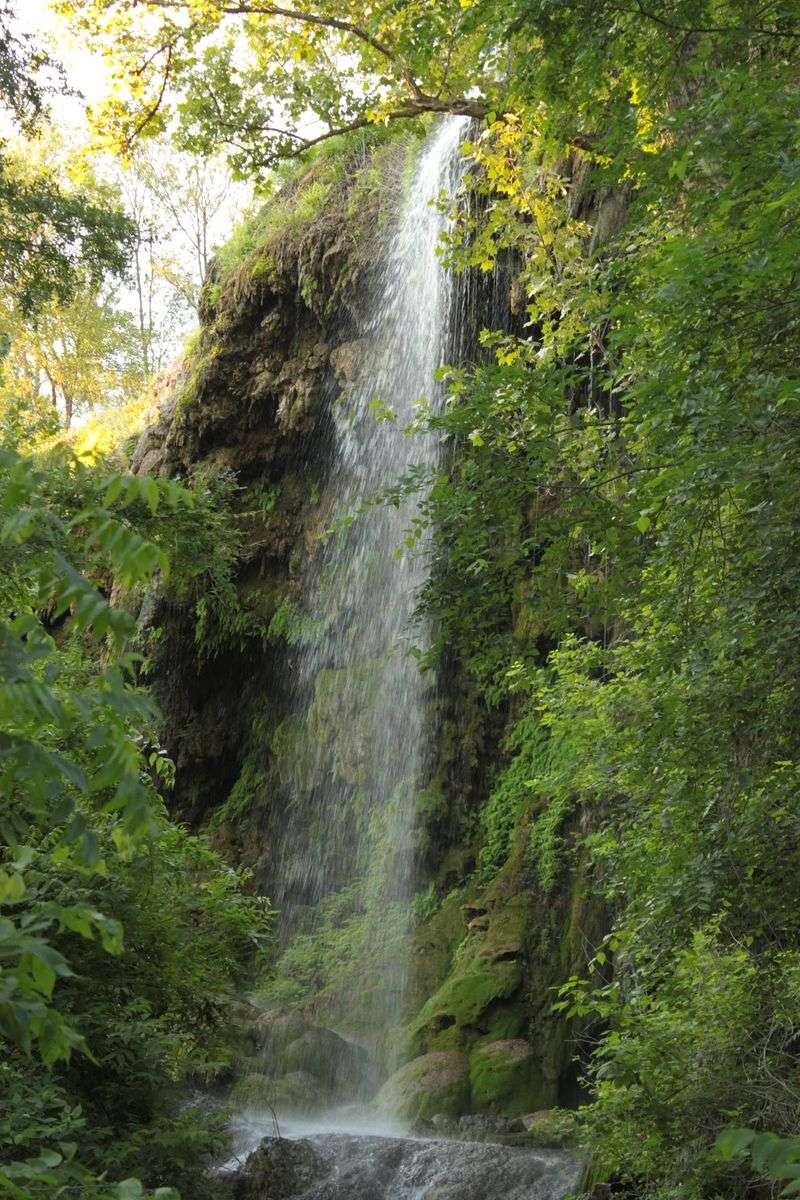
Tucked into a remote bend of the Colorado River, this park hides one of Texas’s most spectacular waterfalls behind miles of rugged backcountry. Getting here requires driving down a long, winding road that makes you wonder if you took a wrong turn. But once you arrive, the 5,328 acres unfold into a maze of trails, caves, and river access points that could keep you busy for an entire weekend.
Gorman Falls stands as the crown jewel, a 60-foot travertine waterfall that looks like something from a tropical paradise. The hike to reach it covers three miles round-trip through rocky terrain, crossing creeks and climbing over boulders. When you finally spot the falls through the trees, the sight stops you in your tracks because nothing on the park map prepares you for its beauty.
The park contains over 30 miles of hiking and mountain biking trails that wind through different ecosystems. You’ll pass through juniper forests, cross limestone outcrops, and follow the river’s edge where water-carved cliffs tower overhead. Spicewood Springs Trail leads to another waterfall, though it only flows after good rains, and the cave tours take you underground into passages decorated with formations.
River access points scatter throughout the park, offering swimming holes and fishing spots that feel completely isolated. The Colorado River here runs clear over limestone bedrock, creating natural pools perfect for cooling off after a long hike. Primitive camping areas sit far from any development, giving you a true backcountry experience.
Cell service disappears once you enter the park, and the nearest town sits miles away. This remoteness adds to the sense of scale because you’re truly disconnected from everything. What appears as a small protected area on regional maps actually contains enough terrain to get lost in, with side canyons and hidden springs waiting around every bend.
3. Lost Maples State Natural Area (Vanderpool)
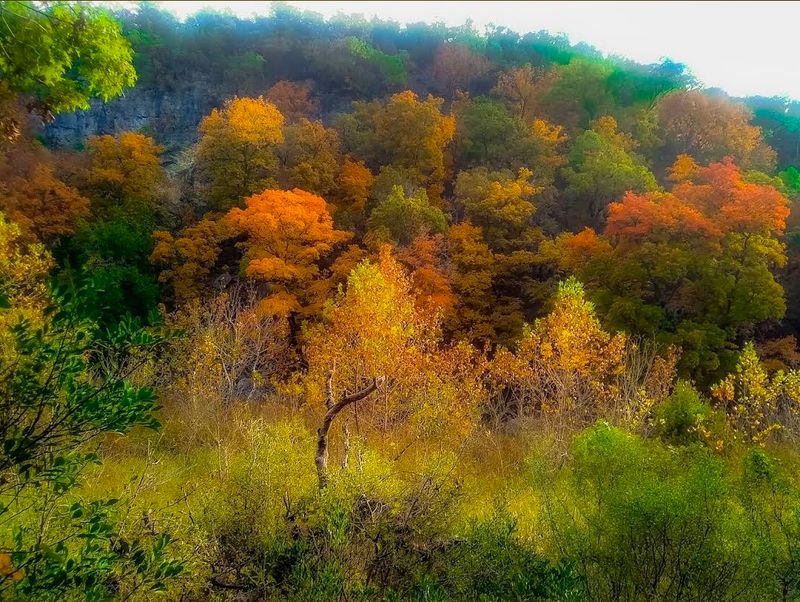
This Hill Country gem earned its name from the isolated stands of Uvalde bigtooth maples that turn brilliant red and orange each fall. Most people arrive expecting a short nature walk and discover instead that the park sprawls across 2,906 acres of steep canyons and rocky plateaus. The terrain here challenges even experienced hikers, with elevation changes that’ll have your legs burning.
The East Trail climbs nearly 500 feet to reach a scenic overlook where you can see for miles across the surrounding hills. Getting there means scrambling over limestone slabs and navigating switchbacks that seem to go on forever. Once at the top, you realize the park extends much farther than the developed areas near the entrance, with wilderness stretching in every direction.
Sabinal River cuts through the heart of the property, creating a riparian corridor that contrasts beautifully with the drier uplands. During spring and early summer, the river flows clear and cold, forming pools deep enough for swimming. The canyon walls rise steeply on both sides, creating a sense of enclosure that makes the space feel even larger because you can’t see what lies beyond.
More than 11 miles of trails crisscross the park, ranging from easy riverside walks to strenuous climbs. The backcountry areas see far fewer visitors, offering solitude for those willing to put in the effort. Wildlife sightings increase the farther you venture from the main areas, with white-tailed deer, wild turkeys, and occasionally even a golden-cheeked warbler making appearances.
Fall weekends draw massive crowds who come for the leaf colors, but visiting during other seasons reveals a different character. Summer heat makes the shaded canyons feel like cool refuges, while winter transforms the maples into sculptural skeletons against gray limestone. The park’s true dimensions only become clear after spending a full day exploring its various zones and realizing you’ve barely scratched the surface.
4. Longhorn Cavern State Park (Burnet)
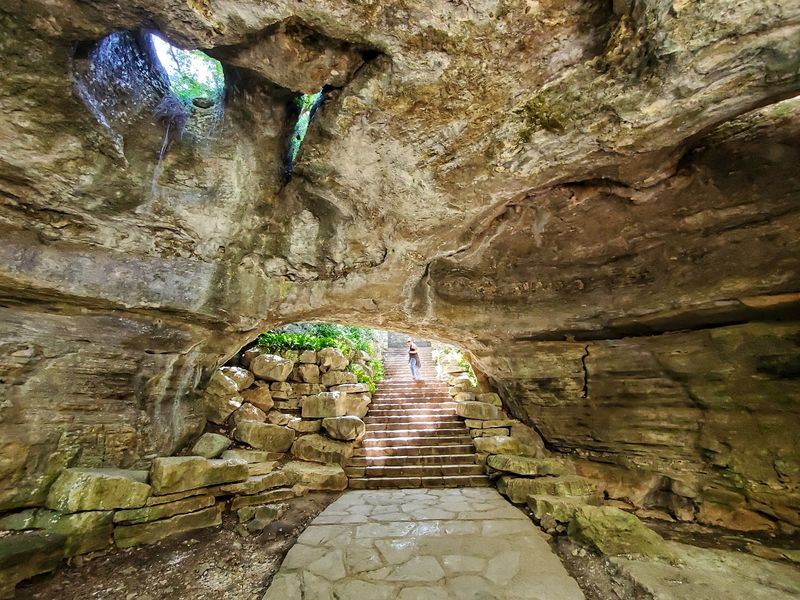
From the surface, this park looks like just another small Hill Country property with a visitor center and some picnic tables. Then you descend into the cavern and discover a massive underground network carved by an ancient river. The main chamber alone could swallow a football field, and the guided tour covers only a fraction of the total cave system that extends through the limestone.
The cavern formed over thousands of years as water dissolved and shaped the rock into rooms, tunnels, and formations. Unlike many show caves, this one features mostly smooth, water-worn surfaces rather than delicate stalactites and stalagmites. Walking through the passages feels like exploring the belly of some enormous stone creature, with walls that swirl and curve in organic patterns.
Tours take about 90 minutes and cover roughly a mile and a half of underground terrain. You’ll climb stairs, duck through low passages, and stand in chambers where the ceiling soars 40 feet overhead. The temperature stays constant at around 68 degrees year-round, making it a perfect escape from summer heat or winter cold.
The cavern’s history adds another layer of intrigue beyond its geological features. Comanche tribes used it as shelter, Confederate soldiers mined bat guano here for gunpowder, and during Prohibition, the main chamber allegedly served as a dance hall and speakeasy. Evidence of these various uses appears throughout the tour, from old mining equipment to smoothed areas where dancers once gathered.
Above ground, the park encompasses 640 acres of rugged terrain with hiking trails that wind through juniper and oak. Most visitors never explore these surface areas because they’re so focused on the cave. But the topside landscape offers its own rewards, including views across Inks Lake and opportunities to spot deer and armadillos.
The contrast between the compact park boundaries on a map and the vast underground spaces below creates a unique sense of hidden scale.
5. Garner State Park (Concan)
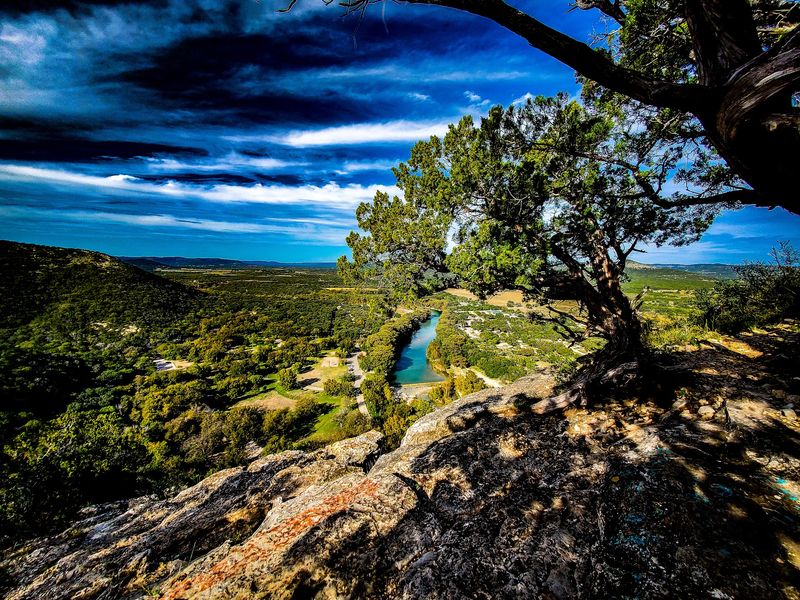
Everyone knows about Garner, or at least they think they do. Yes, the Frio River draws huge summer crowds who come to float and splash in the crystal-clear water. But the park actually covers 1,774 acres that extend far beyond the popular river access points.
Most visitors never venture past the main swimming area, missing the extensive trail system and backcountry that make this place feel enormous once you start exploring.
Old Baldy Trail climbs to the highest point in the park, offering panoramic views across the surrounding Hill Country. The steep ascent gains about 300 feet in less than a mile, leaving you breathless but rewarded with vistas that stretch for miles. From up there, you can see how the park nestles into a bend of the Frio River, with canyons and ridges extending in all directions.
The river itself runs cold and clear, fed by springs that keep the water refreshingly cool even during August heat waves. Cypress trees line the banks, their roots creating natural sculptures in the water. Beyond the developed swimming areas, the river continues through the park for miles, with quiet pools and rapids that see far fewer people.
More than 16 miles of hiking trails wind through different environments, from riverside paths to challenging climbs over rocky hills. The backcountry camping areas sit far from the main campground, offering a completely different experience for those seeking solitude. Spring brings wildflowers that carpet the hillsides, while fall transforms the cypress trees into rusty gold sentinels along the water.
The famous summer dances on the concrete pad near the river represent just one tiny aspect of what Garner offers. Visiting during off-season reveals the park’s true character, when you can hike for hours without seeing another soul and have entire stretches of river to yourself. The disconnect between its reputation as a crowded tubing spot and its actual size surprises first-time visitors who take time to explore beyond the obvious attractions.
6. Enchanted Rock State Natural Area (Fredericksburg)
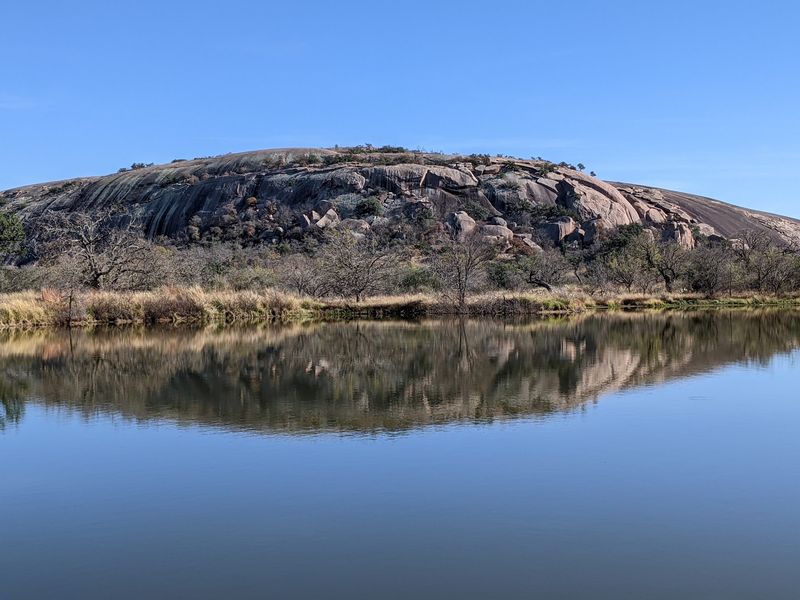
That massive pink granite dome visible for miles around is just the beginning. The rock itself rises 425 feet above the surrounding terrain and covers 640 acres of bare stone, but the state natural area encompasses 1,644 acres total. Once you climb to the summit and look around, you’ll see smaller domes, caves, and rocky outcrops scattered across a landscape that feels almost otherworldly.
The main trail to the top follows a steep but straightforward path up the dome’s face. Your legs will protest the climb, especially on hot days when the bare rock reflects heat like a giant griddle. But reaching the summit rewards you with 360-degree views across the Hill Country, with layers of hills fading into blue distance.
What many visitors miss are the loop trails that circle around the base and lead to less-visited formations. Turkey Peak, Little Rock, and Freshman Mountain offer their own challenges and views without the crowds that pack the main dome. Cave trails wind through boulder fields and into cool rock shelters where you can escape the sun.
The granite here formed over a billion years ago, making it some of the oldest exposed rock in North America. Erosion and weathering created the current landscape, with the softer surrounding stone washing away to leave these resistant domes standing tall. Walking across the summit, you’ll notice pockets of soil where grasses and small plants have gained a foothold, creating miniature ecosystems on the barren rock.
Night skies here rank among the darkest in the region, making the park popular with stargazers who spread blankets on the rock after sunset. The combination of elevation and minimal light pollution creates incredible views of the Milky Way. Camping in the park puts you right in the middle of this granite wonderland, where the rocks seem to glow pink in the sunrise and sunset light, and every corner reveals new formations to explore.
7. Pedernales Falls State Park (Johnson City)
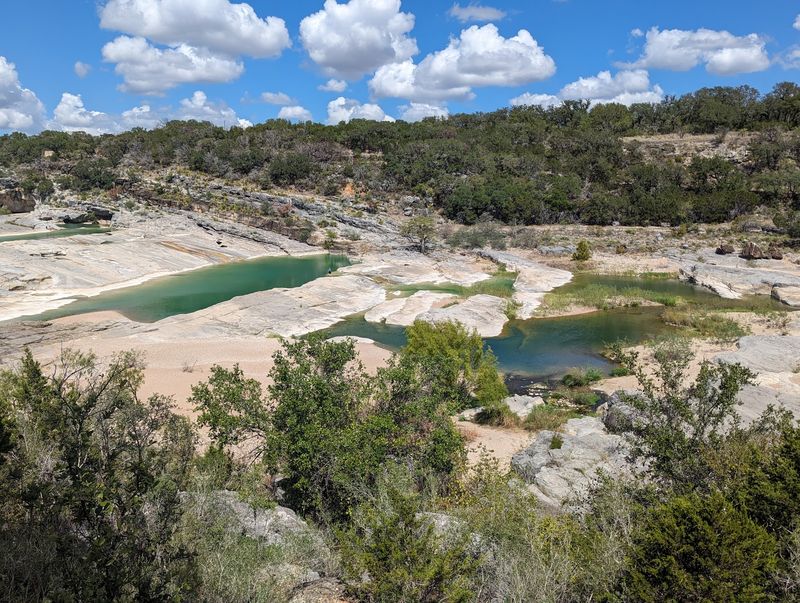
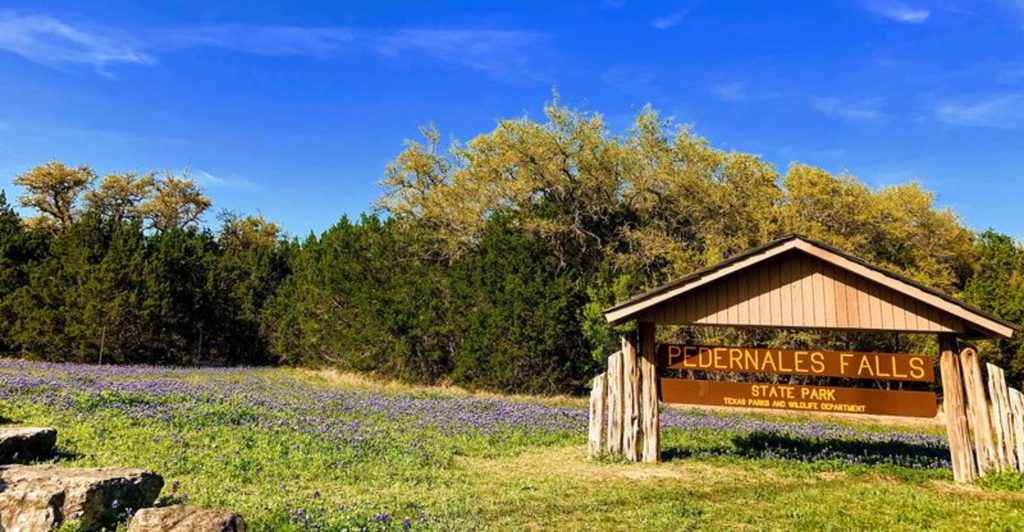
The falls here don’t drop dramatically like a traditional waterfall but instead cascade over layers of tilted limestone in a series of rapids and chutes. When the river runs high, water rushes through these channels with impressive force, creating a roar you can hear from the overlook. The park protects 5,212 acres along the Pedernales River, making it one of the larger state parks in the Hill Country, though its compact shape on maps doesn’t convey the actual ground you can cover.
More than 20 miles of trails wind through different sections of the park, from easy riverside walks to challenging backcountry loops. The Wolf Mountain Trail climbs to higher elevations where you get views across the entire river valley. Spring wildflowers transform the hillsides into colorful displays, while summer heat drives everyone to the shaded canyon bottoms.
The river creates distinct zones within the park. Below the falls, deep pools form where the water slows down, offering swimming opportunities when conditions are safe. Above the falls, the river spreads wide and shallow across limestone bedrock, creating a completely different character.
During dry periods, you can walk across exposed sections of riverbed and examine the rock layers up close.
Primitive camping areas sit miles from the developed campground, accessible only by hiking in with your gear. These backcountry sites offer true solitude, with nothing but Hill Country wilderness surrounding you. Night sounds include owls, coyotes, and the distant rush of water over the falls.
The park’s size becomes apparent when you try to explore it thoroughly in one visit and realize you’ve barely covered half the available trails. Side canyons branch off from the main river valley, each containing its own features worth investigating. Tufa formations, small caves, and seasonal waterfalls hide throughout the property, rewarding those who venture beyond the main falls overlook and picnic areas near the entrance.
8. Hamilton Pool Preserve (Dripping Springs)
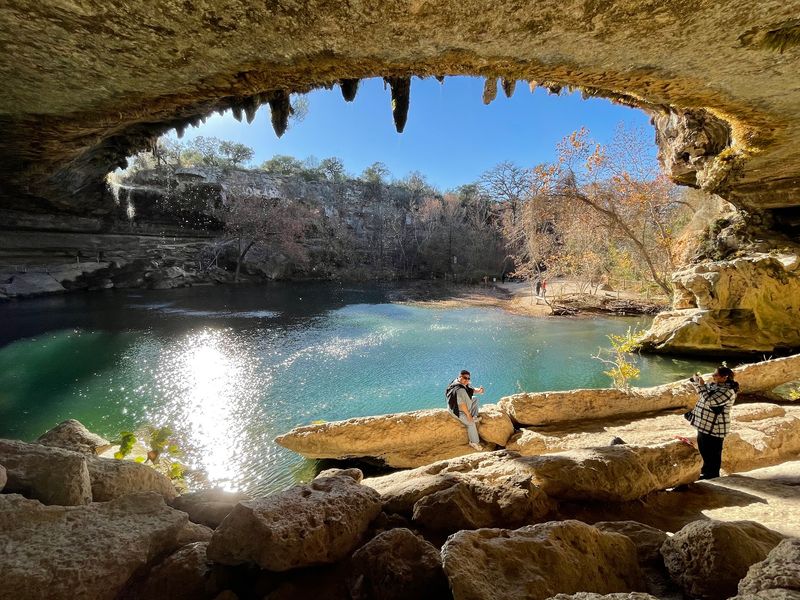
This place started as a private swimming hole before becoming a protected preserve, and its compact size on paper belies the dramatic scenery packed into 232 acres. The main attraction is a collapsed grotto where a 50-foot waterfall spills into an emerald pool surrounded by limestone cliffs. Stalactites hang from the overhang above, and the whole scene looks more like a movie set than a real Texas landscape.
Getting to the pool requires a quarter-mile hike down a rocky trail that descends into the canyon. The path winds through juniper and oak forest before emerging at the grotto, where the temperature drops noticeably in the shade of the overhanging cliff. The pool itself stretches about 50 feet across, with water so clear you can see every rock on the bottom.
Swimming is allowed when bacteria levels are safe, but even when the pool is closed, the preserve remains worth visiting. The waterfall continues flowing year-round thanks to underground springs, though the volume varies with rainfall. During dry periods, it becomes a gentle cascade, while after storms it roars with impressive force.
Beyond the main pool, trails follow Hamilton Creek downstream through a beautiful canyon lined with sycamore and cypress trees. This lower section sees fewer visitors but offers equally stunning scenery, with smaller pools, rock formations, and abundant wildlife. The creek eventually joins the Pedernales River, connecting this preserve to a larger watershed.
The preserve’s popularity means you need reservations to visit, with daily capacity limits that prevent overcrowding. This restriction actually enhances the experience because you’re not fighting through masses of people to see the falls. Early morning visits offer the best light, with sun filtering through the grotto opening to illuminate the pool in golden tones.
The compact acreage contains such concentrated beauty that every step reveals new perspectives on the waterfall, cliffs, and surrounding canyon, making the preserve feel much larger than its actual boundaries.
Share this story