A six-story elephant watches over the Jersey Shore, a silver flying saucer sits in a suburban park, and an indoor ski mountain rises beside the New Jersey Turnpike. None of these scenes comes from a movie set.
They are real places scattered across the Garden State, created by visionary architects, ambitious developers, eccentric artists, and people who clearly believed ordinary buildings were not interesting enough. Some are beautiful in a grand, historic way.
Others are strange enough to make you stop the car and stare. A few manage to be both at once.
Visiting them reveals a side of New Jersey that goes far beyond beaches, diners, and familiar skylines. These buildings tell stories about changing tastes, bold experiments, local pride, and the kind of imagination that refuses to fit inside a standard rectangular box.
Bring a camera, check access details before leaving home, and prepare to wonder how some of these structures were ever built in the first place.
1. Lucy the Elephant – Margate City
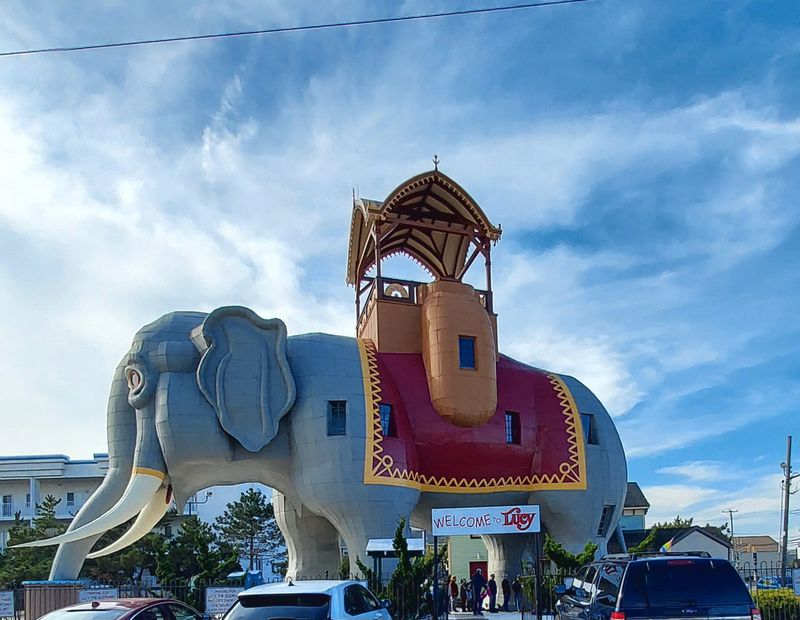
Six stories of wood and metal rise above Margate in the unmistakable shape of an enormous elephant. Lucy was built in 1881 by real estate developer James V.
Lafferty, who wanted an attention-grabbing structure that would draw potential buyers to the area. More than 140 years later, she is still impossible to ignore.
Her gray body, curling tusks, oversized ears, and carriage-like howdah make her look like a boardwalk attraction dreamed up during a particularly imaginative Victorian afternoon. Lucy is more than a roadside photo opportunity, however.
Guided tours take visitors through one of her legs and into rooms hidden inside her body, where displays explain her construction, preservation, and unusual history. A narrow staircase leads to the platform on her back, offering breezy views across Margate and toward the Atlantic.
The interior makes the building feel even stranger because windows reveal the wooden framework supporting the giant animal-shaped shell. Lucy once served as everything from a tavern to a private residence, and she narrowly escaped demolition before being moved to her current home near the beach.
Tour schedules vary throughout the year, so checking ahead is wise. Even travelers who stay outside can explore the grounds, browse the small gift shop, and capture one of New Jersey’s most unmistakable photographs.
2. Asbury Park Convention Hall – Asbury Park
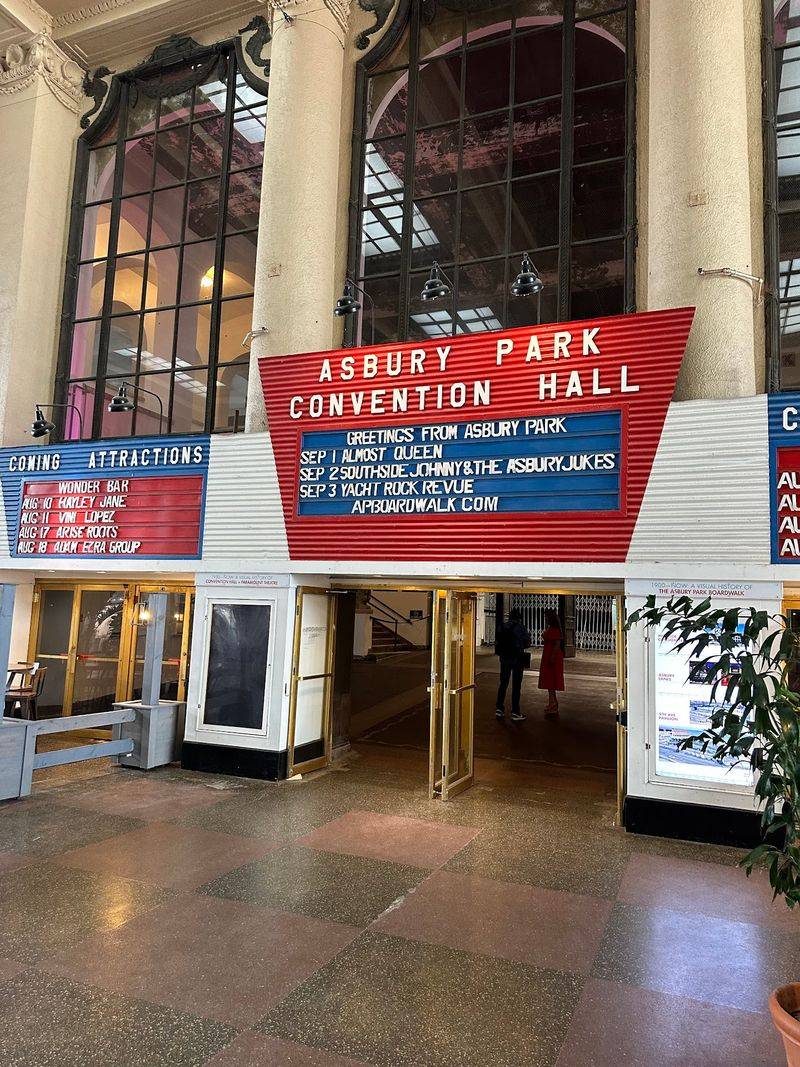
Walk north along the Asbury Park boardwalk and an enormous stone complex suddenly appears to stretch directly into the Atlantic. Convention Hall and the adjoining Paramount Theatre were designed during an era when seaside entertainment buildings were expected to look monumental.
Arched windows, copper details, decorative stonework, and grand entrances give the complex the appearance of an aging European resort rather than a venue on the Jersey Shore. Opened around the beginning of the 1930s, the building hosted concerts, conventions, sporting events, and community gatherings for generations.
Its stages welcomed major performers, while the connecting Grand Arcade became one of the boardwalk’s most recognizable passageways. Time and salt air have left visible marks, but the slightly weathered appearance adds to the drama.
The building looks especially striking on cloudy days, when its towers and massive windows stand against a gray ocean sky. Structural concerns have affected access to portions of the complex, so visitors should check current conditions before expecting to enter.
Even when the interior is unavailable, the exterior is worth seeing from the boardwalk. Take time to notice the nautical carvings, high arches, and unusual position at the edge of the water.
Afterward, continue along the boardwalk for murals, restaurants, live music venues, and views that show why this building remains central to Asbury Park’s identity.
3. Hoboken Terminal – Hoboken
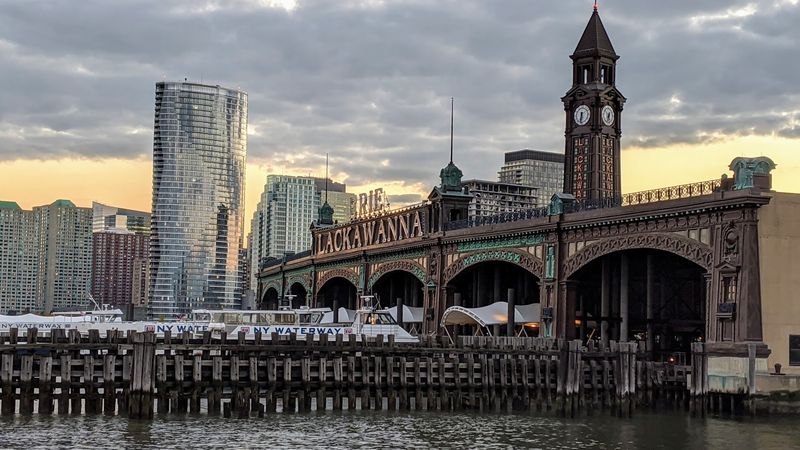
Most train stations are designed to move people through as quickly as possible. Hoboken Terminal seems determined to make commuters stop and look up.
Opened in 1907, the waterfront transportation hub combines trains, ferries, buses, PATH service, and light rail in a sprawling complex beside the Hudson River. The main waiting room is the showstopper.
A vast stained-glass ceiling glows above limestone walls, bronze fixtures, decorative ironwork, and rows of wooden benches. The details feel closer to a grand civic hall than an ordinary commuter station.
Outside, the terminal’s copper facade and clock tower face the Manhattan skyline, creating one of the most impressive arrival points in the region. The building was engineered to handle several transportation systems at once, an ambitious design that still shapes daily travel more than a century later.
Visit outside weekday rush hours to appreciate the architecture without weaving through crowds heading to work. Walk through the waiting room, continue toward the ferry slips, and step outside for views across the river.
Arriving by public transportation is the easiest option because parking in central Hoboken can be difficult and expensive. Once you have explored the terminal, the waterfront promenade and downtown restaurants are only a short walk away.
Thousands of people pass through every day, yet the building still feels like one of New Jersey’s most unexpectedly elegant architectural surprises.
4. Cathedral Basilica of the Sacred Heart – Newark
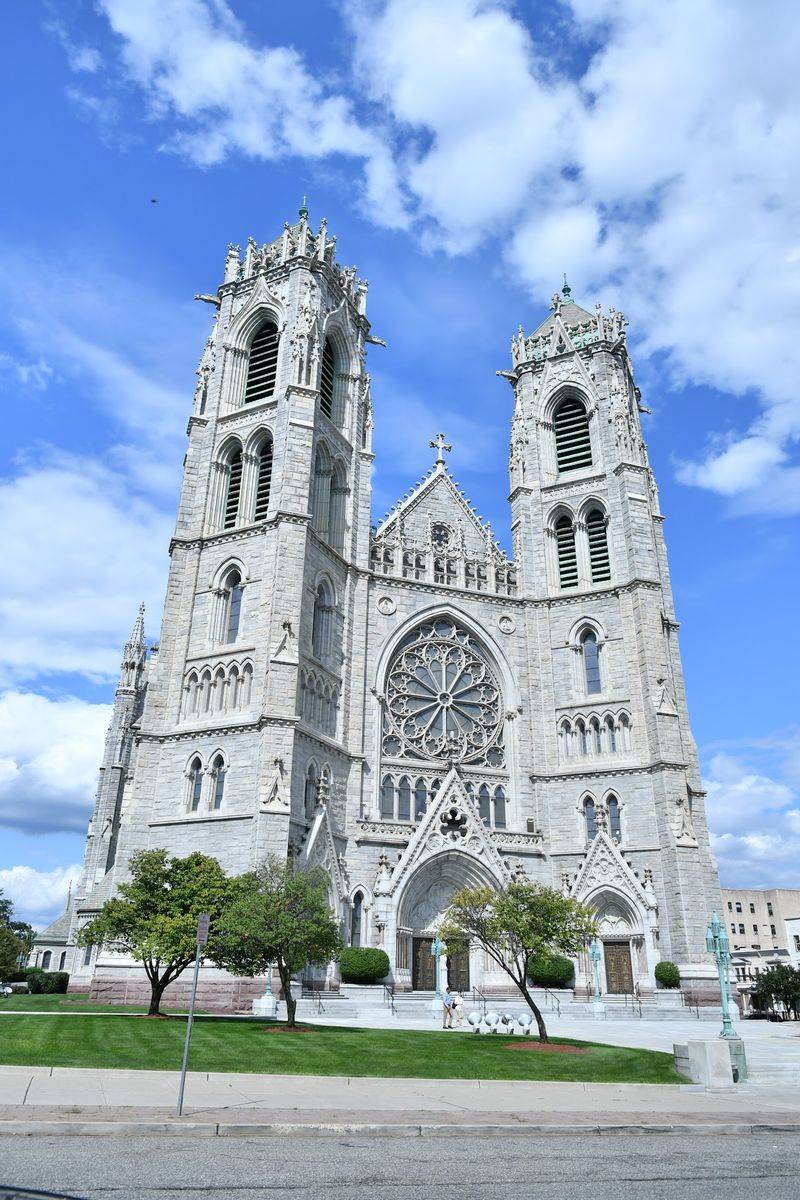
Twin towers rise more than 200 feet above Newark, framing a massive rose window and an entrance that looks transported from medieval France. The Cathedral Basilica of the Sacred Heart is one of the largest Gothic-style cathedrals in North America, and its scale is difficult to appreciate until you stand beneath it.
Construction began near the end of the 19th century and continued for decades, with changing architects refining its French Gothic design along the way. Inside, pointed arches lead the eye toward vaulted ceilings, carved stone details, stained-glass windows, side chapels, and a vast pipe organ.
Sunlight filtering through the colored glass can transform the stone interior from cool gray to soft shades of red, blue, and gold. Unlike many buildings on this list, the cathedral is not bizarre because it is whimsical or eccentric.
It is unusual because something this enormous and elaborate rises in the middle of New Jersey’s largest city. Visitors are generally welcome outside scheduled services and private ceremonies, although respectful behavior is essential because the cathedral remains an active place of worship.
Keep voices low, avoid interrupting Mass, and check the calendar before planning a tour. The location beside Branch Brook Park makes spring an especially rewarding time to visit.
When the park’s cherry trees bloom, their pale pink flowers create a remarkable contrast with the cathedral’s dark stone towers.
5. Emlen Physick House – Cape May
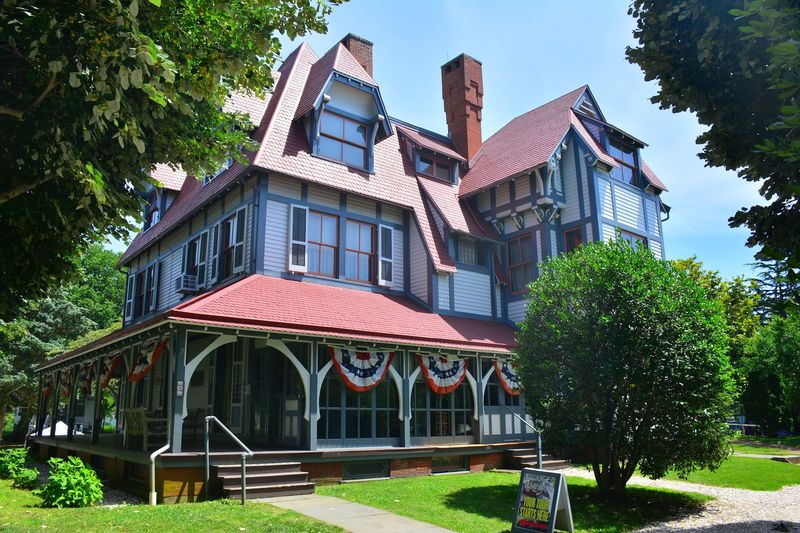
Cape May has no shortage of elaborate Victorian homes, yet the Emlen Physick House still manages to look unlike anything around it. Built in 1879, the mansion features steep rooflines, oversized chimneys, deep porches, projecting windows, and heavy wooden details that give it the appearance of an elegant haunted house.
Architect Frank Furness was known for bold, unconventional designs, and this 18-room residence shows his preference for dramatic shapes over polite symmetry. The house belonged to Dr. Emlen Physick, who lived there with his widowed mother and two aunts.
Guided tours explore both the architecture and the routines of the household, from formal entertaining to the work performed behind the scenes by domestic staff. Rooms are furnished to reflect Victorian life, while seasonal themes examine everything from old-fashioned mourning customs to holiday traditions.
The exterior deserves just as much attention as the interior. Look for the unusual window placement, muscular brackets, patterned surfaces, and roofline that seems to change shape depending on where you stand.
Tours can fill during summer weekends and Cape May’s busy holiday season, so booking ahead is a good idea. The estate also includes landscaped grounds and a carriage house, making it easy to spend more time there than expected.
After touring the mansion, head toward Cape May’s historic center and compare Furness’s bold design with the town’s more delicate gingerbread cottages.
6. Luna Parc – Sandyston
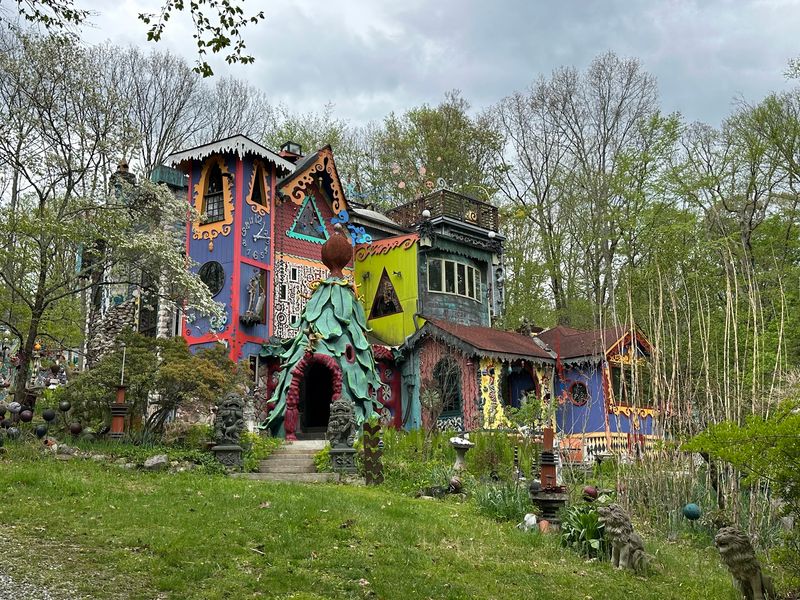
Bright mosaics crawl across walls, sculpted faces peer from unexpected corners, and crooked towers rise through the woods like parts of an unfinished fairy-tale castle. Luna Parc is the home and studio of artist Ricky Boscarino, who has been transforming the Sussex County property since 1989.
Calling it a house does not quite capture what is happening here. It is a constantly evolving artwork built from handmade tiles, stained glass, mirrors, metal, concrete, found objects, and whatever else fits Boscarino’s imagination.
No surface appears safe from decoration. Tiny ceramic creatures hide inside larger patterns, faces emerge from chimneys, and garden structures blur the line between sculpture and architecture.
The interior continues the visual overload with artwork, furniture, jewelry, collections, and rooms that feel more like installations than conventional living spaces. Luna Parc is also a private residence, which means visitors cannot simply arrive whenever they please.
Public access is generally limited to announced open houses, tours, workshops, or special events. Check the schedule carefully before making the drive and respect the property if it is closed.
When an open date is available, arrive prepared to spend time looking closely rather than rushing from room to room. The smallest details are often the most memorable.
Surrounded by quiet woods and country roads, the wildly decorated structure feels even more improbable, as though an eccentric European palace sprouted unexpectedly in rural New Jersey.
7. American Dream – East Rutherford
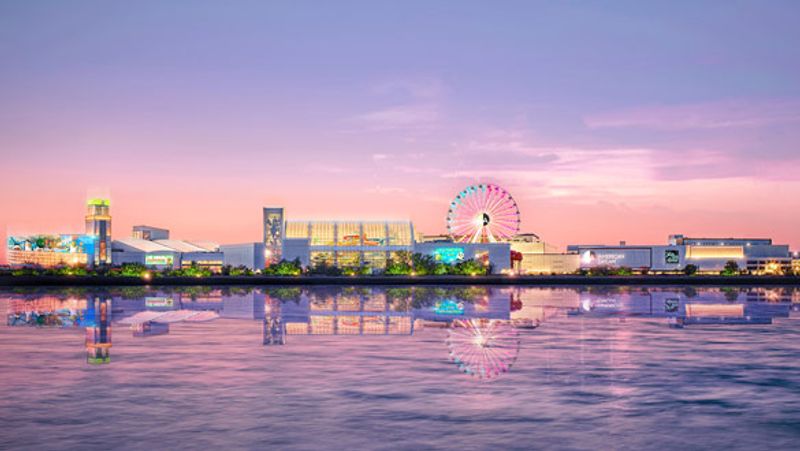
There is nothing normal about stepping inside a shopping complex and finding a snowy mountain. American Dream, the enormous entertainment and retail center beside MetLife Stadium, contains an indoor ski slope along with roller coasters, a water park, an aquarium, an ice rink, miniature golf, restaurants, and hundreds of stores.
The building is so large that it feels less like a mall and more like several separate attractions connected by miles of polished corridors. Nickelodeon Universe places full-size amusement rides beneath a glass ceiling, while DreamWorks Water Park surrounds towering slides with tropical temperatures throughout the year.
Big SNOW offers skiing and snowboarding on real snow even during the hottest days of summer. Moving between those spaces creates some of the strangest contrasts anywhere in New Jersey.
One moment you can be wearing a winter coat near the slope, and the next you are passing families headed toward a wave pool. Entry to the common shopping areas is free, but the major attractions require separate tickets and can become expensive when combined.
Choose one or two priorities before arriving instead of trying to experience everything in a single visit. Comfortable shoes are essential, and taking a photograph of your parking section can prevent a long search later.
Even visitors who dislike malls may find the scale fascinating. Few buildings anywhere attempt to place this many completely different worlds beneath one roof.
8. The Futuro House – Willingboro
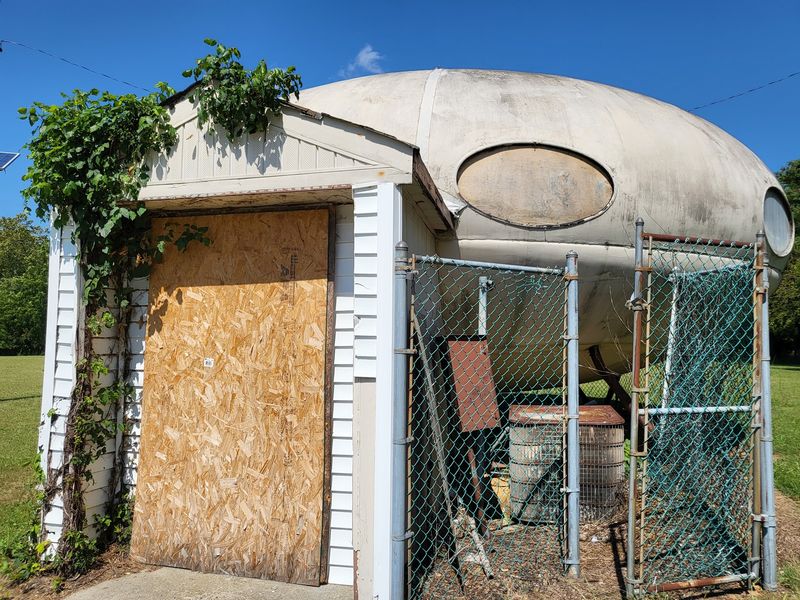
A silver pod with oval windows rests in Mill Creek Park as though it landed from another planet and never received instructions to leave.
The Futuro House was designed by Finnish architect Matti Suuronen during the late 1960s, when designers imagined people might soon live in portable, mass-produced homes resembling spacecraft.
Its lightweight fiberglass shell was intended to be transported easily and placed in remote locations, including ski resorts and vacation properties. The circular interior originally featured built-in seating, compact rooms, and a hatch-like entrance that completed the flying-saucer effect.
Only a limited number of Futuro houses were produced, making surviving examples increasingly rare. Willingboro’s pod has moved through several locations and uses over the years before settling in the park.
Exposure to the elements has taken a toll, and preservation advocates have worked to protect and document the structure. Visitors should expect an unusual exterior landmark rather than a polished museum with regular interior tours.
View it from the appropriate public area, avoid climbing on the shell, and appreciate the wonderfully optimistic design from a respectful distance. The setting makes the experience even stranger.
Jogging paths, trees, sports fields, and ordinary suburban scenery surround a building that appears ready for interplanetary travel. It is a quick stop, but anyone interested in retro design, unusual architecture, or Space Age history will have little trouble remembering it.
9. The Palace of Depression – Vineland
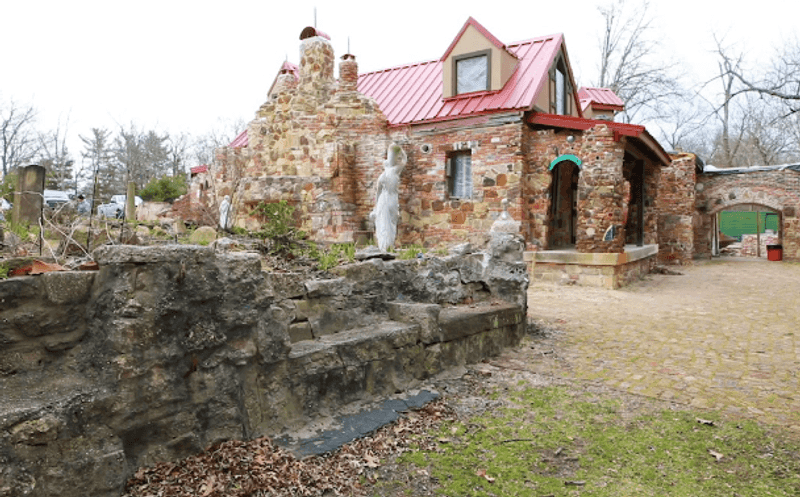
George Daynor looked at a collection of discarded bricks, bottles, concrete, mud, metal, and junk and decided he had enough material to build a palace.
After losing his fortune around the time of the 1929 stock market crash, the former gold miner arrived in Vineland and began constructing an eccentric compound from salvaged materials.
The Palace of Depression opened to visitors in 1932, offering crooked towers, narrow passages, mosaic-covered walls, unusual rooms, and countless objects embedded directly into the structure.
Daynor promoted the property as proof that determination could overcome financial ruin, although his flair for wild stories and self-promotion became as famous as the building itself.
The original palace deteriorated after his death and was eventually demolished in 1969. What visitors see today is a volunteer-led reconstruction created through years of research, fundraising, and hands-on work.
That rebuilt version preserves the intentionally irregular shapes and improvised methods that made Daynor’s creation so unusual. Access can be limited because restoration and reconstruction efforts continue, so verify tour dates or special events before driving to Vineland.
When the site is open, examine the walls carefully. Bottles, broken tiles, pieces of machinery, and other discarded materials appear in unexpected places.
The palace may look chaotic, but its story carries a surprisingly serious message about creativity, resilience, and the determination to build something memorable from almost nothing.
Share this story