A bronze Martian crouches in a quiet Mercer County park, not far from tidy lawns, shade trees, and the kind of everyday New Jersey calm that makes the joke even better. Nothing landed there, of course.
That is the point. In this state, the line between legend and landmark has always been delightfully thin.
A drainage tunnel becomes a doorway to hell. A country road turns into a dare.
A lonely tree gets treated like it has a temper. New Jersey’s creepiest places rarely feel staged or polished; they feel passed along, argued over, embellished, and sworn to by someone who knows someone who was definitely there.
Some of these stops are museums or public parks. Others are better approached with common sense, daylight, and respect for private property.
Together, they make a strange little road map through the Garden State’s best horrors, hauntings, and hoaxes.
1. Paranormal Books & Curiosities / Paranormal Museum – Asbury Park
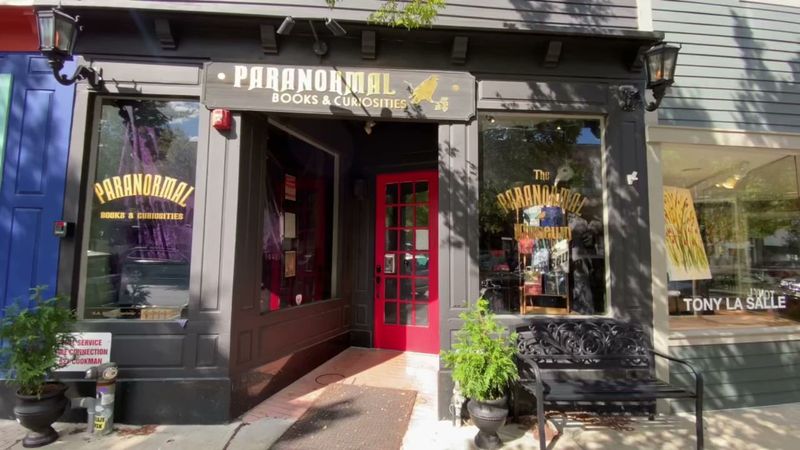
Cookman Avenue already has plenty of personality, but Paranormal Books & Curiosities adds the good kind of goosebumps to Asbury Park’s downtown mix.
The shop is part bookstore, part curiosity cabinet, and part clubhouse for people who like their shore-town history with a ghost story attached.
Inside, you will find paranormal books, unusual objects, spiritual supplies, and the Paranormal Museum, where the displays lean into Asbury’s long-running reputation for hauntings and odd happenings. What makes it worth including is that it does not feel like a plastic skeleton kind of place.
The appeal is in the storytelling: old buildings, boardwalk lore, strange artifacts, and the feeling that the Jersey Shore has always had a second life after dark. It is also one of the easiest stops on this list to actually plan around.
Make it part of a downtown Asbury day, browse the shelves, visit the museum if it is open, then wander toward the boardwalk for food, drinks, or a salt-air reset. Check hours before you go, since small specialty spots can change schedules.
This is a great first stop for skeptics, believers, and anyone who secretly wants to be the “I don’t believe in ghosts, but…” person in the group.
2. Clifton’s Gates of Hell – Clifton
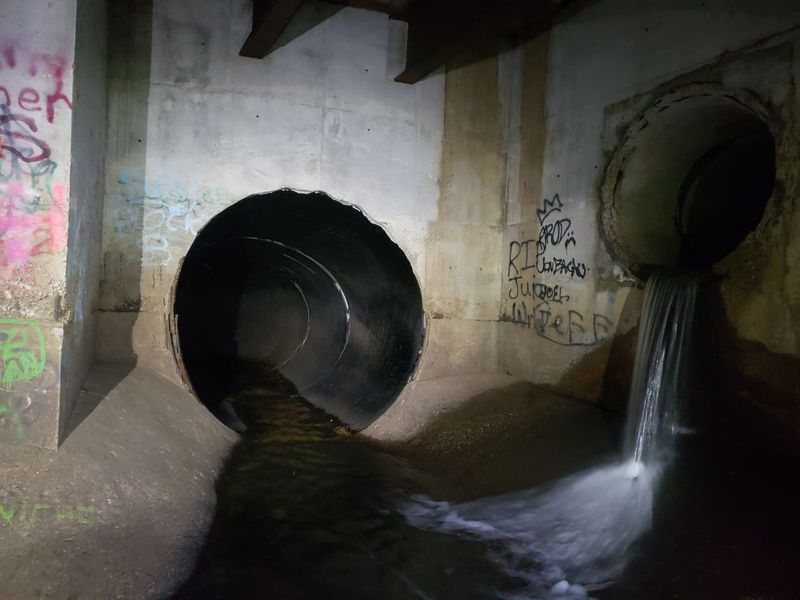
At first glance, the Gates of Hell look almost insultingly ordinary, which is exactly why the legend works.
Hidden in Clifton, this old drainage system has become one of North Jersey’s most notorious urban legends, surrounded by stories about underground levels, strange graffiti, eerie chambers, and tunnels that supposedly lead deeper than any storm drain has business going.
The name does a lot of heavy lifting, but the setting helps too. New Jersey does not need a crumbling castle to feel creepy; give it concrete, shadows, water, and a rumor, and locals will do the rest.
The stories usually involve people daring one another to go farther in, with every level getting stranger and more dangerous. That makes it a perfect horror-and-hoax entry: part real infrastructure, part teenage legend, part “my cousin went in and never came out the same” material.
For readers, though, this is not an invitation to explore underground. Drainage tunnels can flood quickly, contain hazards, and may be illegal or unsafe to enter.
The smart version of visiting is treating it as folklore, not a challenge. Read up on the legend, understand why it stuck, and appreciate the fact that Clifton somehow turned a storm drain into one of the state’s most infamous portals to doom.
3. Shades of Death Road – Independence Township
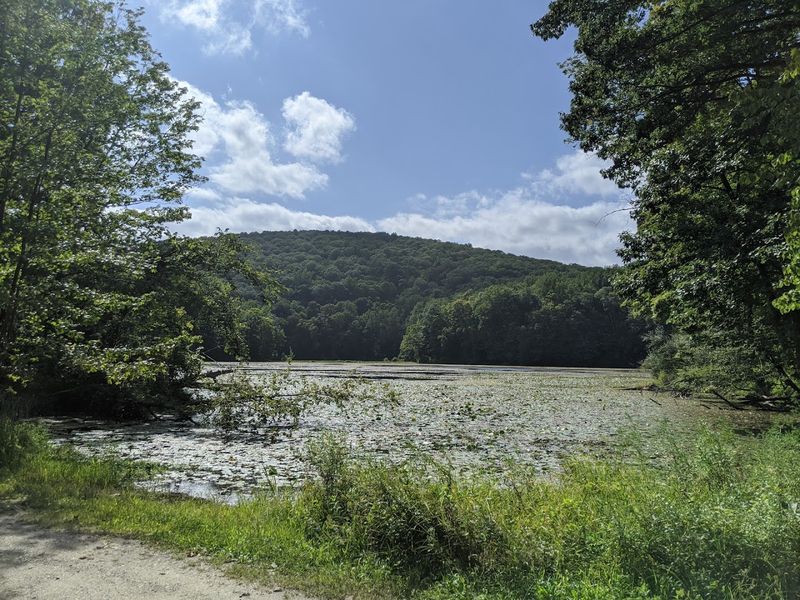
A road called Shades of Death does not have to work very hard to earn attention. This Warren County stretch sounds like it was named by a horror novelist with no interest in subtlety, yet the road itself is real, rural, and wrapped in enough stories to keep the name alive.
Over the years, locals have tied it to murders, accidents, ghostly figures, strange lights, swampy illness, and the kind of general bad luck that makes people lower their voices when they talk about it. Part of the appeal is the landscape.
The road winds through woods, farms, water, and quiet pockets of Independence Township, where a misty morning or late afternoon shadow can make the whole place feel like it is holding something back.
Nearby Ghost Lake adds another layer, because apparently one ominous name was not enough.
The vibe here is less haunted attraction and more local legend that got comfortable in the driver’s seat. If you go, remember that it is still a real road where people live and drive.
Do not block traffic, wander onto private property, or treat local homes like props. Daytime is best if you actually want to enjoy the scenery.
The name will still be creepy without you trying to manufacture a midnight horror scene.
4. Jenny Jump State Forest – Hope
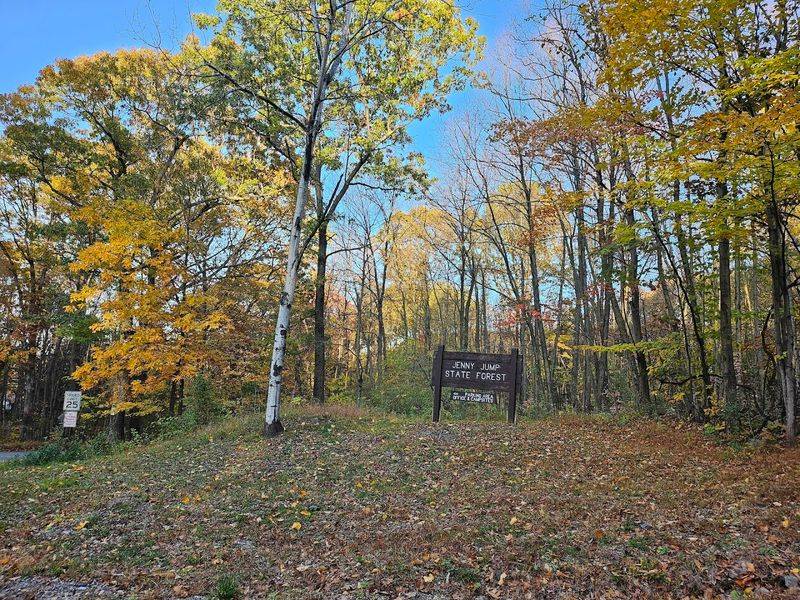
The funny thing about Jenny Jump State Forest is that it is genuinely beautiful before it is spooky.
The trails climb through rocky Warren County woods, with ridges, boulders, overlooks, and the kind of quiet that makes you understand why legends settle here and refuse to leave.
The story behind the name is the hook: local lore says a girl named Jenny jumped from the mountain after a frightening encounter, with versions of the tale changing depending on who is telling it.
Whether you hear it as tragedy, warning, folklore, or campfire invention, it gives the forest a shadowy edge that lingers under all that natural beauty.
This spot earns its place because it offers more than a quick creepy photo. You can actually hike, take in the views, explore the forest, and let the legend sit in the background like a low note in the music.
Bring water, wear real shoes, and pick a trail that fits your comfort level, because this is still a state forest, not a paved ghost tour. Daylight is your friend, especially if you are unfamiliar with the area.
For extra atmosphere, look into nearby names like Ghost Lake and Fairy Hole Cave, which sound like New Jersey was naming places during a thunderstorm.
5. Tripod Rock – Boonton Township / Kinnelon
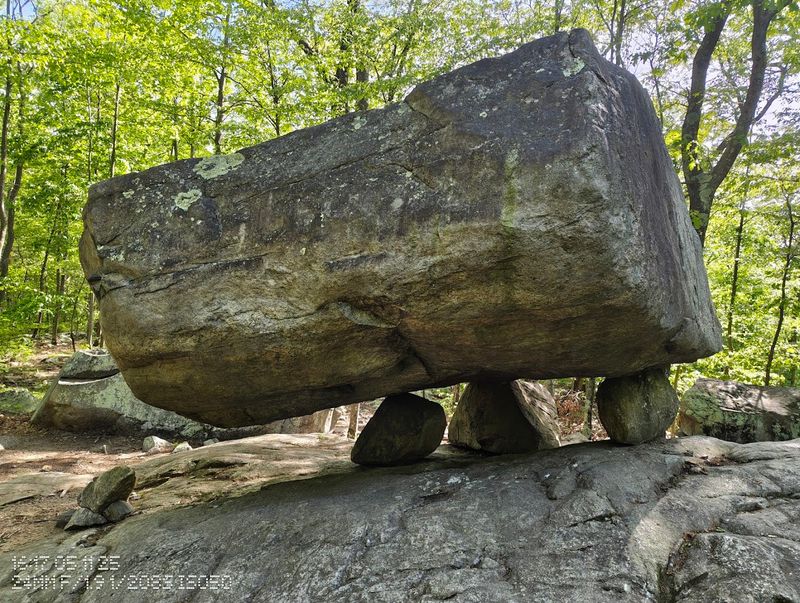
A massive boulder balanced on three smaller stones should look fake, but Tripod Rock is very much real, and that is what makes it so satisfying.
Found in Pyramid Mountain Natural Historic Area, this glacial erratic was left behind by ancient ice, which is the sensible explanation.
Still, standing in front of it, you can understand why people start reaching for stranger theories. It looks staged, deliberate, almost architectural, as if something enormous and patient placed it there and walked away.
That is why it belongs in an article about horrors, hauntings, and hoaxes. Tripod Rock is not scary in the ghostly sense.
Its weirdness comes from the gap between what science explains and what your eyes insist on questioning. The surrounding park makes the visit even better, with rugged trails, wetlands, ridges, and other impressive boulders scattered through the landscape.
This is a great pick for readers who want a creepy-adjacent outing without trespassing, tunnels, or cursed-road anxiety. Start from the Pyramid Mountain area, expect company on nice weekends, and give yourself enough time for the hike rather than treating it like a roadside pull-off.
It is free, photogenic, and oddly humbling. Nobody has to believe aliens arranged it to admit that New Jersey’s rocks can be deeply strange.
6. “War of the Worlds” Monument – West Windsor Township
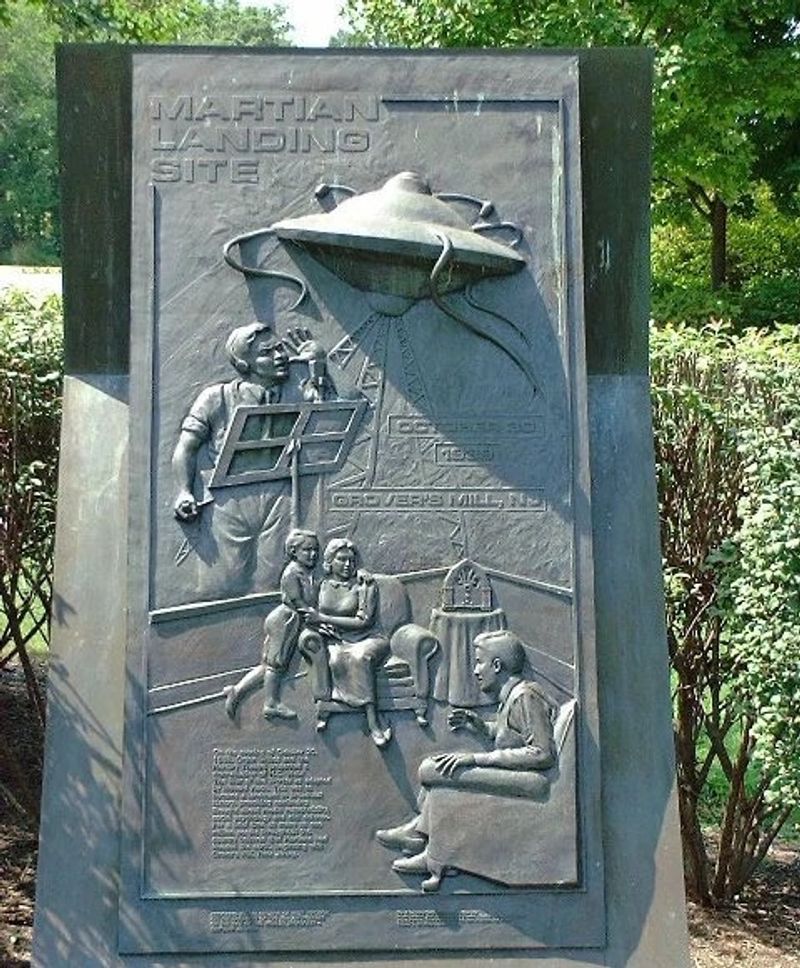
The Martian monument in Grovers Mill is small, odd, and quietly hilarious once you remember what it marks: the place where aliens did not land, but panic did. In 1938, Orson Welles’s radio adaptation of “The War of the Worlds” used this Mercer County community as the fictional landing site for a Martian invasion.
The broadcast became tangled with stories of frightened listeners, confused phone calls, and one of America’s most famous examples of make-believe escaping into real life. Today, the monument gives that imaginary invasion a physical address.
That contrast is the whole charm. You are standing in a peaceful park, looking at a memorial to a disaster that never happened, in a town that became famous because radio made it sound like the end of the world had chosen New Jersey.
It is a perfect hoax-adjacent stop because it is not really about monsters from Mars. It is about rumor, media, panic, and how quickly a story can grow legs.
This is an easy visit, best folded into a Princeton or West Windsor day rather than treated as a full trip by itself. Stop, take a photo, read the marker, and picture families huddled around radios while Grovers Mill briefly became the center of the universe.
7. Devil’s Tree – Bernards Township
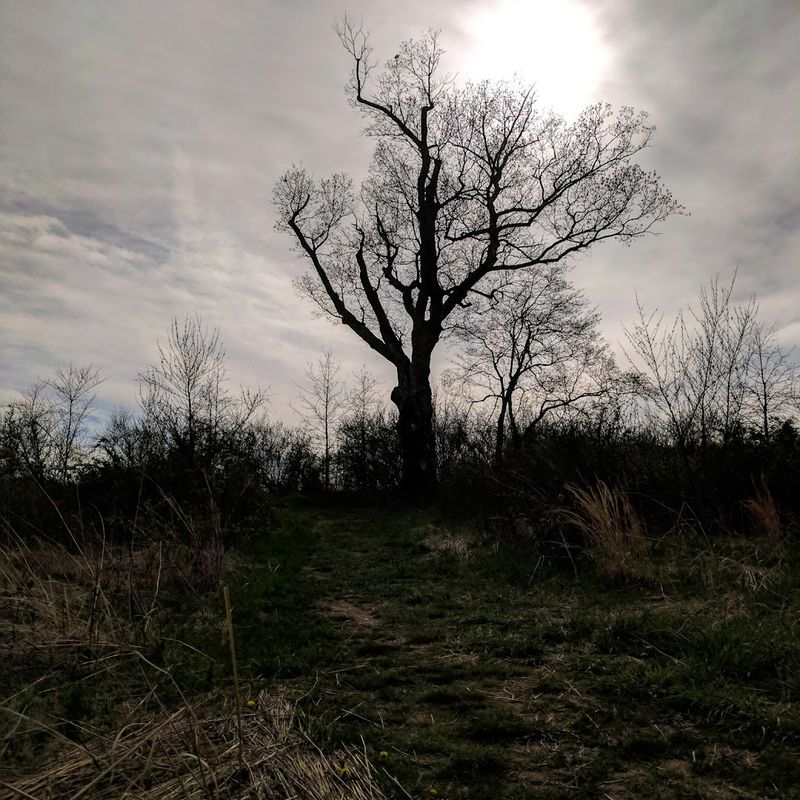
Some haunted places come with creaking floors and cold spots. The Devil’s Tree comes with a simpler instruction: do not mess with the tree.
Standing off Mountain Road in the Martinsville section of Bernards Township, this solitary oak has become one of Central Jersey’s most infamous cursed landmarks.
The stories vary, but they often involve violence, tragedy, a menacing black truck, bad luck for anyone who damages the tree, and a nearby rock said to stay strangely warm.
Like the best local legends, the details shift depending on who is talking, but the warning stays steady. Be respectful, keep your distance, and absolutely do not try to prove anything.
What makes the Devil’s Tree so memorable is how plain it sounds until the folklore kicks in. It is not a mansion, cemetery, or abandoned hospital.
It is a tree in a field that people have turned into a test of nerve and manners. That smallness makes it creepier, not less.
The township has had to protect the site because of vandalism, so visitors should treat this as a look-don’t-touch stop and obey posted rules. Honestly, that only adds to the mystique.
A cursed tree should not need you leaning on it for a selfie.
8. Clinton Road – West Milford
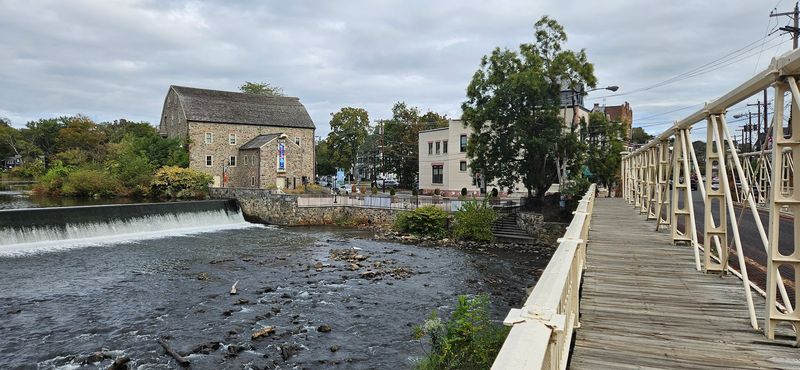
Clinton Road is the New Jersey legend that acts like it knows it is famous. Running through West Milford, this long, wooded road has built a reputation as one of the creepiest drives in the state, thanks to stories about ghostly children, phantom headlights, strange animals, occult rumors, and the unsettling feeling that the trees are listening.
The most repeated tale involves a bridge where a coin tossed into the water is supposedly returned by the ghost of a boy. Whether you believe that or not, the setting does a lot of work on its own.
The road passes through forested stretches, near reservoirs and quiet water, with enough curves and darkness to make even normal driving feel cinematic after sunset. What makes Clinton Road worth including is that it is both a real scenic drive and a full-blown folklore machine.
Everyone seems to have heard a different version, and every version insists it is the correct one. If you go, do not be the person who ruins it for everyone.
Drive safely, stay off restricted land, avoid blocking the road, and do not bother residents or other drivers. Daytime gives you scenery; nighttime gives you atmosphere but also poor visibility.
The best approach is to respect the road and let the legend ride along.
9. Burlington County Prison Museum – Mount Holly
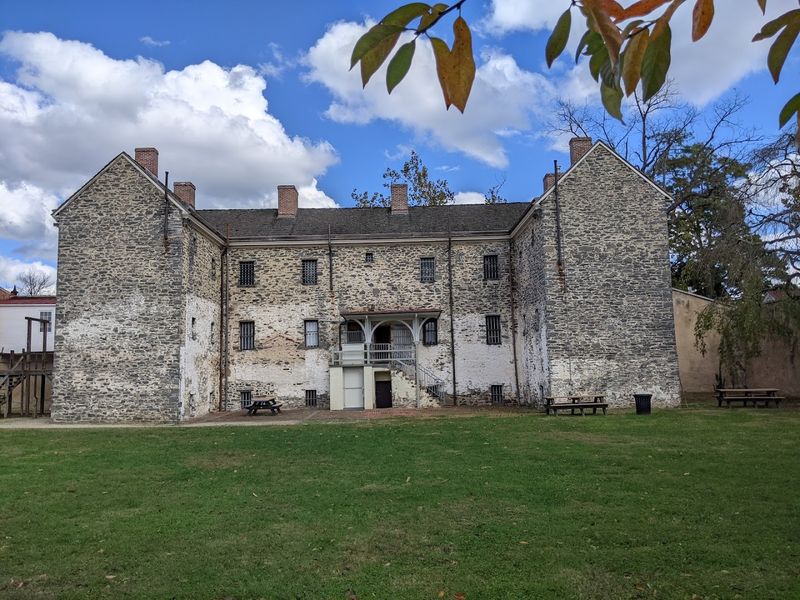
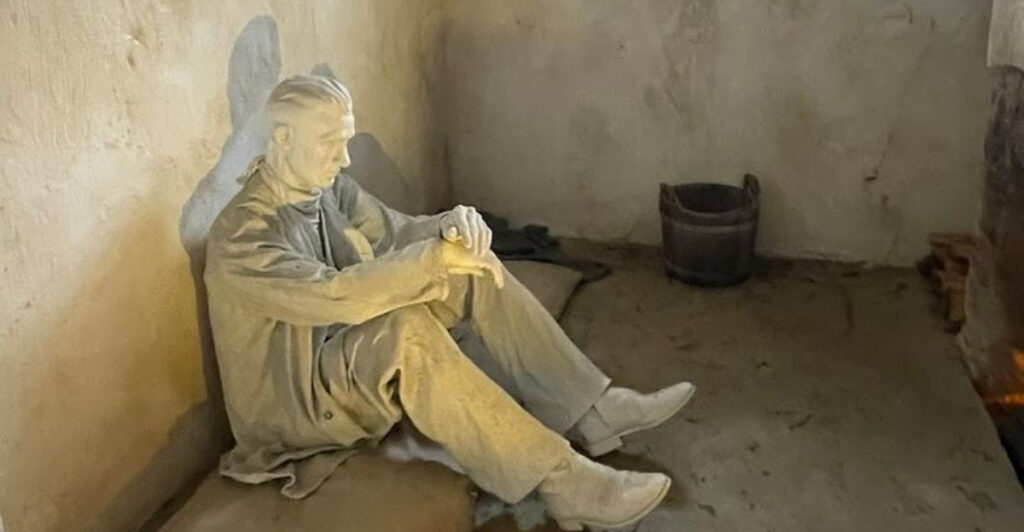
The creepiest thing about Burlington County Prison Museum is that it does not need to pretend very much. Built in the early 1800s and used for well over a century, the old Mount Holly jail has enough real history in its walls to make fake cobwebs unnecessary.
Visitors can walk through preserved spaces connected to crime, punishment, architecture, and daily life behind bars, which gives the place a weight that many haunted attractions only wish they had.
The paranormal reputation adds another layer, with ghost stories and investigations helping turn the former prison into one of South Jersey’s best spooky-history stops.
What makes it stand out is the balance between educational and eerie. You are not just chasing a rumor on the side of a road; you are stepping into a building where people were confined, worked, waited, and left marks behind.
That makes the chills feel grounded. It is also a practical pick for readers who want something structured, indoors, and easy to plan around.
Mount Holly’s downtown is nearby, so you can make it part of an afternoon rather than a single stop. Check current hours before you go, since historic sites can keep limited schedules.
Here, the haunting is not just about ghosts. It is about the past refusing to feel finished.
Share this story