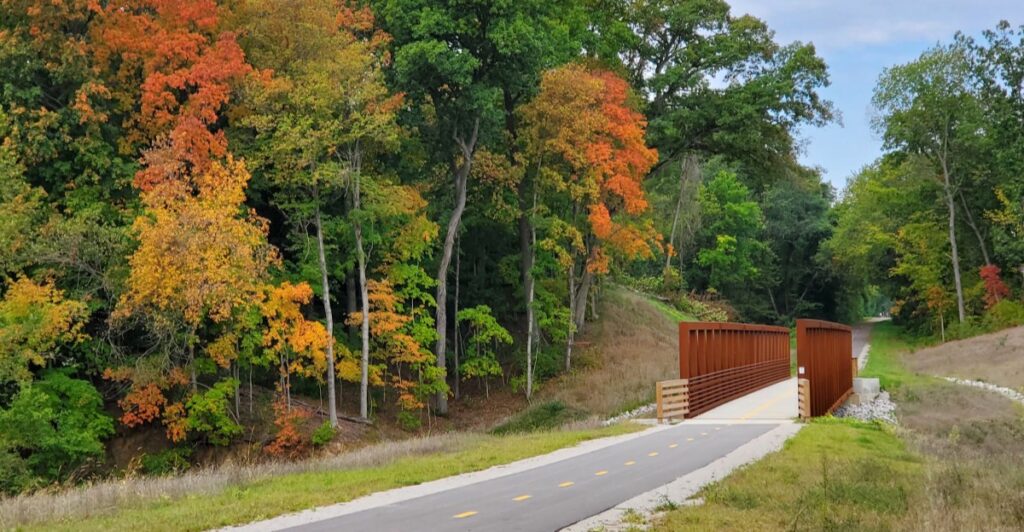
Pedaling through Illinois gets wonderfully easy when the route follows a path originally designed for trains. Former railroad corridors across the state have been transformed into bike trails with gentle grades, long straightaways, and plenty of scenery along the way.
Instead of tackling punishing climbs, cyclists can cruise past farmland, wooded stretches, small towns, and reminders of the rail lines that once connected them. That makes these routes especially inviting for families, beginners, and riders more interested in exploring than racing. Pump up the tires and grab your helmet, because these 9 Illinois rail trails turn pieces of transportation history into relaxing two-wheeled adventures.
1. Tunnel Hill State Trail (Vienna)
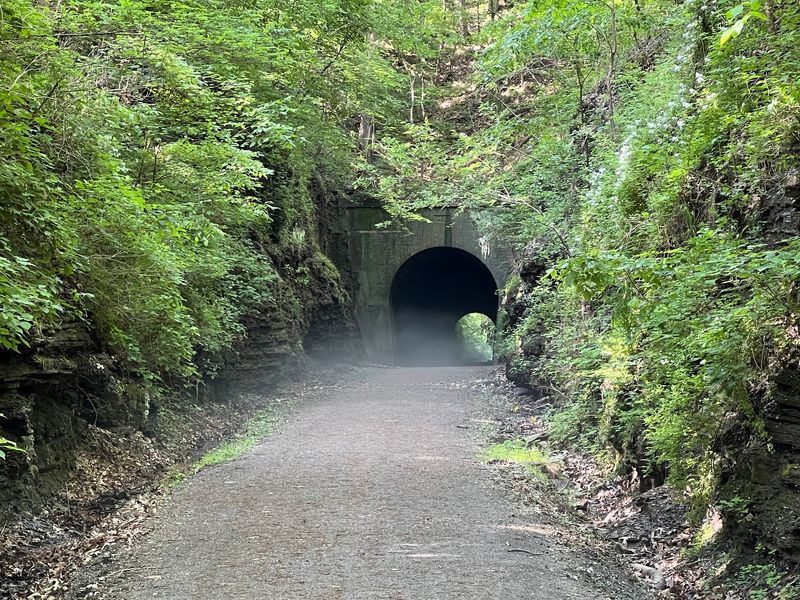
Picture a dark stone opening in a hillside, cool air drifting out even on a sticky July afternoon. That tunnel, stretching 543 feet, is the star of this Southern Illinois trail, and riding through it is a small thrill that most kids talk about for days.
The path follows an abandoned railroad corridor through the rolling Shawnee country. Because trains needed steady, gradual slopes, the grades here stay mild, even though the land around you dips and rises. The crushed-limestone surface crunches under your tires in a pleasant way.
Vienna makes a smart starting point. Shorter out-and-back stretches from town give new riders a taste of the scenery without wearing out their legs. You can turn around whenever you like, which takes the pressure off.
Scenery changes quickly along the way. Thick forests give shade, wetlands pop up with croaking frogs and wading birds, and old wooden trestles carry you over creeks and ravines. Looking down from a trestle gives you a fresh view of the treetops.
Did you know? Railroad tunnels were costly to build, so crews only dug them when going around a hill was even harder. Riding through one is a little like stepping into the problem-solving of engineers from long ago.
Bring a small light or wear sunglasses you can easily slide off. The inside of the tunnel gets dim, and your eyes need a moment to adjust when you roll from bright sunshine into shadow. That one simple step makes the passage much more comfortable.
Fall paints the hills in orange and red, while spring brings wildflowers along the edges. Either season gives this trail plenty of color and a quiet, unhurried pace that suits a slow pedal through the woods.
2. Old Plank Road Trail – Washington Street Access (Joliet)

Smooth pavement can turn a so-so ride into a great one. Starting around Joliet and heading east through Will County, this trail rolls out a blacktop ribbon that feels made for training wheels, cruisers, and relaxed weekend pedaling.
An old railroad corridor gives the trail its steady, flat shape. Long before that, the area was linked to a historic plank road, an early route built with wooden boards so wagons would not sink into the mud. The trail name keeps that story alive.
Riders using the Washington Street access in Joliet can head east toward communities like New Lenox and Frankfort. Each town brings a slightly different look, from quiet residential stretches to open green spaces. Frankfort’s charming downtown makes a fun turnaround spot for a treat.
Families tend to love this one. The paved surface is easy on skinny tires, strollers, and inline skates, so a mixed group can travel together without anyone struggling. Few bumps mean fewer complaints from the back seat of a bike trailer.
Wide sections leave room for passing, though busy days bring plenty of traffic. Staying to the right and calling out when you pass keeps things friendly. Kids learning trail manners will pick it up quickly here.
Greenery lines a good portion of the route. Trees, grassy edges, and small prairie areas break up the suburban views and attract birds like cardinals and goldfinches. Spring and early summer are especially lively with chirping and blooming plants.
Distance is easy to adjust. A short loop from Joliet works for a quick evening ride, while a longer push toward Frankfort fills a full morning. Either choice comes with the same smooth surface and the same gentle grade that railroads left behind.
3. Illinois Prairie Path – Wheaton Trailhead (Wheaton)
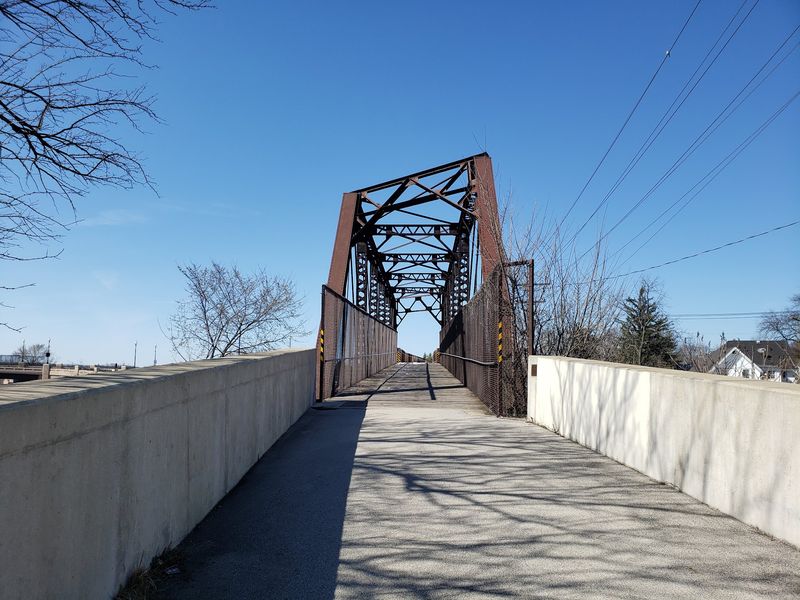
Back in the 1960s, a group of local residents looked at an empty electric railway line and saw something new: a path for people. Their idea became the Illinois Prairie Path, one of the first rail-trails in the entire country.
The route reuses corridors from the old Chicago Aurora and Elgin electric railway. Commuters once rode those trains into the city every day. Now joggers, dog walkers, and cyclists share the same straight line through DuPage County.
Wheaton sits close to the center of the whole network. From here, branches reach out in different directions, so you can choose a new route on each visit. It works almost like a hub at a train station, which fits the trail’s history nicely.
Most of the riding stays level and smooth. You will cruise past parks, tree-lined neighborhoods, and small patches of restored prairie with coneflowers and tall grasses. Butterflies love those prairie areas in summer, so keep an eye out.
Suburban setting means plenty of convenience. Coffee shops, restrooms, and places to grab lunch are often close by, so nobody gets stuck hungry halfway through. That makes it a strong pick for families with younger kids or riders easing back into cycling.
Road crossings do pop up here and there. Slowing down and checking both ways keeps everyone safe, especially when riding with a group. The path is busy on nice weekends, so a friendly bell ring helps when passing walkers.
Fun detail: the trains that once used this route drew power from a third rail rather than overhead wires. Today the only power needed is your own legs, and the flat ground keeps that effort pleasantly low for a relaxed afternoon spin.
4. Lincoln Prairie Grass Trail (Charleston–Mattoon)
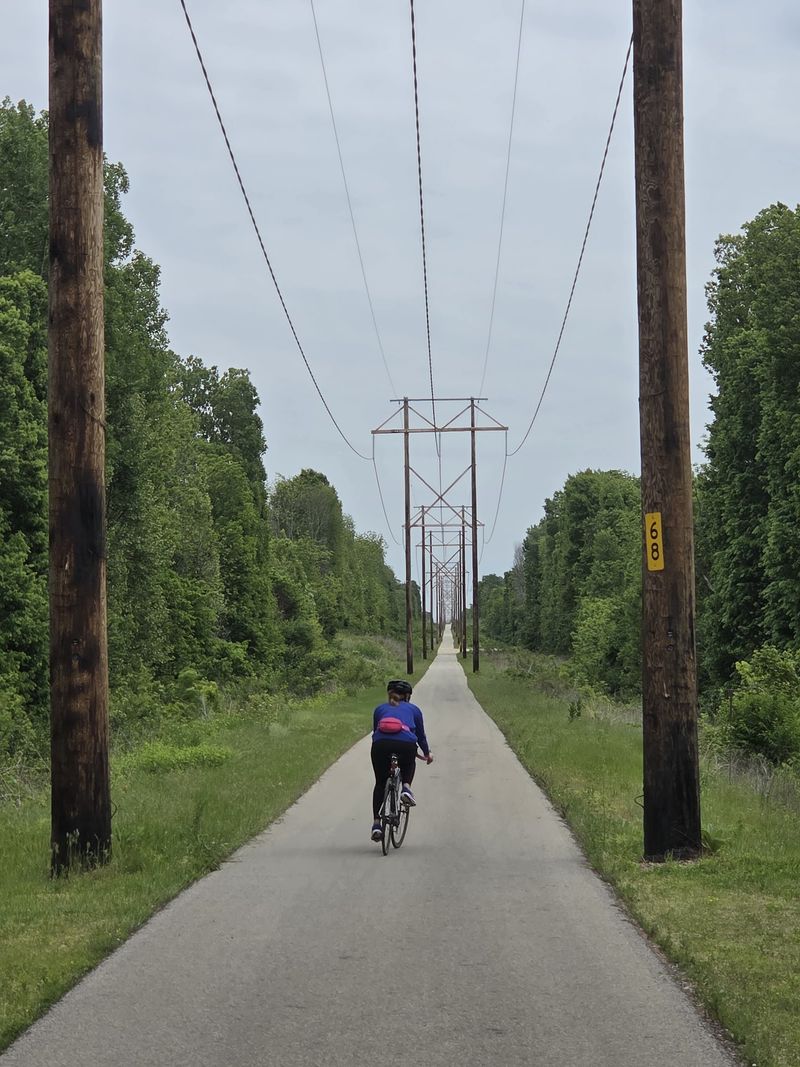
Flat? Very. East-central Illinois is known for land so level you can see storms coming from miles away, and the Lincoln Prairie Grass Trail shows off that wide-open look in the best way.
The paved path connects the Charleston and Mattoon area, following much of a former railroad right-of-way. Two towns linked by one smooth line makes planning simple. You can ride one way and get picked up, or pedal out and back at your own speed.
Abraham Lincoln has deep ties to this part of the state. His father and stepmother lived nearby, and Charleston hosted one of the famous Lincoln-Douglas debates in 1858. The trail’s name nods to that history and to the prairie that once covered the region.
Big skies are the main view. Fields stretch toward the horizon, and native grasses wave along parts of the path. Sunsets out here can be spectacular, with colors spreading across the whole sky.
Families and beginners find a lot to like. Smooth pavement means no loose gravel to worry about, and the lack of hills lets young riders keep up. A slow cruise is not just allowed here, it fits the scenery perfectly.
Wind is the one challenge to watch for. Open land lets breezes build up, so a headwind can make a flat ride feel tougher. Checking the forecast and starting into the wind helps, since the trip back will feel like a gentle push.
Students from Eastern Illinois University in Charleston often use the trail too. Their presence adds a friendly, active energy without making things crowded, and it keeps the path feeling like a true community space.
5. MCT Nickel Plate Trail (Edwardsville)

Ask locals in Madison County about biking, and the letters MCT come up fast. The Madison County Transit trail system links town after town, and the Nickel Plate Trail is one of its friendliest pieces.
Following a former railroad corridor, the path passes through communities and green spaces in southwestern Illinois. Edwardsville is a great jumping-off point, with a lively college-town feel and plenty of places to eat once the ride wraps up.
Smooth pavement keeps things easy. Road bikes, hybrids, and kids’ bikes all handle it well, and the flat grade means even first-timers can cover a few miles without getting worn out. Tunnels and bridges help you skip many busy road crossings.
Connections make this trail extra flexible. Other MCT routes branch off along the way, so you can build a short loop, ride to a nearby town, or link several trails into a long day. Grabbing a trail map before heading out helps you plan a route that fits your energy.
The name has a quirky backstory. Nickel Plate was a nickname for a railroad line, and people still debate exactly where it came from. Some say it hinted at a shiny, well-funded operation, which is a fun guess to toss around on the ride.
Scenery mixes small-town streets with patches of woods and open fields. Spring brings blooming trees, and summer offers shady sections that help on hot days. Fall adds crunchy leaves along the edges.
Quick evening rides are popular here. Commuters, students, and families all share the path, giving it a busy but cheerful energy. Whether you want twenty minutes or a whole afternoon, the Nickel Plate makes it simple.
6. Illinois Prairie Path – Geneva Spur (Geneva)
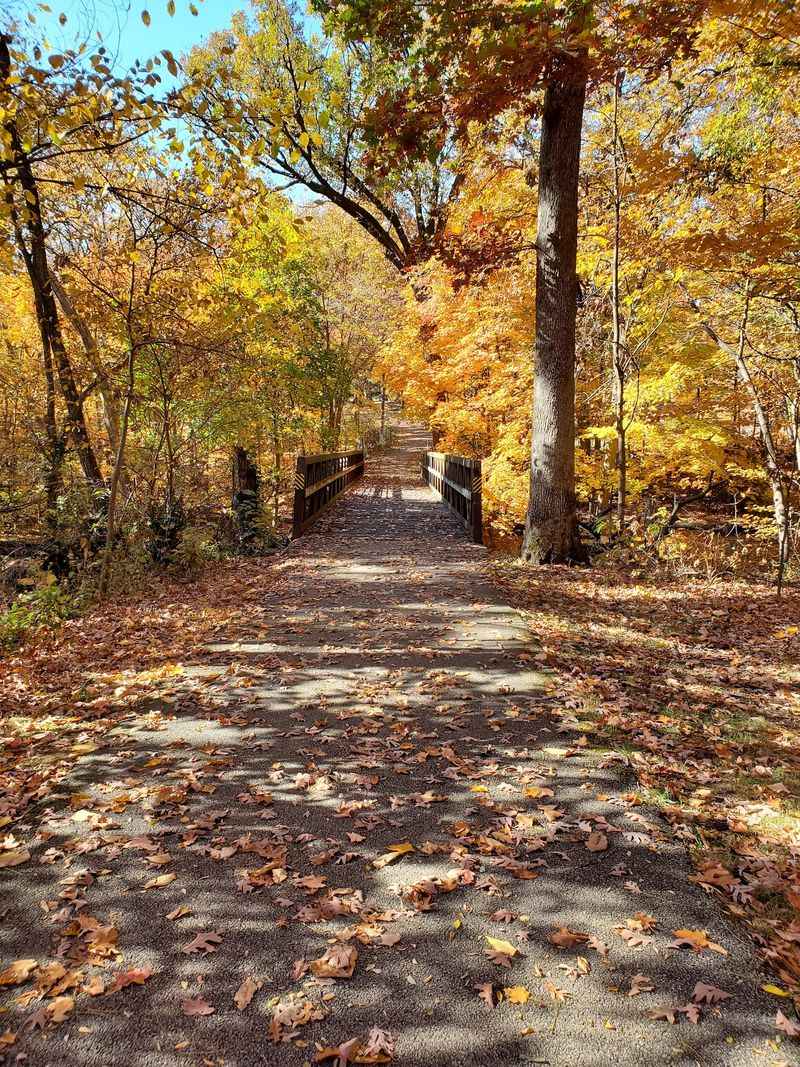
Not every branch of a famous trail needs to be crowded. The Geneva Spur of the Illinois Prairie Path is the calmer cousin, a place where you can actually hear your tires rolling.
This branch follows a reused section of the old Chicago Aurora and Elgin electric railway. Decades ago, trains carried riders between western suburbs and the city. Now the corridor hosts a slower crowd of cyclists, walkers, and the occasional curious rabbit.
Gentle grades keep the effort low. Beginners can build confidence here without worrying about hills or tricky turns. It is also a smart place to test a new bike or practice riding with a child who just ditched training wheels.
Geneva itself adds a lot of charm. The town sits along the Fox River and has a historic downtown filled with shops, bakeries, and old brick buildings. Ending a ride with a stroll by the river turns a short trip into a full outing.
Fewer riders means more space to relax. Weekday mornings can feel almost private, and even weekends tend to stay calmer than the busier main stretches. That quiet makes it easier to notice birdsong and seasonal changes along the path.
Fun fact: the Prairie Path network links to other regional trails, so the Geneva Spur can serve as a doorway to longer adventures. Riders who feel ready can keep going and explore connecting routes along the Fox River.
Autumn is a standout season. Trees along the corridor turn yellow and red, and cool air makes pedaling extra comfortable. For an uncomplicated ride with a pretty town at the finish line, this spur checks every box.
7. Jane Addams Trail (Orangeville)
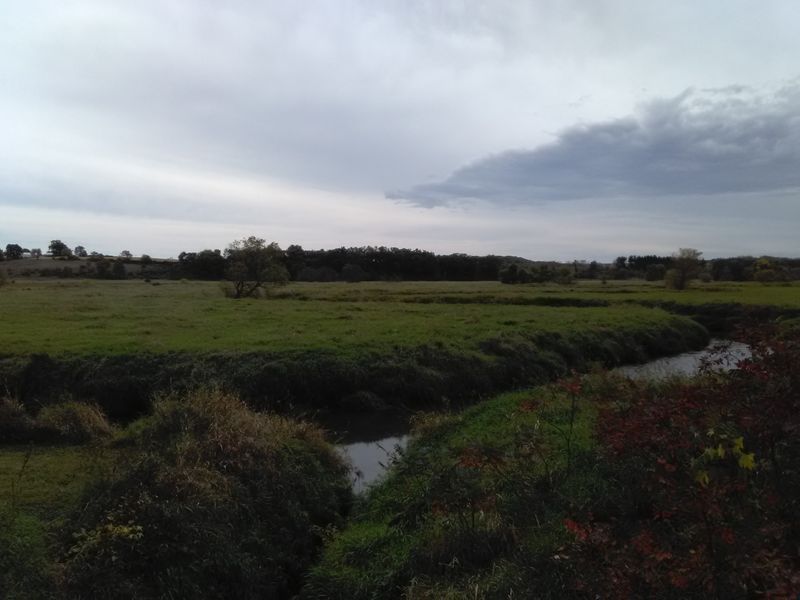
Named after a famous Illinois reformer and Nobel Peace Prize winner, the Jane Addams Trail carries a big name through some very quiet country. Few spots in the state feel this far from traffic.
The route follows a former Illinois Central railroad corridor in northern Illinois, close to the Wisconsin border. Orangeville makes a handy place to start, with small-town calm and easy access to the path. From there, the trail rolls through farmland and stretches of woods.
Bridges steal the show. Restored railroad bridges cross creeks and gullies, and riding over one lets you peek down at slow water and shady banks. Those spots make natural places to pause for a drink and a photo.
Mostly level ground means you can find your rhythm and hold it. There is no rush and no steep climb waiting around the bend, just a steady line that the railroad builders carved long ago. Plenty of riders end up going farther than planned because the miles slip by so easily.
Jane Addams grew up in nearby Cedarville. She later founded Hull House in Chicago to help immigrant families, and her work changed how cities cared for people in need. Riding a trail named for her adds a little history lesson to your outing.
Wildlife shows up often on quiet stretches. Deer may step out at the edge of the woods, and hawks circle above open fields. Early mornings tend to be the best time for spotting animals.
Services are spread out in this rural area, so pack water and a snack. Once you are rolling, the reward is wide-open space, gentle sounds of nature, and a pace that you get to set entirely on your own.
8. Rock Island Trail State Park (Wyoming)

Corn rustles on one side. A row of oaks throws shade on the other. Out here on the old Rock Island Railroad line, the loudest sound might be a red-winged blackbird calling from a fence post.
The trail runs through peaceful farmland and wooded countryside between the Peoria area and Toulon. Wyoming sits along the route and offers a handy place to hop on and start rolling. Small-town stops like this make it easy to plan a ride in short, simple chunks.
Flat ground is the name of the game. Trains once hauled freight and passengers along this corridor, so the path keeps an easy, even grade that lets you settle in and enjoy the view instead of fighting uphill.
History buffs will spot reminders of the railroad days along the way. Old structures, bridges, and markers hint at a time when the trains connected farm towns to bigger cities. Imagining a steam engine rumbling past adds a fun twist to the ride.
The famous song about the Rock Island Line helped make this railroad name known across the country. Riding the old route gives that tune a real place to belong, which is a neat thing to share with younger riders.
Convenient access points help a lot. You can park, ride a few miles, and head back, or plan a longer day with a friend waiting at the other end. Either way, the trail does not demand much except a comfortable seat and some snacks.
Late summer offers tall green crops and wide skies, while autumn turns the fields gold during harvest. Seeing combines working nearby gives a close-up look at how much of Illinois still runs on farming, just as it did when the trains first came through.
9. Kickapoo Rail Trail (Urbana Area)

Some trails feel urban from start to finish. The Kickapoo Rail Trail quickly trades city surroundings for broad farmland and prairie, giving riders a peaceful look at east-central Illinois.
Built along a former railroad corridor, the trail begins in the Urbana area and currently consists of several completed sections extending east toward Kickapoo State Recreation Area. Work continues on remaining gaps, so riders should check the latest trail map before planning a longer trip.
Terrain stays mostly gentle, which makes the open portions approachable for recreational cyclists. The old railroad grade keeps major climbs to a minimum, letting riders settle into an easy pace and enjoy the countryside instead of worrying about steep hills.
The completed Urbana-to-St. Joseph section is an especially convenient choice for a relaxed outing. Farmland, prairie vegetation, and wide-open views replace much of the traffic and development, creating a surprisingly rural atmosphere not far from Champaign-Urbana.
Other completed portions can be found farther east, including sections around Ogden and Oakwood. Eventually, the developing trail is designed to provide a more continuous connection toward Kickapoo State Recreation Area.
Short rides work particularly well here. Pick one of the finished sections, decide how far you want to pedal, and simply turn around when you have had enough.
Wide horizons are part of the appeal. Fields change from bright green in spring to gold around harvest season, while wildflowers add splashes of color along portions of the corridor.
For riders who enjoy easy terrain, railroad history, and classic Illinois farm scenery, the Kickapoo Rail Trail deserves its place on this list. Just remember that the entire planned route is not yet continuously rideable.