Texas is huge, and even people who have lived here their whole lives haven’t seen everything hiding in the corners. There are places so remote and unexpected that you could drive past them without ever knowing they’re there. Some of these spots are tucked away in the Hill Country, while others sit quietly in the desert or hidden deep in small towns.
Get ready to discover nine locations that will make even the most adventurous Texans wonder how they missed them.
1. Cave Without A Name (Boerne)
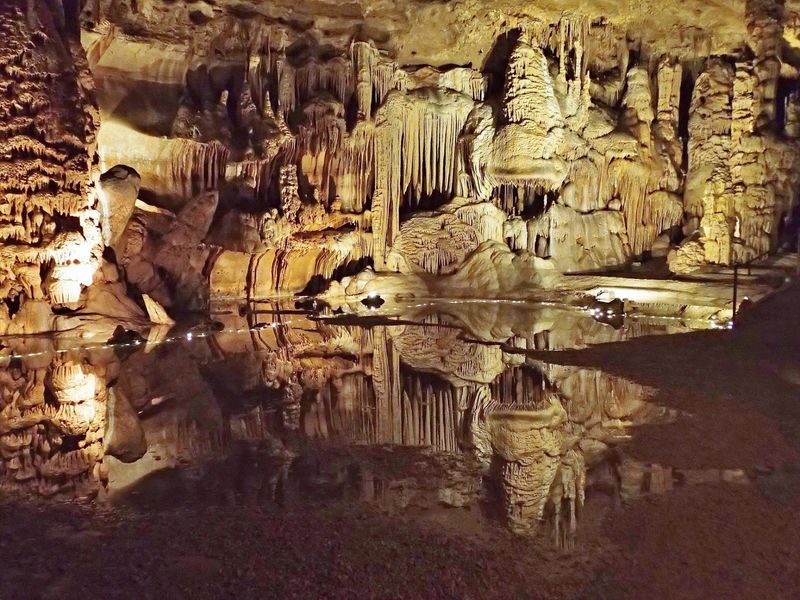
Most people zoom through Boerne on their way to bigger Hill Country attractions, completely missing one of the most spectacular underground wonders in Texas. Discovered by accident when a farmer’s goat fell through a sinkhole in 1939, this cave system features six massive chambers filled with formations that took millions of years to create. The temperature inside stays at a cool 66 degrees year-round, making it a perfect escape from brutal Texas summers.
What makes this place truly special is how well-preserved everything remains. The formations are so delicate and intricate that early visitors held a contest to name the cave, and the winning entry was literally “Cave Without A Name” because nothing seemed worthy enough. Flowstone cascades down the walls like frozen waterfalls, and the natural acoustics are so perfect that concerts are occasionally held inside.
Tours last about an hour and take you deep into the earth on paved walkways with handrails. Your guide will point out formations that look like fried eggs, soda straws hanging from the ceiling, and massive columns connecting floor to ceiling. The lighting system showcases each chamber without overwhelming the natural beauty.
Located just a few miles outside downtown Boerne, the cave sits on a working ranch that’s been in the same family for generations. Reservations are highly recommended since tours are limited to keep the cave pristine. Bring a light jacket even in summer, and wear shoes with good traction since some areas can be slightly damp.
Photography is allowed, but touching any formations is strictly forbidden to preserve them for future generations.
2. Hueco Tanks State Park & Historic Site (El Paso)
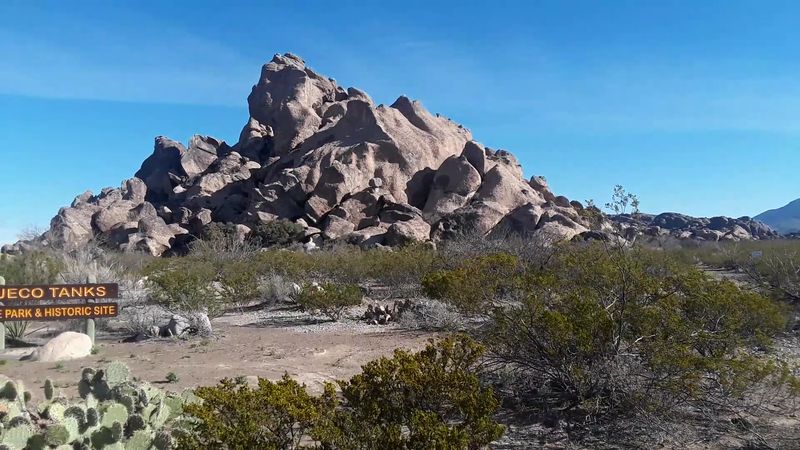
Way out in the far western corner of Texas, where most people think there’s nothing but empty desert, sits a collection of massive rock formations that have been sacred ground for thousands of years. Natural basins in the granite collect rainwater, creating life-saving pools that gave the area its name. Ancient peoples left behind over 2,000 pictographs and petroglyphs, making this one of the most significant rock art sites in North America.
Access is strictly controlled to protect the fragile archaeological treasures. You can’t just wander around on your own like at most state parks. Guided tours are required for most areas, and daily visitor numbers are capped.
Rock climbers from around the world consider this place legendary, with routes that challenge even experienced climbers on the weathered granite boulders.
The pictographs tell stories from multiple cultures spanning 10,000 years. Masks, handprints, animals, and mysterious symbols cover protected rock faces throughout the park. Some images are faded and barely visible, while others remain remarkably vivid with colors made from natural minerals and plants.
Rangers lead interpretive tours that explain the significance of different symbols and the cultures that created them.
Winter is the best time to visit since summer temperatures regularly exceed 100 degrees with almost no shade. Bring lots of water, sun protection, and sturdy hiking boots for scrambling over rocks. Reservations are absolutely necessary, especially for guided tours into restricted areas.
The park only allows a limited number of visitors per day to minimize impact on the archaeological sites, so plan well ahead if you want to experience this hidden treasure.
3. Lavender Ridge Farms & Café (Gainesville)
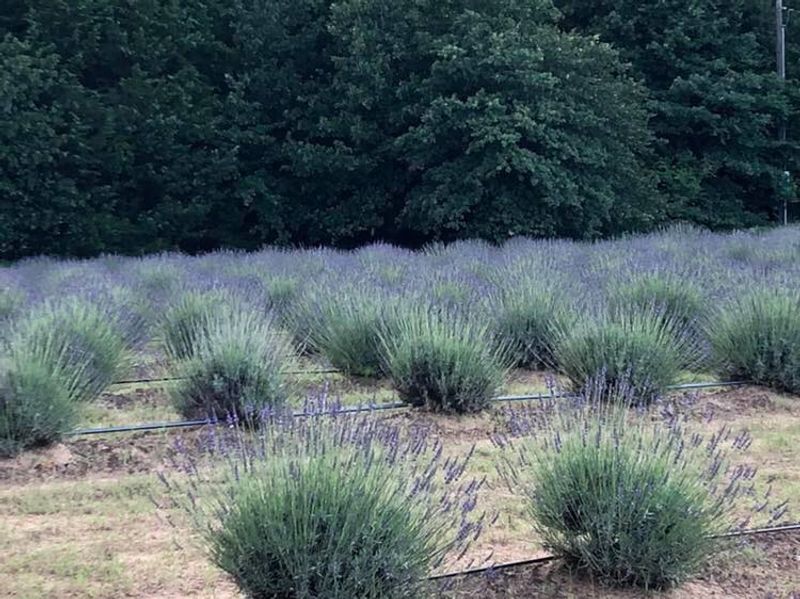
North Texas isn’t exactly famous for lavender fields, which is precisely why almost nobody knows about this fragrant paradise sitting just outside Gainesville. Rows upon rows of purple blooms stretch across rolling hills, creating a scene that feels more like Provence than the Lone Star State. The farm grows multiple lavender varieties that thrive in Texas heat, proving that you don’t need to travel overseas for that dreamy lavender experience.
Peak blooming season runs from late May through June when the entire property erupts in purple. Walking between the rows on a warm afternoon, you’re surrounded by the calming scent and the constant buzz of happy honeybees. The farm offers u-pick opportunities during harvest, letting visitors cut their own fresh stems to take home.
The on-site café serves lavender-infused treats that range from subtle to bold. Lavender lemonade provides the perfect refreshment after exploring the fields. Scones, cookies, and even savory dishes incorporate the herb in creative ways.
The gift shop stocks handmade soaps, essential oils, sachets, and culinary lavender grown right there on the property.
Special events throughout the year include photography sessions, painting classes among the blooms, and seasonal festivals celebrating the harvest. The farm also hosts weddings and private events, with the lavender fields creating an unforgettable natural backdrop. Most Texans have never heard of this place, making it blissfully uncrowded even during peak season.
Check their website before visiting since hours vary seasonally and the café isn’t always open. Wear comfortable shoes for walking through the fields, and bring a camera because the photo opportunities are endless. Spring and early summer offer the most dramatic blooms, but the farm maintains beauty year-round with other plantings and the charming rural setting.
4. Stonehenge II at the Hill Country Arts Foundation (Ingram)
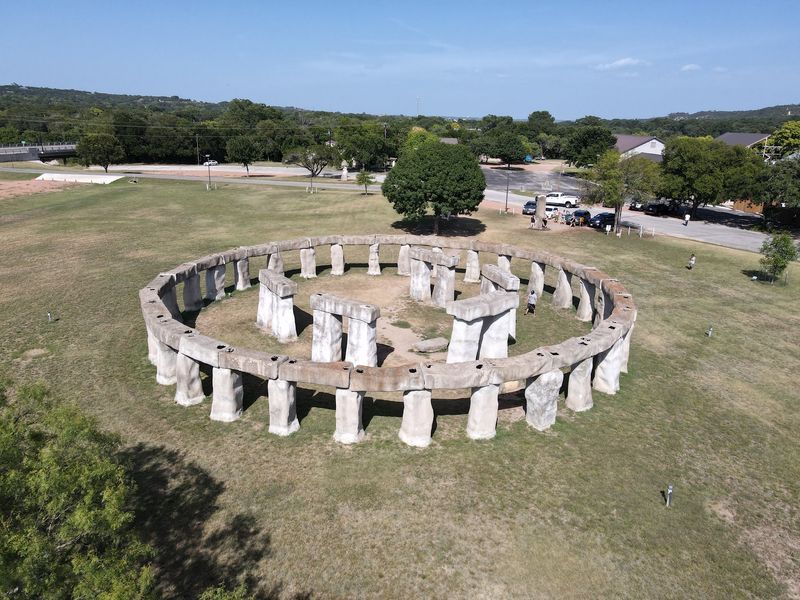
Someone decided that Texas needed its own Stonehenge, and honestly, the result is wonderfully weird in the best possible way. Built in the 1980s by a couple on their ranch as a quirky project, this full-scale limestone replica eventually found a permanent home at the Hill Country Arts Foundation. The stones aren’t ancient, but they’re impressively massive and arranged exactly like the original English monument.
What makes this version even stranger is the addition of two Easter Island moai statues standing guard nearby. Because if you’re going to build a replica of one mysterious monument, why not throw in another? The combination creates a surreal scene that perfectly captures Texas’s anything-goes spirit.
Visitors can walk right up to the stones and even stand inside the circle, something you definitely can’t do at the real Stonehenge.
The site sits on the grounds of an art foundation that promotes Hill Country artists and hosts various cultural events throughout the year. Sculpture gardens, walking trails, and outdoor art installations complement the Stonehenge replica. Admission is free, making this one of the best value attractions in Texas for sheer oddity factor.
The whole place has a peaceful, quirky vibe that’s quintessentially Hill Country.
Photography is encouraged, and the limestone megaliths photograph beautifully against the Texas sky. Sunrise and sunset provide particularly dramatic lighting. There’s rarely a crowd, so you’ll likely have the stones mostly to yourself for contemplation or goofy photos.
The nearby town of Ingram offers a few dining options and shops, but mostly this area remains charmingly undeveloped.
Bring a picnic and spend some time exploring the art foundation’s other outdoor features. The combination of art, nature, and prehistoric replicas creates an experience you won’t find anywhere else in Texas.
5. Ballroom Marfa (Marfa)

Marfa already feels like the edge of the world, and then you discover this contemporary art space that’s even more under-the-radar than the famous Prada installation. Operating as a non-profit cultural arts space since 2003, it presents cutting-edge exhibitions, film screenings, performances, and artist residencies in the high desert. The programming is consistently unexpected, ranging from avant-garde music to experimental visual art that challenges conventional gallery experiences.
Unlike traditional museums, this space embraces temporary installations and site-specific works that respond to the unique West Texas environment. Artists from around the world come here to create pieces that engage with the vast desert landscape and the town’s artistic legacy. The exhibitions rotate regularly, so each visit offers something completely new.
Some shows spill outside the building, incorporating the dramatic natural surroundings into the art itself.
The building itself is architecturally significant, designed to blend contemporary aesthetics with the rugged desert setting. Large windows frame views of the surrounding mountains and endless sky, making the landscape part of every exhibition. Climate control protects delicate artworks while maintaining the connection to the outdoor environment through thoughtful design.
Film screenings happen regularly, showcasing independent and experimental cinema you won’t find at multiplexes. The space also hosts talks, performances, and community events that attract both locals and art pilgrims who’ve traveled to this remote corner of Texas. Many visitors to Marfa focus solely on the famous light phenomenon or the Prada installation, completely missing this vital cultural institution.
Check the website before visiting since hours and exhibitions change frequently. Admission is free, though donations are welcomed to support the programming. Combine your visit with exploration of other Marfa attractions, but give yourself time to properly experience whatever exhibition is currently on view rather than just popping in for a quick look.
6. Westcave Outdoor Discovery Center (Round Mountain)
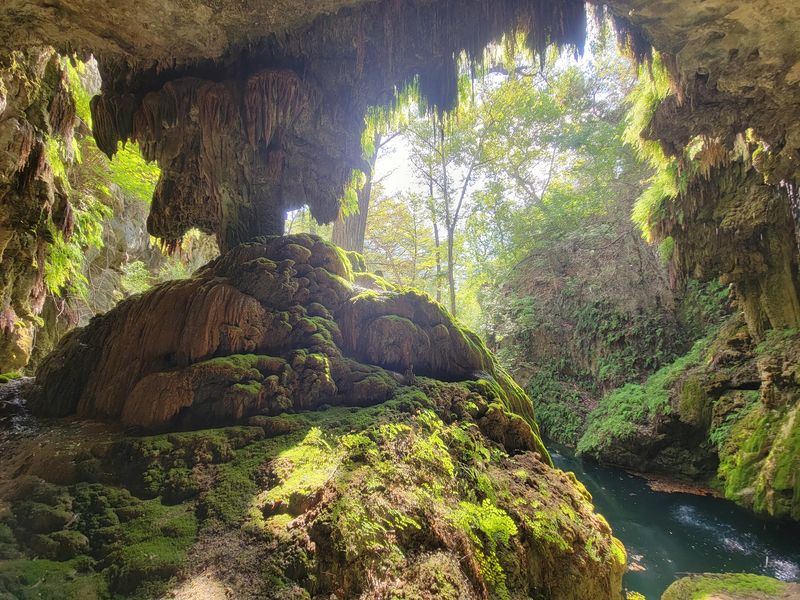
Hidden in a protected canyon about 30 miles west of Austin, this natural preserve features one of the most stunning waterfalls in Texas that hardly anyone knows exists. A 40-foot waterfall cascades into a collapsed grotto filled with ferns and vegetation that seems impossible in the typically dry Hill Country. The microclimate inside the grotto creates a cool, humid environment that supports plants normally found hundreds of miles away in wetter climates.
Access is only possible through guided tours that leave hourly on weekends. The half-mile hike descends into the canyon on a carefully maintained trail with stairs and observation platforms. Your guide explains the unique geology that created this hidden oasis and points out rare plants thriving in the protected environment.
The limestone walls tower overhead, creating a cathedral-like atmosphere.
When you finally reach the grotto, the temperature drops noticeably and the air becomes misty from the waterfall. Maidenhair ferns cover the walls, and moss grows thick on rocks near the water. The acoustics amplify the sound of falling water into a constant, soothing roar.
This pocket ecosystem survives because the canyon protects it from harsh sun and wind while collecting moisture.
The preserve also maintains upland trails through typical Hill Country terrain for comparison, showing the dramatic contrast between the dry plateau and the lush canyon below. An education center offers programs about local ecology, conservation, and the geology that makes this place special. School groups frequently visit for environmental education programs.
Reservations are required for all tours, and spaces fill up fast on weekends, especially in spring when the waterfall flows strongest. Wear sturdy shoes with good traction since the trail can be steep and rocky in places. Bring water and prepare for a moderate hike with elevation changes.
Photography is allowed, but the low light inside the grotto can be challenging.
7. BAPS Shri Swaminarayan Mandir (Stafford)

Rising from a suburban Houston neighborhood like something transported from India, this massive marble temple stuns first-time visitors who had no idea it existed. Hand-carved in India from thousands of pieces of Italian marble and Turkish limestone, the entire structure was shipped to Texas and assembled like an enormous puzzle. No steel reinforcement bars were used in the construction, following ancient architectural techniques that have kept similar temples standing for centuries.
The level of detail is absolutely mind-blowing. Every surface features intricate carvings of deities, flowers, peacocks, and geometric patterns created by master craftsmen. The domes, pillars, and arches showcase traditional Hindu temple architecture on a scale rarely seen outside India.
Walking through the interior, you’re surrounded by glowing white marble that seems to radiate light.
Visitors of all faiths are welcome to tour the temple and learn about Hindu culture and spirituality. The complex includes a traditional mandir (temple) for worship, a cultural center, and beautifully landscaped grounds. Interactive exhibits explain the construction process, religious significance, and the role of the temple in the community.
Guides are available to answer questions and provide context for the symbolic elements throughout the building.
The temple sits in Stafford, which is more known for generic suburbs than architectural marvels. Most Houstonians drive past the area constantly without realizing this incredible building exists just off the highway. The contrast between the sacred space and the surrounding strip malls and office parks makes the experience even more surreal.
Modest dress is required for entry, with specific guidelines posted on the website. Shoes must be removed before entering the marble temple, so wear socks or be prepared to go barefoot. Photography is allowed in most areas except the main shrine room.
Free guided tours are offered regularly, providing deep insight into the temple’s construction, symbolism, and cultural significance.
8. Jacob’s Well Natural Area (Wimberley)
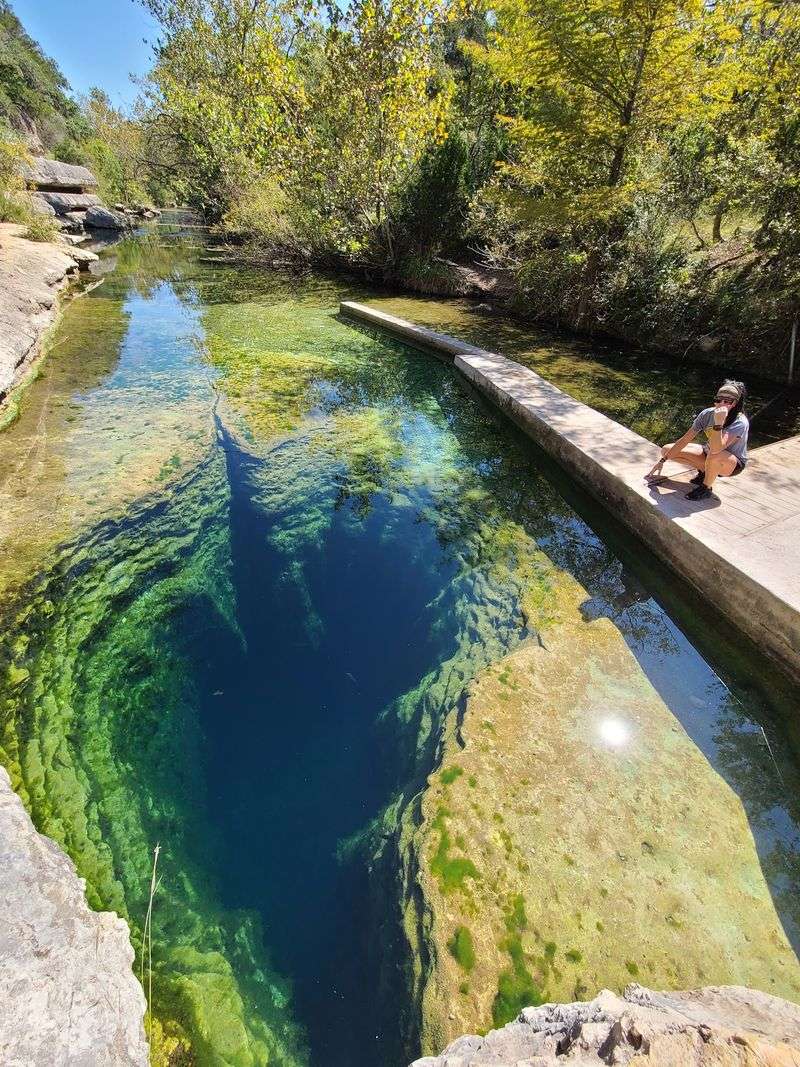
Imagine staring into a perfectly circular opening in the bedrock that drops straight down over 100 feet into crystal-clear water. That’s Jacob’s Well, an artesian spring that has flowed continuously for thousands of years, creating one of the most mesmerizing natural features in Texas. The water is so clear you can see deep into the underwater cave system, which extends for miles beneath the Hill Country.
Swimming here requires advance reservations since daily access is strictly limited to protect the fragile spring. The preserve implementing this system has dramatically reduced the crowds that once overwhelmed the site. When you do score a reservation, you get two hours to swim, sunbathe on the limestone banks, and marvel at the powerful spring pumping thousands of gallons of 68-degree water from underground chambers.
Experienced divers know Jacob’s Well as one of the most dangerous dive sites in Texas. The underwater cave system has multiple chambers connected by narrow passages, and several divers have died exploring the deepest sections. Surface swimming is perfectly safe, but the mysterious depths visible from above add an element of fascination and respect for the natural forces at work.
The spring feeds Cypress Creek, creating a beautiful Hill Country waterway that flows year-round. Hiking trails wind through the preserve, passing through native grasslands and along the creek. Interpretive signs explain the geology, ecology, and cultural history of the area.
The preserve also protects habitat for several endangered species that depend on the spring and creek.
Reservation fees help fund conservation and maintenance of the preserve. Spots fill up quickly, especially on summer weekends, so book as far in advance as allowed. The two-hour time slots are strictly enforced to give everyone a chance to experience this natural wonder.
Bring water shoes since the limestone bottom can be slippery, and pack out everything you bring in to keep the area pristine.
9. Son’s Island (Seguin)
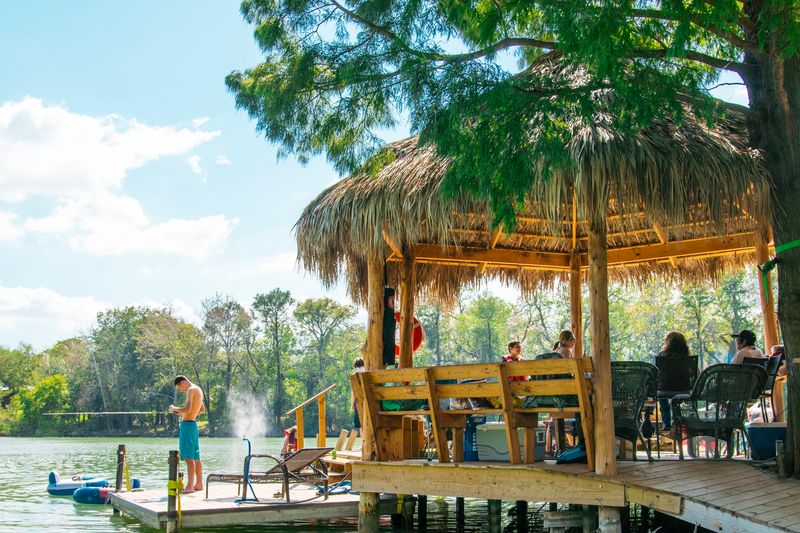
Right in the middle of the Guadalupe River, barely a stone’s throw from downtown Seguin, sits a tiny island that most Texans have never heard of despite it being one of the oldest public parks in the state. Established in the 1840s, this leafy retreat is accessible only by a swinging footbridge that gently sways as you cross the river. Massive pecan and oak trees shade the entire island, creating a cool canopy even on scorching summer days.
The island has a wonderfully old-fashioned, nostalgic atmosphere that feels frozen in time. Picnic tables, grills, and open grassy areas provide space for family gatherings that have been happening here for generations. Kids love the adventure of crossing the bridge and having an entire island to explore.
The sound of the river flowing around both sides creates a constant, peaceful soundtrack.
No vehicles are allowed, preserving the tranquil atmosphere and making it safe for children to roam freely. You carry everything across the footbridge, so pack light but bring plenty of food and drinks since there are no facilities or vendors on the island. The simplicity is part of the charm, encouraging people to disconnect and enjoy nature without modern distractions.
The island’s location makes it perfect for tubing trips on the Guadalupe. You can stop and rest in the shade, have lunch under the trees, and then continue floating downriver. Local tubing outfitters know about the island and often mention it to customers, but it remains surprisingly underutilized compared to more famous Hill Country swimming spots.
Seguin itself is often overlooked by travelers rushing to Gruene or San Marcos, so the town maintains an authentic small-town Texas feel. After visiting the island, explore the historic downtown square with its antique shops and local restaurants. The island is free to access and open during daylight hours year-round, making it an easy addition to any Central Texas road trip.
Share this story