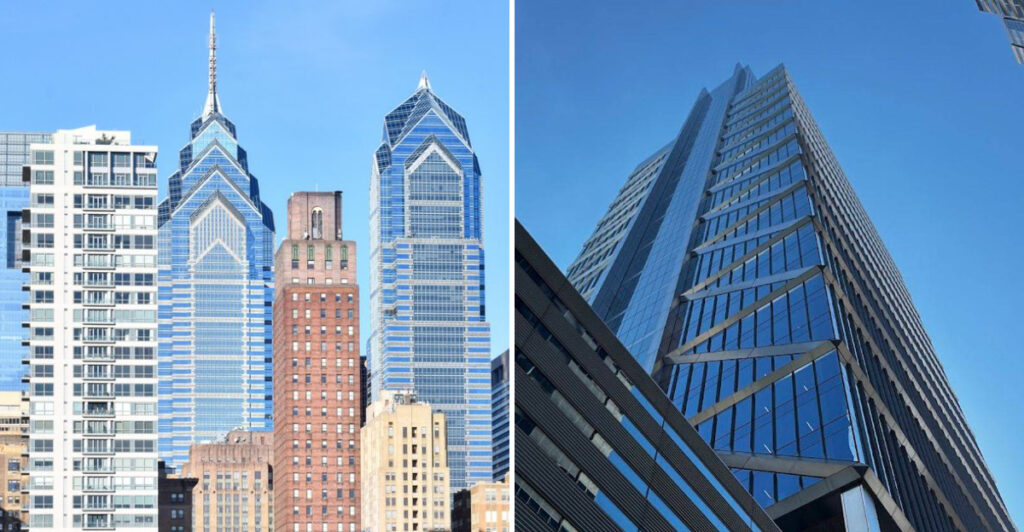
Pennsylvania’s skyline tells a bigger story than height alone, because every soaring tower reflects the state’s mix of ambition, reinvention, and unmistakable urban character. If you have ever looked up in Philadelphia or Pittsburgh and felt that rush of wonder, this lineup will take you straight into the buildings that shape the view, define key business districts, and give the Commonwealth its most memorable silhouettes.
From polished glass giants to bold postmodern landmarks and luxury residential towers, these structures show how Pennsylvania keeps balancing historic identity with modern growth in a way that feels both grounded and forward-looking. You are about to get a closer look at nine standout high-rises that dominate Pennsylvania’s skyline and prove that in this state, architecture is never just background scenery.
1. Comcast Center
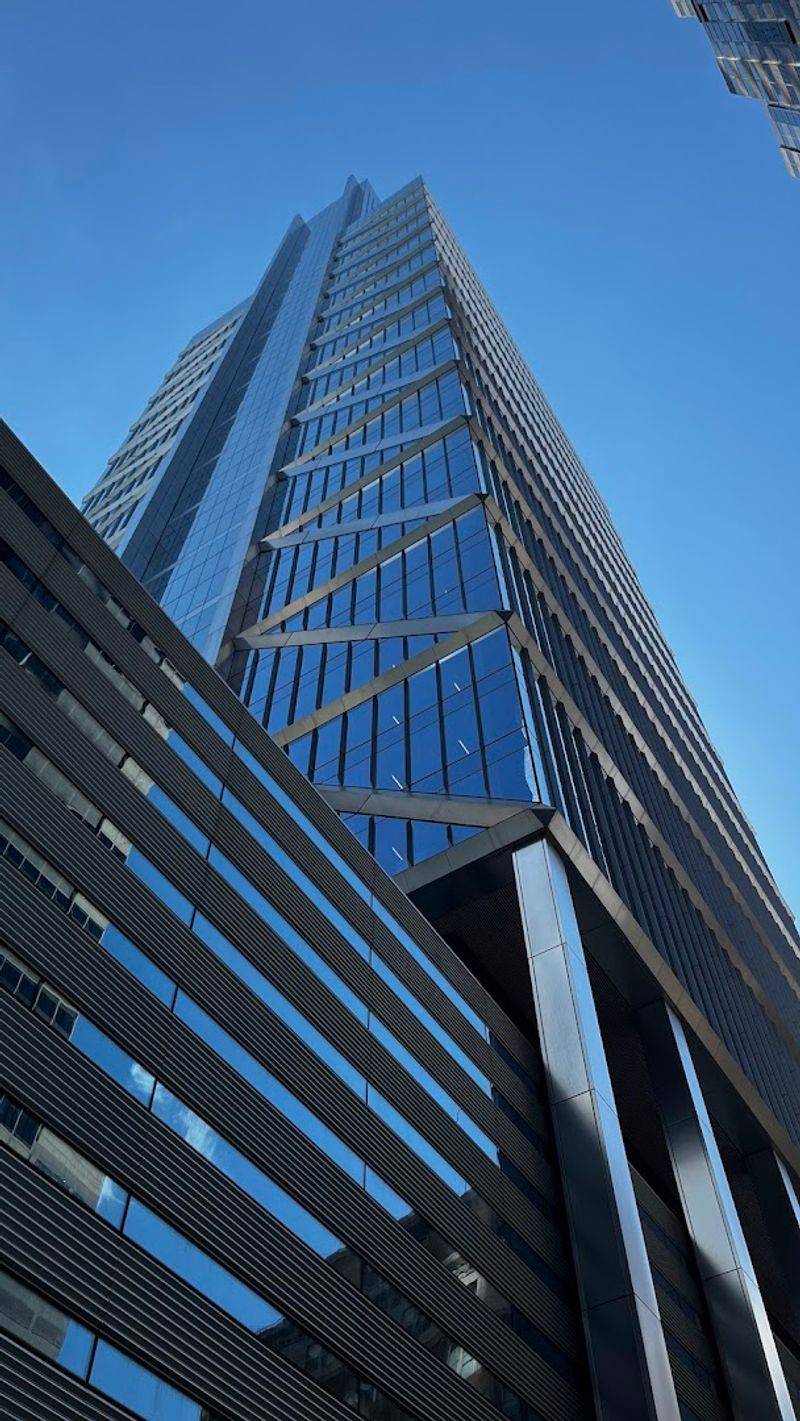
Rising above Center City with a sleek, reflective presence, this tower captures the polished confidence of modern Pennsylvania.
You can feel its importance before stepping inside, because the building anchors the business core with a calm, unmistakable authority.
Although Philadelphia is full of historic landmarks, Comcast Center proves the skyline also knows how to speak in a contemporary voice.
Completed in 2008, Comcast Center stands at 975 feet and became one of the city’s defining vertical landmarks.
Its glass exterior gives it a clean, almost weightless look, especially when sunlight moves across the facade during the day.
When you see Comcast Center from a distance, it feels less like a bulky office block and more like a carefully cut shard of light.
The tower was designed by Robert A.M. Stern Architects, and that balance of elegance and corporate power comes through clearly.
Inside, it serves as a major office hub, but outside, its impact is even broader because it reshaped the visual identity of downtown Philadelphia.
In a state known for colonial streets, industrial roots, and classic stone architecture, Comcast Center adds a newer chapter that still feels worthy of Pennsylvania’s stature.
What makes the building especially memorable is how confidently it fits into the city without overwhelming it.
It rises high, yet the proportions stay refined, helping the structure look timeless rather than flashy.
If you are exploring Pennsylvania’s tallest buildings, Comcast Center belongs near the top of your list because it combines scale, design discipline, and skyline presence in a way that is hard to ignore.
Even among taller and newer neighbors, Comcast Center still commands attention with effortless style.
It is the kind of tower that quietly reminds you how much modern architecture can influence the mood of an entire city.
In Pennsylvania, few buildings announce progress as gracefully as this one.
2. Two Liberty Place
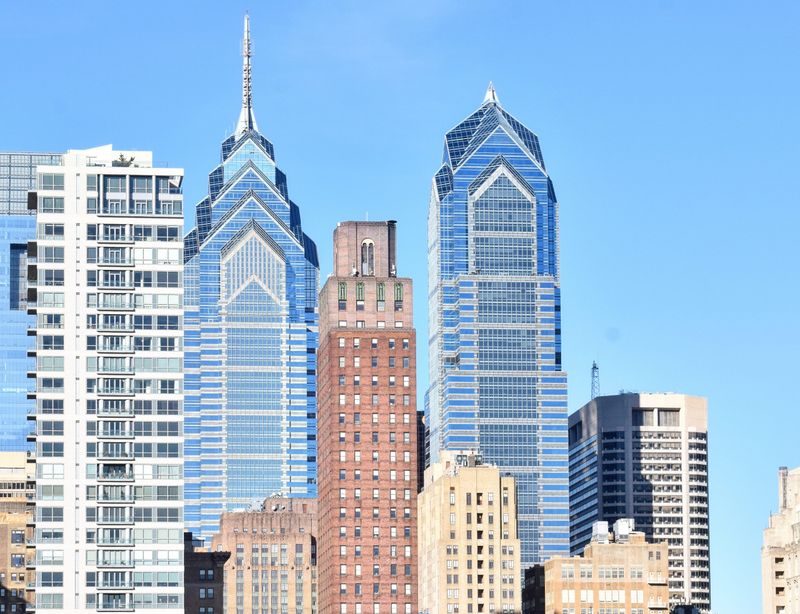
Few towers in Pennsylvania create such an immediate impression of height, polish, and big-city drama.
Looking up at this building, you notice the tapering form and shining glass first, but the real appeal comes from how confidently it completes the Philadelphia skyline.
It feels like a statement piece, yet one that has settled naturally into the city’s visual identity.
Two Liberty Place rises 848 feet and stands as one of the most recognizable buildings in the Commonwealth.
Designed by Helmut Jahn, it opened in 1990 and brought a crisp postmodern energy to Center City.
The blue glass, angular crown, and slender profile make the tower feel sharp and elegant, especially when viewed beside older stone and brick architecture.
What makes Two Liberty Place stand out is its relationship with the surrounding skyline rather than height alone.
It complements neighboring skyscrapers while keeping a distinct personality, and that balance matters in a state where cities often carry layers of architectural history.
Philadelphia can feel deeply rooted in the past, but this tower reminds you that Pennsylvania also embraces bold, modern ambition.
The building serves primarily as office space, yet its cultural value reaches beyond business use.
You do not need to work there to appreciate how it shapes the skyline, catches changing weather, and adds a strong vertical rhythm to downtown views.
From broad avenues, bridges, and rooftop perspectives, Two Liberty Place keeps pulling your eyes upward.
There is also something unmistakably Pennsylvanian about its blend of practicality and flair.
It does not chase ornament for its own sake, but it is far from plain, which gives it lasting appeal.
If you want to understand why Pennsylvania’s urban skyline feels more dramatic than many people expect, this building is an essential part of the answer.
3. FMC Tower at Cira Centre South
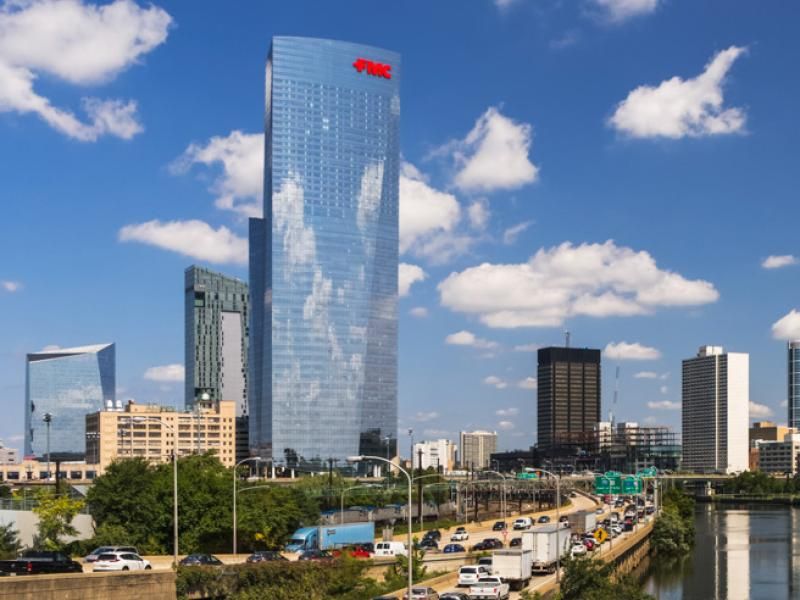
Along the Schuylkill River, this striking tower shows a different side of Pennsylvania’s skyline story.
Instead of relying on old financial district traditions, it brings a fresh, mixed-use energy that feels connected to research, innovation, and city living.
The result is a high-rise that looks modern not just in style, but in purpose.
FMC Tower at Cira Centre South reaches 730 feet and adds serious height to Philadelphia’s western skyline.
Opened in 2016, the building was designed by Pelli Clarke Pelli Architects, and its reflective glass facade gives it a crisp, forward-looking character.
When you see it from across the river, the tower feels like part of a larger transformation in how Pennsylvania cities grow.
This building matters because it blends office, residential, and hospitality functions into one vertical landmark.
That mix helps it feel active at different hours of the day, which gives the surrounding district a lively, modern pulse.
In Pennsylvania, where many major buildings were once defined by a single corporate identity, FMC Tower represents a more flexible urban future.
The setting also strengthens its impact.
Positioned near University City, rail lines, and riverfront views, the tower contributes to a skyline that feels tied to education, medicine, and innovation.
You are not just looking at another tall building here – you are seeing the physical expression of Philadelphia’s evolving economy within the broader story of Pennsylvania.
Its design is clean and contemporary, yet the tower avoids feeling cold because the location gives it movement and energy.
Reflections from water, trains, traffic, and neighboring towers make the whole structure seem alive in changing light.
For anyone tracing the tallest buildings in Pennsylvania, FMC Tower at Cira Centre South stands out as one of the state’s clearest symbols of modern momentum.
4. G. Fred DiBona Jr. Building
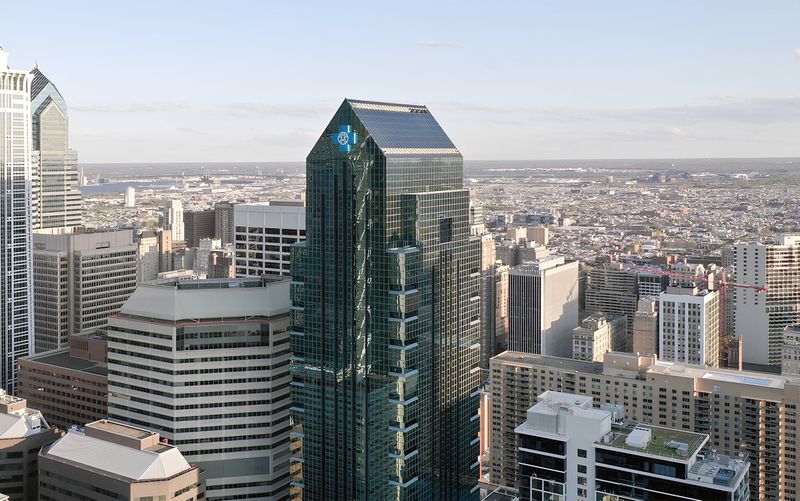
Standing with polished confidence in Center City, this tower gives Pennsylvania’s skyline a corporate elegance that still feels accessible.
It does not rely on an extreme shape or a dramatic spire to make its point.
Instead, the building earns attention through proportion, location, and a quiet sense of authority that grows stronger the longer you look.
The G. Fred DiBona Jr. Building, formerly known as the Blue Cross-Blue Shield Tower, rises 625 feet in Philadelphia.
Completed in 1990 and designed by WZMH Architects, it brought a clean, modern look to the city during a period when the skyline was changing quickly.
Its blue-tinted glass and carefully stepped form give it a recognizable silhouette without pushing into excess.
One reason this tower matters is how well it reflects Pennsylvania’s urban personality.
It feels professional and ambitious, yet not disconnected from the practical character that defines much of the Commonwealth’s built environment.
In a city packed with landmarks competing for attention, the G. Fred DiBona Jr. Building holds its place by being dependable, refined, and highly visible.
The structure also plays an important role in the composition of the broader skyline.
From many angles, it helps fill the space between more famous giants, creating a fuller and more layered downtown profile.
You might not always hear it mentioned first, but when you look across Philadelphia, its contribution becomes impossible to miss.
That is part of what makes the tower compelling in a statewide ranking like this one.
Not every dominant building needs to be the tallest or loudest to shape how a city feels.
In Pennsylvania, the G. Fred DiBona Jr. Building proves that a well-placed, well-designed high-rise can become essential simply by giving the skyline balance, continuity, and lasting visual strength.
5. Three Logan Square
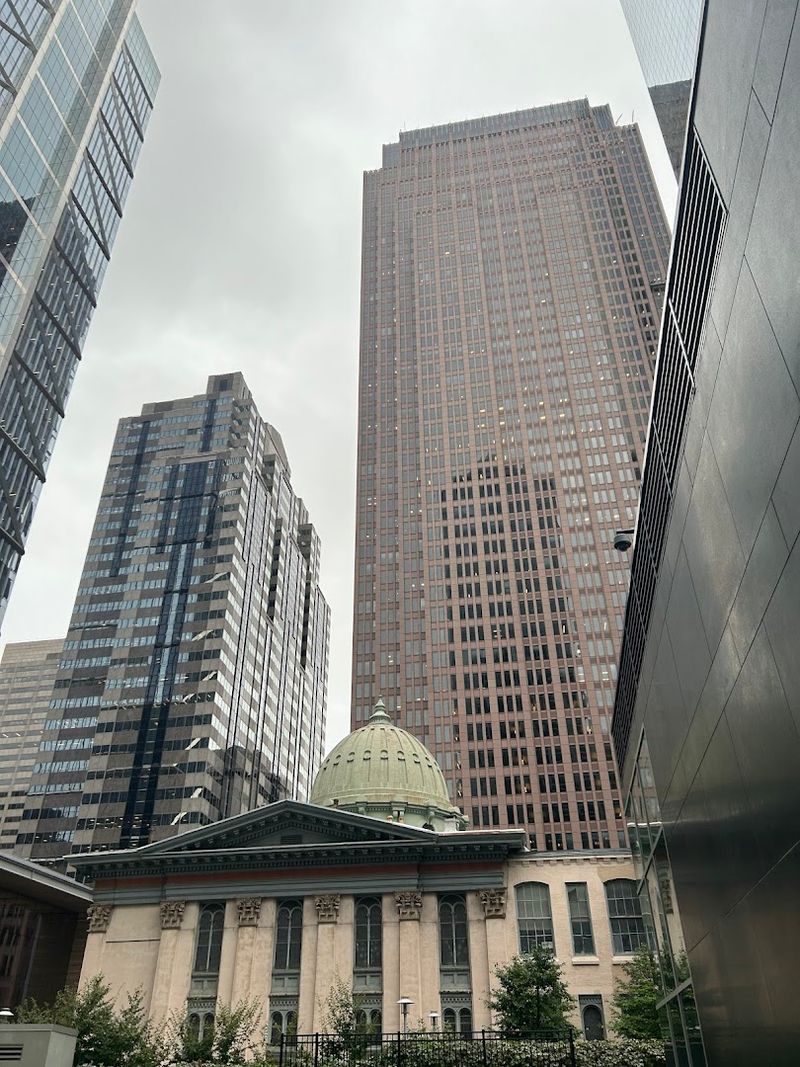
In the heart of Philadelphia’s business district, this tower adds height and structure to one of Pennsylvania’s most recognizable urban areas.
It does not scream for attention, yet it steadily earns it through scale, location, and a strong postmodern design language.
The more you study the skyline, the more important this building becomes.
Three Logan Square reaches 546 feet and opened in 1991 as part of the Logan Square complex.
Designed by Kohn Pedersen Fox, it carries a refined office-tower character that fits comfortably within Center City while still standing tall enough to shape distant views.
Its light-toned facade and stepped upper sections create a crisp outline against the sky.
The building’s significance comes partly from how it strengthens the larger composition of downtown Philadelphia.
Pennsylvania’s skyline is not dominated by a single architectural style, and that mix gives it personality.
Three Logan Square helps bridge modern glass towers and older institutional buildings, making the city feel layered rather than fragmented.
Because of its position near key cultural and commercial areas, the tower contributes to the sense that Philadelphia is both historic and actively evolving.
You can walk through nearby streets full of classic civic architecture, then look up and see this high-rise reinforcing the city’s contemporary side.
That contrast is one of the best things about urban Pennsylvania, and Three Logan Square captures it well.
It may not always headline conversations about the state’s tallest buildings, but it absolutely deserves a place in them.
Height matters, of course, yet so does the ability to define a district and support a skyline’s rhythm.
In Pennsylvania, Three Logan Square proves that a well-composed office tower can quietly become one of the structures that holds the whole view together.
6. The Laurel
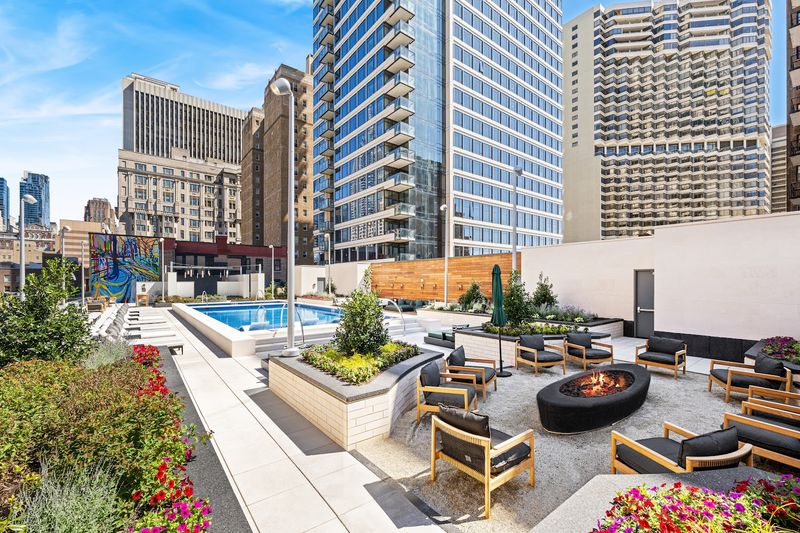
Luxury high-rise living reaches a new level in Pennsylvania through this elegant residential tower.
Instead of reading like a traditional office giant, it brings softness, refinement, and a sense of exclusivity to the skyline.
That difference matters, because it shows how the state’s tallest buildings are not only about business power but also about changing urban lifestyles.
The Laurel rises 604 feet above Philadelphia and stands near the celebrated Rittenhouse Square area.
Completed in 2022, it was designed by Solomon Cordwell Buenz and immediately added a fresh residential presence to one of the city’s most prestigious neighborhoods.
Its curved glass form gives the building a graceful look that feels distinct from sharper corporate towers nearby.
What makes The Laurel especially interesting in Pennsylvania is how it blends scale with livability.
Tall residential buildings carry a different emotional impact than office towers because they suggest daily life happening high above the street.
When you look at The Laurel, you are not just seeing a skyline feature – you are seeing a sign of how Philadelphia continues to evolve as a place where people want to live, not only work.
The building also strengthens the diversity of the state’s architectural profile.
Pennsylvania’s major cities are often associated with historical institutions, industrial sites, and business centers, but The Laurel introduces a more lifestyle-driven form of vertical ambition.
Its polished exterior and upscale image make it feel current while still fitting naturally into the broader cityscape.
From many angles, the tower adds a sleek vertical note to Philadelphia’s already rich skyline.
It may be newer than several other giants on this list, yet it has quickly become part of the conversation because of its height and visual elegance.
In Pennsylvania, The Laurel represents the growing role of residential design in shaping what a dominant skyline can be.
7. Centre Square (East Tower)
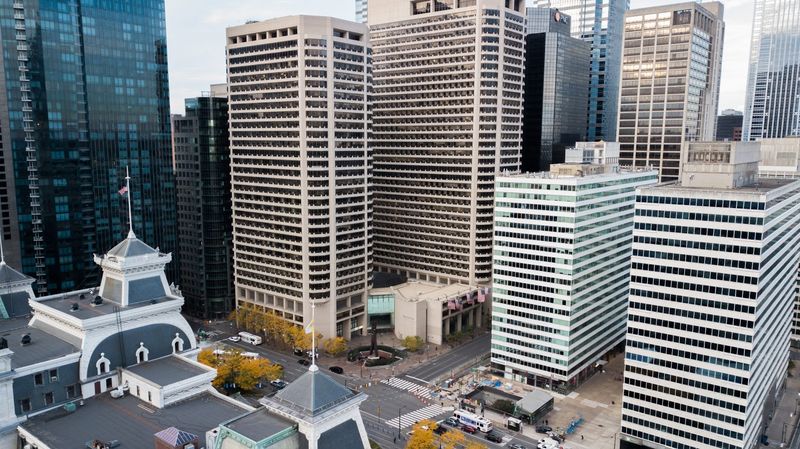
Set within a major office complex in downtown Philadelphia, this tower reflects an earlier phase of Pennsylvania’s high-rise ambition.
Its look is more restrained than some of the flashier skyscrapers that followed, but that simplicity gives it a certain confidence.
You can tell it was built to project stability, and in the skyline, that still matters.
Centre Square East Tower rises 490 feet and opened in 1974 as part of the larger Centre Square development.
Designed by Vincent Kling, the building carries a modernist style marked by straightforward geometry and a strong urban presence.
Although it is not as ornate as later landmarks, its height and central location make it an enduring part of Philadelphia’s vertical story.
This tower is important because it represents the business-minded growth of Pennsylvania during the late twentieth century.
At a time when many cities were redefining their downtown cores, Centre Square helped reinforce Philadelphia as a serious commercial center.
That role gives the building significance beyond aesthetics, especially if you are interested in how skylines evolve through economic shifts.
The East Tower works best when seen as part of the city’s layered architectural conversation.
Around it, you will find historic masonry, civic landmarks, postmodern towers, and newer glass giants, all competing and cooperating at once.
In that mix, Centre Square adds structure and continuity, reminding you that every dominant skyline needs solid anchors as much as headline-grabbing peaks.
Its impact may feel quieter than some neighboring towers, yet it remains deeply woven into the identity of Center City.
Buildings like this often become so familiar that people overlook how essential they are to the whole composition.
In Pennsylvania, Centre Square East Tower stands as a durable reminder that skyline dominance can come from consistency, position, and long-term relevance as much as spectacular design.
8. U.S. Steel Tower
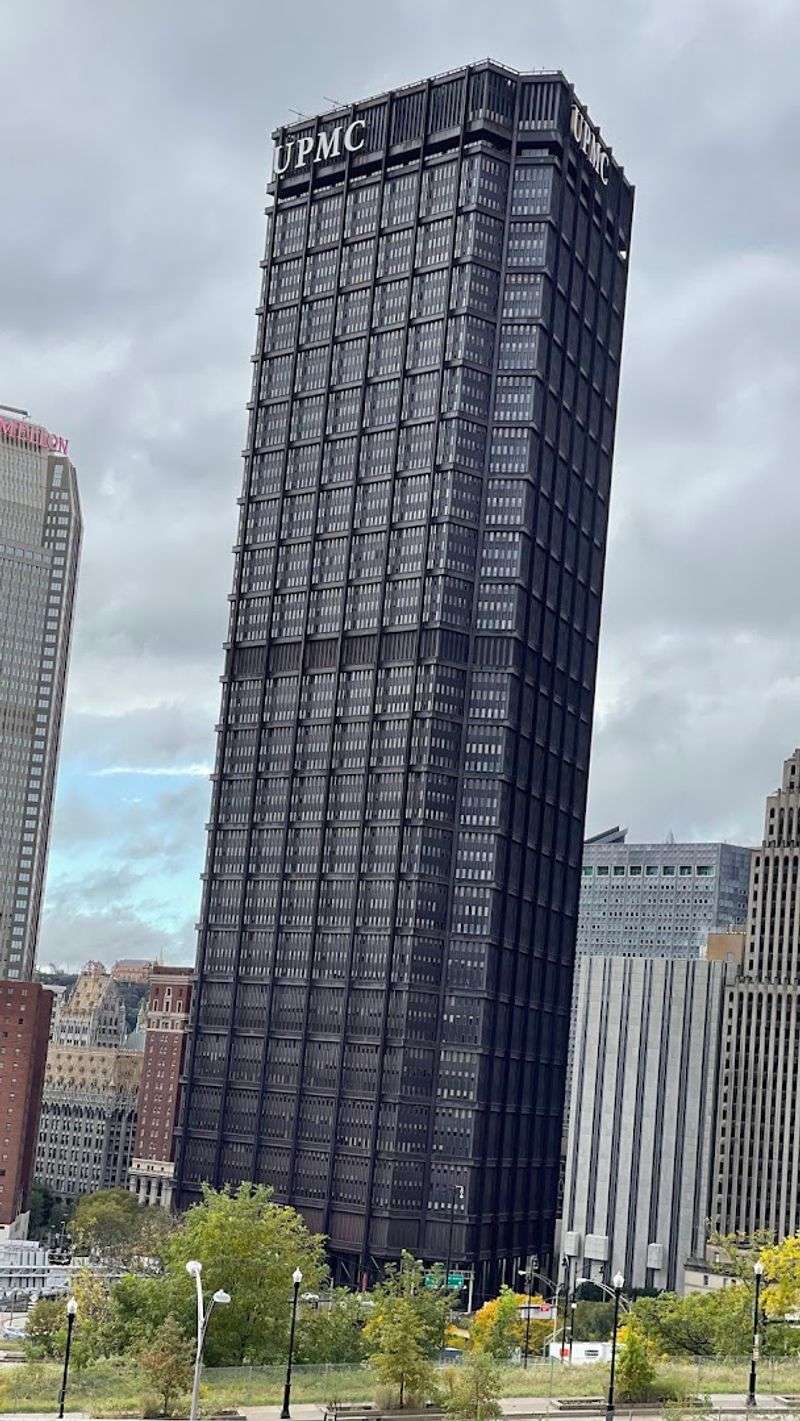
Across Pennsylvania, not every skyline story belongs to Philadelphia, and this massive Pittsburgh landmark proves it.
Dark, angular, and unmistakably powerful, the building rises with a kind of industrial dignity that feels perfectly matched to western Pennsylvania’s history.
When you see it, you immediately understand that this is a tower shaped by steel, commerce, and regional identity.
U.S. Steel Tower stands 841 feet tall and has dominated downtown Pittsburgh since 1970.
Designed by Harrison & Abramovitz, it remains the tallest building in Pittsburgh and one of the most imposing structures in the state.
Its weathering steel facade gives it a heavier, more grounded look than many reflective glass towers, which only strengthens its character.
What makes this building so memorable is the way it expresses Pennsylvania’s industrial legacy without apology.
Pittsburgh’s skyline carries a different mood from Philadelphia’s, and U.S. Steel Tower sits at the center of that distinction.
Rather than polished corporate lightness, it offers mass, strength, and a sense that the city’s economic past still stands visibly within its present.
The triangular roofline and dark exterior help the tower command attention from bridges, riverbanks, and surrounding hills.
In a city where topography creates constantly shifting views, the building remains a reliable focal point.
You do not have to know its measurements to feel its importance – the structure simply looks like it belongs at the top of Pennsylvania’s hierarchy of urban landmarks.
There is also something compelling about how unapologetically serious the tower feels.
It does not soften itself for trendiness, and that makes it memorable in an era of increasingly interchangeable skyscrapers.
For anyone exploring the tallest buildings in Pennsylvania, U.S. Steel Tower offers a necessary reminder that skyline dominance can come from character, history, and material presence as much as absolute height.
9. BNY Mellon Center
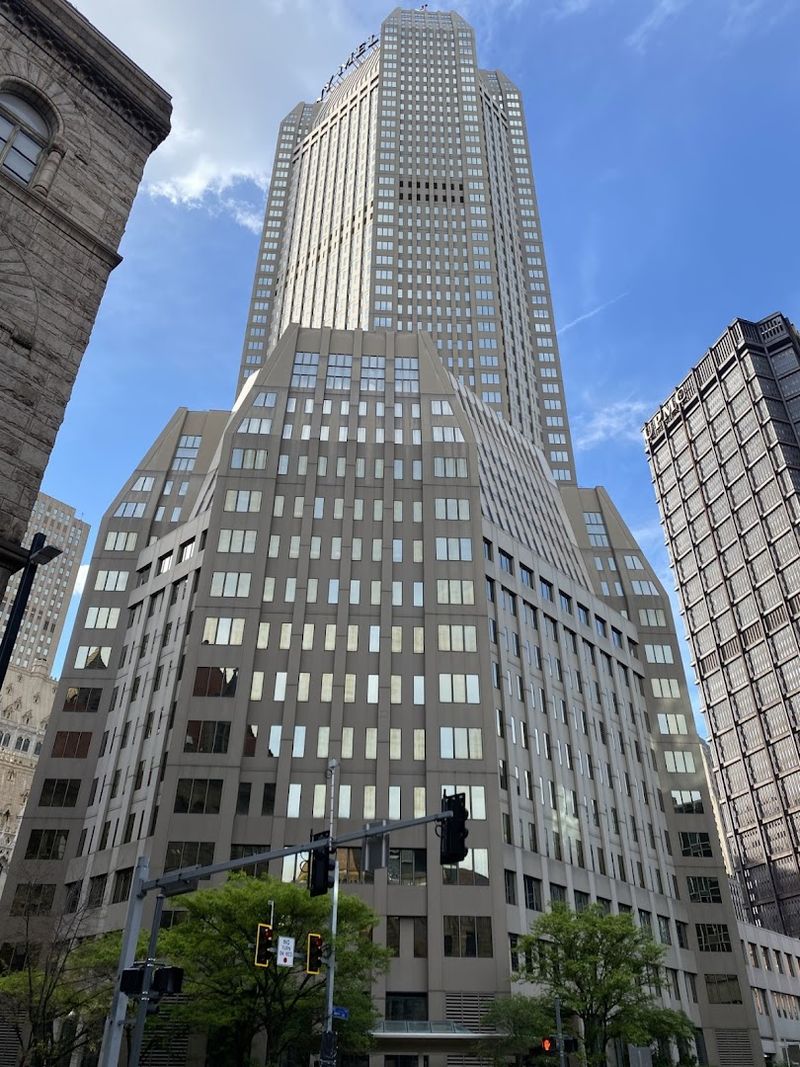
Another major Pittsburgh high-rise, this tower adds a cleaner and more polished note to Pennsylvania’s western skyline.
Where some buildings project sheer industrial heft, this one balances business authority with a more contemporary visual rhythm.
It helps show that Pittsburgh, like the rest of Pennsylvania, contains more architectural variety than many visitors expect.
BNY Mellon Center rises 725 feet and has been part of downtown Pittsburgh since 1983.
Designed by Welton Becket Associates, the tower features a strong vertical composition that gives it both elegance and visibility.
Its light facade and orderly lines stand out against the darker forms often associated with the city’s older commercial core.
The building contributes to Pennsylvania’s skyline story by reinforcing Pittsburgh’s role as a major urban center in its own right.
Too often, conversations about tall buildings in the state focus only on Philadelphia, but BNY Mellon Center makes it clear that western Pennsylvania has serious architectural presence as well.
When seen with neighboring towers, it helps create the layered and recognizable profile that defines downtown Pittsburgh.
There is also a practical beauty to the structure that fits the state well.
It does not overcomplicate its appearance, yet it still feels substantial and dignified, which is a combination Pennsylvania architecture often does very well.
You can sense its role as a working office tower, but it also succeeds visually from a distance, especially across the rivers and bridges that frame the city.
In the broader ranking of Pennsylvania’s tallest buildings, BNY Mellon Center deserves attention for more than its height.
It represents the continued strength of Pittsburgh’s central business district and adds balance to a skyline with distinct personalities.
If you want to appreciate the full architectural range of Pennsylvania, this tower is an important piece of that picture.
Share this story