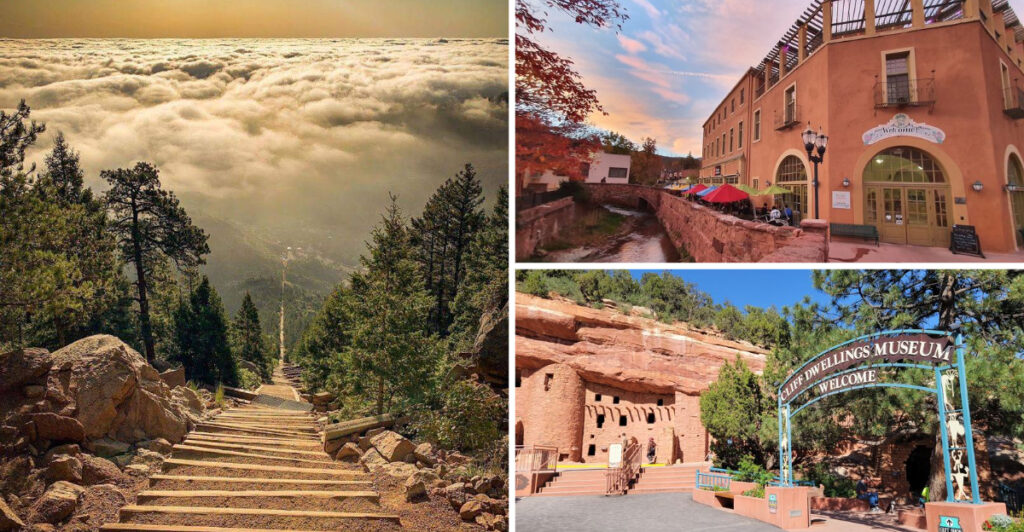
Manitou Springs is one of Colorado’s most distinctive mountain towns, blending historic charm, quirky attractions, natural mineral springs, and spectacular views of Pikes Peak into an unforgettable getaway. Just minutes from Colorado Springs, this walkable community is filled with colorful shops, art galleries, cozy cafés, historic buildings, and easy access to some of the state’s most popular hiking trails.
Its free-spirited personality and rich history make every visit feel a little different from the last. Whether you’re planning a weekend escape or a scenic day trip, Manitou Springs is the kind of Colorado town that’s impossible to forget.
A Main Street Framed by Mountains and Mischief
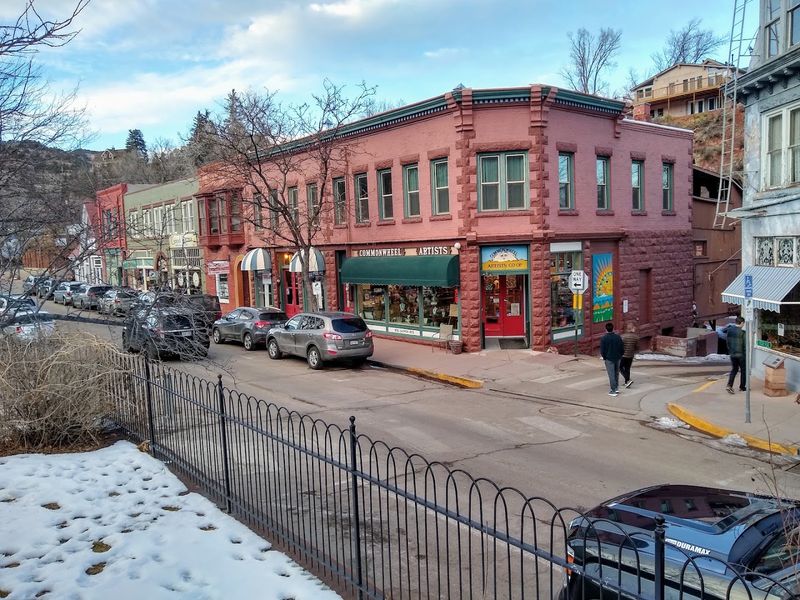
Manitou Springs announces itself fast. One minute you are near a larger city grid, and the next you are in a compact valley where the mountains suddenly crowd the edges of town and every storefront seems to have its own personality.
The setting creates immediate drama, with steep slopes, old brick facades, painted trim, and a main drag that looks built for strolling instead of rushing.
That visual squeeze gives the town its unusual rhythm. Cars move through, but the real pace belongs to people drifting between coffee shops, candy counters, art galleries, penny souvenirs, and old fashioned signs that still make room for a wink.
Nothing appears polished into sameness, and that is exactly the point – Manitou Springs keeps its odd little edges visible.
Look closer and the details sharpen the mood. Murals pop up where you do not expect them, stairways climb toward tucked away businesses, and side streets reveal cottages, inns, and porches with a slightly theatrical charm.
Even the light changes quickly here, bouncing off windows and then flattening against the mountain shadows in a way that makes late afternoon especially good for walking.
For a town this small, the arrival feels remarkably full. There is visual texture everywhere, but it never tips into clutter because the landscape keeps everything anchored.
Before you have even mapped out lunch or figured out where to park, Manitou Springs has already made its case through setting alone: compact, eccentric, and dramatically placed at the foot of one of Colorado’s most recognizable peaks.
The Mineral Springs That Still Shape the Town
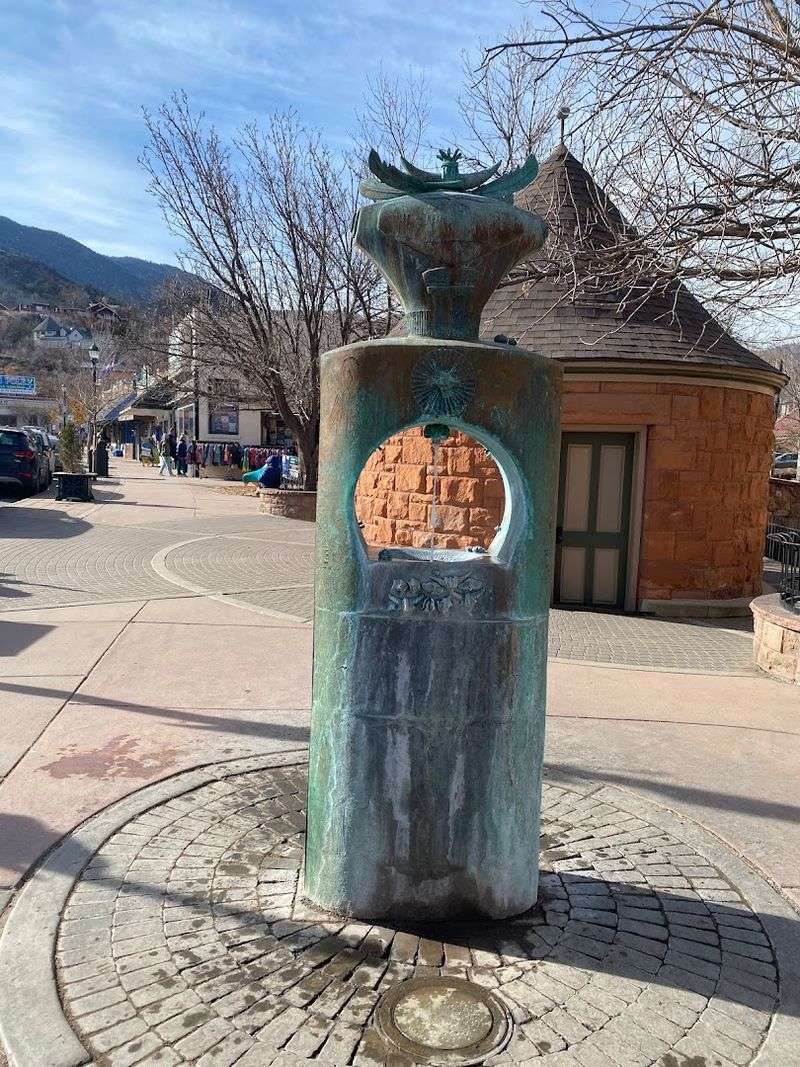
Long before Manitou Springs became a day trip favorite, the town’s identity was tied to water. Mineral springs bubble up in and around the community, and that odd, slightly ceremonial tradition of sampling them remains one of the most distinctive things you can do here.
Instead of treating the springs as background decoration, the town folds them into the street experience. Several spring fountains are located within walking distance of downtown, and each one brings a different taste profile.
Some are pleasant and crisp, others arrive with a stronger mineral punch that can surprise anyone expecting ordinary cold water.
Carrying a cup and comparing them adds a playful mission to a casual walk, turning the sidewalks into a low key tasting route with local history built into every stop.
The appeal is not only the water itself. These springs explain why Manitou developed as a resort community in the first place, and they give the town a thread of continuity that modern shops alone could never provide.
You are not just passing fountains; you are encountering the feature that shaped the place, influenced its architecture, and helped turn this mountain pocket into a destination.
That context changes how the town reads. The decorative structures, plaques, and pathways around the springs make more sense once you realize the water is central, not incidental.
In a travel landscape filled with copycat entertainment districts, Manitou Springs still revolves around something grounded, literal, and local: naturally carbonated mineral water emerging from the base of the mountains and still drawing curious people block by block.
Where Pikes Peak Turns Every Errand Into Scenery
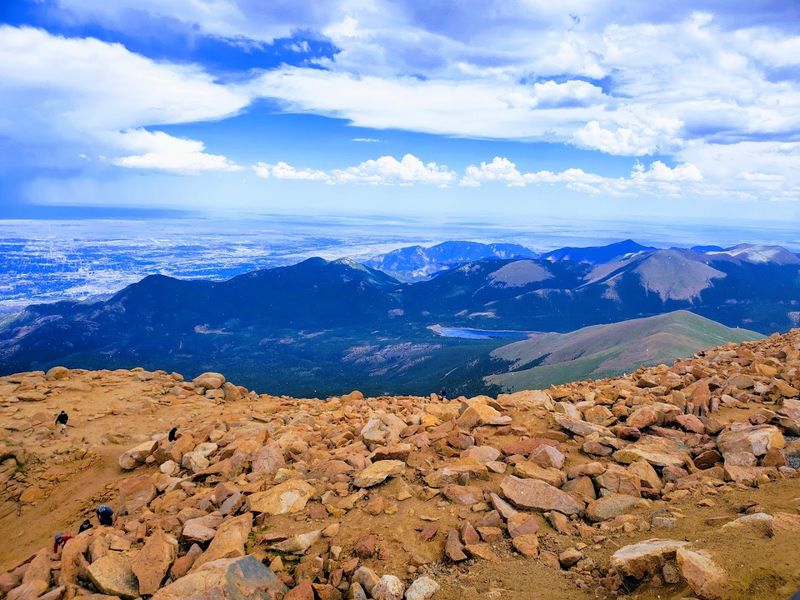
In many mountain towns, the landscape is beautiful but distant, more postcard than presence. Manitou Springs works differently because Pikes Peak and the surrounding slopes are always in the composition, looming above roofs, peeking down side streets, and changing the mood of even the most ordinary downtown moments.
Buying an ice cream or crossing the avenue never feels disconnected from the terrain. That constant visual relationship gives the town unusual energy.
You are not in a flat commercial corridor decorated with mountain themes; you are in a settlement tightly fitted into real topography, where elevation is obvious and every glance upward resets your sense of scale.
The closeness of the landscape makes the built environment look smaller, older, and more intimate in a way that heightens the town’s personality.
It also creates a useful contrast. Manitou can be lively, playful, and packed with storefront charm, yet the mountains prevent it from tipping into pure novelty because there is always something larger pressing in from the edges.
Late in the day, shadows move quickly across facades and sidewalks, and the town takes on that dramatic high country look without needing any staged viewpoint.
Colorado has no shortage of scenic places, but this particular arrangement stands out because the scenery is inseparable from daily movement. You do not need a special detour to appreciate the setting.
Stand on Manitou Avenue, look uphill, and the geography explains the town’s shape, pace, and appeal all at once – a compact pocket of color and history tucked under one of the state’s most iconic mountain backdrops.
The Incline Changes the Mood of the Entire Town
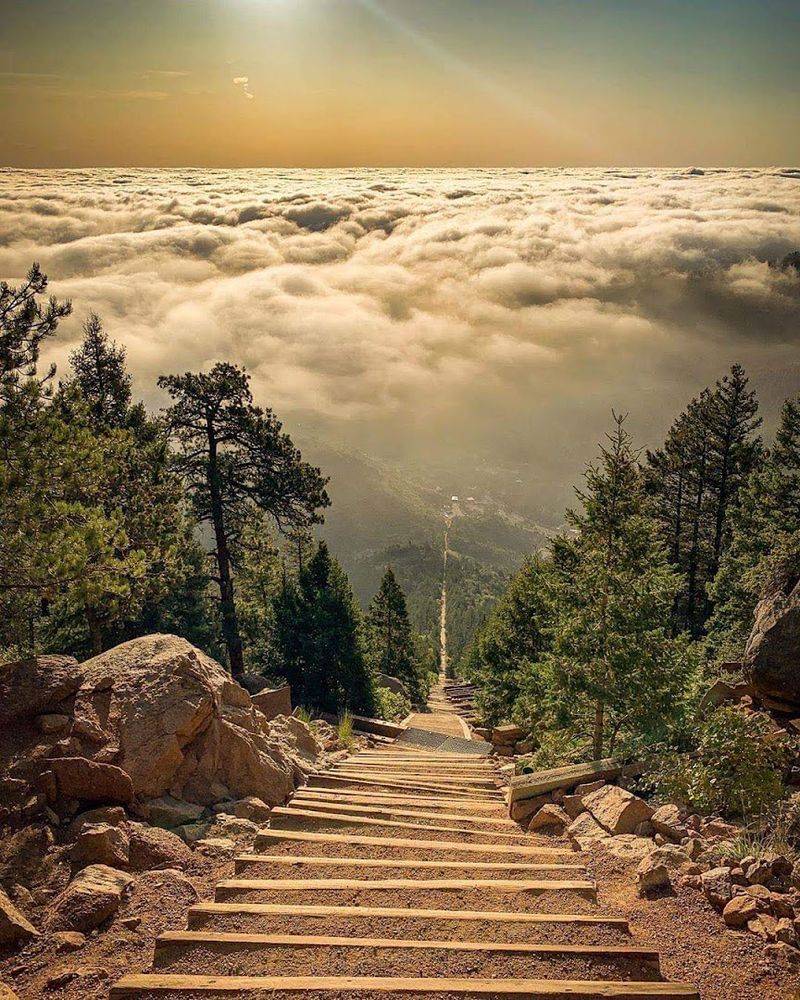
Manitou Springs has a playful downtown, but it also carries serious outdoor credentials, and nowhere is that clearer than the Manitou Incline.
The route rises steeply up a former railway grade and has become one of the most talked about physical challenges in Colorado. Even if you never step on the stairs, its presence changes how the whole town feels.
You notice it in the mix of people moving through the streets. Alongside casual shoppers and families with strollers, there are hikers in trail shoes, runners checking water bottles, and red faced finishers heading back toward coffee, lunch, or a quiet bench.
That overlap keeps Manitou from becoming too precious, because exertion is part of the local texture as much as boutiques and sweets.
The Incline also sharpens the town’s relationship with the mountains. This is not a place that merely admires scenery from patios; it invites people to engage with steep terrain in a very direct way.
Nearby access to trails, canyon routes, and uphill views gives the area a restless edge, making downtown feel like a base camp with historic storefronts rather than a sealed off attraction district.
For travelers, that mix is especially satisfying. You can spend the morning tackling a strenuous climb, then wander a compact center where recovery comes with ice cream, mineral water, or a long lunch instead of a long drive.
Few towns blend effort and ease so tightly, and that contrast is part of Manitou Springs’ charm – one block says resort escape, the next says lace up and head uphill.
Manitou Cliff Dwellings and the Town’s Layered Past
Manitou Springs does not present history as a sealed museum piece. It appears in architecture, resort era traces, preserved streetscapes, and attractions that reveal how long this mountain corridor has drawn interest, movement, and storytelling.
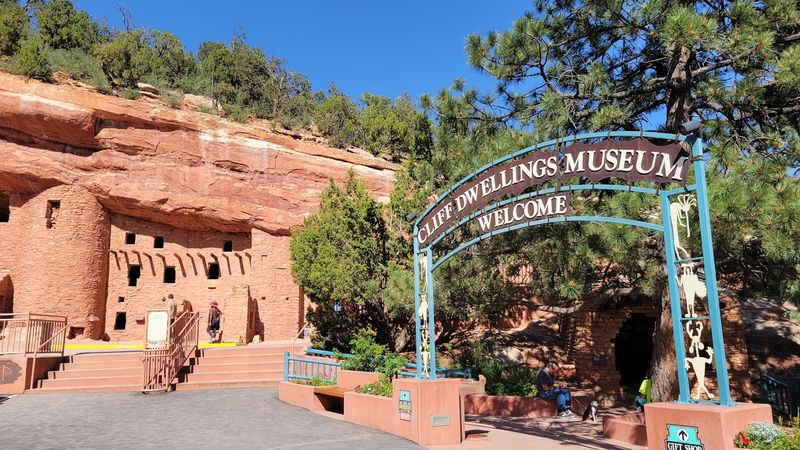
The Manitou Cliff Dwellings add another layer to that picture, giving travelers a chance to engage with stone structures and exhibits that shift the day away from shopping and scenery.
Set near town, the site introduces a different texture than downtown’s painted storefronts and sweet shops. The rough stone, low openings, and hands on layout create a more tactile encounter, one that invites closer attention to construction, setting, and the broader cultural history represented there.
Even for travelers who arrive mainly for Pikes Peak views or the Incline, the stop broadens the experience. Back in town, that sense of layered time continues.
Manitou’s historic resort identity still echoes through inns, older commercial buildings, and the overall scale of the streets, which feel shaped by an earlier travel era rather than modern expansion.
The place makes more sense when you see it as a crossroads of health tourism, mountain access, and enduring curiosity about the region’s landscape and past.
That layered character gives Manitou Springs more depth than many compact tourist towns manage. It is lively without being disposable, quirky without becoming ahistorical, and walkable in a way that keeps the town’s older bones visible.
By the time you move between a spring fountain, a historic block, and a site like the cliff dwellings, the town reads less like a novelty stop and more like a place assembled through several distinct chapters.
How to Time a Day in Manitou Springs, Colorado
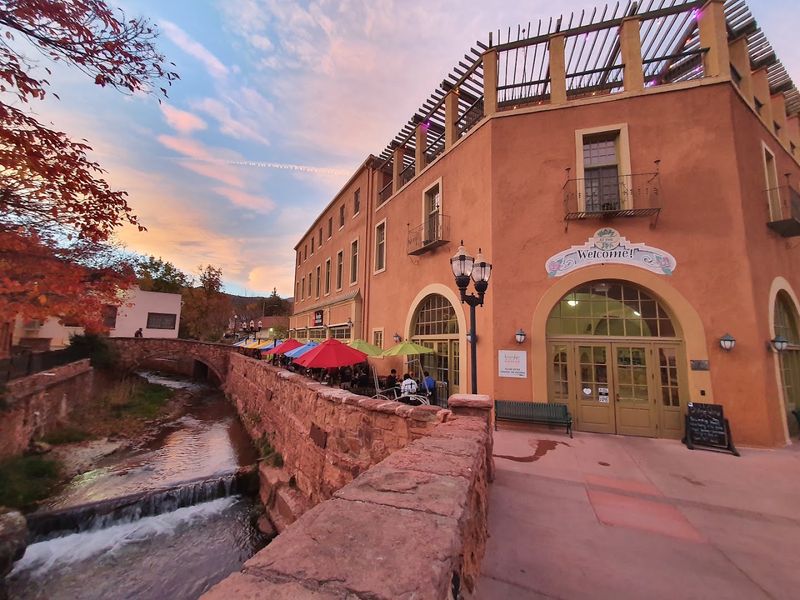
Manitou Springs is best approached with a little strategy. Because the town is compact and popular, timing shapes the experience more than a map does, especially if you want easy parking, quieter sidewalks, or a shot at pairing downtown wandering with trail time.
Early hours are ideal for seeing the place before the day’s energy fully builds. Morning gives you cleaner views, cooler air, and a calmer version of Manitou Avenue.
This is the best window for grabbing coffee, sampling a spring or two without a crowd clustered nearby, and noticing architectural details that get lost once the street turns busier. If hiking is part of your plan, starting early also helps you avoid the harsher midday sun on exposed routes.
By late morning and into afternoon, the town shifts gears. Storefronts are fully active, patios fill, and the people watching becomes part of the fun, with mountain athletes, casual trippers, and families sharing the same few blocks.
That busier period works well for browsing galleries, taking your time over lunch, and leaning into the town’s social, slightly theatrical side.
Evening has its own appeal if you can stay. The light softens against the mountains, temperatures usually ease, and downtown picks up that pleasant end of day hum rather than a rushed nightlife pulse.
For many travelers, the sweet spot is simple: start early, leave room to wander without a checklist, and let Manitou Springs reveal itself through a sequence of small, specific pleasures instead of one oversized headline attraction.