If you think Pennsylvania’s best stories live only in Philadelphia, Gettysburg, or Pittsburgh, you are missing the state at its most mysterious, inventive, and unforgettable. Across quiet hillsides, old industrial corridors, hidden caves, and roadside oddities, I found places that feel like secrets passed between curious travelers – spots where science seems to bend, history lingers in the air, and local legends refuse to fade.
Some of these landmarks are eerie, some are whimsical, and some are deeply moving, but all of them reveal a side of Pennsylvania that feels richer and stranger than the usual postcard version. If you love destinations that give you something to talk about long after the trip home, these 12 lesser-known Pennsylvania landmarks are exactly the kind of remarkable detours worth chasing.
1. Gravity Hill, Bedford County
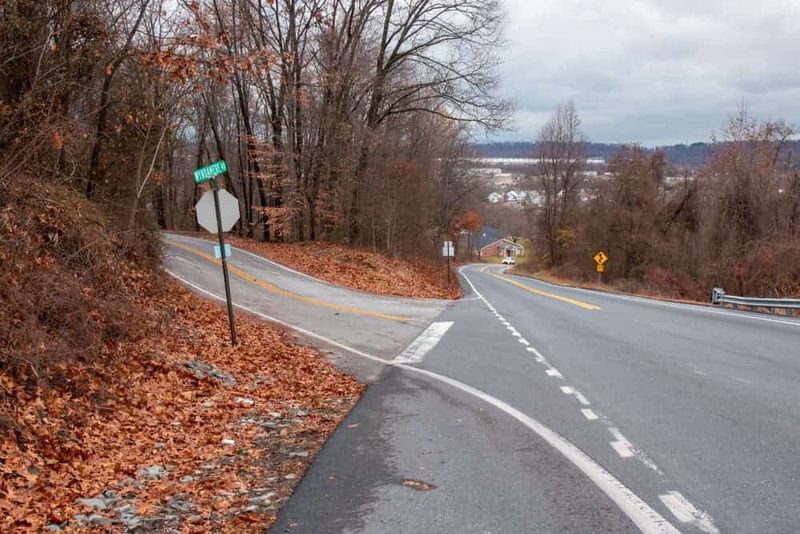
Few roadside stops in Pennsylvania mess with your senses quite like this one.
On a narrow stretch of country road in Bedford County, your eyes insist on one thing while your car seems to do another, creating the famous illusion known as Gravity Hill.
It is the kind of place that makes you laugh first, then immediately try it again just to prove to yourself that what happened was real.
The story is rooted less in the paranormal than in the power of perspective, yet that has never stopped local folklore from thriving.
Visitors have long swapped tales about unseen forces, ghostly hands, and mysterious energy tugging vehicles uphill, especially after dark when the trees close in and the road feels even more theatrical.
Whether you trust physics or legends more, the fun comes from standing in the middle of that uncertainty.
What makes Gravity Hill memorable is how simple the experience is.
There is no grand visitor center, no dramatic monument, and no complicated route to follow, just a modest roadway and the shared thrill of disbelief.
In a state packed with major historic attractions, this tiny curiosity reminds you that wonder does not always need a grand stage.
If you go, the best approach is to treat it like a small adventure rather than a full-day destination.
Arrive with patience, respect the road, and expect a quick but genuinely entertaining stop that leaves you talking the whole drive afterward.
Gravity Hill in Bedford County proves that one of Pennsylvania’s strangest stories can unfold in a place most travelers would otherwise pass without a second glance.
2. Centralia Ghost Town, Columbia County
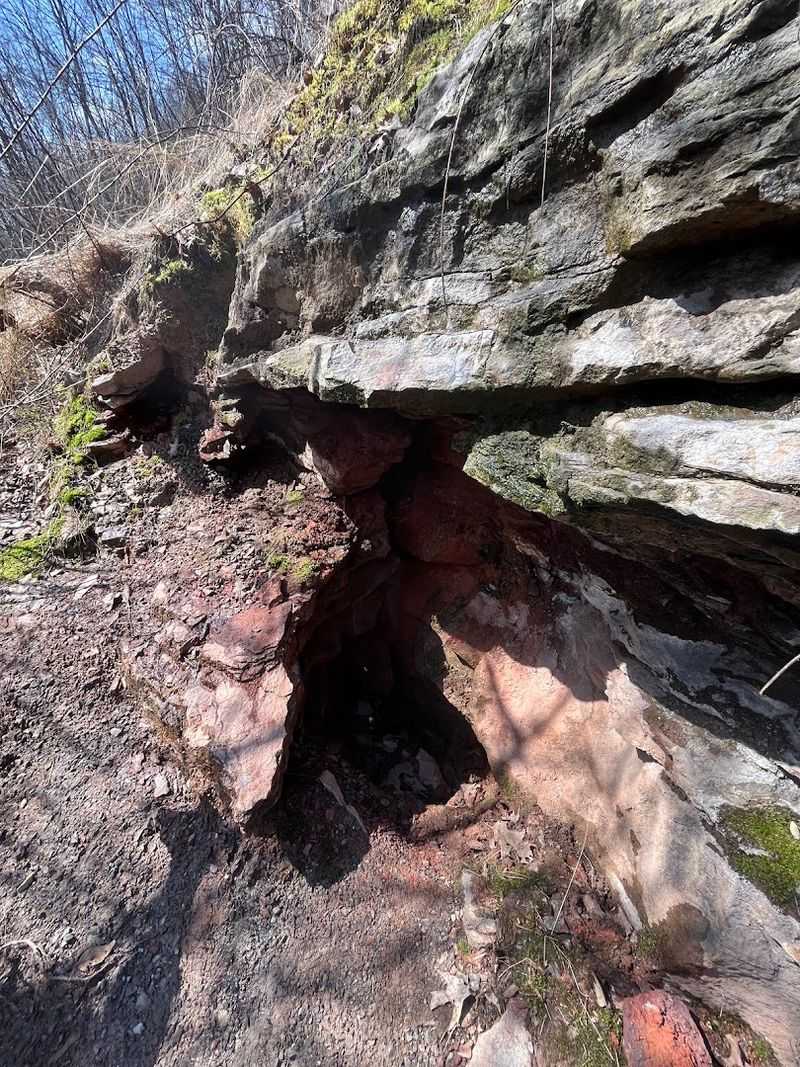
Very few places in Pennsylvania feel as hauntingly unforgettable as this nearly vanished town.
What was once a busy coal community in Columbia County became one of America’s most famous ghost towns after an underground mine fire ignited in 1962 and kept burning beneath the ground for decades.
That disaster slowly forced residents out, erased neighborhoods, and transformed Centralia into a powerful warning about what can happen when industry and environment collide.
Walking through what remains is less about seeing ruins and more about feeling absence.
Empty streets, reclaimed land, and lingering stories from former residents create an atmosphere that is strangely quiet, as if the town still remembers every porch, shop, and conversation that used to animate it.
Even people who know the facts beforehand are often surprised by how emotional the place feels in person.
For years, Centralia drew attention for its cracked highway and smoking ground, turning it into a site of dark tourism and intense public fascination.
Much of that visual spectacle has changed, but the legend has not faded, because the deeper story is about displacement, resilience, and a community reshaped by a fire no one could easily stop.
It remains one of Pennsylvania’s most unsettling intersections of geology, human error, and memory.
If you visit the area, sensitivity matters as much as curiosity.
This is not a haunted amusement park but a real place tied to real loss, and that perspective makes the experience more meaningful.
Centralia Ghost Town still captures the imagination, yet its most remarkable story may be how a nearly erased town continues to speak so loudly through silence.
3. Ringing Rocks Park, Bucks County
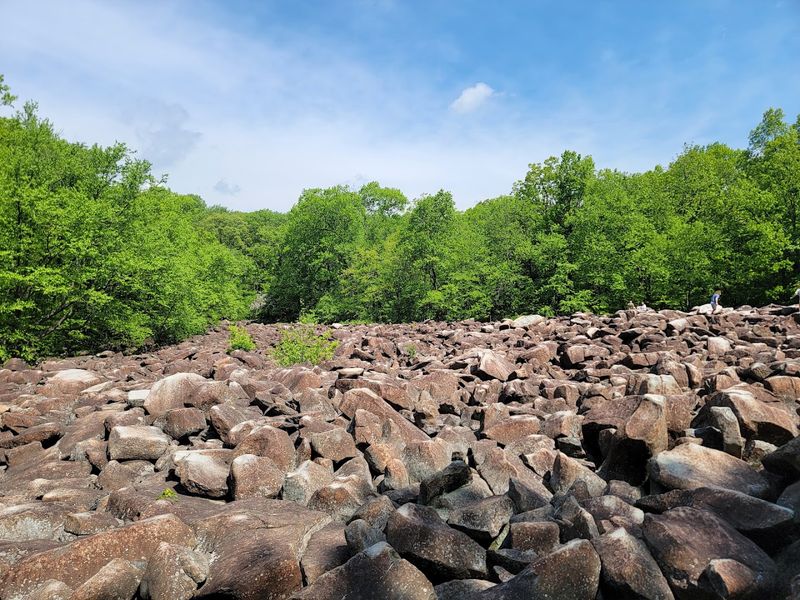
Hidden in Bucks County is a boulder field that turns a simple walk into a hands-on science mystery.
At Ringing Rocks Park, certain stones produce bell-like metallic tones when struck, creating a natural percussion set unlike anything most visitors expect to find in Pennsylvania woods.
It is one of those places where you can arrive skeptical and leave delighted within minutes.
The sounds come from a rare combination of rock composition, internal stress, and the way the stones rest against one another, though the exact effect has fascinated geologists for generations.
Local tradition has added its own flair, with people once imagining everything from ancient rituals to hidden mineral magic beneath the pile.
Even after reading the explanations, there is something surprising about hearing music come from a field of seemingly ordinary boulders.
What makes the site especially appealing is the contrast between its unusual geology and its casual accessibility.
You do not need a long backcountry trek or specialized knowledge to appreciate it, just sturdy shoes, curiosity, and ideally a small hammer if regulations and current park guidance allow.
Nearby trails and a small waterfall add to the experience, giving the outing more depth than a single novelty stop.
Ringing Rocks Park is a reminder that Pennsylvania’s stories are not all tied to battles, factories, or old buildings.
Some of the most memorable landmarks come from the land itself, quietly waiting for someone to notice that nature can be playful too.
In a state known for layered history, this Bucks County site offers a different kind of wonder, where geology becomes sound and a forest clearing turns into an instrument.
4. Haines Shoe House, York
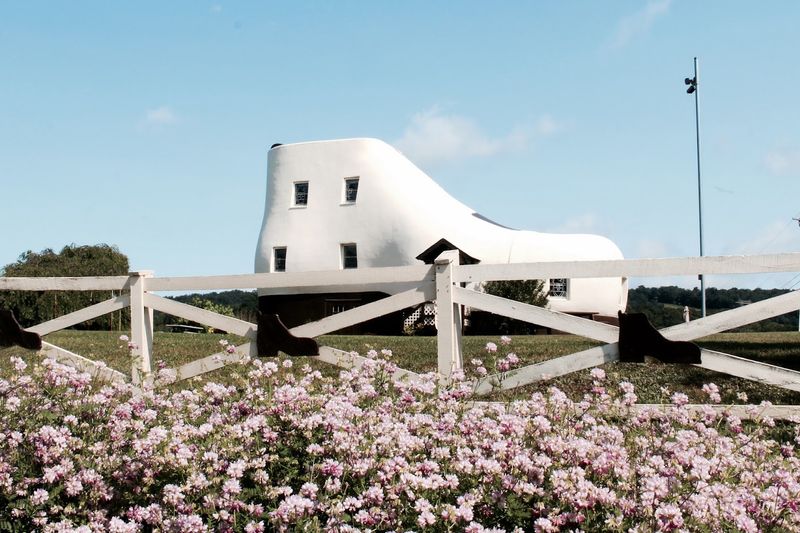
Roadside architecture rarely gets more charming than a house built in the shape of a giant boot.
In York, the Haines Shoe House stands as a playful piece of Pennsylvania Americana, originally created in 1948 by shoe salesman Mahlon Haines as both advertisement and attention-grabbing landmark.
It is whimsical at first glance, but the longer you look, the more it starts to tell a story about ambition, marketing, and local character.
The building was not just a gimmick parked beside a highway.
Haines used it to promote his shoe business, host guests, and entertain visitors, turning a simple sales idea into one of the state’s most memorable novelty structures.
In an era before social media and viral branding, this oversized footwear proved that bold design could make people stop, smile, and remember exactly who you were.
There is also something endearing about how sincerely strange it is.
The windows, lace-like details, and compact interior transform the giant shoe from billboard to actual inhabitable space, which makes the attraction feel more imaginative than absurd.
You can sense the optimism behind it, a belief that business could be fun, personal, and a little theatrical.
Today, the Haines Shoe House remains a favorite for travelers who love oddball landmarks with real history behind the humor.
It captures a version of Pennsylvania that is practical yet inventive, rooted in entrepreneurship but never afraid of a wink and a grin.
If you enjoy places that feel equal parts folk art, business history, and road trip treasure, this York icon leaves a bigger impression than its playful silhouette might first suggest.
5. The Allegheny Portage Railroad National Historic Site, Gallitzin
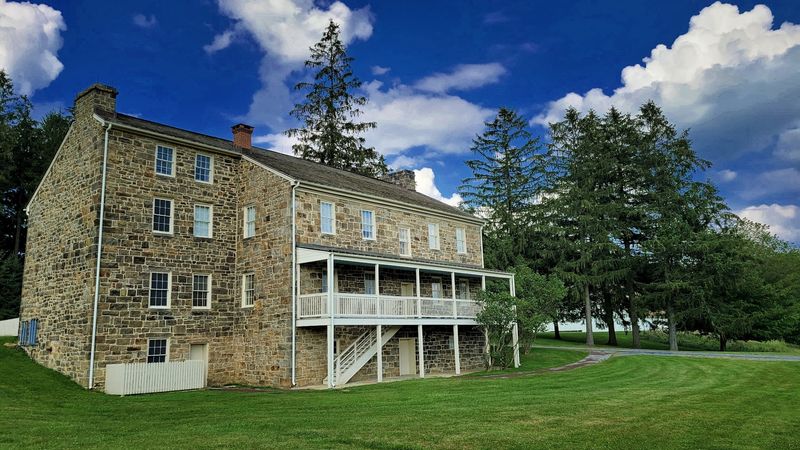
Before rail travel became routine, crossing Pennsylvania’s mountains demanded an incredible amount of ingenuity.
Near Gallitzin, the Allegheny Portage Railroad National Historic Site preserves the story of the Main Line of Public Works, an ambitious nineteenth-century transportation system that helped move passengers and freight over the Alleghenies.
It feels like a place where you can almost see the machinery of a young nation straining toward expansion.
This was not an ordinary railroad in its early form.
Cars were hauled up and lowered down steep inclines by stationary engines and ropes, linking canal travel with mountain rail segments in a complicated system that was both innovative and difficult to operate.
For a crucial period, it helped make Pennsylvania a transportation powerhouse and connected eastern markets with the growing west.
What makes the site so compelling is that it captures a transitional moment in American technology.
You are not just looking at tracks or artifacts but at evidence of a bold solution created before engineers had perfected easier alternatives.
That sense of experimentation gives the landscape a restless energy, as if every hill and grade still remembers the effort required to conquer it.
Visiting today offers a quieter experience than the drama of its busiest years, but the story remains impressive.
Exhibits, reconstructions, and surviving features reveal how much planning and labor went into moving people and goods across terrain that once seemed stubbornly impassable.
The Allegheny Portage Railroad site deserves far more attention because it shows Pennsylvania not merely as a backdrop to history, but as one of the places where America learned how to connect itself.
6. Horseshoe Curve, Blair County
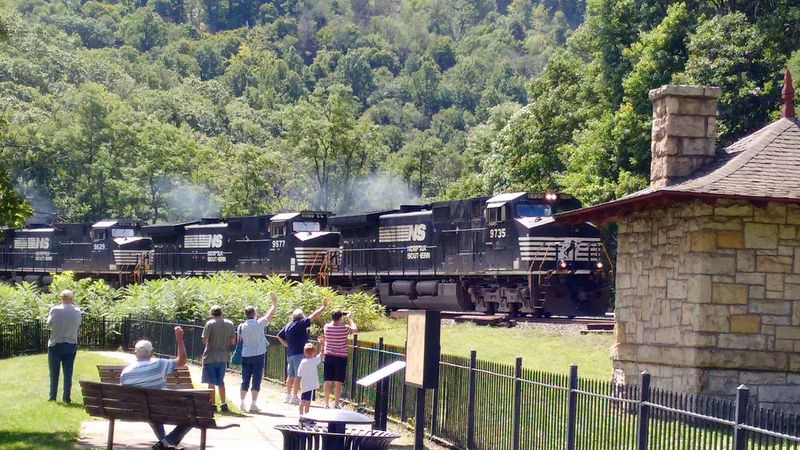
Some engineering landmarks impress you most when you step back and see the whole design at once.
In Blair County, Horseshoe Curve arcs through the mountains in a graceful bend that solved a major railroad challenge and became one of Pennsylvania’s most celebrated feats of transportation history.
Even if you are not a rail enthusiast, the scale and elegance of the site are hard to resist.
Completed by the Pennsylvania Railroad in the nineteenth century, the curve helped trains manage steep grades while crossing the Alleghenies more efficiently.
It played an enormous role in commerce, migration, and wartime logistics, proving that careful engineering could reshape how a region connected to the rest of the country.
What looks beautiful from an overlook was, at its core, a practical answer to a demanding landscape.
There is also a strong emotional pull to the place.
Watching modern trains follow a path carved generations ago creates a vivid link between past and present, and the surrounding mountain scenery gives the entire experience a cinematic quality.
You do not need much imagination to picture the excitement early travelers must have felt when technology and terrain finally struck a workable deal.
Although Horseshoe Curve is better known than some landmarks on this list, it still deserves a spot because many visitors underestimate the story behind the view.
This is not just a scenic railroad bend but a symbol of Pennsylvania’s industrial confidence and problem-solving spirit.
When you stand there listening for the approach of a train, you can feel how one carefully calculated curve helped move a state, and in many ways a nation, into a new era.
7. Indian Echo Caverns, Hummelstown
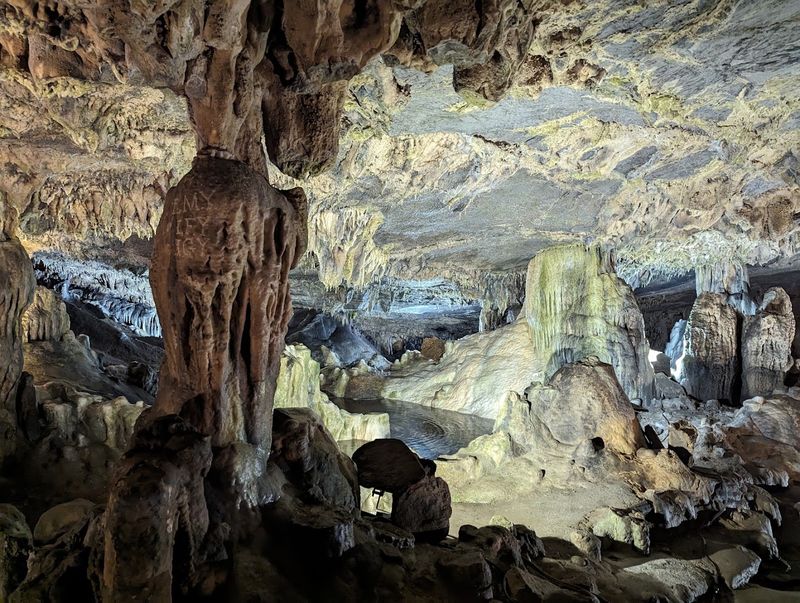
Beneath the surface near Hummelstown lies a Pennsylvania landmark that feels part natural wonder, part time capsule.
Indian Echo Caverns draws visitors underground into cool chambers shaped over countless years, where limestone formations, still water, and echoing passageways create a setting that feels immediately removed from the everyday world.
It is easy to understand why caves like this have inspired both scientific interest and local storytelling for generations.
The caverns carry a layered history that extends beyond geology.
Long before modern tourism, the site was associated with Indigenous presence and later became woven into regional folklore, family outings, and the broader tradition of American cave exploration.
That mix of natural formation and human narrative gives the place a depth that goes beyond the visual spectacle of stalactites and curving rock walls.
What I find especially compelling is how caves shrink your perspective in the best possible way.
Underground, time feels different, and the slow work of water carving stone makes human timelines seem brief by comparison.
Indian Echo Caverns offers that humbling effect while remaining accessible enough for travelers who want wonder without a demanding expedition.
Above ground, the attraction has long functioned as a nostalgic destination for Pennsylvania families, which adds another layer to its story.
It is not only a cave but also a memory-making place where generations have shared the same cool air, dim light, and sense of discovery.
In a state filled with historic sites built by people, Indian Echo Caverns stands out because its most remarkable architect was nature itself, patiently creating a hidden world that still captivates anyone willing to descend into it.
8. Columcille Megalith Park, Northampton County
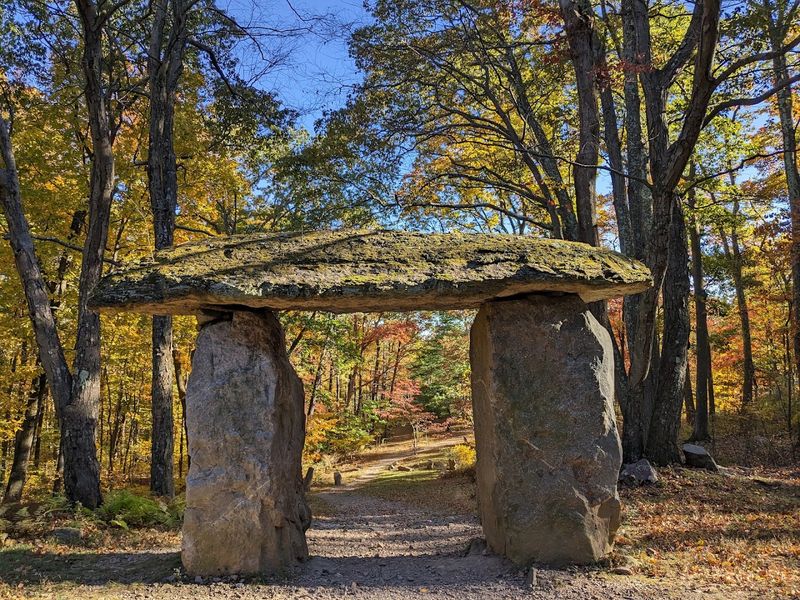
Tucked into the woods of Northampton County is a place that feels unlike almost anything else in Pennsylvania.
Columcille Megalith Park combines standing stones, forest paths, and contemplative spaces in a landscape inspired by Celtic spirituality and the ancient stone sites of Britain and Ireland.
The result is peaceful, slightly mysterious, and wonderfully hard to categorize.
This is not an archaeological site from antiquity, but that does not make it any less evocative.
Created in the late twentieth century as a retreat for reflection, the park invites visitors to slow down and experience symbolism, silence, and the natural setting as part of one immersive composition.
The carefully placed stones, names, and shrines give the grounds the feeling of a storybook filtered through Pennsylvania woodland.
What makes Columcille remarkable is the sincerity of its vision.
It never feels like a theme park imitation of ancient Europe, but rather a thoughtful adaptation of megalithic ideas into a local landscape shaped by trees, weather, and personal reflection.
You can approach it spiritually, artistically, or simply as an unusual outdoor walk, and the place still works.
In a state where landmark lists often lean heavily on colonial buildings and industrial history, Columcille offers another side of Pennsylvania’s cultural imagination.
It shows how modern creators can build places of meaning that resonate deeply even without centuries of age behind them.
If you are drawn to destinations that encourage quiet attention instead of hurried sightseeing, this Northampton County retreat delivers a memorable kind of magic, proving that one of Pennsylvania’s most intriguing stories can be found not in a crowd, but in the hush between stones and trees.
9. The Old Economy Village, Ambridge
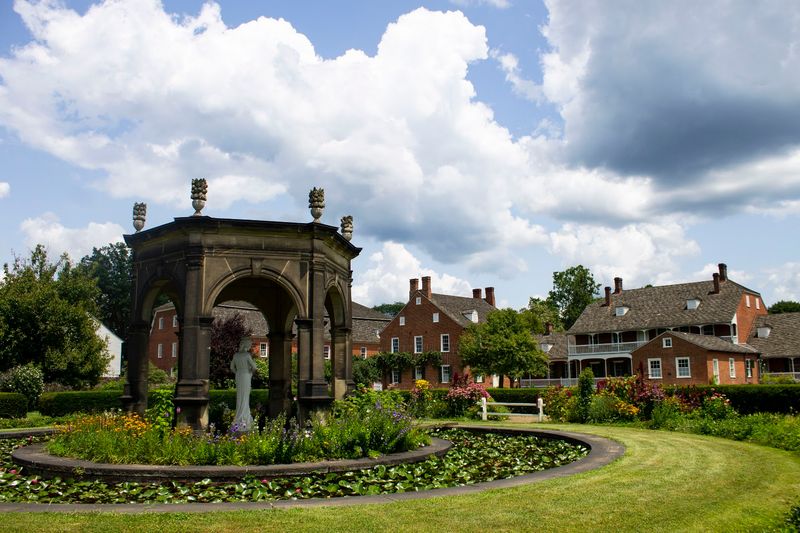
Few historic sites in Pennsylvania reveal such an unusual social experiment so vividly.
In Ambridge, Old Economy Village preserves the world of the Harmony Society, a religious communal group of German immigrants who built a remarkably organized and prosperous settlement in the nineteenth century.
Walking through the village, you get a rare glimpse of how faith, labor, and discipline shaped an entire community.
The Harmonists were known for industry, craftsmanship, and celibacy, an uncommon combination that made their success especially striking and their long-term future inherently complicated.
They developed businesses, constructed elegant buildings, and maintained an orderly way of life that impressed visitors while also setting them apart from surrounding society.
That tension between separation and achievement gives the site much of its fascination.
What stands out most is how complete the vision feels.
Gardens, workshops, residences, and communal spaces together tell a story larger than any single house museum can manage, allowing you to sense the rhythm of a place where individual lives were intentionally arranged around collective purpose.
It invites bigger questions too, especially about what people are willing to give up in pursuit of harmony, security, and belief.
Old Economy Village deserves more attention because it expands the usual narrative of Pennsylvania history.
Instead of focusing solely on political milestones or battlefield moments, it highlights a community that tried to build an ideal society on its own terms and, for a time, succeeded impressively.
If you enjoy places where architecture, religion, economics, and human ambition intersect, this Ambridge landmark offers one of the state’s richest and most thought-provoking stories, all preserved within a village that still feels unexpectedly alive with intention.
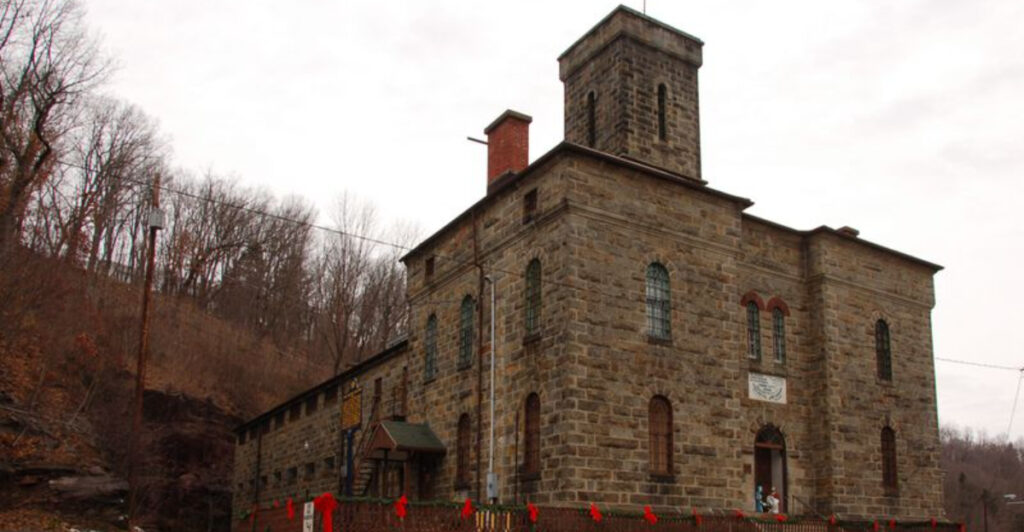
10. Old Jail Museum, Carbon County
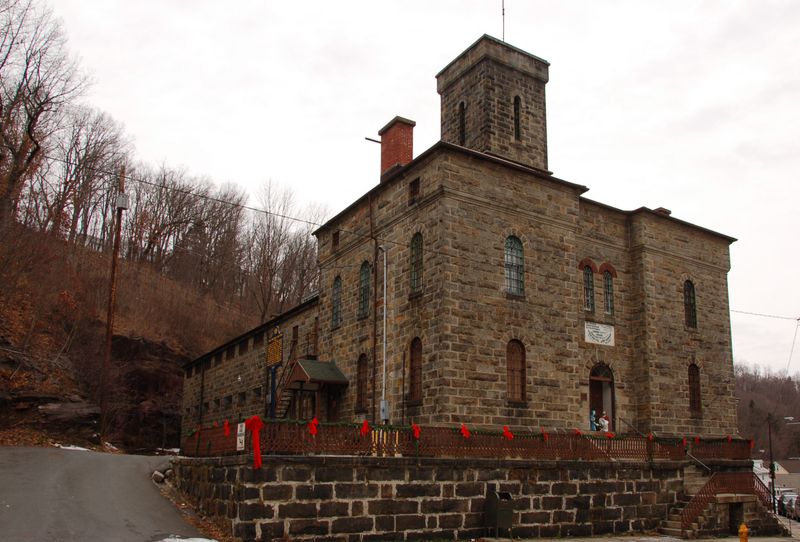
History turns especially intense when it is tied to confinement, conflict, and unresolved legend.
In Carbon County, the Old Jail Museum is best known for its connection to the Molly Maguires, a secretive group associated with labor unrest, violence, and ethnic tension in Pennsylvania’s coal region during the nineteenth century.
The building itself is stark and imposing, but the stories inside are what linger with you.
Visitors come not just for architecture or prison artifacts, but for the emotional weight of a place linked to controversial trials and executions.
The Molly Maguires have long occupied a murky space between criminal conspiracy and labor resistance, which means every room in the jail seems to hold competing versions of justice.
That ambiguity is part of what makes the museum so compelling, because it refuses easy conclusions.
One of the most talked-about details is the handprint said to remain on a wall from a condemned prisoner, a feature that has fueled ghost stories and fascination for generations.
Whether you view it as supernatural evidence, prison folklore, or a powerful symbol created by memory, it gives the site a chilling sense of presence.
Suddenly the past does not feel distant at all.
The Old Jail Museum matters because it captures more than a dramatic local tale.
It opens a window onto immigrant life, dangerous labor conditions, anti-Irish prejudice, and the brutal pressures of Pennsylvania’s coal economy.
If you are interested in landmarks that raise difficult questions rather than offering neat inspiration, this Carbon County site stands out as one of the state’s most unforgettable places, where the walls seem to preserve not only history, but argument, fear, and the stubborn persistence of unanswered truth.
11. Ephrata Cloister, Lancaster County
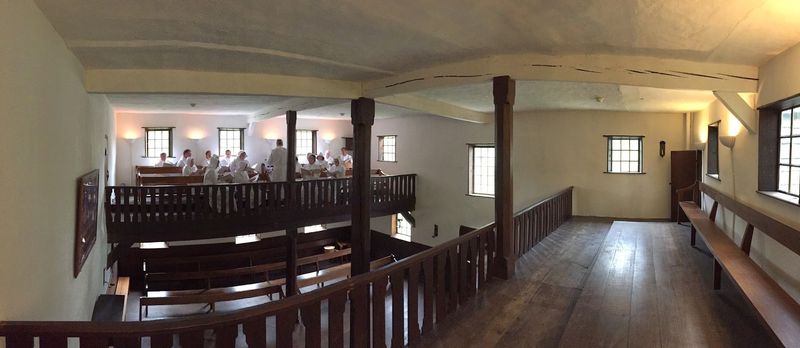
Among Pennsylvania’s most distinctive historic places, this Lancaster County site feels almost otherworldly.
Ephrata Cloister was founded in the eighteenth century by a German religious community that embraced celibacy, mysticism, disciplined routine, and a style of communal life unlike anything common in colonial America.
The surviving buildings and quiet grounds still carry a sense of inward focus that sets them apart immediately.
The community was known for more than unusual religious practice.
Its members produced respected music, printing, and craftsmanship, contributing significantly to the cultural life of early Pennsylvania while living according to strict spiritual ideals.
That contrast between withdrawal from the world and meaningful influence within it makes the story far richer than a simple tale of eccentric settlers.
What fascinates many visitors is the intensity of everyday life here.
Members reportedly slept on wooden benches with small blocks for pillows and organized their schedules around devotion, labor, and self-denial, creating a rhythm that feels difficult to imagine from a modern perspective.
Yet the site never feels merely severe, because there is beauty in the architecture, landscape, and creative output that emerged from such disciplined conviction.
Ephrata Cloister deserves a place on any list of remarkable Pennsylvania landmarks because it reveals how varied the state’s early communities truly were.
This was not just a colony of farmers and merchants, but also a place where radical spiritual experiments took root and left lasting marks on culture and history.
If you are drawn to destinations that challenge assumptions about America’s past, Ephrata Cloister offers a deeply memorable encounter with a community that tried to build heaven a little closer to earth, one rigorous day at a time.
12. Pike County Columns, Milford
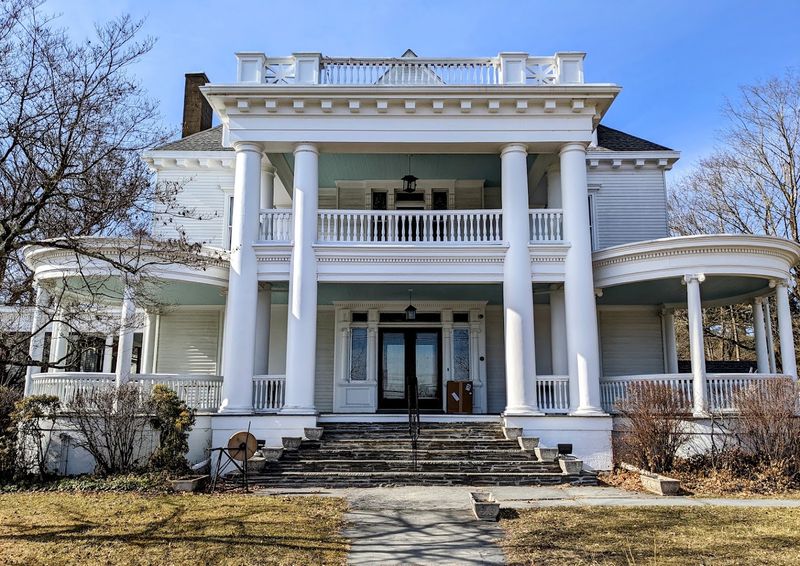
Some landmarks are memorable precisely because they seem to arrive without clear explanation.
Near Milford, the Pike County Columns rise as a curious set of stone structures that prompt immediate questions about who built them, why they were placed there, and how such an unusual sight remains relatively overlooked in Pennsylvania.
They have the kind of enigmatic presence that makes a brief stop turn into a long conversation.
Part of the appeal is that the columns feel suspended between ruin, folly, and monument.
Depending on the angle, they can look romantic, theatrical, or slightly surreal, as though they were transplanted from another landscape and quietly left behind in the woods.
That ambiguity encourages local storytelling, speculation, and the enjoyable uncertainty that accompanies many lesser-known landmarks.
Unlike more famous historic sites with exhaustive interpretation, the Pike County Columns invite observation first and explanation second.
You notice proportion, weathering, and setting before anything else, and that slower process can be refreshing in a travel culture that often rushes straight to the summary plaque.
The columns reward curiosity because they let atmosphere do much of the work.
What makes them worth seeking out is not only the structure itself but the way it reflects Pennsylvania’s layered landscape.
Across the state, traces of ambition, taste, and forgotten plans often remain in unexpected forms, and this site near Milford fits that pattern beautifully.
If you like places that feel a little mysterious, a little photogenic, and a little outside the standard travel script, the Pike County Columns offer a remarkable final reminder that Pennsylvania still holds surprises for anyone willing to look past the headline attractions and follow a stranger story into the trees.