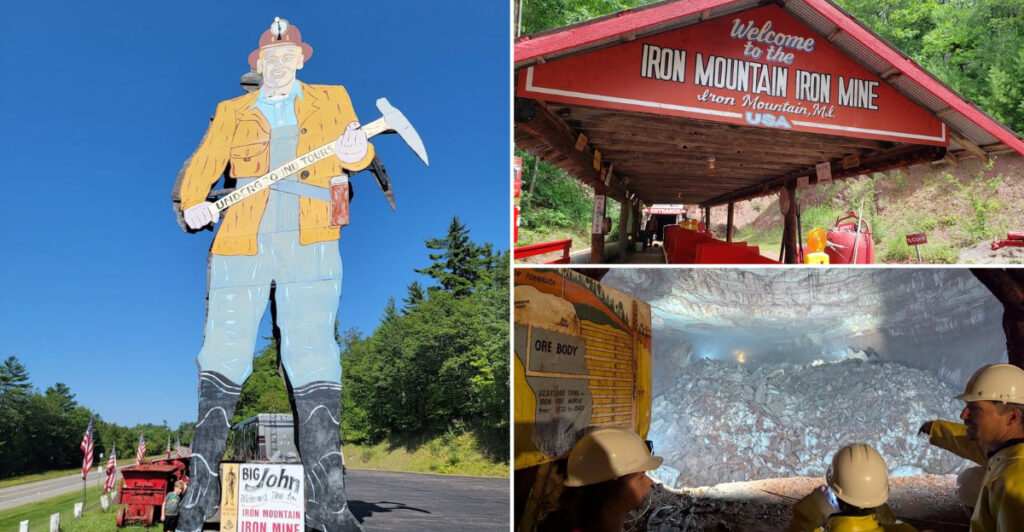
There are plenty of roadside stops in Michigan’s Upper Peninsula, but very few drop you into a real iron mine on a narrow underground train. At Iron Mountain Iron Mine in Vulcan, the experience starts with a hard hat and ends deep inside cold, damp tunnels cut straight through ancient rock.
It is part history lesson, part sensory jolt, and part family adventure with just enough grit to feel unforgettable. If you want a travel stop that instantly breaks the rhythm of an ordinary road trip, this one does it fast.
The Ride Starts Before You Even Go Underground
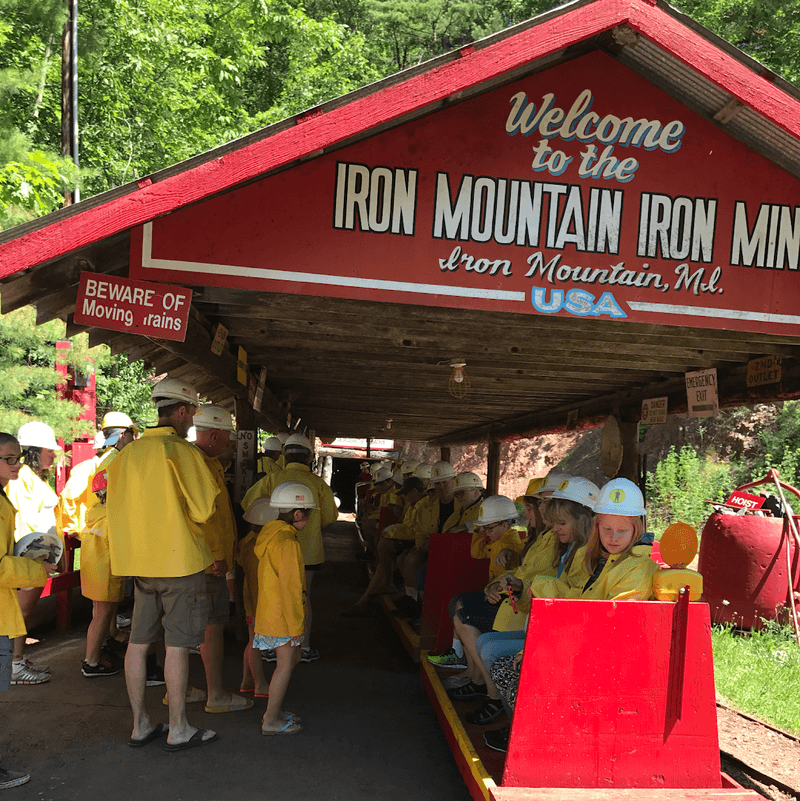
The most surprising part of Iron Mountain Iron Mine is how quickly the experience shifts from roadside attraction to working-world mood. You pull up off US-2 expecting a museum stop, then see mining equipment, weathered structures, and the small train that carries you underground.
That transition matters because this place does not build suspense with polished theatrics. It gets right to the point and lets the setting do the work.
Before the descent, you are fitted with a hard hat and rain gear, a practical step that immediately changes your posture from casual traveler to active participant. The staging area near the back adds to that sense of movement, with groups gathering, guides organizing the next departure, and the track car waiting like a compact gateway into the mountain.
Nothing here suggests a simulated attraction. The rail car is the real beginning of the story.
Then the train starts rolling, and the appeal sharpens. The ride is short, but that is part of its charm.
Instead of dragging out the entrance, it delivers a quick jolt of darkness, cool air, damp stone, and narrowing space. You are not looking at mining from a distance.
You are being taken into it, seated on a track that cuts into the rock and drops you roughly 400 feet below the surface.
That entrance sequence gives the mine its signature identity. Plenty of historic sites ask for your attention with signs and displays.
This one asks you to climb aboard. By the time the light outside starts disappearing behind the rail car, the whole visit has already separated itself from the usual scenic stop across Michigan’s Upper Peninsula.
Forty-Three Degrees and a Whole Different World
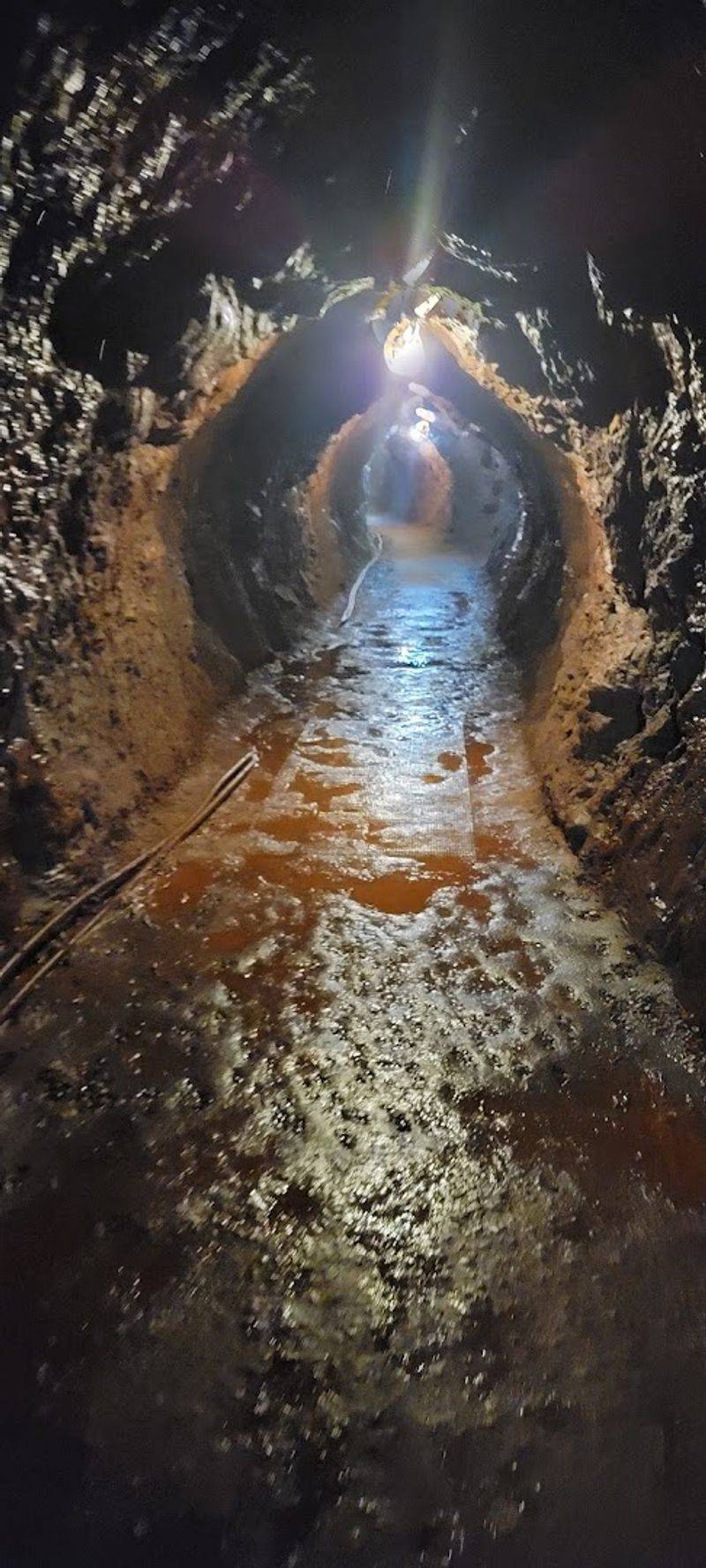
Step off the rail car and the temperature becomes the first major plot twist. Even on a hot Upper Peninsula day, the mine stays around the low 40s, which means the air hits your face with the clean bluntness of a walk-in cooler.
That chill is not a side note. It reshapes the visit immediately, making every breath, drip, and echo feel sharper.
The underground environment is not dressed up to look dramatic. It already is.
The rock walls are wet, the floor can be slick, and the lighting picks out rough textures instead of softening them. You notice how sound changes down there too.
Voices carry differently, machinery details make more sense, and even small movements seem amplified inside enclosed stone corridors.
Because the mine remains damp and cool, practical choices become part of the experience. A sweatshirt is not overplanning here.
Shoes you do not mind getting a little messy make more sense than anything delicate. Those details may sound minor, but they help the site keep its honest edge.
You are not gliding through a climate-controlled exhibit. You are navigating a former industrial space that still behaves like one.
That constant cold also adds a useful kind of contrast to the tour. It reminds you that mining was physical work shaped by conditions, not just tools or production numbers.
The setting itself becomes evidence. In Michigan summer, stepping into this underground climate can feel refreshing.
A few minutes later, it also starts to feel clarifying. The mine is interesting because of its history, but the cold is what makes that history land in your bones while you are standing inside it.
Michigan History With Real Stone Under Your Boots
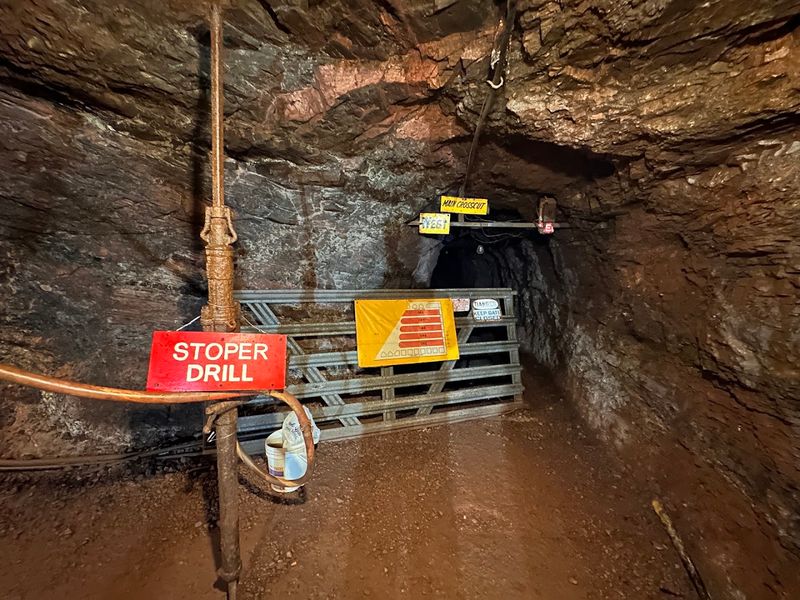
Iron Mountain Iron Mine works best when you treat it as more than an unusual train ride. The underground setting is exciting on its own, but the tour gains depth from the way history is folded directly into the route.
Instead of standing in front of detached labels, you hear about mining while surrounded by the stone, grades, and passages that gave the work its shape. That difference makes the information easier to picture and much harder to ignore.
The guides are a big part of that balance. The strongest mine tours know how to keep a group moving while still translating technical material into plain language, and this one has built a reputation for exactly that.
Details about methods, equipment, and the labor involved are delivered in a way that stays accessible for families without flattening the subject. Children can follow it, adults stay engaged, and the site never loses its seriousness.
That matters in a place tied to Upper Peninsula industry. Iron mining is not abstract here.
It sits close to the region’s identity, landscape, and economic past, and the tour gives that context enough room to register. You are not getting a broad lecture on mining everywhere.
You are getting a place-specific story rooted in Vulcan and the surrounding Michigan iron country.
Because the interpretation happens underground, the scale of the labor comes across with more force. Distances feel longer in the dim tunnel.
Stone ceilings look heavier when you are under them rather than reading about them from a safe distance. The history becomes less like a chapter summary and more like a physical environment you move through, step by step, with the route itself doing part of the teaching.
The Big Underground Chamber Nobody Expects
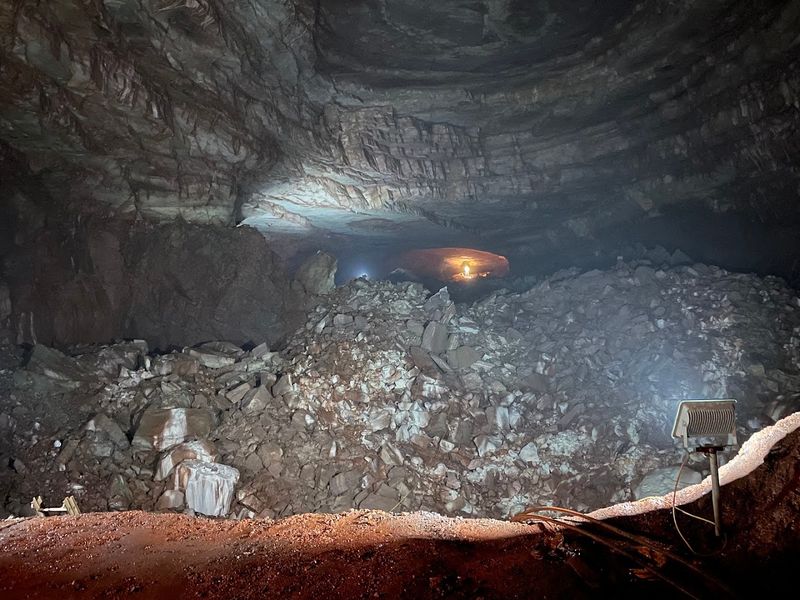
One of the smartest things about Iron Mountain Iron Mine is that the underground route does not peak too early. The train ride grabs your attention, the tunnels establish the mood, and then the mine reveals a space with enough scale to reset your sense of proportion.
After narrower passages and closer walls, the appearance of a much larger chamber lands with real force. It is the kind of moment that changes the pace of the tour without needing special effects.
Open underground spaces always carry a visual shock, and this one benefits from contrast. Your eyes adjust to tighter corridors, lower ceilings, and the practical geometry of mined rock.
Then the space expands. The ceiling curves overhead, the dimensions spread outward, and the mine stops reading as a tunnel system alone.
It becomes a vast carved interior where the human effort behind extraction suddenly looks much bigger.
That shift matters because scale is hard to communicate above ground. Numbers can sound impressive, but they rarely carry emotional weight until you can compare them to your own body in space.
Here, you can. The chamber gives the tour a centerpiece that is less about explanation and more about direct visual understanding.
Standing there, you do not need much persuasion to grasp how ambitious and demanding the work must have been.
It also adds variety to the route. Good tours avoid a flat rhythm, and this chamber breaks up the experience with a different kind of drama than the rail ride or historical narration.
It is broad instead of narrow, quiet instead of kinetic, and spacious enough to make the underground world feel newly strange again. That single reveal helps the mine avoid sameness and gives the visit a second memorable gear.
Why Families Keep Making This Upper Peninsula Stop
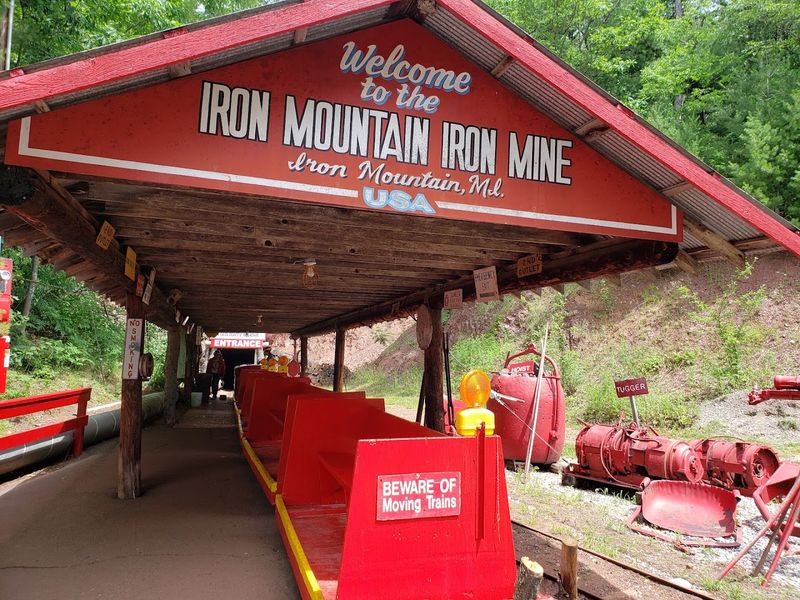
Some historic landmarks are best appreciated by adults who already arrived interested. Iron Mountain Iron Mine is different because the experience has built-in momentum.
You wear the gear, board the train, head underground, and walk through an actual mine. That sequence gives families something concrete to do together instead of asking kids to summon enthusiasm for static displays.
The site teaches through action, and that keeps the energy moving.
The tour’s pace helps. It is structured enough to feel organized, but short enough that attention does not drift into restlessness.
Children get unusual visuals, adults get regional history, and both groups share the same central novelty of descending into the mountain. That overlap is valuable.
Family attractions often split their audience into separate priorities. Here, the main event works across ages without feeling watered down.
There is also a nice range in how the property handles the above-ground parts of the visit. The gift shop gives everyone a place to browse before or after a tour, and it leans naturally into rocks, minerals, and specimens that connect back to the mine rather than feeling tacked on.
Outside, there are photo opportunities and even a spring noted for its crisp water, adding small traditions around the main attraction without distracting from it.
None of that means the mine is soft-edged. It is cold, damp, and a little rugged, which is exactly why it lands so well.
Younger visitors get an adventure that feels real, not staged. Adults get a stop that does more than fill an hour.
In the Upper Peninsula, where road trips often rely on scenery and distance, this place changes the rhythm by turning history into a shared physical experience your group can actually enter.
How to Time Your Visit in Vulcan, Michigan
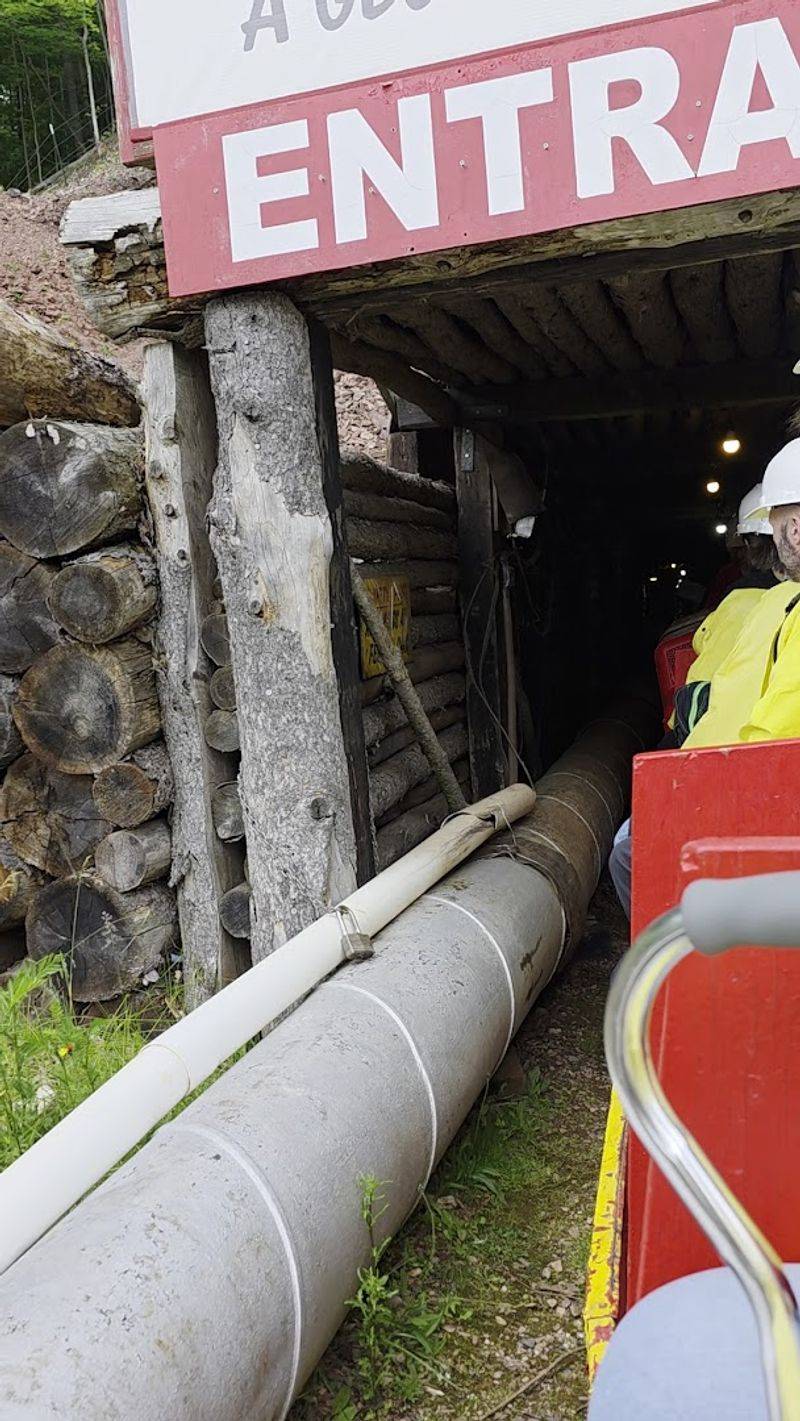
For a place with such a dramatic underground setting, Iron Mountain Iron Mine is refreshingly straightforward to plan. It operates daily from 9 AM to 5 PM, which makes it easy to slot into a broader Upper Peninsula driving day without heroic scheduling.
If you are already tracing US-2 or connecting nearby towns, this is the kind of stop that can anchor a morning or break up a long afternoon stretch on the road.
Timing matters most in relation to temperature and crowd flow. On warm days, the mine’s cold interior turns the visit into a built-in reset, so midday can actually work in your favor rather than against it.
At the same time, arriving a little earlier gives you more flexibility, especially if you want to browse the shop, take exterior photos, and settle in without feeling rushed toward the next tour departure. A little extra margin improves the whole tone of the stop.
Footwear and layers are the practical details most likely to shape your comfort. Expect damp ground and a distinctly chilly underground climate, even when the parking lot feels like peak summer.
A hoodie or light jacket makes sense, and shoes with decent traction are smarter than anything flimsy. Mobility can be a consideration too, since the experience includes walking in a real mine environment rather than a flat museum floor.
The larger planning takeaway is simple. This attraction rewards treating it like an active outing, not a quick overlook.
Give yourself enough time to handle the gear, absorb the train ride, and enjoy the underground route without clock-watching. In Vulcan, Michigan, that small adjustment pays off fast, because the mine is at its best when the day around it is not pushing you to hurry back above ground.
A Roadside Landmark That Actually Changes the Day
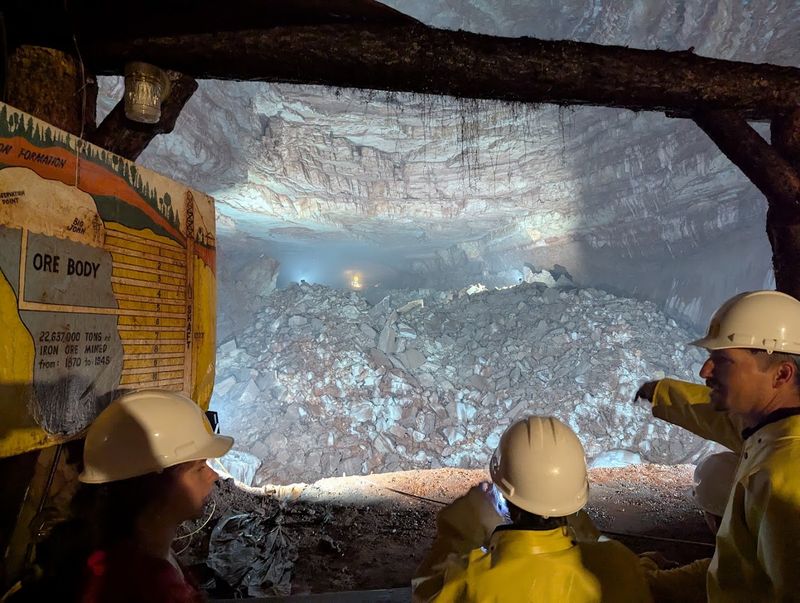
Roadside attractions usually fall into two categories. Some are quick photo stops with a novelty angle.
Others promise more than they deliver. Iron Mountain Iron Mine avoids both traps by offering a full sensory shift, a clear historical focus, and one unforgettable hook: you ride a train into a real mine and walk through the cold underground spaces where iron extraction once shaped the region.
That combination gives the place unusual staying power. The strongest detail is not any single artifact or signboard.
It is the sequence of contrasts. Warm air turns cold.
Daylight gives way to tunnel light. Open highway scenery narrows into rock walls and rail lines.
Then, after the tour, you step back outside and feel that temperature swing in reverse. The change is so immediate that the return to the surface becomes part of the attraction too.
Just as important, the site stays grounded. It does not need exaggerated branding, oversized gimmicks, or polished storytelling tricks to hold attention.
The mine itself provides the drama, and the tour structure lets that drama unfold in a practical, readable way. You learn enough to understand the significance of the place, but the experience never gets buried under excessive interpretation.
The balance stays tight, which is one reason the visit works for both curious passersby and people who plan for it.
If your Upper Peninsula itinerary needs one stop that is more than scenic and more than historical, this is a strong contender. It is tactile, cold, specific, and deeply tied to local industry in a way that roadside travel rarely captures so directly.
By the time you are back in the sunlight near the entrance, the day has a different texture than it did an hour earlier.