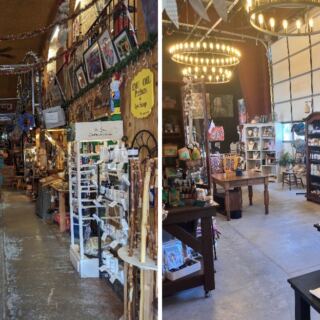
Ann Arbor has no shortage of smart attractions, but this one turns brainy energy into full-speed play. Inside the Ann Arbor Hands-On Museum, science is not sealed behind glass – it splashes, spins, lights up, and invites you to test everything yourself.
The building may look modest from the street, yet its four floors open into a dense, lively maze of experiments that can easily fill an afternoon. If you want a family stop that rewards curiosity instead of passive wandering, this is the one that keeps pulling you to the next corner.
A Brick Corner Hiding a Four-Story Burst of Motion

On a downtown Ann Arbor block lined with older buildings, the museum does not announce itself with theme-park flash. That understatement is part of the surprise.
You step inside expecting a pleasant children’s museum, then realize the place climbs upward through multiple levels packed with activity, noise, color, and moving parts.
The layout gives the building a vertical momentum that suits the subject matter. Instead of one giant hall, you get a stacked series of zones that invite exploration in bursts.
Stairs, elevators, overlooks, and open sightlines create the sense that something is always happening just above you or around the next corner.
That density matters. A lot of science museums can feel thin once the first excitement wears off, but here the concentration of exhibits keeps attention moving.
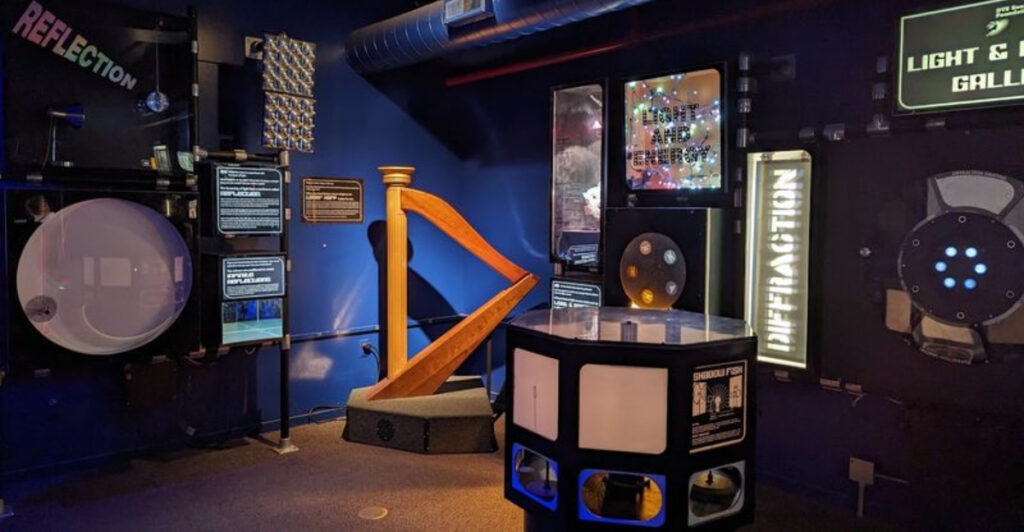
Water play, motion-based setups, light experiments, role-play spaces, and tactile stations are close enough together that younger kids never lose steam, while older ones can zigzag toward whatever grabs them next.
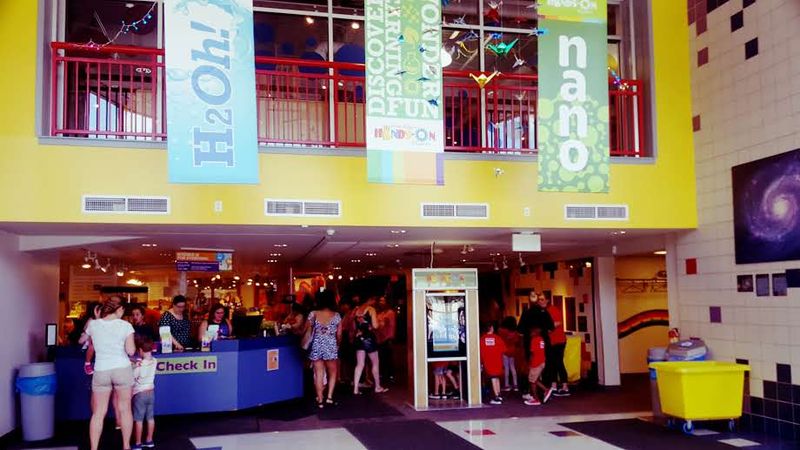
The entrance area also signals that this is built for actual family logistics, not just idealized museum browsing. Coats, strollers, restrooms, and a small shop sit near the front, which helps the day start without chaos.
In a destination focused on touching, testing, and repeat tries, that practical ease makes a bigger difference than flashy design ever could.
Before a single exhibit explains force, sound, or electricity, the building already teaches one lesson clearly: curiosity does not need a grand monument. Sometimes it lives inside a brick address on East Ann Street, where the surprise is not that children have fun, but how quickly adults start scanning every floor for their own next experiment.
Where Water, Sound, and Air Turn Science Into Action
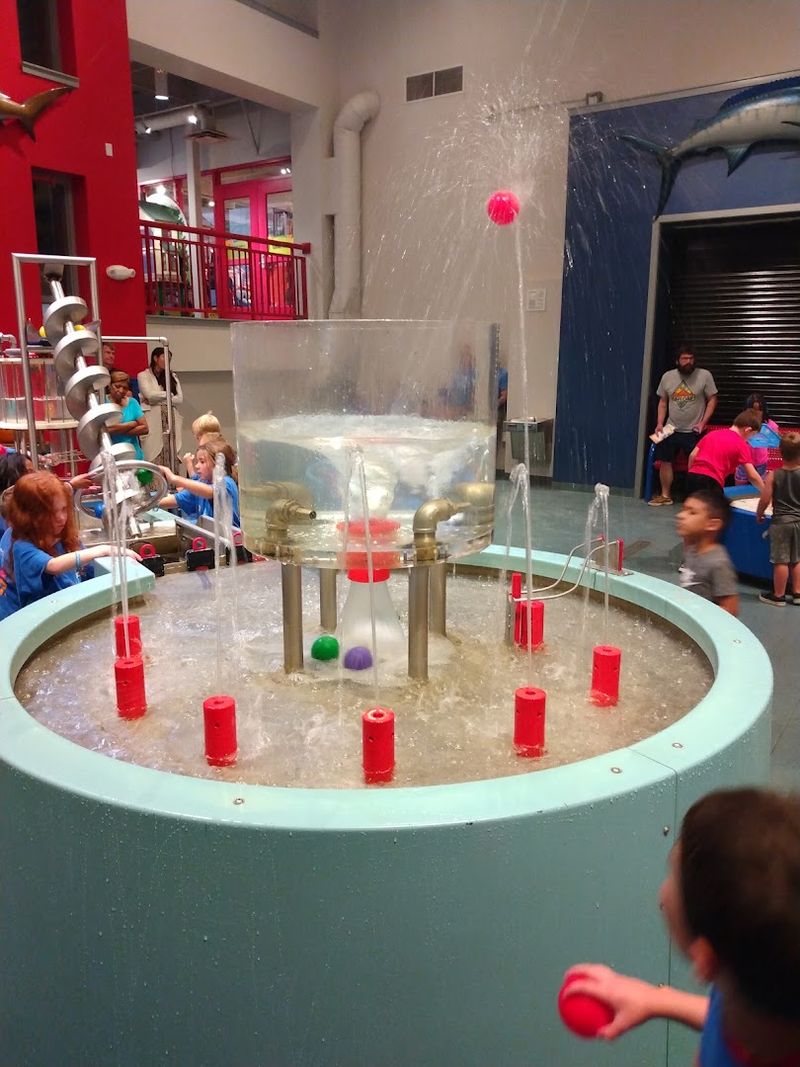
The museum’s strongest trick is simple: it makes abstract ideas behave like toys without reducing them to background decoration. A child can splash, pump, launch, press, climb, and listen, then absorb the basic logic afterward.
That order matters because engagement comes first, and explanation arrives while attention is still fully alive.
Water areas are a major example. They are not passive look-and-see installations, but stations where flow, force, direction, and cause-and-effect become obvious through play.
That can also mean wet sleeves, damp cuffs, and the occasional soaked shirt, so the fun is tactile in the most literal way possible.
Elsewhere, sound and movement steal focus. The musical steps have become one of those details that kids want to repeat immediately, not because anyone tells them to, but because the body understands the payoff before the brain labels it.
Running up, stepping down, and testing how each movement triggers a response turns the staircase into part exhibit, part percussion instrument.
Air-based and motion-focused stations add another layer. These are the exhibits that pull kids into trial-and-error mode, where they keep adjusting one variable to see what changes.
That behavior is the real educational engine here, more than any wall text, because it rewards persistence instead of one perfect answer.
What you notice after a while is how rarely this place asks children to stand still. The museum trusts motion as a pathway to understanding.
For families who know that sitting quietly is not the natural state of a curious six-year-old, that design choice is not a side benefit. It is the whole reason the building works for hours at a time.
Smart Design for Toddlers, Big Kids, and the Adults Following Behind
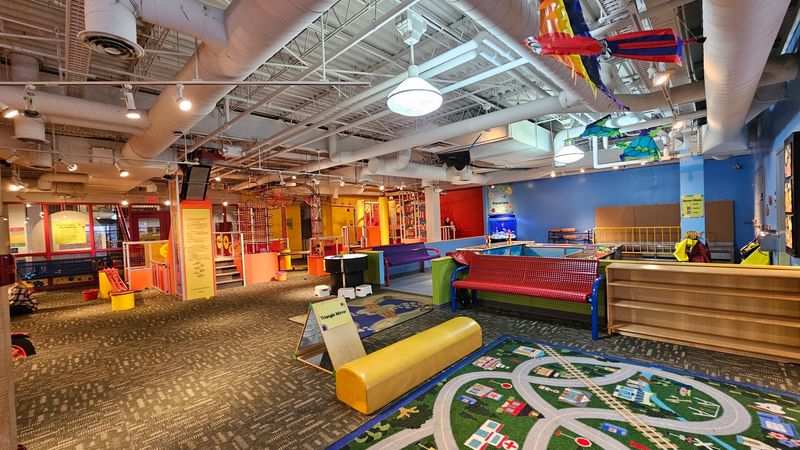
One reason this museum outperforms many larger attractions is that it understands family groups are rarely moving at the same speed. A toddler wants sensory play and safe repetition.
An older child wants challenge, surprise, and enough independence to feel slightly in charge. Adults want a day that does not turn into constant negotiation after ten minutes.
The museum answers that by spreading experiences across floors and by offering dedicated spaces for younger children. Families with very little kids can settle into age-appropriate zones without being forced into the middle of every fast-moving crowd.
At the same time, older siblings are not trapped in baby-focused environments for the entire visit.
That separation does not create rigid silos. It creates breathing room.
You can shift from quieter, enclosed play toward more kinetic exhibit clusters as energy changes, then circle back when attention starts to fade. In practice, that flexibility keeps mixed-age visits from feeling like a compromise where one group is always waiting on the other.
Adults benefit more than the museum’s playful image might suggest. Elevators make the four floors workable with strollers and mobility needs, sightlines are generally manageable, and the building is organized enough that you can keep your bearings while still letting kids explore.
That combination makes supervision easier without draining all spontaneity from the day.
The result is not a museum aimed narrowly at one developmental stage. It is a place that recognizes how families actually travel through space: stopping suddenly, doubling back, splitting attention, and changing plans floor by floor.
In that sense, the smartest engineering here may not be any single exhibit. It is the way the whole building accommodates different ages without flattening the experience for any of them.
A Michigan Museum That Respects Noise, Mess, and Real Curiosity
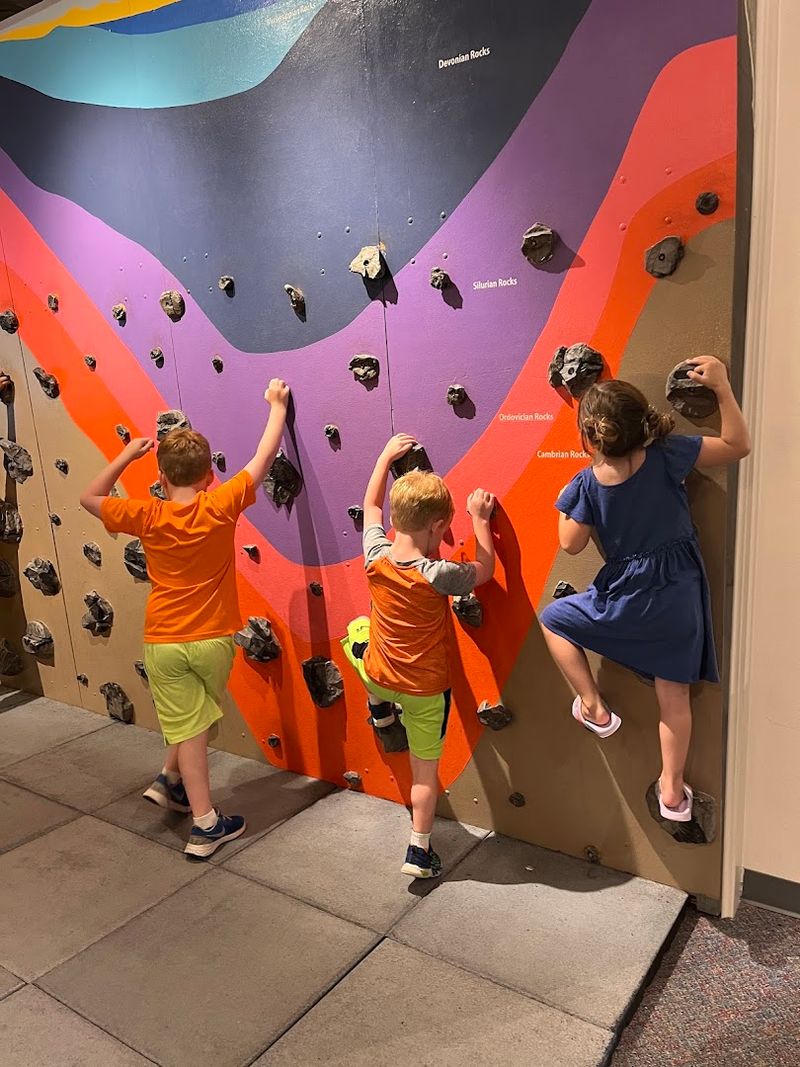
Some museums tolerate children. This one is built around the assumption that kids learn by testing boundaries, repeating actions, making noise, and occasionally getting messy.
That attitude changes the entire experience. Instead of guarding every display with a low-level warning vibe, the building invites contact and expects motion as part of the educational process.
You can see that philosophy in the exhibits that encourage full-body participation. A room designed for louder sound does not treat volume like a problem to be controlled.
Water play stations do not pretend families will remain perfectly dry. Role-play and mechanical activities ask children to manipulate the setup directly, rather than admire a finished result from a polite distance.
That freedom is especially refreshing in a college town where intellectual identity runs deep. Ann Arbor has plenty of places associated with research, scholarship, and formal learning, but this museum taps a different form of intelligence.
It gives you a version of STEM that starts with sensory evidence, not textbook vocabulary, and that makes the subject more accessible without making it smaller.
There is also an unusual generosity in the pacing. Kids are not rushed toward one headline attraction and then pushed into a gift-shop ending.
They are allowed to linger, repeat, compare outcomes, and return to favorites. Repetition is not treated as a failure to move on.
It is recognized as how experimentation often works when someone is genuinely interested.
That makes the museum especially strong on cold-weather days, snow days, and any afternoon when outdoor plans collapse. You still get movement, unpredictability, and the pleasant noise of discovery, but inside a structured environment that can absorb all of it.
For a family outing in Michigan, that combination of indoor energy and hands-on learning is hard to top.
Timing Changes Everything More Than You Might Expect
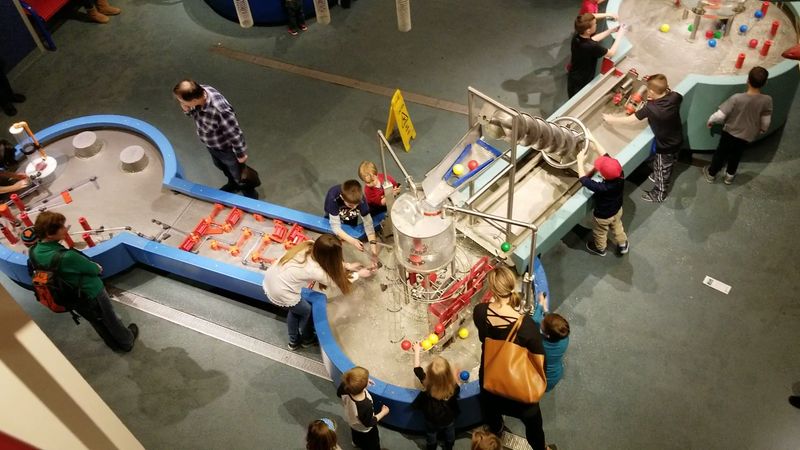
This is the kind of place where timing can shape the entire visit. Because the museum is popular with families, school groups, and local regulars, the same exhibit can feel wildly different depending on when you arrive.
A water station that invites focused experimenting in a quieter hour can become a fast, splashy traffic circle when every child in the building finds it at once.
Weekdays often bring field trips, which means mid-morning can be lively in a very specific way. You may find clusters of students moving through together, especially on school-year days.
If you are visiting with toddlers or younger children who need more space and slower pacing, later weekday afternoons can be a smoother window.
Weekends have their own rhythm. They are convenient, obviously, but also more likely to feel compressed near the most popular stations.
That does not make them a bad choice. It simply means you should expect a busier social environment and plan around the exhibits where waiting, turn-taking, and open floor space matter most.
Starting early has advantages if your group likes fresh energy and first crack at favorite zones. Arriving later can work well if you want a less frantic entrance and are comfortable spending a focused few hours instead of trying to conquer every floor.
Since the museum is open from 10 AM to 5 PM most operating days and closed Mondays, there is a clear framework for planning.
The practical advice is straightforward: do not treat this like a quick stop squeezed between heavier plans. Give it breathing room.
A museum built on repeat interaction does not reveal itself best in a rushed ninety-minute pass. The families who navigate it well are usually the ones who arrive with a time strategy instead of hoping the crowd pattern will sort itself out.
How to Navigate the Day Without Burning Out by Floor Two
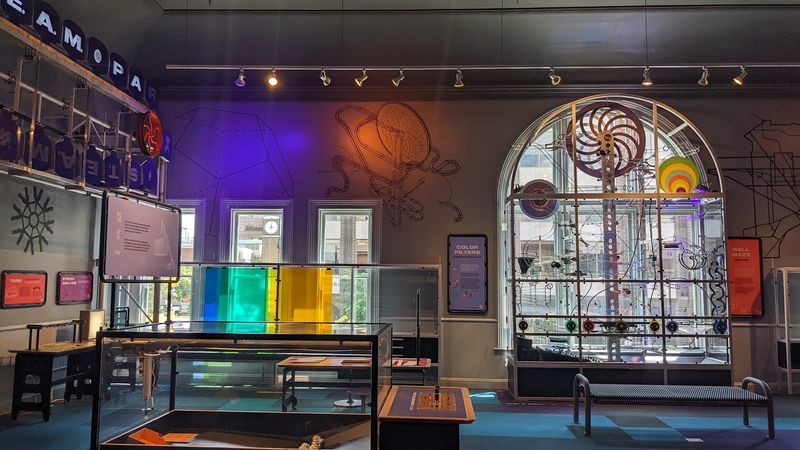
The museum rewards a little strategy. Because there is so much packed into the building, the instinct to race upward and see everything fast can backfire.
Children often lock onto one floor longer than expected, then suddenly hit a wall. A better approach is to treat the visit as a loop of bursts: active play, reset, another floor, then a return to the strongest favorite.
Start by using the front-end conveniences instead of skipping past them. Stroller parking, coat areas, restrooms, and the general orientation near the entrance can save frustration later, especially in colder months when everyone arrives layered up.
If the day includes water play, having spare clothes or at least a backup shirt is not overplanning. It is realism.
The building also works best when you avoid trying to force a strict educational sequence. Let the exhibits create the route.
If a child gets absorbed by motion, water, sound, or pretend-play setups, stay there long enough for the curiosity cycle to play out. The museum is designed for repeat attempts, and rushing away too quickly can undercut the most valuable part.
There is a small eating area and limited vending, which matters if you are planning a longer stay. This is not a full lunch destination inside the museum, so it helps to think ahead.
Downtown Ann Arbor gives you nearby food options afterward, but during the visit itself, a simple snack plan keeps momentum from collapsing at exactly the wrong moment.
Comfort counts more than style here. Supportive shoes, sleeves you do not mind pushing up, and a willingness to move between floors will serve you better than any ideal itinerary.
This is not a museum for hovering elegantly at a distance. It is one for crouching beside a station, waiting for the next turn, and discovering that two hours disappeared faster than expected.
Why This Ann Arbor Favorite Holds Attention Long After the Novelty Should Fade
Plenty of family attractions win the first fifteen minutes. Bright colors, moving parts, and a loud room can generate instant excitement.
The harder test is whether attention holds once the novelty wears off. At the Ann Arbor Hands-On Museum, it usually does, because the exhibits are built around participation rather than spectacle alone.
That difference is subtle but important. A child is not only pressing a button to trigger a prepackaged effect.
More often, there is a variable to test, a repeated action to refine, or a physical system to manipulate. The payoff is not just surprise.
It is the satisfying sense that your own choices changed the outcome in some visible way.
Adults tend to appreciate that depth too. Even when the museum is clearly kid-centered, it avoids talking down to the audience through overly sugary presentation.
The building is colorful, yes, but it also respects curiosity as a real intellectual impulse. That is why grandparents, parents, and older siblings rarely remain pure observers for long.
Its location helps complete the appeal. Set right in downtown Ann Arbor, the museum fits naturally into a wider city day without losing its own identity.
You can pair it with lunch, a walk, or another stop nearby, but the museum never reads like filler between bigger plans. It is strong enough to be the main event.
In the end, the standout quality is not simply that children have fun here. Many places can deliver a burst of entertainment.
This museum turns energy into inquiry and inquiry into play, all within a compact urban building that keeps revealing new corners. If you are looking for one Ann Arbor destination where curiosity gets room to run, climb, splash, and repeat itself, this address earns the hours you give it.
Share this story