Texas doesn’t just do things differently—it does them bigger, bolder, and with way more personality than anywhere else. From canyons that rival the Grand Canyon to roadside art that’s become world-famous, the Lone Star State has a knack for turning ordinary landscapes into extraordinary experiences. Whether you’re chasing waterfalls in Hill Country, exploring desert wilderness, or standing where history was made, these nine destinations showcase exactly why Texas stands apart from every other state in the country.
1. Big Bend National Park (Far West Texas)
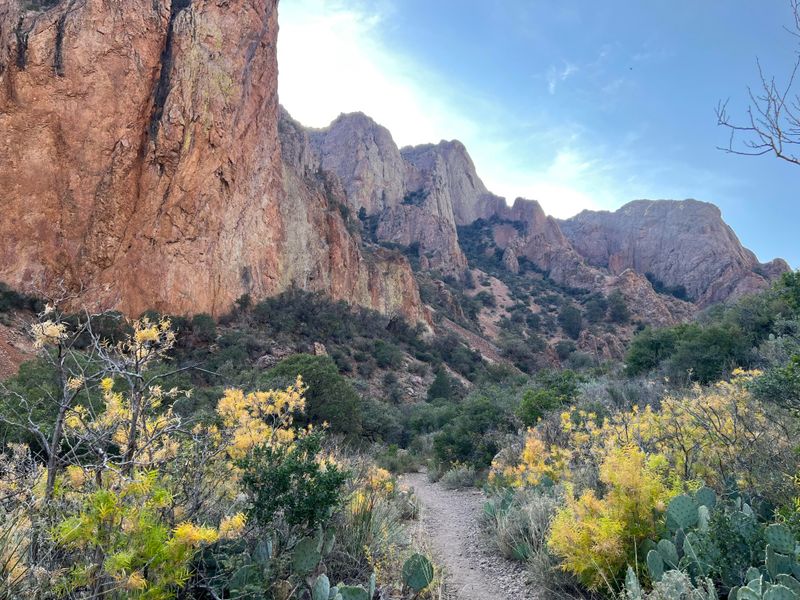
Way out where Texas meets Mexico, the land transforms into something that feels like another planet entirely. Mountains rise sharply from the desert floor, the Rio Grande carves through limestone canyons, and the night sky explodes with more stars than you ever imagined existed. This is the kind of place where cell service disappears and your sense of wonder takes over completely.
The park covers more than 800,000 acres of Chihuahuan Desert, making it larger than the entire state of Rhode Island. You can hike down into Santa Elena Canyon where sheer rock walls tower 1,500 feet overhead, soak in natural hot springs along the river, or climb up to the Chisos Mountains where temperatures drop and vegetation changes dramatically. Wildlife here includes roadrunners, javelinas, and over 450 bird species that make this a paradise for birdwatchers.
Getting here requires commitment since it’s genuinely remote—about three hours from the nearest major city. But that isolation is exactly what makes Big Bend magical. You won’t find crowds or commercialization, just raw nature doing its thing on a massive scale.
Spring and fall bring perfect weather for hiking and camping, while summer heat can be intense in the lower elevations. Winter nights get surprisingly cold, especially in the mountains, so pack layers no matter when you visit. The park offers everything from easy nature walks to challenging backcountry trails that can take days to complete.
Sunrise and sunset paint the desert in colors that cameras never quite capture accurately. The silence here feels almost physical, broken only by wind through the canyons or the occasional call of a coyote. This isn’t just a park—it’s a complete reset for anyone who ventures this far west.
2. Palo Duro Canyon State Park (Canyon)
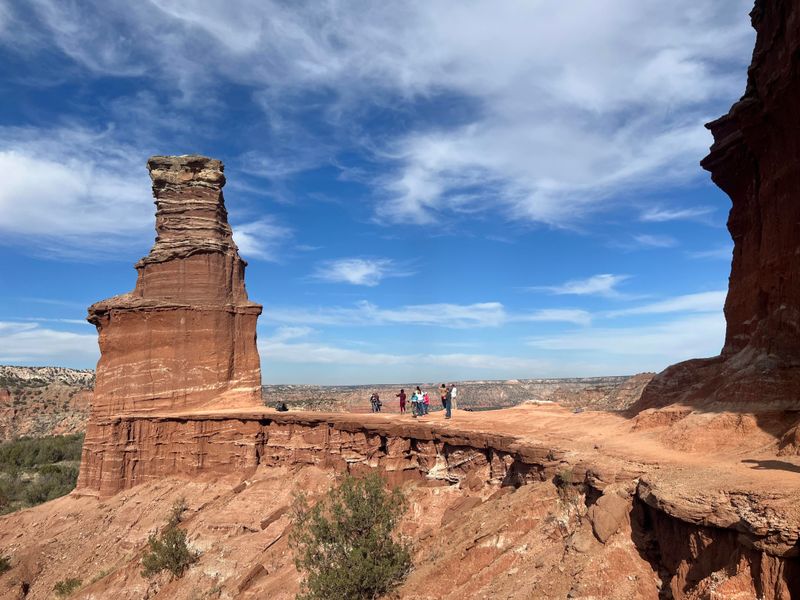
Most people think Texas is flat until they stumble upon this geological masterpiece hiding in the Panhandle. Stretching 120 miles long and plunging 800 feet deep, Palo Duro Canyon earns its nickname as the “Grand Canyon of Texas” honestly. The multicolored rock layers tell stories spanning millions of years, painted in shades of red, orange, yellow, and purple that shift with the changing light.
Spanish explorers named it “Palo Duro,” meaning “hard wood,” after the juniper trees growing along the canyon floor. These days, you can drive a scenic road that winds down into the canyon, offering pullouts where the views stop you in your tracks. The iconic Lighthouse rock formation stands as the park’s most photographed feature—a 310-foot tower of rock that looks exactly like its name suggests.
Hiking trails range from easy walks to challenging climbs that reward you with panoramic views. The Lighthouse Trail covers six miles round-trip and climbs about 500 feet, making it doable for most people with decent fitness. Mountain biking is huge here too, with miles of trails that let you explore the canyon floor at speed.
Summer brings an outdoor musical drama called “TEXAS” performed in a natural amphitheater carved into the canyon walls. The show runs Tuesday through Sunday nights from early June through mid-August, combining history, music, and spectacular staging under the stars. Temperatures during summer days can hit triple digits, so early morning or evening activities make the most sense.
Camping inside the canyon puts you right in the heart of the action, with sites offering everything from basic tent spots to cabins with air conditioning. Wildlife sightings include roadrunners darting across paths, wild turkeys, and the official Texas State Bison herd that roams the park grounds.
3. Hamilton Pool Preserve (Dripping Springs)
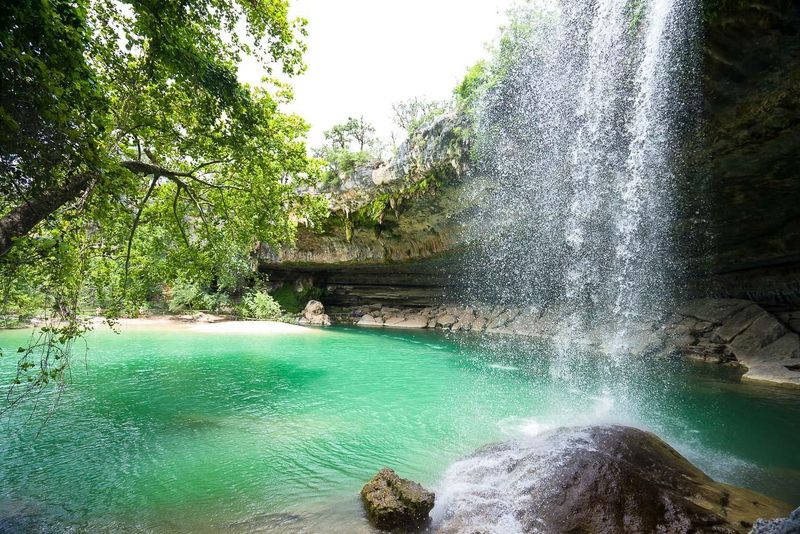
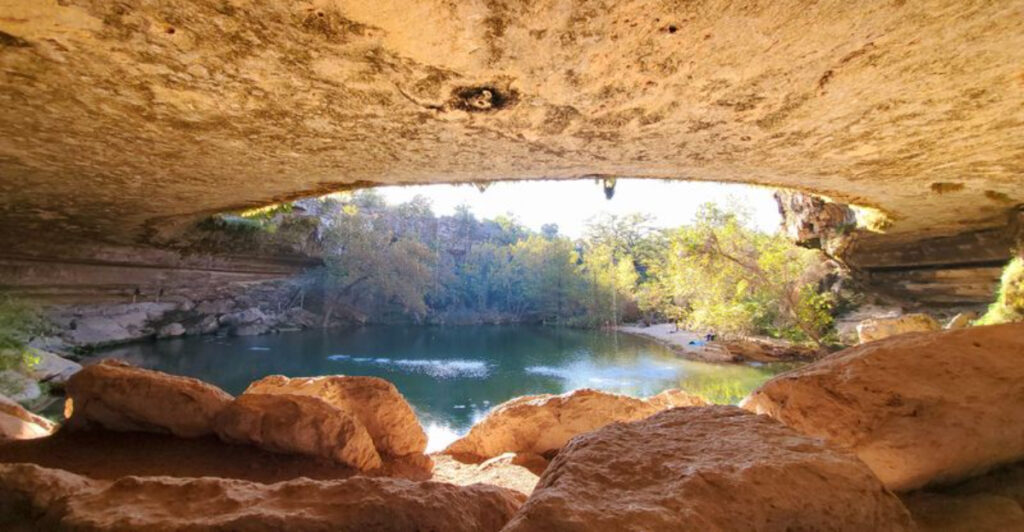
A collapsed grotto ceiling thousands of years ago created what might be the most Instagram-worthy swimming hole in all of Texas. Water spills over a limestone overhang into a jade-green pool below, while ferns and moss cling to the cave-like ceiling above. The whole scene looks almost too perfect to be real, like something a theme park designer dreamed up—except nature did all the work here.
Located about 23 miles west of Austin in the Hill Country, this natural pool sits on a 232-acre nature preserve managed by Travis County. A 260-foot trail leads down to the pool, though it involves some stairs and uneven terrain that might challenge visitors with mobility issues. The waterfall doesn’t always flow—it depends on recent rainfall—but even when it’s just a trickle, the pool itself remains stunning.
Swimming is allowed when water quality tests come back clean, which happens most of the time during summer months. The water stays cool year-round, fed by underground springs that maintain temperatures in the 50s and 60s even during scorching Texas summers. That first plunge takes your breath away, but your body adjusts quickly and the refreshment feels absolutely incredible.
Reservations are required and must be made online in advance because the preserve limits daily visitors to protect this fragile ecosystem. Weekends book up fast, sometimes weeks ahead, so plan accordingly. The preserve also closes periodically when water quality issues arise or during extreme weather events.
Bring water shoes because the pool bottom is rocky and can be slippery. No glass containers, pets, or alcohol are allowed, and lifeguards aren’t on duty, so swimming is at your own risk. The preserve opens at 9 AM daily, with closing times varying by season.
Photography is spectacular here, with the best light filtering through the grotto opening during midday hours.
4. Cadillac Ranch (Amarillo)
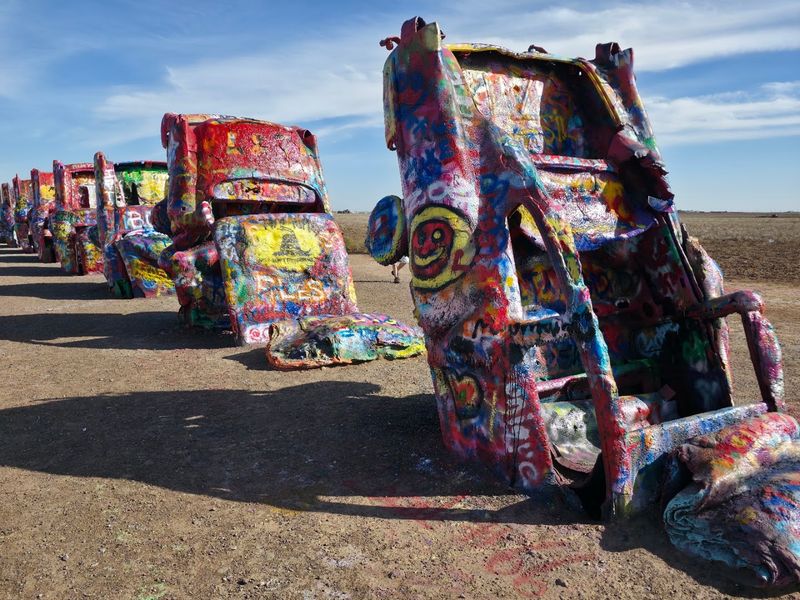
Ten Cadillacs buried nose-first in a wheat field at the exact same angle as the Great Pyramid of Giza—because why not? This roadside art installation has been confusing and delighting travelers along Interstate 40 since 1974, when a group of San Francisco artists known as the Ant Farm planted these tail-finned beauties in the dirt. What started as a statement about American car culture has evolved into something entirely different: a constantly changing canvas where visitors become artists.
The cars span the golden age of Cadillac design from 1949 to 1963, representing the rise and fall of the tail fin. Originally they sported their factory paint jobs, but over the decades, layers upon layers of spray paint have transformed them into psychedelic monuments. Every surface is fair game, and the installation’s owners actively encourage visitors to bring spray paint and add their own mark.
Located about ten miles west of downtown Amarillo right off the frontage road, Cadillac Ranch is free to visit and open 24/7. There’s no fence, no admission booth, no rules beyond common sense. You just park in the dirt lot and walk across the field to the cars.
Some people spend five minutes snapping photos, while others bring multiple cans of paint and spend hours creating elaborate designs.
The cars have been moved once—in 1997 they were relocated two miles from their original spot to escape encroaching development. They’ve also been completely repainted a few times for special occasions, like when they went all black for a documentary filming. Within days, visitors cover them with new graffiti, and the cycle continues.
Bring your own spray paint because there’s nowhere to buy it on-site. Hardware stores in Amarillo sell it, and many visitors stock up before heading out. Wear clothes you don’t mind getting paint on, and watch for traffic when crossing from the parking area.
The best photos happen during golden hour when the setting sun lights up the graffiti-covered metal.
5. The Alamo (San Antonio)
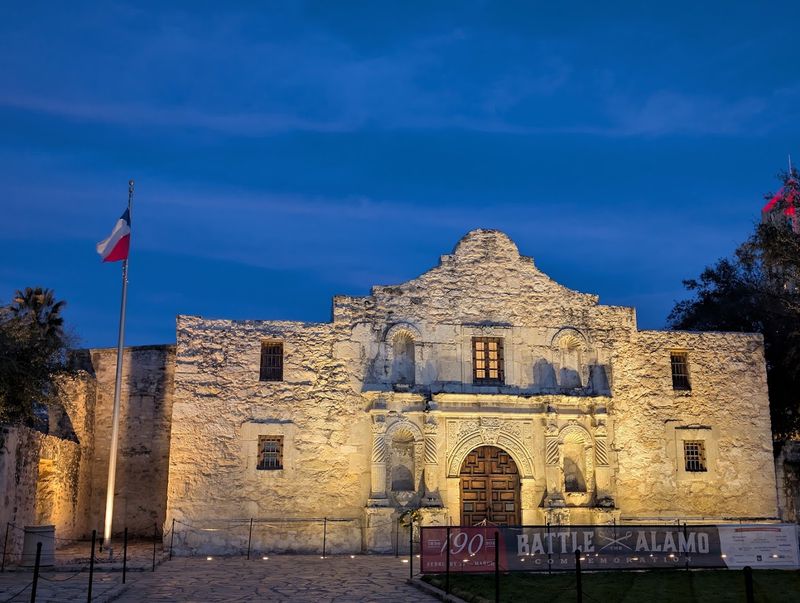
Remember the Alamo? This small Spanish mission turned fortress sits in the heart of downtown San Antonio as a reminder of one of the most famous last stands in American history. In 1836, roughly 200 Texian and Tejano defenders held out for 13 days against thousands of Mexican troops led by General Santa Anna.
Everyone inside died, but their sacrifice became the rallying cry that eventually won Texas its independence.
The actual battle site is much smaller than most people expect—the entire compound covers just 4.2 acres in what’s now a bustling urban setting. The iconic church facade that everyone recognizes from photos and movies represents just one building in what was originally a much larger mission complex. Walking through the thick limestone walls, you can almost feel the weight of history pressing down.
Inside the church, displays showcase artifacts from the battle including weapons, documents, and personal items belonging to famous defenders like Davy Crockett, William Travis, and Jim Bowie. The Long Barrack Museum tells the broader story of the site, from its founding as Mission San Antonio de Valero in 1718 through its role in Texas independence. Rangers and volunteers answer questions and share stories that bring the history to life.
Admission is free, though donations are encouraged to support preservation efforts. The Alamo opens daily except for a few major holidays, with extended hours during peak tourist season. Photography is allowed in outdoor areas but restricted inside the church out of respect for what’s considered hallowed ground.
The surrounding area has been heavily commercialized with souvenir shops and tourist attractions, which some visitors find jarring. Plans are underway to restore more of the original mission grounds and create a more historically accurate experience. Despite the modern intrusions, standing where those defenders made their final stand still carries emotional power that transcends the gift shop kitsch nearby.
6. Caddo Lake State Park (Karnack)
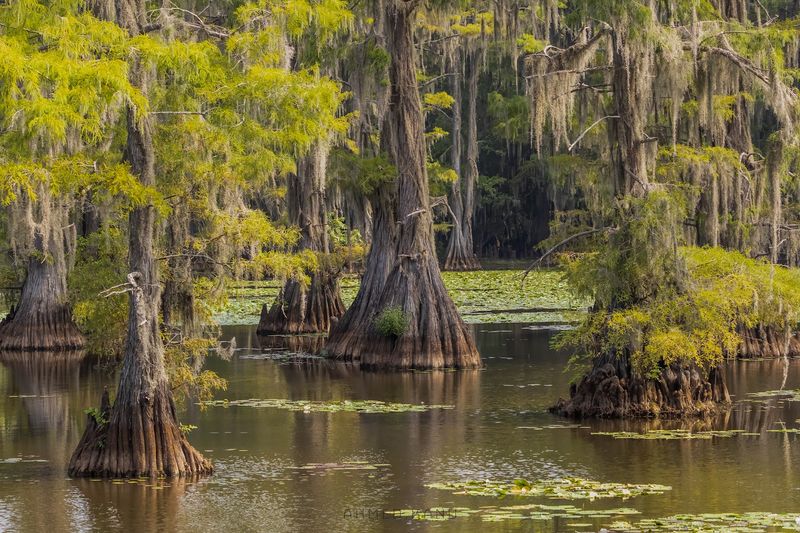
Spanish moss drapes from ancient bald cypress trees rising out of dark, tannic water that reflects the sky like black glass. Caddo Lake feels more like Louisiana bayou country than Texas, which makes sense since it sits right on the border between the two states. This is the only natural lake in Texas—every other significant lake in the state was created by damming rivers—and it sprawls across 25,400 acres of channels, sloughs, and open water.
The lake’s signature feature is its cypress forest, where trees that can live over 400 years create a maze of waterways perfect for exploration by kayak or canoe. Paddling through the flooded forest feels like entering another world, especially when morning mist hangs low over the water and herons lift silently from hidden spots. You can easily get turned around in the maze of channels, so bringing a GPS or hiring a guide makes sense for first-timers.
Wildlife thrives here in numbers that surprise most visitors. Alligators sun themselves on logs, though they’re generally not aggressive toward humans. Over 200 bird species have been recorded in the area, making it a top destination for birdwatchers.
Fish include largemouth bass, catfish, and crappie, drawing anglers year-round despite the challenging navigation through stumps and vegetation.
The state park on the Texas side offers cabins, campsites, and boat rentals for those who don’t bring their own watercraft. Interpretive programs teach about the lake’s unique ecosystem and the rare plants that grow nowhere else. The park’s pier and boardwalks provide access for those who prefer staying on solid ground while still experiencing the lake’s mysterious beauty.
Legend has it that Caddo Lake formed when a massive logjam on the Red River caused water to back up and flood the area. Native American stories tell of an earthquake that created the lake overnight. The truth is probably less dramatic but the mystical atmosphere makes any origin story feel believable in this haunting landscape.
7. Enchanted Rock State Natural Area (Fredericksburg)
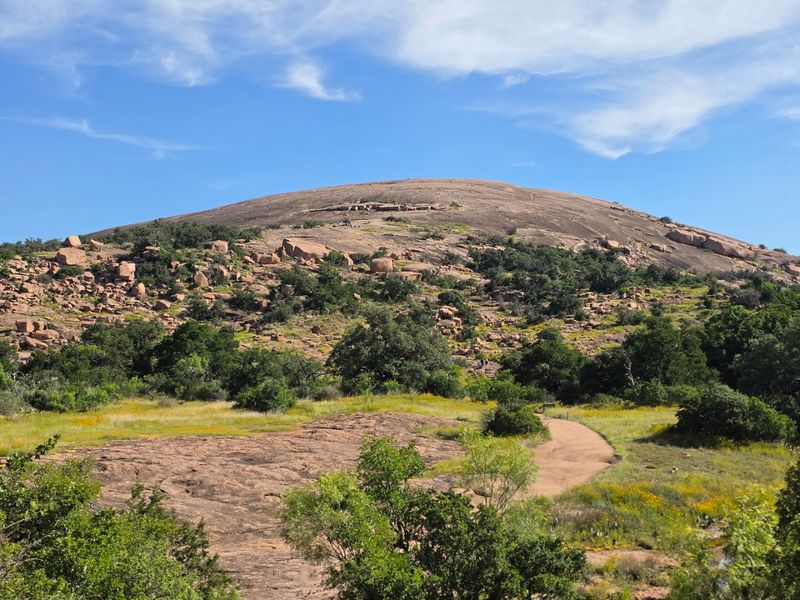
A giant pink granite dome rises 425 feet above the surrounding Hill Country, its smooth surface gleaming in the sun like something from another planet. Enchanted Rock is actually a batholith—a huge underground rock formation that erosion has slowly exposed over millions of years. The dome you see is just the tip; the rock extends several miles underground, making it one of the largest batholiths in the United States.
Climbing to the summit takes most people 30 to 45 minutes via the Summit Trail, which is steep but well-maintained. The granite surface can be slippery, especially after rain or in the early morning when dew makes everything slick. Once you reach the top, 360-degree views stretch for miles across the Hill Country, with the town of Fredericksburg visible to the south.
On clear days, you can see for over 30 miles in every direction.
The rock makes creaking and groaning sounds at night as it cools and contracts, which explains why Tonkawa Indians believed the rock was haunted by spirits. Spanish explorers and early settlers also reported hearing mysterious noises, adding to the location’s mystical reputation. Modern geologists explain it as thermal expansion and contraction, but the sounds are still eerie when you’re camping nearby after dark.
Rock climbing is popular on the surrounding smaller domes, with routes ranging from beginner-friendly to seriously challenging. Camping is available but requires reservations, which often book up weeks in advance for weekends. The park limits daily visitors to protect the fragile ecosystem, so arriving early is crucial—they close the gates when parking lots fill up, which can happen by mid-morning on weekends.
Spring wildflowers paint the surrounding landscape in brilliant colors, while fall brings cooler temperatures perfect for hiking. Summer heat makes the granite surface hot enough to burn skin, so early morning visits work best during June through August. Bring plenty of water regardless of season because there’s no shade on the rock and dehydration happens fast in the Texas sun.
8. South Padre Island (South Padre Island)
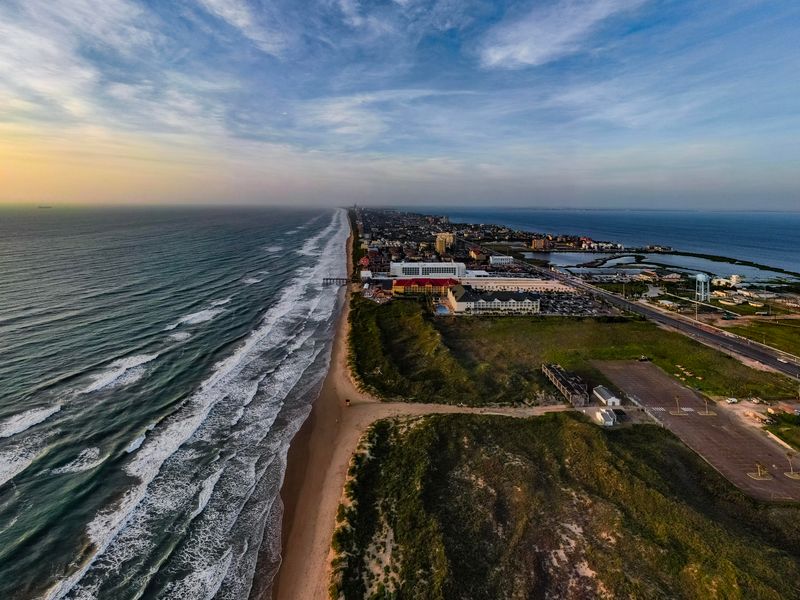
At the southern tip of Texas, a 34-mile barrier island stretches along the Gulf Coast with some of the most beautiful beaches in the state. South Padre Island manages to be both a spring break party destination and a peaceful nature retreat, depending on which part of the island you visit and when you show up. The northernmost sections stay relatively quiet and family-friendly year-round, while the southern end near the convention center transforms into chaos during March.
The water here glows with shades of turquoise and emerald that look photoshopped but are completely real. Warm Gulf currents keep swimming comfortable from April through October, while winter months bring cooler temperatures that are still pleasant compared to most of the country. The gentle slope of the beach means you can walk out quite far before water reaches chest height, making it ideal for families with young kids.
Beyond the beach, the island offers world-class fishing, dolphin watching tours, and sea turtle rescue centers where injured turtles recover before release. The South Padre Island Birding and Nature Center features boardwalks through wetlands where over 300 bird species have been recorded. Kiteboarding and windsurfing are huge here thanks to consistent winds and shallow Laguna Madre bay waters on the island’s west side.
High-rise hotels and condos cluster near the southern end, while the northern sections remain more natural and less developed. Restaurants serve fresh Gulf seafood, with shrimp boats visible from shore bringing in daily catches. The vibe shifts from college party scene to laid-back beach town within just a few miles, giving visitors plenty of options.
Getting here requires driving over the Queen Isabella Causeway, a 2.4-mile bridge that offers spectacular views as you approach the island. The nearest major airport is in Brownsville, about 30 miles away, though many visitors drive down from San Antonio or Houston for long weekends. Hurricane season runs June through November, so checking weather forecasts before booking summer trips makes sense.
9. Guadalupe Mountains National Park (near Dell City)
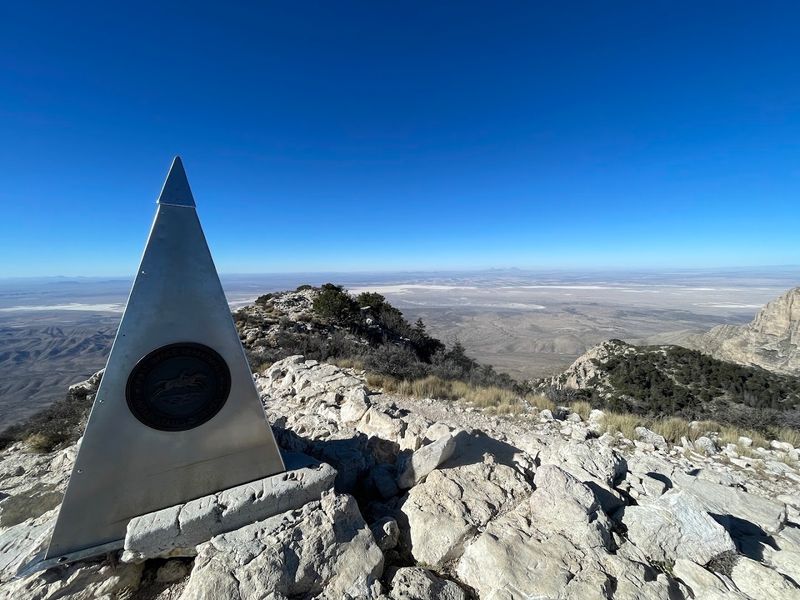
Texas’s highest peak rises 8,749 feet above sea level in a national park that most Texans have never visited. Guadalupe Peak towers over the surrounding Chihuahuan Desert, part of an ancient fossilized reef that formed 265 million years ago when this area sat at the bottom of a tropical ocean. The limestone cliffs contain fossils from that ancient sea, making this one of the best-preserved fossil reefs on Earth.
Hiking to the summit of Guadalupe Peak is a Texas rite of passage for serious hikers, though the 8.4-mile round-trip trail isn’t for beginners. The elevation gain tops 3,000 feet, and the rocky trail can be brutal in summer heat or winter ice. Those who make it to the top find a metal pyramid monument and a trail register where you can record your accomplishment.
Views from the summit stretch across three states on clear days.
The park protects over 86,000 acres of wilderness with ecosystems ranging from desert lowlands to high-altitude forests. McKittrick Canyon is famous for fall foliage—rare in Texas—when bigtooth maples turn brilliant red and gold in late October and early November. The canyon also features a year-round stream, a rarity in this arid region, creating a ribbon of green life through the desert.
Wildlife includes mule deer, elk, mountain lions, and over 300 bird species. The park’s remoteness keeps crowds relatively small even during peak seasons, offering solitude that’s increasingly hard to find in more famous national parks. No lodging or food services exist within park boundaries, so visitors must come prepared with supplies from El Paso, about 110 miles northeast.
Backcountry camping requires permits but allows you to experience the desert’s incredible night sky far from light pollution. Spring and fall offer the most comfortable temperatures for hiking, while summer heat can be dangerous and winter brings ice and snow to higher elevations. This is raw, challenging wilderness that rewards prepared visitors with unforgettable experiences.
Share this story