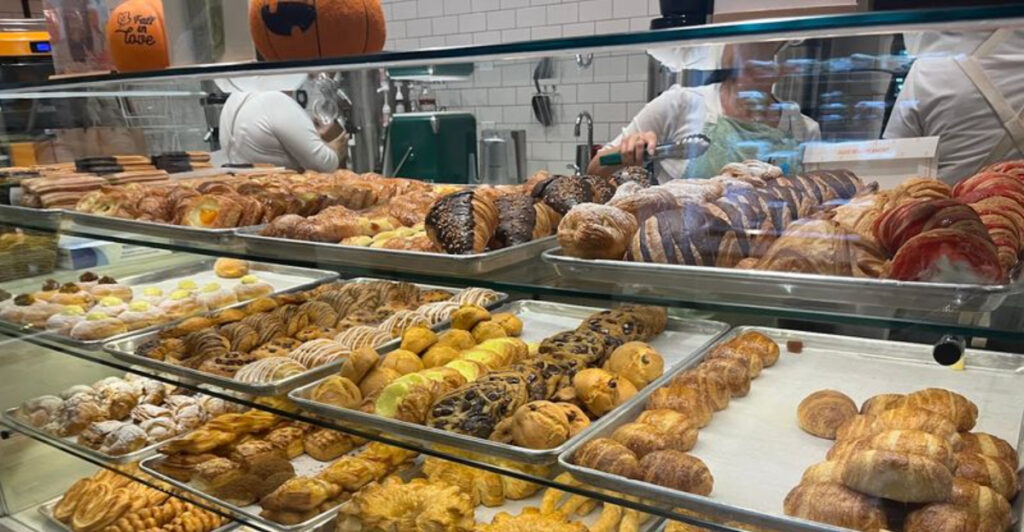
The first challenge at Dulce De Leche Bakery is making it past the display case without changing your order three times. Golden empanadas suggest lunch, tall cake slices argue for dessert, and neat rows of pastries make a strong case for taking a box home.
At 6510 Bergenline Avenue in West New York, this family-founded bakery operates with the range of a neighborhood café and the precision of a serious cake shop.
You can stop in early for coffee and a croissant, return for a breaded milanesa sandwich, then somehow justify a slice of dulce de leche cake before the day is over.
That sweet-and-savory flexibility has helped the business grow from one Argentine family’s idea in 2007 into a Northern New Jersey favorite with additional locations in Jersey City and Englewood. Nearly two decades later, the Bergenline Avenue shop still feels grounded in the everyday bakery traditions that inspired it.
An Argentine Family Brought the Flavors of Home to North Jersey in 2007
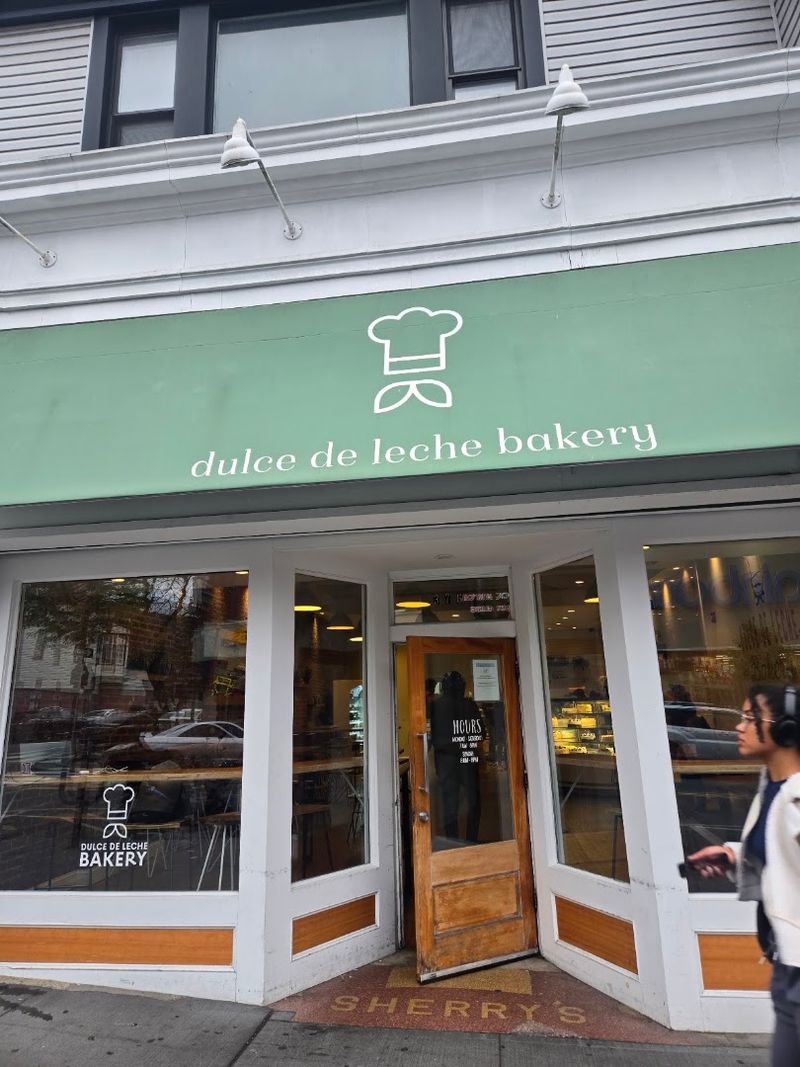
Back in 2007, an Argentine family living in New Jersey found itself missing something that could not be replaced by an ordinary supermarket bakery. In Argentina, the neighborhood panadería is woven into the rhythm of daily life.
It is where bread is picked up in the morning, pastries are brought to family gatherings, and neighbors pause over coffee instead of treating baked goods as an occasional splurge. Dulce De Leche Bakery grew from the desire to recreate that kind of place in Northern New Jersey.
The family did not limit the idea to cakes or desserts. Instead, it built a modern bakery-café where customers could find Argentine pastries, empanadas, sandwiches, coffee, breakfast, lunch, and celebration cakes under one roof.
The original West New York location sits at 6510 Bergenline Avenue, surrounded by the dense mix of restaurants, markets, bakeries, and small businesses that makes North Hudson one of New Jersey’s most interesting food corridors.
Its success eventually led to additional shops at 376 Central Avenue in Jersey City and 55 West Palisade Avenue in Englewood, but the Bergenline Avenue bakery remains closely tied to the community that first embraced it.
Its schedule reflects that neighborhood role. The West New York shop opens at 6 a.m.
Monday through Saturday and stays open until 8 p.m., while Sunday hours run from 7 a.m. to 8 p.m. That is enough time to cover commuters looking for coffee, lunchtime sandwich runs, after-school pastry stops, and last-minute cake pickups.
The growth may be impressive, but the original purpose remains easy to recognize. This is still a place built around the foods an Argentine family missed from home and believed its New Jersey neighbors would appreciate too.
Golden Empanadas Come Packed With Six Crowd-Pleasing Fillings
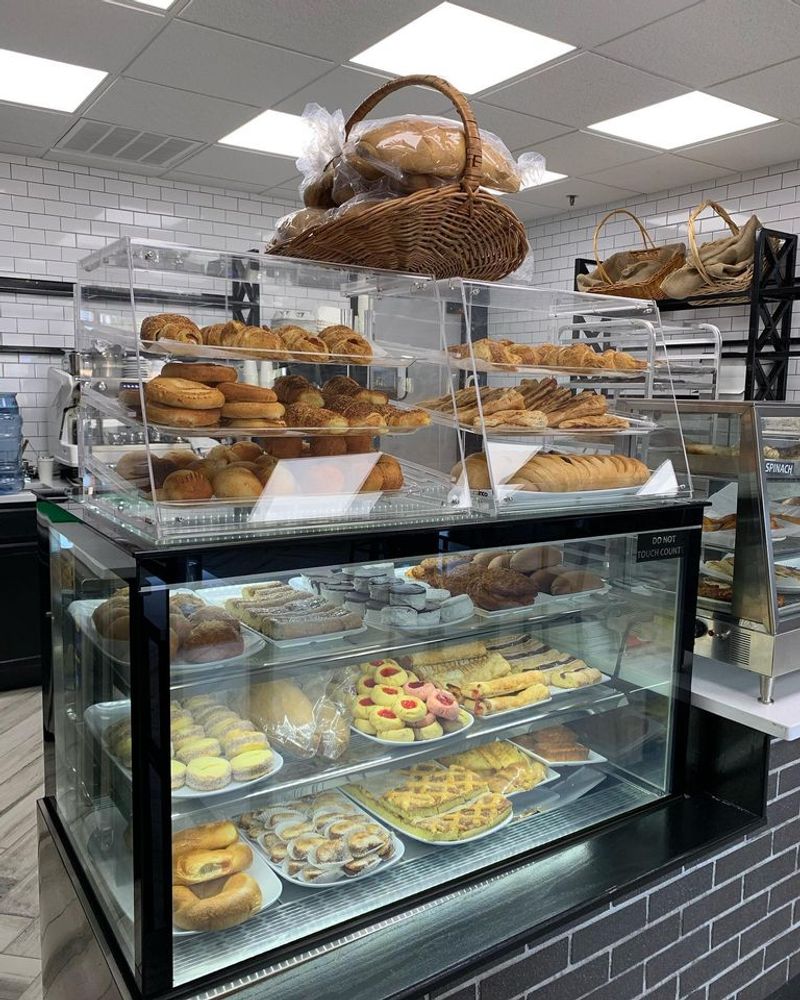
The quickest way to understand the bakery’s savory side is to order more empanadas than you originally planned. At $2.75 each, they are inexpensive enough to encourage experimentation, especially when six different fillings are waiting behind the counter.
Beef and chicken cover the familiar classics. Ham and cheese brings the salty, creamy combination that works just as well for breakfast as it does for lunch.
Spinach offers a meatless choice, while four cheese goes all in on richness. Then there is pepperoni, the playful outlier that lands somewhere between an Argentine empanada and a particularly tidy pizza pocket.
Ordering one of each costs $16.50 before tax, which may be the most efficient solution for anyone who dislikes choosing. It also turns a quick snack into an easy group lunch, with each person able to claim a favorite or negotiate trades after the first bite.
What holds the lineup together is the pastry. The shells are thin enough to keep the fillings in focus but sturdy enough to survive a trip home in a paper bag or bakery box.
Their golden surface gives way to a crisp exterior and a softer inner layer, avoiding the heavy, doughy quality that can sink a lesser empanada. The sealed edges also make them practical Bergenline Avenue food.
They can be carried to the car, eaten at a café table, or brought home alongside a cake without creating a disaster in the box. Ordering them hot delivers the full contrast between flaky crust and warm filling, though cold empanadas can be reheated later when the afternoon craving inevitably returns.
Six flavors may sound manageable while reading the menu. Once the case is directly in front of you, choosing only one feels unnecessarily strict.
Dulce de Leche Turns Cakes, Pastries, and Alfajores Into the Main Attraction
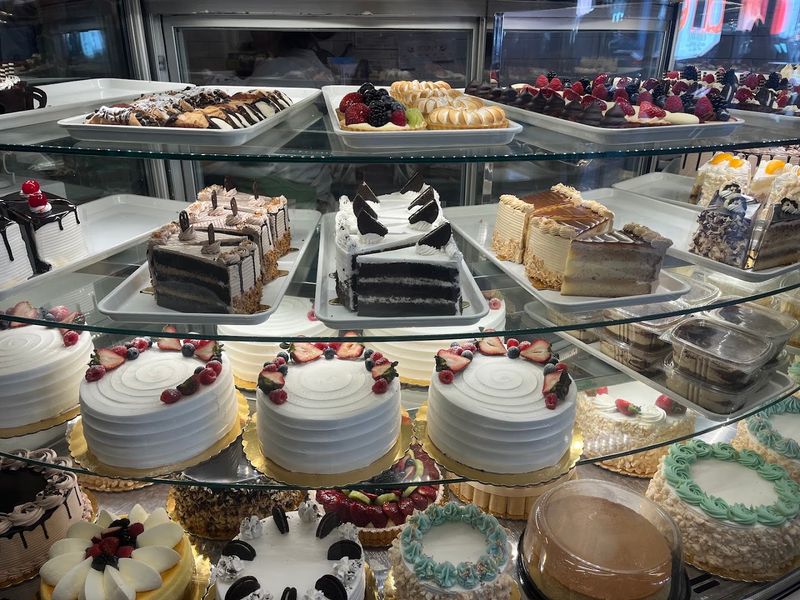
Dulce de leche is not treated as an occasional drizzle here. It is the bakery’s foundation, appearing between cake layers, inside pastries, and at the center of the Argentine sandwich cookies known as alfajores.
The caramelized milk spread has a smooth, dense texture and a deeper flavor than ordinary caramel sauce. Used badly, it can overwhelm everything around it.
Used carefully, it brings toasted sweetness without wiping out the cake, cream, chocolate, coconut, or fruit sharing the bite. That balance is clearest in the Dulce de Leche Chantilly cake.
Chocolate cake is layered with dulce de leche and whipped cream, giving each forkful three distinct elements instead of one uninterrupted blast of sugar. The vanilla-based House Cake takes another route, combining dulce de leche with whipped cream and peaches beneath a crunchy meringue exterior.
Alfajores provide the same signature flavor in a smaller format. These delicate sandwich cookies are filled with dulce de leche, and versions coated in white chocolate sometimes appear among the bakery offerings.
They are less of a commitment than a full cake slice but still substantial enough to make a plain cup of coffee feel like a proper break. A standard coffee starts around $2, while lattes and cappuccinos begin near $3.50.
That makes it easy to assemble the classic bakery pairing without turning the visit into a major production. Cake slices generally begin at roughly $5.50, offering another sensible route for anyone curious about several flavors but not ready to arrive home carrying three whole cakes.
The temptation, of course, is that dulce de leche appears in so many forms that comparison becomes part of the fun. A soft alfajor, a flaky pastry, and a chilled cake slice may share the same central ingredient, yet each one uses it differently.
Tres Leches, House Cake, and Coconut Mousse Make Choosing One Slice Nearly Impossible
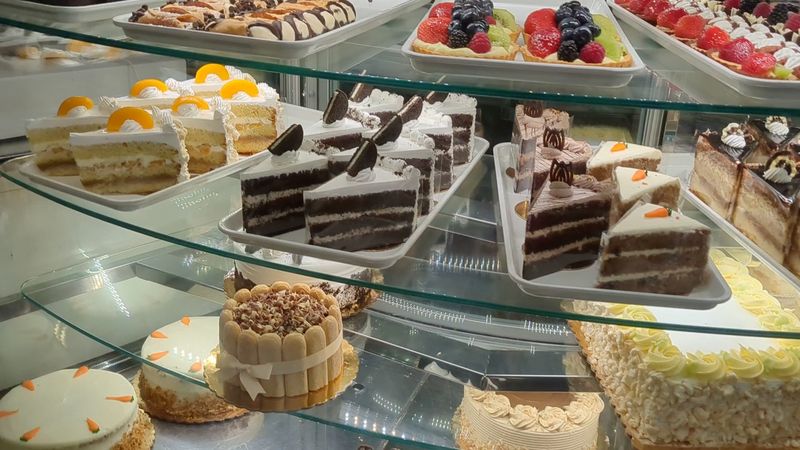
The cake case creates a very specific kind of indecision. You may arrive convinced that tres leches is the obvious choice, only to spot peaches inside the House Cake or the pale layers of Coconut Mousse and immediately reopen the debate.
The Tres Leches Cake starts with vanilla cake and adds Bavarian cream, dulce de leche, and peaches. It is richer and more structured than a basic milk-soaked sponge, with the fruit cutting through the cream and caramel.
A slice costs around $6, while whole cakes begin at approximately $44. The House Cake is the bakery’s signature all-rounder.
Vanilla cake, dulce de leche, whipped cream, and peaches sit beneath a crunchy meringue exterior, creating a mix of soft, creamy, fruity, and crisp textures. Slices are about $5.50, and whole cakes start near $24, making it one of the more affordable celebration-sized choices in the case.
Coconut Mousse is the wildcard. Vanilla cake is layered with coconut mousse and dulce de leche mousse, a combination that sounds heavy but gains contrast from the coconut’s lighter, slightly tropical flavor.
It is also available by the slice for around $5.50, with whole cakes starting near $26. Those three alone could occupy a table for several visits, yet they represent only part of the selection.
The same-day menu may also include Dulce de Leche Chantilly, Chocolate Chip, Double Mousse, Oreo, tiramisu, flan, and a passion fruit cheesecake topped with whipped cream and fresh berries. Buying slices is the smart strategy for a first visit.
It allows everyone at the table to try a few different cakes without committing to one full-size winner. The only flaw in that plan is that the bakery sells enough appealing options to make three slices feel like research rather than excess.
Choripán Milanesa and Sandwiches de Miga Take the Menu Far Beyond Sweets
Around lunchtime, the aroma of sausage, toasted bread, and breaded cutlets pulls attention away from the pastry case. Dulce De Leche Bakery may have dessert in its name, but its savory menu is capable of carrying an entire meal without requiring a single cookie.
Choripán is one of the clearest expressions of the bakery’s Argentine roots. The sandwich pairs grilled Argentine sausage with chimichurri, lettuce, tomato, and mayonnaise, then adds fries on the side.
The sausage brings the richness, chimichurri supplies the sharp herbal edge, and the vegetables keep the whole thing from feeling too dense. The milanesa sandwich is built around a crispy breaded beef or chicken cutlet with lettuce, tomato, and mayonnaise.
It is straightforward, filling, and easy to understand even for someone completely unfamiliar with Argentine food. Milanesa Napolitana pushes the idea further by topping the beef or chicken cutlet with ham, marinara, and mozzarella.
It sits comfortably between a sandwich-shop lunch and full comfort-food territory. The lomito is the heavyweight, stacking grilled steak with ham, cheese, lettuce, tomato, and mayonnaise, with the option to add an egg.
This is not the sandwich to order when planning a light afternoon. Sandwiches de miga take the opposite approach.
Made with thin, soft bread and neat layers of ham and cheese, these sandwiches are commonly associated with Argentine parties, café counters, and family gatherings.
Their tidy appearance makes them look restrained beside the choripán and milanesa, but the combination is satisfying in the familiar way of a carefully made tea sandwich.
Breakfast and lunch are served daily until 3 p.m., so timing matters. Arrive later and the cakes will still be there, but the grilled Argentine sausage may have to wait for another day.
The Bergenline Avenue Cafe Brings the Spirit of a Buenos Aires Bakery to West New York
Bergenline Avenue has never been a quiet backdrop. The long North Hudson commercial corridor moves through Union City, West New York, Guttenberg, and North Bergen, collecting restaurants, produce markets, bakeries, clothing stores, buses, delivery drivers, and hurried shoppers along the way.
Its food businesses reflect generations of Latin American immigration, with cuisines from Argentina, Cuba, Colombia, the Dominican Republic, Ecuador, Mexico, and several other countries represented within a few miles.
Dulce De Leche Bakery fits naturally into that landscape because it functions as more than a specialty dessert stop.
Early in the morning, it is a coffee-and-croissant place. By noon, customers are ordering empanadas, choripán, milanesa, and salads.
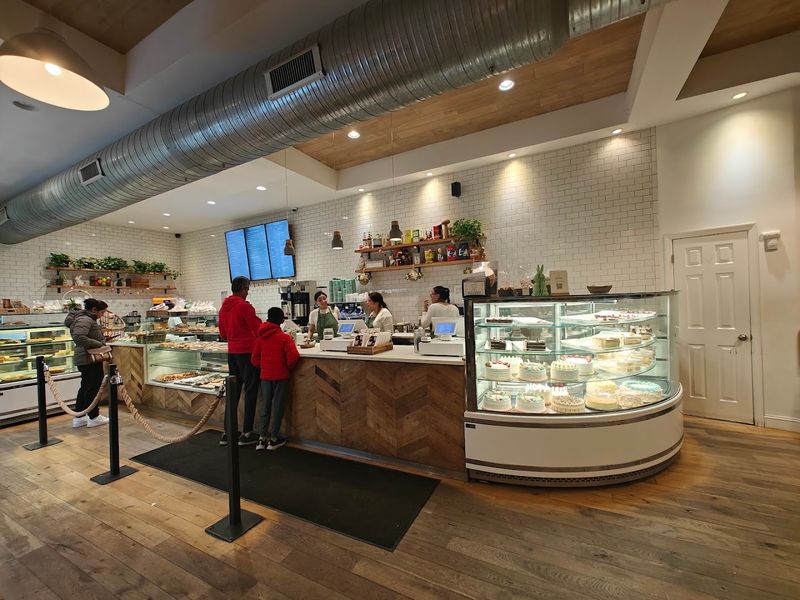
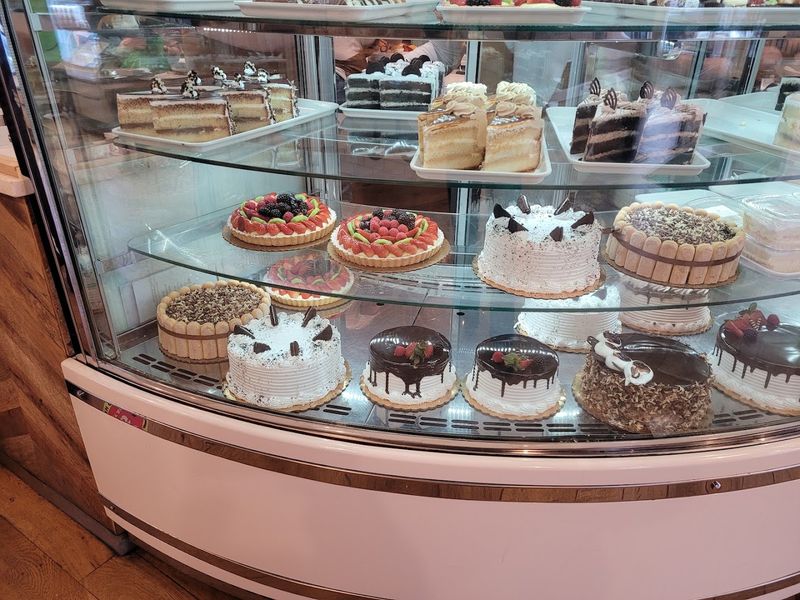
Later, the display cases become the focus as people pick up cake slices, alfajores, cookies, flan, or whole cakes for celebrations. The interior follows the bakery-café model rather than the cramped grab-and-go setup found at many neighborhood pastry shops.
Customers can sit with a cappuccino, work through a sandwich and fries, or open a bakery box immediately because waiting until home suddenly seems unrealistic. The cases remain central to the room, putting decorated cakes and neatly arranged pastries directly in the line of sight.
That visual abundance matters. Argentine bakery culture is built partly around choice, from small pastries meant to accompany coffee to elaborate cakes designed for birthdays and family tables.
The West New York shop preserves that range while adding the convenience expected from a modern North Jersey café. Nearly 20 years after the family opened its first bakery, the idea still feels remarkably focused.
Dulce De Leche Bakery does not present Argentine food as a theme or novelty. It serves it as everyday neighborhood food, one empanada, milanesa sandwich, alfajor, and peach-filled cake at a time.
Share this story