A pair of snappy natural-casing frankfurters can tell you plenty about Barth’s Market before you ever reach the steak counter. They are made in-house, rooted in German tradition, and sold at a New Providence shop where the family name has been hanging over the business since 1940.
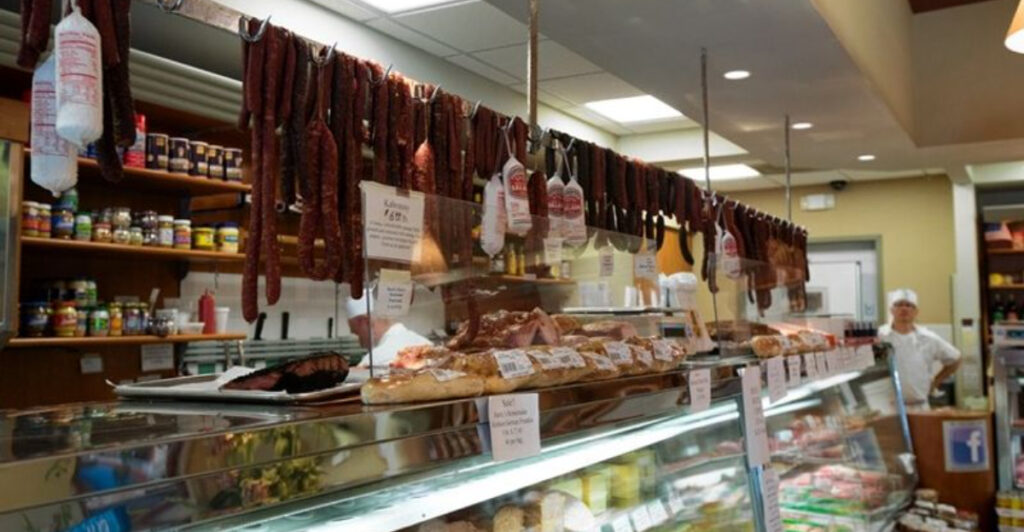
Behind them are bratwursts seasoned with marjoram, slabs of house-made bacon, liverwurst, kielbasa, smoked pork chops, and the kind of cold cuts that make an ordinary sandwich feel like it has been properly considered. The market at 41 South Street is much larger than the pork store Otto Barth opened more than eight decades ago.
It now carries seafood, produce, prepared dinners, baked goods, sandwiches, and catering trays. Yet the heart of the place has not moved far from the butcher block.
Three smokehouses operate behind the scenes, old family recipes remain in circulation, and a fourth Barth generation is helping carry the craft forward.
Otto Barth Brought His German Butchery Traditions to New Jersey in 1940
Before New Jersey entered the picture, Otto Barth already knew his way around a butcher shop. He operated three shops and a butcher cart in Germany, building his livelihood around the practical, demanding craft of preparing meat well and serving it fresh.
In 1940, he left Germany with his family, escaping the Nazi regime and looking for a safer place to begin again. That new beginning took shape in Irvington, where he opened the original Barth’s Pork Store.
The name told customers exactly what they were getting. This was not a broad supermarket with a token meat case tucked against the back wall.
It was a pork store in the old European tradition, centered on butchered meats, sausages, cold cuts, and the specialized knowledge required to make them consistently. Otto brought more than recipes with him.
He brought the standards of a trained butcher who understood that texture, seasoning, trimming, curing, and smoking all mattered. That foundation remains easy to spot in the market’s modern inventory.
Traditional German natural-casing frankfurters are still made in-house, as are skinless German franks, liverwurst, bratwurst, bacon, and numerous smoked meats. The Thuringer bratwurst, for example, combines veal and pork with marjoram, a straightforward blend that depends more on balance and technique than novelty.
Even with newer varieties such as cheddar-jalapeño bratwurst and Cajun-style andouille joining the lineup, the original idea has held firm: make the product on-site and make it well enough that people notice the difference. Starting a business in a new country during wartime would have been difficult under any circumstances.
Otto managed to build one strong enough not only to survive but also to create a trade that his children, grandchildren, and great-grandchildren could continue.
The Move to New Providence Turned a Family Pork Store Into a Local Landmark
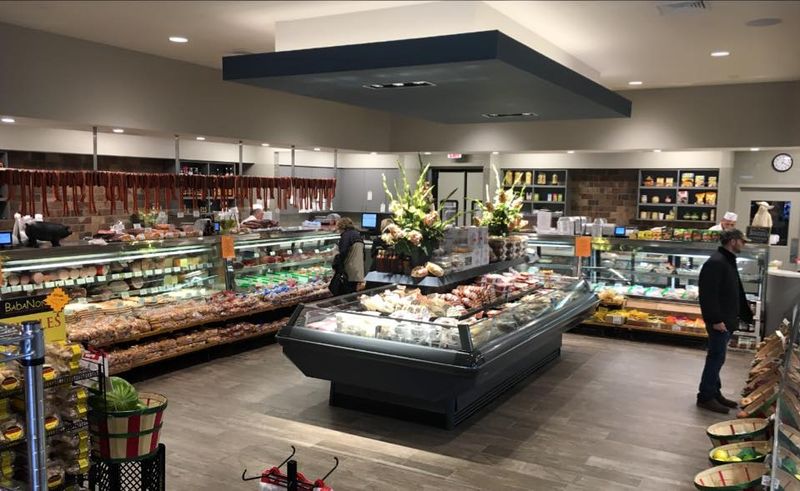
Twenty years after opening in Irvington, the Barth family brought the business west to New Providence. The shop settled at 41 South Street in 1960, and it has remained at that address ever since.
What began there was compact by present-day standards. Jim Barth later recalled that his grandfather’s store measured just 22 by 40 feet, a footprint that makes the current market’s range look even more remarkable.
New Providence proved to be the kind of town where a good butcher could become part of the weekly routine. Families came in for roasts, chops, sausages, and holiday orders, then returned often enough for the people behind the counter to learn how they liked everything cut.
Over time, Barth’s became less of a specialty stop and more of a local institution, the place residents associated with backyard cookouts, Sunday dinners, and crowded holiday kitchens. Growth came in visible stages.
The market expanded in 2003, allowing it to add seafood, salads, and prepared foods while improving the flow around the butcher counters. Business increased quickly enough that weekend and holiday lines sometimes stretched out the door.
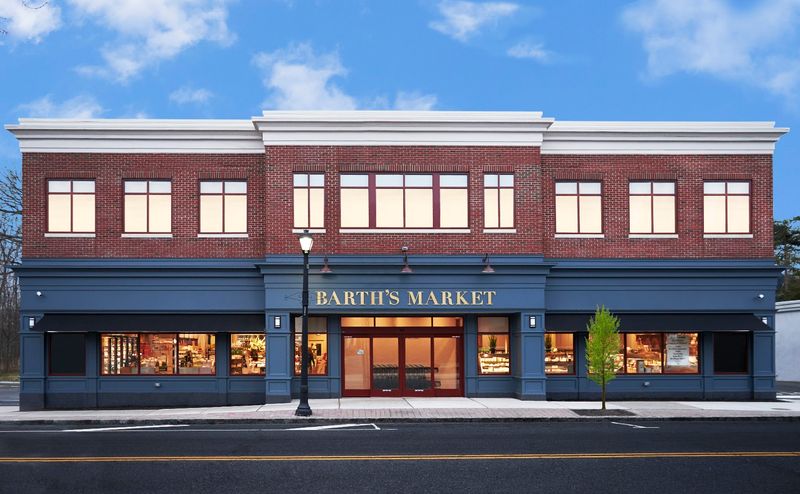
A much larger project followed, with the expanded store completed in 2017. The first floor grew to roughly 9,486 square feet, while nearly 7,000 square feet of second-floor space supported the operation above it.
The larger building did not push the butcher counter aside. It gave the family room to surround it with a seafood department, produce, bakery items, specialty groceries, sandwiches, hot meals, and two industrial kitchens.
That balance explains how Barth’s has managed to grow without feeling like it traded its identity for square footage. It may function as a full neighborhood market now, but the place still revolves around the work Otto Barth brought to New Jersey in the first place.
Four Generations Have Kept the Barth Family Craft Alive
Family businesses rarely travel through four generations in a perfectly straight line, and the Barth story has a few sharp turns. Otto Barth Sr. established the shop, and his son, Otto Jr., later joined him.
The next handoff, however, was anything but simple. When Jim Barth was about 27, his father offered to sell him the business and building if he could produce $600,000 by the end of the month.
Unsurprisingly, that was not an easy check for a young butcher to write. The store was sold, and Jim continued working in the meat industry.
He operated a wholesale business and a plant in Edison that produced sausages for Foodtown stores, then became involved in the veal and lamb trade. The savings and loan crisis contributed to the business closing in 1988, forcing another reset.
Jim worked for other independent operators until the Barth family regained control of its old store. By 1995, Jim was running the market.
Rather than attempting one dramatic reinvention, he began improving it piece by piece. He invested in machinery, upgraded the smokehouse, renovated the property, and focused on making every item distinctive and dependable.
His goal was not to produce one impressive batch followed by an average one. It was to reproduce the same standard week after week, which is exactly the kind of consistency regular customers remember.
Jim’s wife, Sandy, helped operate the business, and their children, Paige and Max, became involved as the next generation. Max has worked as a manager and now helps guide Barth’s into its fourth generation.
That matters because old recipes do not preserve themselves. Someone has to learn why a particular sausage is seasoned a certain way, how the texture should feel, and when a product is ready for the case.
At Barth’s, that knowledge has moved from Otto to Otto Jr., from Jim to Max, with each generation expanding the operation without cutting the thread connecting it to 1940.
House-Made Bratwurst, Cold Cuts, and Cured Meats Still Follow Time-Tested Recipes
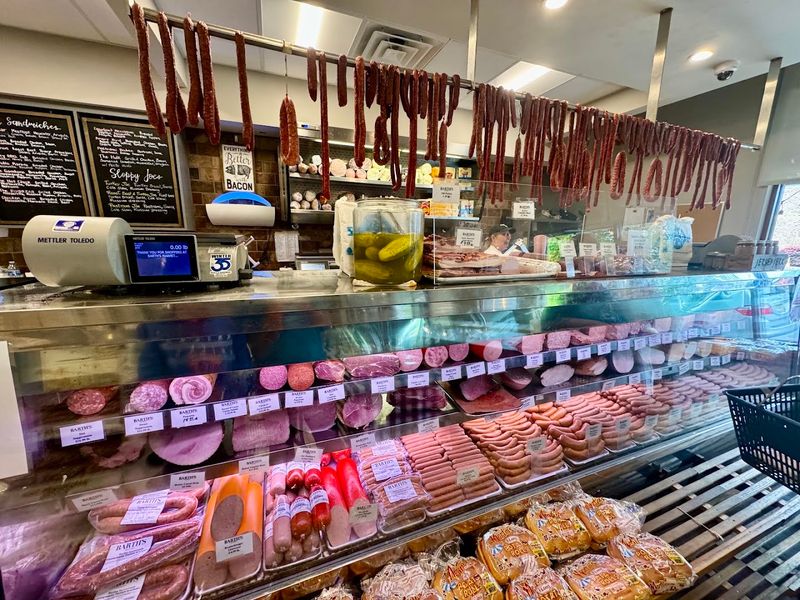
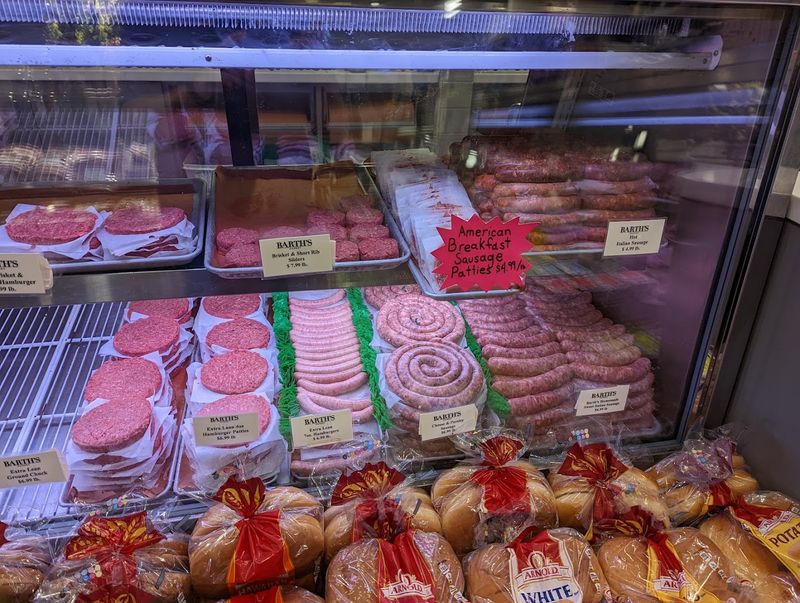
The sausage case is where Barth’s German roots become lunch, dinner, or a very ambitious weekend cookout. Traditional bratwurst shares space with Polish kielbasa, Bauernwurst, Thuringer bratwurst, Landjäger, and natural-casing frankfurters.
Some varieties stick close to the old playbook; others lean into newer tastes with cheddar, jalapeño, beer, or bolder spices. The common point is that Barth’s still produces its sausages, smoked meats, and cold cuts on-site.
The Thuringer bratwurst is a good example of how little fuss a well-made sausage needs. It is made with veal, pork, and marjoram and has been listed at around $9.99 per pound, while traditional pork frankfurters in natural casings have sold for roughly $8.99 per pound.
Skinless German frankfurters and cheddar-jalapeño bratwurst have also been available for about $7.99 per pound, though prices can change. These are not products hidden away for an annual Oktoberfest display.
They are part of the everyday selection. The deli side digs just as deeply into old-school territory.
Barth’s makes coarse-style liverwurst in-house and sells it by the chub, alongside Braunschweiger, dried sausages, cold cuts, and smoked specialties.
Shoppers who prefer something less traditional can move toward roast beef, turkey, pastrami, Italian subs, wraps, or a North Jersey-style sloppy joe layered with meat, cheese, and coleslaw.
What keeps the selection interesting is that tradition is treated as a working method rather than a museum piece. The family recipes remain the foundation, but the market is comfortable adding andouille, chorizo, cheddar-jalapeño franks, and other varieties that Otto Barth probably did not sell from his butcher cart in Germany.
The technique stays disciplined while the case keeps evolving, which is a smart way to honor the past without freezing the menu in it.
Three Smokehouses Give the Bacon, Hams, and Sausages Their Signature Flavor
In a photograph from the mid-1990s, Jim Barth stands beside what was then a major upgrade: a modern steel smokehouse replacing older cast-iron equipment. The market now operates three smokehouses, all devoted to products still made on the premises.
That detail separates Barth’s from shops that merely slice and resell smoked meats produced somewhere else. Smoking is not simply a matter of exposing meat to a cloud of flavor and hoping for the best.
The process has to be repeatable. Temperature, timing, moisture, seasoning, and the size of each piece all influence the finished result.
A family market serving longtime customers cannot have bacon taste one way in March and completely different by Memorial Day. Modern equipment helps control the process, while the recipes and judgment behind it remain grounded in decades of experience.
The results show up across the store. Barth’s makes slab bacon and sliced bacon, which have been sold for around $9.99 per pound, along with Canadian bacon, smoked pork chops, smoked ham, kielbasa, frankfurters, and several varieties of bratwurst.
There are even smoked bacon lollipops, an item that sounds playful until you remember this is a butcher shop with the equipment to take bacon very seriously. The smokehouses also demonstrate how the family has approached modernization.
Jim did not replace traditional products with generic convenience food when he began investing in the shop. He bought machinery that allowed Barth’s to make more of those traditional products with greater consistency.
The equipment changed; the reason for using it did not. That is the practical meaning of “old-fashioned” at Barth’s.
Nobody is insisting that every task must be completed with tools from 1940. The old-fashioned part is the willingness to do the work in-house, protect the family recipes, and keep checking the final product against a standard customers have known for years.
Fresh Meats, Prepared Foods, and Personal Service Keep Customers Coming Back
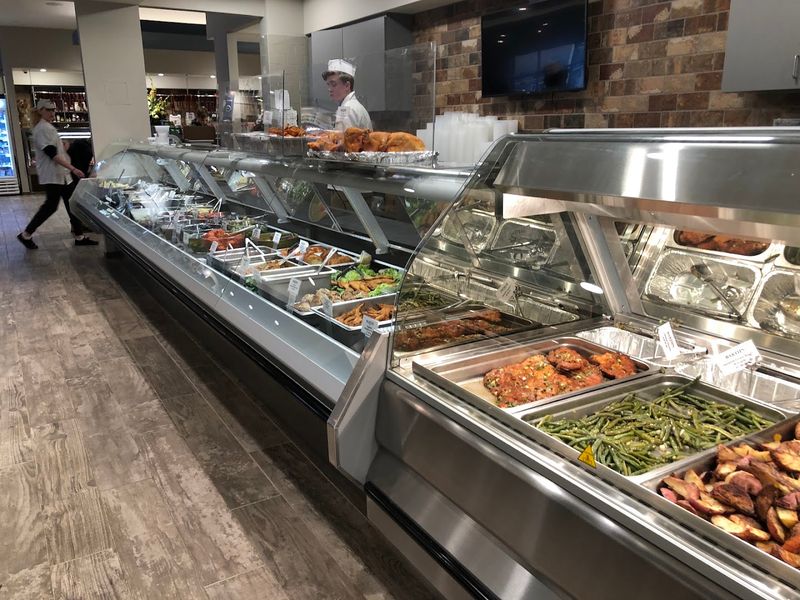
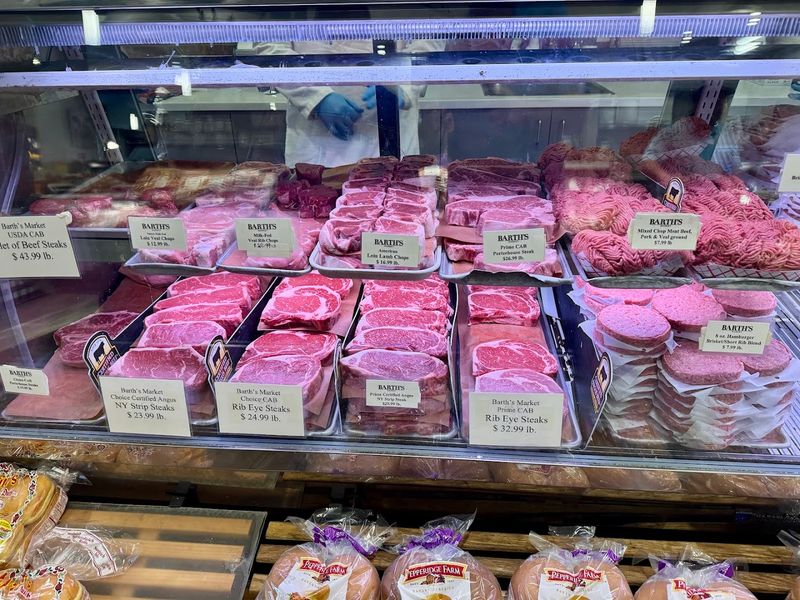
A first visit may begin with bratwurst, but it can easily end with enough groceries to cancel a second stop. The fresh meat department covers beef, pork, lamb, veal, poultry, duck, and goose, with butchers available to cut meat to order.
Nearby are seafood, produce, cheese, baked goods, frozen items, and specialty pantry products. The modern Barth’s is designed to handle dinner from the main course to the vegetables, not merely provide a package of sausages on the way home.
Prepared food has become a substantial part of that equation. Offerings have included beef goulash, meatloaf, Italian meatballs, smoked baby back ribs, salmon dishes, shrimp scampi, baked ziti, soups, pierogies, German potato salad, and potato pancakes.
Catering trays extend the selection with bratwurst and mustard, kielbasa and sauerkraut, jägerschnitzel, rouladen, pork roast, and sausage with peppers and onions. The hot-food counter and rotating dinner specials are especially useful on evenings when cooking a full meal sounds considerably less appealing than carrying one home.
Despite all that expansion, service remains part of the shop’s identity. A proper butcher counter invites conversation.
Customers can ask which cut suits a slow braise, how much roast will feed a table, or whether the chops should be thicker. That exchange is difficult to reproduce with a foam tray and a self-checkout screen.
Barth’s Market generally opens at 8 a.m. seven days a week, closing at 6 p.m. on weekdays and 5 p.m. on weekends, though holiday schedules can vary. Those steady neighborhood hours fit a business that serves both planned holiday feasts and ordinary Tuesday dinners.
More than 80 years after Otto Barth opened his Irvington pork store, the market still succeeds through a combination that sounds simple but demands constant attention: good ingredients, skilled hands, reliable recipes, and people behind the counter who know what they are selling.
Share this story