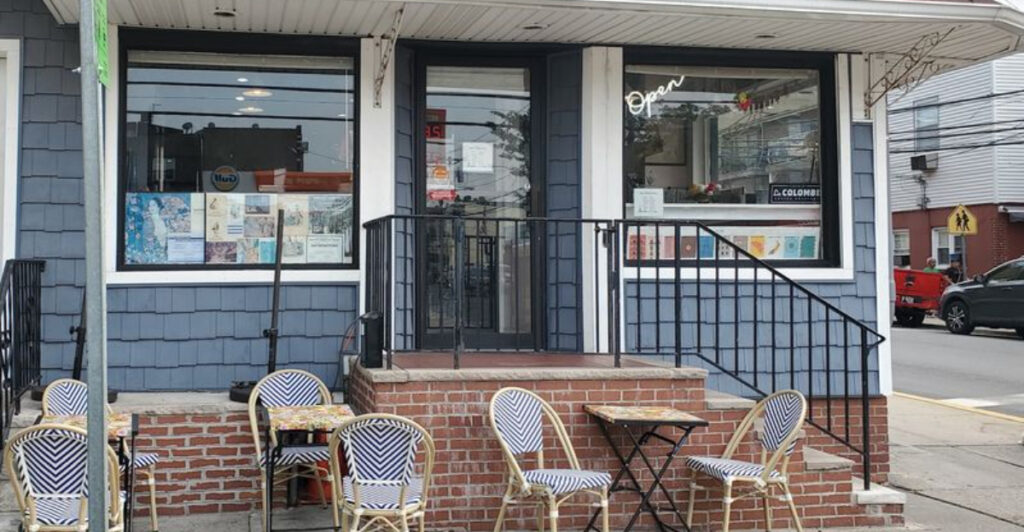
A pair of tiny yellow rain boots sits among framed Parisian artwork while the smell of butter, espresso, and caramelized sugar drifts through the room. This is not a carefully staged café in Montmartre.
It is Petite B Bakery, tucked into a neighborhood storefront at 200 61st Street in West New York. The display case makes the geography even harder to believe.
Golden croissants sit beside glossy fruit tarts, custard-filled gâteau Basque, and dark, ridged canelés. Baguettes emerge from the oven with properly crisp crusts, and the chocolate tucked inside the pain au chocolat comes directly from France.
Petite B is polished without being precious. Locals stop in for black coffee, commuters grab pastries for the road, and regulars know which small-batch items tend to disappear first.
Behind it all is owner Camille Boulla, a French transplant who did not set out to build a theme. She simply created the neighborhood bakery she missed.
Meet the Parisian Behind Petite B Bakery
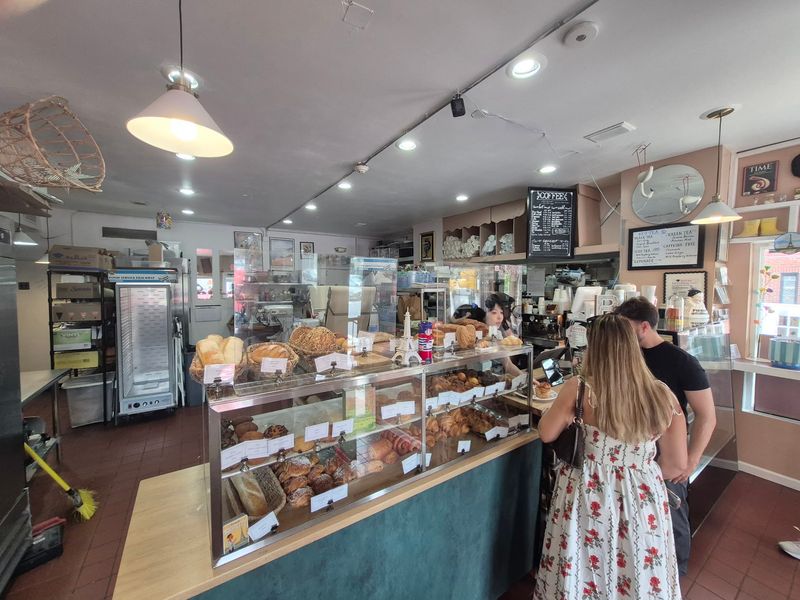
Long before Camille Boulla became a Hudson County bakery owner, she was growing up in a small town south of Paris. Food was woven into ordinary life there.
A baguette with butter counted as a perfectly respectable pleasure, coffee was generally served black, and an afternoon walk could easily include a stop for something flaky, custardy, or chocolate-filled. Boulla first visited New York City as a teenager in 1999.
She later returned for a college internship, fell for the city and her future husband, and eventually settled in West New York in 2010. The location offered a practical compromise: more affordable than Manhattan, close enough to enjoy it, and walkable in a way that reminded her of home.
Petite B’s name is practically a miniature biography. “Petite” gives it an unmistakably French note, while the B refers to Boulla, bakery, and boulangerie. It also echoes the nickname “little bee,” which her husband gave her because she rarely stops moving.
Spend a morning watching trays come and go, and the nickname quickly makes sense. Her approach is refreshingly grounded.
Boulla has never framed Petite B as a bid for culinary grandeur or a future bakery empire. She wanted to make the bread, desserts, and coffee she could not find nearby, then serve them to people she would see again the following week.
That neighborhood focus matters. West New York is not merely a convenient address or a cheaper alternative to opening across the Hudson.
Boulla lives here. She knows the streets, appreciates the town’s mix of cultures, and values the familiar faces that pass through her door.
Petite B feels personal because it is personal, right down to the artwork on the walls and the recipes behind the counter.
How This West New York Bakery Became a Neighborhood Favorite
Opening a bakery in September 2020 was either spectacularly brave or slightly unhinged. In Petite B’s case, it was a little of both.
Boulla had secured the storefront in 2019 and originally planned to open in March 2020, just as restaurants and shops across New Jersey began shutting down. Rather than abandon the idea, she waited and adjusted.
When Petite B finally welcomed customers, West New York was ready for something different. Several restaurants had occupied the same space during the previous decade, but many offered food residents could already find throughout the area.
A traditional French bakery, by contrast, filled a genuine gap. Its location at 200 61st Street places it in the middle of daily neighborhood life rather than inside a glossy shopping district.
Manhattan may be visible from parts of town, but there is no need to cross the Hudson, pay a bridge or tunnel toll, and hunt for parking simply to find a serious almond croissant. Nearby residents can walk over, collect a baguette, and be home before the crust loses its crackle.
The bakery’s opening hours also fit its neighborhood role. Petite B generally opens early, around 7 a.m. on weekdays and 8 a.m. on weekends, though its schedule and evening closing times can vary.
Monday is typically the day to find the door closed. Early arrival is smart for another reason: breads and pastries are produced in small batches, so a late-afternoon visitor may not see the same selection as the breakfast crowd.
Regulars have helped turn that limited production into part of the appeal. They know the almond croissants, canelés, and baguettes do not sit around waiting indefinitely.
They also know Petite B offers more than sweets. Quiche Lorraine, seasonal quiches, soups, focaccia sandwiches, and savory croissants make it useful for lunch, not just a Saturday sugar run.
The French Details That Make Petite B Feel So Authentic
Walk through the door and look past the pastry case for a moment. The child-sized yellow boots, old portraits, handwritten postcards, Eiffel Tower imagery, and framed paintings of butter were not ordered together from a restaurant décor catalog.
Many came from Boulla’s home, her childhood, her family, or customers who understood what she was creating. That explains why the room feels collected rather than decorated.
Boulla is an enthusiastic thrift hunter, and her mother found some of the artwork in Paris. A customer contributed a large Eiffel Tower portrait.
Even the little boots belonged to Boulla’s children and resemble a pair she wore while growing up in France. The strongest French detail, however, is restraint.
Petite B does not coat every surface in tricolor flags or give ordinary menu items theatrical names. Its identity comes through in the food and in the rhythm of the place.
A plain croissant, a lemon tart, a crusty baguette with butter, and a black coffee receive the same respect as more elaborate desserts. The bakery also avoids the American habit of treating bigger and sweeter as automatic improvements.
Pastry cream supports the fruit instead of burying it. Almond filling tastes nutty rather than sugary.
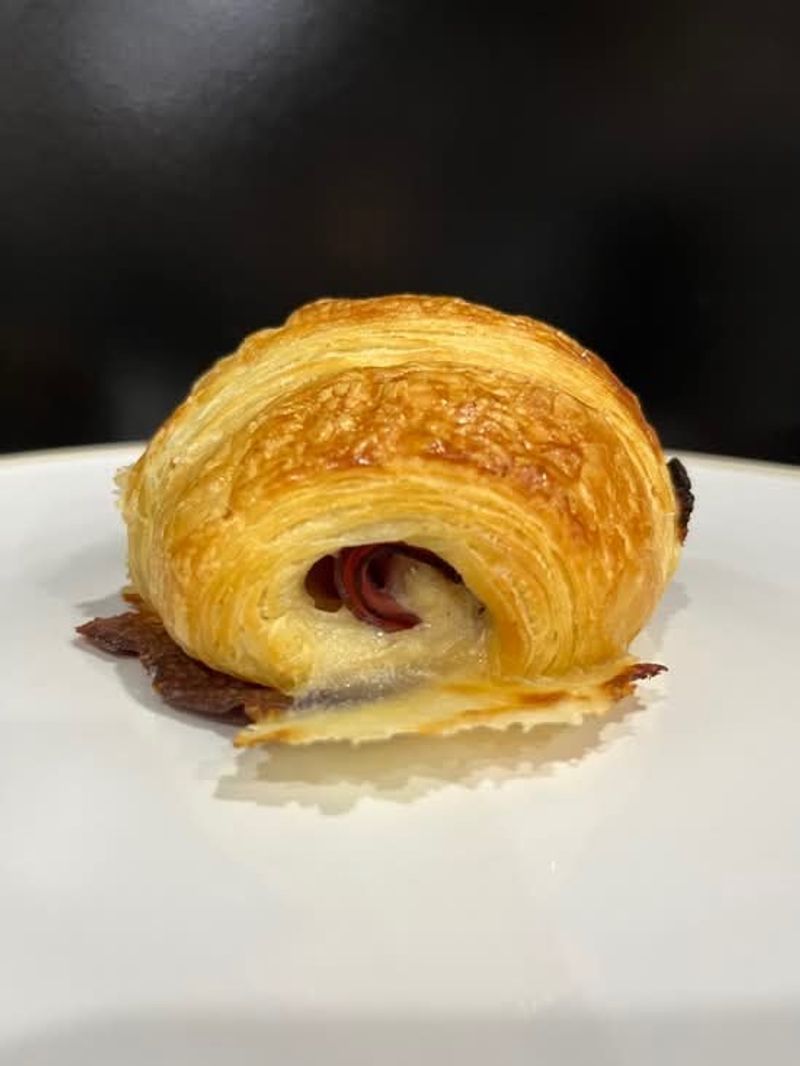
Dark chocolate provides richness without turning pain au chocolat into a candy bar wrapped in dough. Even the bread reveals a cultural difference.
A French-style baguette should have a crisp, assertive crust. Someone accustomed to very soft supermarket bread might initially mistake that firmness for staleness, but break the loaf open and the distinction becomes obvious.
The interior remains airy and tender while the exterior snaps and scatters crumbs across the table. None of this feels like a performance staged for visitors.
It is simply Boulla’s version of normal, transported from south of Paris to Hudson County and shaped around the habits of the people who now stop by every week.
The Croissants and Pastries You Need to Try
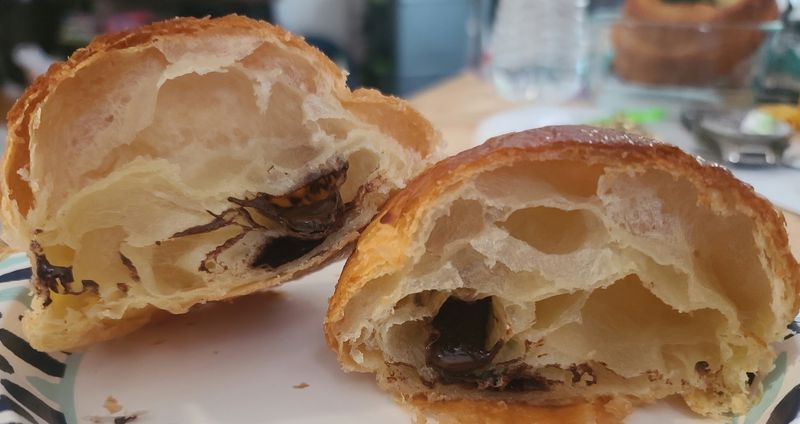
The plain croissant is the honest test. There is no glaze, filling, or heap of toppings available to hide weak dough.
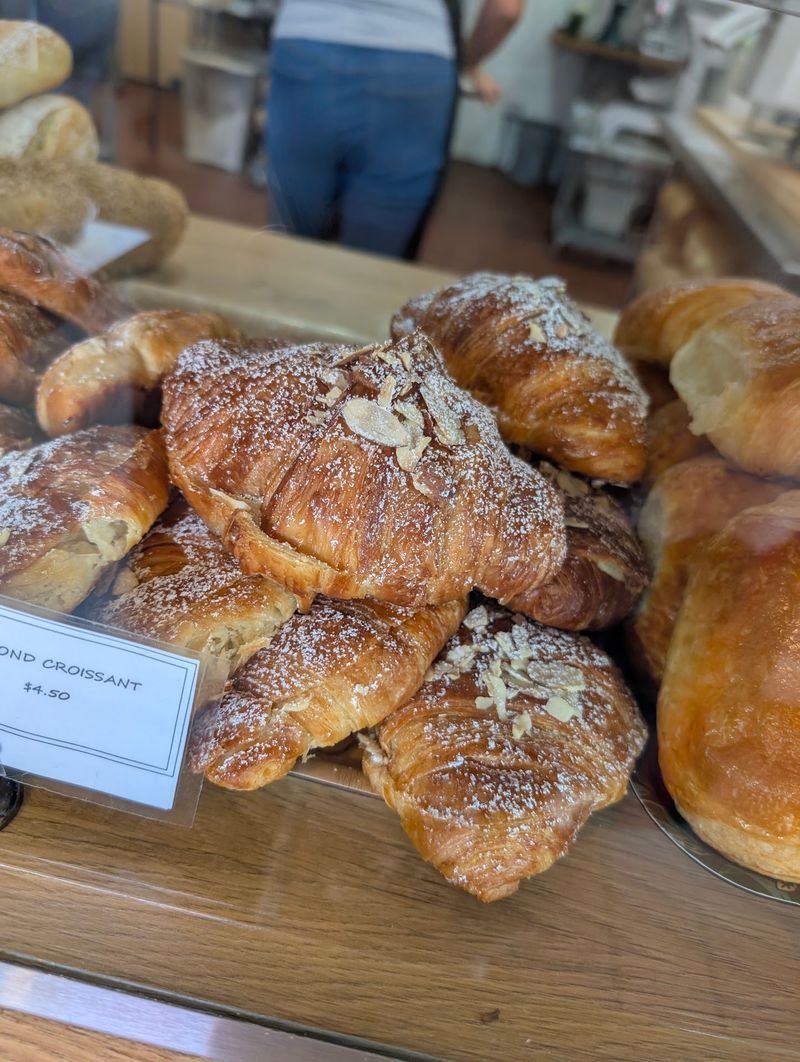
Petite B’s version, usually priced around $4.50, earns its place in the bag with a deeply golden exterior, an airy center, and thin layers that break away as soon as you pull it apart. From there, breakfast can become as sensible or unruly as you like.
The chocolate croissant costs about $5.50 and wraps French chocolate inside laminated dough. The almond croissant, around $6, adds a generous layer of almond cream and sliced nuts.
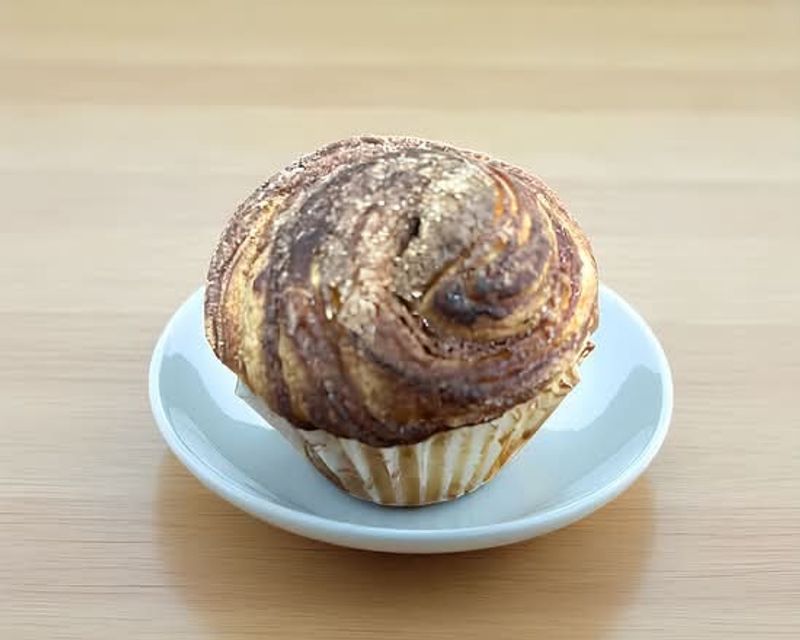
It is richer and slightly heavier than the plain version, but the filling remains balanced enough that the pastry still tastes like a croissant rather than cake. For something less traditional, try the Nutella cruffin.
This roughly $6 hybrid coils croissant dough into a muffin shape and fills the center with chocolate-hazelnut spread. It is messy, playful, and not remotely designed for eating discreetly in the car.
The guava croissant brings another local-friendly twist, while savory versions may include ham and cheese or spinach and Manchego. The canelé is smaller but arguably more interesting.
Originally from Bordeaux, this ridged pastry has a dark, caramelized shell and a soft center flavored with vanilla and rum. The almost-burnt sugar note is intentional, and the contrast between the crisp exterior and custardy middle is the whole point.
The gâteau Basque deserves attention too. Its crumbly, shortbread-like crust surrounds smooth pastry cream, offering a taste of southwestern France that rarely appears in a standard New Jersey bakery case.
Fruit lovers can look for the raspberry cream tart, currently around $8.25, or a classic lemon tart. Those arriving hungry enough for lunch can switch lanes entirely.
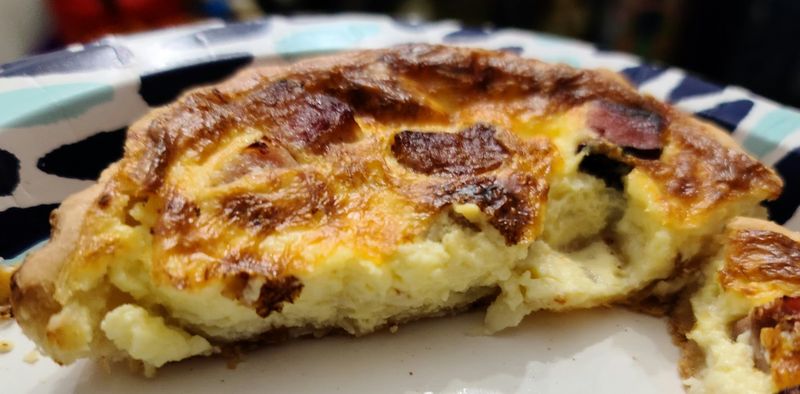
Quiche Lorraine and seasonal varieties such as mushroom Gruyère run about $10.50, turning a pastry stop into a proper meal with very little effort.
Traditional Ingredients Make Every Bite Taste Better
Croissant dough is not complicated on paper. Flour, butter, yeast, sugar, salt, and time do most of the work.
In practice, the difference between a pale, breadlike crescent and a crisp French croissant comes down to technique, temperature, and the kind of butter folded between those layers. Petite B uses a fattier, creamier butter made in the French style.
That extra fat is not a minor technicality. It helps the dough laminate cleanly, creates separation between the layers, and produces a richer flavor without leaving the finished pastry greasy.
When the butter and dough stay at the correct temperature, steam pushes those layers apart in the oven and forms the honeycomb interior pastry lovers hope to find. Boulla imports the chocolate used in her chocolate croissants from France because the particular variety is not easily found here.
At the same time, she does not import ingredients merely to make the menu sound more exotic. If an ingredient of the right quality is available locally, she prefers to use it.
That balance carries through the rest of the case. Fruit tarts pair ripe berries or sliced seasonal fruit with lightly sweetened pastry cream.
Financiers get their deep, nutty character from almond flour and browned butter. Madeleines remain delicate and sponge-like, often with a quiet note of lemon.
Canelés rely on vanilla, rum, and controlled caramelization rather than frosting or decorative excess. Everything is produced in small batches and baked regularly, which explains both the freshness and the occasional empty space in the display.
Baguette production is intentionally limited, and delicate items such as canelés are at their best on the day they are made. The result is not pastry that shouts for attention.
Flavors remain recognizable, textures stay distinct, and sweetness knows when to step aside. That kind of discipline is harder to fake than any amount of powdered sugar.
Coffee and Community Complete the Parisian Experience
At a table near the window, the winning order might be almost comically simple: one croissant, one black coffee, and ten quiet minutes before the day gets noisy. Petite B serves La Colombe coffee, the Philadelphia-born roaster whose smooth, full-bodied blends can stand up to buttery pastry without tasting harsh.
The menu covers the familiar café range. Drip coffee and café au lait keep things straightforward, while a latte is about $5.50 and an iced latte runs roughly $6.
Cappuccinos, mochas, and macchiatos are available for anyone who wants more than a basic cup. Some iced drinks use coffee ice cubes, a small but clever touch that prevents the final few sips from becoming brown water.
Coffee also slows the visit down. West New York moves at commuter speed in the morning, with buses headed toward Manhattan and residents squeezing errands into the gaps between work and school.
Inside Petite B, people still pause at the counter, ask what came out of the oven, and trade a few words with staff before leaving. That familiarity is central to Boulla’s idea of success.
She has said she would rather run a bakery loved by locals than chase accolades or turn the business into something impersonal. Leftover food has been donated to neighbors and local organizations, extending the bakery’s role beyond what happens at the register.
The relationship runs both ways. Customers have contributed decorative pieces, recommended favorites to one another, and made specific pastries part of their weekly routines.
The bakery reflects its French owner, but it also belongs unmistakably to West New York. That may be Petite B’s most convincing Parisian quality.
It treats bread, coffee, and pastry not as occasional luxuries but as small daily pleasures, best enjoyed in a place where the person behind the counter might remember you.
Share this story