A fireplace surround sat forgotten in an attic for decades, its connection to the past reduced to one handwritten name on the back — “Claflin.”
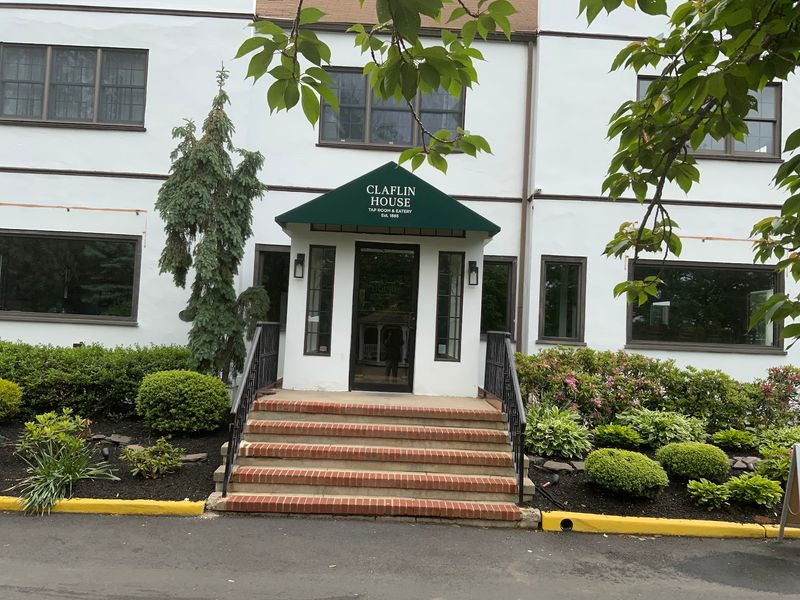
Today, that piece is downstairs again, restored to its original place inside an 1885 mansion where golfers, newlyweds, local families, and the occasional history buff still gather. The Claflin House stands at Lakewood Country Club, but calling it a clubhouse barely covers the story.
This was once the private home of merchant Arthur B. Claflin and his wife, Margaret, built during an era when Lakewood attracted Rockefellers, railroad heirs, presidents, and fashionable New Yorkers seeking winter recreation.
The original country club burned down, golf was played when the ground was cold, and summer fairways were turned into hayfields. Somehow, the mansion endured it all.
Now home to Maggie’s restaurant, it remains one of the most inviting surviving pieces of Lakewood’s unexpectedly glamorous past.
When Lakewood Was a Gilded Age Winter Playground
Picture Lakewood around the turn of the 20th century, and do not picture beach traffic or packed summer weekends. The town’s big season began around Labor Day and carried straight through winter.
Wealthy New Yorkers arrived by train and carriage for fresh air, grand hotels, elegant dinners, hunting, ice skating, and golf. Lakewood had positioned itself as a fashionable health resort, with pine-scented air promoted as a welcome escape from the smoke and crowds of Manhattan.
The scale of that resort culture is easy to underestimate today. Lakewood’s year-round population stood at roughly 8,000 after World War I, but the winter population could swell to around 35,000 as visitors filled its hotels and private estates.
Some of the richest families in America became part of the local scenery. John D.
Rockefeller maintained an estate and private golf course in town. George Jay Gould, the son of railroad magnate Jay Gould, lived at Georgian Court, the estate that later became Georgian Court University.
Golf was still a young sport in the United States, and Lakewood got involved early. The local club was established in 1896, with an initial nine-hole course designed by Horace Rawlins, winner of the first U.S. Open in 1895. That early layout covered 2,532 yards, with holes ranging from 200 to 375 yards.
The club also offered hunting, trapshooting, kennels, stables, and even a pigeon house. The seasonal routine would look backward to a modern golfer.
Members played through fall and winter, then the course closed during the warmer months. The grass was allowed to grow long, cut into hay, and used to feed horses.
In Gilded Age Lakewood, summer was apparently the off-season.
Arthur Claflin Builds a Grand Country Estate
Arthur B. Claflin was exactly the sort of figure who fit comfortably into Lakewood’s high-society chapter.
A prosperous New York merchant, he became one of the founders and directors of the local country club. His family name was already associated with business, politics, and philanthropy, but in Lakewood, it became attached to a handsome country residence overlooking land connected to the developing golf course.
The mansion dates to approximately 1885. In 1901, Claflin purchased the former Hyer estate for $40,000 and expanded his presence in the area.
He sold about 100 acres to the Country Club of Lakewood for $23,000, helping give the young organization room to grow. The Claflin residence, its grounds, and its stables formed part of a much larger country-estate lifestyle built around outdoor recreation and gracious entertaining.
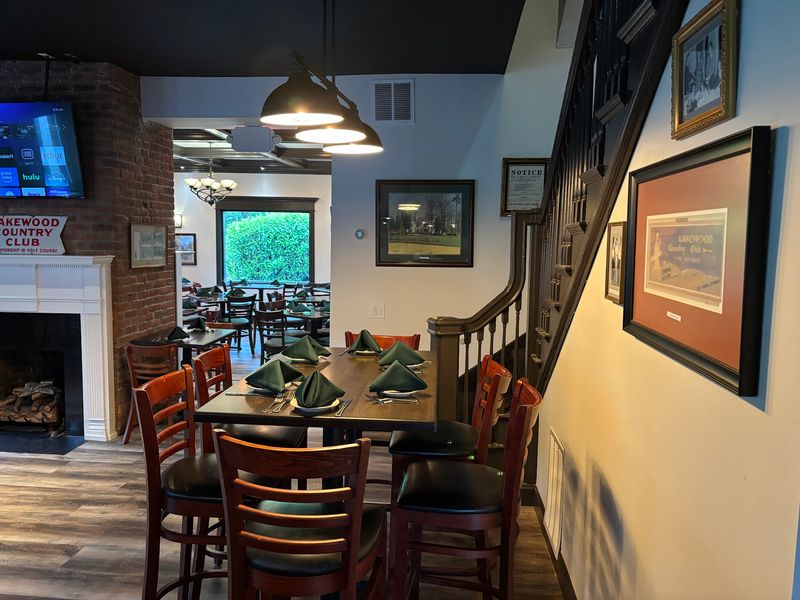
This was not a weekend cabin with a fancy front porch. The house was intended to receive guests in style. Its broad rooms, fireplaces, stucco exterior, carefully shaped rooflines, and substantial service spaces reflected an age when wealthy families arrived with staff, luggage, formal clothing, and social calendars.
The road between George Gould’s Georgian Court estate and the Claflin property regularly carried carriages filled with prominent guests headed for golf, hunting, dining, or an afternoon at the club.
Arthur’s wife, Margaret, played an important role in giving the estate its character. Known as Maggie, she developed a reputation for hospitality and community involvement rather than simply occupying a grand house behind closed doors.
Her interest in local beautification connected the family to the wider town. Plenty of Lakewood’s grand hotels and estates eventually disappeared.
The Claflin House survived because it proved useful long after the private-estate era faded. Its next chapter began with a fire just down the road.
How the Mansion Became Lakewood Country Club

The country club’s first purpose-built clubhouse was quite a place. Designed in the Dutch Colonial style by architect Montrose W.
Morris, the building measured approximately 40 by 100 feet. It reportedly featured Tiffany windows, guest rooms, a bowling alley, and the sort of lavish accommodations expected by members accustomed to luxury hotels and private estates.
Then, around 1917, it burned. Replacing such an elaborate structure would have been difficult under ordinary circumstances.
With World War I disrupting labor, materials, and finances, an ambitious rebuilding project became especially impractical. The club needed another solution, and Arthur Claflin happened to own a large residence nearby.
As a club director, Claflin sold his mansion to the organization for use as its new clubhouse. He then built a larger home elsewhere on his estate in the area now known as Pine Park.
Even the outbuildings found new purposes. The stables behind the former residence became the golf pro shop, neatly converting part of the old estate into working club facilities.
The move gave the mansion a reason to remain standing. Instead of becoming an obsolete relic from Lakewood’s resort years, it continued welcoming the same general mix of golfers, diners, and guests, only now under club ownership.
Generations passed through its rooms, and the surrounding course grew into the present 18-hole, par-72 layout measuring 6,566 yards. Lakewood Country Club also changed with the town around it.
It is now a public, year-round course, weather permitting, rather than an exclusive winter playground for wealthy seasonal residents. The clubhouse serves people who might never swing a golf club at all.
Weddings fill the banquet room, families come for dinner, and warm evenings bring music and conversation to the outdoor Tiki Bar. The names and clothing have changed, but the old mansion is still doing what it was built to do — receiving company.
The Story Behind Maggie’s Name
Maggie was not a marketing invention dreamed up during a restaurant rebrand. She was Margaret Claflin, Arthur’s wife and the woman remembered for bringing warmth to the original household.
That distinction matters because the mansion could easily feel stiff. Historic country homes often come with an invisible “look, but do not touch” rule.
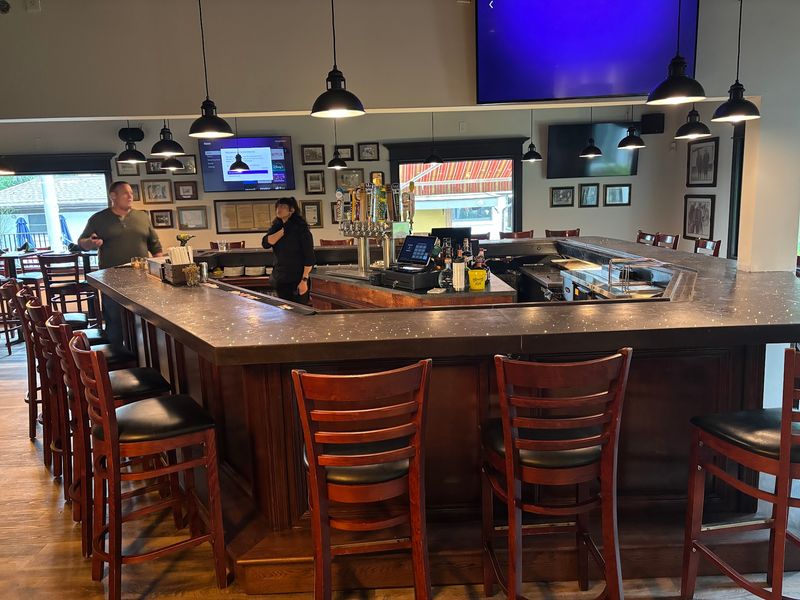
The Claflin House works differently. Its current restaurant and taproom, Maggie’s, uses Margaret’s name as a reminder that this was a lived-in home, not merely a display of Gilded Age wealth.
Margaret was known for her hospitality and her involvement in Lakewood beautification efforts. At a time when the town was attracting affluent visitors and building its reputation as a polished resort, that civic work helped shape the community beyond the family’s own property.
Naming the restaurant for her gives the mansion’s social history a human face and, importantly, ensures Arthur does not get the entire marquee. The modern version of hospitality is considerably less formal than it would have been in Margaret’s dining room.
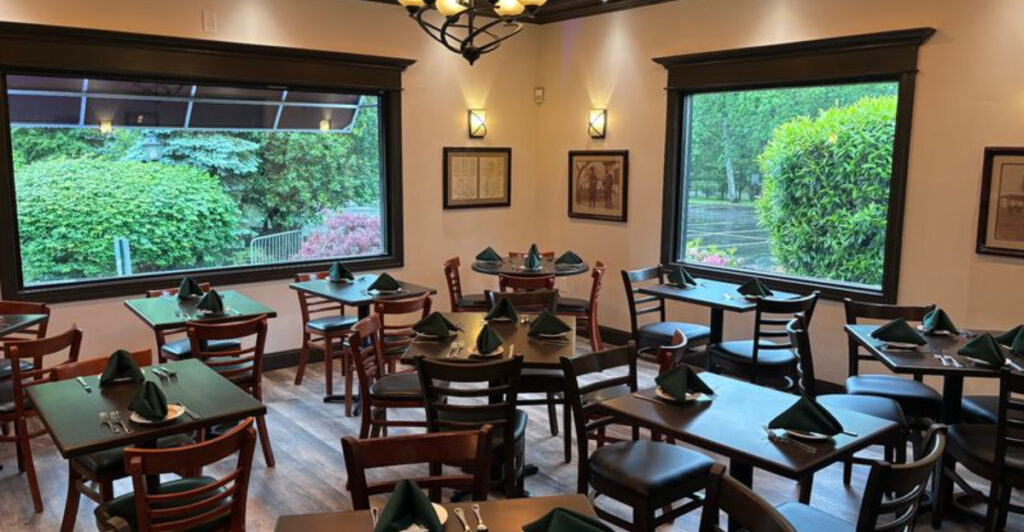
Maggie’s serves approachable tavern food, including shepherd’s pie, roast beef, burgers, wings, salads, and house-made pizza. The restaurant is open to the public at 145 Country Club Drive, so no membership card or respectable Gilded Age fortune is required.
Current posted hours run from 11 a.m. to 10 p.m. Sunday through Tuesday and from 11 a.m. to 2 a.m. Wednesday through Saturday. There is something fitting about eating a burger beneath walls filled with local history.
The mansion has not been frozen at one carefully selected moment in time. It remains social, busy, and useful.
Margaret Claflin’s idea of a proper menu might have looked very different, but a house full of guests would probably have suited Maggie just fine.
Historic Treasures Hidden Inside the Claflin House
Look closely at the walls, because the old photographs are not generic antique-store finds chosen to create a vaguely historic mood. The images and memorabilia inside the Claflin House come from Lakewood’s own past, collected and preserved over decades by Lakewood Country Club president Raef Lawson.
One of the most striking pieces is a photograph of President Theodore Roosevelt golfing at the club. Nearby, visitors may spot a painting commemorating the 1911 Cup of Lakewood, created when the organization was known as the Lakewood Golf and Hunt Club.
The collection also includes an early membership card signed by George Gould, the club’s first president, and the original course layout associated with Horace Rawlins. Together, those artifacts make a strong case that Lakewood was not standing on the sidelines during golf’s early American growth.
Rawlins had won the inaugural U.S. Open only a year before the club was established.
Gould belonged to one of the country’s best-known railroad families. Roosevelt’s presence connects the course to a president famous for embracing strenuous outdoor life.
These are not borrowed connections; they happened here. Some of the mansion’s best discoveries were hiding inside the building itself.
During renovation work, original fireplace surrounds were found stored in the attic. One had “Claflin” written on its back, a remarkably simple label for an object carrying more than a century of history.
The surrounds were restored and returned to their proper places instead of being replaced with modern reproductions. That decision captures what makes the house special.
Its history is not limited to a plaque by the entrance. It is built into the fireplaces, preserved in documents, and staring out from photographs on the walls.
A casual meal can turn into a small local-history hunt before the appetizers arrive.
Preserving the Mansion for a New Generation
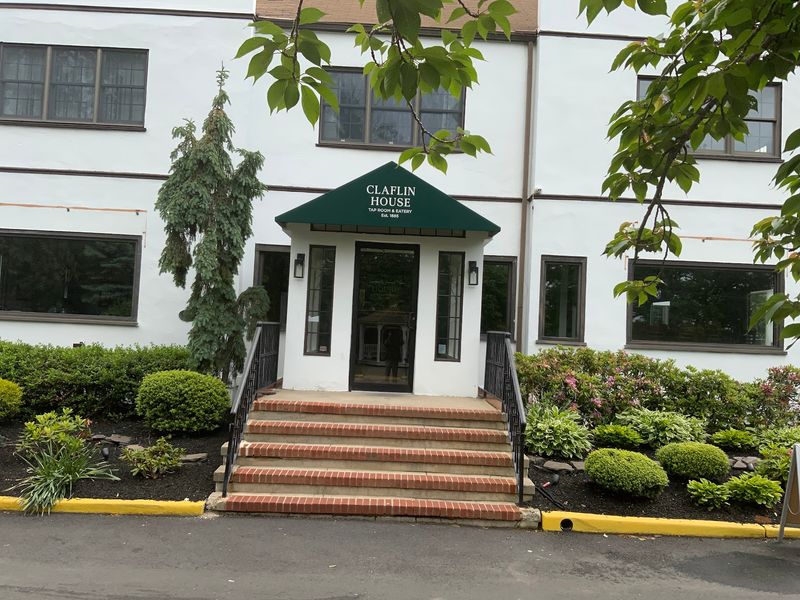
Old buildings are charming right up until the utilities fail. Keeping a 19th-century mansion in active use requires less romance than wiring, plumbing, structural work, and a steady willingness to solve expensive problems nobody notices once they are fixed.
The Lawson family understands that bargain well. Raef Lawson’s grandfather purchased a controlling interest in Lakewood Country Club in 1937, during the difficult years following the Great Depression.
Raef and his brother Robert later grew up around the property, working summer jobs at the club as teenagers before taking on leadership roles. Robert became general manager, while Raef, now the club president, focused heavily on administration and food and beverage operations.
Recent renovations addressed both the visible and invisible sides of preservation. Infrastructure, utilities, communications, and technology were upgraded so the building could continue functioning as a restaurant, clubhouse, and event venue.
Historic details were restored rather than swept aside. When a banquet hall was added, its rooflines, windows, stucco, decorative scuppers, and other architectural elements were designed to blend with the original mansion.
The goal was for the addition to look as though it had always belonged there. That work allows the Claflin House to keep evolving without losing the features that make it worth saving.
A gazebo and banquet space now host weddings and milestone celebrations. Golfers finish rounds nearby, restaurant tables fill at Maggie’s, and families return years after holding events on the property.
The result feels less like a monument and more like a house that simply refused to retire. Lawson describes stewardship of the mansion in generational terms.
In his view, a person does not truly own an old building but looks after it for whoever comes next. At the Claflin House, that philosophy is visible in every restored fireplace and carefully matched window — and in the fact that, after roughly 140 years, the front door still opens for guests.
Share this story