Creativity feels especially surprising when it appears just beyond an ordinary business area. In Brighton, Michigan, Oaken Transformations Sculpture and Poetry Walk turns a short outdoor path into a quiet mix of art, nature, reading, and reflection.
Sculptures and poems appear along the trail in a way that encourages visitors to slow down, look closer, and treat even a brief walk like something more meaningful than a quick stop. The setting is easy to reach but still feels tucked away enough to make the discovery satisfying.
For anyone who likes Michigan outings with thoughtful details, small surprises, and a calmer pace, this Brighton trail has plenty worth noticing.
A Hidden Turn Leads to an Unexpected Art Trail
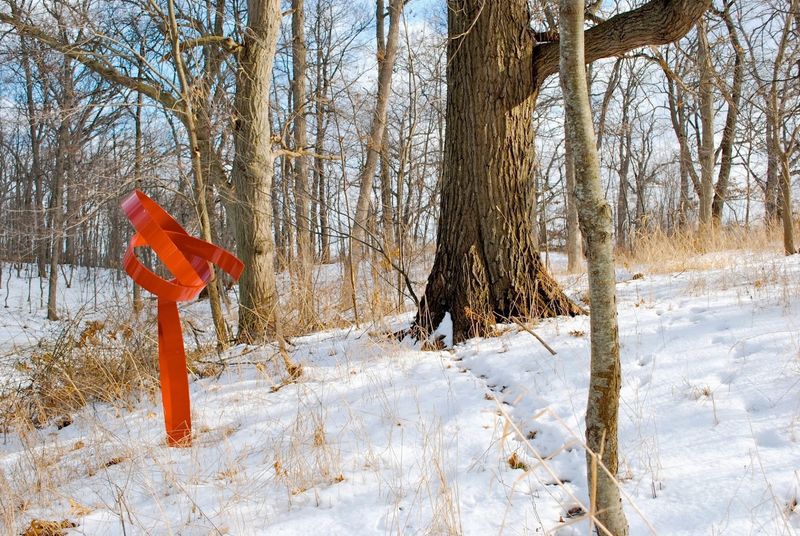
One of the most surprising parts of Oaken Transformations Sculpture and Poetry Walk is how quietly it begins. The location sits at 6893 Grand River Ave in Brighton, close to everyday businesses, so the idea of an art-filled path can catch first-time visitors off guard.
That contrast gives the place some charm right away.
Instead of a grand front gate or big museum-style entrance, the walk feels tucked in. A few local accounts note that the turn can be easy to miss, especially for anyone expecting large signs or a dramatic arrival.
Knowing that in advance helps set the right mood: this is a small-scale discovery, not a giant attraction with flashy direction boards.
Once the path begins, the shift is immediate. Pavement, parking areas, and commercial edges give way to a quieter wooded setting, creating a neat change in pace within just a few steps.
That quick transition is part of what makes the walk memorable, because the site does not announce itself loudly.
For readers planning a stop, a little preparation goes a long way. Watch carefully for the correct entrance near the complex, allow a few extra minutes for finding the path, and do not expect a big tourist setup.
Thinking of it as a tucked-away local art space makes the experience easier to enjoy.
That hidden quality also matches the theme of transformation in the name. Ordinary surroundings open into a trail where sculpture and poetry take over, and the surprise becomes part of the visit itself.
In a busy day, that kind of small, unexpected change can be more refreshing than a larger destination.
Sculptures Give the Loop Its Visual Punch
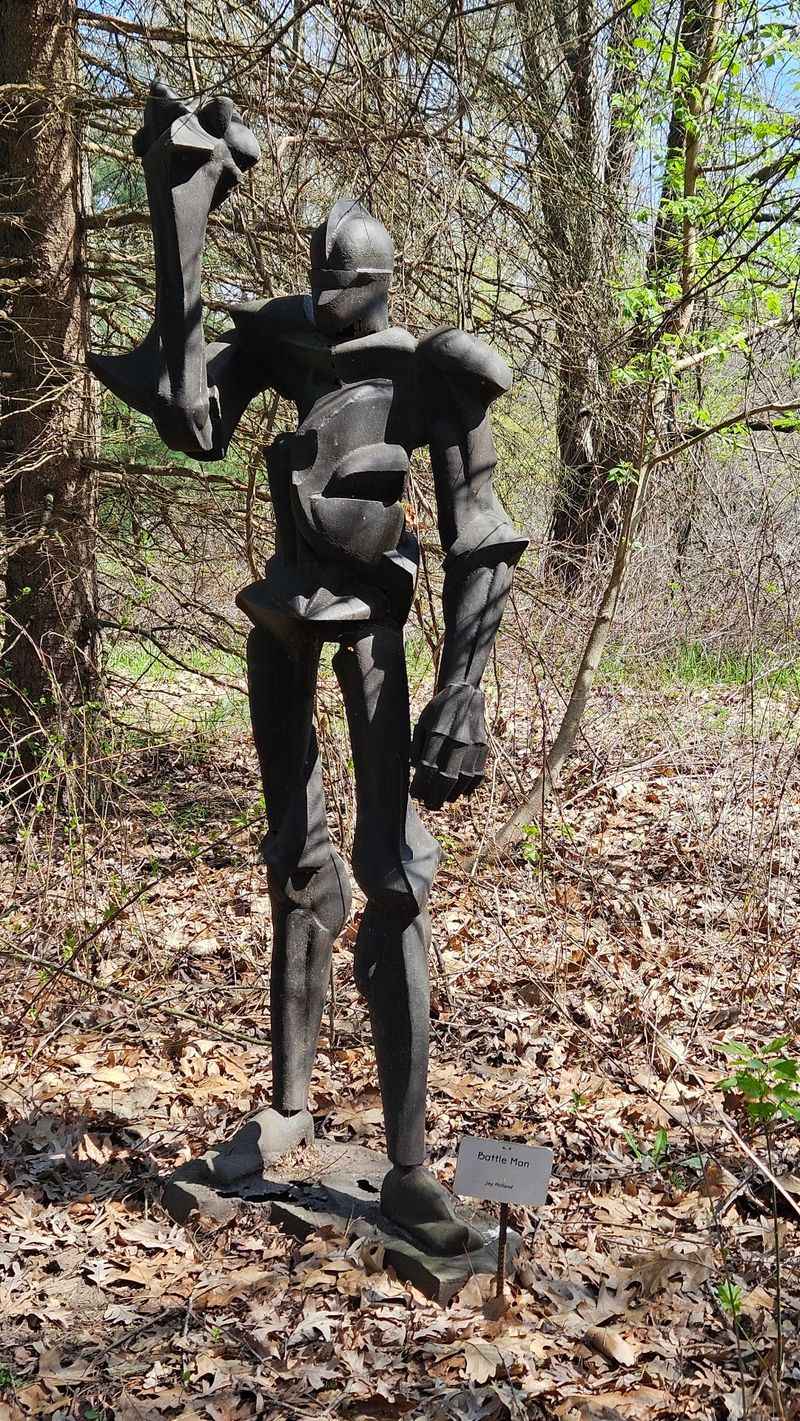
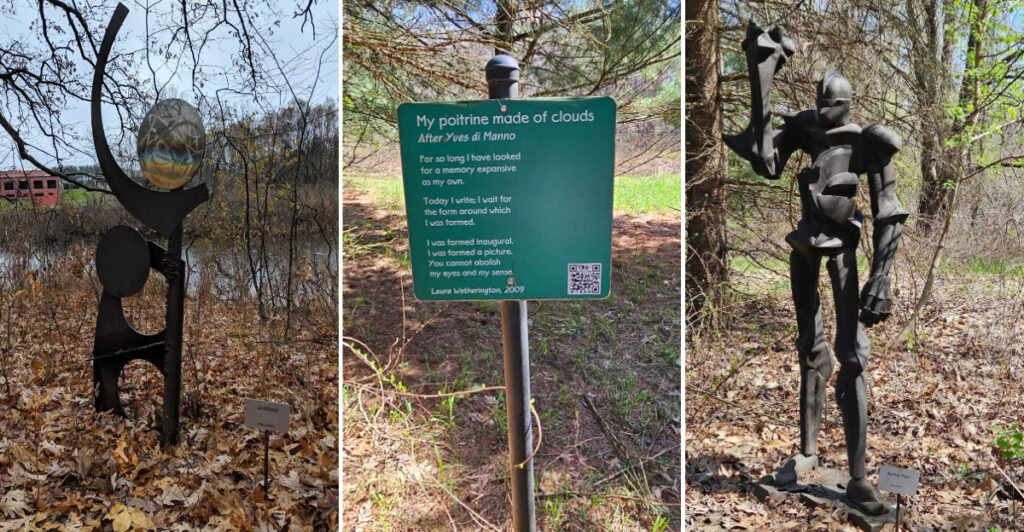
Artwork does the heavy lifting here, and it changes the path from a simple loop into a small outdoor gallery. Along the trail, sculptures appear in a natural setting instead of a white-walled room, which gives each piece a different kind of energy.
Trees, light, and weather become part of the viewing experience.
Reports from visitors point to a range of sculpture styles rather than one strict look. That variety matters because it keeps the short walk from feeling repetitive.
Even on a brief visit, each work can shift the tone, moving from playful to reflective to puzzling in only a few steps.
Outdoor sculpture invites a slower kind of looking. A piece may read one way from a distance and another way when seen up close, with texture, shape, and angle becoming easier to notice.
Children may focus on size and form, while adults may start talking about meaning, making the walk naturally conversation-friendly.
The setting helps the art without overwhelming it. Instead of fighting city noise or large crowds, the sculptures sit in a quieter area where the eye can rest.
That lets the pieces stand out through placement and contrast rather than through sheer scale.
For the best experience, move at an unhurried pace and circle each sculpture before moving on. A quick glance can miss details that only show up from the side or back, especially in outdoor light that changes minute by minute.
Bringing a phone or small camera can be useful too, since certain angles look especially striking against the trees.
At this trail, sculpture is not presented as a formal lecture. It appears as part of a walk, inviting curiosity instead of demanding expertise, and that makes the art easier to approach.
Poetry Stations Add a Second Layer to the Walk
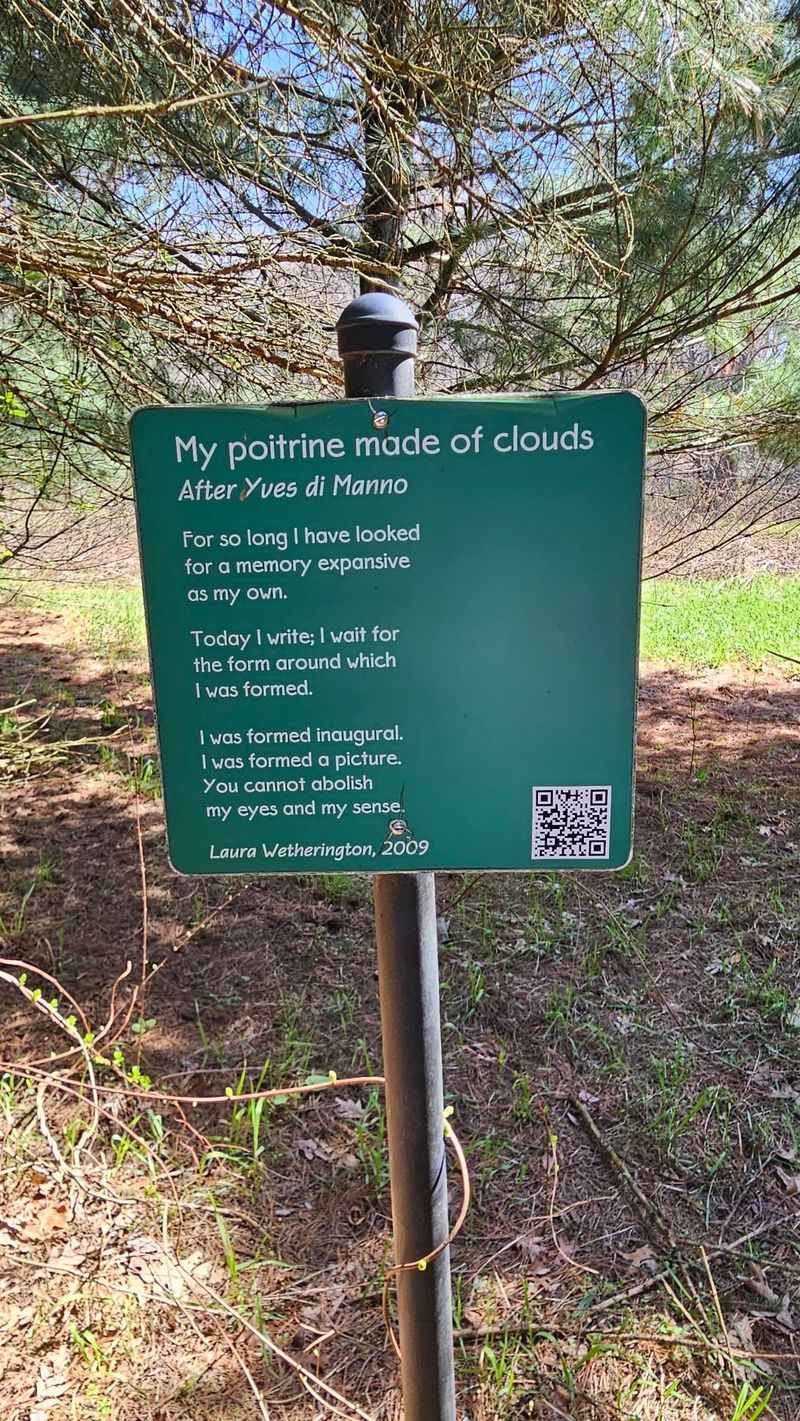
Not every trail asks visitors to read as well as look. At Oaken Transformations Sculpture and Poetry Walk, poetry adds a second layer to the outing, giving the route a quieter and more thoughtful rhythm.
The words do not compete with the sculptures. They change how the path is experienced between one artwork and the next.
That combination is especially interesting because poems slow people down in a different way than objects do. A sculpture can be scanned quickly, but a poem asks for a pause, a second glance, and sometimes a reread.
On a short loop, those pauses stretch the visit into something more considered.
Some poems are linked with QR codes, which gives the walk a modern touch without turning it into a screen-heavy stop. Instead of covering the trail with large text panels, the setup can offer extra information in a more compact way.
That keeps the path visually cleaner while still giving curious readers more to explore.
Families, friends, and couples may all use the poetry differently. One person might focus on the lines themselves, while another gets pulled into the author background or the connection between a poem and a nearby sculpture.
That difference opens up easy conversation without making the walk feel like homework.
If weather is cold or windy, using the QR features may not be as comfortable, so a mild day makes the reading side more enjoyable. It also helps to bring a charged phone and enough time to stop at more than one poem instead of hurrying through.
Even a simple note-taking app can be handy for saving a favorite line.
Poetry gives the trail its voice. Without it, the route would still offer visual interest, but the written pieces turn the outing into a fuller artistic experience.
Around the Pond, the Setting Does Part of the Storytelling
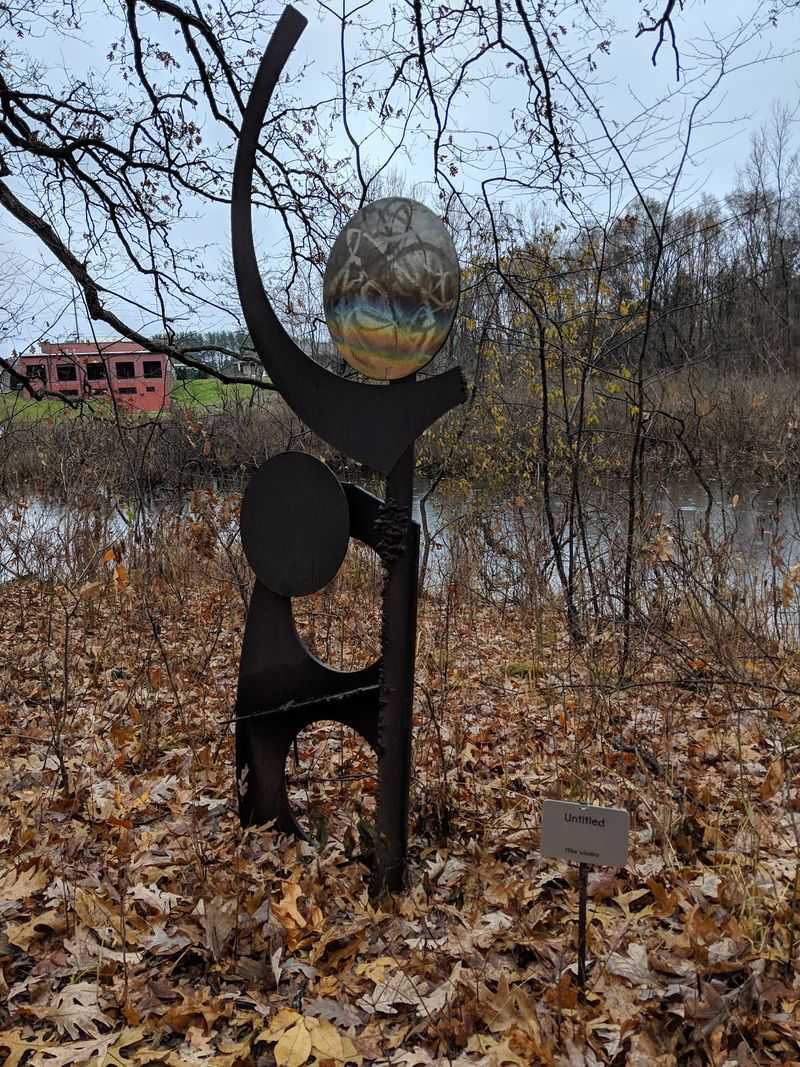
Nature has a quiet role here, and the pond-centered loop is a big reason the walk works so well. A trail that circles water already has built-in movement, changing views, and small shifts in light.
Add sculpture and poetry to that layout, and the setting starts helping tell the story.
Local descriptions of the site mention a quiet wooded area looping around a pond. That detail matters because it explains why the walk does not feel crowded with objects.
The route has breathing room, letting each sculpture or poem appear as a stop within a larger landscape rather than as part of a packed display.
Water also changes the pace. Even a short path seems more settled when a pond is nearby, and reflections can add another visual layer without any extra design work.
In brighter months, leaves, blooms, and fuller greenery likely make the route more colorful, while early spring or colder seasons can reveal shapes and lines more clearly.
That seasonal flexibility is part of the appeal. A sculpture beside bare branches gives one mood, while the same piece near summer growth can read very differently.
Readers interested in photography may find the walk especially rewarding for that reason, since repeat visits can produce noticeably different scenes.
Comfort matters outdoors, so sturdy shoes and weather-ready clothing make the experience smoother. After rain, the ground may feel different than it would on a dry afternoon, and pond-side air can be cooler than expected.
Bringing water for a longer stop is sensible, even if the loop itself is brief.
The landscape here is not just background decoration. It helps frame the art, space the experience, and keep the trail from becoming visually flat.
That mix of woods, water, and creative work gives the walk its strongest sense of place.
Brighton, Michigan Delivers a Short Outing With Real Variety
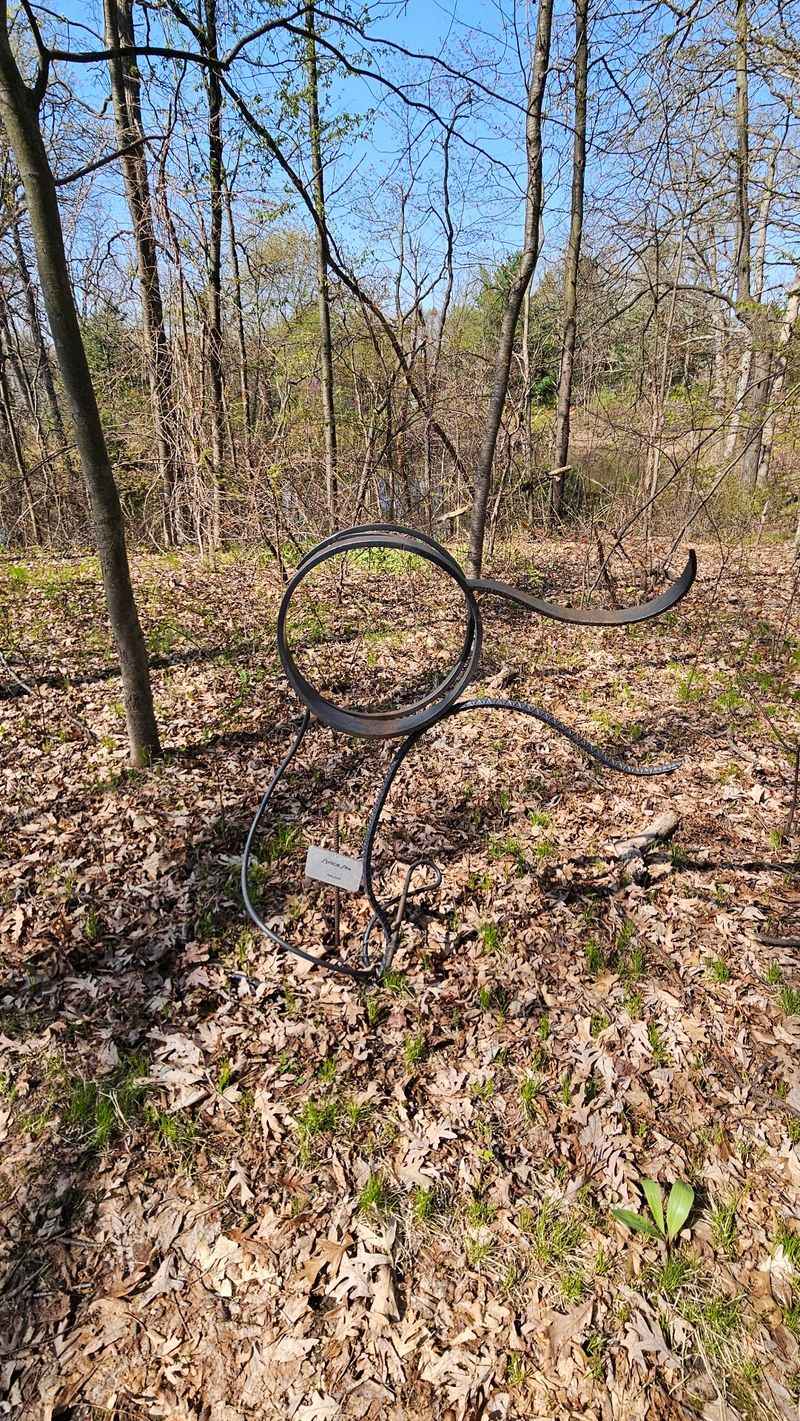
Some places need half a day to make an impression. Oaken Transformations Sculpture and Poetry Walk proves that a compact outing can still offer range.
In one short loop, the site combines walking, art, reading, and natural scenery without asking for a huge time commitment.
That makes it especially useful for travelers building a flexible afternoon in Brighton, Michigan. A local lunch, a short drive, and then a 20 to 30 minute stop at the trail can create a fuller day without heavy planning.
The walk suits people who enjoy adding one unusual stop instead of centering everything on a single big attraction.
The size of the experience also lowers the pressure. There is no need to map out a long route, pack for a strenuous hike, or commit to an all-day museum visit.
For parents, older adults, casual explorers, or anyone with a tight schedule, that simplicity can be a real advantage.
Short does not mean empty. The loop still has enough variation to hold attention because the trail shifts between sculpture viewing, poem reading, and pond-side observation.
A person in a hurry can move through quickly, but someone with a slower pace can turn the same route into a more lingering visit.
Because the setting is compact, it works well as a reset during a busy week. Even residents who live nearby could use it as a creative break rather than a special trip reserved for rare occasions.
That kind of easy access gives the place practical value beyond its artistic concept.
In a travel landscape packed with oversized attractions and long to-do lists, this Brighton spot stands out by being manageable. It offers enough texture to feel special while staying short enough to fit into ordinary life.
Best Seen Slowly, Not Rushed Like a Checklist Stop
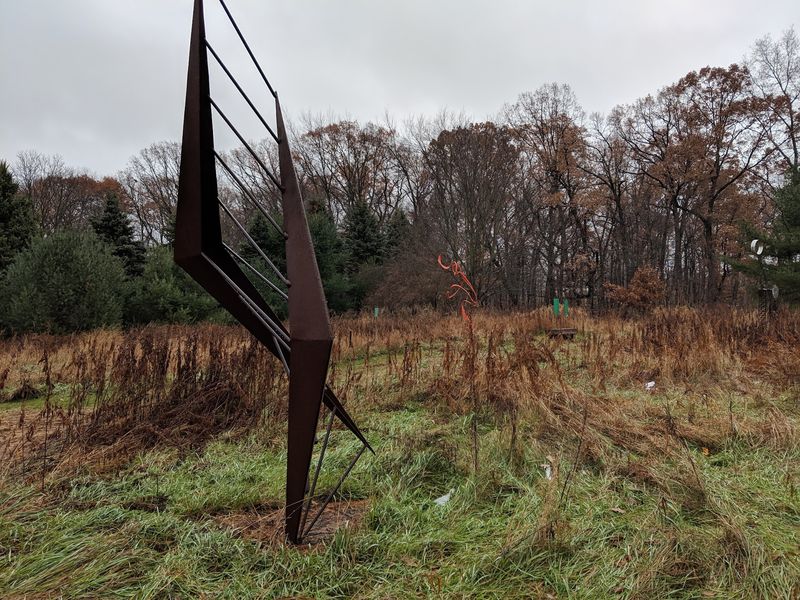
Speed can flatten a place like this. Oaken Transformations Sculpture and Poetry Walk may be short, but the best version of the visit comes from slowing down enough to notice how the pieces relate to the path, the trees, and the pauses between stops.
Treating it like a checklist can make the whole idea feel smaller than it really is.
A useful approach is to view the route in layers. Start by taking in the broad setting, then move to the sculptures, then the poems, and finally any extra information available through QR codes.
That order lets the walk build naturally instead of turning into a scramble for details.
Different kinds of visitors can shape the experience in their own way. Art lovers may spend more time circling individual works, while readers may linger over lines that connect with the quiet setting.
Families can turn the walk into a simple game by asking what each sculpture resembles or which poem line fits the landscape best.
Light timing matters more than many people expect. Morning or late afternoon can make textures and shadows easier to see, while harsher midday light may flatten some surfaces.
A calmer weekday pace may also suit the trail, especially since the site is part of a commercial complex and not an isolated park.
Bringing a charged phone helps with QR content, but constant screen use can break the rhythm. A better plan is to look first, read second, and only then pull up extra material when curiosity calls for it.
That keeps the walk grounded in its physical space.
The route rewards attentiveness rather than endurance. There are no grand obstacles here, only a chance to move a little slower and let sculpture, poetry, and setting work together in a measured way.
Hours and Access Matter More Here Than at a Typical Park
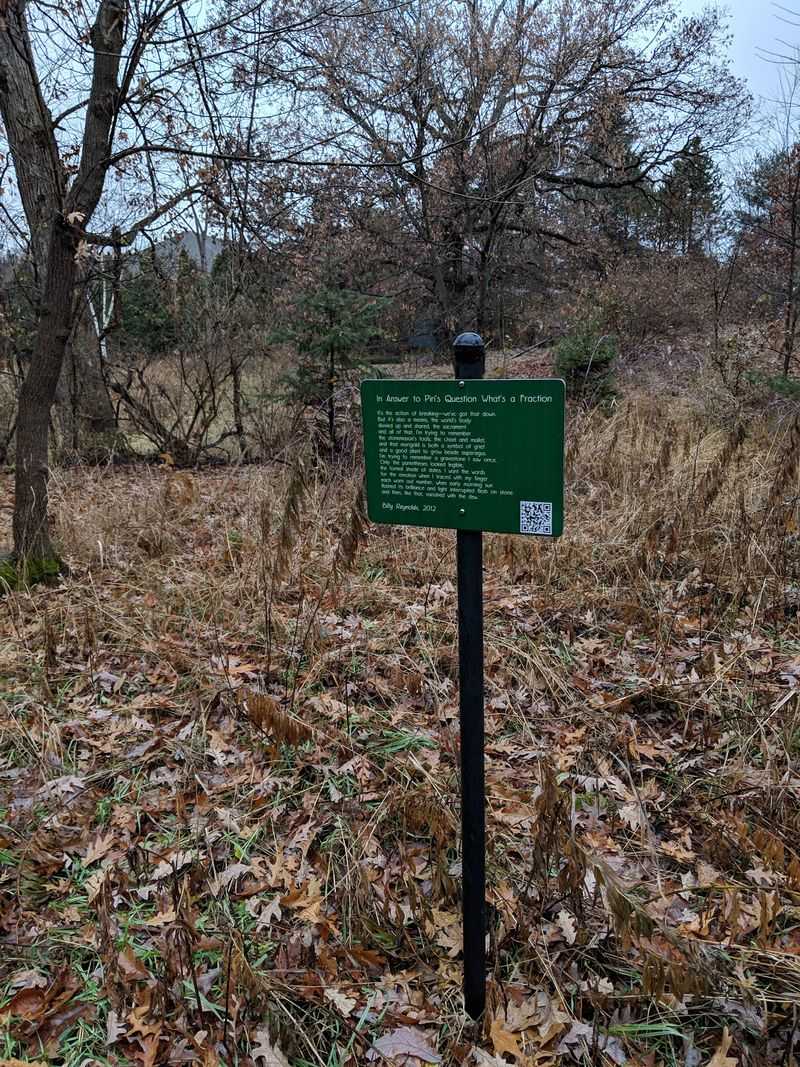
Planning counts at this location because it does not function like an always-open public park. Oaken Transformations Sculpture and Poetry Walk is associated with a commercial complex, and the posted schedule indicates weekday hours, generally 7:30 AM to 5:30 PM, with Saturday and Sunday closed.
That one detail can shape the entire outing.
Knowing the hours in advance helps prevent the most frustrating kind of visit: arriving ready for a walk and finding access unavailable. At least one public account has described reaching the site during listed hours and encountering a locked gate, so building in flexibility is smart.
When a place operates on business property, access can feel more dependent on timing than at a city trail.
The practical lesson is simple. Visit on a weekday, aim for the middle part of the day when possible, and have a backup stop in Brighton in case conditions change.
That approach keeps the outing relaxed instead of turning it into a rigid must-do.
Parking and entry also deserve attention. Because the trail is tucked behind business uses, first-time visitors should expect a more low-key arrival and keep an eye out for the correct turn.
A little patience at the start can save confusion later.
Weather is another planning factor because the experience is fully outdoors. Cold conditions can make reading QR-linked poetry less appealing, while spring, summer, or early fall may allow more time to explore comfortably.
The walk is short enough that even a narrow weather window can work.
Practical details may not be glamorous, but they matter here more than usual. When timing, access, and expectations line up, the trail works best as a smooth, easy cultural stop rather than a last-minute gamble.
Why This Outdoor Gallery Works Better Than a Standard Museum Visit
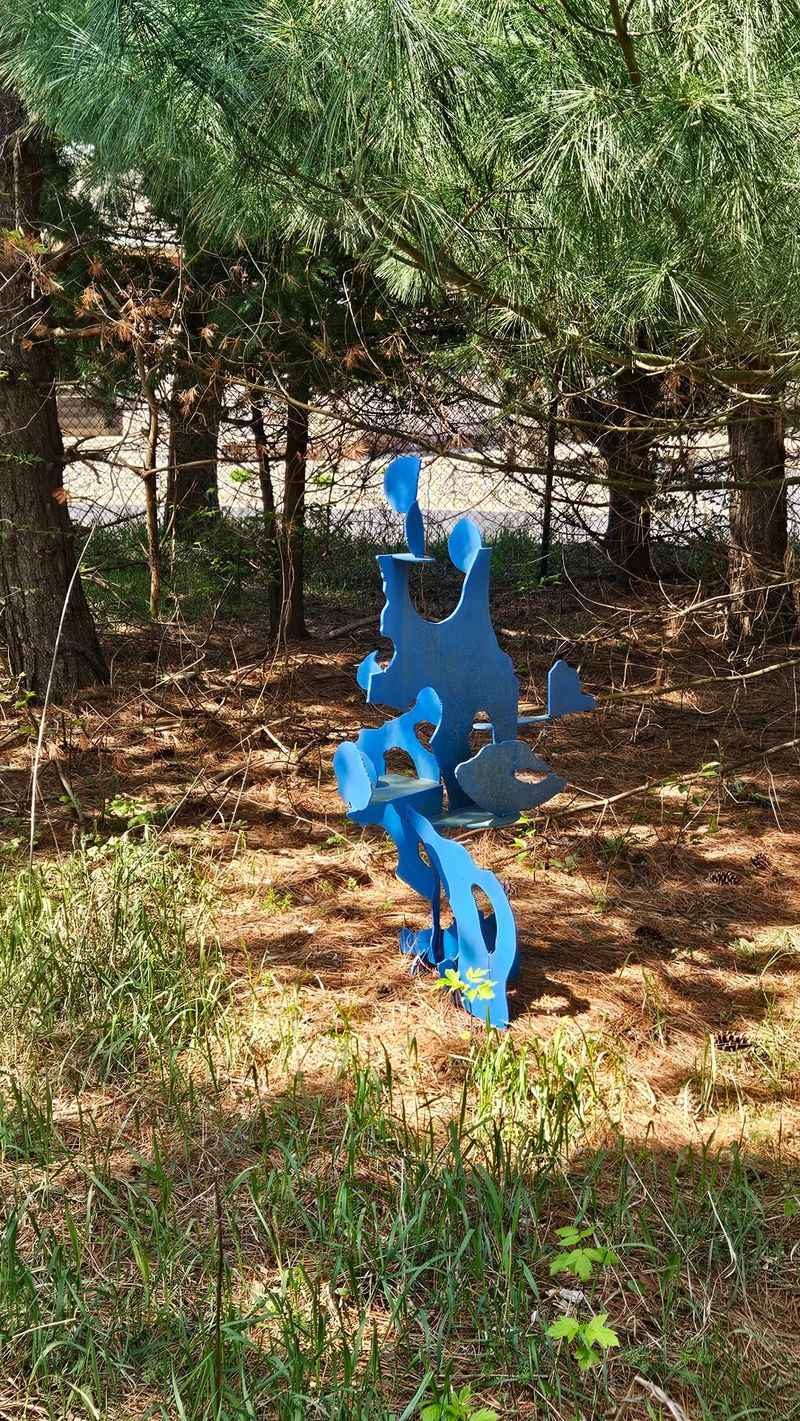
Fresh air changes the way art is received. At Oaken Transformations Sculpture and Poetry Walk, sculpture and poetry are not boxed inside galleries with fixed lighting and silent rooms.
They are placed along a path where movement, weather, and natural sound shape the experience from minute to minute.
That setup makes the art more approachable for people who do not always feel comfortable in formal museum spaces. There is no pressure to stand in one place, no rigid route through indoor rooms, and no need to understand every piece on the spot.
A person can simply walk, pause, read, look again, and keep going.
The outdoor format also encourages conversation. Because the visit unfolds on a trail, talking softly about a sculpture or reacting to a poem feels more natural than it sometimes does indoors.
The place supports interpretation without demanding a single right answer, which is helpful for mixed-age groups.
Scale plays an important role too. This is not a giant institution trying to overwhelm with quantity.
Its strength comes from concentration. A short loop with selected creative stops can be easier to absorb than a much larger museum where attention gets tired before the final room.
There is also a refreshing link between art and ordinary life. Set near businesses rather than far from them, the walk shows that culture does not have to be separated from daily routines.
A weekday errand, lunch outing, or quick local detour can lead straight into a small landscape of sculpture and verse.
That is why the trail stands out. It takes elements often seen in separate places, art, literature, and nature, and brings them together on a manageable path in Brighton. The result is an outdoor gallery that asks very little from visitors while offering a surprisingly rich change of pace.
Share this story