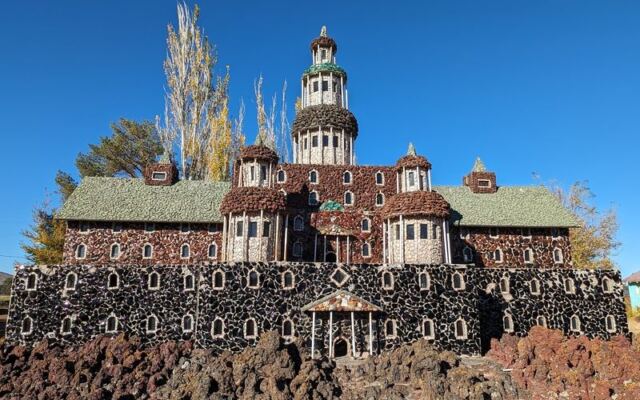
Somewhere between Redmond and Bend, peacocks perch on tiny castles made of lava rock, and nobody seems surprised. The towers, bridges, and patriotic monuments were built by hand, one stone at a time, and many are still standing after decades in the high desert. Some displays are even being rediscovered on the property today.
The site is the kind of old roadside stop that many Oregonians remember from childhood, and now a restoration effort is working to keep it open for the next generation. Admission runs on a suggested donation, so a family outing here stays easy on the wallet. Keep reading to learn where this stone kingdom sits, what makes it so unusual, when it is open, and the small tips that help you see every corner, including one section many people miss entirely.
A Stone Kingdom Off SW 77th Street
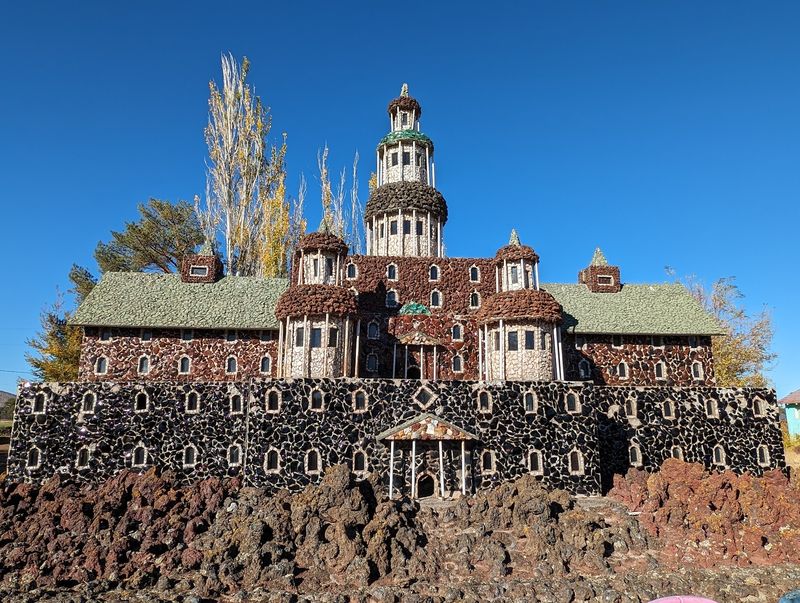
The tiny kingdom has a real mailing address. Petersen Rock Garden & Museum sits at 7930 SW 77th St, Redmond, OR 97756, in the heart of Central Oregon.
It is a historic roadside folk art attraction with storied gardens and a museum. The grounds hold architectural structures built from petrified wood, lava, and rock.
The location lands between Redmond and Bend, so it fits neatly into a drive through the high desert. Expansive views frame the stonework from nearly every angle.
First impressions can be a little misleading. From the driveway, parts of the property can look worn, but the mood shifts once you start walking the paths.
Many people arrive expecting a quick look and end up staying longer. Some families spend more than two hours here, though a faster loop is possible.
The garden is not a polished theme park, and that is part of the appeal. It is the work of one builder’s long vision, and it carries the marks of age proudly.
So what exactly did that builder create, and why does it still matter? The answer starts with the man behind the stones.
The Builder Behind the Castles
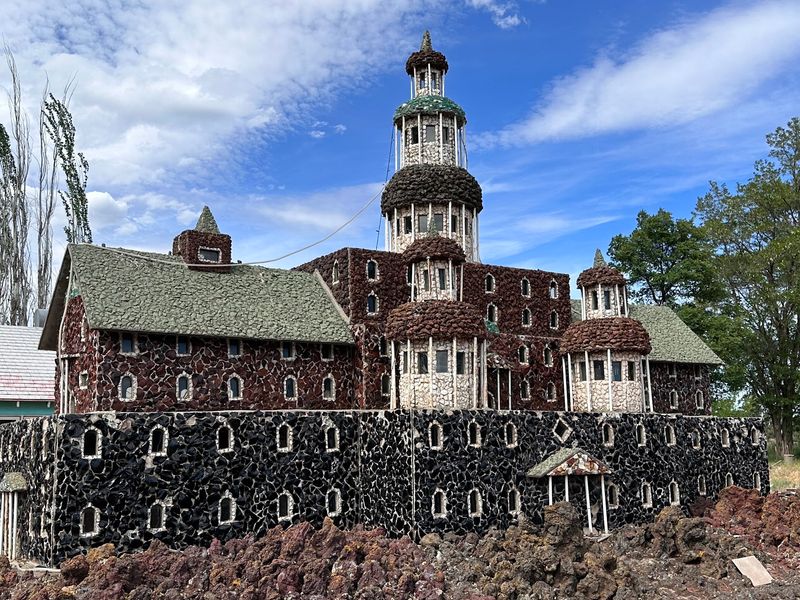
Every rock here was placed by a person with patience to spare. The garden springs from one owner’s vision, diligence, and devotion to stone.
He built houses, walkways, and bridges, all crafted from the minerals of the region. The result is a whole miniature landscape that feels like a private world opened to the public.
Many of the stones came from close to home. Much of the material on display was found within about 85 miles of Redmond.
That local sourcing gives the place a strong Oregon identity. It is less a collection of imported curiosities and more a portrait of the surrounding land.
The story is still unfolding, too. Additional rock displays made by the former owner are still being found on the site.
Staff in the gift shop often share a short history lesson about the creator and the area. It is a friendly way to learn how a farm property became a landmark.
Knowing the backstory changes how the structures look. Each tower suddenly reads as hours of careful handwork rather than random decoration.
Miniature Castles and Patriotic Monuments
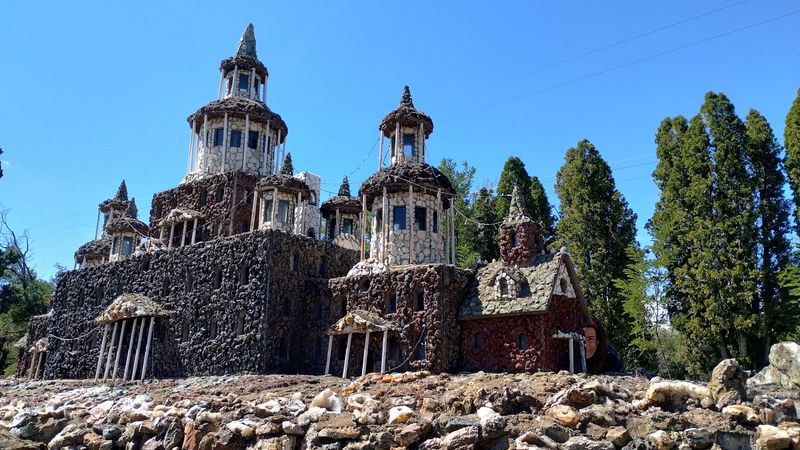
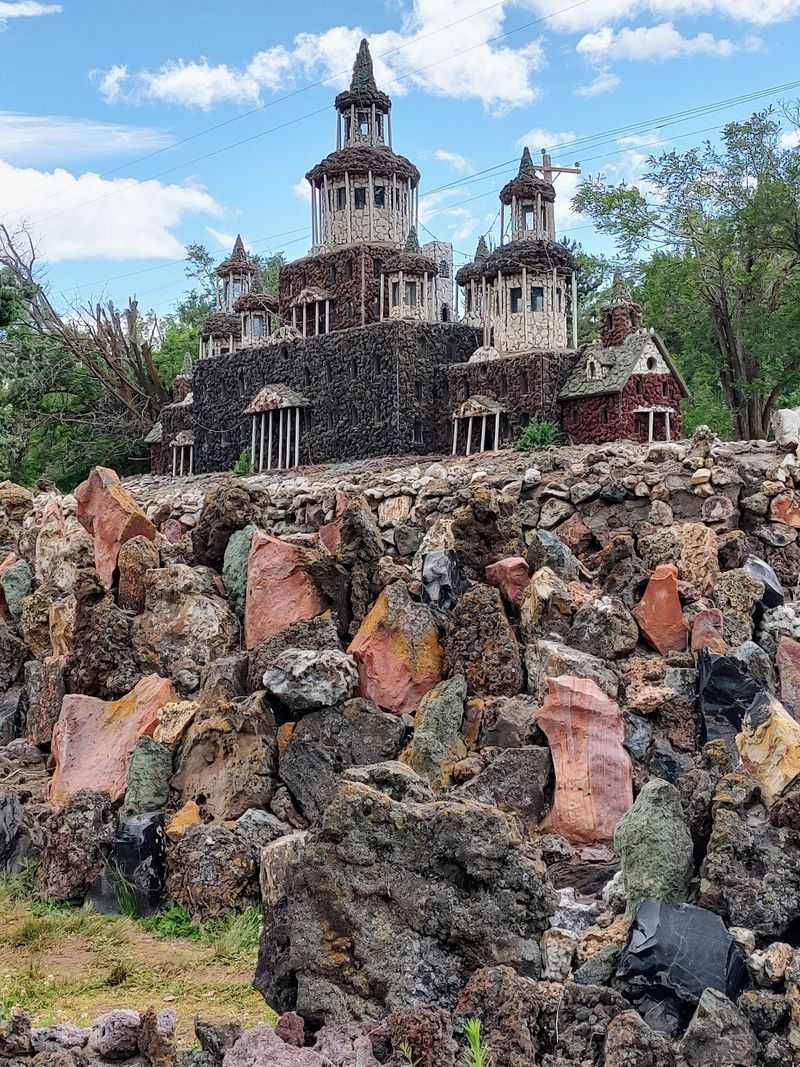
Royalty would need to be very small to live here. The castles stand only a few feet tall, yet their size and complexity are genuinely impressive.
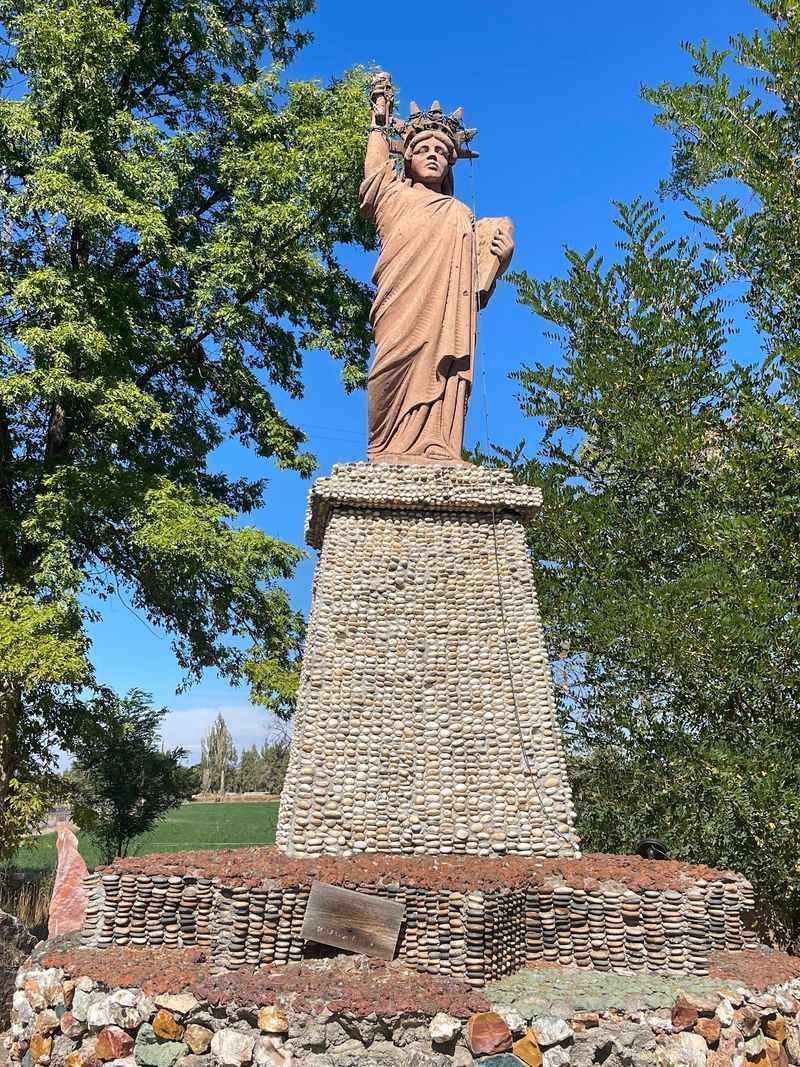
Builders’ materials include lava rock, agate, petrified wood, obsidian, and glass. Concrete holds many of these pieces together in detailed forms.
Patriotic monuments share space with the castles. Bridges connect sections of the grounds, adding to the storybook layout.
Each creation seems to carry its own meaning. Some people spend a long time studying the details and guessing at the builder’s intent.
The structures are fragile with age, so climbing is not allowed. Kids can admire them up close, but hands and feet should stay on the paths.
The weathering is visible in places. That aged look is part of the charm, and it also explains why restoration has become such a priority.
A camera comes in handy here. The castles make great photo subjects, especially with a peacock wandering into the frame.
Peacocks Running the Place
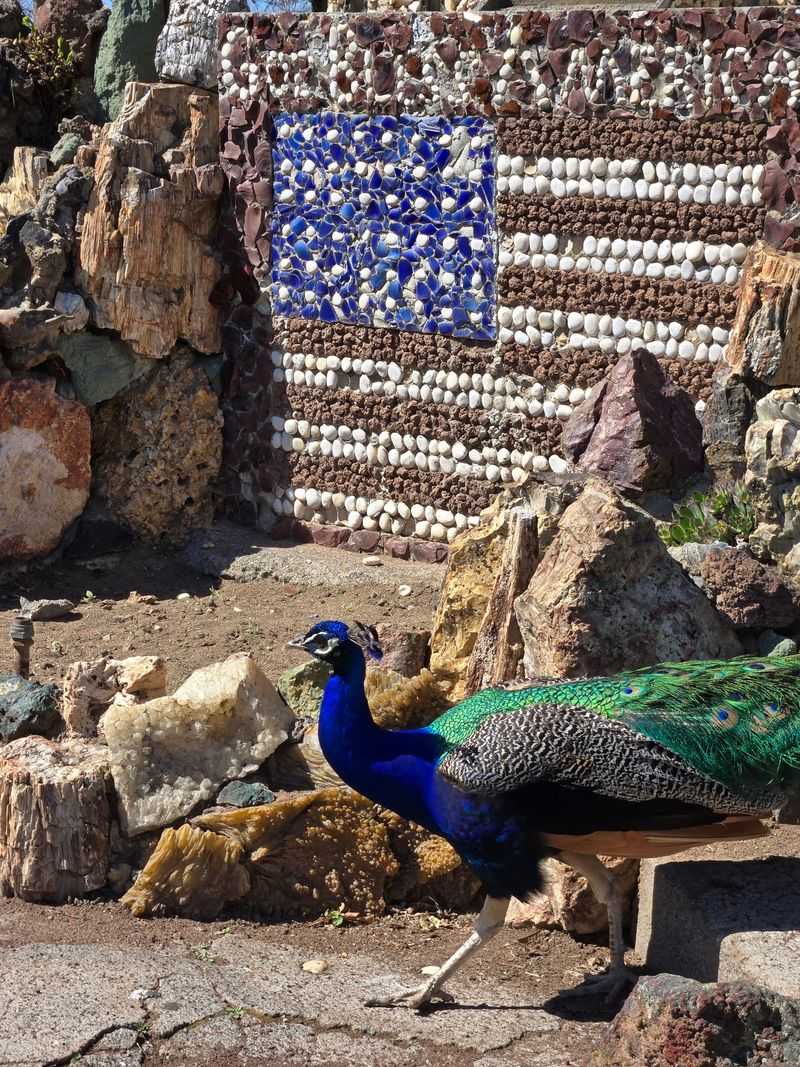
The real rulers of this kingdom have feathers. Peacocks roam freely across the grounds, often perching right on top of the stonework.
They are the most talked-about feature of the whole property. Chickens wander the paths as well.
Feeding them is a favorite activity. A cup of bird food costs about $1 at the museum.
The peacocks are not shy. During mating season they call loudly to each other, and the sound can catch first-timers off guard.
Families often spend a surprising amount of time with the birds. For young kids, feeding them may become the highlight of the trip.
Feathers are part of the fun, with a few rules. The gift shop has offered a couple of free feathers to guests who return their empty food cups.
One spot calls for courtesy. A privately owned white house stands on the property, and people live there, so give it space even when the birds gather nearby.
Treat the peacocks with respect, and they will happily steal the show.
Inside the Rock Museum
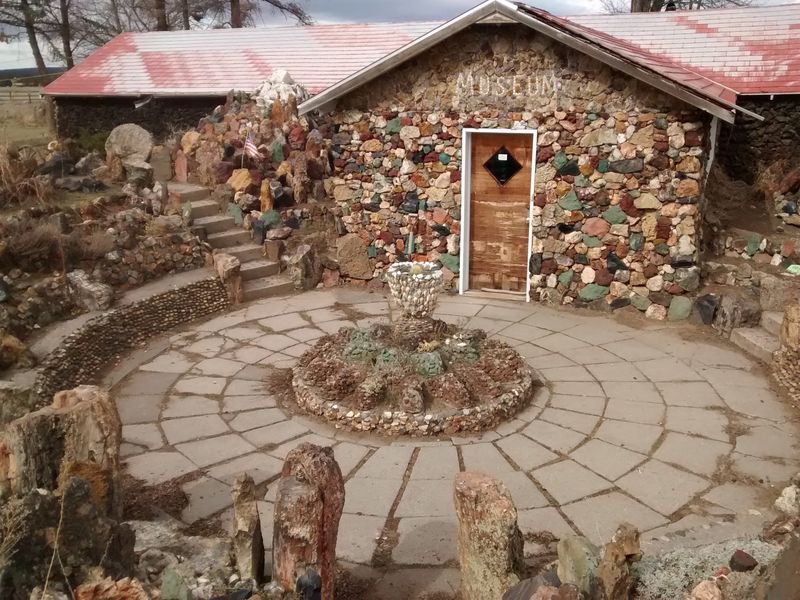
Rockhounds, here is your headquarters. The museum holds rocks of all kinds from Central Oregon and around the world.
Displays also include artifacts such as arrowheads. Preserved archaeology adds a historical layer to the geology.
The museum has received updates in recent years. A grand opening for the refreshed space was held on April 6th.
Volunteers can be a great resource. Some are knowledgeable about geology and the surrounding region and enjoy answering questions.
The collection works well for many ages. Kids often leave with a renewed interest in rocks, while adults find plenty of detail to study.
It is a good place to start a visit. Learning what obsidian and petrified wood look like indoors makes them easier to spot in the garden outside.
Save time for the glowing room down the hall, though.
A Room That Glows
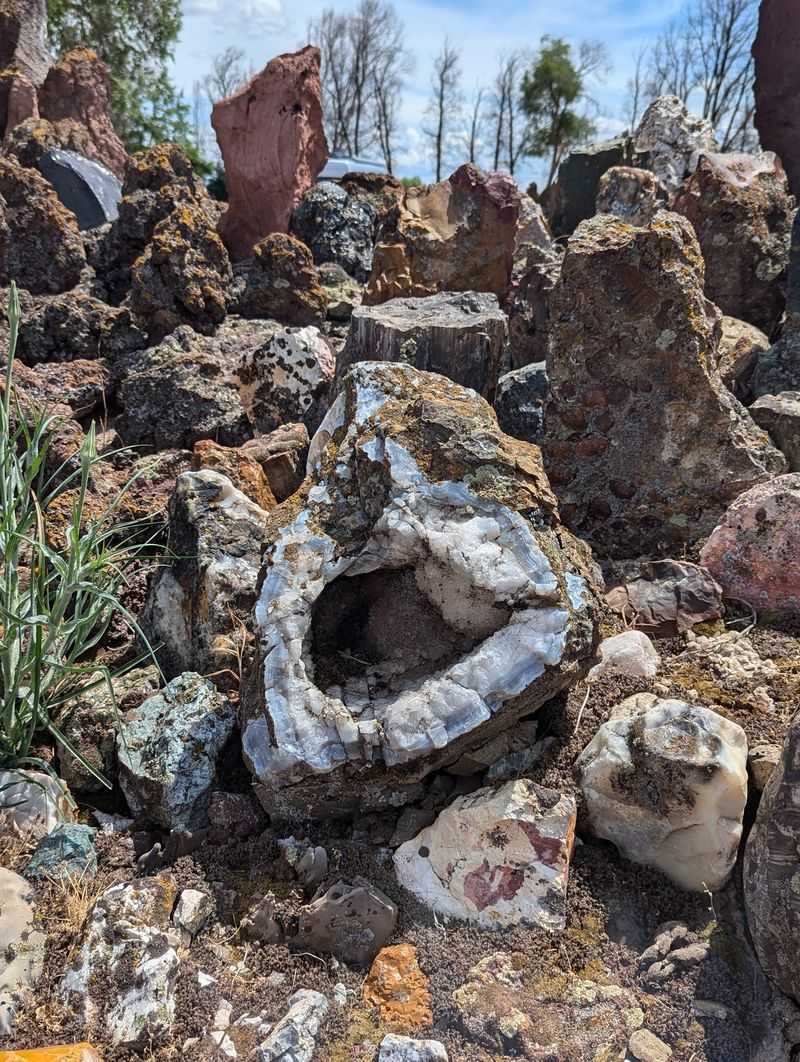
Lights off, rocks on. The black light room is one of the museum’s most popular stops.
Under ultraviolet light, certain minerals reveal colors that are hidden in normal daylight. The effect turns ordinary specimens into something unexpected.
Thundereggs get special attention. These are a famous Oregon find, and volunteers have demonstrated how they react under black light.
The display is compact but memorable. Many people call it one of the most impressive parts of the visit.
Kids especially tend to enjoy the reveal. It is a quick science lesson that does not feel like a lesson at all.
The room pairs well with a stop at the gift shop afterward. Seeing what minerals can do may inspire a new addition to a home collection.
Step back into the sunshine, and the outdoor stones may never seem quite as plain again.
The Gift Shop Treasure Hunt
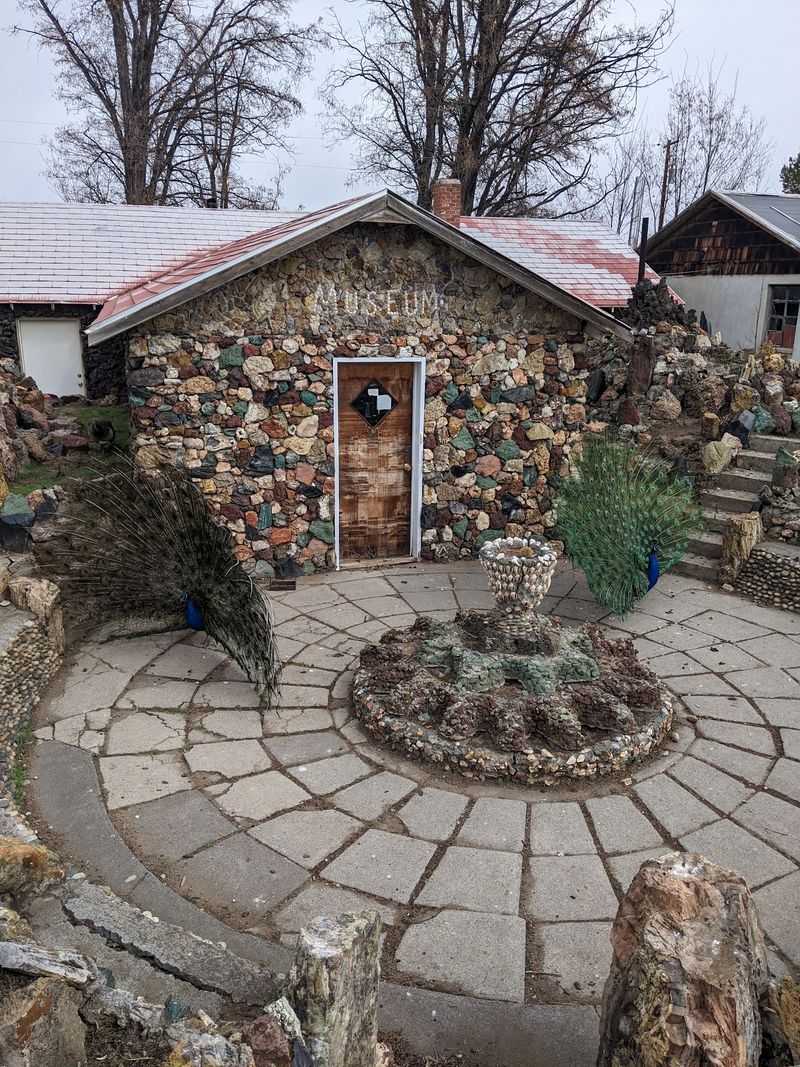
Plenty of people walk in for a cup of bird food and walk out with a geode. The gift shop is a destination of its own.
Shelves hold rocks for sale, from small stones for young collectors to showpiece items for the home. Many shoppers find the prices surprisingly reasonable.
The shop also sells drinks. It doubles as the place to pay admission and pick up peacock food.
Staff are often friendly and helpful. Conversations here can turn into short history lessons about the garden.
Purchases matter beyond souvenirs. Shop sales help support the restoration and keep the grounds open to the public.
Kids may want to bring a little spending money. Adding a stone to a growing collection is a popular way to end the day.
Consider it a small investment in keeping a classic Oregon roadside stop alive.
Ponds, Islands, and the Missed Side
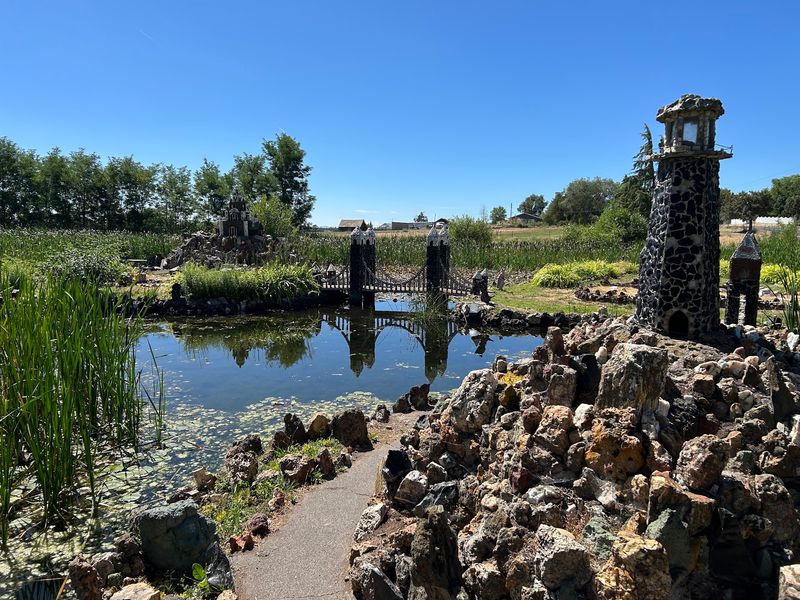
Here is the tip that saves the most regret. An exhibit with water and islands sits at the front of the property, across the entrance driveway.
It is not well marked, and many people miss it completely. Make a point to cross over before leaving.
The ponds and fountains are a seasonal feature. Water features appear to run during summer.
At other times, the ponds may be low or muddy, and fountains may be off. Plan a summer return if the water displays are a priority.
Restoration also touches this area. Upkeep takes funding, and the grounds still need attention in spots.
Even dry, the islands show the builder’s creativity. The layouts are worth studying in any season.
Check both sides of that driveway, and the kingdom will feel twice as big.
Restoration, Families, and Easy Company
Some people came here as children, then brought their kids, and now bring grandkids. That kind of loyalty is exactly why preservation matters.
Restoration work is underway, including improvements to the historic farmhouse. Many longtime fans are pleased to see the progress.
The atmosphere is calm and quiet. The setting feels like an oasis in the high desert.
Families of all sizes fit right in. The grounds are toddler friendly and dog friendly.
Picnic tables are spread around the property. Packing a lunch turns a short stop into a relaxed afternoon.
A shed holds an art installation where guests can add wishes. It is a small, personal touch.
Boat parking has been accommodated, a handy detail for travelers on lake trips. It is that kind of easygoing place.
Hours, Donations, and a Fair Verdict
Timing is everything here. The garden is open Friday through Monday, from 10 AM to 4 PM.
It is closed Tuesday, Wednesday, and Thursday. Weekend trips are the easiest to plan.
Admission works on a suggested donation. The recommended amount is about $10 per adult and older child, paid on the honor system.
That model keeps a family outing affordable. It also directly funds the restoration effort.
Expect a laid-back stop rather than a full-day destination for many. Still, plenty of guests linger for two hours or more.
Remember the simple rules: no climbing on structures, and give the private home its space. Bring cash for bird food.
For more details, visit petersenrockgarden.org before heading out.
Quirky, weathered, and full of heart, this stone kingdom earns its spot on a Central Oregon itinerary. Drop a donation in the box, and help the castles stand a while longer.
Share this story