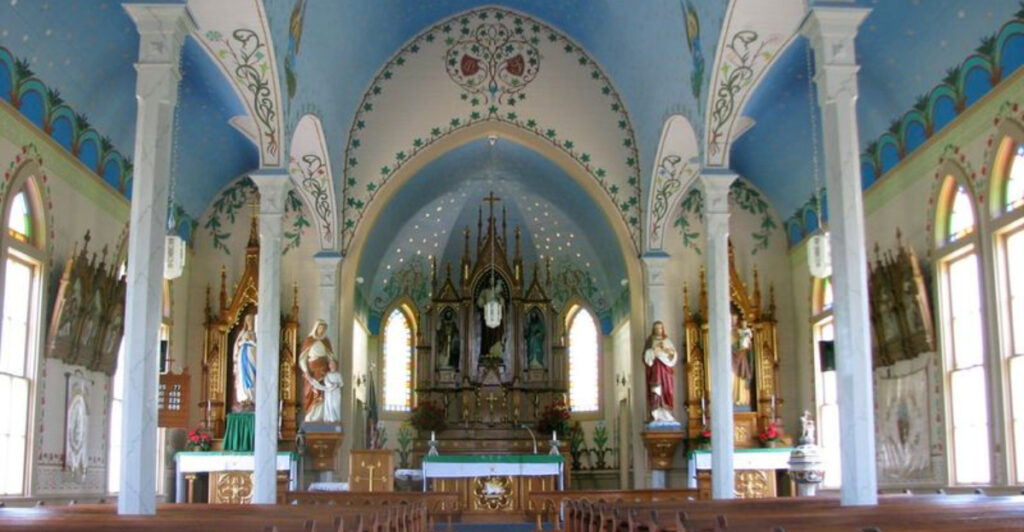
Hidden among the rolling hills near Schulenburg, this unassuming little church holds one of Texas’s most stunning artistic treasures inside. Saints Cyril and Methodius Catholic Church in Dubina is part of the famous Painted Churches of Texas, and its interior is an explosion of color, stars, and intricate designs that’ll leave you speechless. Built by Czech immigrants who wanted to bring a piece of their European heritage to their new Texas home, this chapel proves that big beauty can come in small packages.
1. A Starry Blue Heaven Above Your Head
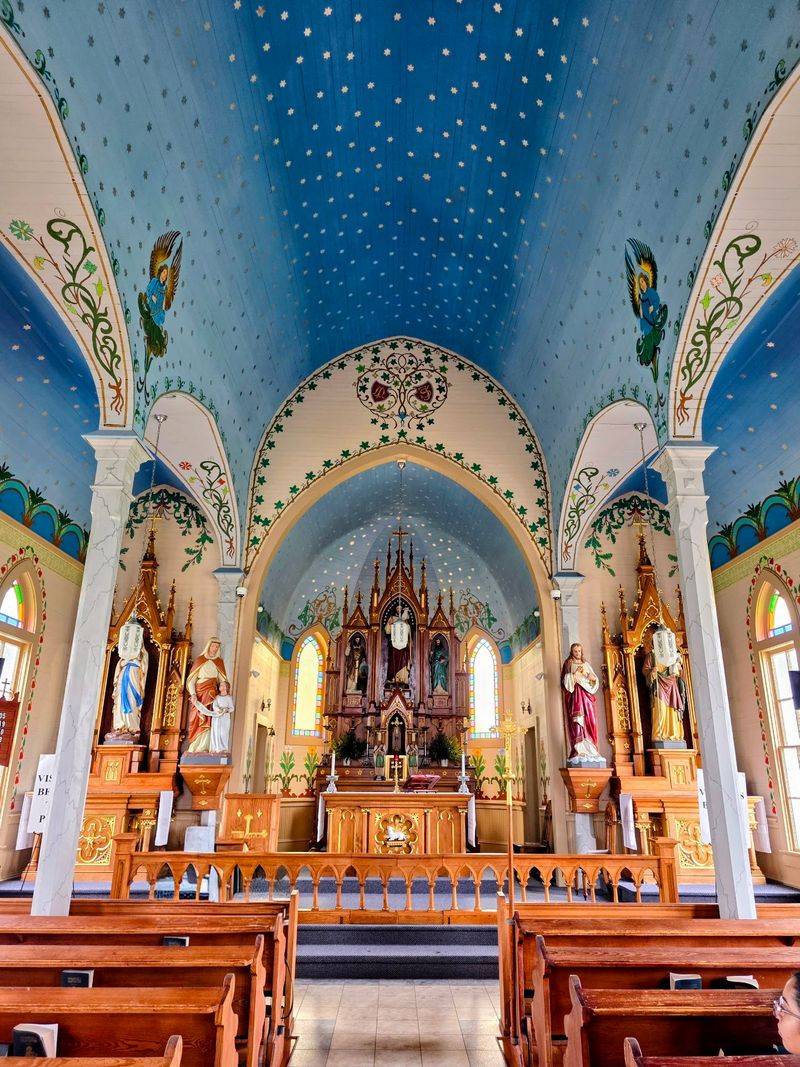
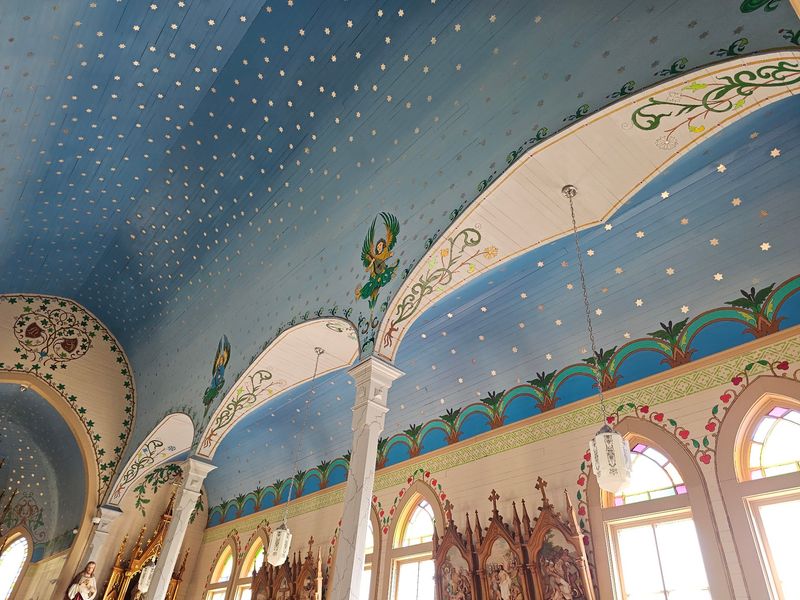
Walk through those church doors and your eyes shoot straight up. The ceiling stretches overhead like a Texas sky at twilight, painted in soft shades of blue that seem to glow even on cloudy days. Hundreds of golden six-pointed stars dot the surface, creating a heavenly canopy that makes you feel like you’re standing under the night sky.
The artists who painted this masterpiece in the late 1800s didn’t have fancy equipment or modern paint. They worked on scaffolding with handmade brushes, mixing pigments by hand and applying each star with painstaking precision. The result is something photographs simply can’t capture because the light shifts and changes as you move through the space.
Unlike some churches where decoration feels overwhelming, this starry ceiling creates a sense of peace. The pale blue tones keep things calm while the gold stars add just enough sparkle to remind you this is a special place. Czech immigrants chose these specific colors because they reminded them of Mary’s traditional robes in religious art.
Visitors often spend twenty minutes just staring upward, trying to count the stars or trace the patterns. Kids love spotting different star formations while adults appreciate the incredible craftsmanship. The ceiling alone makes the drive from Houston or San Antonio completely worth it, and it’s just the beginning of what this little church has to offer.
2. Intricate Stencil Work That Tells a Story
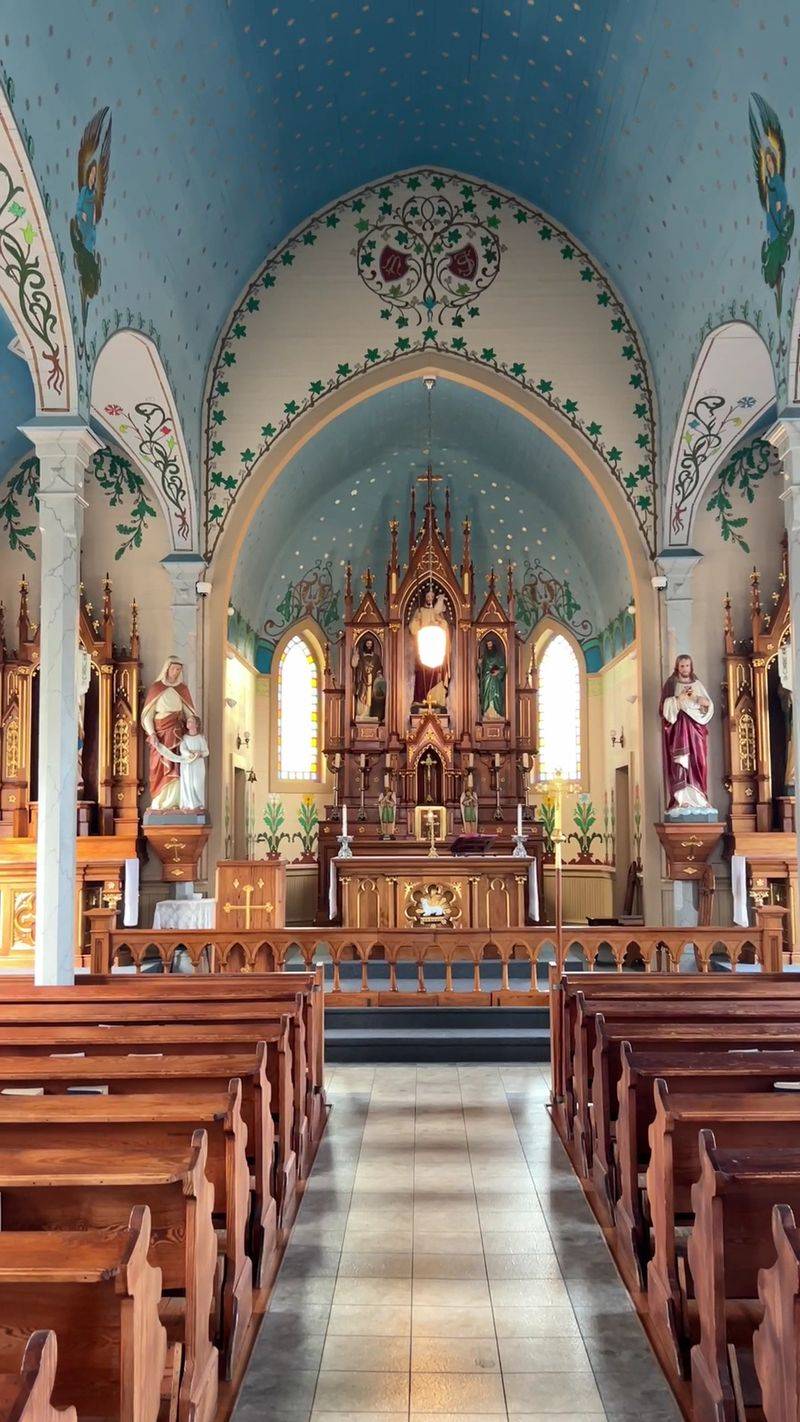
Every square inch of wall space tells part of a bigger story through elaborate stencil patterns. Delicate flowers wind their way up columns, vines twist around doorways, and leaves seem to dance across the plaster in designs that took months to complete. The artists created custom stencils for each section, ensuring no two areas look exactly alike.
What makes this stencil work special is the attention to botanical detail. These aren’t generic flower shapes but recognizable blooms that would have grown in Czech gardens back in Europe. Roses, lilies, and native wildflowers all make appearances, painted in colors that have stayed vibrant for over a century thanks to the quality of the original pigments.
Angels peek out from unexpected corners, their faces serene and their wings detailed with individual feathers. Some hold scrolls with Czech inscriptions, others gesture toward the altar, guiding your eye through the space. The stenciling creates a visual rhythm that moves you naturally from the entrance toward the sanctuary.
Modern restoration efforts have preserved these delicate designs while carefully touching up areas where time had taken its toll. Parishioners take enormous pride in maintaining this artistic heritage, understanding they’re stewards of something irreplaceable. Watching sunlight filter through the windows and illuminate different stenciled sections throughout the day adds another layer of beauty to an already stunning display.
3. The Dramatic Altar That Commands Attention
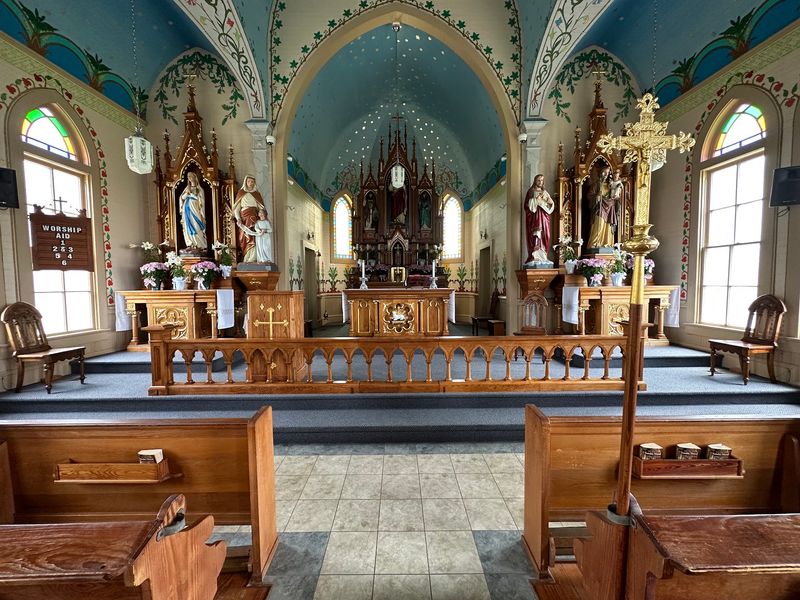
Rising from the front of the church like a piece of European baroque architecture, the altar is an absolute showstopper. Carved wood, gilded details, and religious statuary combine to create a focal point that draws every eye in the building. The craftsmanship rivals anything you’d find in much larger cathedrals, proving these Czech settlers weren’t cutting corners when it came to honoring their faith.
Multiple tiers create visual interest and provide spaces for candles, flowers, and religious objects used during Mass. The central tabernacle sits in a position of honor, surrounded by carved angels and saints that seem to stand guard. Gold leaf catches the light from the windows, making the whole structure shimmer during afternoon services.
Local woodworkers and artisans from the Czech community built this altar by hand, often donating their time and materials. They brought techniques passed down through generations, creating joinery so precise that the structure has stood solid for well over a hundred years. Some of the statues were imported from Europe while others were carved locally by talented craftsmen.
The altar’s size might seem disproportionate to the small church, but that’s exactly the point. Immigrants who had little material wealth poured everything into creating a worship space that reflected the grandeur of what they’d left behind. Standing before it, you understand how much faith and community meant to people building new lives in a challenging frontier environment.
4. Czech Heritage Written Into Every Corner
Reading the walls here requires knowledge of Czech because that’s the language you’ll find throughout the building. The Stations of the Cross feature Czech inscriptions, hymn numbers reference Czech songbooks, and biblical quotes appear in the language these immigrants spoke at home. Walking through feels like stepping into a piece of Central Europe that somehow landed in the Texas countryside.
The first Czech settlers arrived in this area in the 1850s, making Dubina the earliest Czech settlement in Texas. They faced incredible hardships including harsh weather, unfamiliar crops, and isolation from their homeland. Building churches that preserved their language and traditions became a way to maintain cultural identity while adapting to American life.
Even today, some Masses are celebrated in Czech, and the congregation includes descendants of those original families. The language connects modern parishioners to ancestors who built this church with their own hands. Visitors who don’t speak Czech still appreciate seeing the beautiful script painted across walls and carved into wood.
Language preservation efforts extend beyond the church walls, with local historical societies working to document and teach Czech to younger generations. The church serves as a living museum where culture and faith intertwine. Seeing Czech words surrounded by Texas landscapes creates a fascinating cultural contrast that makes this place truly unique in the American religious landscape.
5. Part of the Dubina Historic District
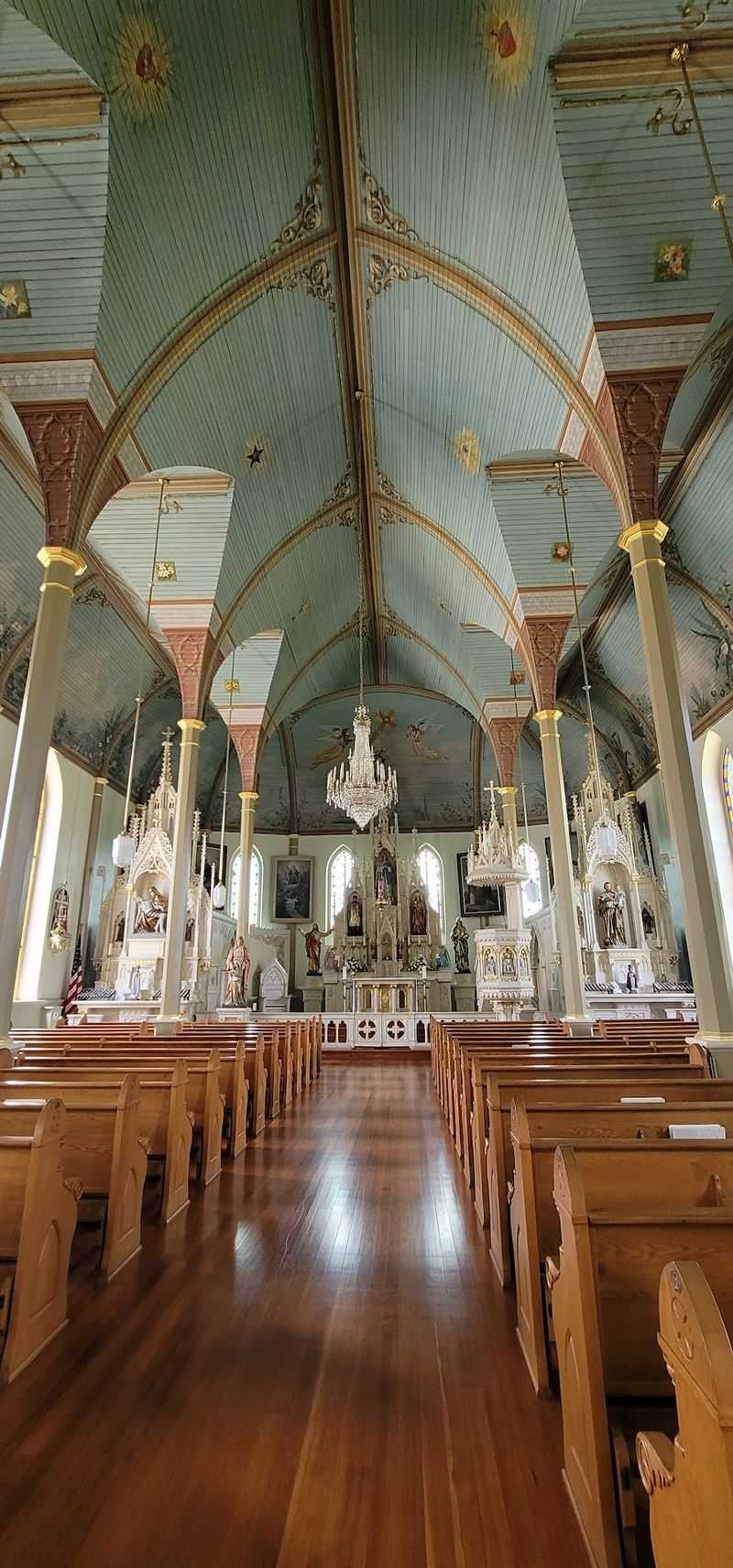
Recognition came officially in 2003 when the Dubina Historic District earned a spot on the National Register of Historic Places. This designation acknowledges not just the church but the entire settlement area as historically significant. Being the first Czech settlement in Texas gives Dubina special importance in understanding immigration patterns and cultural preservation in the American South.
The historic district includes the church, cemetery, and surrounding grounds that tell the complete story of Czech pioneer life. Walking the property, you’ll find old grave markers with Czech names, memorial plaques honoring military veterans from the community, and landscape features that reflect European sensibilities adapted to Texas terrain. Everything works together to create a cohesive historical experience.
Preservation efforts involve multiple organizations working to maintain authenticity while making the site accessible to visitors. Careful restoration projects use period-appropriate materials and techniques, ensuring repairs don’t compromise historical integrity. The community takes this responsibility seriously, understanding they’re protecting something valuable for future generations.
Compared to the other Painted Churches scattered around Fayette County, many consider Saints Cyril and Methodius the most elaborate and best preserved. Its combination of artistic achievement, cultural significance, and historical importance creates a perfect storm of reasons to visit. The National Register designation helps secure funding for ongoing maintenance and raises awareness about this incredible Texas treasure hiding in plain sight along a rural farm road.
6. A Peaceful Country Setting Worth the Drive
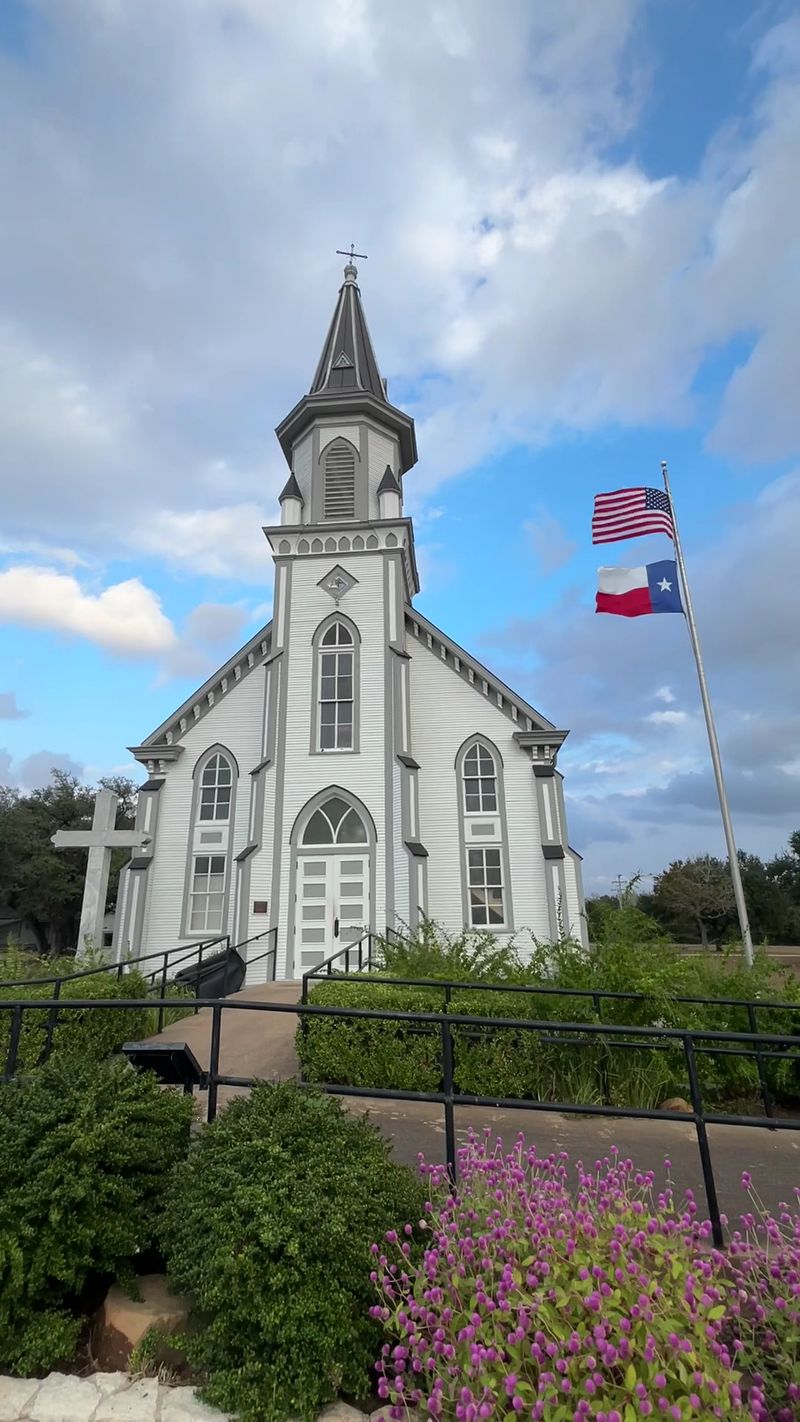
Getting here means leaving the interstate and wandering down farm roads where cattle outnumber cars. The seven-mile drive from Highway 90 takes you through quintessential Texas countryside with rolling fields, old farmhouses, and that big sky that makes everything feel wide open. The journey itself becomes part of the experience, slowing you down and preparing you for the quiet beauty waiting at the end.
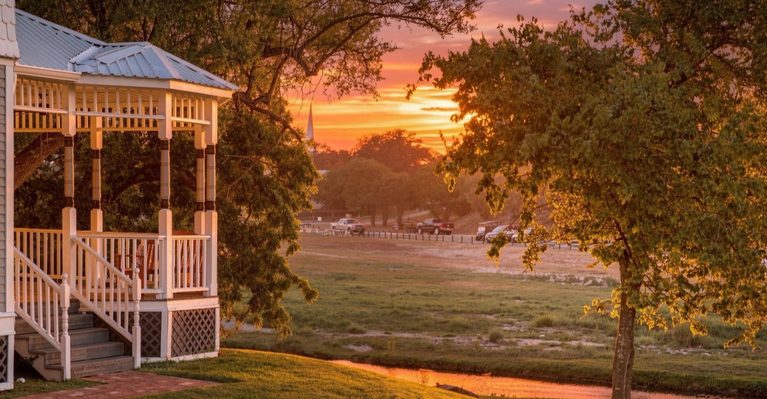
Saints Cyril and Methodius sits surrounded by open land with a cemetery across the street and not much else in sight. This isolation is part of its charm because you can actually hear yourself think, feel the breeze, and take in the surroundings without distraction. The church looks almost impossibly white against green fields and blue sky, a beacon drawing you closer.
Plenty of parking on a gravel lot makes visiting easy despite the rural location. A handicap ramp ensures accessibility for all visitors, and the grounds invite wandering and exploration. Many people pack a picnic and make an afternoon of it, especially when combining this church with visits to other Painted Churches in the area.
The tranquil setting reflects the lives these Czech farmers built, centered around faith, family, and working the land. Modern parishioners maintain that connection to place and heritage. Visitors consistently mention how the peaceful surroundings enhance the spiritual and artistic experience inside, creating a complete escape from busy modern life just an hour or so from major Texas cities.
7. Still an Active Parish Serving the Community
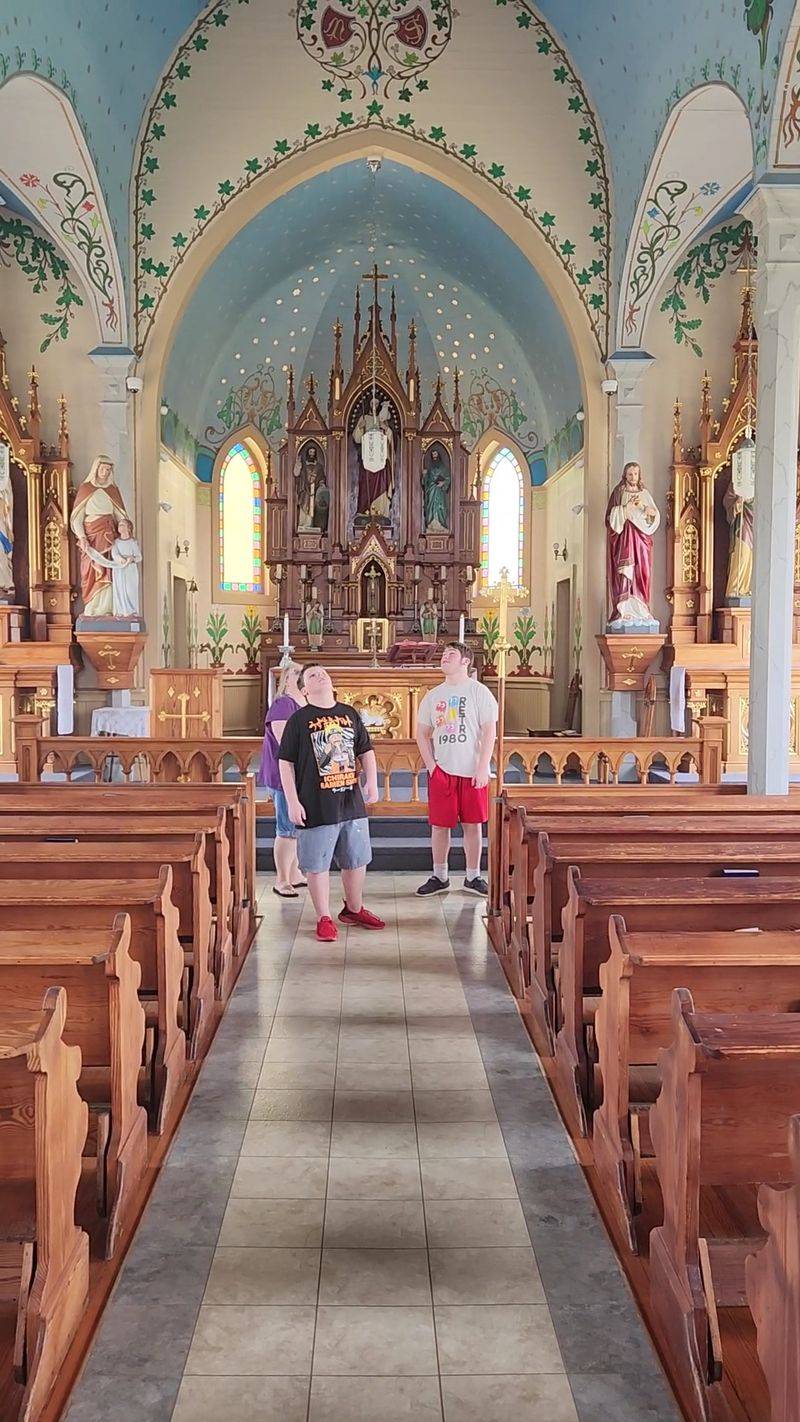
This isn’t a museum piece you look at from behind velvet ropes. Saints Cyril and Methodius remains a functioning parish where real people gather for Mass, celebrate sacraments, and maintain living traditions. Walking in, you’ll smell incense, see fresh flowers on the altar, and find brand new songbooks in the pews alongside century-old fixtures.
The church opens daily from 8 AM to 5 PM, welcoming visitors outside of Mass times to explore and appreciate the artwork. A donation box near the entrance allows guests to contribute to ongoing maintenance costs. The community depends on these donations and parish support to keep this historic treasure in good condition for future generations.
Regular services continue in both English and Czech, connecting past and present in meaningful ways. The confession box still gets used, stations of the cross are prayed during Lent, and all the traditional Catholic practices continue just as they have for over a century. This living quality makes the church feel vibrant rather than frozen in time.
Parishioners show remarkable dedication to preserving their heritage while remaining an active faith community. They organize events, coordinate with tour groups from Schulenburg, and welcome visitors with genuine warmth. The congregation includes families who’ve attended for generations alongside newer members drawn to the church’s beauty and history.
Experiencing this blend of preservation and active use gives visitors a richer understanding of how historic sites can remain relevant and cherished in modern Texas.
8. Photography and Tours Bring This Treasure to Life
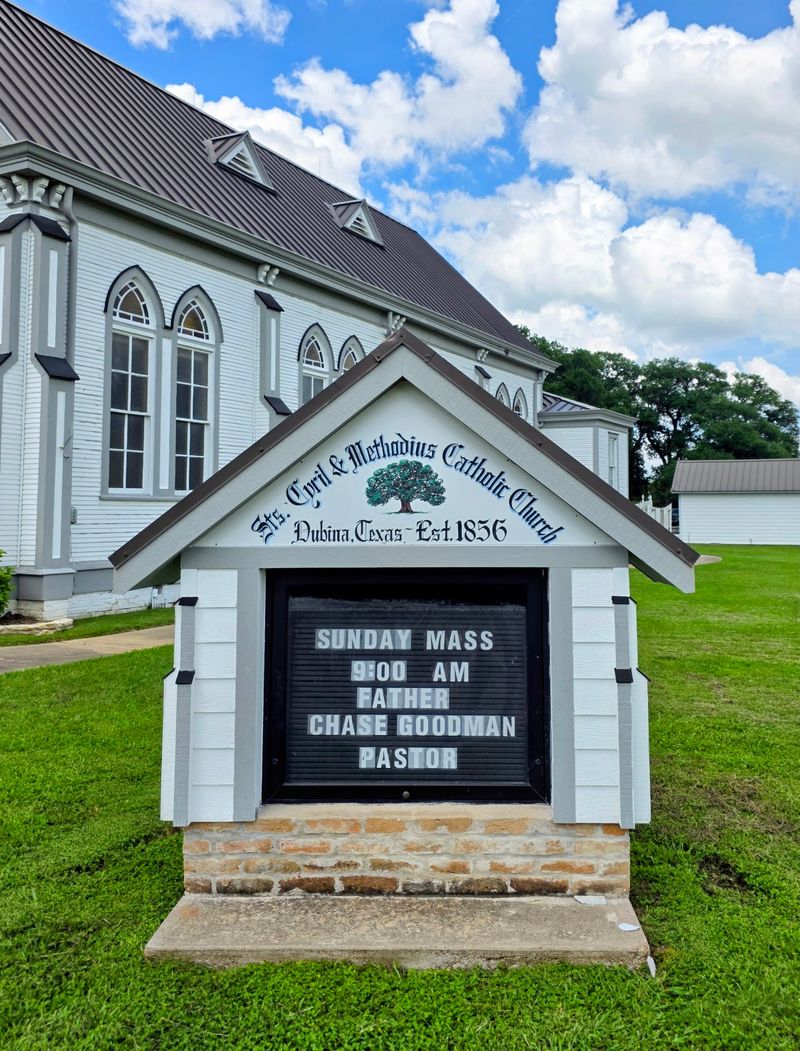
Camera phones come out immediately when people step inside because the urge to capture this beauty is irresistible. Photographers love the challenge of capturing the intricate details, playing with natural light filtering through windows, and finding angles that showcase the full scope of the artwork. Even with a locked gate during off-hours, determined visitors angle their cameras through the bars to grab shots of the interior.
The Schulenburg Chamber of Commerce runs organized tours of the Painted Churches, providing transportation and expert guides who explain the history, artistry, and cultural significance. These tours solve the logistics of visiting multiple churches spread across the countryside and add context that deepens appreciation. Guides share stories about the families who built these churches and the artists who decorated them.
Solo visitors should note that access policies can vary, with some reviews mentioning locked gates outside regular hours. Calling ahead ensures you won’t make the drive only to find limited viewing. During open hours, you’re free to explore at your own pace, though photography etiquette matters in an active house of worship.
Social media has introduced this hidden gem to broader audiences, with stunning photos sparking road trip plans across Texas and beyond. Videos on YouTube document visits and share the experience with people who can’t make the trip themselves. The visual impact translates even through screens, though everyone agrees seeing it in person creates a completely different level of appreciation for the artistry and faith that created this remarkable space.
Share this story