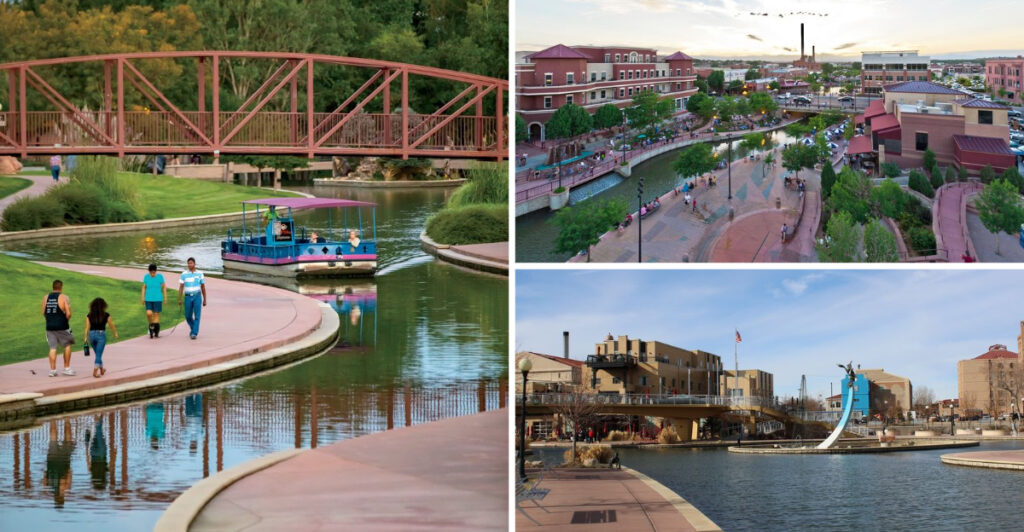
Bridges arch over calm water while restaurant patios spill toward winding paths in the heart of downtown Pueblo. The Historic Arkansas Riverwalk creates an unexpectedly European atmosphere, especially when boats glide past public art, landscaped spaces, and inviting places to sit along the channel.
Yet the experience remains distinctly connected to Pueblo, with local history woven into the surroundings and plenty of opportunities to explore at an unhurried pace. Families can wander beside the water, couples can settle in for patio dining, and road trippers can stretch their legs. It is the kind of downtown detour that makes staying longer seem like a good idea.
Stone Bridges, Shaded Paths, and a Postcard-Ready Setting
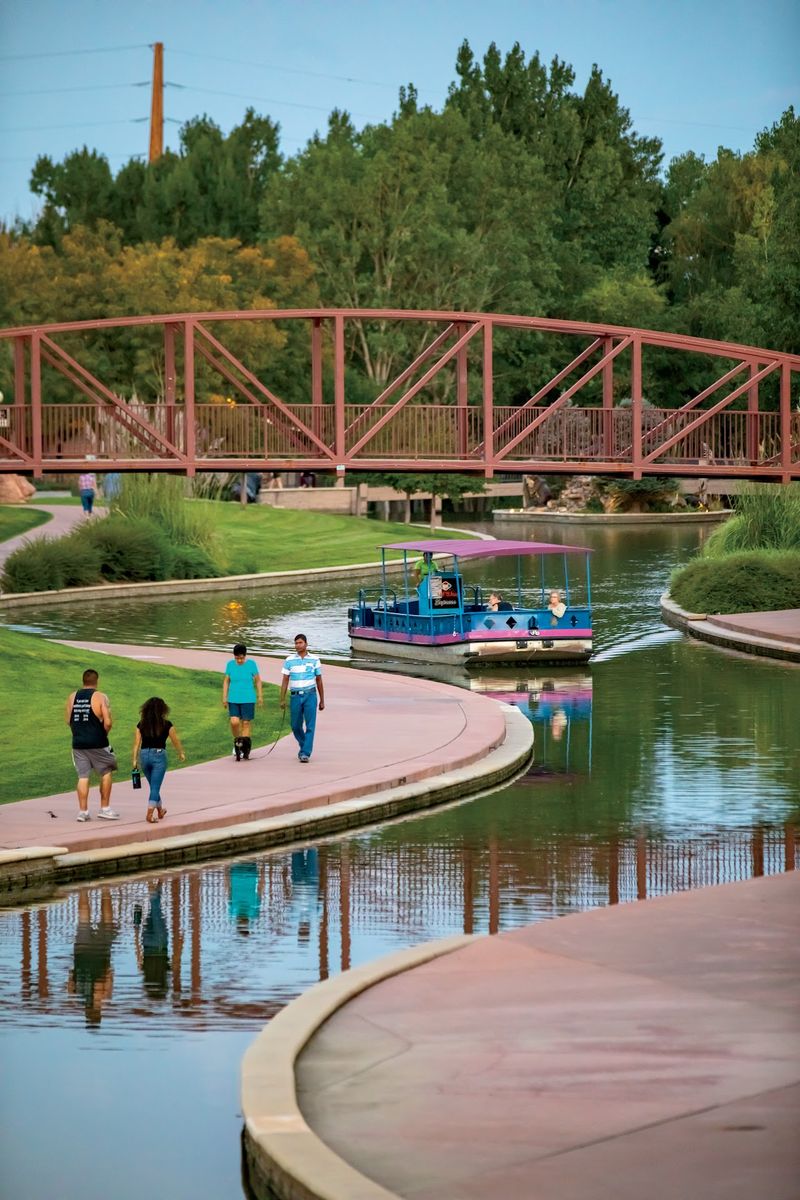
Some places look best in photos. The Historic Arkansas Riverwalk works the other way too, because the layout feels even better once the path opens up beside the water.
Curved edges, low bridges, trees, and brick details create a scene that is softer and more dressed up than a typical downtown park.
The European comparison starts to make sense when the walkway bends and the canal narrows into cozy views. Instead of one long, plain stretch, the route keeps changing shape, giving each few steps a slightly different frame.
A bridge ahead, a planter by the railing, and a table near the water all help the setting feel carefully arranged rather than accidental.
Shade is a big part of the experience, especially on warmer days in Pueblo. Trees and sitting areas break up the walk so it never feels like a march from one end to the other.
Families can pause, older visitors can rest, and anyone carrying coffee can take their time without hunting for a place to stop.
There is also enough open space to keep the area from feeling cramped. That matters because old-world charm can sometimes come with tight quarters, but here the paths stay roomy and easy to navigate. Strollers, couples, dogs, and solo walkers can all move around without much fuss.
For the best first look, start with no rush at all. Walk one full loop before choosing where to sit or eat, because the best angles are often around the next bend.
Late afternoon adds softer light, and after sunset the bridges and water reflections give the riverwalk an even more polished look.
Boat Rides That Show the Waterway From the Best Angle
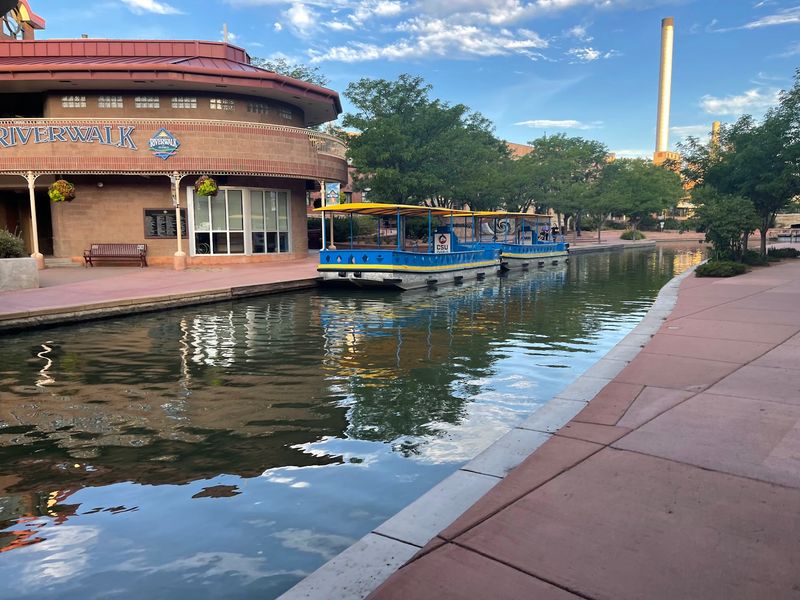
A riverwalk is nice from the sidewalk, but the water itself changes the whole story. At the Historic Arkansas Riverwalk, boat rides turn a short stroll into a small adventure, and that is one of the reasons the place stands out in Pueblo.
Looking up at bridges and patios from canal level gives the district a different shape. The ride is not about speed or thrills.
It is about slowing down long enough to notice details that get missed on foot, like the curve of the walls, the reflections under the bridge, and the way trees soften the edges of downtown. Kids usually enjoy the novelty right away, while adults tend to appreciate how easy the ride makes sightseeing.
Short tour rides work especially well for travelers who do not want a complicated plan. There is no need for hiking gear, long driving detours, or a full-day schedule.
A simple loop on the water can fit neatly into an afternoon that also includes lunch, a coffee stop, or a walk to nearby attractions.
Paddle boats add a more playful option when available. They offer a chance to move at a personal pace, which can be fun for families with older children or pairs looking for a more hands-on outing.
Seasonal conditions matter here, though, because water activities may not run the same way during colder months.
The smartest approach is to pair the boat portion with time on land. Walk the route first, then ride, so the familiar path suddenly looks new from below eye level.
If the water is not operating in winter, the riverwalk still works as a scenic walk, but when boats are running, they provide one of the clearest reasons the place feels special.
Art, Monuments, and Small Details That Reward a Slower Pace
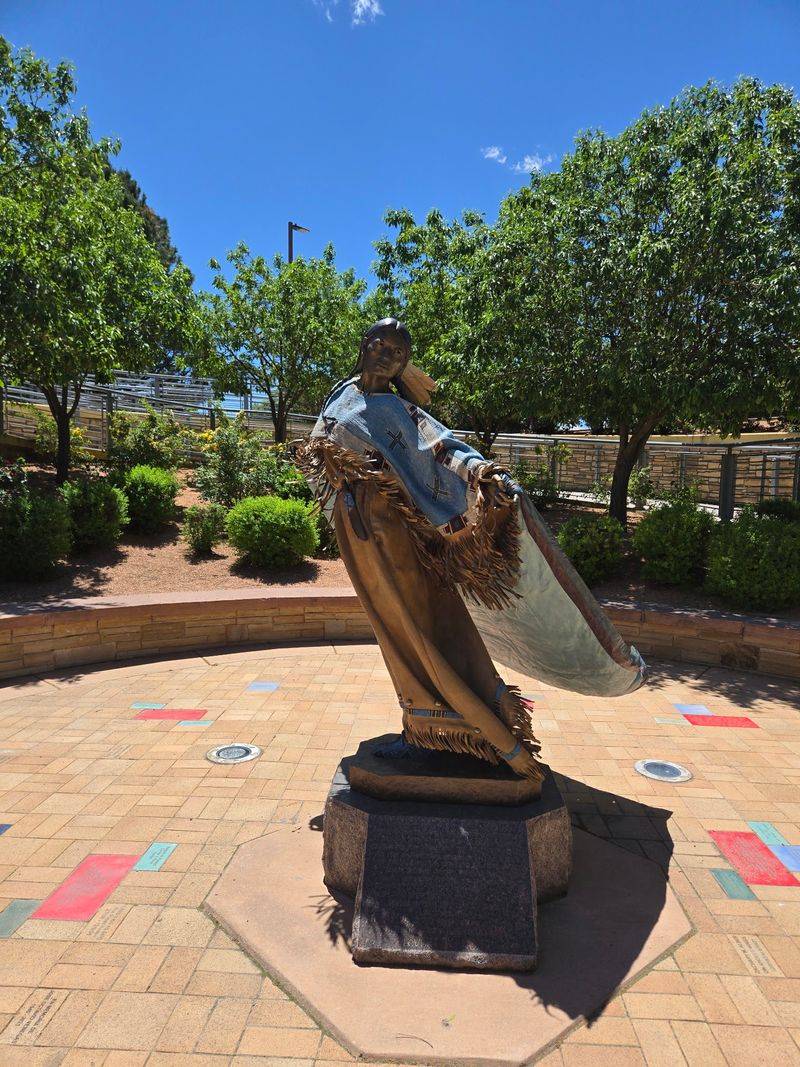
At first glance, the water takes center stage. Keep walking, though, and the quieter details begin to do a lot of the work.
Sculptures, monuments, signs, fountains, and bits of artwork along the route turn the Historic Arkansas Riverwalk into more than a pretty place to pass through.
This matters because the path is not very long, so interest has to come from layers rather than distance. A piece of public art on one curve, a historical marker on another, and a fountain near a gathering area help break the route into mini chapters.
That setup makes even a short visit feel fuller without becoming overwhelming. Children can enjoy the playful side of the setting, especially where water features and open areas invite movement.
Adults who like history or design have something else to follow, since the markers and monuments add context to the location. Nobody needs to be an expert to get something out of it, which is part of the riverwalk’s strength.
The best way to notice these extras is to resist the urge to rush from restaurant to restaurant. A slower loop gives the eye time to catch shapes, textures, and small pieces of color that would otherwise blend into the background.
Even the benches and railing lines contribute to the overall look. Photography works well here because the art is spread through the walk instead of packed into one corner. One minute the frame is all water and bridge, and the next it includes bronze, stone, or garden color.
For travelers who like places with visual variety, that mix keeps the experience lively. If there is one practical tip, it is simple. Build in extra time for wandering.
The riverwalk is easy to underestimate on a map, but its charm often comes from stopping in the middle of the path for a closer look rather than racing to the next destination.
Pueblo, Colorado History Running Right Beside the Canal
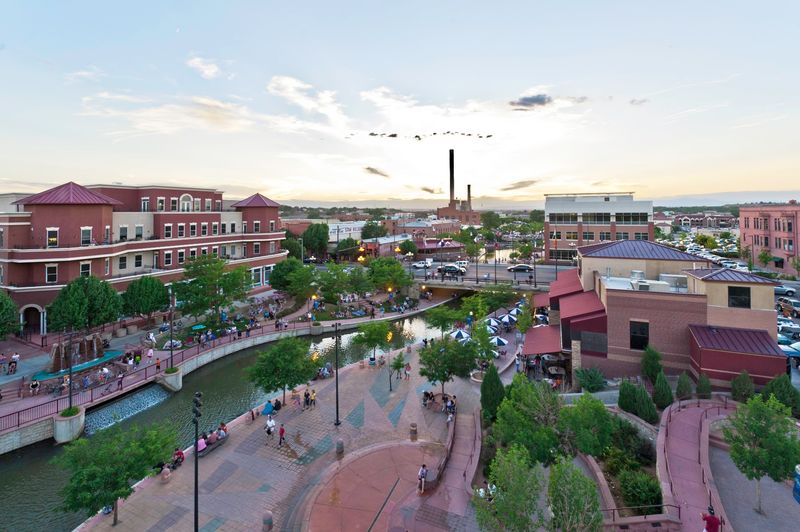
Not every attractive waterfront says much about its city. The Historic Arkansas Riverwalk does, and that gives the setting more weight than a simple recreational path.
Its very name points to history, and the location in downtown Pueblo ties the walk to the city’s older commercial and civic core.
That connection matters because the riverwalk is not floating off in a resort bubble. Buildings, streets, signs, and public spaces around it remind walkers that this is part of a working city with a long story.
The area blends civic pride, redevelopment, and public gathering space in a way that is easy to understand even during a casual visit.
Historical markers and monuments help explain the place without turning the route into an outdoor classroom. A family can read a sign, keep moving, and still come away with a better sense of Pueblo than they would from a random stop at a highway exit.
The information is there for anyone curious enough to pause for a minute. The riverwalk also shows how water can shape identity in the American West. In a state better known for mountains and ski towns, this canal-like promenade offers a different picture of Colorado life.
It brings attention to Pueblo’s own style instead of copying the same outdoor image seen elsewhere. Travelers who enjoy local context should start near the main entrances and look for interpretive material as they go.
Reading a few signs early makes the rest of the walk more meaningful because names, structures, and monuments start connecting to one another. Suddenly the art, bridges, and public spaces look less decorative and more rooted.
That blend of scenery and civic history is a big reason the riverwalk stays interesting. Even when the water is calm and the crowds are light, the setting still has substance. It is a place to stroll, yes, but it is also a short lesson in how Pueblo presents itself to the world.
Meals by the Water Without the Rush of a Big Tourist Strip
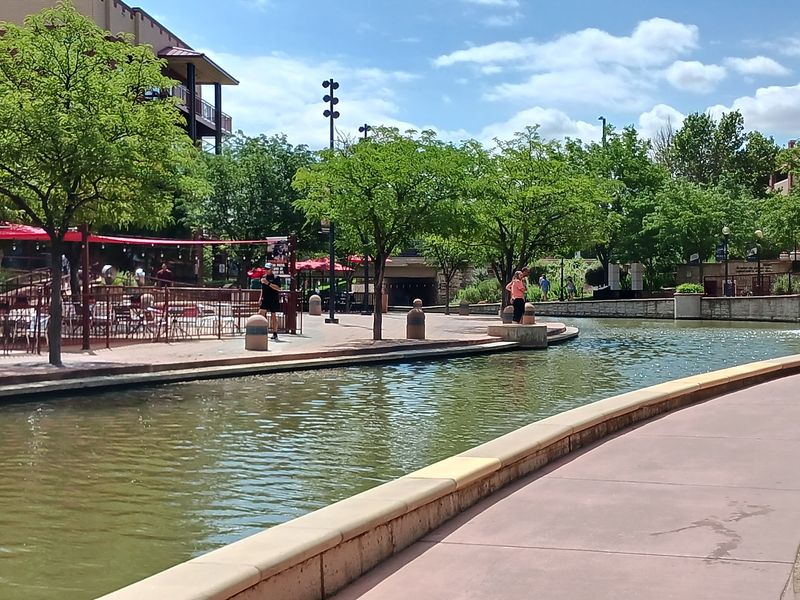
Here is where the riverwalk becomes more than scenery. Restaurants and casual food stops along the water let a walk turn into a full outing without needing to move the car or build a complicated plan. That simple convenience is one of the most useful parts of the Historic Arkansas Riverwalk.
Unlike huge entertainment districts that can feel loud and packed, this area tends to move at a calmer pace. A meal by the canal comes with open views, people strolling past, and enough separation between spaces to keep the experience relaxed.
Even a quick coffee can feel like an event when the table sits near the water. That matters for families, road trippers, and anyone traveling with a dog. A flat walk before or after a meal helps break up the day, and patio seating nearby can make the stop easier than a standard downtown restaurant visit.
The surroundings do some of the work, giving everyone something to look at between bites. There is also a practical advantage to the compact layout. If one place is busy or not the right fit, another option is usually close by, and the walk itself remains pleasant while deciding.
The area supports lingering without forcing a fixed schedule, which is useful for groups with different energy levels.
Evening is an especially smart time to combine dinner with a stroll. The water reflects light, temperatures usually ease, and the district shifts into a softer, more dressed-up version of itself.
For couples, that can mean an easy date setting. For families, it means kids can walk off extra energy after eating.
The best strategy is to treat food as part of the riverwalk, not a separate errand. Arrive early enough to explore first, choose a place with a view if possible, and save a little time afterward for one more loop. The meal anchors the visit, but the water keeps it from feeling ordinary.
How to Time Your Visit for Lights, Shade, and Fewer Hassles
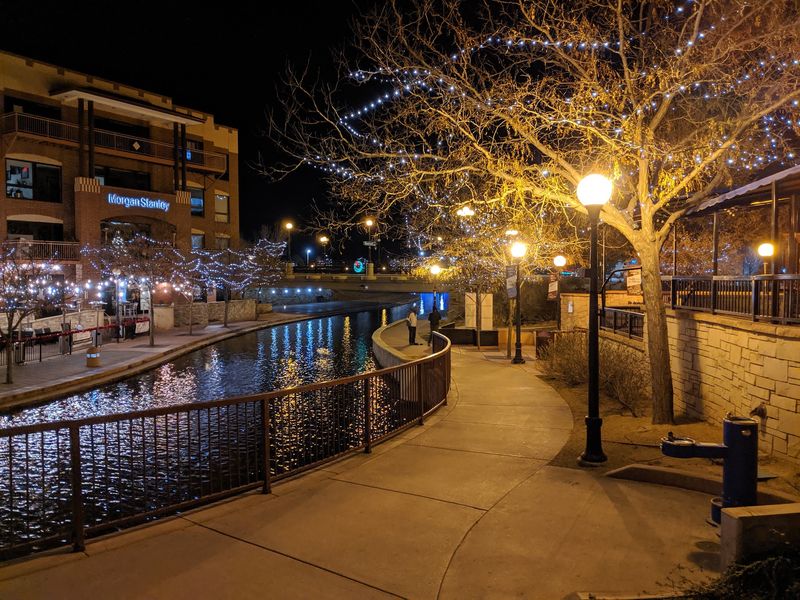
Timing can change the mood of the Historic Arkansas Riverwalk more than many travelers expect. The same path can read as a bright family promenade in late morning, a shaded rest stop in the afternoon, and a calm, glowing canal walk after dark.
Because the park is open around the clock, there is room to match the visit to the kind of outing you want. Early in the day works well for photos with cleaner light and fewer people in the frame. It is also a comfortable option for warmer months, especially for anyone walking with young children or dogs.
Pavement can heat up later, so morning starts are the safer choice in summer. Late afternoon has its own advantages. Trees cast longer shadows, the pace tends to soften, and the restaurants nearby begin to feel like part of the plan instead of an afterthought.
This is a good window for travelers who want both a walk and a meal without splitting the day in two. Night brings out a different side of the riverwalk. Reflections under bridges, light on the water, and darker skies around the buildings make the area look more polished and intimate.
It is easy to see why many people find the evening version especially charming. Winter requires a little flexibility. Water levels and boating options may change, and the look can be less lush than in peak growing season.
Still, the route remains manageable because it is flat, compact, and easy to finish in one outing. A few planning notes make the stop smoother. Wear comfortable shoes, carry water in hot weather, and do not assume every amenity will be right beside you the moment you need it.
Give yourself enough time to wander slowly, because the riverwalk is at its best when the schedule is loose and the pace matches the water.
Why This Riverwalk Stands Apart in a State Known for Mountains
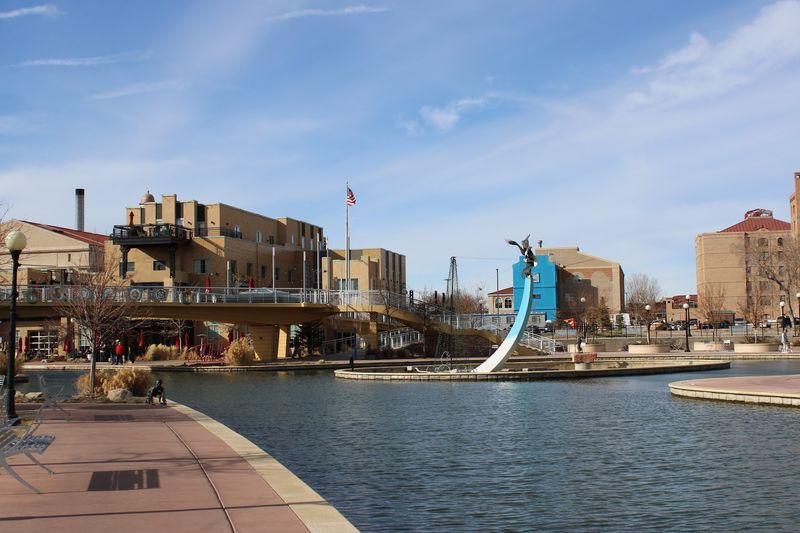
Colorado travel stories often lead straight to peaks, ski towns, and high-altitude lakes. Pueblo’s Historic Arkansas Riverwalk offers a completely different kind of outing, and that contrast is exactly why it deserves attention.
Instead of asking visitors to chase elevation, it invites them to slow down at water level in the middle of a city. The place stands apart because it combines several roles without trying too hard to be any single one.
It works as a park, a walking route, a dining district, a family stop, and a compact lesson in local identity. Many attractions do one thing well. This one quietly stacks several useful experiences into the same area.
There is also a practical appeal that mountain destinations sometimes cannot match. The paths are flat, the walk is manageable, and the outing does not demand special gear or intense planning.
Grandparents, toddlers, teens, and road trippers passing through can all share the same space without much adjustment.
Its style helps too. Bridges, canal curves, public art, and waterside seating bring a touch of elegance that feels unusual in a downtown setting.
The look is polished enough for date night, easy enough for a family afternoon, and relaxed enough for a simple solo walk with coffee in hand.
For travelers building a broader Colorado trip, the riverwalk can offer variety after days filled with highways and mountain views. It gives the state another face, one tied to history, urban design, and everyday civic life. That broader picture matters because it shows Colorado is more than one postcard image.
If a stop in Pueblo is brief, this is the place most likely to reshape expectations. The riverwalk is compact, welcoming, and layered with more detail than first impressions suggest.
By the time the bridges, boats, art, and evening light all come together, it becomes clear why this stretch of water earns such affection in southern Colorado.