A fifty-dollar bill can disappear before you reach the checkout at a regular grocery store.
At some of New Jersey’s best farmers markets, though, the same bill gets a much more interesting workout: tomatoes still warm from the field, a loaf of crusty bread, a bag of peaches, fresh eggs, maybe a soft pretzel for the walk back to the car—and, at the more sprawling markets, possibly an antique kitchen gadget you absolutely did not plan to buy.
The trick is knowing where to go. Some of these spots are traditional producer markets where farmers pull up early and sell until the tables are bare.
Others are wonderfully unruly hybrids of produce stands, Amish food counters, flea markets, bakeries, butchers, and prepared-food stalls. Prices naturally change with the season and vendor, but shop what’s abundant, resist blowing half the budget at the first stand, and $50 can still make for a very satisfying Saturday haul.
1. Columbus Farmers Market, Columbus
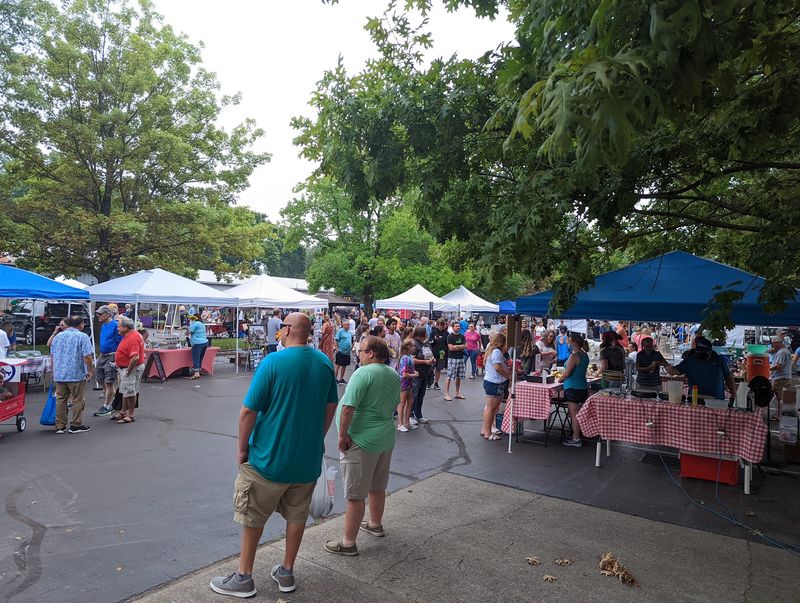
The easiest way to blow your plan at Columbus is to forget just how enormous the place is. This Route 206 institution is less a tidy farmers market than a full shopping ecosystem: Produce Row, an indoor Amish market, permanent stores, food counters, a garden center, and an outdoor flea market all compete for your attention.
For the $50 challenge, start where the value is most obvious. Produce Row specifically emphasizes retail produce at wholesale-style prices, with fruits, vegetables, eggs, flowers, seafood, and a few harder-to-find ingredients suited to Asian and Latin cooking.
Cannuli’s adds fresh fish, shellfish, and Italian-market staples to the mix. Save room in both your bag and your budget for the Amish section.
It operates Thursday through Saturday and includes meat, poultry, deli foods, dry goods, baked goods, candy, pretzels, barbecue chicken, and ribs brought in by Lancaster County vendors. A soft pretzel or something from the bakery makes a much better mid-shopping refuel than abandoning the market for lunch elsewhere.
Columbus works best when you arrive with a rough list but allow one wildcard purchase. Buy produce first, add meat or seafood if the numbers cooperate, then use whatever is left for something fun. Free parking throughout the complex makes loading a serious haul considerably easier.
2. Cowtown Farmers Market, Pilesgrove
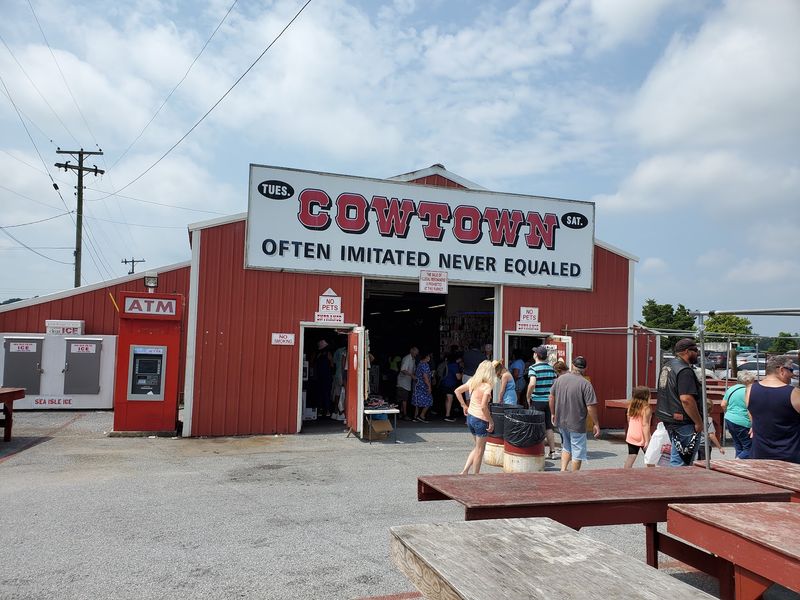
Show up at Cowtown expecting orderly rows of kale and heirloom tomatoes, and the first few minutes may scramble your expectations.
This is part farmers market, part flea market, part South Jersey institution, with indoor and outdoor vendors selling food alongside clothing, household goods, collectibles, and assorted bargain-table discoveries.
Cowtown traces its roots to 1926, when it began as a livestock auction, and in 2026 it marked a century in business. Today, the market operates year-round every Tuesday and Saturday from 8 a.m. to 4 p.m., rain or shine, with hundreds of vendors spread across the property.
Produce is still a major reason to come, particularly when Jersey crops are at their peak, but the prepared food can wreck even the strongest shopping discipline.
Bill’s is known for its cheesesteak pretzel, Esther’s turns out soft pretzels and pretzel logs, and other longtime stands handle nuts, dried fruit, breakfast sandwiches, sausage, and classic market food.
A $50 strategy here requires focus. Walk the produce first, compare what looks best, and stock up on vegetables and fruit before exploring the rest.
Then reserve a few dollars for lunch and a little flea-market wandering. That combination—groceries, something hot to eat, and maybe an unexpected bargain—is exactly why Cowtown never feels like an ordinary food-shopping trip.
3. Trenton Farmers Market, Lawrence Township
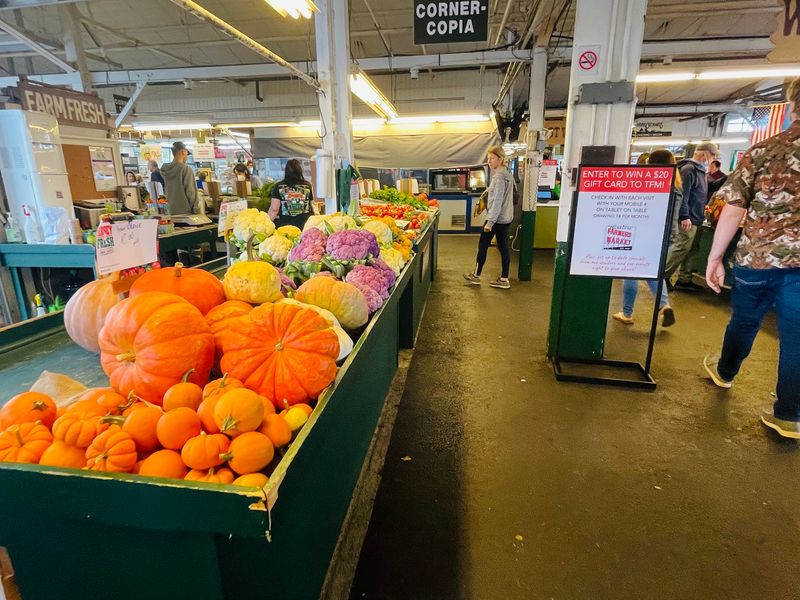
There’s a reason the counters at this Spruce Street market feel more permanent than the pop-up tents found at many weekend markets: the Trenton Farmers Market has been operating as a farmer-owned cooperative since 1939 and has occupied its Lawrence Township location since 1948.
The result is a place built for actual grocery shopping rather than a quick browse.
Jersey Fresh fruits and vegetables anchor the experience, but the market’s roster stretches into Amish meats and poultry, dairy and eggs, artisan cheese, baked goods, local wine, sweets, barbecue, rotisserie chicken, and a Polish deli where kielbasa gives you another very good reason to arrive hungry.
This is one of the better stops on the list for turning $50 into the makings of several meals.
Start with whatever local produce is abundant—corn, tomatoes, peppers, peaches, apples, greens, or squash depending on the month—then build around it rather than arriving married to a rigid recipe.
A few vegetables, eggs or cheese, something from the butcher, and bakery goods can create a much more interesting haul than five unrelated impulse buys.
Several farms maintain a presence here, including growers with decades of history at the market, which helps explain why produce remains central even though the surrounding vendor mix has expanded dramatically. Come hungry enough to sample something, but not so hungry that your entire $50 winds up becoming lunch.
4. Berlin Farmers Market, Berlin
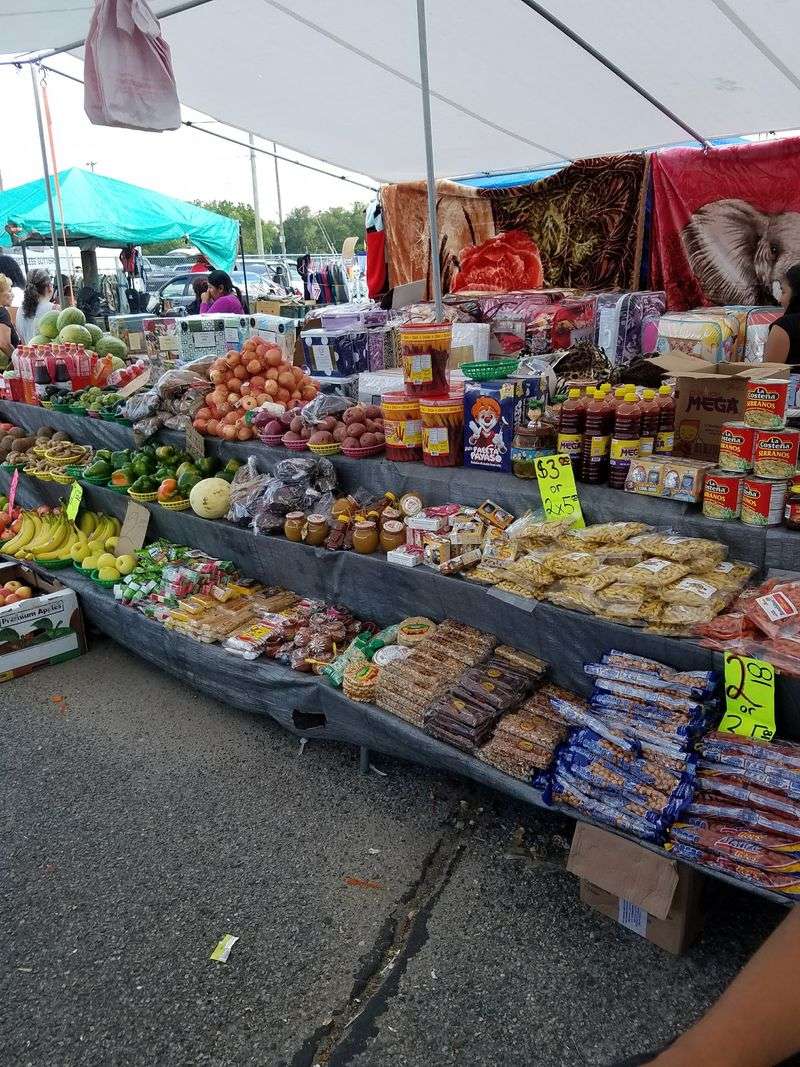
Some markets reward a canvas tote and a leisurely stroll. Berlin rewards comfortable shoes and a willingness to get distracted.
Established in 1940, the family-run market has evolved from its livestock-and-produce-auction roots into roughly 150,000 square feet of indoor shopping with more than 85 stores, plus an outdoor flea market that can accommodate hundreds of vendor spaces.
Fresh produce sits comfortably beside an Amish bakery, butcher counters, candy, plants, antiques, clothing, collectibles, and the sort of miscellaneous finds that turn “I need peppers” into a two-hour expedition.
The outdoor market currently runs Friday through Sunday from 8 a.m. to 4 p.m.; the indoor shopping center opens Thursday through Sunday, with longer evening hours Thursday through Saturday. For anyone trying to make $50 stretch, Berlin offers two completely different games.
You can treat it as a food run, hunting seasonal produce and bakery or butcher-counter staples, or divide the money between groceries and the outdoor bargains. The second option is more dangerous and considerably more fun.
Go early on a weekend if you care about having the broadest outdoor selection, then work inward. Unlike a compact neighborhood market, Berlin is large enough that buying everything that catches your eye in the first 15 minutes is a rookie mistake.
Do one lap, compare, then spend. Your wallet will appreciate the reconnaissance.
5. Collingswood Farmers Market, Collingswood
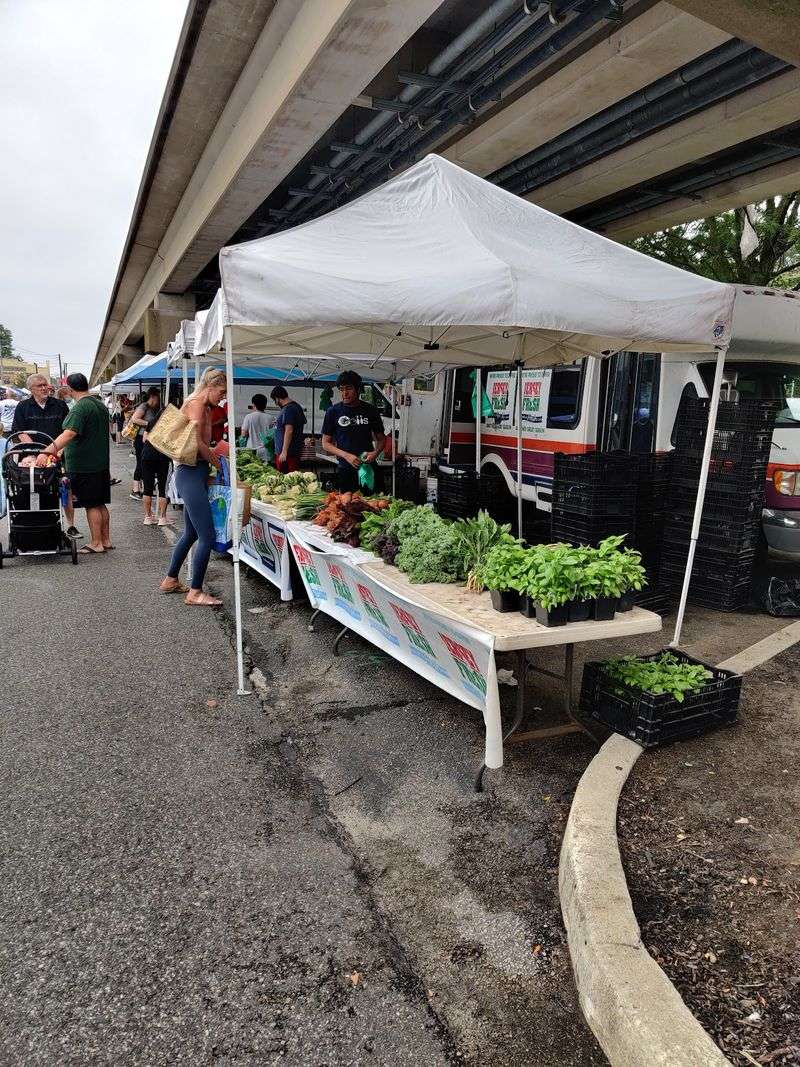
Listen for the trains overhead and look for the big blue water towers. That is your cue that you’ve reached one of South Jersey’s most unmistakable Saturday markets.
Collingswood sets up beneath the PATCO High Speed Line between Collings and Irvin avenues, turning a space that looks purely functional during the week into rows of farm stands, coffee, breakfast food, flowers, meats, and local products every Saturday morning.
What began in 2000 with a dozen farms has grown into a fixture for shoppers throughout the surrounding towns.
For the 2026 season, the market runs Saturdays from 8 a.m. to noon from May 2 through November 21, rain or shine. Collingswood keeps its priorities refreshingly clear.
Farmers and growers remain central, while prepared-food vendors are encouraged to use Jersey Fresh or other regional ingredients whenever possible. There are also live music stages, which makes lingering with coffee and breakfast feel entirely reasonable even when you supposedly came only for vegetables.
Fifty dollars goes furthest when you follow the season. Buy berries when tables are full of berries, tomatoes when everyone seems to have tomatoes, and apples when fall arrives.
Add meat, bread, flowers, or a breakfast sandwich only after your produce bag has some weight to it. The market closes at noon, so this is not the Saturday to sleep until 11:30 and hope the best peaches waited for you.
6. Englishtown Auction Sales, Englishtown and Manalapan
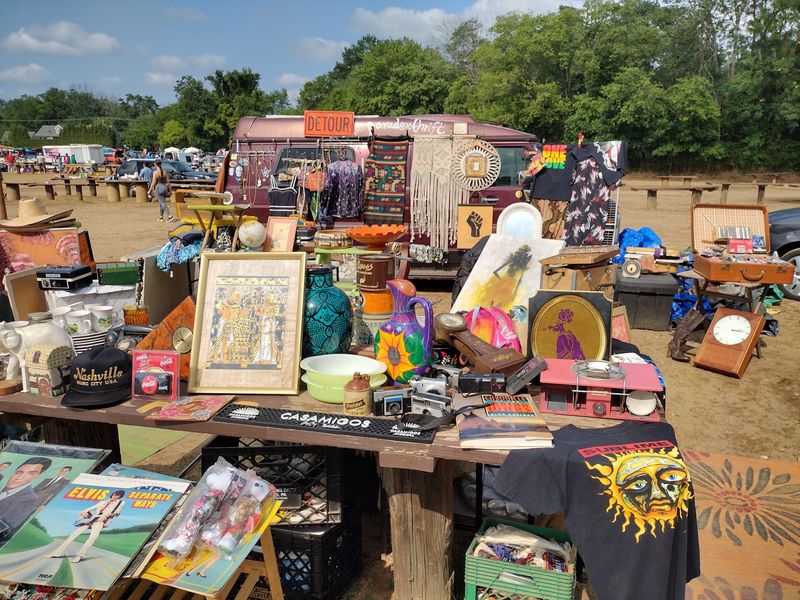
You can come to Englishtown for zucchini and leave wondering how a box of old tools, three plants, and a vintage lamp ended up in the trunk. That is the risk—and the charm—of this sprawling open-air market.
Fresh produce and plants are part of the draw, but they share space with garage-sale goods, discount clothing, footwear, jewelry, crafts, antiques, and whatever else vendors have hauled in that weekend.
The market operates every Saturday and Sunday from 8 a.m. to 4 p.m., year-round and rain or shine, at 90 Wilson Avenue in Manalapan.
The scale makes Englishtown particularly good for shoppers who enjoy the hunt more than a perfectly curated experience.
Three outdoor food courts give you plenty of chances to stop for something hot, and the outdoor shopping areas around the buildings are paved—a small detail that becomes surprisingly important once you have spent an hour covering ground.
If your goal is a big $50 food haul, handle that part first. Check the produce, see what is abundant, buy the practical stuff, and only then let yourself loose among the flea-market tables.
Otherwise, that “too good to leave behind” collectible may become dinner money. Englishtown is the market for people who enjoy having no idea what the next aisle will contain.
You might not leave with exactly what was on your list, but leaving empty-handed takes impressive discipline.
7. Williamstown Farmers Market, Williamstown
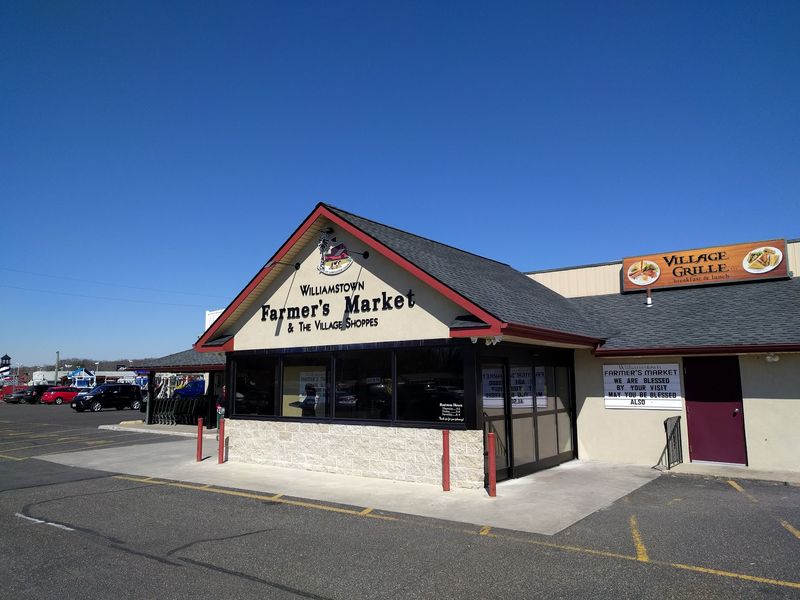
The horse-and-buggy sign on Black Horse Pike is a pretty good clue that this is not going to be a minimalist Saturday produce stand.
Williamstown Farmers Market brings Lancaster County food traditions into Gloucester County, packing plenty of grocery potential into a market that is open Thursday and Friday from 9 a.m. to 6 p.m. and Saturday from 8 a.m. to 4 p.m.
Come for staples and you will quickly meet the real troublemakers: fresh donuts, sticky buns, shoo-fly pie, fruit breads, mini cheesecake bites, homemade quiche, deli sandwiches, and shelves of sweets.
Rosie’s Bakery makes its donuts and sticky buns on-site, while Stoltzfus Family Produce covers the fruit-and-vegetable side of the trip.
This is a strong $50 stop because one building can handle several categories without forcing you to drive around town. Start with produce and something substantial for dinner, then decide how much of the remaining budget is safe to expose to the bakery.
If you are buying lunch, the market’s Italian-style deli offerings can turn the grocery run into a meal without requiring another stop. Once the food shopping is finished, there are also more than 20 Village Shoppes to browse, which is either a bonus or a budget hazard depending on your self-control.
Bring a list. Ignore it selectively. Absolutely leave space for a sticky bun.
8. Dutch Wagon Amish Farmer’s Market, Medford
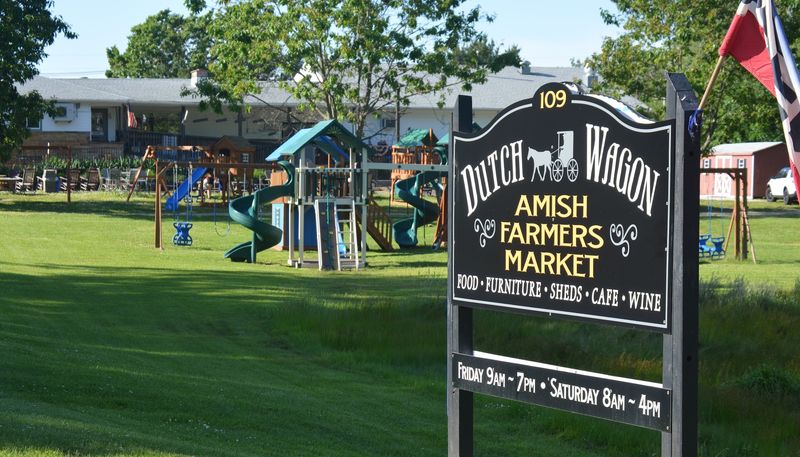
Friday morning at the Dutch Wagon smells like the sort of shopping list that gets abandoned halfway through: baked goods, smoked or cooked meats, deli counters, and enough sweet things to make “just one” an unrealistic plan.
The Medford market at 109 Route 70 is compact compared with places like Columbus or Berlin, but its smaller footprint is an advantage when the goal is filling a grocery bag rather than spending an entire day wandering.
The Amish vendors bring Lancaster County staples including poultry, meats, bacon, cheeses, dairy products, baked goods, candy, and prepared salads. The market operates Fridays and Saturdays, with current hours of 9 a.m. to 7 p.m. Friday and 8 a.m. to 4 p.m. Saturday.
The produce side gets additional muscle from Summer Wind Farm Market, whose Medford location stocks seasonal fruits and vegetables along with local and regional specialties.
Depending on the season, shoppers can also encounter seafood sourced through regional fishermen and purveyors, hyper-local Medford honey, Jersey tomato products, peach products, plants, herbs, and hanging baskets.
With $50, think pantry-building rather than novelty shopping. Seasonal vegetables, meat or cheese, and a loaf or baked treat can cover several meals while still giving you something worth eating in the car.
Saturday gets busy, so arriving closer to opening is the better move if you dislike negotiating narrow aisles with an armful of groceries.
9. West Windsor Community Farmers’ Market, West Windsor
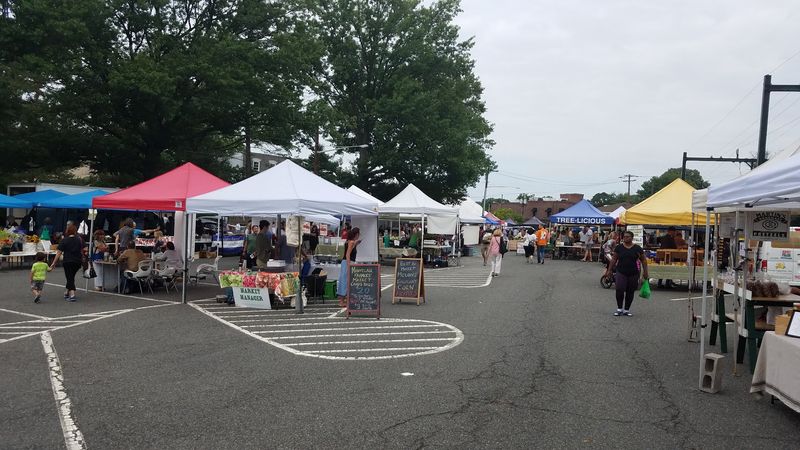
A train station parking lot probably would not make your shortlist for Saturday brunch, yet the lot beside Princeton Junction turns into one of New Jersey’s most food-focused markets every week of the main season.
West Windsor started in 2004 with eight farms and one bakery; in 2026, its 23rd season, the market features a much broader mix of local farms and artisan food producers while keeping agriculture firmly at the center.
The selection can include seasonal fruits and vegetables, grains, beef, pork, lamb, poultry, eggs, artisan cheeses and yogurts, mushrooms, honey, cider, flowers, and plants. Then the specialty-food vendors complicate your budget in the best possible way.
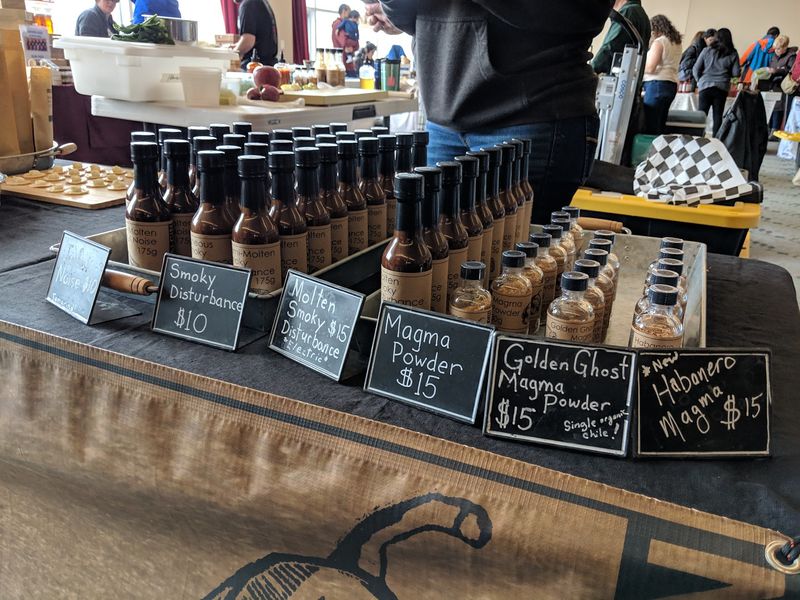
Expect possibilities such as sourdough, pastries, pickles, fresh pasta, sustainably caught seafood, chocolates, jams, prepared Eastern European, Indian, and Lebanese foods, plus breakfast choices ranging from crepes to wood-fired pizza.
The market runs Saturdays from 9 a.m. to 1 p.m. during the main season, from the first Saturday in May until the Saturday before Thanksgiving, in the southbound Vaughn Drive parking lot at Princeton Junction.
A $50 bill works nicely here if you choose one “main event”—perhaps meat, cheese, or seafood—then surround it with in-season produce and bread. Breakfast is tempting, so account for it before you start shopping instead of discovering at noon that your grocery budget somehow became brunch.
10. Montclair Farmers’ Market, Montclair
Before you even decide what to buy, Montclair gives you one major advantage over many seasonal markets: you can make this trip in February.
The Farmers’ Market at the Walnut Street Train Station operates year-round on Saturdays, running from 8 a.m. to 1 p.m. from June through November and 9 a.m. to 1 p.m. from December through May.
There is free parking across the tracks, vendors accept credit cards, and pets are welcome, making this one of the easier markets to turn into a standing weekend routine. The current vendor mix goes well beyond standard produce.
Alongside New Jersey farmers, shoppers can find locally grown mushrooms, artisan bread, jams and preserves, raw local honey, pickles, juice, specialty meats, prepared foods, chocolate, nuts, and other pantry-friendly goods. The best $50 approach changes with the calendar.
In August, hand most of the money to the farmers: tomatoes, corn, peaches, peppers, greens, and whatever else looks like it was picked five minutes ago. In colder months, shift more toward bread, meat, mushrooms, honey, preserved foods, and other products that do not depend on peak growing season.
Montclair is easy to overspend at because so many booths sell polished specialty foods, so give yourself one splurge instead of six. A jar, loaf, or chocolate bar feels much more satisfying when you still have enough produce to cook dinner afterward.
11. Summit Farmers Market, Summit
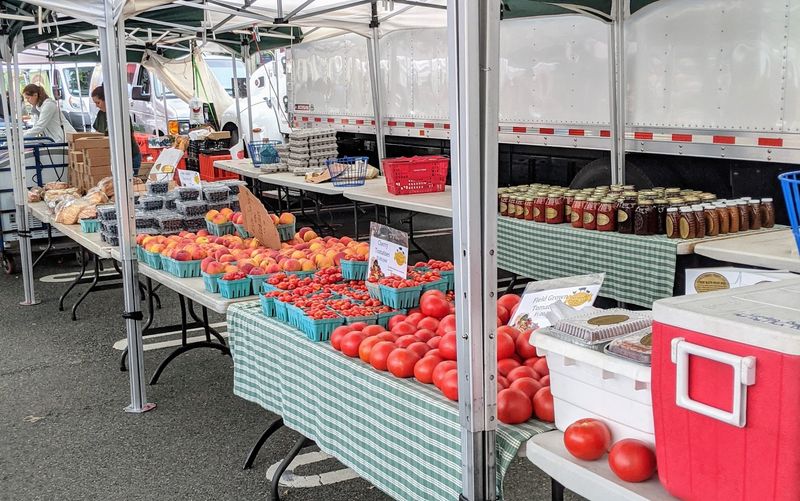
Sunday morning in downtown Summit comes with an unusually persuasive argument for getting out of bed before brunch. The Farmers Market fills Park & Shop Lot #1 at DeForest and Woodland avenues from 8 a.m. to 1 p.m., rain or shine, and the 2026 season runs from April 19 through December 20.
Now in its 33rd season, the market limits its farmer and purveyor focus to New Jersey, giving it a distinctly Garden State roster rather than a catch-all regional lineup. That roster is deep enough to make a $50 budget interesting.
Current vendors include vegetable and fruit farms, Valley Shepherd Creamery, Shore Catch, Hoboken Farms, coffee roasters, bread and bakery sellers, pickle makers, pasta vendors, chocolatiers, nut butters, Polish foods, guacamole, pizza, paletas, and plenty of other reasons to reconsider the definition of “grocery shopping.”
The winning move is to make the farmers your first lap. See what looks best and what is plentiful, then build meals around those ingredients.
Ten or fifteen dollars spent impulsively on prepared food feels very different when it happens before you buy vegetables than after. Because the market sits right downtown, it also works well as the start of a Sunday rather than the whole event.
Get there early, fill a tote, grab coffee or something ready to eat, and leave before your remaining cash starts developing strong opinions about pastries and chocolate.
12. Burlington County Farmers Market, Moorestown
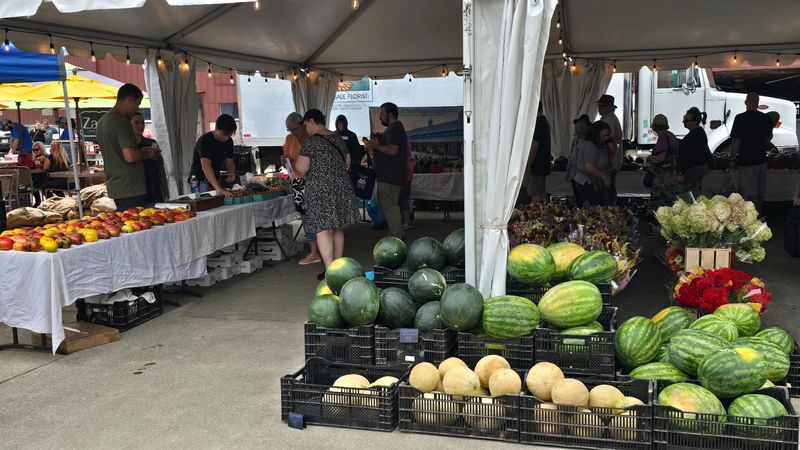
On a Saturday morning at the Burlington County Agricultural Center, grocery shopping happens on a preserved former dairy farm rather than beside a strip-mall parking lot.
That setting already gives this Moorestown market a different rhythm, but the scale seals it: its 2026 opening day brought more than 75 vendors selling Jersey produce, plants, prepared foods, crafts, and specialty goods.
The market celebrated its 20th season in 2026 and runs Saturdays from 8:30 a.m. to 1 p.m. at 500 Centerton Road, with the regular season continuing through November 14.
Farmers remain the heart of the trip, with names such as Cranberry Hall Farm, James Durr Farm, Black Sheep Farm, Pinelands Produce, Davidson Exotic Mushrooms, and other local growers appearing alongside honey, seafood, flowers, baked goods, coffee, cheese, and prepared-food vendors.
The 2026 lineup also added businesses selling local grains and flour, pizza, bagels, vegan food, Jamaican dishes, breads, and other ready-to-eat options. Fifty dollars can disappear quickly if you treat every stand as a snack opportunity, so start with the farm tables.
Load up on whatever Jersey is producing heavily that week, add bread or another pantry item, then spend the final portion on something you can eat there. Live music is part of the market schedule, so there is no need to rush back to the car once the bags are full.
Share this story