Tennessee hides some of the most incredible underground landscapes in America, and most people drive right past them without a second thought. Below the rolling hills and scenic valleys, a network of stunning caverns waits to be explored, each with its own personality and geological wonders.
From underground waterfalls to ancient rock formations that took millions of years to create, these caves offer a chance to step into a completely different world. Whether you’re a seasoned spelunker or just looking for a unique weekend adventure, these nine Tennessee caves will blow your mind.
1. Ruby Falls, Chattanooga
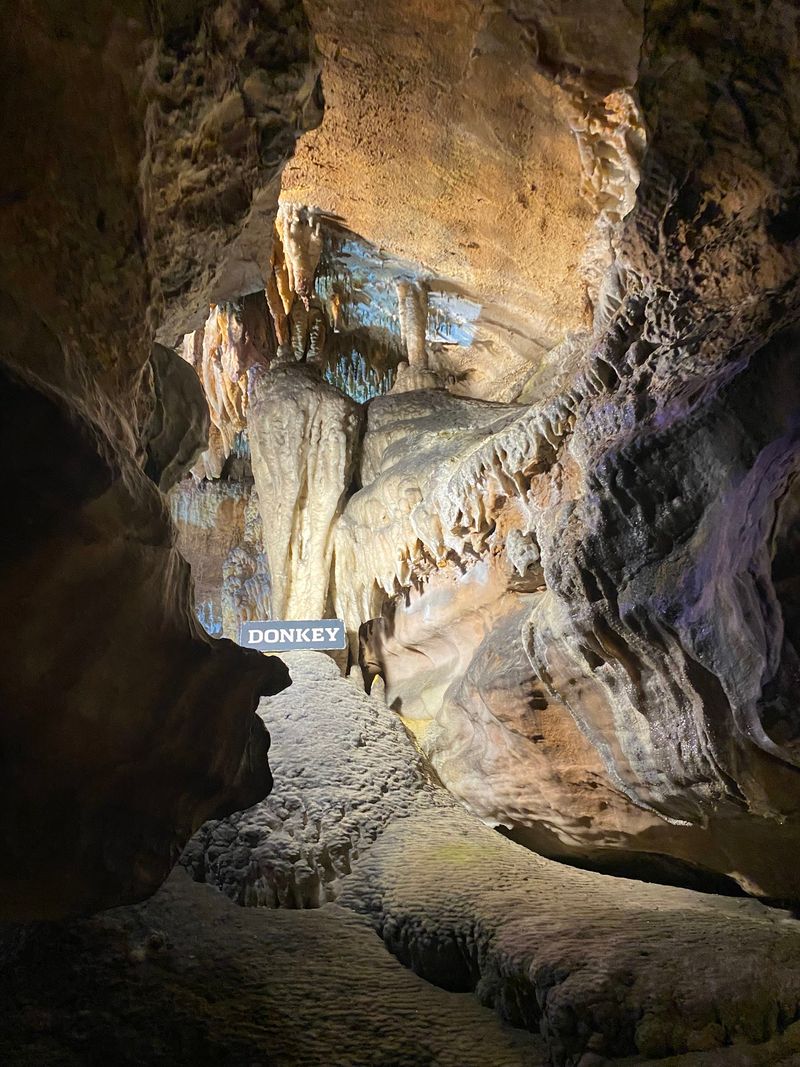
Picture standing 1,120 feet below the surface of Lookout Mountain, watching a 145-foot waterfall thunder down through solid rock. That’s Ruby Falls, and it’s one of those experiences that photographs simply can’t capture.
The journey starts with an elevator ride that drops you deep into the mountain, and from there, you walk through narrow passages lined with stalactites and stalagmites that look like they belong in a fantasy movie.
The cave itself was discovered in 1928 by Leo Lambert, who named the waterfall after his wife, Ruby. He was actually looking for a new entrance to another cave when he stumbled upon this hidden gem.
The formations you’ll see along the way have names like Dragon’s Foot and Elephant’s Ear, and honestly, once you see them, the names make perfect sense.
What makes Ruby Falls special isn’t just the waterfall, though that’s obviously the star of the show. The entire cave system features some of the most diverse formations you’ll find anywhere in Tennessee.
You’ll walk past flowstone curtains that look like frozen waterfalls, and columns where stalactites and stalagmites have grown together over thousands of years.
The guided tours last about an hour and cover roughly a mile of walking, mostly on paved pathways. They’ve done a great job making it accessible while preserving the natural beauty.
The lighting system they installed highlights the formations without overwhelming them, creating an almost otherworldly atmosphere.
Temperature inside stays around 60 degrees year-round, so bring a light jacket even if it’s sweltering outside. The humidity is high, which is part of what keeps those formations growing.
Kids usually love this place because it feels like exploring a real-life treasure cave, and the waterfall finale never disappoints. Just be prepared for some tight squeezes in a few spots along the route.
2. Cumberland Caverns, McMinnville
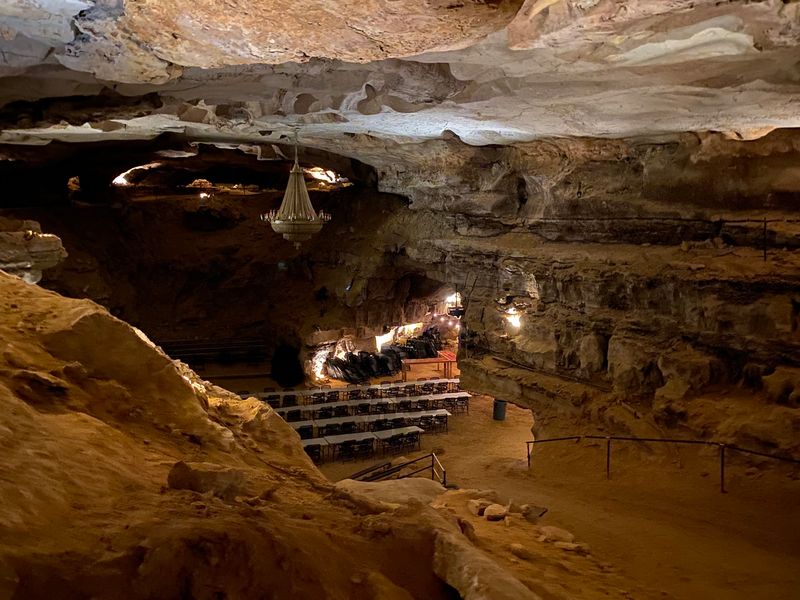
Ever heard music echoing through a cave 333 feet underground? Cumberland Caverns hosts actual concerts in their Volcano Room, a massive chamber with acoustics that rival any concert hall.
This place takes cave exploring to a whole different level, offering everything from easy walking tours to serious spelunking adventures that last eight hours.
The main tour, called the Walking Tour, covers about a mile and a half through some of the most spectacular formations in the Southeast. You’ll see massive columns, delicate soda straws hanging from the ceiling, and rooms so large they could fit a football field.
The Volcano Room alone is 600 feet long and features a natural stone formation that looks exactly like a volcano, complete with what appears to be lava flows.
History buffs will appreciate that these caves were used for saltpeter mining during the War of 1812. You can still see evidence of the mining operations, including old tools and markings on the walls.
During the Civil War, both Union and Confederate soldiers sought shelter here, leaving behind their own marks on history.
For the adventurous types, the Wild Cave Expedition is absolutely worth it. You’ll crawl through tight passages, climb over boulders, and explore areas most tourists never see.
They provide all the gear, including helmets with headlamps, and the guides know every inch of these caves. It’s muddy, challenging, and incredibly rewarding.
The cave maintains a constant 56-degree temperature, so dress accordingly. They also offer overnight caving expeditions where you can actually sleep underground in a designated camping area.
Imagine waking up surrounded by ancient rock formations that have been growing for millions of years. The regular tours run about an hour and fifteen minutes, perfect for families with younger kids who might not be ready for the extreme adventures.
3. Tuckaleechee Caverns, Townsend
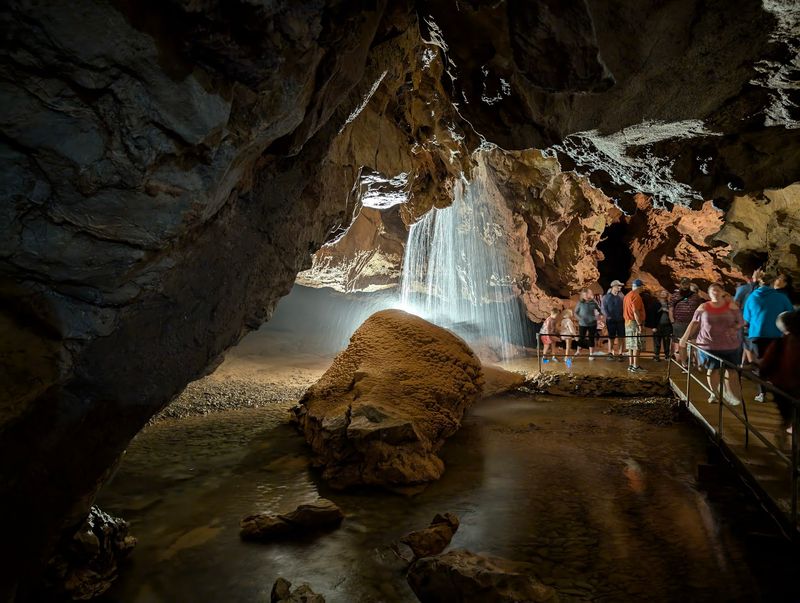
Located just outside the Great Smoky Mountains, Tuckaleechee Caverns might be the most underrated cave system in Tennessee. The Cherokee knew about these caves long before European settlers arrived, and they considered them sacred.
When you see the twin waterfalls inside, you’ll understand why. These aren’t just trickles of water, they’re legitimate waterfalls dropping 210 feet through the darkness, creating a constant roar that fills the chambers.
The caverns were opened to the public in 1953 by the Vananda family, who still operate them today. They’ve kept things relatively simple and authentic, without over-commercializing the experience.
The tour route follows the natural path of an underground stream, taking you through rooms with names like The White Room and The Big Room, each more impressive than the last.
One of the coolest features here is the massive stalagmite called Totem Pole, which stands 24 feet tall and took roughly 200,000 years to form. You’ll also see formations that look like frozen waterfalls, delicate cave pearls, and something called cave onyx that catches the light in the most incredible ways.
The guides explain how each formation develops, and the science behind it is fascinating.
The walking tour covers about a mile and takes roughly an hour. The pathways are well-maintained, though there are some stairs and uneven surfaces.
What sets Tuckaleechee apart from some of the more tourist-heavy caves is the authentic feel. They haven’t installed elaborate light shows or piped-in music. Instead, you get the raw beauty of the cave with just enough lighting to see the formations clearly.
Because it’s near the Smokies, you can easily combine a cave visit with hiking or other outdoor activities. The temperature inside hovers around 58 degrees, offering a cool escape during hot summer days.
Bring a camera, but know that capturing the scale of these chambers is nearly impossible. You really have to see it in person.
4. The Lost Sea at Craighead Caverns, Sweetwater
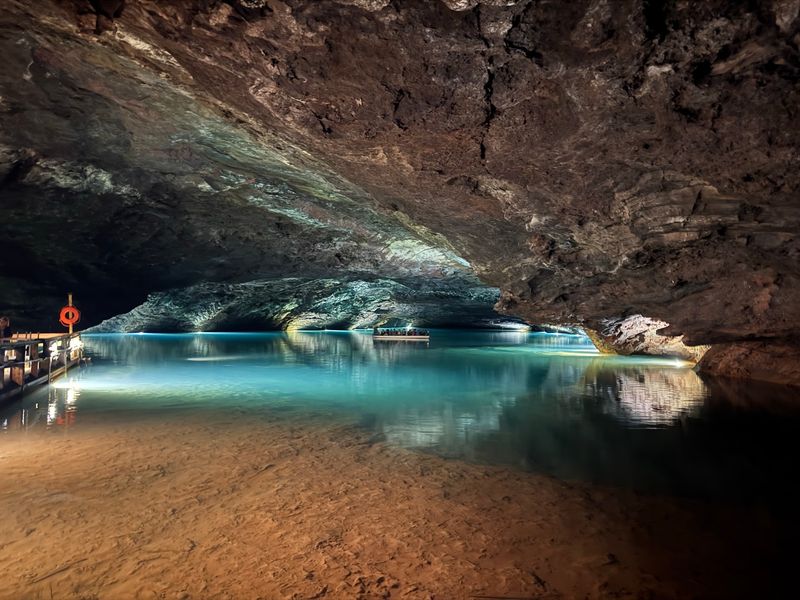
America’s largest underground lake sits quietly beneath the hills of Sweetwater, and most people have no idea it exists. The Lost Sea is exactly what it sounds like: a 4.5-acre lake hidden inside a cave system, and you can actually take a boat ride on it.
The water is so clear you can see ancient formations rising from the bottom, and rainbow trout swim through the darkness like ghosts.
Cherokee legends spoke of a large cave in this area, but European settlers didn’t officially discover it until 1905. A young boy named Ben Sands squeezed through a narrow opening and found himself in a massive cavern.
The lake itself wasn’t fully explored until 1905, when divers began mapping its extent. Even now, nobody knows exactly how far it stretches because it connects to a massive underground aquifer.
The tour starts with a three-quarter-mile walk through the cave system before you reach the lake. Along the way, you’ll see Confederate signatures on the walls from soldiers who used the cave during the Civil War.
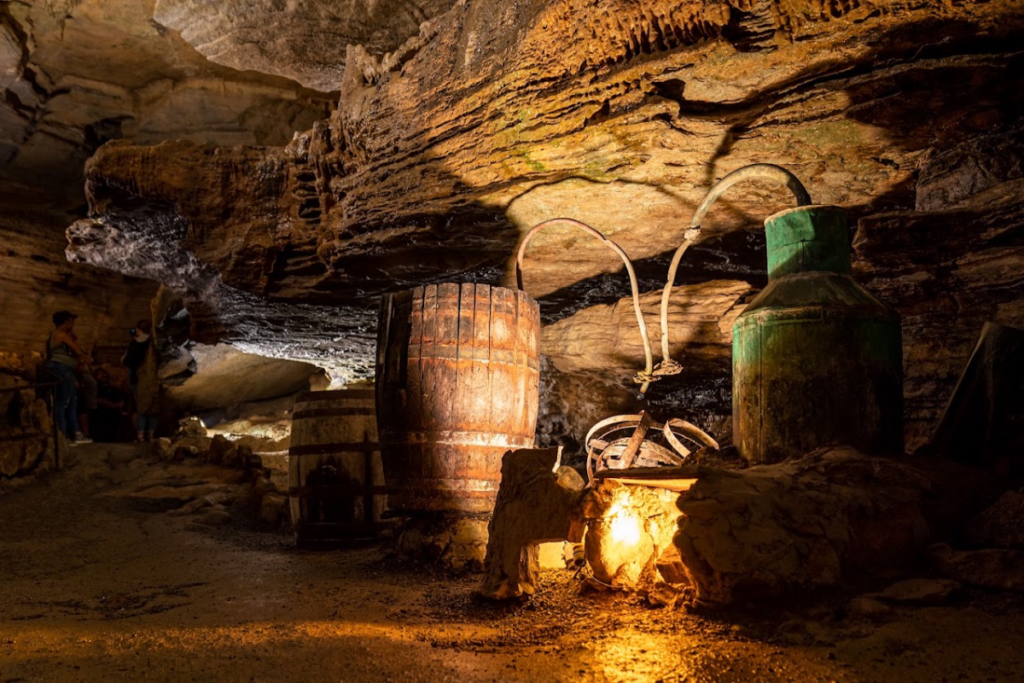
There’s also evidence of a Prohibition-era moonshine operation, complete with remnants of old stills. The cave has quite the colorful history beyond its geological significance.
When you finally reach the lake, you board glass-bottom boats for a cruise across the water. The guides point out formations and explain how the lake formed over millions of years.
The trout were introduced in the 1960s as an experiment, and they’ve thrived in the constant 58-degree water despite having no natural light. They’ve adapted by developing enhanced sensory abilities to navigate and find food.
The entire tour takes about an hour and a half, and it’s suitable for all ages. The boat ride is peaceful and surreal, floating through absolute darkness beyond the lights of the boat.
5. Forbidden Caverns, Sevierville
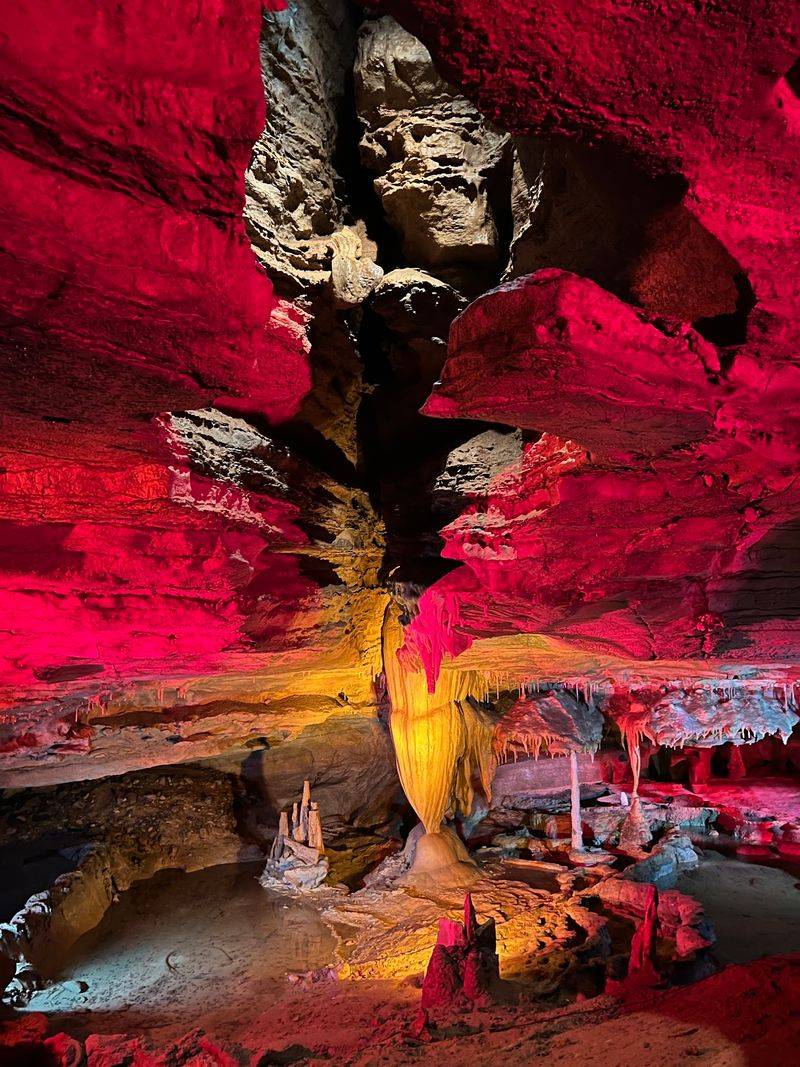
The name alone makes you want to explore this place, and Forbidden Caverns delivers on the mystery factor. Located near Sevierville, this cave system features some of the most colorful formations you’ll find anywhere.
We’re talking rock that looks painted in shades of pink, orange, yellow, and even purple, all created by different mineral deposits over countless centuries.
Local legend claims the cave got its name because Cherokee people forbade entry to certain chambers they considered sacred. While the historical accuracy of that story is debatable, the cave definitely has an ancient, mystical quality.
European settlers rediscovered it in the early 1800s, but it wasn’t opened for tours until 1967. The owners have worked hard to preserve the natural formations while making it accessible to visitors.
One of the highlights is an underground stream that still flows through the cave, creating a constant soundtrack of running water. The stream carved these passages over millions of years, and it’s still doing its work today.
You’ll see places where the water has polished the rock smooth as glass, and other areas where it’s created intricate patterns and ripples frozen in stone.
The tour guides do an excellent job explaining the geology without getting too technical. They’ll show you formations that look like strips of bacon, others that resemble grapes, and massive columns that seem to hold up the mountain above.
The lighting is designed to highlight the natural colors of the rock, and the effect is stunning. Some formations literally sparkle when the light hits them just right.
Tours run about 55 minutes and cover roughly half a mile of walking. The pathways are good, though there are some steps and inclines.
The cave stays at a comfortable 58 degrees year-round, making it a perfect escape from summer heat or winter cold. Because it’s close to Gatlinburg and Pigeon Forge, many families include it as part of a larger Smoky Mountain vacation.
The gift shop at the entrance has an impressive collection of minerals and fossils if you’re into that sort of thing.
6. Dunbar Cave, Clarksville
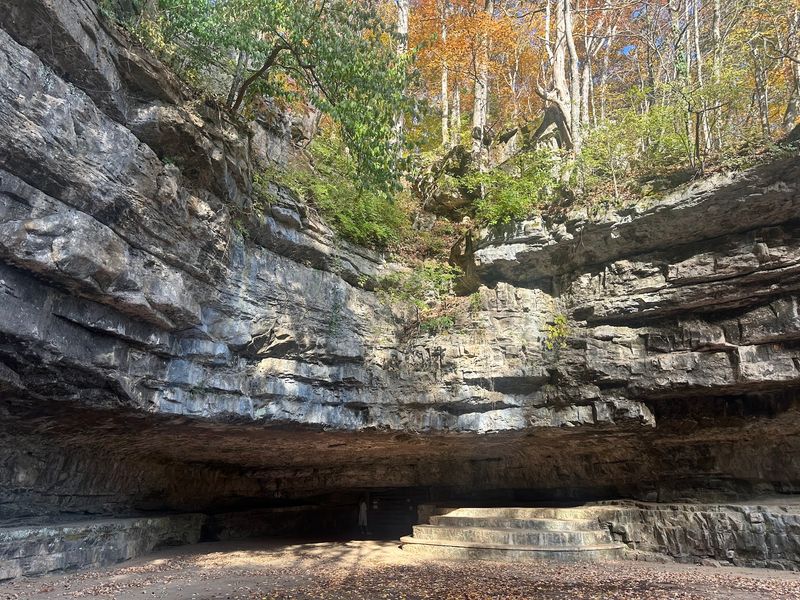
Walking into Dunbar Cave feels like stepping back in time, and not just because of the geology. This cave has been a gathering place for thousands of years, first for Native Americans who left behind mysterious cave art, then as a popular dance hall and concert venue in the 1930s and 40s.
Big bands played here, and people would travel from miles around to dance inside a cave. Try wrapping your head around that.
The cave entrance is massive, like nature carved out a cathedral door in the limestone cliff. Inside, the main chamber opens up into a space large enough to hold hundreds of people, which is exactly what happened during its heyday as a music venue.
You can still see remnants of the old stage and dance floor, now weathered and reclaimed by the cave’s natural processes.
Archaeological evidence suggests Native Americans used this cave as far back as 10,000 years ago. The pictographs on the walls, created with natural pigments, depict various symbols and figures that archaeologists are still working to fully understand.
Some appear to be ceremonial in nature, while others might represent territorial markers or astronomical observations. Standing in front of these ancient artworks gives you chills.
Today, Dunbar Cave operates as a state park, and they offer guided tours that focus on both the natural and cultural history. The cave extends for about eight miles, though most of that is off-limits to casual visitors due to preservation efforts and safety concerns.
The accessible portion gives you a great sense of the cave’s scale and significance without requiring any serious spelunking skills.
The tours are free, which is amazing considering the historical and geological value of this site. Rangers lead walks that last about an hour, and they’re genuinely passionate about the cave’s stories.
Above ground, the park offers hiking trails through beautiful woodlands and around a small lake. The cave maintains its cool temperature year-round, and bats use the deeper passages as hibernation sites during winter months, so tour schedules vary seasonally.
7. Bell Witch Cave, Adams
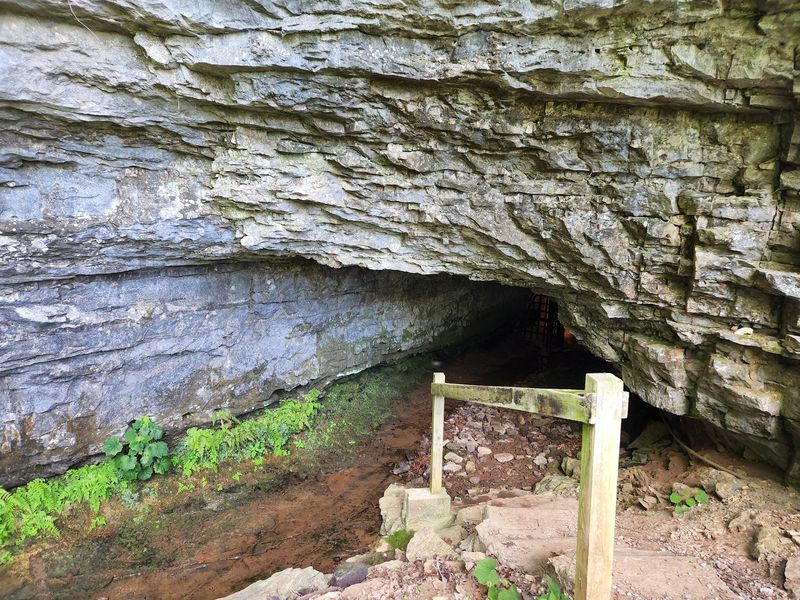
Some caves are famous for their beauty, others for their size. Bell Witch Cave is famous because it’s supposedly haunted by one of America’s most well-documented supernatural entities.
Whether you believe in ghosts or not, the history surrounding this cave is absolutely wild. The Bell Witch legend dates back to the early 1800s when the Bell family experienced unexplained phenomena that eventually drove them from their home.
The cave sits on what was once the Bell family property, and according to local lore, the entity that tormented them retreated into this cave after John Bell’s death. Visitors have reported strange occurrences here for nearly two centuries: unexplained voices, objects moving on their own, sudden temperature drops, and feelings of being watched.
Paranormal investigation teams regularly visit, and the stories they bring back are consistently bizarre.
From a purely geological standpoint, it’s a relatively small cave, nothing like the massive cavern systems elsewhere in Tennessee. But what it lacks in size, it makes up for in atmosphere.
The entrance is narrow and a bit claustrophobic, and the interior has an undeniably eerie quality. Water drips constantly from the ceiling, echoing through the chambers in a way that can definitely play tricks on your mind.
Tours here focus as much on the legend as the geology. Guides share the detailed history of the Bell family’s experiences, including accounts from Andrew Jackson, who reportedly encountered the witch during a visit to the area.
Whether these stories are true, embellished, or completely fabricated depends on who you ask, but they’re entertaining regardless. The cave itself has some interesting formations, though they’re secondary to the main attraction.
The property includes a replica of the original Bell cabin and a small museum with artifacts and documents related to the legend. Tours run seasonally and are more casual than what you’d find at the larger commercial caves.
The temperature inside is cool but not uncomfortable, and the whole experience takes about 45 minutes. If you’re into paranormal stuff or American folklore, this is a must-visit.
If you’re just looking for pretty rock formations, you might want to choose one of the other caves on this list.
8. Bristol Caverns, Bristol
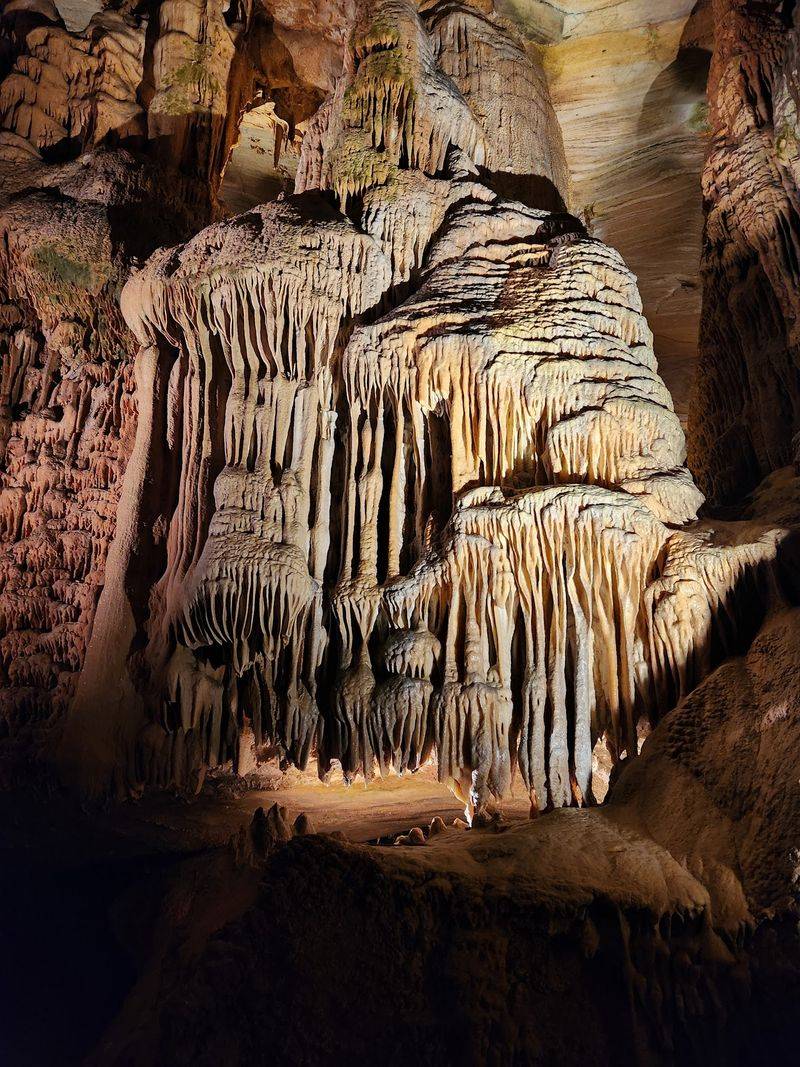
Straddling the Tennessee-Virginia border, Bristol Caverns offers a unique underground adventure that’s been millions of years in the making. An underground river carved these passages through solid limestone, creating a maze of tunnels and chambers that seem to go on forever.
The sound of rushing water accompanies you through much of the tour, reminding you that this cave is still very much alive and changing.
The cave was known to early settlers and Native Americans, but it wasn’t commercially developed until 1942. During World War II, the cool, constant temperature made it an ideal storage location for various goods.
After the war, the owners decided to open it for tourism, and it’s been a regional attraction ever since. The development was done thoughtfully, preserving the natural character while making it accessible to visitors.
What makes Bristol Caverns stand out is the sheer variety of formations packed into a relatively compact tour route. You’ll see classic stalactites and stalagmites, sure, but also rare formations like helictites that seem to defy gravity, growing sideways or even upward instead of straight down.
There are also beautiful flowstone cascades that look like frozen waterfalls, created by mineral-rich water flowing over the rock for thousands of years.
The underground river is the real star here. In some sections, it flows right next to the walking path, and you can see how it continues to shape the cave.
During heavy rains, the river swells considerably, and you can see high-water marks on the walls showing just how much it can rise. The guides explain how the water chemistry affects formation growth and why some areas are more active than others.
Tours last about 45 minutes and cover roughly half a mile of walking. The pathways are well-maintained, though there are stairs and some uneven sections. The cave temperature stays around 55 degrees, so bring a light jacket.
Because it’s right off Interstate 81, Bristol Caverns makes an easy stop if you’re traveling through the area.
9. Appalachian Caverns, Blountville
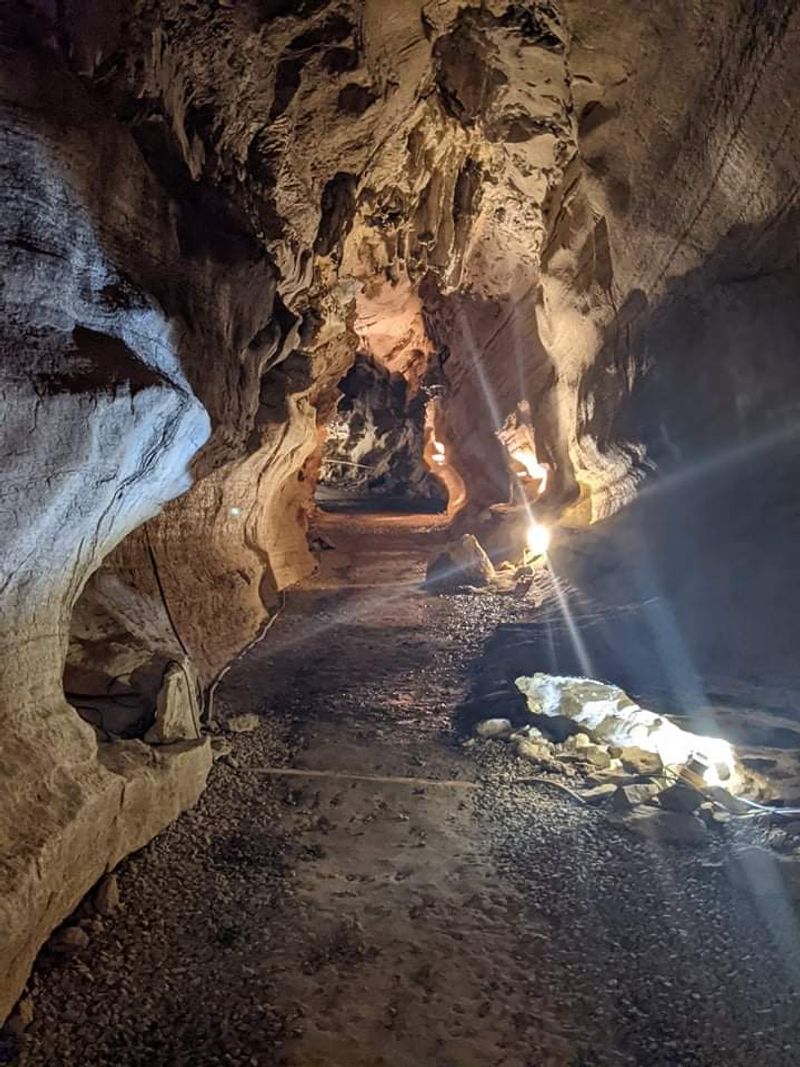
Appalachian Caverns might be the most versatile cave experience in Tennessee because they offer everything from easy walking tours to genuine wild caving adventures. Located near Blountville, this cave system has something for everyone, whether you’re bringing your grandmother or training for an expedition to Mammoth Cave.
The geology here is exceptional, featuring formations you won’t find in most show caves.
The standard tour takes you through beautifully lit passages filled with classic cave formations, but what really sets this place apart is their wild cave tours. These expeditions take you off the developed paths and into raw, untouched sections of the cave.
You’ll crawl through tight spaces, wade through water, and experience the cave the way early explorers did. They provide all the gear, including coveralls, helmets, and headlamps, and the guides are experienced cavers who prioritize safety while maximizing adventure.
One unique feature here is the abundance of rare formations. You’ll see things like cave pearls, which form when dripping water causes calcite to build up around a grain of sand, creating perfect little spheres.
There are also impressive displays of cave coral, which looks exactly like ocean coral but forms through completely different processes. The variety of colors in the rock, caused by different mineral deposits, creates a natural art gallery underground.
History adds another layer to the experience. The cave was used by early settlers for various purposes, and there’s evidence of Native American presence as well.
During Prohibition, rumor has it that moonshiners used remote sections of the cave for their operations, though proving that now is pretty much impossible. The guides share these stories along with the geological information, creating a well-rounded tour.
For families with young kids, the regular tour is perfect and lasts about an hour. The wild cave tours range from two hours to all-day expeditions, depending on how adventurous you’re feeling.
The cave maintains a constant 55-degree temperature, and the humidity is high, so dress in layers you don’t mind getting dirty. This is one of the few places in Tennessee where you can experience both commercial cave touring and real spelunking at the same location.
Share this story