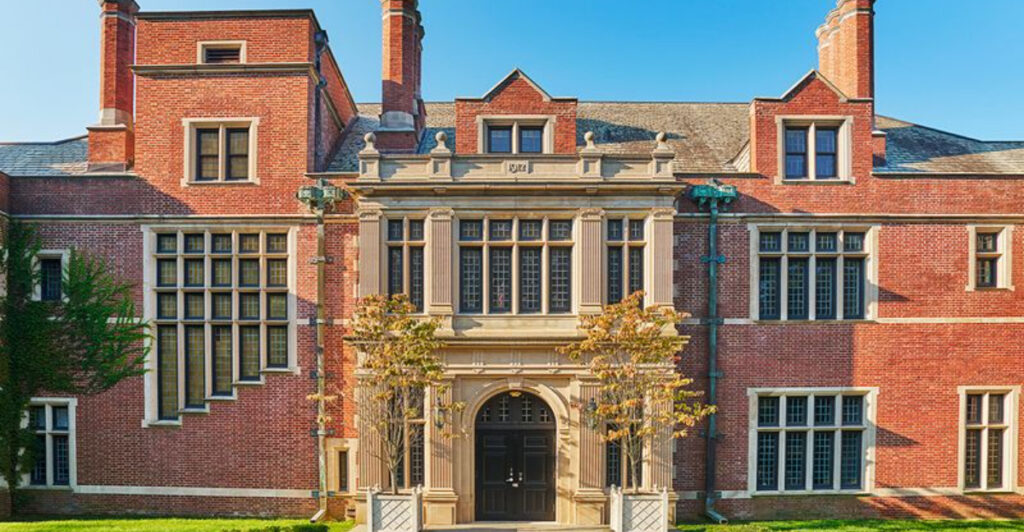
A red-brick manor appears through the trees at the end of a long country drive, its tall chimneys and limestone trim looking more English aristocracy than everyday New Jersey. The surprise gets better once you learn who owned it.
Hidden among the Somerset Hills, Pendry Natirar occupies an estate that once belonged to Hassan II, the late king of Morocco. The property’s royal chapter is only one layer of a story involving a shipping heiress, a convalescent home, preserved parkland, and a painstakingly restored Tudor mansion.
Today, the historic residence anchors a polished countryside resort complete with a working farm, destination restaurant, cooking school, enormous spa, and trails leading toward the North Branch of the Raritan River. It sits less than an hour from Manhattan, yet the setting feels far removed from traffic and crowded sidewalks.
This is the rare New Jersey secret that becomes more interesting with every detail you uncover.
Pendry Natirar Hides in Plain Sight Among the Somerset Hills
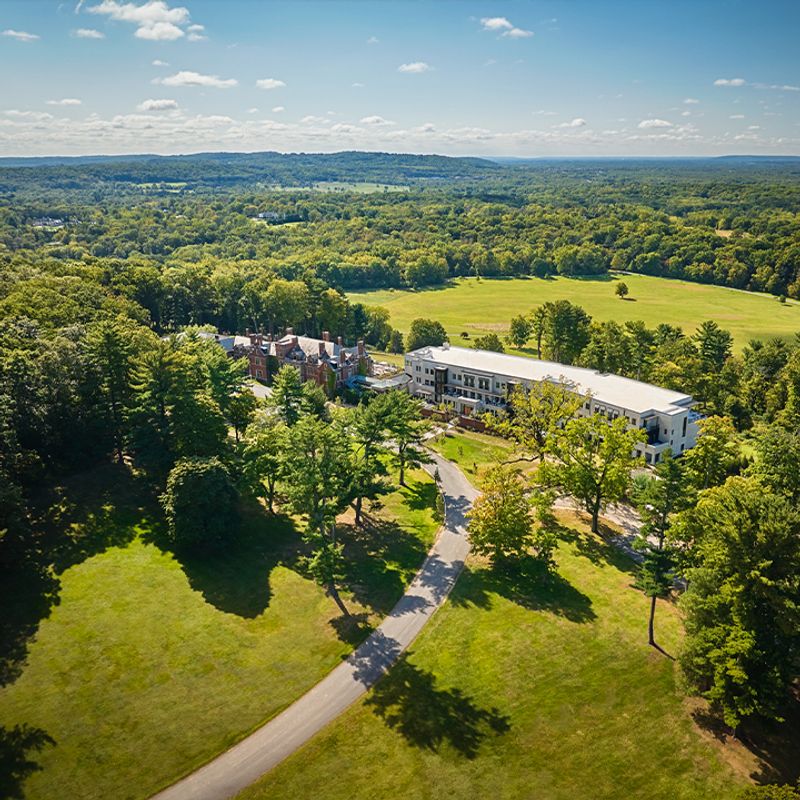
The journey to Pendry Natirar does not feel like a typical hotel arrival. Roads wind past fields, old trees, and handsome homes before the estate reveals itself in Peapack-Gladstone, one of those Somerset County corners where Manhattan suddenly seems much farther away than it really is.
The resort stands at 400 Natirar Drive, roughly 45 miles west of Midtown and less than an hour from New York City when traffic cooperates. Its surroundings help explain why the place remains such a surprise.
Natirar spreads across nearly 500 acres spanning Peapack-Gladstone, Far Hills, and Bedminster, with the North Branch of the Raritan River crossing the property. Even the estate’s unusual name is hiding something in plain sight. “Natirar” is “Raritan” spelled backward, a clever nod to the river that runs through the land.
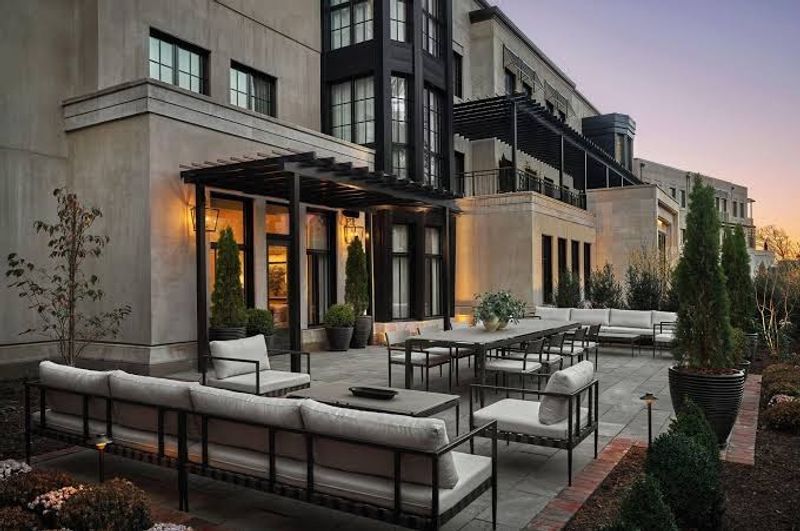
The current resort opened in October 2024, but it does not announce itself like a shiny new development. Its centerpiece is a stately red-brick manor completed in 1912, joined by newer buildings designed to respect the scale and character of the original estate.
The result looks settled into the landscape rather than dropped onto it. Pendry Natirar has 68 guest rooms, including 21 suites, along with four dining and drinking spaces, a farm, a cooking school, and extensive wellness facilities.
Yet size is not what makes the first impression. It is the contrast between access and atmosphere.
New Jersey Transit’s Gladstone Branch runs through nearby towns, major highways are within an easy drive, and Manhattan is close enough for a weekend escape. Once the manor appears beyond the trees, however, commuter-country New Jersey gives way to something far more intriguing.
The Tudor-Style Manor Once Served as a Moroccan King’s American Home
Long before hotel guests checked into rooms overlooking the countryside, this estate belonged to Kate Macy Ladd and her husband, Walter Graeme Ladd. The couple began assembling the property in 1905, eventually creating an estate of roughly 1,000 acres.
Boston architect Guy Lowell, whose work included the Museum of Fine Arts in Boston and the New York County Courthouse, designed the 40-room Tudor-style mansion. Completed in 1912, it featured limestone trim, a slate roof, oak paneling, molded plaster ceilings, and the sort of chimneys that practically demand a dramatic winter snowfall.
Kate also had a charitable mission for Natirar. Beginning in 1908, she provided a place where working women could recuperate from illness without charge.
After her death, the mansion became part of the Kate Macy Ladd convalescent facility, which continued operating until 1983. That was when the estate entered its most unexpected chapter.
Hassan II, king of Morocco from 1961 until his death in 1999, purchased Natirar for $7.5 million. The king reportedly visited infrequently, but the estate served as an American residence for his family while his children attended Princeton University, about 30 miles south.
That connection explains how a Tudor mansion in Somerset County ended up under Moroccan royal ownership for two decades. After Hassan II died, the property passed to his son, King Mohammed VI.
Somerset County purchased it from him in 2003 for $22 million, securing the land’s future while opening the way for public park use and private redevelopment around the historic buildings. Knowing that history changes the way the manor feels.
Those carved mantels and paneled rooms are not stage dressing cooked up for a luxury hotel. They witnessed more than a century of private family life, charitable work, royal ownership, and reinvention.
Preserved Fields and Woodlands Make the Estate Feel Worlds Away
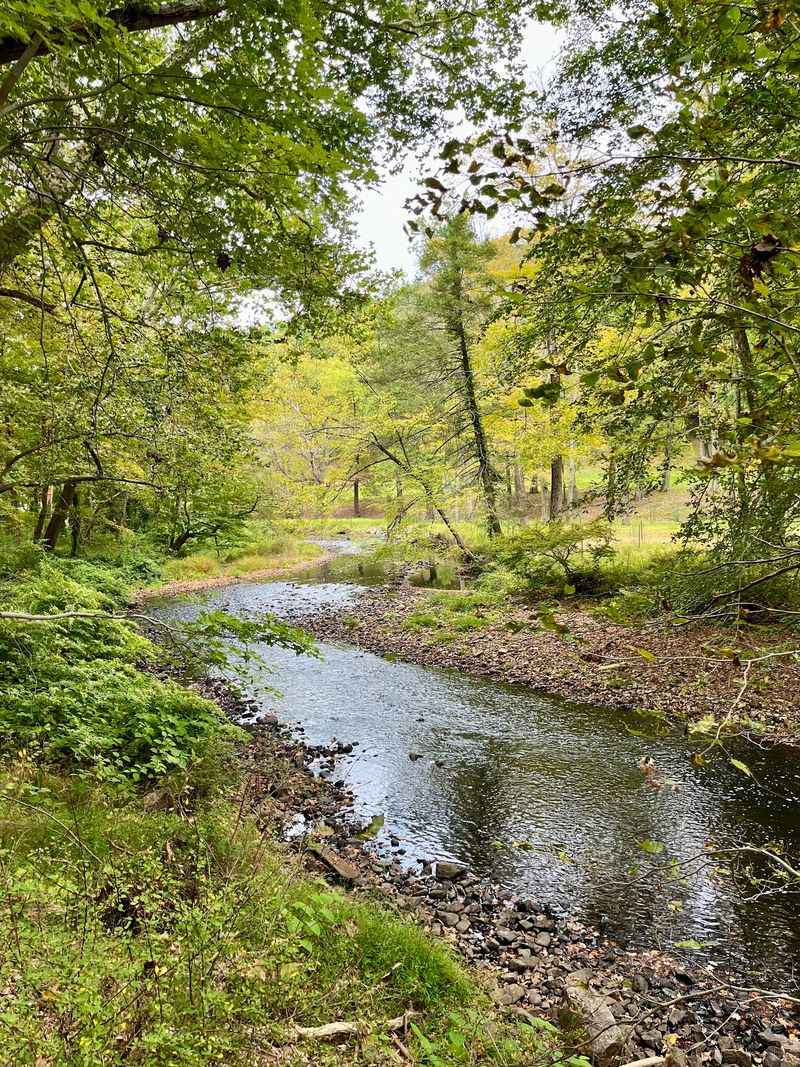
Walk far enough from the main buildings and the hotel begins to disappear behind the tree line. Open meadows replace manicured arrival spaces, wooded paths drop toward the water, and the North Branch of the Raritan River slips quietly through the property.
This is not scenery manufactured around a resort. Much of Natirar is protected county parkland, preserving a landscape that has shaped the estate since the Ladds lived here.
Somerset County manages more than 400 acres as Natirar Park, while the resort occupies the historic core and surrounding grounds. That arrangement helps keep the wider property remarkably open.
The park contains lawns, forests, wetlands, river access, Peapack Brook, and historic agricultural structures dating from the 18th and 19th centuries. A picturesque two-mile loop follows part of the river corridor, crosses fields, and passes through wooded sections.
Another loop adds approximately 1.3 miles through the Far Hills side of the estate. Depending on the route and posted regulations, visitors use the trails for walking, jogging, horseback riding, and mountain biking.
The public park is generally open from dawn to dusk, so experiencing Natirar does not necessarily require booking a room or ordering an expensive dinner. Guests who want something more organized can turn to the resort’s Compass Sports program.
Its offerings may include guided hikes, e-bike rides, archery, axe throwing, fly-fishing, and horseback rides at nearby stables. A forested walk from the resort to the river takes only minutes, but it creates a convincing sense of separation from the modern world.
The preservation also serves a practical purpose. Forests, wetlands, and floodplains around the Raritan and Peapack Brook protect habitat and help safeguard the local watershed.
The sweeping views are lovely, but the real luxury is knowing they are not simply waiting for the next subdivision.
Historic Elegance and Modern Luxury Come Together Inside
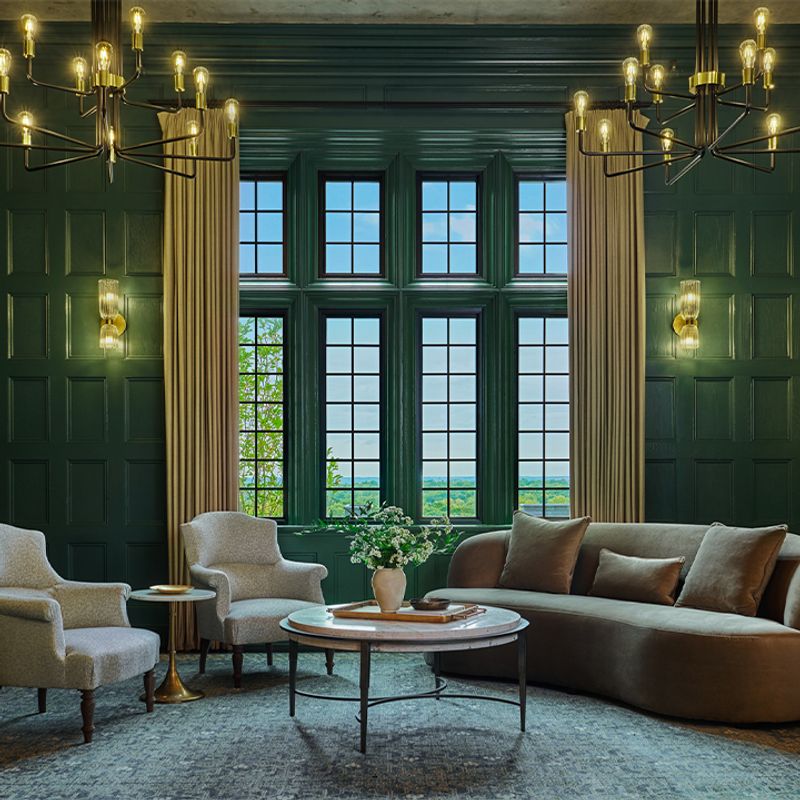
Step through the manor’s limestone foyer and the age of the estate is immediately apparent. Original stone fireplaces, decorative plaster ceilings, warm wood paneling, and oak floors survive inside the restored 1912 building.
Rather than sanding away every sign of history, the renovation lets those details carry the rooms. Contemporary furniture, sculptural lighting, rich fabrics, and modern art add polish without making the mansion look as though it has been dressed for a historical reenactment.
The guest accommodations continue that balancing act. Floor-to-ceiling windows and private balconies pull the countryside indoors, while hardwood floors and residential-style sitting areas keep the spaces connected to the country-house setting.
Resort King rooms measure roughly 455 to 562 square feet and include pillow-top mattresses with 600-thread-count linens, walk-in wardrobes, 50-inch smart televisions, Bluetooth speakers, and Vittoria espresso machines. Marble bathrooms come with walk-in rain showers and double basins, useful details when two people are trying to get ready for dinner at the same time.
Estate King rooms trade views of the resort buildings for wider countryside panoramas, while Deluxe Estate rooms add a furnished balcony or patio. Two-queen configurations accommodate as many as four guests, and connecting options make the property workable for families who want more breathing room.
Beyond the bedrooms, the estate moves easily between formal and relaxed spaces. The Great Room is built for lingering near a fireplace, while Ladd’s Tavern handles breakfast, lunch, dinner, cocktails, light bites, and afternoon tea.
The newer portions of the resort expand the experience without trying to imitate the century-old manor brick for brick. That restraint matters.
Pendry Natirar feels current where comfort demands it and historic where character counts, allowing guests to enjoy the estate’s past without also inheriting its early-20th-century plumbing.
Ninety Acres Turns Ingredients From the Working Farm Into Dinner

A restaurant can talk about farm-to-table cooking all evening, but Ninety Acres has 12 acres of proof growing just outside. The Farm at Natirar produces organic heirloom vegetables, microgreens, herbs, fruit, flowers, and other seasonal ingredients used across the estate’s culinary program.
The connection is unusually direct. What is ready in the fields can influence what appears on the plate, giving the chefs a reason to let the calendar guide the menu instead of forcing tomatoes to behave like summer in February.
Ninety Acres occupies the estate’s restored carriage house and has been a dining destination since 2009, well before the Pendry hotel opened. Its current identity remains relaxed but refined, with chef-driven dishes shaped by the farm’s harvest and ingredients from regional producers.
Specific preparations change with the season, which is the point. Spring might favor tender greens, peas, herbs, and young vegetables, while late summer brings tomatoes, peppers, squash, and fruit at their most useful.
The farm is not limited to supplying the kitchen. Resort guests and Natirar Club members can join scheduled experiences that explain what happens before dinner reaches the table.
Farm tours, seasonal workshops, animal encounters, and apiary programs bring visitors close to the property’s agricultural work. The resident sheep and free-range chickens play roles in soil health and field rotation, while bees support pollination and provide honey.
A cooking school beside the restaurant takes the idea one step further with hands-on classes built around seasonal ingredients, practical techniques, and recipes meant to be repeated at home. There are more casual alternatives when a full dinner is not on the schedule.
Ladd’s Tavern offers country-inspired all-day dining, the Great Room serves drinks and bites in a fireside setting, and the pool has its own seasonal service. Still, Ninety Acres is where Natirar’s larger story becomes edible.
The fields are not decorative landscaping, and the farm is not a clever name on the menu. Dinner begins in the soil just beyond the dining room.
A Restorative Spa and Scenic Trails Complete the Country Escape
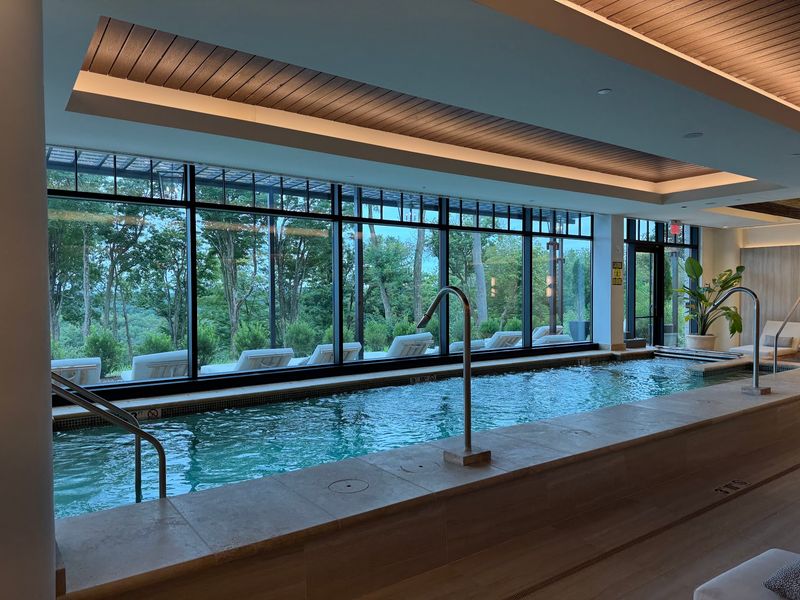
After a eucalyptus steam, a cedar sauna, and a quiet stretch beside an indoor plunge pool, the outside world starts to feel like someone else’s problem. Spa Pendry occupies 19,000 square feet across two floors, making it substantial enough to be a destination on its own rather than a couple of treatment rooms tucked beside the gym.
Its men’s and women’s lounges include rainfall showers, steam rooms, and saunas, while shared relaxation areas offer a halotherapy salt room, a heated tranquility plunge pool, and an outdoor terrace facing the countryside. Twelve treatment rooms provide space for massages, facials, and body treatments, and several have private terraces.
The nature connection here is more than a soothing soundtrack of distant birds. Treatments and wellness programming draw inspiration from the surrounding landscape, while yoga, meditation, strength sessions, and other scheduled classes give guests options beyond the massage table.
The spa is open daily from 10 a.m. to 6 p.m., although access rules differ throughout the week. Adults who are not staying at the resort may reserve qualifying treatments Monday through Thursday, while Friday through Sunday access is reserved for hotel guests and Natirar Club members.
Outside, the property offers an entirely different kind of reset. Guests can follow trails through forest and meadow, walk roughly six minutes to the Raritan River, borrow the countryside for an e-bike ride, or try activities ranging from fly-fishing to archery.
The contrast works beautifully. One hour might involve a salt room and a robe; the next might bring muddy shoes beside the river.
That combination captures what makes Natirar difficult to categorize. It is a historic estate, public landscape, luxury hotel, working farm, and royal footnote occupying the same green corner of Somerset County.
The king is gone, but the deep quiet that made this land worth owning has survived.