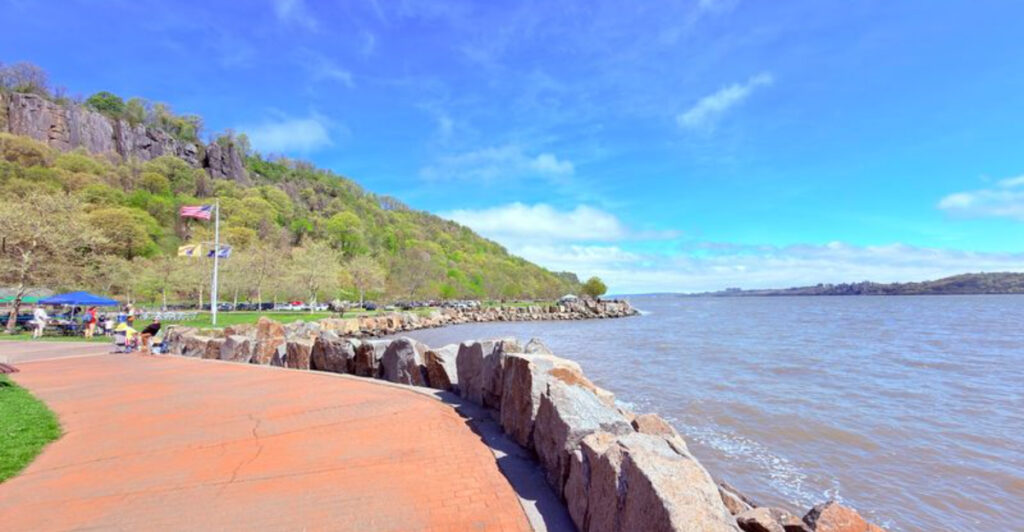
A half-day adventure should not require a 5 a.m. alarm, a trunk full of equipment, or a recovery day afterward. The sweet spot is much simpler: a trail with something memorable at the end, plus enough time for a picnic, a historic detour, or a warm cider doughnut before heading home.
New Jersey is particularly good at this kind of outing. In a single morning or afternoon, you can circle a quiet reservoir, wander through an abandoned village, explore an old military post, or follow a sandy path to the edge of Barnegat Bay.
These ten adventures combine manageable walks with places worth lingering, turning a few hours outside into something more satisfying than another lap around the neighborhood. Some routes are flat and leisurely, while others add a few hills or rocky stretches, but none demands an expedition mindset.
Bring water, wear shoes you do not mind getting muddy, and leave the complicated itinerary at home.
1. Ramapo Lake Loop and a Picnic at Ramapo Valley County Reservation
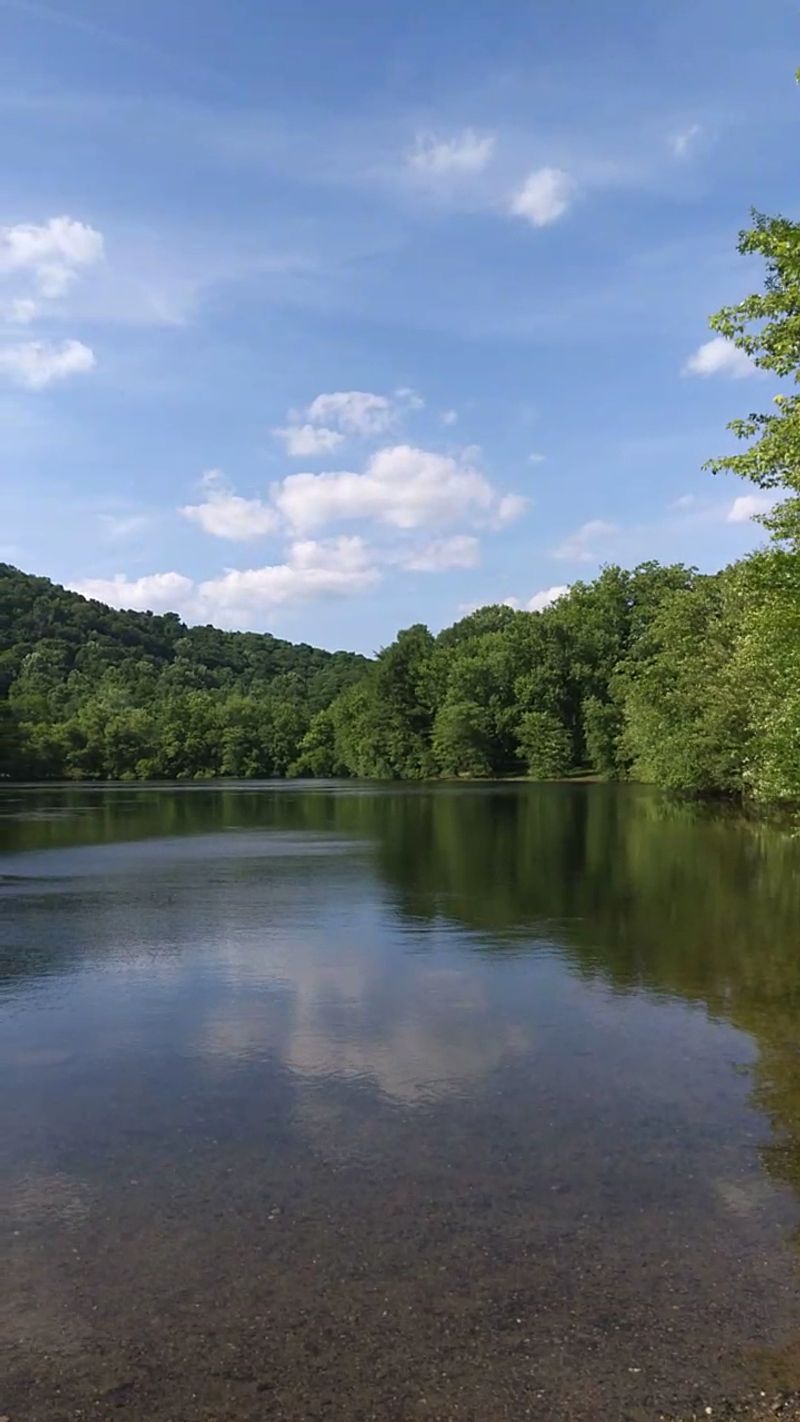
The first reward arrives quickly at this Bergen County favorite. A short walk from the parking area leads to Scarlet Oak Pond, where still water, wooded slopes, and the occasional passing heron make suburban Mahwah feel much farther away than it is.
Visitors looking for a relaxed outing can linger around the pond and nearby trails, while those ready for more climbing can continue toward Ramapo Lake for a longer loop through the forest.
The approach to the lake includes rocky footing and a noticeable uphill stretch, so “easy” refers more to the uncomplicated half-day plan than to a perfectly flat stroll.
Once you reach the water, the pace softens. Tree-lined views open between the branches, and scattered ruins add an unexpected touch of mystery to the route.
Pack lunch and save it for the return to Scarlet Oak Pond, where the scenery does most of the work. The reservation is popular with hikers, runners, families, and leashed dogs, particularly on crisp weekend mornings.
Parking can fill early, so arriving before the late-morning rush is a smart move. Trail intersections extend well beyond the basic lake outing, making a downloaded map or photo of the kiosk useful.
Allow several hours if you plan to reach Ramapo Lake, and choose the shorter pond walk when time—or enthusiasm for hills—is limited.
2. Watchung Reservation Trails and the Deserted Village of Feltville
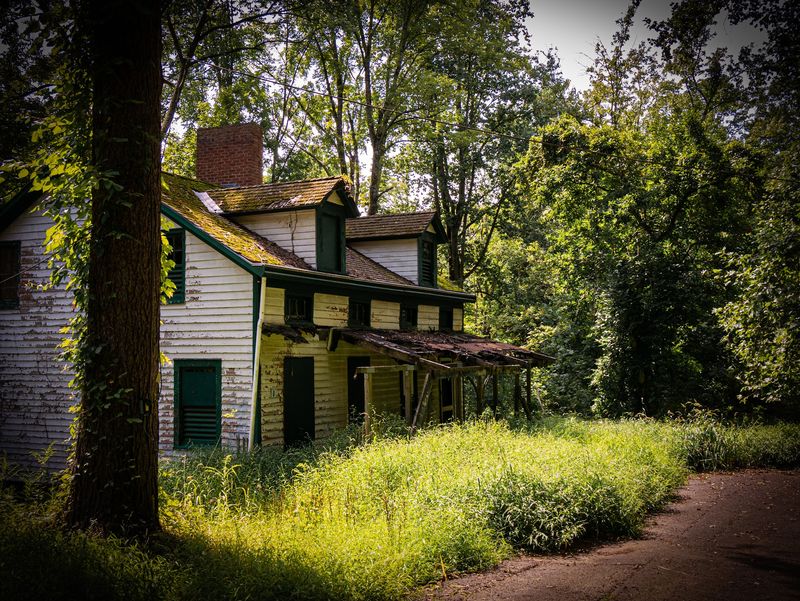
Empty foundations, weathered buildings, and handwritten-looking trail signs give this walk the pleasant feeling of stumbling into a forgotten chapter of local history. The Deserted Village of Feltville sits within Watchung Reservation, but it once functioned as a small industrial community centered around a mill.
Later incarnations included a summer resort, and remnants from those different eras still stand among the trees. Rather than tackling the full six-mile History Trail, build an easier half-day outing around the village and a portion of the surrounding paths.
Interpretive signs explain the buildings, former residents, and industries that shaped the settlement, so the history does not require much homework beforehand. After exploring, continue toward Lake Surprise or follow one of the shorter woodland trails through the reservation’s streams and rolling terrain.
The trails can become muddy after rain, and exposed roots keep the walking interesting without making it overly demanding. Families can add a stop at Trailside Nature & Science Center, where exhibits introduce the plants, animals, and geology found across the reservation.
It is a useful rainy-day backup as well as a good finish for curious kids. Feltville has its own parking area, while other trailheads are scattered throughout the preserve.
With more than a dozen miles of paths available, it is easy to accidentally turn a casual walk into a serious hike, so decide on a turnaround point before setting off.
3. Manasquan Reservoir Loop and the Environmental Center
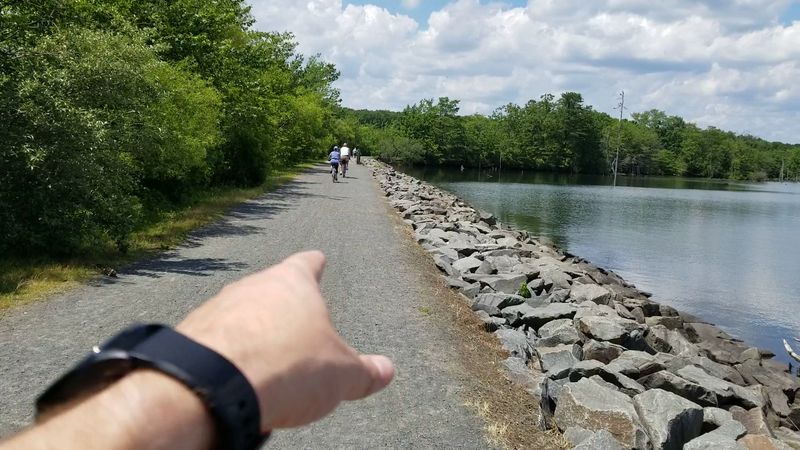
Five miles sounds ambitious until the trail is this level, open, and easy to follow. The gravel Perimeter Trail wraps around the Manasquan Reservoir in Howell, delivering changing water views without technical climbs or confusing side paths.
Mile markers help walkers track their progress, and the broad surface leaves room for hikers, runners, cyclists, and the occasional stroller built for rougher terrain. The full circuit generally fits comfortably into a half day, especially if you pause at the overlooks to scan for ospreys, herons, turtles, or bald eagles.
Anyone wanting a shorter outing can choose the roughly one-mile Cove Trail instead. It stays closer to the shoreline and feels more like a quiet nature walk than a workout.
The Visitor Center is the best base for the longer route, with restrooms and an upper observation deck overlooking the water. Seasonal kayak and rowboat rentals can turn the walk into a two-part adventure, although availability is first-come, first-served and swimming is not permitted.
The Environmental Center normally adds wildlife displays and wetland interpretation, but it has been undergoing renovations, so check its status before counting on an indoor visit. Even without it, the reservoir makes an easy, satisfying escape.
Bring water because much of the perimeter is exposed, and start early on hot days. The payoff is a full-loop accomplishment without the sore-knee drama of a mountain trail.
4. Batsto Lake Trail and a Walk Through Historic Batsto Village
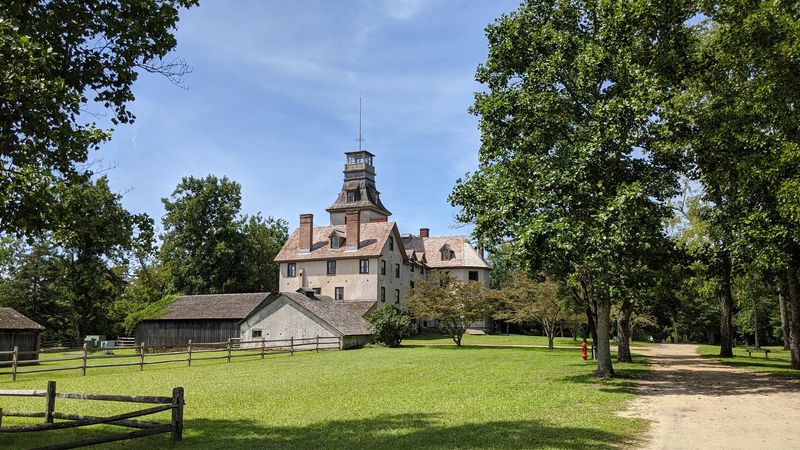
Pine needles soften your footsteps here, and the woods carry that clean, slightly spicy scent found only in the Pine Barrens. The Batsto Lake Trail begins near Historic Batsto Village in Wharton State Forest and traces a mostly gentle route through pitch pine, oak, and wetlands.
Depending on the selected loop and current trail configuration, hikers can shape the walk to suit the available time rather than committing to an all-day trek. Sandy patches and exposed roots appear along the way, but major elevation changes are refreshingly absent.
The lake itself brings broad views and opportunities to spot waterfowl, while tea-colored streams reveal the region’s naturally tannin-stained water. Save at least an hour for Batsto Village after the hike.
Once a center of bog-iron and glass production, the preserved settlement includes workers’ homes, a general store, barns, a sawmill, and the imposing Batsto Mansion. Even when building interiors are closed, the grounds are free to wander and packed with details that make the former company town feel surprisingly tangible.
The village area also provides parking, picnic tables, and restrooms, making it an easy base for the entire outing. Bugs can be persistent during warmer months, so repellent deserves a place beside the water bottle.
Visit on a cool morning or fall afternoon, and the combination of hushed forest and industrial history feels far richer than its low-effort itinerary suggests.
5. Cape May Point Trails, the Lighthouse, and Sunset Beach
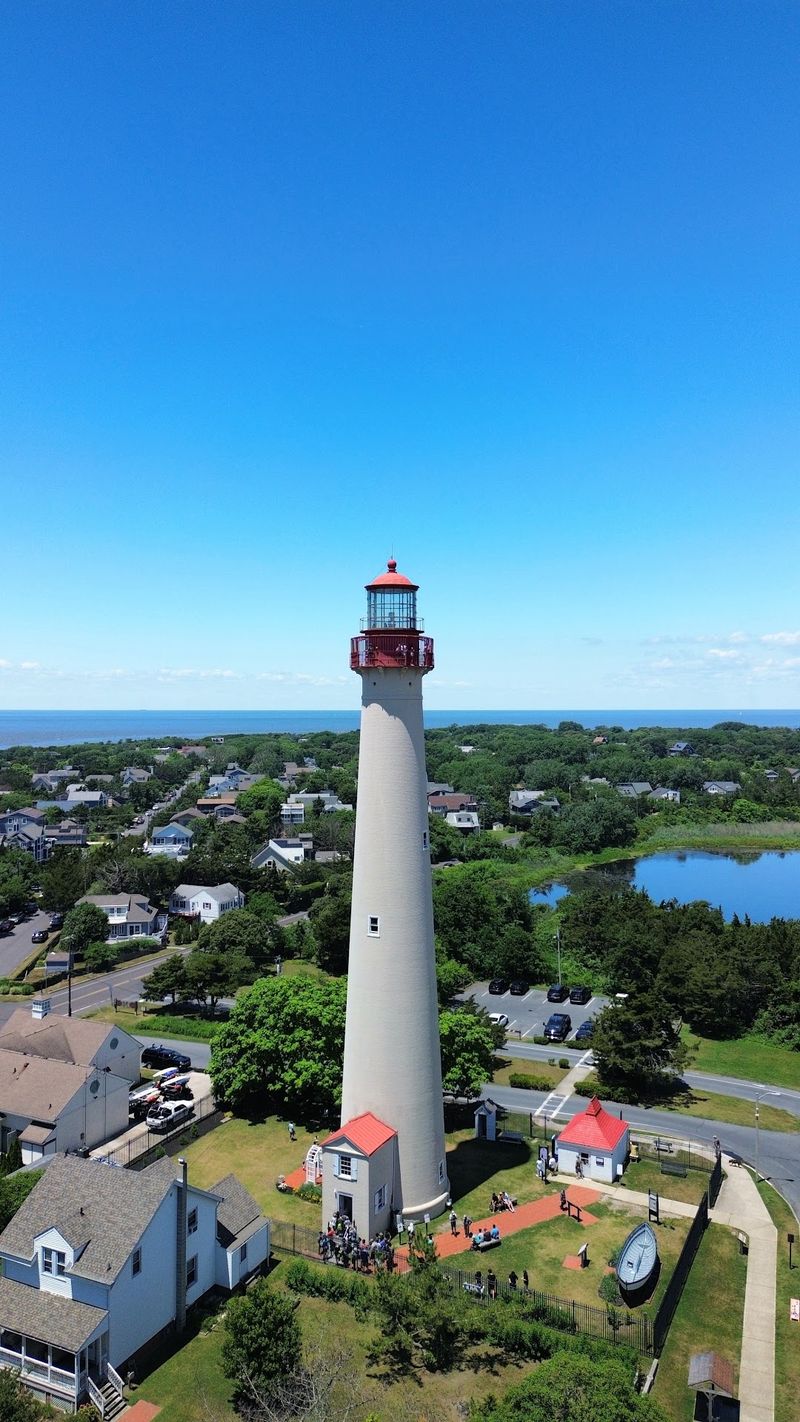
Migrating birds provide the traffic at Cape May Point, sometimes passing overhead in numbers that stop walkers mid-sentence. Three color-coded trails wind through the state park’s dunes, freshwater ponds, coastal woodland, and marshes, offering several ways to build a short, flexible walk.
Boardwalks cover parts of the routes, and observation platforms create natural stopping points for watching swans, ducks, hawks, and songbirds. The shortest loop works well for families, while combining trails fills a couple of hours without leaving the park.
Then there is the lighthouse. Its red cap rises above the landscape and makes navigation wonderfully simple: if you can see it, you know roughly where you parked.
When the tower is open, climbing the 199 steps adds a little leg work and a sweeping view over Cape May Point. Those who prefer to remain at ground level can explore the surrounding paths and World War II remnants instead.
Finish the outing a short drive away at Sunset Beach, known for its view of the concrete ship Atlantus and the smooth quartz pebbles nicknamed Cape May diamonds. Sunset is the obvious draw, but quieter daytime visits make beachcombing easier.
Trail surfaces can become wet after storms, and seasonal bird activity draws crowds, so mornings are ideal. In three or four unrushed hours, this outing manages to include a nature walk, a landmark, wartime history, and the beach.
6. Cattus Island Trails and the Cooper Environmental Center
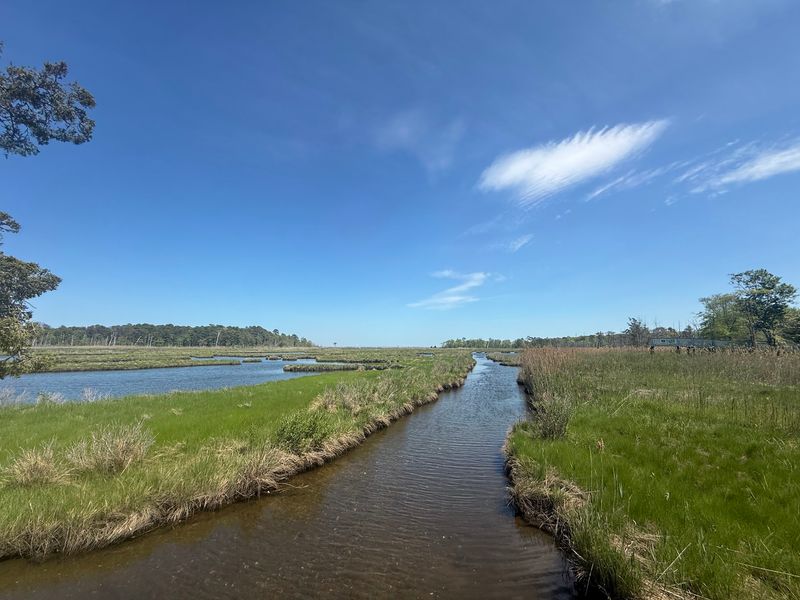
Salt marsh replaces mountain scenery at Cattus Island, and that change makes every step feel distinctly coastal. The 530-acre Toms River park contains about seven miles of trails, but visitors can create a comfortable half-day route by following the main path toward the sandy beach and adding one or two shorter loops.
The terrain is mostly flat, with forest, marsh edges, boardwalks, and open views across Barnegat Bay. Ospreys are among the park’s signature residents, and their platform nests are easier to spot than the birds themselves until one circles overhead with a fish.
Egrets, fiddler crabs, turtles, and songbirds provide additional reasons to slow down. The Cooper Environmental Center turns the outing into more than a walk.
Inside are hands-on displays about the bay ecosystem, viewing areas, and live reptiles and fish native to the region. The nearby butterfly garden is especially colorful from late spring into early fall, while an accessible boardwalk gives visitors another easy way to experience the landscape.
Admission to the park and center is free, and the center’s restrooms make it a practical place to begin or end the trip. Pick up a printed trail map before heading out because the network includes several intersections.
Ticks are present, so use repellent and check clothing afterward. Most importantly, do not rush the beach overlook; it is exactly the kind of quiet spot that can make a two-hour walk stretch pleasantly into four.
7. Sandy Hook Multi-Use Path and the Fort Hancock Historic District

Few walking routes offer ocean dunes on one side, New York Harbor on the other, and former military batteries waiting near the finish. Sandy Hook’s paved Multi-Use Path runs along much of the peninsula, allowing visitors to choose almost any distance and turn around whenever the sea breeze stops feeling helpful.
Start near Fort Hancock for the most history-packed version of the outing. Rows of yellow-brick officers’ homes face the parade ground, while defensive batteries and other structures hint at the site’s long role protecting New York Harbor.
The Sandy Hook Lighthouse, first lit in 1764, stands nearby and remains the oldest operating lighthouse in the country. Walking tours and building access vary, but the district is rewarding even when explored entirely from outside.
Continue along the path toward a bay overlook, beach access point, or the holly forest area, keeping clear of the Coast Guard zone at the peninsula’s northern tip. The route is flat and paved, although wind can make the return feel longer than the journey out.
Summer brings beach crowds and vehicle entrance fees, so spring and fall are particularly pleasant for a walking-focused visit. During peak season, arrive early because traffic can back up near the entrance.
Pack a snack, use the picnic areas, and leave enough time to wander the historic post without watching the clock. This is less a hike than a choose-your-own-distance tour through dunes, beaches, and military history.
8. Hacklebarney State Park Trails and a Stop at the Cider Mill

The Black River announces itself before it appears, sending the sound of rushing water up through a steep, shaded ravine. Hacklebarney State Park’s compact trail system makes it easy to reach the good scenery without devoting an entire day to the effort.
Routes descend through hardwood forest toward the river, where cascades spill over dark boulders and hemlocks keep parts of the gorge cool even during warmer weather. The Main Trail provides the most direct access, while connecting paths create loops of different lengths.
Although the park is small, rocky footing, stairs, and the climb back to the parking area give the walk more bite than its mileage suggests. Take your time around wet stones, especially after rain.
Once back at the car, continue the adventure at nearby Hacklebarney Farm Cider Mill. The seasonal farm stop is known for apple cider, baked goods, and cider doughnuts—the sort of post-hike reward that makes everyone forget the uphill return.
Its operating days and seasons can change, so confirm before making the doughnuts an essential part of the plan. Fall weekends are naturally busy at both the park and mill; an early start preserves the peaceful woodland experience and improves the odds of finding parking.
Outside peak foliage season, the gorge is equally appealing and considerably quieter. Budget two hours for the trails and another hour for the farm, with extra time if you plan to sit outside and make those doughnuts disappear slowly.
9. Palisades Interstate Park Trails and a Picnic at Ross Dock
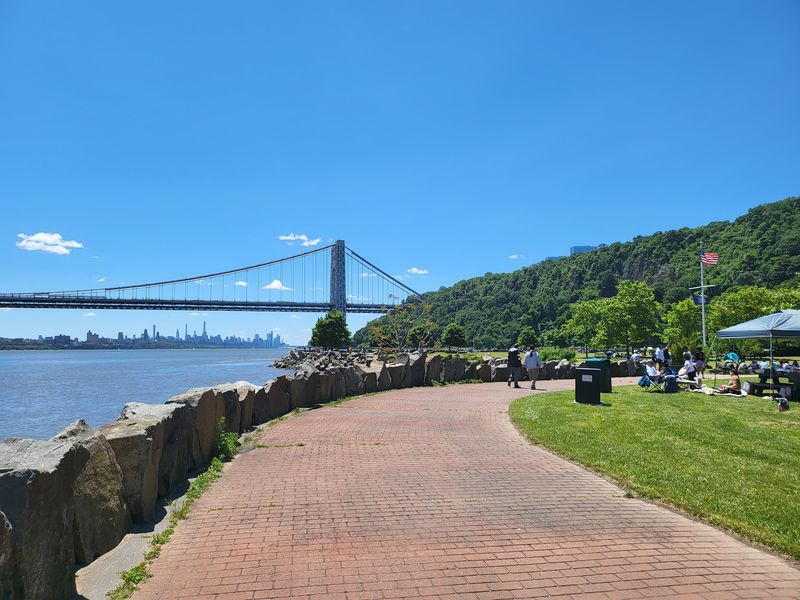
© Palisades Interstate Park Commission: Ross Dock Picnic Area
Standing beside the Hudson River at Ross Dock, it is hard to believe the George Washington Bridge is just minutes away. The cliffs rise sharply behind the picnic area, passing boats slide through the broad river channel, and Manhattan appears close enough to feel like part of the view rather than a separate destination.
For a manageable hike, follow a section of the white-blazed Shore Trail or tackle the shorter version of the Carpenter’s Loop. The full loop covers roughly five and a half miles and includes a substantial climb, but it can be cut about in half for a better fit within an easy afternoon.
Either option mixes riverfront walking with wooded slopes and changing views of the cliffs. Steep grades and stone steps mean this is not the flattest outing on the list, yet the ability to shorten the route keeps it flexible.
Return to Ross Dock for lunch at one of the picnic tables; grills, restrooms, and wide lawns make it one of the park’s most convenient places to settle in. Parking is metered from spring through fall, and the riverfront area is not served directly by public transportation.
The park’s Giant Stairs route has been closed because of rockfall concerns, so do not build your itinerary around it. Stick with the marked open trails, bring more water than the mileage seems to require, and let the riverside picnic be the reward for every uphill step.
10. Holmdel Park Trails and a Visit to Historic Longstreet Farm
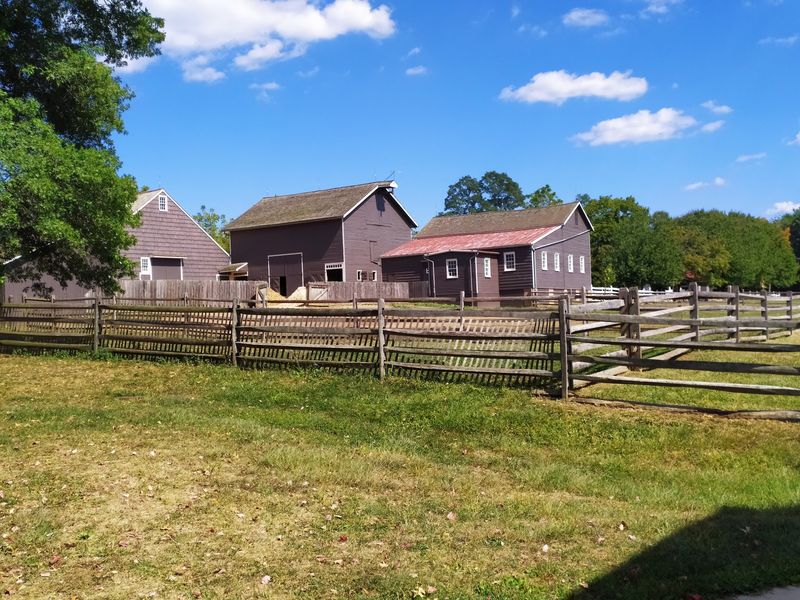
A horse-drawn wagon, a farmhouse woodstove, and fields worked with traditional equipment are not what most people expect at the end of a suburban park trail. Historic Longstreet Farm recreates daily agricultural life from the 1890s, giving this Holmdel outing a second act that works for adults and children alike.
Begin with the half-mile paved loop connecting the Pond View and Forest Edge areas if you want the gentlest option. Walkers looking for more mileage can venture onto the shaded woodland trails and rolling hills that spread across the park’s 719 acres.
With nearly ten miles available, it is easy to create a one- or two-hour route without repeating much scenery. The terrain ranges from smooth park paths to steeper natural trails, so check the map before committing to a loop.
Afterward, head to Longstreet Farm to see restored buildings, heritage-breed animals, and staff demonstrating the chores that once filled an entire day. Admission is free, though programs, demonstrations, and access to individual buildings vary by date.
The combination works especially well for families because the farm gives younger walkers a clear reward beyond “more trees.” Picnic areas, playgrounds, fishing ponds, and an arboretum provide backup options if the group still has energy. The park opens early year-round and becomes busy during cross-country events and fall weekends, so check the schedule before visiting.
A morning walk followed by the farm leaves the afternoon free while still feeling like a complete day out.