A staircase climbs toward rooms that no longer exist. A hulking furnace stands cold after devouring entire forests for fuel.
Deep in the Pine Barrens, graffiti-covered walls mark a factory that may never have produced what it was built to make. New Jersey’s ruins are not tidy places where history sits behind glass.
They leave gaps, loose ends, and just enough standing stone to make you wonder what happened. Some belonged to industrial communities that vanished when their mills stopped turning.
Others recall military projects, ambitious fortunes, transportation revolutions, and one of the most famous disasters ever captured on film. A few have been carefully restored; others are slowly being reclaimed by moss and trees.
Together, these 11 places reveal a version of New Jersey shaped by ironmasters, merchants, soldiers, inventors, laborers, and dreamers whose plans did not always last. Bring sturdy shoes, a little curiosity, and respect for whatever walls are still standing.
1. Van Slyke Castle Ruins – Ringwood
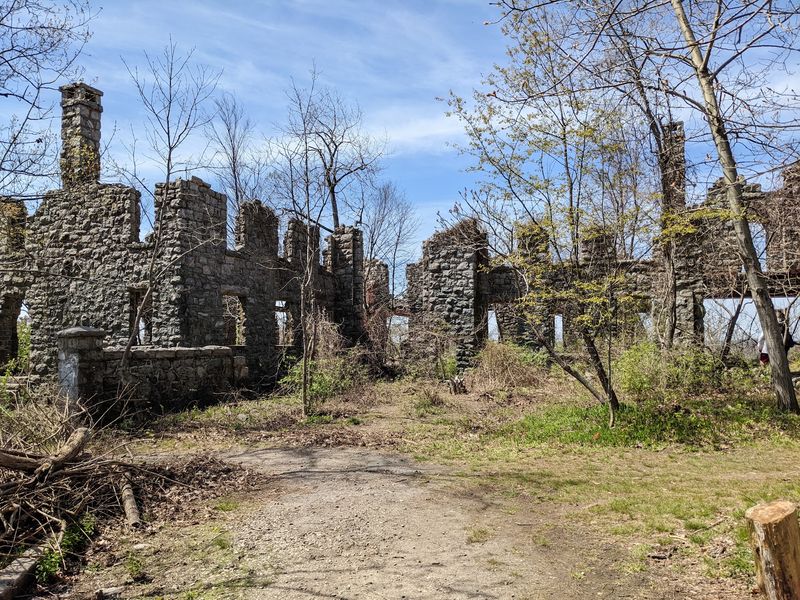
Stone columns and a broad staircase appear near the top of Fox Hill as if someone dropped the remains of a European estate into the Ramapo Mountains. Originally called Foxcroft, the mansion was built in the early 1900s by wealthy stockbroker William Porter.
After Porter died in an automobile accident, the property eventually passed to Ruth Van Slyke, whose name became permanently attached to the ruins. This was no modest country retreat.
The estate included a swimming pool, water tower, formal landscaping, and sweeping views that made the climb worthwhile long before hikers began coming here. The house was abandoned after Van Slyke’s death, and fire later reduced it to stone walls, arches, and foundations.
Nature has since done its part, threading roots through masonry and softening the edges with moss. Reaching the ruins requires a real hike through Ramapo Mountain State Forest, commonly approached from the Castle Loop and neighboring trails.
The remaining walls are unstable in places, so admire them without climbing or squeezing into questionable openings. What makes the site memorable is the contrast: one moment you are following a rocky woodland trail, and the next you are standing inside the outline of someone’s vanished mansion.
Continue toward the old water tower for an elevated view across the surrounding hills and the Wanaque Reservoir.
2. The Deserted Village of Feltville – Berkeley Heights
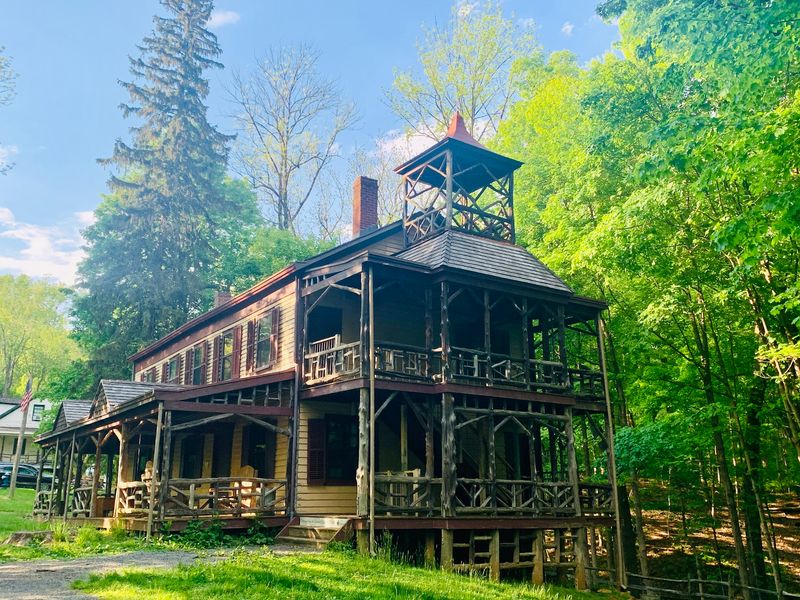
“Deserted” is only part of this village’s complicated identity. The settlement inside Watchung Reservation began around 1736 with a sawmill, but its defining chapter arrived in 1845, when businessman David Felt purchased hundreds of acres and built a printing and stationery factory along Blue Brook.
He added workers’ housing, a school, a store, and a church, creating a planned mill community with roughly 175 residents at its peak. Known as “King David,” Felt offered unusually good living conditions for the period, though he also ran the village with a distinctly paternal hand.
After he retired in 1860, a string of business ventures failed and the community briefly emptied. Then came another reinvention.
Warren Ackerman purchased the property in 1882, added rustic porches to the cottages, renamed it Glenside Park, and marketed it as a summer resort. Guests played golf, rode horses, attended dances, and escaped the city until shore vacations and automobiles helped make the resort obsolete.
Today, surviving cottages, the restored Church/Store, Masker’s Barn, archaeological remnants, and a small cemetery form an easy self-guided walk of about a mile. The grounds are generally open from dawn to dusk, and interpretive panels keep the layers of history straight.
Stay off weak porches and remember that some buildings are occupied. Feltville is less a ghost town than a place that repeatedly tried to become something new.
3. Harrisville Ruins – Chatsworth
Listen for the Oswego River while walking through this section of Wharton State Forest. Its steady movement helps explain why an industrial settlement once flourished in what now feels like uninterrupted Pine Barrens.
A sawmill operated here by the mid-1700s, followed by a slitting mill that cut iron into strips for nailmaking. Around 1815, the site was converted into a paper-manufacturing operation.
The community became known first as McCartyville and later as Harrisville after the Harris family acquired the factory in the 1850s. Workers lived in company housing and relied on a village that included a store, gristmill, and post office.
The paper operation became one of the forest’s notable industries, using waterpower in a landscape already known for iron furnaces and mills. Harrisville’s long run ended dramatically when fire swept through the settlement in 1914.
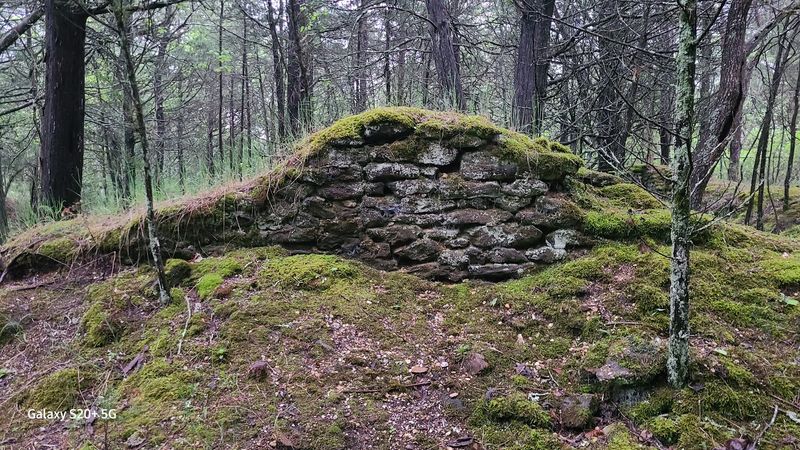
What remains is scattered rather than monumental: brick walls, stone foundations, channels, and fragments partly concealed by undergrowth. That subtlety is exactly why the place sticks with you.
Instead of arriving at a polished attraction, visitors must read the ground and imagine the machinery, homes, and working lives that once filled the woods. Conditions can be wet, sandy, and buggy, while cell service may be unreliable.
Download a map before leaving and do not disturb bricks or artifacts. The ruins look quiet now, but the river still follows the same route that once powered an entire town.
4. Battery Lewis – Highlands
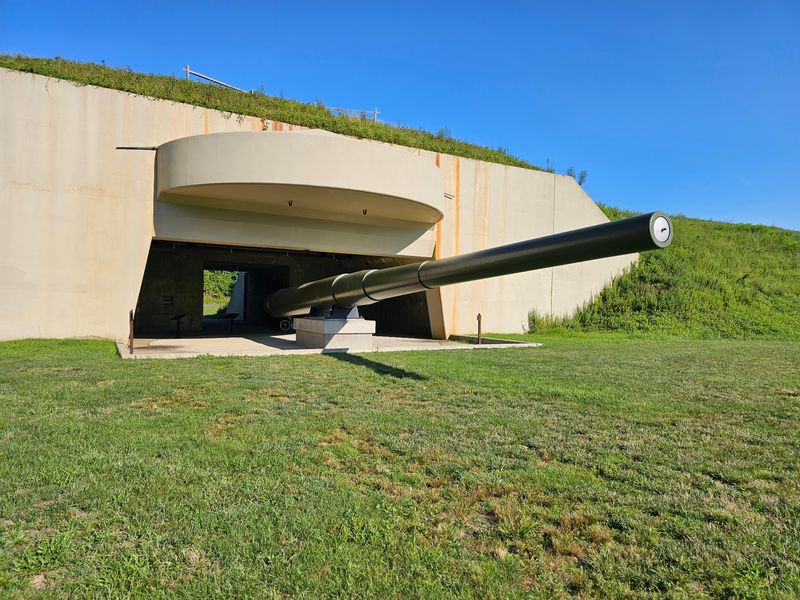
Two 16-inch guns once waited inside this immense concrete bunker, ready to hurl armor-piercing shells roughly 25 miles out to sea. Built during World War II at the Navesink Military Reservation, Battery Lewis formed part of the Harbor Defenses of New York.
Its job was to protect one of the country’s most important ports from enemy warships approaching the coast. Each gun was enormous, and the casemates shielding them were buried beneath thick layers of earth and reinforced concrete.
Yet the attack they were designed to stop never came. Advances in aircraft and missile technology soon made fixed coastal artillery obsolete, and the guns were removed for scrap after the war.
For decades, the bunker sat sealed and largely forgotten inside what became Hartshorne Woods Park. A major preservation effort later reopened it, transforming a gloomy military relic into one of the state’s most engaging history stops.
Visitors can walk beside the casemates, examine interpretive displays, and occasionally join programs that open additional portions of the structure. A restored 16-inch naval gun barrel outside supplies the missing sense of scale; it is difficult to appreciate the weapon’s size until you are standing beside it.
The surrounding park offers wooded trails and views toward the Navesink River, making it easy to pair history with a longer outing. Check the county park schedule before visiting if entering the battery is important, since interior access and guided programs may be limited.
5. Wawayanda Furnace – Hewitt
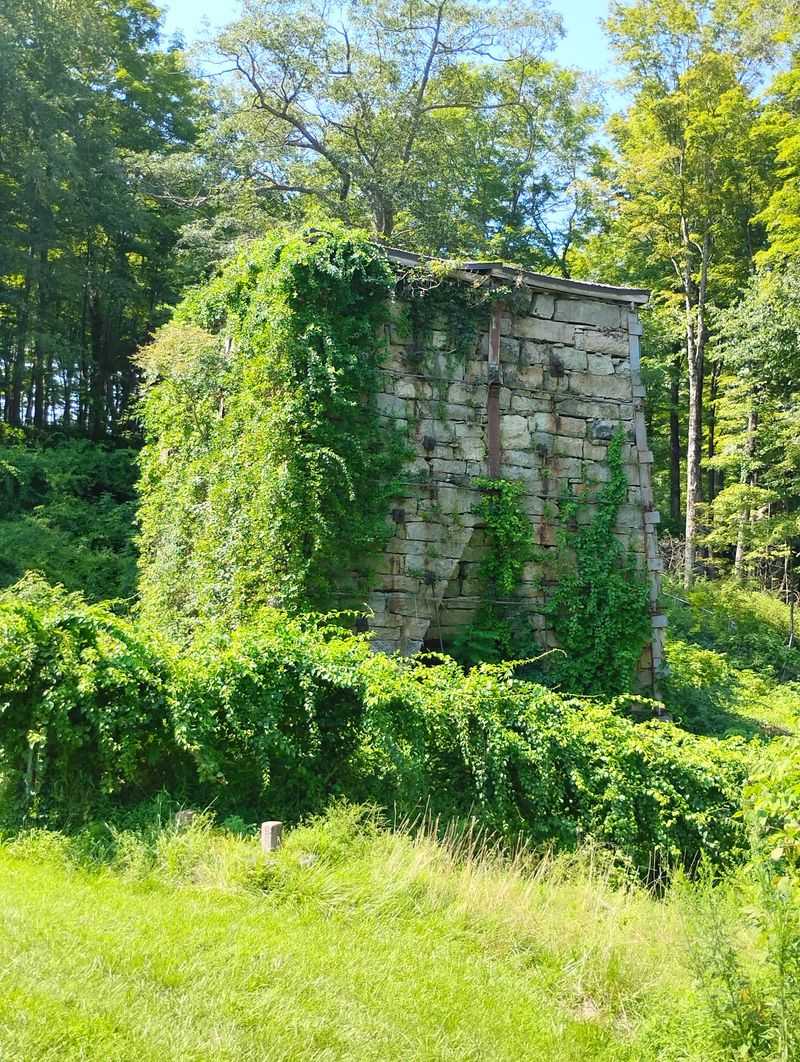
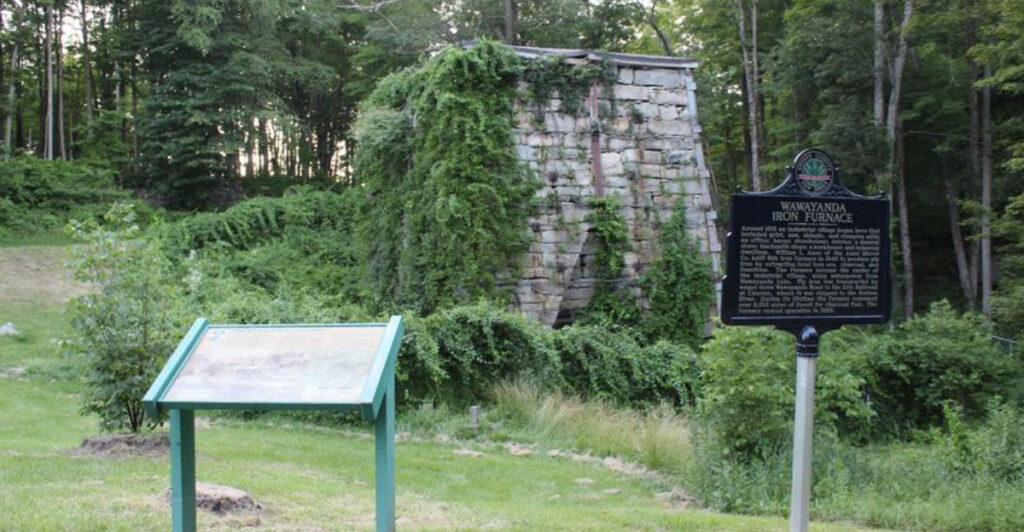
The most surprising number attached to this stone furnace is not its height or age. It is 6,000—the approximate number of forested acres consumed to make the charcoal that kept it operating.
Built in 1846 by William L. Ames, the Wawayanda Furnace used local iron ore, limestone, charcoal, and waterpower from Wawayanda Lake to produce pig iron.
It stood at the center of a busy industrial village that included mills, blacksmith shops, barns, storehouses, workers’ dwellings, and a general store. Finished iron traveled by wagon to the Erie Railroad at Chester before continuing toward markets along the Hudson River.
The furnace shut down in 1869, and nearly everything around it eventually disappeared. Its rugged stone stack survived, however, looking almost sculptural beside the lake’s outlet.
Unlike ruins reached by a demanding backcountry trek, this one sits near the main recreational area of Wawayanda State Park, so it can be appreciated without turning the day into an expedition. After seeing it, walk along the lake or connect with one of the park’s trails to understand the landscape that supplied both power and fuel.
The furnace is especially striking in autumn, when bright foliage frames its dark stonework. Do not let the peaceful setting soften the scale of what happened here: this quiet corner of Sussex County was once an industrial engine, and the surrounding woods were raw material as much as scenery.
6. Batsto Village – Hammonton
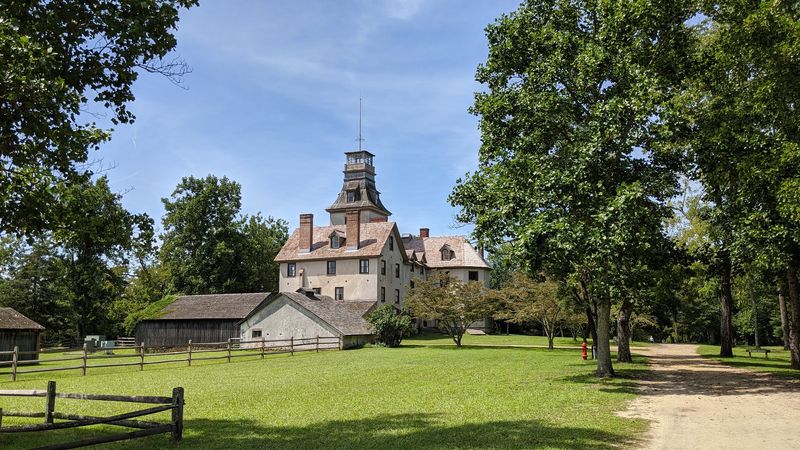
A mansion, post office, sawmill, workers’ cottages, barns, and general store remain gathered around Batsto Lake, making this feel less like an isolated ruin and more like a company town waiting for its shift to begin. Batsto’s industrial story dates to 1766, when its ironworks began smelting bog ore gathered from the reddish, mineral-rich waters of the Pine Barrens.
During the Revolutionary era, the operation produced military supplies for the Continental cause. The Richards family later expanded Batsto, but changing technology and competition eventually weakened the local iron business.
Glassmaking followed, then another major transformation after Philadelphia industrialist Joseph Wharton purchased the property in 1876. Wharton modernized the mansion, developed agricultural operations, and left such a mark on the region that the surrounding state forest now bears his name.
More than 30 historic structures survive, giving visitors an unusually complete look at the village rather than a lone furnace foundation. Start at the visitor center, follow the short history trail, and allow time to look beyond the mansion.
The workers’ homes and industrial buildings tell the fuller story of the people who kept Batsto functioning. Guided mansion tours and demonstrations may follow limited schedules, so check before making them the centerpiece of a visit.
The village grounds themselves reward an unhurried walk. Batsto works because it shows history at several scales at once—from bog iron in a creek bed to an entire community built around turning it into profit.
7. Waterloo Village – Stanhope
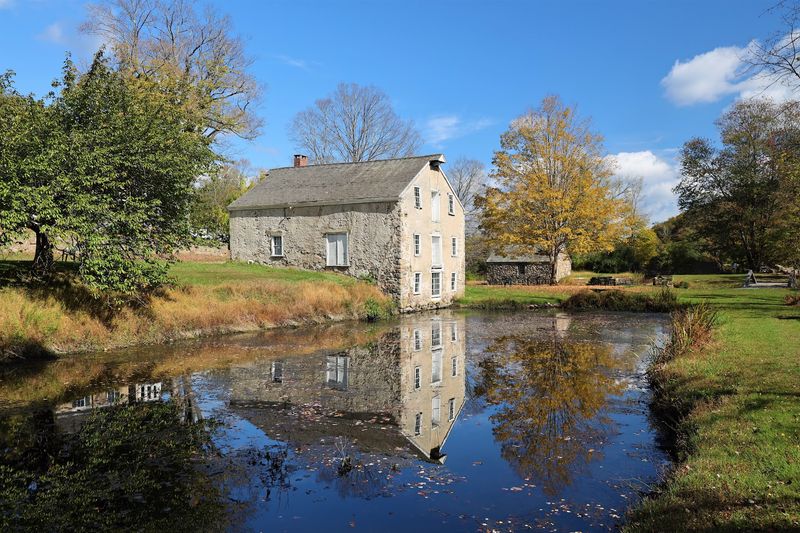
Canal boats once passed beside these buildings carrying coal, iron, and other goods across northern New Jersey. Waterloo became an important stop on the Morris Canal, the ingenious 102-mile waterway completed in the 1830s to connect the Delaware River with the busy markets near New York Harbor.
Because the route crossed steep terrain, engineers used locks and water-powered inclined planes to move boats over elevations that ordinary canals could not handle. Waterloo occupied a prime position near an inclined plane and developed into a working community with a store, inn, gristmill, blacksmith shop, and homes.
Railroads eventually made the canal obsolete, and commercial traffic ended in the early 20th century. The village later found a wildly different second life as a restored cultural attraction and concert venue.
Johnny Cash, Bob Dylan, Ray Charles, and other major performers appeared here, adding another unexpected layer to a place already connected to transportation history. Today Waterloo sits within Allamuchy Mountain State Park, where its surviving buildings, canal features, and towpath create a compact walk through the old settlement.
The grounds can be explored when open, but access to building interiors varies with tours, programs, restoration work, and events. The site also includes the recreated Winakung Lenape Village, which presents the region’s story before the canal arrived.
Waterloo is worth visiting precisely because no single era owns it; commerce, engineering, preservation, performance, and Indigenous history all meet along the same quiet waterway.
8. Brooksbrae Terracotta Brick Factory Ruins – Manchester Township
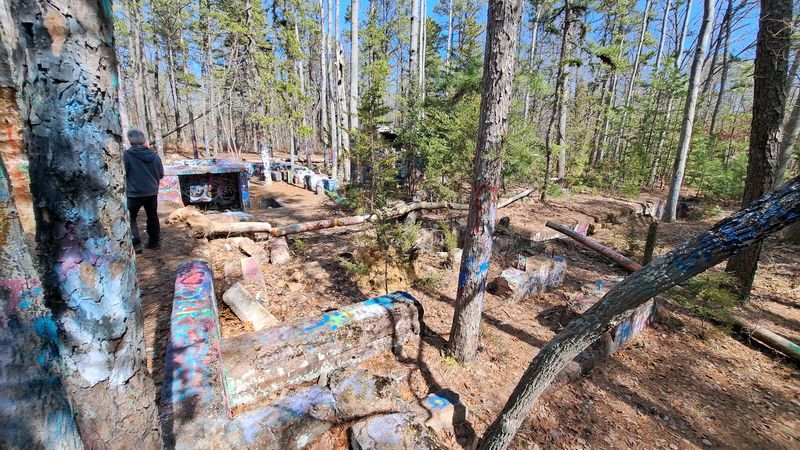
Color explodes across these concrete remains in the middle of the Pine Barrens. Layer upon layer of graffiti covers the arched kiln structures, turning an unfinished industrial dream into an ever-changing outdoor canvas.
The factory is generally associated with the Brooksbrae Terra Cotta Brick Company and an early-1900s plan to manufacture bricks or architectural terracotta using the region’s clay deposits and nearby railroad transportation. The venture appears to have stalled before reaching meaningful production.
Accounts connect its failure to the death of founder William J. Kelly, legal disputes over his estate, and a destructive fire, though parts of the popular story are difficult to document and sometimes conflict.
That uncertainty is not a footnote—it is central to Brooksbrae’s appeal. Visitors encounter a substantial ruin with remarkably little settled history, leaving fact and Pine Barrens folklore tangled together.
Reaching it typically involves walking along sandy roads and abandoned rail alignments in the Pasadena section of Manchester Township. There are no visitor facilities, formal exhibits, or helpful staff waiting at the end.
Cell reception can fade, ticks are a concern, and sandy access roads may not suit every vehicle, so save directions in advance and approach on foot from a legal parking area. Never enter closed land or climb the aging walls.
Brooksbrae feels rawer than the state’s preserved villages, but that is the point: it shows what history looks like before someone organizes it, labels it, and decides which version of the story survives.
9. Raritan Landing – Piscataway
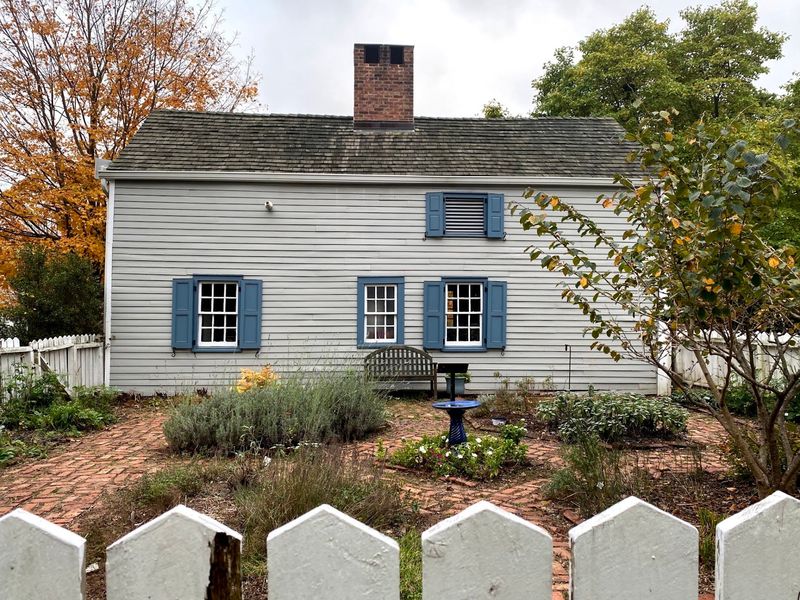
Nothing about the grassy space near the Raritan River initially suggests a bustling colonial port. Most of the town is underground.
Raritan Landing emerged in the early 1700s at the farthest navigable point on the river, where ships could unload imported goods and take on flour, produce, and other commodities from New Jersey’s interior. Warehouses, shops, taverns, and homes lined the community, while merchants built fortunes connecting local farms with Atlantic trade.
The American Revolution brought destruction when British troops moved through the area in 1777, but the settlement recovered and continued operating for decades. Its decline came as improved roads, canals, and railroads redirected commerce elsewhere.
Buildings vanished, development covered portions of the site, and the former port slipped from everyday memory. Large archaeological projects eventually uncovered foundations, cellars, ceramics, coins, tools, and personal belongings that revealed just how active and internationally connected the town had been.
Visitors can explore the story at East Jersey Old Town Village in Piscataway, where relocated and reconstructed historic buildings stand near the archaeological area. This is not a dramatic aboveground ruin, so imagination—and the interpretive material—does more work here.
That makes it a fascinating change of pace. Instead of staring at crumbling walls, you are looking across a modern landscape and learning how archaeologists rebuilt a lost community from stains in the soil, buried foundations, and objects people discarded nearly three centuries ago.
10. Fort Nonsense – Morristown
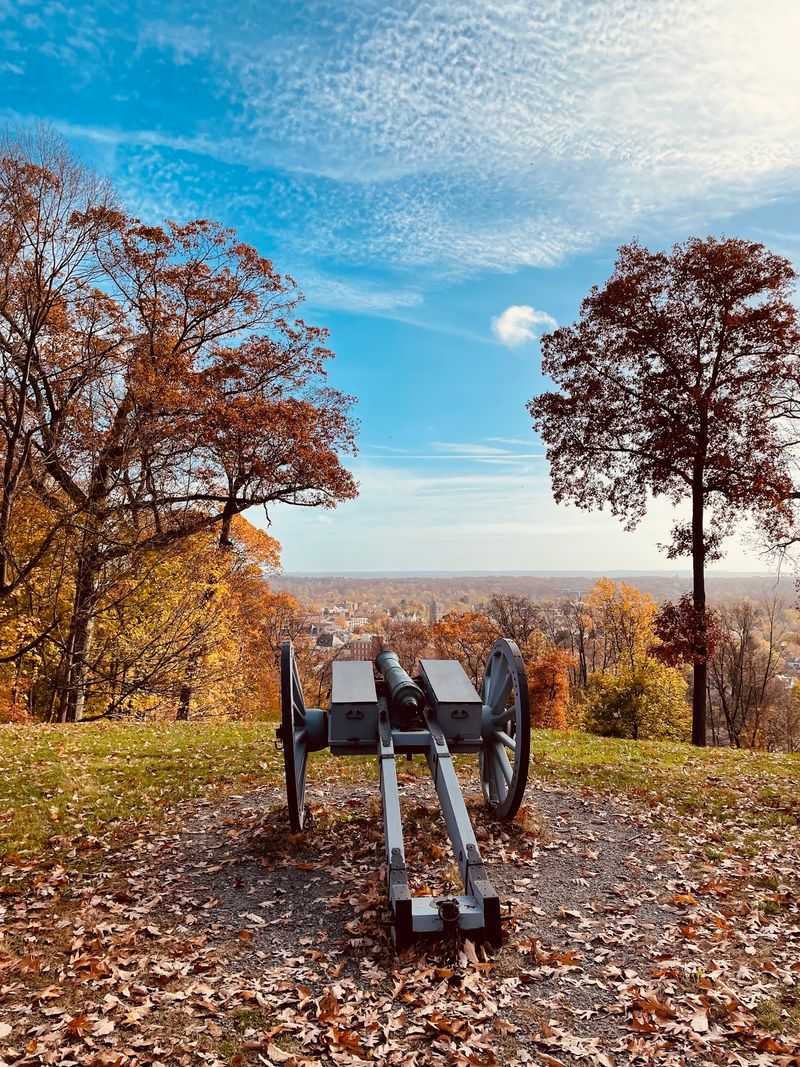
George Washington ordered a fortification built above Morristown in 1777, but its peculiar nickname has encouraged generations of speculation. One popular tale claims Washington assigned the work merely to keep his troops busy and warm, making the structure literally a “fort of nonsense.”
Entertaining? Absolutely. Supported by the historical record? Not especially.
The position made sound military sense. From the hilltop, troops could monitor roads approaching Morristown, protect the Continental Army’s supply base, and retreat to higher ground if the town came under attack. The redoubt included earthworks, a guardhouse, and space that could serve as a defensive refuge.
It never faced the dramatic assault people might expect from a Revolutionary fort, and the original works gradually eroded. Reconstruction attempts in later centuries further complicated what visitors see today.
That mixture of documented purpose, missing evidence, and stubborn folklore gives the site its personality. Part of Morristown National Historical Park, the hill is easy to reach by car and requires far less walking than Jockey Hollow.
Remnants and reconstructed earthworks are modest, but the broad view explains the strategic choice better than any plaque can. Pair the stop with Washington’s Headquarters or the encampment trails for a fuller picture of Morristown’s military role.
Fort Nonsense is proof that a memorable nickname can nearly overpower the truth—and that the truth, once you stand on the hill and scan the approaches, is actually more convincing.
11. Hindenburg Crash Site – Manchester Township
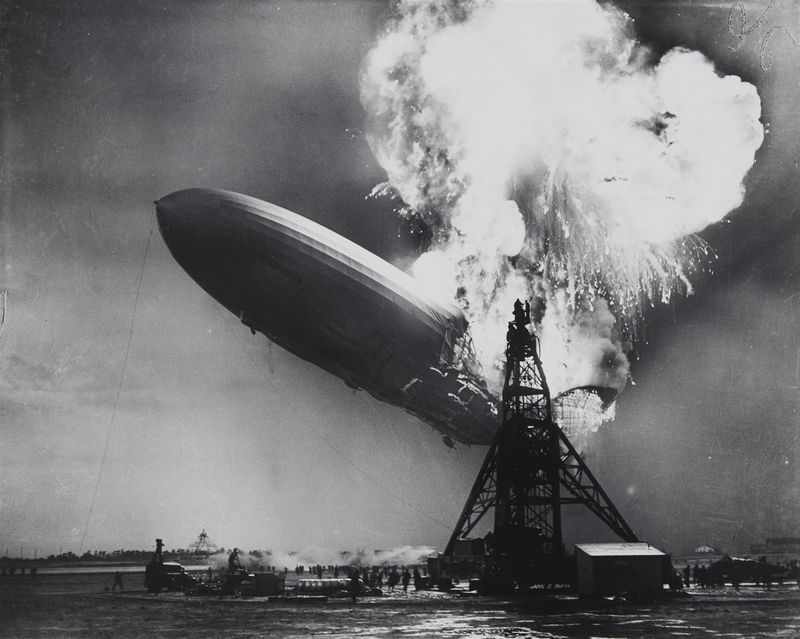
At 7:25 p.m. on May 6, 1937, the future of luxury airship travel changed in roughly half a minute. The German zeppelin Hindenburg was attempting to land at Naval Air Station Lakehurst after crossing the Atlantic when fire appeared near its tail and rapidly engulfed the hydrogen-filled craft.
Thirty-five people aboard and one member of the ground crew died. Remarkably, most passengers and crew survived, escaping through windows or jumping as the burning airship settled toward the ground.
Newsreel cameras and radio reporter Herbert Morrison captured the catastrophe, turning a New Jersey landing field into the scene of one of the 20th century’s most recognizable disasters.
The site itself is understated: a ground marker outlines the location where the control car came to rest, while nearby Hangar No. 1 recalls the enormous infrastructure required by the airship program.
Because the memorial lies on an active military installation, visitors cannot simply drive through the gate. Public tours are generally arranged in advance through the Navy Lakehurst Historical Society and require identification, registration, and compliance with current base security rules.
Confirm availability well before traveling. The restrictions make this the least spontaneous stop on the list, but also one of the most affecting.
There are no theatrical ruins, just an open field, a marker, and the knowledge that a machine nearly three football fields long disappeared in flames here before stunned spectators.