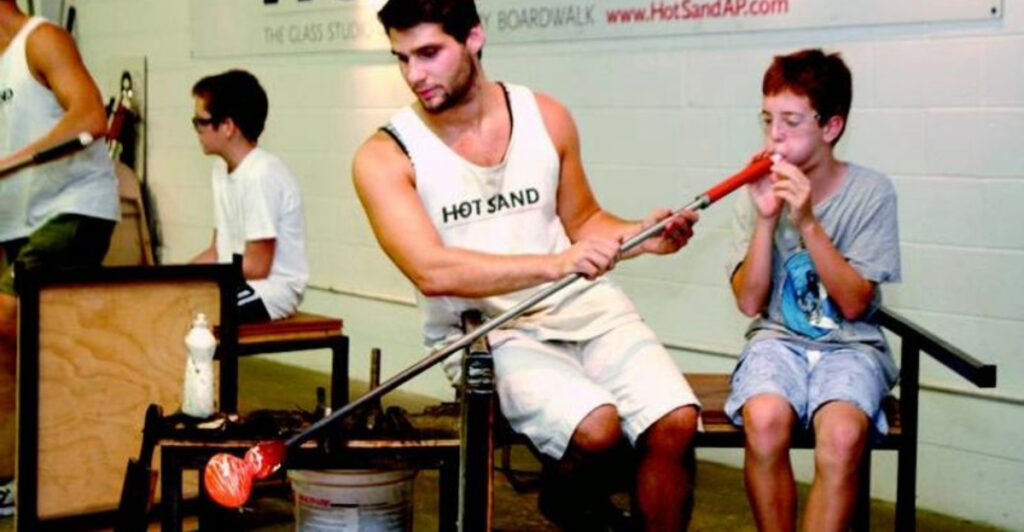
A glowing blob of glass spins at the end of a steel pipe. A few rooms away, wet clay rises between a potter’s hands, while somewhere else in New Jersey, a sculptor is welding a figure large enough to require a forklift.
Finished artwork may get the spotlight, but the making is often the most exciting part. Fortunately, the Garden State has studios, creative campuses, historic villages, and wonderfully unconventional art spaces where visitors can get close to the process.
Some offer demonstrations throughout their regular seasons; others unlock their doors only for annual open-house weekends, when paint-splattered worktables and half-finished sculptures become part of the show.
The list stretches from a glassmaking center rooted in South Jersey industry to an artist’s mosaic-covered home in Sussex County.
Check schedules before leaving, since access varies, then prepare to meet the people who turn molten glass, raw wood, metal, clay, paint, and improbable ideas into something worth staring at.
1. WheatonArts – Millville
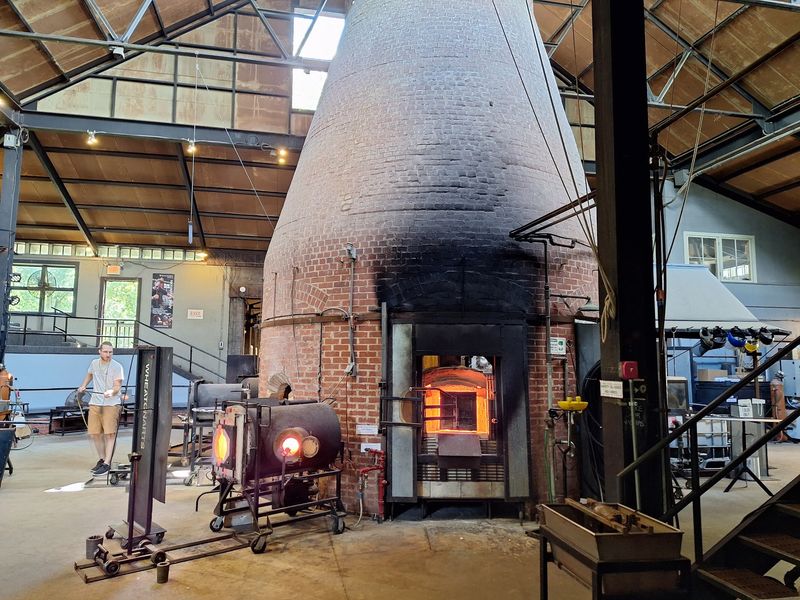
The furnace room supplies the drama at this Millville arts campus. Molten glass glows orange on the end of a blowpipe as an artist rolls, blows, reheats, and shapes it, sometimes turning an unpromising lump into a graceful vessel within minutes.
The amphitheater-style Hot Glass Studio makes it easy to follow the action, and narrators explain the tools and techniques without draining the magic from the process. Glassblowing may be the headline attraction, but it is not the only craft unfolding in public.
WheatonArts also has flamework and pottery studios, where visitors can watch glass rods become beads and pendants or see clay thrown, decorated, and glazed. Resident artists are generally comfortable answering questions, so curious visitors can learn why a piece returns to the heat or how local clay behaves on the wheel.
The surrounding campus grew from South Jersey’s long glassmaking tradition and includes the Museum of American Glass, shops, exhibits, and a nature trail. That gives you plenty to explore between demonstrations.
WheatonArts operates seasonally, typically from spring through December, and studio activity can vary by day. Look at the calendar before driving to Millville, particularly if one medium matters most to you.
For the fullest visit, allow several hours rather than treating the glass studio as a quick stop.
2. Hot Sand – Asbury Park
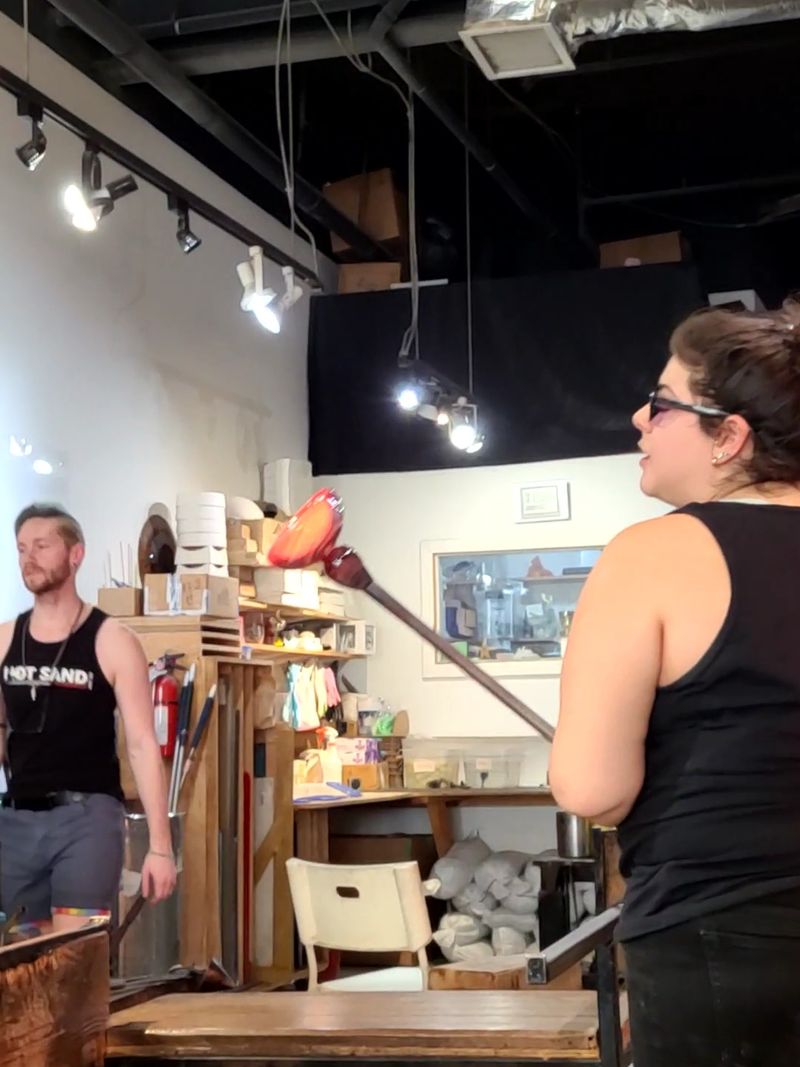
At 2,000 degrees, glass does not leave much room for hesitation. Inside this Cookman Avenue studio in Asbury Park, professional glassworkers move quickly between the furnace, shaping bench, and reheating chamber while visitors stand close enough to feel the warmth.
It is a compact, immediate introduction to glassblowing, without a museum barrier separating you from the people doing the work. Watching is fun, but Hot Sand is especially appealing because spectators can become collaborators.
Guided experiences let beginners select colors and help create paperweights, ornaments, drinking vessels, and other pieces. The artist handles the most heat-sensitive steps, yet participants still see every stage, from gathering molten glass to forming the final shape.
Fused-glass projects offer a gentler option for younger guests or anyone not eager to stand beside a roaring furnace. The studio also has a gallery filled with finished work, providing a useful before-and-after comparison once you have witnessed the effort behind each curve and color.
Reservations are smart during weekends and the summer season, when downtown Asbury Park fills quickly. Wear closed-toe shoes and remember that hot glass must cool slowly, so completed pieces generally cannot go home immediately.
Arrange pickup or shipping, then head out for lunch or a boardwalk stroll while privately admiring your new career as an assistant glassblower.
3. Peters Valley School of Craft – Layton
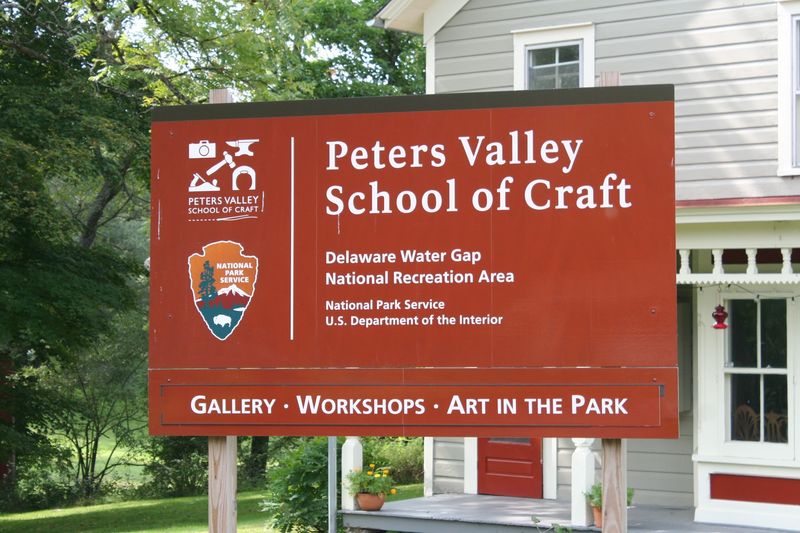
An old rural settlement in the Delaware Water Gap now hums with anvils, pottery wheels, looms, saws, and the concentrated quiet of people learning difficult things. Peters Valley School of Craft occupies a collection of adapted historic buildings in Layton, creating a campus that feels more like an artists’ village than a conventional school.
Workshops cover blacksmithing, ceramics, fibers, woodworking, photography, printmaking, jewelry, metals, and glass, with visiting instructors bringing techniques from across the craft world.
This is primarily a working educational campus, so casual access to active studios is tied to scheduled programs, tours, demonstrations, and special events rather than guaranteed drop-in observation.
Time a visit well, however, and you may see metal moving under a hammer, fibers taking shape on a loom, or clay being prepared for a major kiln firing. Public events are particularly rewarding because multiple disciplines can be active at once, giving visitors a broader look at how craftspeople solve problems with very different materials.
The gallery, located separately along Route 615, is an excellent companion stop and showcases contemporary work by hundreds of makers. It also demonstrates just how refined the results of those messy studio processes can become.
Check the program calendar before making the scenic drive, and do not assume every workshop space will be open. The wooded setting is lovely, but the artists—not the landscape—are the real reason to linger.
4. Riker Hill Art Park – Livingston
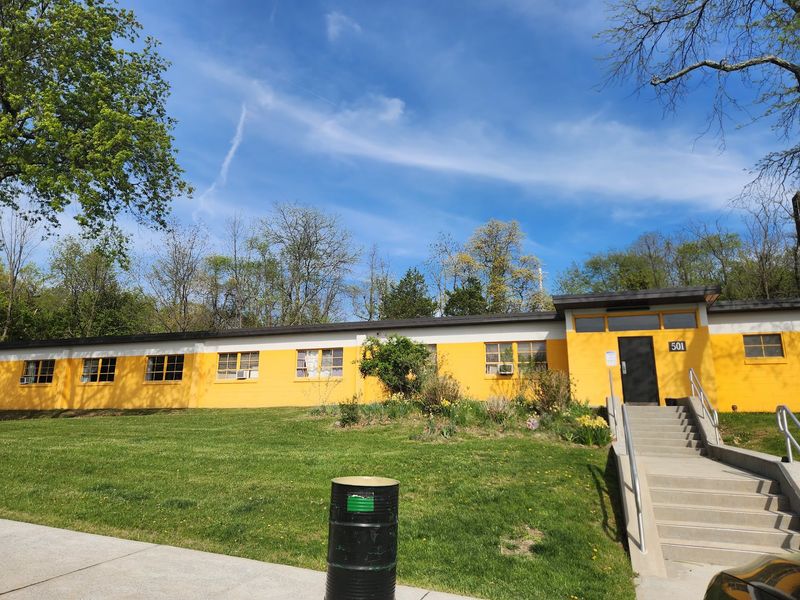
Few Cold War installations have enjoyed a second act this colorful. Riker Hill began as a military tracking facility, but the former Army buildings now contain dozens of artist studios where painters, ceramicists, jewelry makers, photographers, printmakers, glass artists, and sculptors work.
The unlikely history is visible in the low, practical structures, although open doors reveal shelves of pigments, kilns, hand tools, and projects in every stage of completion. Most days, the Livingston grounds are open while the private studios remain closed.
The key dates are the semiannual open-house weekends, traditionally held in early June and November. That is when the park truly earns its place on this list.
Visitors can move from room to room, talk directly with artists, watch demonstrations, study works in progress, and buy pieces without the formality of a commercial gallery.
The variety prevents the experience from becoming repetitive: one studio may contain delicate metalwork, while the next is crowded with large canvases or freshly fired pottery.
Because the artists occupy their spaces year-round, these rooms feel genuinely worked in rather than arranged for display. Admission to open-house events is generally free, and onsite parking makes the outing fairly simple, though popular hours can get busy.
Wear shoes suited to walking between buildings, leave time for conversation, and resist the temptation to rush toward the prettiest finished pieces. The cluttered workbench beside them often tells the better story.
5. Mana Contemporary – Jersey City
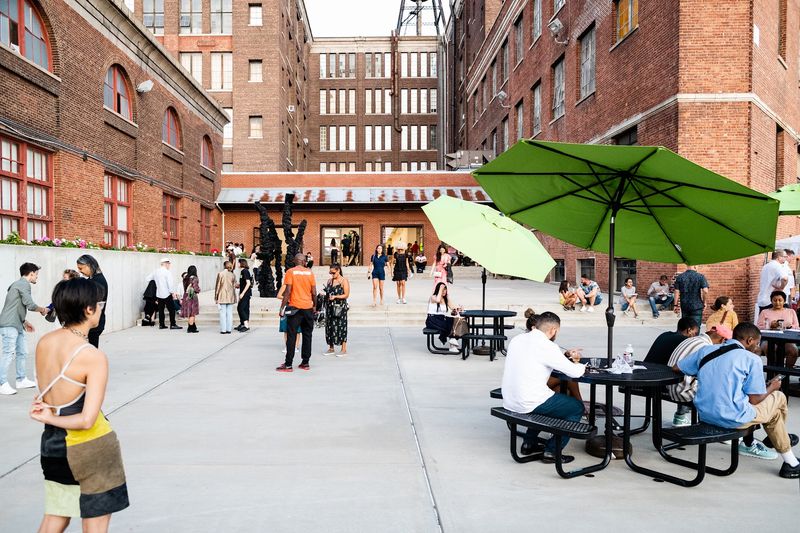
Scale is the first surprise at this former tobacco warehouse in Jersey City. Mana Contemporary is not a single studio or gallery but a vast arts complex containing working spaces, exhibitions, collections, archives, and specialized facilities under one roof.
Long industrial corridors connect rooms where painters, sculptors, photographers, fabricators, performers, and other creative professionals develop their work, sometimes only a few doors apart. The best opportunity to see that ecosystem is during an open-studio event.
Artists welcome visitors into spaces that normally remain private, revealing sketches taped to walls, test pieces stacked in corners, half-completed canvases, and the equipment required to create work far larger than a dining-room table. Conversations tend to be refreshingly direct.
Instead of reading a polished label after a piece is finished, you can ask why a material was chosen or what problem the artist is still trying to solve. Open-studio programs may also include performances, demonstrations, installations, and access to exhibitions throughout the building.
Mana is not a place to visit unannounced with the expectation that every door will be open, so confirm tour and event details in advance. When public access is available, give yourself more time than seems necessary; the building is enormous, and the most memorable encounter may happen well beyond the first gallery.
Public transportation is practical from New York and other parts of Hudson County, while drivers should research parking before arrival.
6. Noyes Arts Garage of Stockton University – Atlantic City
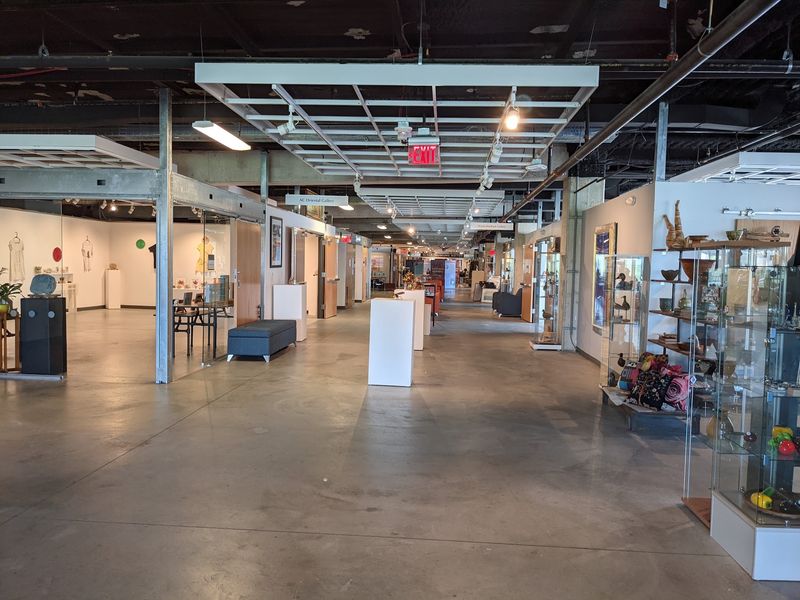
Atlantic City’s creative side becomes wonderfully tangible inside a former garage near Tanger Outlets. Rather than hiding artists behind gallery walls, the Noyes Arts Garage combines exhibition space with individual studios occupied by regional makers.
Visitors can browse paintings, jewelry, photography, mixed-media work, textiles, and handmade objects, then often meet the people responsible for creating them. Because these are functioning studios and small businesses, the experience changes depending on who is working that day.
You might find an artist painting, assembling jewelry, discussing a work in progress, or explaining the materials arranged across a crowded table. That unpredictability is part of the charm.
The Arts Garage also houses museum exhibitions and hosts receptions, workshops, cultural programs, and special events, adding more reasons to stay after circling the studios. Its location makes it an easy addition to an Atlantic City day without requiring a detour from the central tourism district.
Admission is typically free, and nearby parking is more straightforward than navigating the casino end of town during a busy weekend. Go with enough time to talk rather than treating the studios like retail stalls.
Many of the resident artists are happy to explain their methods when they are not deep in concentration, and buying directly from them gives a visit a satisfying conclusion. Since studio attendance varies, a scheduled event or reception offers the best chance of finding several artists working and ready to engage.
7. Manufacturers Village – East Orange
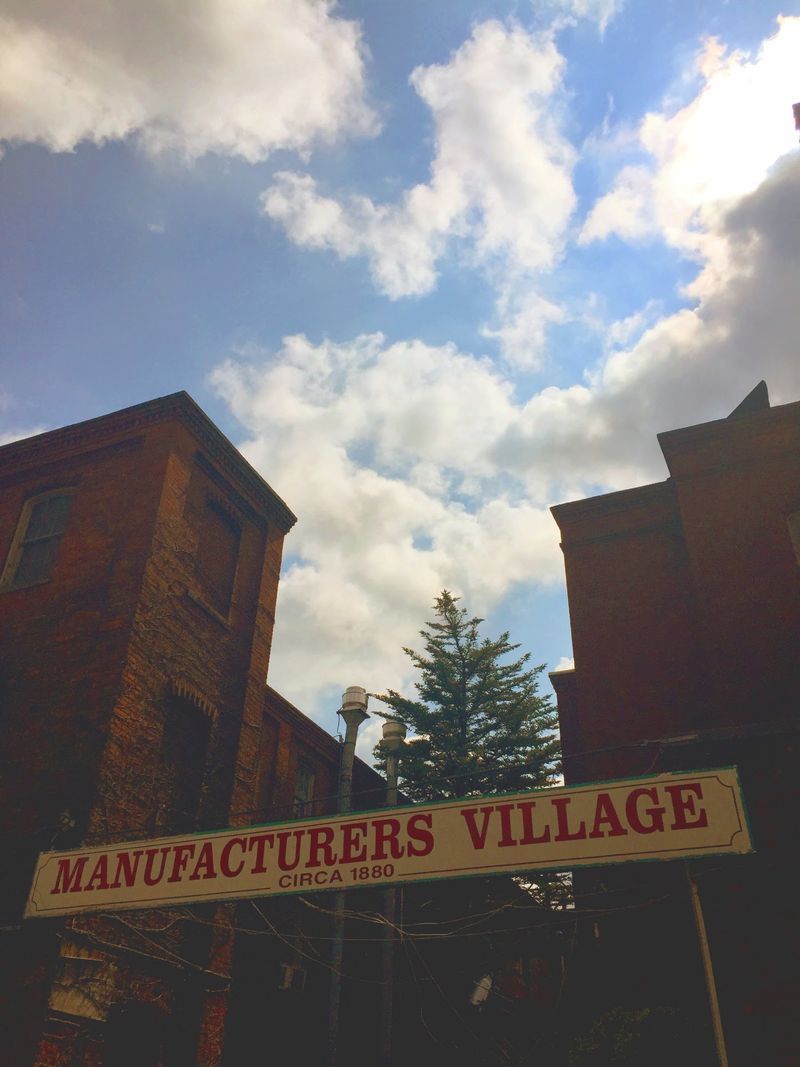
Behind the brick walls of a former East Orange factory, more than 60 artists have built a creative community out of high ceilings, tall windows, and rooms once intended for manufacturing. The industrial bones remain, but production here now means canvases, sculpture, textiles, photography, ceramics, installations, and experimental work.
Manufacturers Village is normally a private workplace, which makes its open-house weekends feel like someone has handed you a temporary key to a secret neighborhood. Visitors wander through multiple buildings, climbing stairs and following studio signs into spaces that range from orderly and minimalist to gloriously chaotic.
Finished pieces share room with sketches, raw materials, reference photographs, and abandoned experiments. Artists are present to discuss what they are making, and some work or demonstrate techniques while guests pass through.
The scale of the place encourages discovery. A room that looks quiet from the hall may hold enormous abstract paintings, delicate fiber work, or a sculptural idea still being assembled on the floor.
Open studios are generally free, but they take place on selected dates, not as an everyday attraction. Wear comfortable shoes, pick up a map if one is offered, and arrive early enough to explore without racing closing time.
The historic architecture is part of the pleasure, as is the massive outdoor Black Lives Matter mural created by a group of local artists. This is art encountered where it actually lives: beside ladders, paint cans, coffee cups, and all the evidence of work.
8. Monroe Center for the Arts – Hoboken
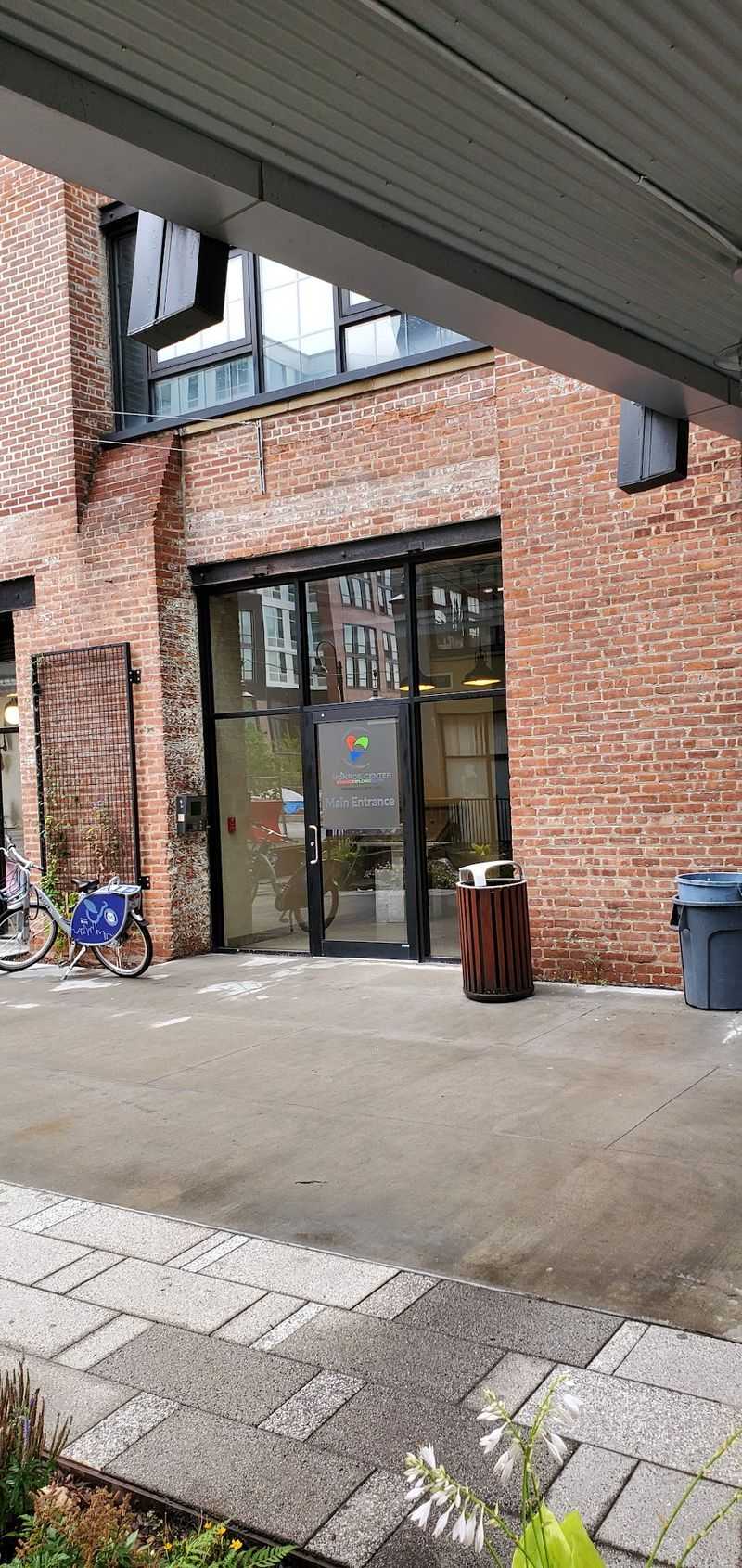
A freight elevator, old factory corridors, and the occasional streak of paint on a studio floor provide the right introduction to the Monroe Center in Hoboken.
The sprawling complex at 720 Monroe Street has long housed artists alongside creative businesses, teachers, performers, and makers, giving the building a personality quite different from the polished storefronts closer to the waterfront.
Public open-studio events are the moment to see it at full strength. Doors swing open, hallways become informal galleries, and visitors can meet painters, photographers, jewelry designers, sculptors, and mixed-media artists in the rooms where their ideas take physical form.
Some demonstrate their methods, while others display unfinished pieces or explain the experiments that never made it into a formal show. The building is also a major stop during Hoboken’s broader annual studio tour, which brings live demonstrations, exhibits, music, and receptions to creative spaces around the city.
It is worth checking the event map rather than assuming every participating artist will be concentrated in one hallway. Outside those programmed dates, access depends on individual studios, classes, and businesses, so this is not the place for spontaneous door-knocking.
When the building opens to the public, however, it offers an unusually personal view of artmaking in a dense urban setting. Hoboken parking can test anyone’s inner peace, making public transportation a sensible choice.
The light rail stops nearby, leaving more energy for navigating the center’s many rooms.
9. Grounds For Sculpture’s Johnson Atelier – Hamilton
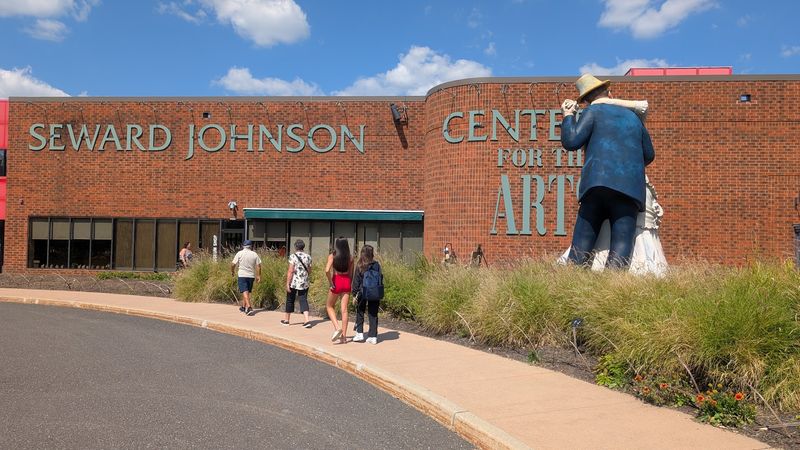
Before a monumental sculpture reaches a plaza or museum lawn, it may pass through a workshop filled with molds, welding equipment, rigging, casting materials, and machinery that looks capable of building a small bridge.
The Johnson Atelier in Hamilton specializes in the fabrication and conservation of sculpture, helping artists translate models and concepts into large, durable objects.
Its connection to Grounds For Sculpture gives visitors occasional opportunities to peek behind the scenes through scheduled tours, talks, open studios, and “artists in action” programs. These are the experiences to watch for, since the production facility is not routinely open for casual wandering.
During public programs, guests may meet studio artists, see demonstrations, and learn how a sculpture progresses from maquette to full-scale form.
The process can involve enlarging, molding, casting, welding, finishing, patination, and careful structural planning—far more teamwork and engineering than a finished bronze usually reveals.
Some behind-the-scenes events focus on current fabrication and conservation projects, while studio-program events introduce painters and sculptors working in dedicated spaces on the campus.
Pairing one with a visit to Grounds For Sculpture creates a satisfying full-circle day: first see how ambitious art is made, then walk among completed works installed across the gardens.
Advance registration is important, and certain tours may be limited to members or special ticket holders. If workshop access is the main goal, confirm those details before purchasing general admission.
Also heed any closed-toe-shoe requirement; this is a real fabrication environment, not a theatrical imitation.
10. Luna Parc – Sandyston
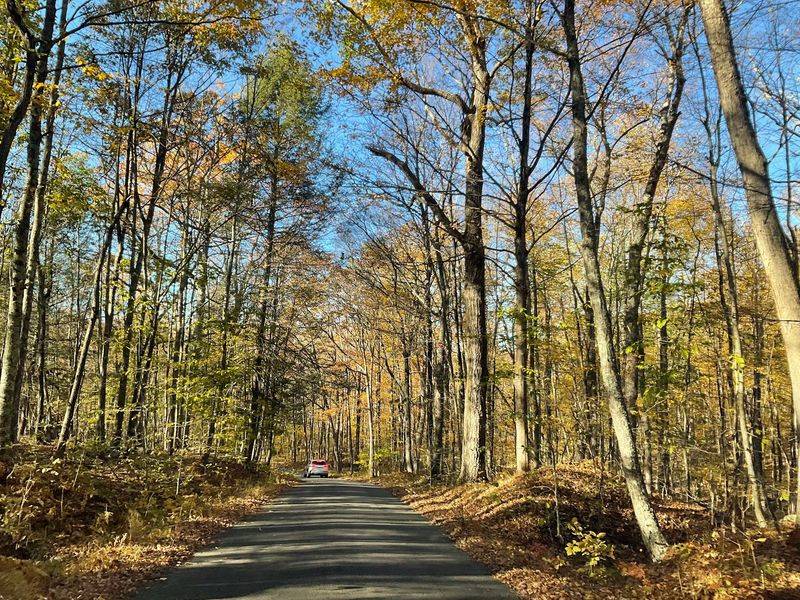
There is no sensible place for the eye to rest at Luna Parc. Faces peer from mosaics, colored tiles crawl across walls, towers twist upward, and ordinary architectural surfaces become excuses for another joke, symbol, creature, or pattern.
Multimedia artist Ricky Boscarino began transforming this Sandyston property in 1989, and the work has continued ever since. Part home, part studio, and part ever-expanding artwork, it may be New Jersey’s most exuberant argument against beige.
Public access is limited to designated open-house dates, generally offered in seasonal windows rather than on a daily schedule. Those openings allow visitors to explore parts of the fantastical property, browse Boscarino’s ceramics, jewelry, drawings, and other handmade pieces, and meet the artist behind the visual avalanche.
The most fascinating element is the lack of a firm boundary between studio and finished work. A decorative experiment may migrate onto the building, while a collected object can become part of a new assemblage.
Even when no formal demonstration is underway, the tools, materials, and constantly evolving surroundings expose a creative process that has lasted decades. Expect a personal, unconventional experience rather than a standard museum visit.
Dates and entry arrangements should be confirmed before heading into rural Sussex County, and visitors need to respect that this is also a private residence. Bring curiosity, patience, and someone who will appreciate hearing “look at that” roughly every 30 seconds.
Subtle it is not, and that is precisely the point.
11. Camden FireWorks – Camden
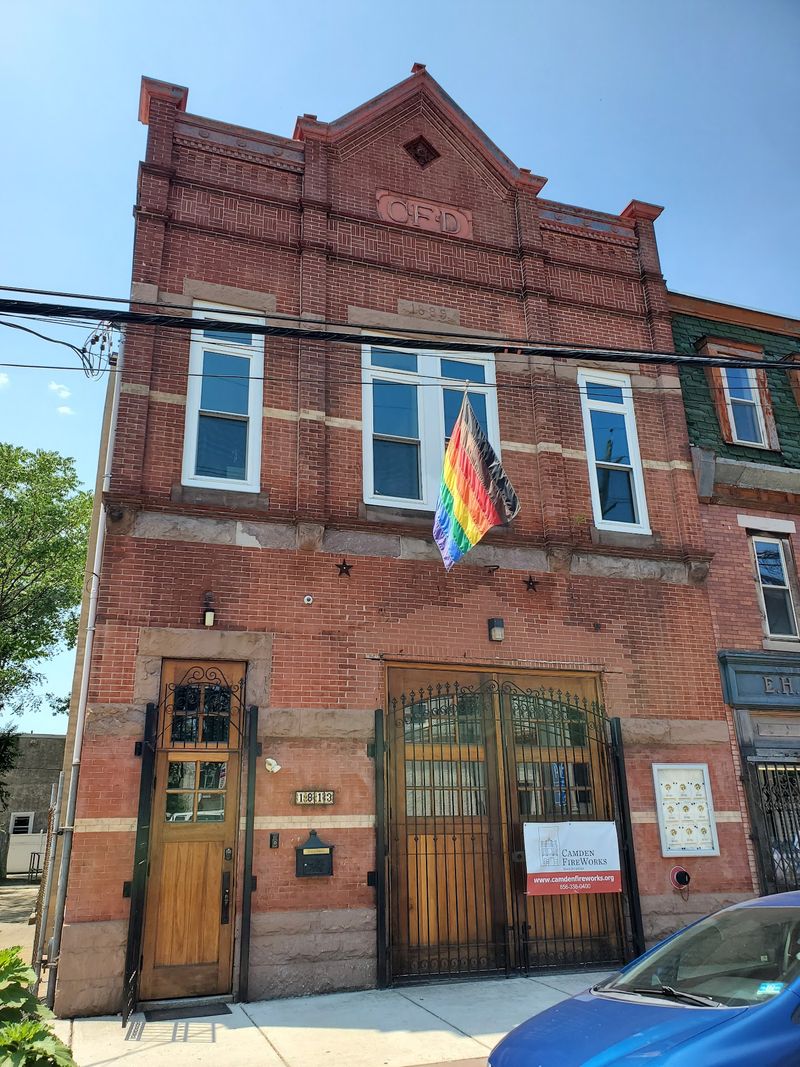
The restored firehouse in Camden’s Waterfront South neighborhood was built for action, and it still has that energy—only now the equipment is more likely to include brushes, cameras, carving tools, and buckets of paint.
Camden FireWorks supports artists through studio space, exhibitions, public programs, and community projects shaped by the city around it.
Its events give visitors opportunities to meet working artists and see creativity used not merely as decoration, but as a tool for storytelling and neighborhood connection. Open studios, workshops, community paint days, and the annual Makers and Music Festival are especially good occasions to catch work in progress.
Depending on the program, visitors might see a mural developing, watch an artist shape a public sculpture, encounter resident artists inside their studios, or even contribute to a collaborative project.
The organization emphasizes artists from Camden and surrounding communities, bringing perspectives that do not always receive space in larger cultural institutions.
That makes conversations here as important as demonstrations. Artists may explain not only how a piece is made, but why its symbols, colors, or location matter.
Regular gallery hours and studio access can vary, so plan around a posted exhibition, festival, or participatory event instead of arriving with no schedule in mind. The surrounding Waterfront South arts district rewards further exploration, with murals and cultural organizations nearby.
Come prepared to look closely, ask thoughtful questions, and see how a former public-service building has found another way to serve its city.
12. Tuckerton Seaport – Tuckerton
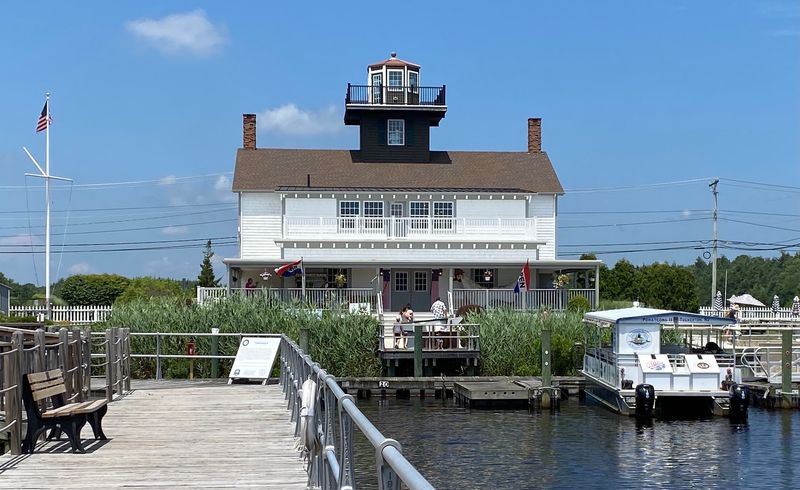
A block of cedar becomes a shorebird one careful cut at a time. At Tuckerton Seaport, carving is more than a decorative craft; it belongs to the working history of the Barnegat Bay and the Pine Barrens.
The 40-acre maritime museum and cultural center preserves regional traditions through demonstrations, classes, exhibits, and conversations with the people who still practice them.
Decoy carvers are central to that mission, but programs may also feature basket weaving, fiber arts, boatbuilding, music, and other forms of folklife shaped by South Jersey’s waterways.
Rather than presenting traditions as frozen artifacts, the Jersey Shore Folklife Center connects visitors with living artists and craftspeople who continue to adapt and teach them. Watch a carver establish the curve of a bird’s back, and the finished decoys in the collection suddenly make more sense.
Special events and scheduled demonstrations provide the richest experience, since the roster of working artists changes throughout the year. The Seaport also includes historic structures, maritime displays, a recreated lighthouse, and views along Tuckerton Creek, so a visit remains worthwhile between programs.
Summer brings the broadest operating schedule, while off-season hours and activities can be more limited. Check the calendar before going if you hope to see a particular craft.
Admission is modest, parking is available, and the site is relaxed enough for families. Children who normally sprint through museums may slow down when wood shavings begin falling from a carver’s hands.
13. Historic Cold Spring Village – Cape May
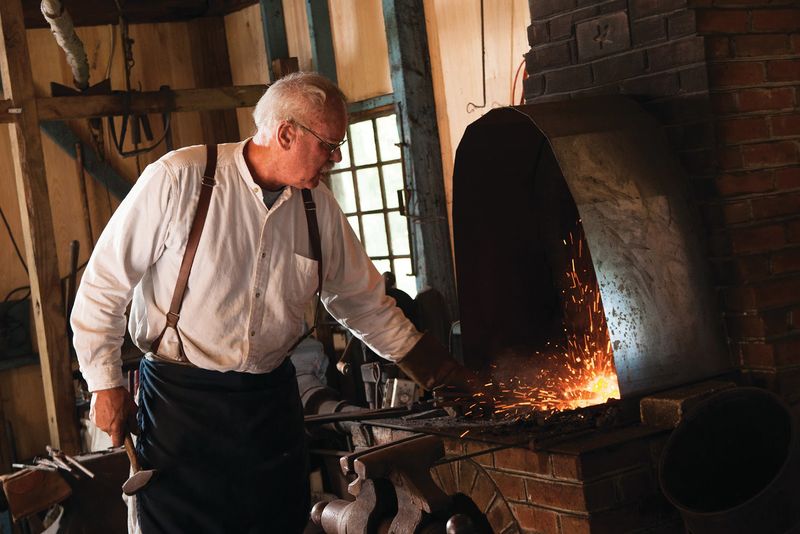
The clang of a blacksmith’s hammer travels easily between the old buildings at Historic Cold Spring Village. Follow it, and you may find iron glowing in a coal fire; turn another corner and a printer, woodworker, basket maker, or bookbinder could be demonstrating a trade that once supplied everyday life in South Jersey.
Spread across 30 acres near Cape May, the open-air museum contains restored historic buildings arranged as an early American community. Costumed interpreters do more than stand beside antique tools.
They use them, explain them, and reveal the physical skill hidden inside objects that modern shoppers purchase without a thought. The printer must set type correctly before ink touches paper.
The blacksmith reads color to judge the heat of metal. The basket maker controls every strip so the finished form remains tight and useful.
These demonstrations make the village far more engaging than a row of furnished houses, especially for visitors who enjoy asking how things work. Craft activity varies, so not every trade will necessarily be demonstrated on every visit.
The main season typically runs from late spring through Labor Day, with additional themed weekends in fall. Arrive earlier in the day to give yourself time to move between buildings without rushing, and use the Seashore Road entrance indicated by the village.
Comfortable walking shoes are helpful on the outdoor grounds. Cape May’s beaches may be nearby, but for a few hours, sparks, ink, wood curls, and hand tools provide the better show.