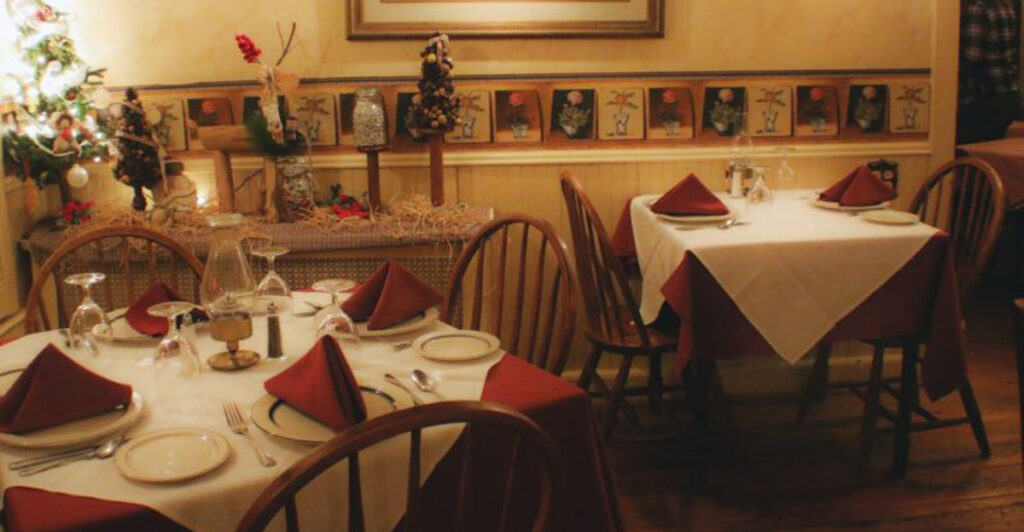
A basket of onion-covered sliders lands beside a spinning counter stool. Somewhere else, a jukebox glows beside red vinyl booths, and across the state, prime rib is being carved beneath the watchful eyes of mounted deer.
New Jersey’s most nostalgic dining rooms do not rely on manufactured retro charm. They have the real thing: worn counters, wood-paneled walls, old photographs, patterned carpets, and regulars who have occupied the same favorite seats for decades.
Some date to colonial stagecoach routes; others preserve the chrome-and-neon optimism of the roadside-diner era. What connects them is the feeling that the outside world has moved forward while nobody inside saw a compelling reason to redecorate.
Come for legendary hot dogs, red-sauce Italian cooking, sizzling steaks, or an unapologetically simple cheeseburger. Stay long enough to notice the details.
These 13 restaurants turn an ordinary meal into a trip through New Jersey history—without requiring you to eat behind velvet ropes.
1. Belmont Tavern – Belleville
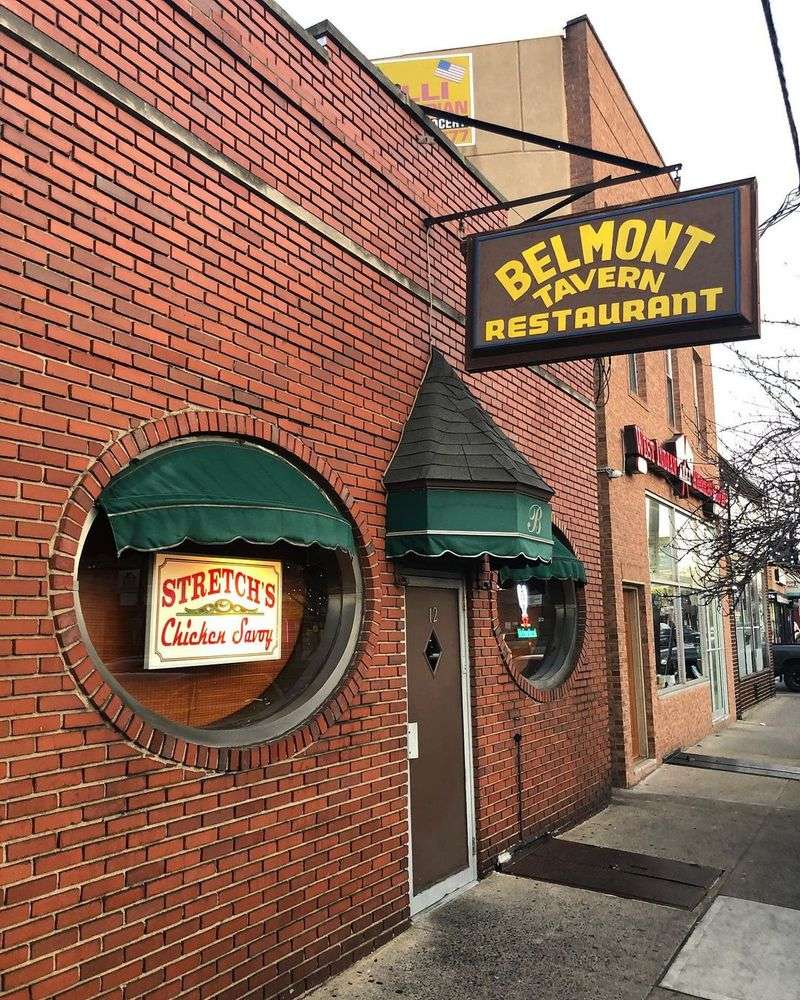
There is no soft introduction to the chicken Savoy. The plate arrives loaded with dark, crisp-skinned chicken coated in garlic, herbs, vinegar, and enough punch to wake up every taste bud at the table.
It is the signature dish at this Belleville institution, where Stretch’s famous recipe has inspired countless imitations but remains closely tied to the Belmont Tavern dining room. That room is a beauty precisely because nobody has tried to make it fashionable.
Wood paneling, closely packed tables, framed photographs, and an old neighborhood-bar layout give the place the lived-in appearance of a family restaurant that has hosted several generations without clearing away the evidence. The menu follows the same philosophy.
Order shrimp Beeps in its spicy red sauce, cavatelli with pot cheese, or pork chops with hot peppers, then let the table share everything. Portions are generous, flavors are bold, and subtlety is not the objective.
Conversations bounce across the room, servers move with practiced speed, and newcomers quickly realize that regulars know exactly what they want before sitting down. Belmont is cash-only and does not take reservations, so arrive early if you are visiting on a Friday or Saturday.
Once seated, settle in rather than rushing. This is old-school Italian American dining in its natural habitat, complete with strong personalities, garlicky plates, and absolutely no interest in chasing trends.
2. Angelo’s Fairmount Tavern – Atlantic City
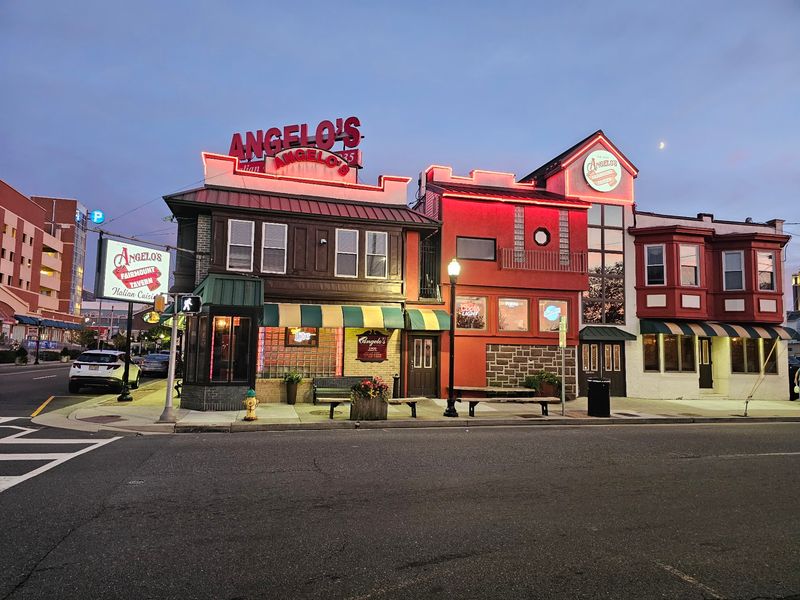
Red sauce has been bubbling in this Atlantic City kitchen since 1935, and the dining rooms seem determined to remember every decade. Family photographs cover the walls, dark wood frames the booths, and closely arranged tables create the cheerful squeeze of a restaurant built around large families rather than personal space.
Angelo’s began when Angelo Mancuso converted a family home into a tavern, and that residential origin still shapes the experience. Moving through the restaurant can feel like wandering into a sprawling Sunday dinner where several branches of the same family have already arrived.
Start with fried calamari or clams, but save room for the dishes that built the place: spaghetti with meatballs, lasagna, eggplant Parmigiana, and veal covered in mozzarella and deep-red gravy. The portions favor appetite over architectural plating, exactly as they should.
Servers have the friendly efficiency of people accustomed to carrying multiple hot dishes through narrow passages, while the bar feels like a neighborhood gathering place that happens to sit near Atlantic City’s casinos.
Photographs and memorabilia give you plenty to inspect between courses, including reminders of the city before towering resorts transformed the skyline.
Reservations are smart on weekends, and the restaurant has its own parking lot—a valuable little luxury in this part of town. Angelo’s does not recreate Atlantic City nostalgia.
It simply keeps serving dinner inside it.
3. Tony’s Baltimore Grill – Atlantic City
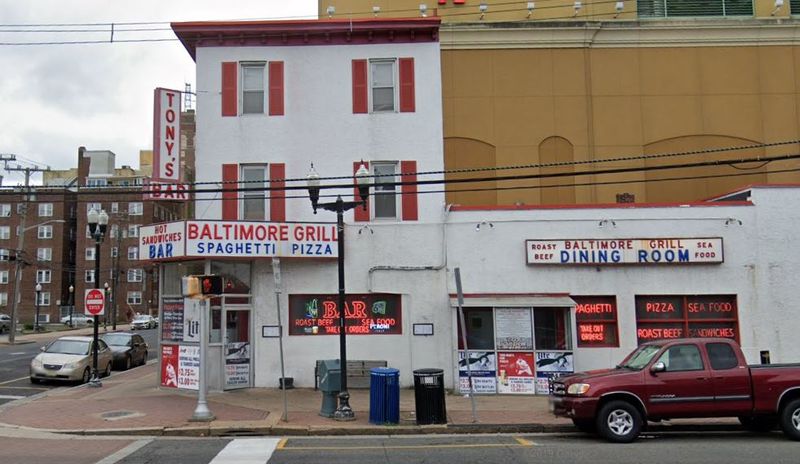
Pull open the door after dark, and the glowing jukebox, red booths, terrazzo floor, and low lighting make 1955 feel like a perfectly reasonable date. Tony’s Baltimore Grill has been an Atlantic City fixture since 1927, although it moved to its current home in the 1960s.
The room retains the kind of late-night, slightly rumpled glamour that modern designers spend fortunes trying to reproduce. Here, it comes naturally.
This has long been a refuge for casino workers finishing shifts, police officers grabbing food, neighborhood regulars, and visitors who suddenly decide that midnight calls for pizza. The pies are thin, crisp, and admirably straightforward.
Get one with sausage or pepperoni, add a plate of spaghetti and meatballs, and resist any urge to complicate the occasion. Baked ravioli, fried seafood, and old-fashioned sandwiches fill out a menu that reads like comfort food from an earlier Atlantic City.
Drinks come from a proper neighborhood bar rather than a laboratory of smoke-filled glassware, and the dining room’s familiar wear is part of its charm. Tony’s feels most convincing later in the evening, when the neon outside is glowing and a mix of locals and night owls slides into the booths.
Hours can change, particularly outside the busiest season, so check before planning a very late visit. The building may sit only blocks from the casinos, but its personality belongs to the city that existed before them.
4. White Manna – Hackensack
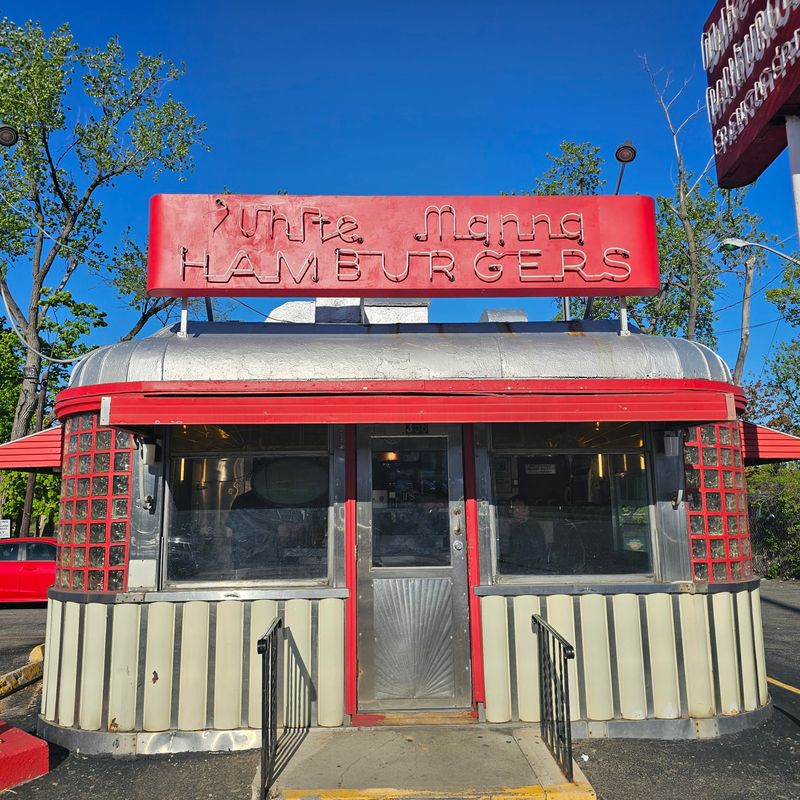
The entire show happens within a few feet of your stool. Balls of ground beef hit the griddle, sliced onions pile on top, and a cook presses everything flat before lining the little patties across soft rolls.
Steam fogs the windows, customers call out orders, and someone inevitably decides that the three sliders they requested will not be enough. White Manna’s tiny Hackensack building originally appeared at the 1939 New York World’s Fair before arriving on River Street, where it has served burgers since 1946.
Its porcelain exterior, curved shape, stainless-steel surfaces, and compact horseshoe counter make it one of New Jersey’s purest diner time capsules. There is no back dining room hiding behind the grill.
The narrow counter is the restaurant, which means every seat comes with a front-row view. Order the cheeseburgers with onions unless you have a powerful objection; the onions melt into the thin beef patties and provide much of their unmistakable flavor.
Fries and a shake complete the experience, but the sliders are small enough that ordering in multiples is standard operating procedure. Seating is limited, and a line can form quickly at lunchtime.
Parking is also tight, though turnover tends to move once the griddle gets rolling. Do not expect a leisurely, private meal.
White Manna is close, steamy, fast, and wonderfully direct—a working piece of diner history where lunch still comes wrapped in paper.
5. Summit Diner – Summit
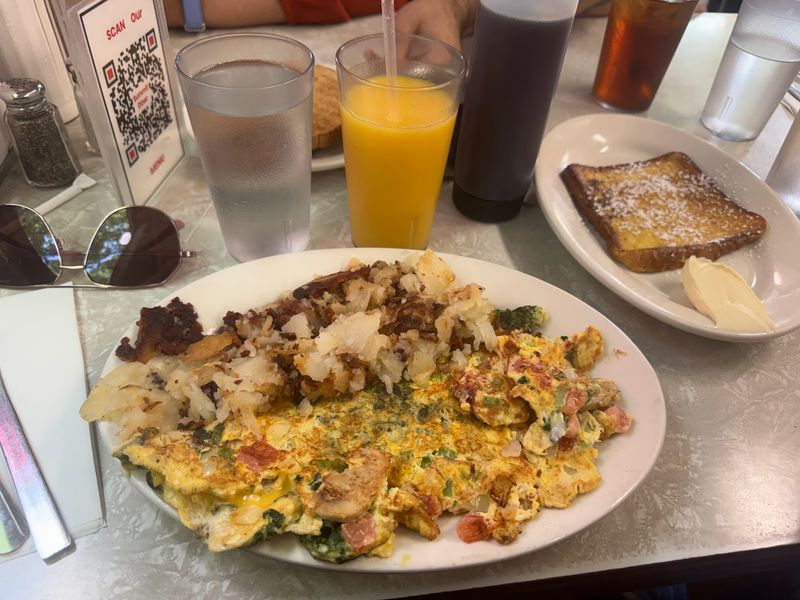
Morning light reflecting off the stainless-steel exterior is your first clue that this is not another breakfast place wearing a retro costume.
The narrow dining car was manufactured by the Jerry O’Mahony company in 1938, and it still contains the essential elements of a classic Jersey diner: counter stools, tight booths, tiled surfaces, a working griddle, and barely an inch wasted.
Summit Diner began serving customers in 1929 before the current structure arrived, making it one of the state’s enduring roadside landmarks. Inside, lawyers, construction workers, commuters, families, and longtime regulars sit elbow-to-elbow over sturdy breakfasts.
A Taylor ham, egg, and cheese sandwich is the obvious New Jersey order, especially with potatoes and coffee, though pancakes, omelets, burgers, and daily specials all have their loyalists. The food is unfussy, portions are sensible, and plates arrive without decorative distractions.
What makes the room memorable is its rhythm. Orders are called, coffee is poured, the front door keeps opening, and everyone adjusts instinctively to the limited space.
It feels busy without needing loud music or artificial energy. The diner is steps from Summit’s train station, making it convenient for an early breakfast or weekday lunch.
Hours lean toward mornings and afternoons rather than late-night diner territory, and bringing cash is the safest move. Grab whichever seat opens first; in a dining car this compact, there really is no bad one.
6. Jim’s Lunch – Millville
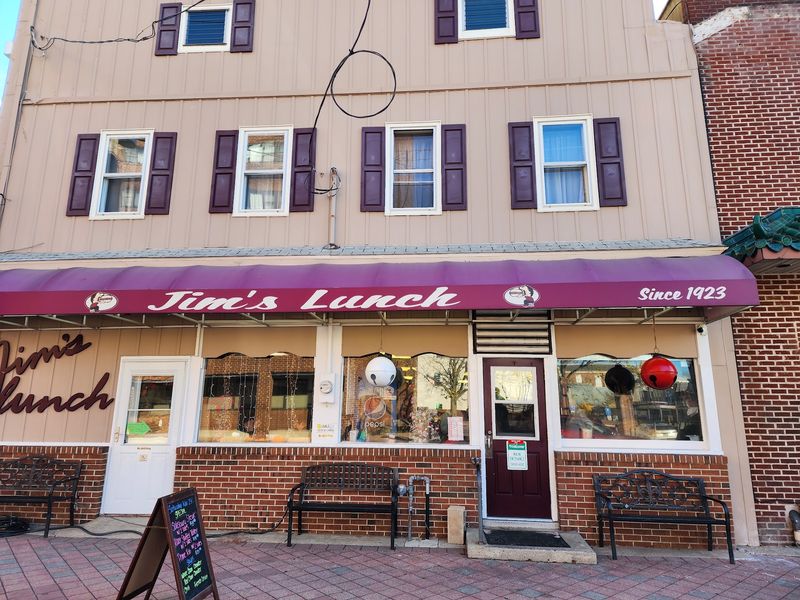
Ask three Millville families what belongs on a Jim’s burger, and you may get three passionate answers—but the house relish will appear in every serious discussion.
This downtown luncheonette has been feeding the community since 1923, and its thin griddled burgers topped with onions and a distinctive spiced relish have become a local inheritance.
People who grew up eating them return with children and grandchildren, often ordering by habit before fully settling into their seats. The dining room supports that sense of continuity.
Counter stools, simple booths, old photographs, and a no-frills layout place the focus on the grill and the people gathered around it. You are not here for a towering gourmet burger held together by a steak knife.
Jim’s version is compact, savory, slightly messy, and best ordered with a second one waiting nearby. Hot dogs, fries, sandwiches, and straightforward breakfast choices round out the menu, but first-timers should not wander too far from the classics.
The restaurant traditionally follows a seasonal schedule and closes during part of the summer, an unusual custom that regulars accept as part of its identity. Confirm that it is open before driving to Millville, and carry cash just in case.
When the doors are open, lunch feels less like visiting a preserved landmark and more like joining a century-old local routine. That is precisely why the room remains so special.
7. Bill’s Luncheonette – Chester
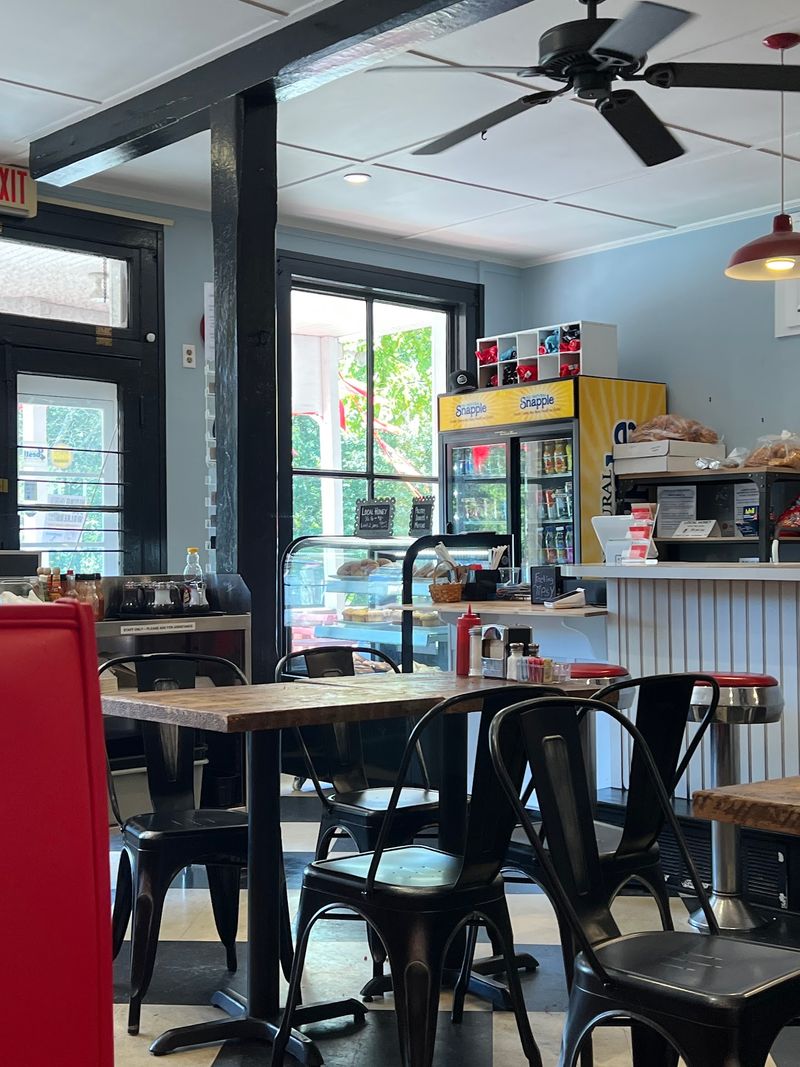
The griddle sits close enough to the counter that breakfast arrives with its own soundtrack: eggs cracking, bacon snapping, spatulas scraping, and short orders exchanged without wasted words.
Bill’s Luncheonette has occupied its modest Chester storefront since 1949, preserving the kind of small-town lunch-counter experience that has nearly vanished from New Jersey’s main streets.
There is nothing theatrical about the old-fashioned interior. Round stools line the counter, booths hug the walls, and signs and memorabilia have accumulated naturally rather than being purchased as a coordinated decorating package.
Breakfast is the main draw, with pancakes, French toast, omelets, home fries, and egg sandwiches prepared within view of the people eating them. At lunch, burgers, hot dogs, grilled cheese, and other short-order staples keep things equally uncomplicated.
The prices are generally friendly, the coffee keeps moving, and conversations often skip across tables because the room is small enough to make strangers temporary neighbors. Go early on a weekend; seating is limited, and Chester’s shops and seasonal events can bring a crowd into town.
Bill’s is especially enjoyable before a walk along Main Street, when you can follow breakfast with antique browsing and still be back at your car before the day gets complicated. Plenty of restaurants call themselves nostalgic.
Bill’s simply opens the door each morning and continues doing what a luncheonette has always done.
8. Rutt’s Hut – Clifton
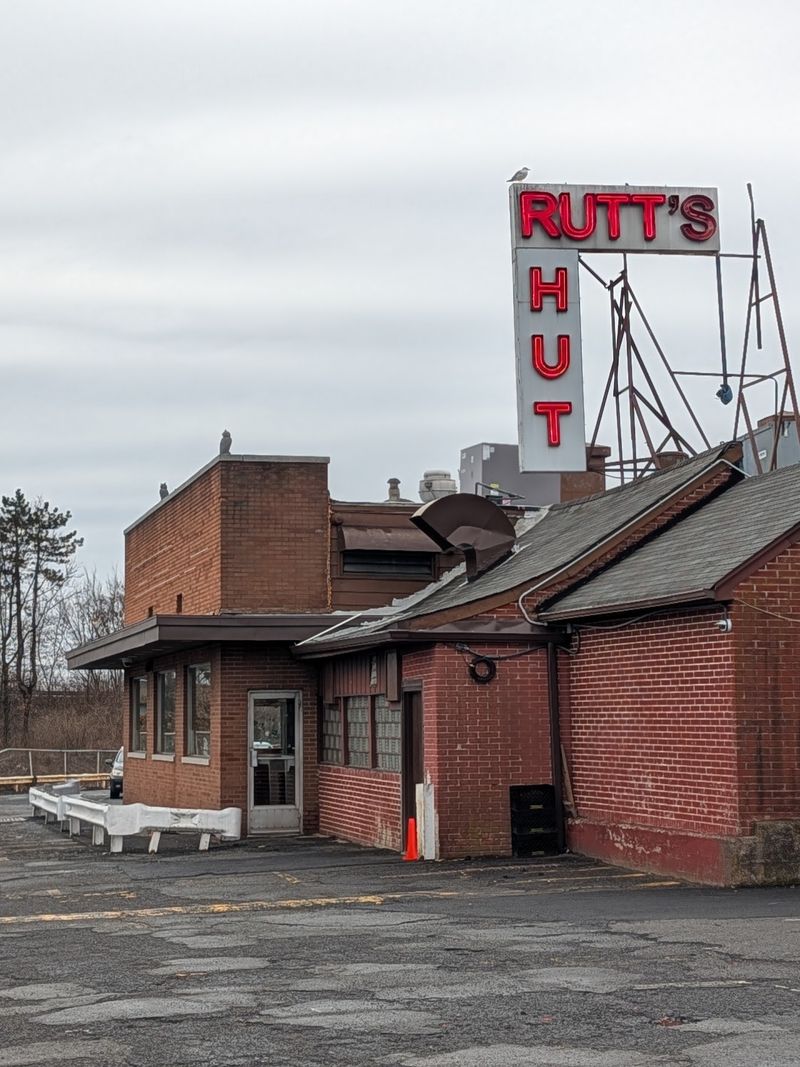
A deep-fried hot dog splits open in the oil, emerging blistered, craggy, and ready for a streak of mustard and a spoonful of the house relish. That is the “ripper,” the order most closely associated with Rutt’s Hut since the Clifton roadside stand opened in 1928.
You can request your dog less cooked or take it all the way to the nearly black “cremator,” but the classic ripper occupies the sweet spot between juicy and audibly crisp. The dining setup remains gloriously utilitarian.
One side operates like a standing counter, with customers eating from paper plates beneath fluorescent lights; another offers a more conventional tavern room with tables and drinks. Neither space wastes energy pretending hot dogs require ceremony.
Vintage signs, stainless steel, worn surfaces, and generations of routine provide more character than a polished redesign ever could. The mustard-based relish is essential, adding cabbagey sweetness and tang to the salty dog.
Onion rings, fries, burgers, and chili give groups something to share, though it is surprisingly easy to eat two rippers without assistance. Rutt’s sits near Route 3 and has a large parking lot, making it a convenient detour rather than an elaborate outing.
Lunchtime brings regulars who order quickly and move aside with practiced efficiency. Follow their lead: know how cooked you want your dog, add relish, and claim a patch of counter.
Silverware would only slow you down.
9. Pic-A-Lilli Inn – Shamong
License plates, beer signs, photographs, sports memorabilia, and decades of Pine Barrens personality compete for wall space inside this Shamong roadhouse. The effect is not tidy, and that is exactly the point.
Pic-A-Lilli Inn has been operating since the 1920s, with multiple generations of the same family helping it evolve from a rural stop into one of South Jersey’s best-known wing destinations. The dining room still feels like a place discovered during a long drive, even when the parking lot tells you that plenty of other people had the same idea.
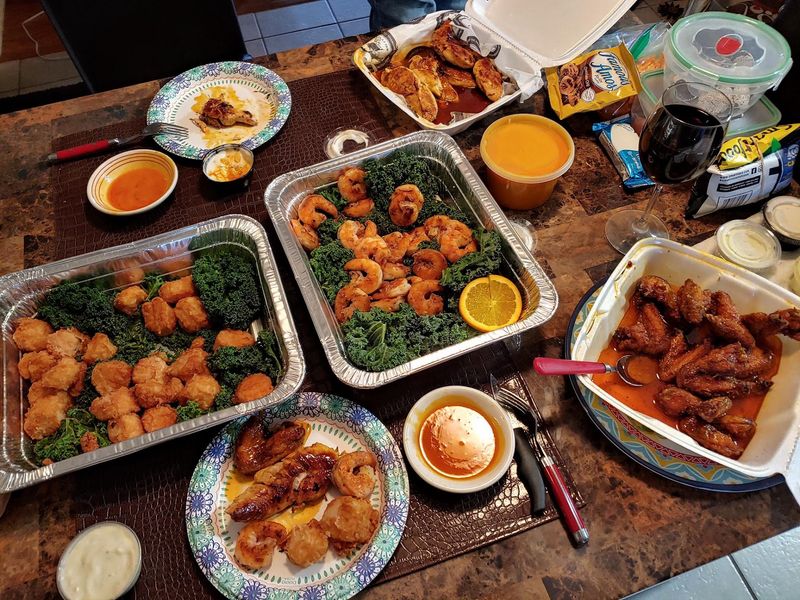
Wings are the move here, coated in a sharp, tangy sauce whose heat sneaks up rather than arriving as a stunt. Order them at your preferred intensity and add the “tails”—breaded strips of chicken—to give the table something boneless to fight over.
Sandwiches, burgers, seafood, and bar snacks provide backup, but a visit without wings misses the central event. Paper towels are more useful than napkins, and nobody looks especially dignified by the final round.
The room is casual enough for families, motorcyclists, sports fans, and groups fresh from a day outdoors, all of whom seem perfectly comfortable beneath the accumulated memorabilia. Located along Route 206, the inn has ample parking but can become packed during games and weekend evenings.
Arrive hungry and do not wear anything too precious. The sauce has survived this long by refusing to stay neatly on the plate.
10. The Walpack Inn – Walpack Township
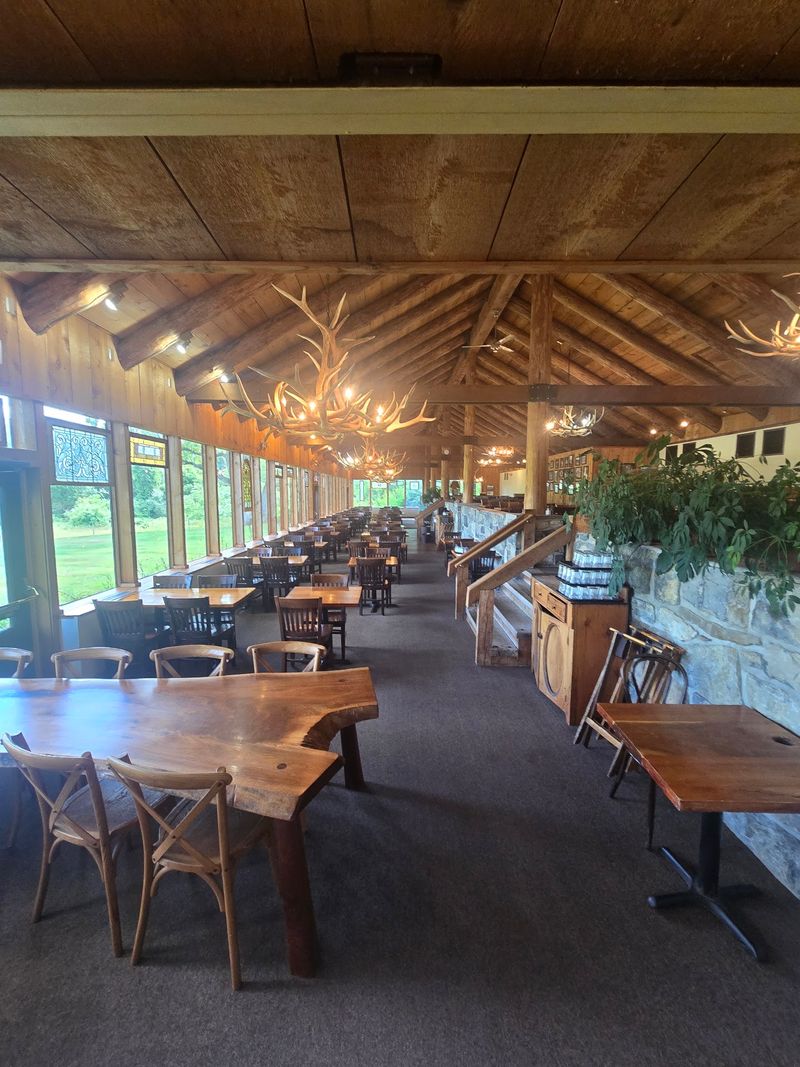
Mounted animals gaze down from knotty-pine walls while floor-to-ceiling windows frame a meadow where live deer may wander past during dinner. That combination of rustic taxidermy and genuine woodland scenery makes The Walpack Inn one of the state’s most wonderfully peculiar dining rooms.
The family-run restaurant opened in 1949 in a remote corner of Sussex County, long before the surrounding Walpack area became part of the Delaware Water Gap National Recreation Area.
Its décor preserves a particular midcentury vision of a country lodge: dark beams, stone, wagon-wheel touches, patterned carpeting, and tables set for unhurried special occasions.
Prime rib is the traditional order, carved thick and served with the confidence of a kitchen that knows why people made the drive. Steaks, seafood, chicken, and hearty seasonal dishes share the menu, while the salad bar remains part of the old-school appeal when offered.
Getting here is half the story. Roads narrow, cell service becomes unreliable, and the forest slowly replaces everyday New Jersey congestion.
Download directions beforehand and watch carefully for wildlife, especially after dark. The inn operates on a limited schedule, often centered on weekends, and reservations are strongly recommended.
Request a window table if possible, though the interior offers plenty to study wherever you land. By the time dinner ends, stepping outside into the quiet can feel like returning from another decade—and perhaps another state entirely.
11. Ye Olde Centerton Inn – Pittsgrove
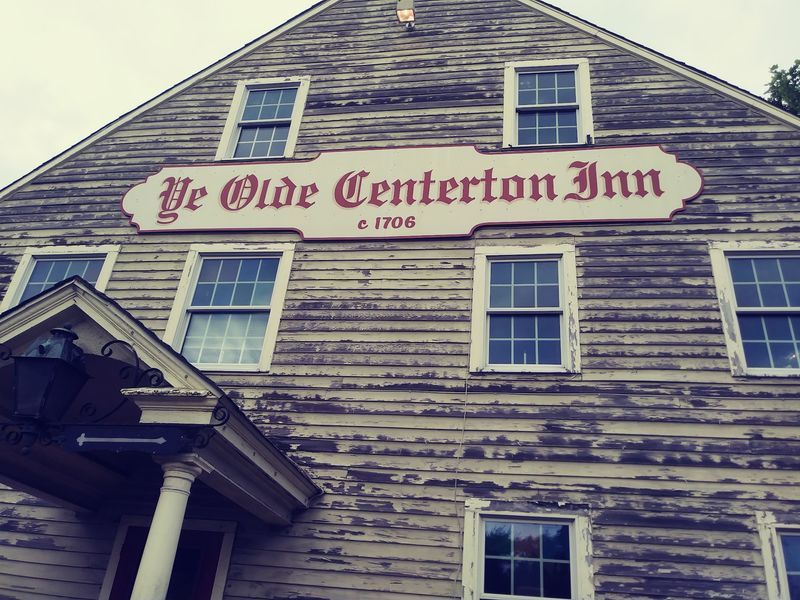
A dining room does not survive from the early 1700s without collecting a few stories. Ye Olde Centerton Inn traces its beginnings to 1706, when this corner of rural Salem County served travelers long before highways, restaurant apps, or even the United States existed.
The low ceilings, fireplaces, traditional woodwork, and intimate arrangement of rooms preserve the proportions of an old inn rather than forcing the building into a modern open-plan layout. Dinner unfolds at a measured pace here.
Steaks, seafood, crab dishes, and seasonal preparations suit the setting, with thoughtful service that makes the visit feel like an occasion without becoming stiff. Depending on the menu, begin with soup, clams, or a seafood appetizer before moving toward a filet, pork chop, or fresh fish.
This is not the place for grabbing a rushed plate on the way somewhere else. The inn generally operates by reservation, so call ahead and confirm both availability and current dining hours.
Its Pittsgrove location also rewards a little planning; the rural roads are peaceful but can feel very dark after dinner. Arrive early enough to appreciate the exterior and the surrounding countryside in daylight.
Once inside, put the phone away for a few minutes and look around. The most impressive feature is not any single antique but the fact that people have gathered here for food and conversation for more than three centuries.
12. The Clinton House – Clinton
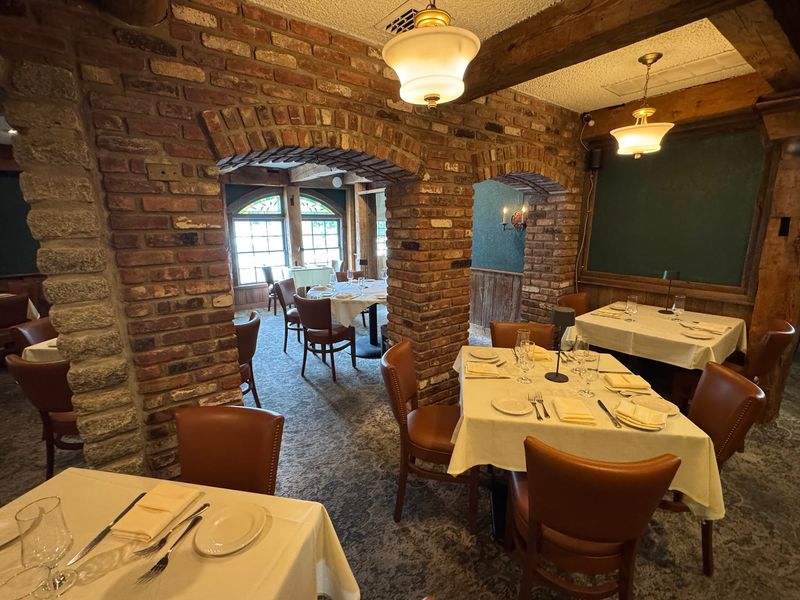
Before Clinton became one of New Jersey’s prettiest river towns, this Main Street property was already welcoming travelers. Hospitality at The Clinton House dates to 1743, and portions of the restaurant still retain the intimate scale and architectural character associated with its stagecoach-inn past.
Dark wood, fireplaces, traditional furnishings, and separate dining spaces create a more convincing historical mood than one enormous room ever could. Today it operates primarily as an American steakhouse, making a well-seared strip steak or filet the natural centerpiece of dinner.
Seafood, crab cakes, burgers, and German-influenced dishes broaden the choices, while the tavern works nicely for a drink and a less formal meal. The historic surroundings never overwhelm the food; instead, they give an ordinary dinner a welcome sense of weight.
You can imagine muddy travelers stopping here two centuries ago, though their supper probably did not arrive with a carefully selected glass of Cabernet. Parking is available across the street, and reservations are useful on weekend evenings.
Build extra time into the visit for a walk through downtown Clinton, particularly around the Red Mill and the South Branch of the Raritan River. The town is compact enough that dinner can anchor an entire afternoon without complicated planning.
Back inside, ask for one of the cozier historic rooms if seating allows. A fireplace, a steak, and walls that have outlasted generations make an excellent combination.
13. Knife & Fork Inn – Atlantic City
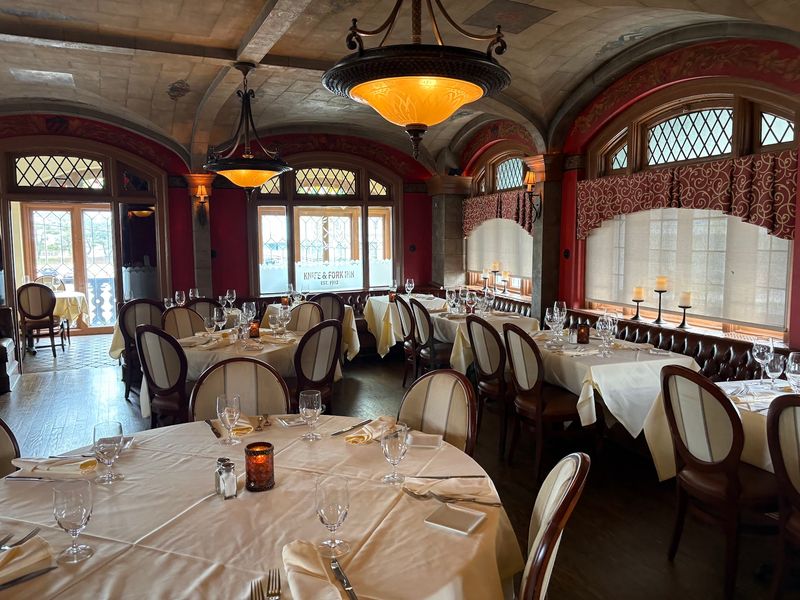
From the street, the peaked roof and crossed knife-and-fork emblems look like the entrance to a particularly dramatic secret society. That impression is not far off.
The Knife & Fork opened in 1912 as a private club, complete with exclusive rooms, Prohibition-era drinking, and rules that initially restricted where women could enter. It became a public restaurant in 1927 and was later carefully restored to evoke its early-20th-century splendor.
Inside, mahogany woodwork, murals, stained glass, chandeliers, fireplaces, and richly colored walls offer a sharp contrast to the glassy casino towers nearby. The dining room feels historic without appearing dusty; this is old Atlantic City dressed for dinner.
Steaks and seafood lead the menu, with lobster, oysters, crab cakes, chops, and composed fish dishes matching the room’s clubby confidence. Order a cocktail first and give yourself time to explore the details rather than treating dinner as fuel between casino visits.
Different floors and dining spaces have distinct personalities, so returning guests can experience the building from a new angle. Reservations are strongly advised, particularly on summer weekends and during major Atlantic City events.
Valet service can eliminate the search for parking, and arriving before sunset provides a good view of the unusual exterior. For maximum effect, dress a little sharper than strictly necessary.
The Knife & Fork does not demand it, but the room makes you want to participate in the occasion.