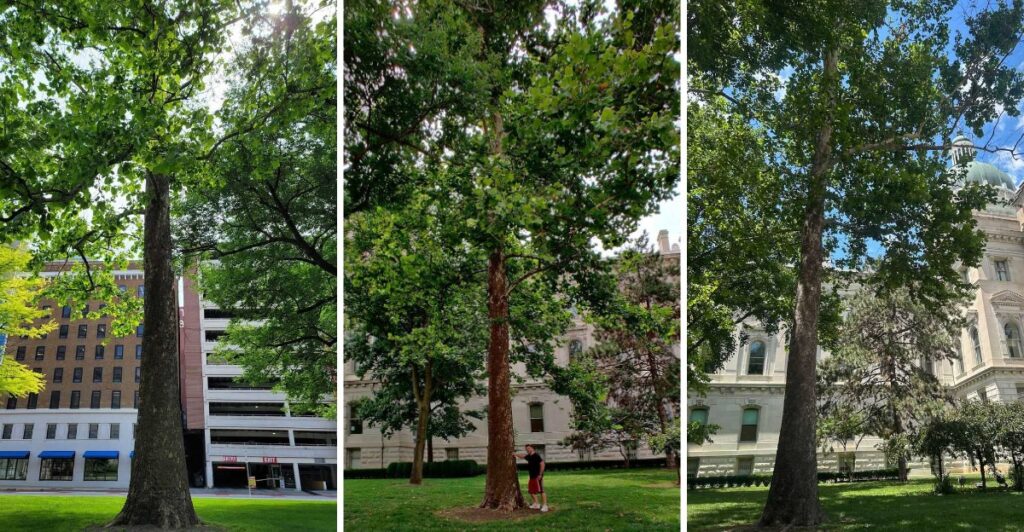
One of downtown Indianapolis’ most unusual space artifacts is alive, growing, and easy to walk right past. Near the Indiana Statehouse stands a sycamore descended from a seed carried around the moon during NASA’s Apollo 14 mission before returning to Earth.
Planted more than 50 years ago, the Moon Tree now looks surprisingly ordinary considering the extraordinary journey behind its beginnings. That contrast makes the landmark especially fascinating, connecting space exploration and Indiana history in a single living monument. Here, visitors do not need a museum ticket to encounter a piece of the Apollo era—they simply need to look up.
A Sycamore With a Space-Age Secret

Most trees earn attention because they are huge, old, or beautifully placed. This one has a stranger claim to fame. The Indianapolis Moon Tree is a sycamore grown from a seed connected to the Apollo 14 mission, giving an ordinary-looking trunk a story that reaches far beyond the sidewalk around it.
That contrast is the first thing that makes the site interesting. Nothing about the tree shouts for attention in a flashy way. Instead, the surprise comes from knowing that a seed linked to lunar orbit ended up rooted beside one of Indiana’s most important civic buildings, where lawmakers, workers, and tourists pass by during regular days.
Sycamores are already easy to notice once you know their clues. The bark often shows pale, patchy areas that make the trunk look almost painted by hand.
At the Statehouse, that visual detail helps separate the Moon Tree from the many other features downtown, especially for anyone trying to identify it after hearing the story secondhand.
There is also a nice lesson here about how history is not always locked behind museum glass. Sometimes it grows leaves, drops bark, and changes with the seasons. A child can understand the wonder quickly: a tree came from a seed that went around the moon.
An adult may pause longer and think about science programs, public memory, and how easily amazing facts can hide in plain sight.
For anyone visiting Indianapolis, the best approach is to let the simplicity work on you. Stand still for a minute, look up through the branches, and remember that one of downtown’s quietest landmarks has a direct link to the space race. That small realization gives the tree its real power.
Where To Find It Beside the Indiana Statehouse

Tracking down the Indianapolis Moon Tree can feel a little like a tiny treasure hunt. The landmark is outside the Indiana Statehouse in downtown Indianapolis, and the tree has been described on the east side of the building near the governor’s office area. That location gives it a formal setting, but the experience of finding it is more relaxed than grand.
One reason visitors sometimes miss it is simple: the tree is not always obvious as a named attraction. Reports note that earlier markers were moved, which means first-time searchers may arrive expecting a big sign and instead face a row of trees and government grounds. Knowing that ahead of time makes the stop much less frustrating.
A useful visual clue is the bark. The sycamore’s trunk shows the species’ familiar white and bare patches, which stand out against darker bark on other nearby trees. If the east side is your focus, looking for the only sycamore-like trunk in that area can help narrow the search quickly.
The grounds around the Statehouse also shape the experience. You are not hiking through a park or entering a fenced garden dedicated only to the tree. You are moving through a working civic space, where sidewalks, statues, offices, and patches of lawn all share the same block.
That makes the discovery feel more personal, almost as if Indianapolis tucked a piece of space history into everyday downtown traffic.
Good planning makes a difference here. Wear comfortable shoes, give yourself a few extra minutes to circle the building if needed, and do not expect giant directional signs to guide the way. The hunt is short, but when the sycamore finally comes into view, the setting makes the story even better.
Apollo 14 Lives On in Indiana
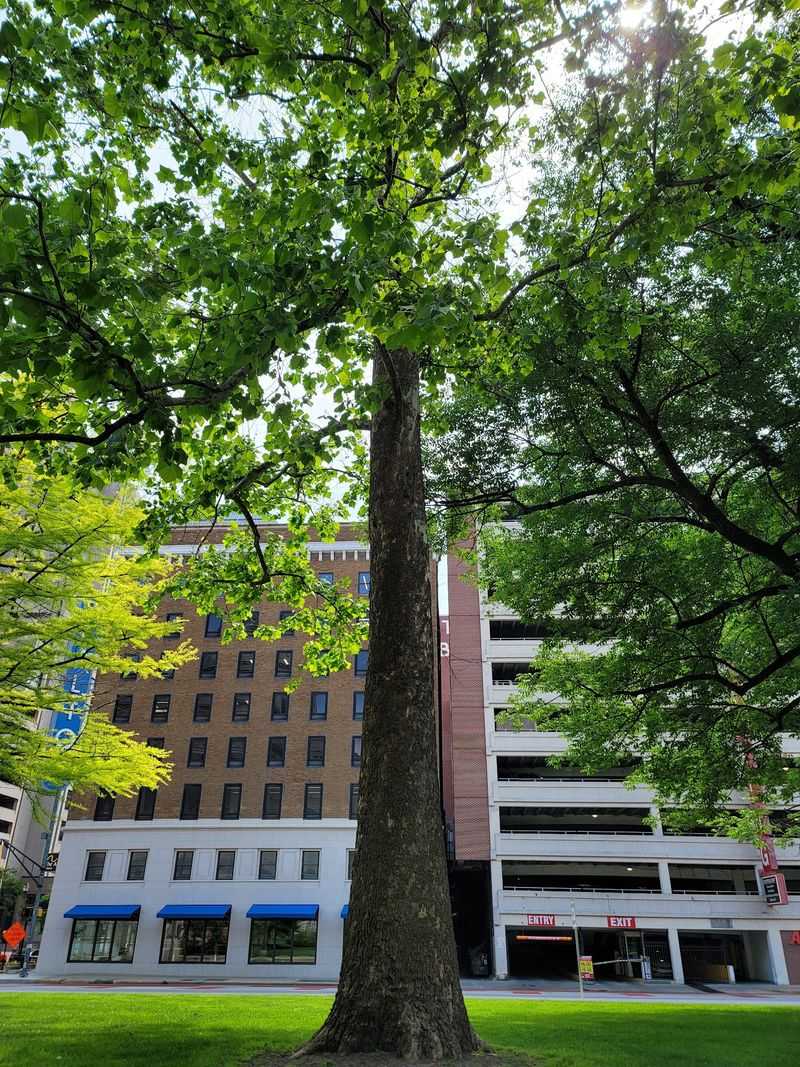
Long before this sycamore shaded Statehouse grounds, its story began with one of America’s moon missions. Seeds traveled during the Apollo 14 era, then returned to Earth and were planted in different places. Indianapolis became home to one of those living reminders, turning a patch of government landscaping into a quiet chapter of space exploration.
That backstory matters because it changes how the tree is seen. Without context, it is a handsome sycamore. With context, it becomes a rare link between outer space and local geography, a piece of history still alive instead of sealed away in a case.
The timeline adds even more weight. The seed journey connects to 1971, and the Indianapolis tree was planted in the 1970s, allowing it to grow for decades in public view.
A fifty-year-old tree already carries age and presence. Add a lunar connection, and the tree shifts from familiar urban greenery to a landmark with national meaning.
There is something especially strong about the way this story reaches different age groups. Students can connect it to science class. History fans can place it within the Apollo program.
Local residents can appreciate that an internationally known chapter of exploration left a trace right beside the center of Indiana state government.
It also helps to keep expectations realistic. The tree did not grow on the moon, and it does not glow with science-fiction drama.
Its power comes from the path of the seed and from the fact that living organisms were part of that era’s effort to test, symbolize, and celebrate space travel. In Indianapolis, that giant national story narrows down to one trunk, one canopy, and one corner of downtown.
The Missing Plaque and the Fun of Figuring It Out
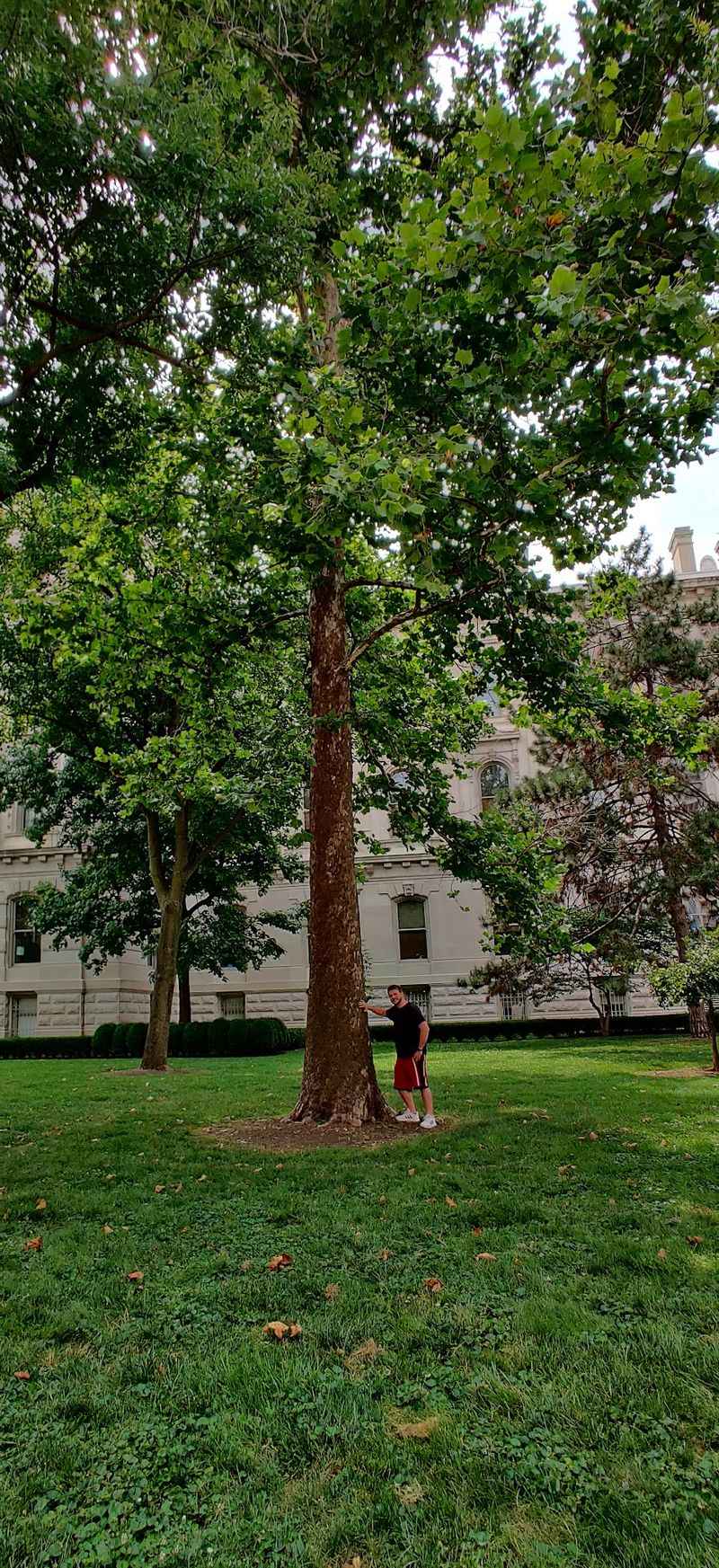
Every good landmark does not need neon arrows, and this one proves it. Part of the Indianapolis Moon Tree’s odd charm comes from the fact that the identifying plaque has reportedly been removed from the tree itself and relocated elsewhere on the Statehouse grounds. That small change turns a straightforward stop into a closer look at the landscape.
For some visitors, the missing marker can be annoying. Arriving with excitement and then not seeing a label on the exact trunk may create doubt. Yet the challenge also pushes people to notice details they might otherwise ignore, especially bark pattern, placement beside the building, and the broader layout of paths and statues around the Statehouse.
The relocated marker has been noted near a small garden area on the south side, close to the George Washington statue. That means a careful walk around the grounds can add another layer to the visit.
Instead of snapping one quick picture and leaving, you get a mini search that makes the setting more memorable and helps you understand the Statehouse complex better.
There is also a useful takeaway for families or school groups. The tree becomes a simple lesson in observation. Read the story before arriving, compare the clues on site, and let kids spot the white-patched sycamore trunk for themselves.
That kind of active looking can be more fun than following a giant sign straight to the answer. Anyone planning a stop should think of the missing plaque as part of the experience, not a failure of the trip.
Bring patience, look around slowly, and treat the search like a short downtown puzzle with a science-history prize at the end. Once the right sycamore comes into focus, the unmarked quality almost adds to its character.
Look Up Close and the Trunk Gives It Away
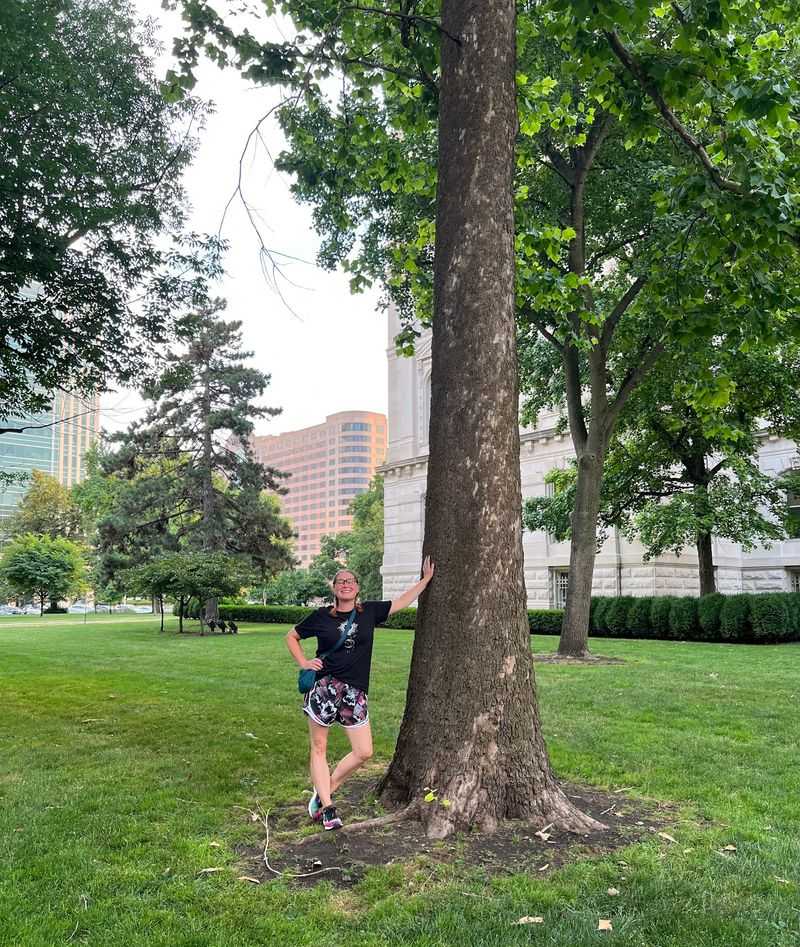
Not every landmark works best from far away. The Indianapolis Moon Tree rewards close looking, especially if you focus on the trunk. Sycamores have a bark pattern that can appear mottled, pale, and patchy, almost like pieces of different colors were fitted together.
On busy Statehouse grounds, that texture becomes the easiest visual clue. From a distance, the tree may blend into the formal landscaping around the building. Walk nearer, though, and the bark starts doing the talking.
White splotches and bare spots break up the surface, making the trunk stand out in a way that feels natural rather than decorative. It is a useful reminder that recognizing a place often starts with noticing species traits, not just signs.
Season also changes the effect. In leafy months, the Moon Tree can look broad, shaded, and stately, with its canopy softening the government setting around it.
During colder months, the branches are more exposed, and the trunk may become the main attraction. Some people prefer peak foliage, while others may find winter identification easier because the shape is clearer.
That shifting appearance makes repeat visits surprisingly interesting. A spring stop highlights new growth. Summer offers shade and fuller scale.
Fall adds color and a stronger sense of age. Winter strips the scene down to bark, branch structure, and the stark fact that this living thing has stood through decade after decade of Indiana weather.
If you want the best photo, step back far enough to include part of the Statehouse setting, then take a second image closer to the bark.
One shot tells the story of place. The other helps explain why this particular tree can be recognized at all. Together, they capture both the landmark and the clue hidden in plain view.
A Quick Downtown Stop That Rewards Slow Looking

Some attractions ask for a full afternoon. The Indianapolis Moon Tree asks for attention more than time. Because it sits on Statehouse grounds in the middle of downtown, the visit works well as a short stop during a walk, a lunch break, or a wider day of sightseeing around central Indianapolis.
That convenience is one of its strengths. You do not need special gear, advance booking, or a detailed itinerary to appreciate the tree. What helps most is a willingness to slow down in a place where many people usually keep moving.
Government buildings often create an in-and-out rhythm, but this landmark is better enjoyed at a calmer pace. A practical visit can unfold in a few simple steps.
Approach from the Statehouse grounds, scan the east side carefully, identify the sycamore by bark and position, and then spend a minute reading up on the Moon Tree story if you have it saved beforehand. Suddenly a basic urban walk gains a layer of discovery.
The stop also pairs nicely with nearby downtown features. Statues, sidewalks, lawn areas, and the Statehouse architecture create enough context to make the tree part of a bigger visual experience.
Rather than sitting alone in a remote park, it exists in a busy civic setting, which gives the moment an everyday kind of wonder. Space history shows up where office workers pass by and pedestrians head to lunch.
For the smoothest experience, try daylight hours and decent weather. Comfortable shoes matter more than anything else. If leaves are on the branches, enjoy the full shape of the tree.
If they are gone, use the clearer trunk and branch outline to your advantage. Either way, a stop that might last ten minutes can still become one of downtown’s smartest detours.
Why an Unmarked Tree Still Stands Out
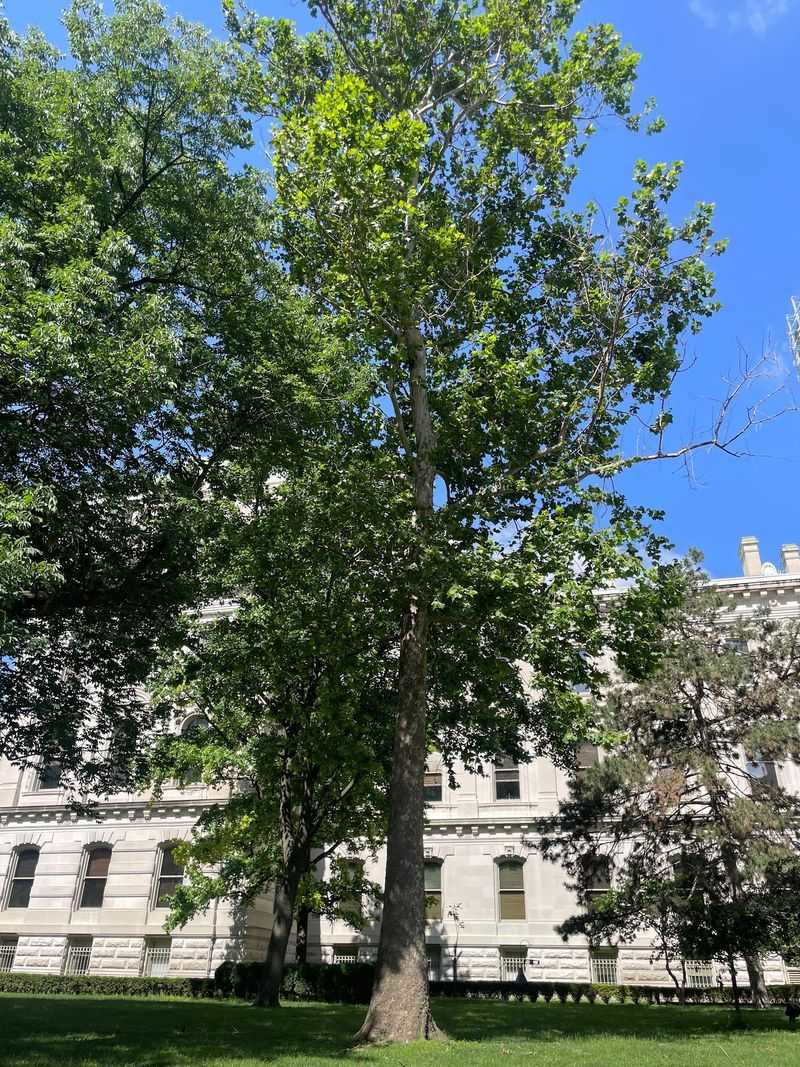
Here is the surprising part: the Indianapolis Moon Tree does not need flashy presentation to matter. In fact, its modest appearance may be exactly why it works so well.
Among statues, government offices, and downtown routines, a living tree tied to lunar history creates a kind of contrast that no signboard could fully stage.
It stands out because it asks the imagination to do a little work. You see bark, branches, and roots in Indiana soil, but the story stretches back to one of the biggest scientific adventures of the twentieth century. That gap between ordinary appearance and extraordinary past gives the landmark its punch.
There is also a larger civic value in keeping track of places like this. Not all public history comes as giant monuments or dramatic museum exhibits.
Some of it survives in quieter forms, woven into daily city space where anyone can encounter it without paying admission. The Moon Tree turns science history into something public, local, and approachable.
For Indianapolis, that matters. The city gains a landmark that links state identity with a national story of exploration. For students, it can make history and science feel less distant.
For travelers, it offers a stop that is unusual enough to talk about later without requiring a huge block of time. For locals, it is a reminder that familiar streets can still hold odd and wonderful facts.
The final appeal is simple and strong. You are looking at a mature sycamore outside the Indiana Statehouse, yet the tree’s beginning connects to a seed that orbited the moon.
Few landmarks compress so much meaning into such an everyday shape. Once that idea clicks, the unmarked trunk becomes one of downtown Indianapolis’s sharpest little surprises.
Share this story