A clapper rail calls from somewhere deep in the reeds, an egret lifts off without warning, and suddenly that short wooden walkway feels like the best seat in New Jersey.
Wildlife watching does not always require muddy boots, steep climbs, or an expedition-sized backpack.
Across the state, refuges, sanctuaries, and protected nature parks have built boardwalks, overlooks, blinds, and observation platforms that bring visitors surprisingly close to marshes, ponds, forests, and tidal creeks.
Many are short, level, and manageable for families, casual walkers, and anyone more interested in spotting an osprey than logging serious trail mileage.
These ten destinations stretch from Sussex County to the Delaware Bay, covering everything from urban wetlands with Manhattan views to quiet coastal habitats filled with herons and terrapins. Bring binoculars if you have them, but do not worry if you forget.
At places this accessible, New Jersey’s wild side often comes right to you.
1. Great Swamp National Wildlife Refuge – Basking Ridge
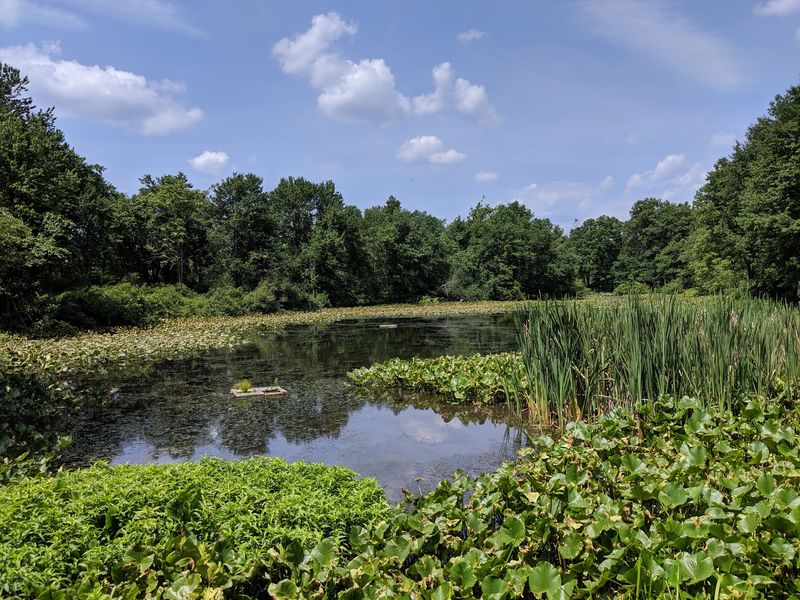
A wooden walkway floating above dark swamp water is the main attraction at this Morris County refuge, and the setting feels remarkably remote for somewhere surrounded by busy North Jersey suburbs.
The Wildlife Observation Center provides roughly 1.2 miles of boardwalk and compacted stone-dust trails, making it the easiest place to experience Great Swamp without tackling the rougher paths inside its wilderness area.
Frogs, painted turtles, water snakes, and wading birds can appear beside the walkway, while the surrounding forest provides cover for deer, foxes, and countless songbirds.
Three observation blinds let visitors settle in quietly and watch the wetlands without immediately advertising their arrival to everything with feathers.
The standout feature is the Chandler S. Robbins Memorial Viewing Platform, a two-level structure overlooking the refuge’s largest impoundment.
Its lower level offers an accessible vantage point, while stairs lead to a higher deck with broader views across the water. Ducks gather here during migration, and bald eagles are regular enough to keep binoculars pointed toward the treetops.
The observation center is reached from Long Hill Road and has its own parking area and restrooms. Pets and picnicking are not permitted, which helps keep the experience peaceful.
Visit early in the morning, when the boardwalk is quiet and the swamp seems to wake up one splash at a time.
2. Cape May National Wildlife Refuge – Cape May Court House
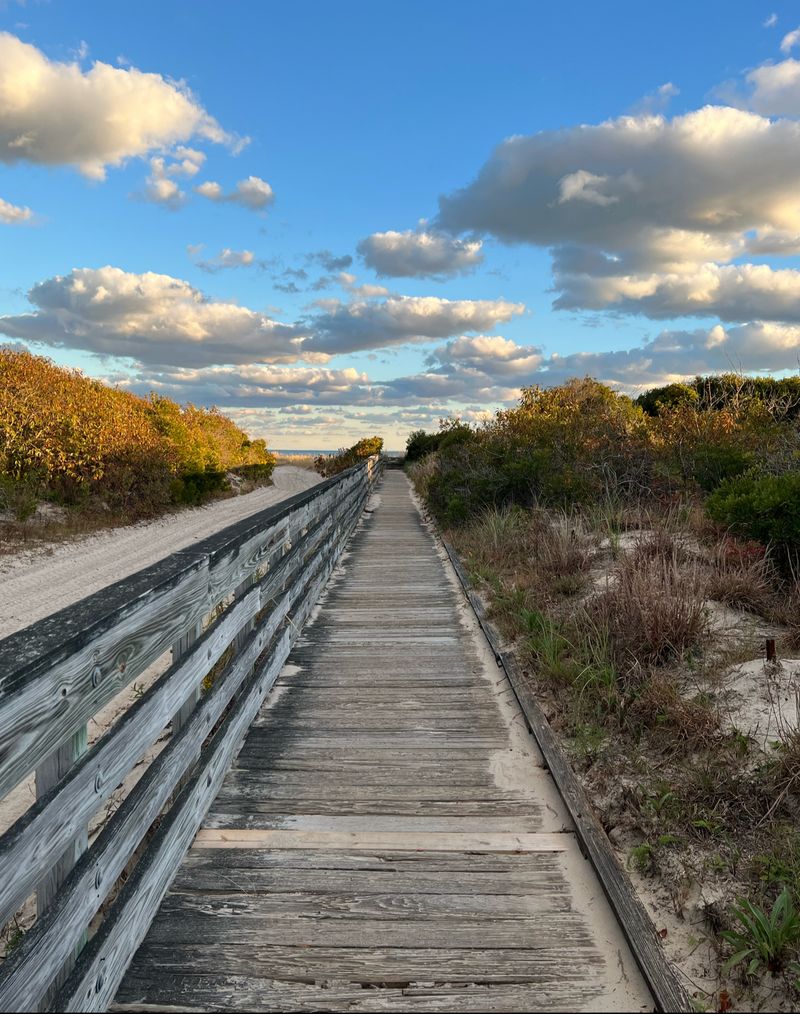
Five hundred feet is all it takes to trade beach traffic for open salt marsh at the Two Mile Beach unit of this sprawling Cape May County refuge.
The accessible Central Dune Trail follows a boardwalk to an observation platform overlooking grasses, tidal water, and the maritime landscape behind the dunes.
It is short enough for a quick stop but interesting enough to hold visitors longer than expected, especially when herons begin working the shallows or a clapper rail starts calling from the vegetation. Another boardwalk near the second parking area leads to a platform overlooking the beachfront.
Shorebirds, gulls, and migrating songbirds pass through this section of the refuge, while butterflies and dragonflies add movement closer to the trail.
The refuge’s position along the Cape May Peninsula makes spring and fall particularly rewarding, when migration funnels an astonishing variety of birds through the region.
Beach access within the protected unit is seasonally restricted from April through September, but the trails remain available, allowing visitors to observe without disturbing nesting wildlife. Two Mile Beach sits near Diamond Beach, making it an easy addition to a Cape May or Wildwood trip.
There is no need to commit to a long hike or haul equipment over soft sand. Park, follow the boardwalk, and give yourself time to scan the marsh edges.
The best sighting of the day may arrive before you have walked a tenth of a mile.
3. Edwin B. Forsythe National Wildlife Refuge – Galloway
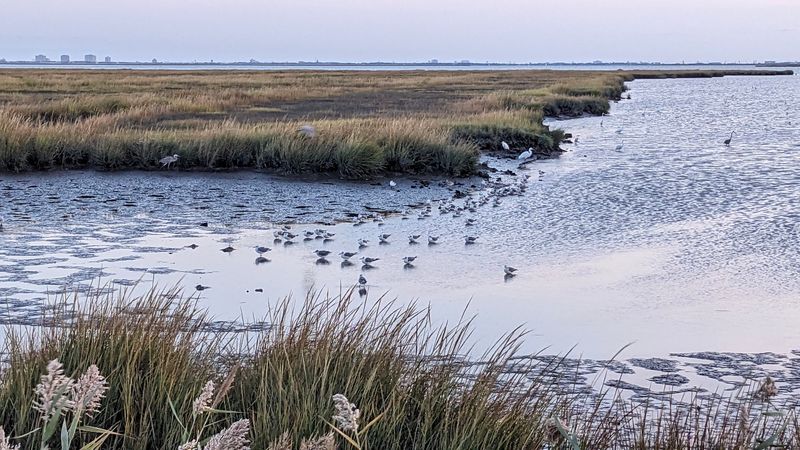
The Atlantic City skyline looks almost unreal from the middle of this vast coastal refuge, where casino towers rise beyond salt marshes crowded with egrets, ducks, and shorebirds.
The Galloway headquarters area offers several easy ways to enjoy the landscape, including the Leeds Eco-Trail and its 400-foot boardwalk over the marsh.
The route is short, wheelchair-friendly, and connected to an upland section that passes through maritime forest. Visitors can watch fiddler crabs moving below the boards, listen for marsh wrens in the grasses, and scan the open water for herons and glossy ibis.
Forsythe also has an eight-mile Wildlife Drive for anyone who wants excellent viewing with minimal walking. Two observation towers, located at Gull Pond and Turtle Cove, provide elevated perspectives over habitats used by hundreds of bird species.
Pull-offs along the drive make it easy to stop whenever something interesting appears, which happens frequently during migration. An entrance fee applies to the headquarters trails and Wildlife Drive, and the route is open from sunrise to sunset.
The visitor center has restrooms, information, and trail guidance, though its hours are more limited than those of the outdoor areas. Bring insect repellent in warm weather and keep a camera close.
An osprey carrying a fish or a flock of snow geese lifting from the marsh can turn an easy loop into a genuine spectacle.
4. Wallkill River National Wildlife Refuge – Sussex
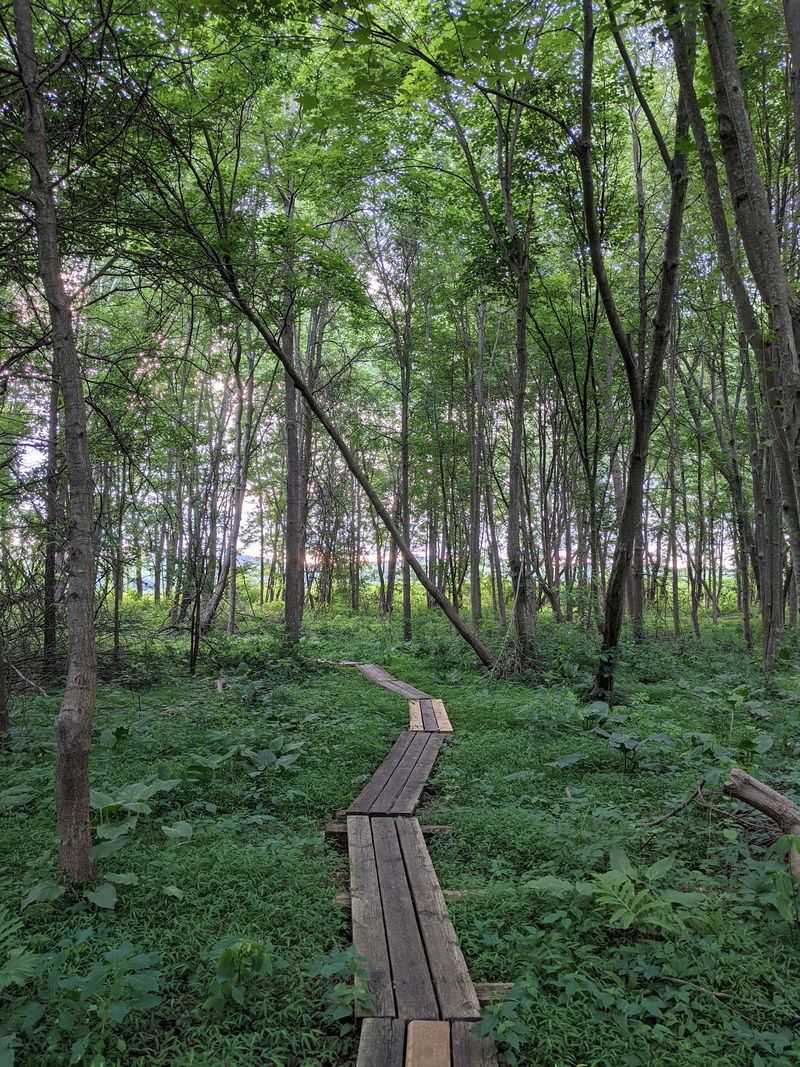
There is something pleasantly unhurried about watching the Wallkill River slide past from the end of a boardwalk. At Bassett’s Bridge, a short wooden walkway leads from a large parking area to the water’s edge, offering easy access for wildlife observation as well as fishing and paddling.
The river corridor attracts great blue herons, belted kingfishers, ducks, turtles, and the occasional bald eagle, while the surrounding wetlands support an impressive mix of birds throughout the year. Visitors who want to extend the outing can head to the nearby Wood Duck Nature Trail.
Built along an abandoned railroad bed, the trail stays level, and its first 0.6 mile is wheelchair accessible. The raised route passes wet fields, forest edges, and marshy habitat without demanding any serious climbing.
Spring brings frogs and returning songbirds, summer fills the vegetation with insects and wildflowers, and cooler months make it easier to see waterfowl through the bare branches.
Wallkill River National Wildlife Refuge straddles the New Jersey–New York border, but its Sussex County access points provide plenty to explore without crossing state lines.
Conditions can become damp after rain, so shoes with decent traction are useful even on the easier routes. This is not a place built around one dramatic landmark.
Its appeal comes from slowing down, checking the riverbank carefully, and noticing how much wildlife uses this quiet slice of northern New Jersey.
5. Supawna Meadows National Wildlife Refuge – Pennsville
Winter is when the open fields at Supawna Meadows really show off. Northern harriers sweep low over the grass, American kestrels perch patiently above the landscape, and the bare vegetation makes movement easier to spot from a distance.
The refuge’s Grassland Trail passes through a patch of upland forest before reaching an observation platform overlooking a finger of tidal marsh. From there, visitors can scan the water and surrounding grasses for waterfowl, raptors, and wading birds without negotiating steep terrain.
The trail continues through the grassland for those who want a longer walk, but the platform provides a natural destination and a good place to pause. A second option, the roughly one-mile Forest Habitat Trail, circles a pond and passes through hardwood woods and scrubby habitat.
Spring peepers and Southern leopard frogs can make the pond surprisingly loud in warmer weather, while wood ducks and great blue herons favor the wetter sections.
Located in Pennsville near the Delaware River, Supawna Meadows feels quieter and less developed than many better-known refuges.
There is no busy nature center scene, so arrive prepared with water, bug spray, and a downloaded map. Pets are prohibited, and some areas may be affected by seasonal hunting activity.
For the most satisfying visit, come early or late in the day, when the light spreads across the marsh and hunting raptors are most likely to be moving.
6. Scherman Hoffman Wildlife Sanctuary – Bernardsville
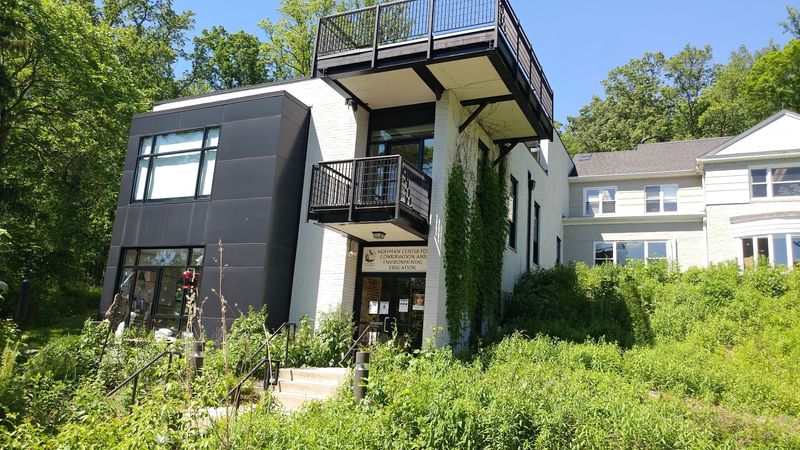
The observation deck at the Hoffman Center proves that an excellent birding spot does not have to sit at the end of a long trail. From this elevated perch in Bernardsville, visitors can look across the Passaic River valley and surrounding woodland canopy, a particularly useful viewpoint during the fall hawk migration.
Broad-winged hawks sometimes travel overhead in swirling groups known as kettles, while bald eagles, red-tailed hawks, and smaller migrating birds may also pass within view. Even outside migration season, the deck is a comfortable place to watch the treetops and listen for activity in the forest.
The sanctuary protects more than 280 acres of woodland, field, floodplain, and river habitat. Several marked trails descend from the nature center, but visitors who want an easy outing can spend time on the deck and explore only the gentler areas nearby.
Inside the center, the nature store carries field guides, feeders, and birding equipment, and staff-led programs frequently introduce newcomers to local wildlife. Trails remain open from dawn to dusk even when the building is closed, though parking arrangements change after center hours.
Pets are not allowed. Autumn offers the biggest overhead show, but spring is excellent for warblers and summer brings butterflies, nesting birds, and plenty of activity around the forest edges.
Bring binoculars, claim a spot along the railing, and let the migration come to you.
7. Stone Harbor Bird Sanctuary – Stone Harbor
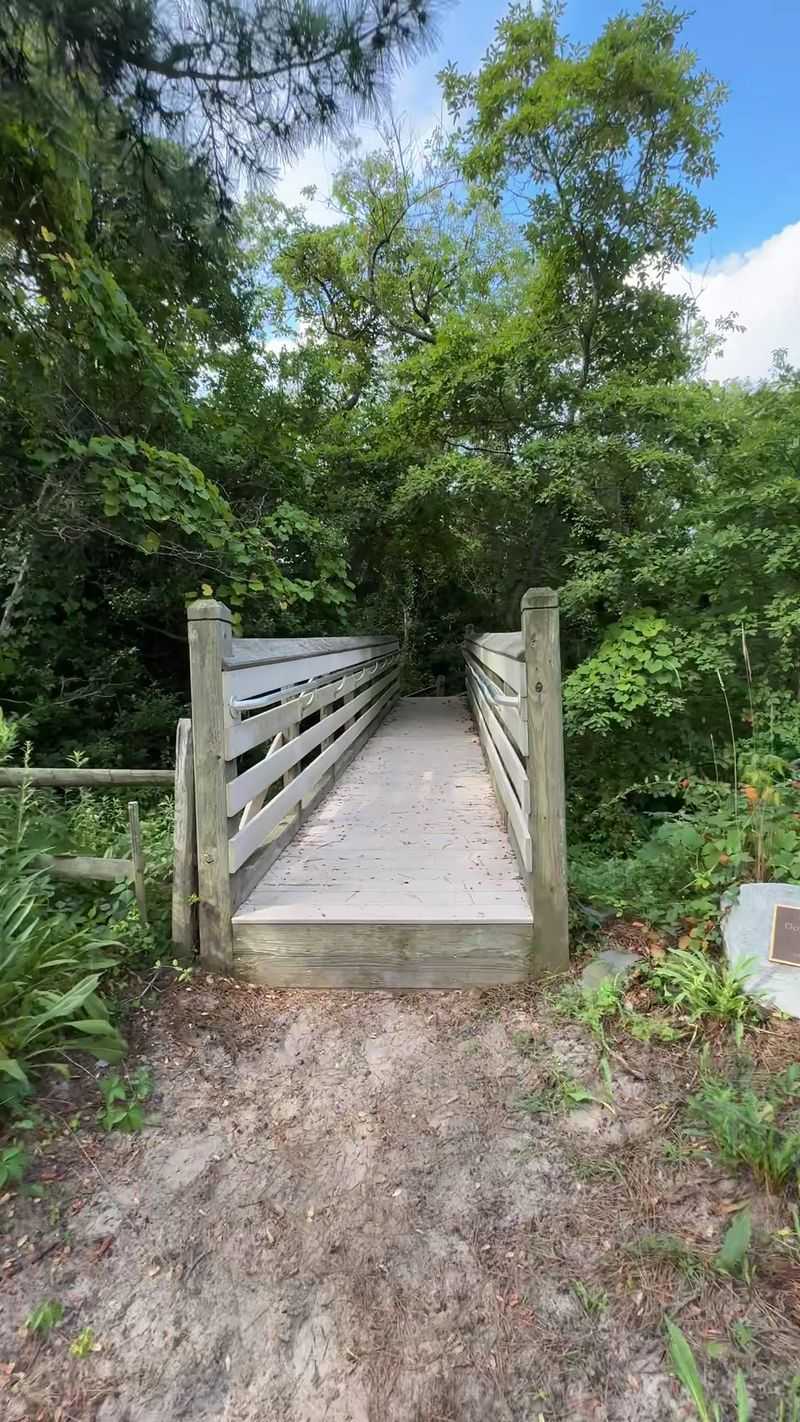
A heron stalking minnows in the marsh can stop a conversation instantly, and the Heron Overlook Path was designed for exactly that kind of interruption.
Entered from Third Avenue, this easy path leads through gardens to a viewing area facing saltwater wetlands used by egrets, herons, and migrating birds.
Benches encourage visitors to stay awhile rather than rush through, and monarch butterflies sometimes crowd the surrounding flowers during their fall migration.
The nearby Meadow Walk offers another gentle route, threading between freshwater meadow on one side and salt marsh on the other.
It ends near Paul’s Pond, where glossy ibis, green herons, black-crowned night herons, and ospreys may be seen feeding or resting in the trees. The sanctuary also contains short woodland paths, including Egret Espy Path, which crosses a footbridge into old maritime forest.
Stone Harbor’s location on a major migration route gives this compact preserve far more wildlife than its residential surroundings might suggest. Different entrances serve different paths, so it helps to look at the sanctuary map before arriving rather than expecting one central trailhead.
Access is free, and the short routes make the sanctuary easy to combine with a beach day or downtown stop. Move quietly, especially during nesting season, and check branches as carefully as the water.
Some of the sanctuary’s best birds specialize in standing perfectly still until everyone walks past them.
8. The Wetlands Institute – Stone Harbor
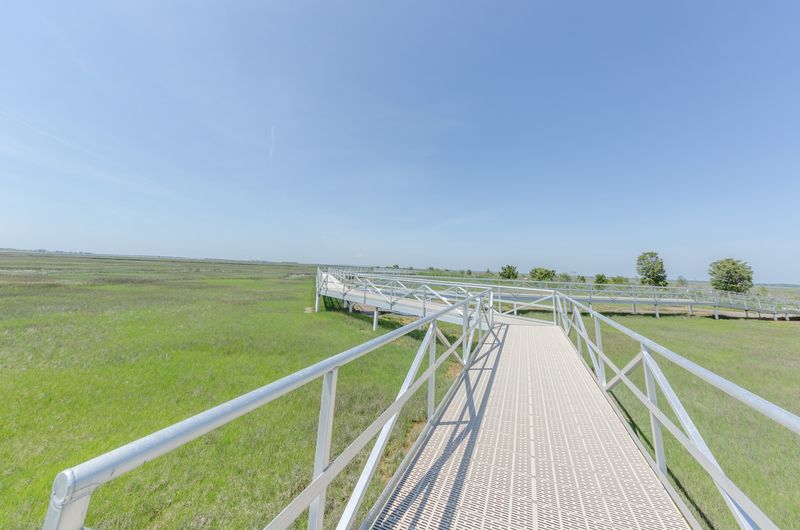
Fiddler crabs scuttle beneath the grated walkway while laughing gulls argue overhead, turning a simple quarter-mile stroll into a close-up look at salt-marsh life.
The Wetlands Institute’s elevated walkway rises above the fragile habitat and follows a 720-foot loop with wide railings and ADA-compliant ramp access during operating hours.
Its open design gives visitors clear views without trampling the grasses or disturbing the animals below. From the walkway, it is possible to spot diamondback terrapins, egrets, ospreys, marsh birds, and tiny creatures moving through the tidal channels.
The adjoining Salt Marsh Trail continues toward a 125-foot pier over a creek, where visitors can watch one of the region’s large laughing gull colonies and see how dramatically the marsh changes with the tide. An observation tower adds an even broader view across the wetlands toward the barrier islands.
Located on Stone Harbor Boulevard, the institute combines outdoor exploration with aquarium exhibits, touch-tank programs, and conservation displays, making it especially useful when a family includes both devoted birders and easily distracted children.
Admission and seasonal hours vary, so check current details before making a special trip.
The terrain is easy, but the marsh is exposed to sun and wind; a hat and sunscreen earn their place in the bag. Try to arrive near low tide, when mudflats appear and feeding birds gather around the newly exposed shallows.
9. Richard W. DeKorte Park – Lyndhurst
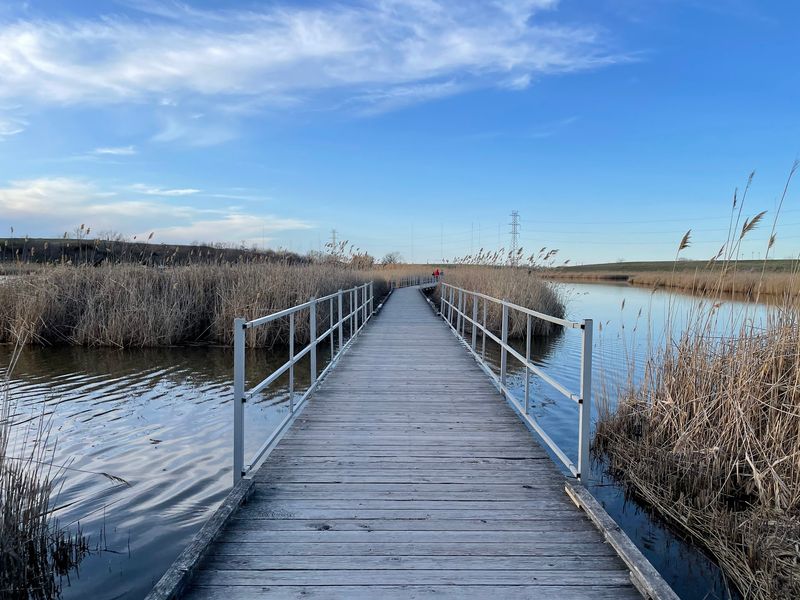
Few boardwalk views capture New Jersey’s personality quite like this one: snowy egrets in the foreground, Manhattan’s skyline in the distance, and a landscape that once seemed destined to become another landfill.
DeKorte Park has turned a piece of the Meadowlands into one of North Jersey’s easiest and most productive wildlife-watching destinations.
Its half-mile Marsh Discovery Trail loops over the Shorebird Pool on a boardwalk equipped with bird blinds, study docks, seating areas, and interpretive displays. The water sits close on either side, putting ducks, herons, sandpipers, and red-winged blackbirds within comfortable viewing range.
More than 285 bird species have been recorded in the Meadowlands, and seasonal changes keep the trail interesting throughout the year. Spring and fall bring migrants, summer produces herons and egrets, and winter can deliver raptors and large groups of waterfowl.
The park has 3.5 miles of paths in total, including routes to scenic overlooks, but the boardwalk loop provides a complete outing without much distance or difficulty. DeKorte is located in Lyndhurst and generally opens from morning until dusk, with free parking near the environmental center.
Dogs are permitted on several park trails but not on the Marsh Discovery Trail. Check current trail notices before visiting, since storm damage can occasionally close individual sections.
Come near sunset and the skyline may steal your attention, at least until something with wings glides across it.
10. Palmyra Cove Nature Park – Palmyra
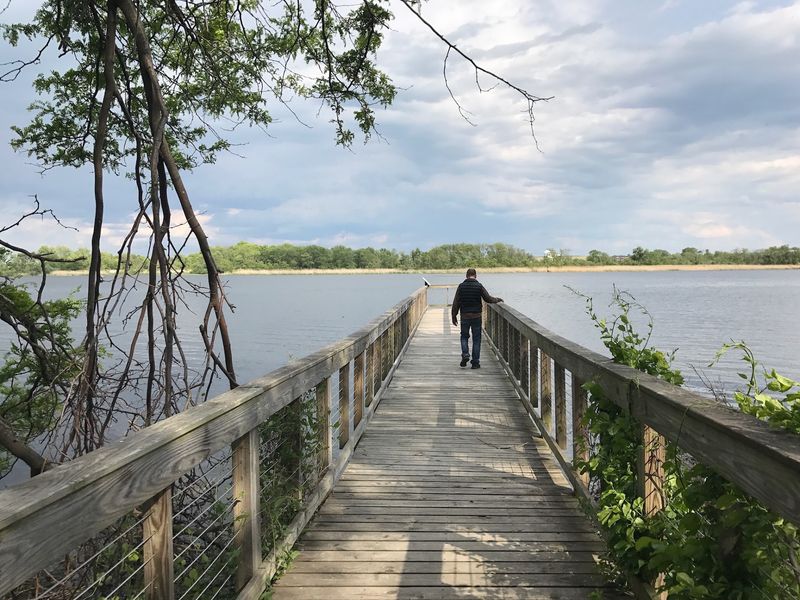
The sound of traffic fades much faster than expected once the boardwalk enters the marsh at Palmyra Cove.
Wedged beside the Delaware River and just across from Philadelphia, this protected natural area packs wetlands, woodland, meadow, tidal cove, and sandy shoreline into one remarkably varied property.
The easy boardwalk section carries visitors over damp ground where frogs, turtles, dragonflies, and wading birds thrive. Open sightlines across the marsh make it easier to spot great blue herons, ospreys, hawks, and bald eagles, particularly during the cooler months.
Beyond the boards, mostly level trails provide access to the river, where low tide exposes a broader strip of shoreline and creates feeding areas for shorebirds. The contrast is part of the fun: wild turkeys and deer may appear on one side of the trail while the Philadelphia skyline rises across the water on the other.
The Environmental Discovery Center near the entrance provides exhibits and restrooms when open, and parking is available on site. Admission to the park is free, but pets are not permitted.
Because the shoreline and wetlands respond to the tide, no two visits look quite the same. Wear shoes with some grip after rain, when the boardwalk can become slick, and arrive early for the quietest experience.
This is an easy nature walk with just enough urban backdrop to remind you where you are.
Share this story