Tennessee is home to some of the most stunning architecture in the South, from grand antebellum mansions to soaring modern skyscrapers. These buildings tell the story of the state’s rich history, cultural heritage, and artistic vision.
Whether you’re a history buff, an architecture enthusiast, or just someone who appreciates beautiful spaces, these 12 magnificent structures will leave you in awe and give you a whole new appreciation for Tennessee’s architectural treasures.
1. Tennessee State Capitol — Nashville
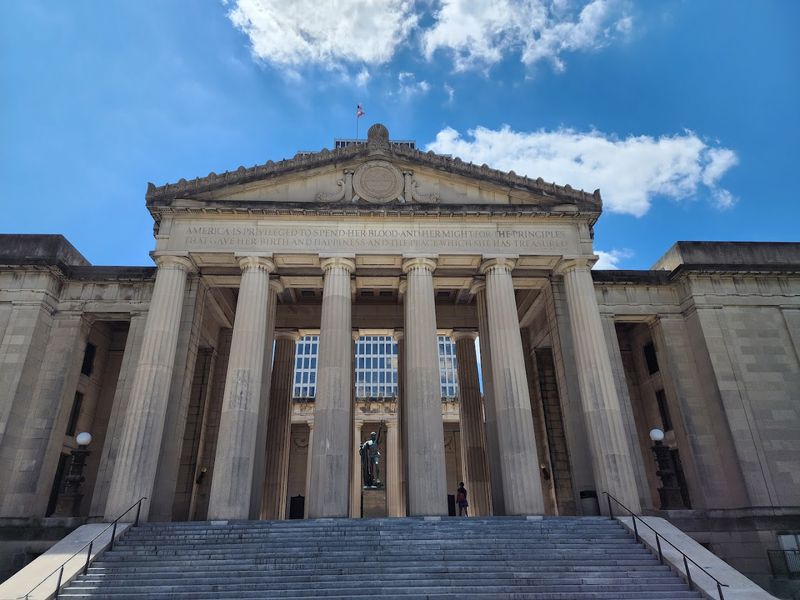
Perched on a hill overlooking downtown Nashville, the Tennessee State Capitol stands as one of the finest examples of Greek Revival architecture in America. Completed in 1859, this limestone masterpiece was designed by architect William Strickland, who loved the building so much that he’s actually buried in its walls.
Walking up to the Capitol, you’ll notice the massive Ionic columns that support the portico, giving the structure its temple-like appearance. The interior is equally impressive, with a stunning rotunda that rises to a height of nearly 200 feet. Marble staircases, ornate ironwork, and historical paintings fill the halls, transporting visitors back to the 19th century.
The grounds surrounding the Capitol are worth exploring too. Statues and monuments dot the landscape, including memorials to Presidents Andrew Jackson and James K. Polk, both of whom have deep Tennessee roots.
2. Ryman Auditorium — Nashville
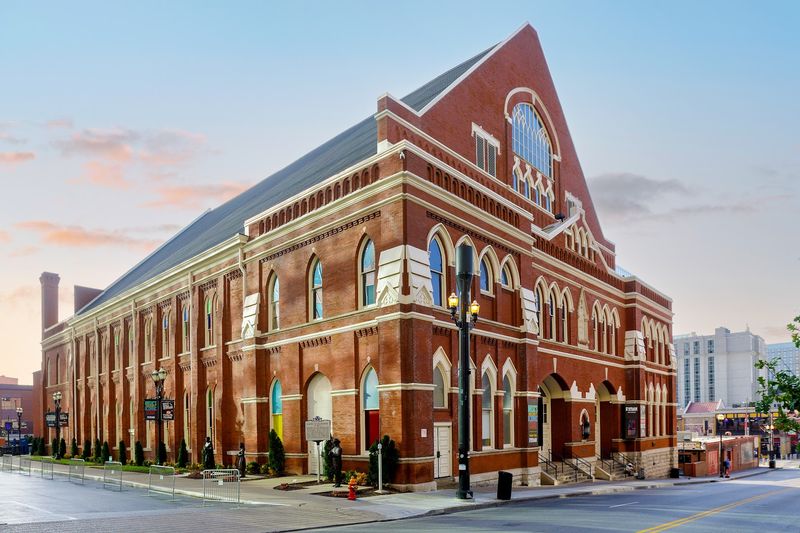
Originally built as a church in 1892, the Ryman Auditorium transformed into the most famous music venue in country music history. Its red brick Victorian Gothic exterior might look like a house of worship, but inside is where legends were born. For over three decades, it served as the home of the Grand Ole Opry, earning its nickname as the “Mother Church of Country Music.”
The acoustics inside the Ryman are legendary. Performers and sound engineers alike marvel at how every note seems to hang in the air with perfect clarity. The wooden pews that once seated churchgoers now hold music fans who come from around the world to experience live performances in this intimate, 2,300-seat venue.
What makes the Ryman truly special is the sense of history that permeates every corner. Hank Williams, Patsy Cline, Johnny Cash, and countless other icons graced this stage. Today’s biggest stars still consider performing at the Ryman a career milestone, and the venue hosts everything from bluegrass to rock concerts.
During the day, guided tours take you backstage and into the dressing rooms where stars prepare for their performances. You can even stand on the stage and feel what it’s like to look out over those famous pews, imagining the roar of the crowd that has echoed through this building for over a century.
3. Andrew Jackson’s Hermitage — Nashville
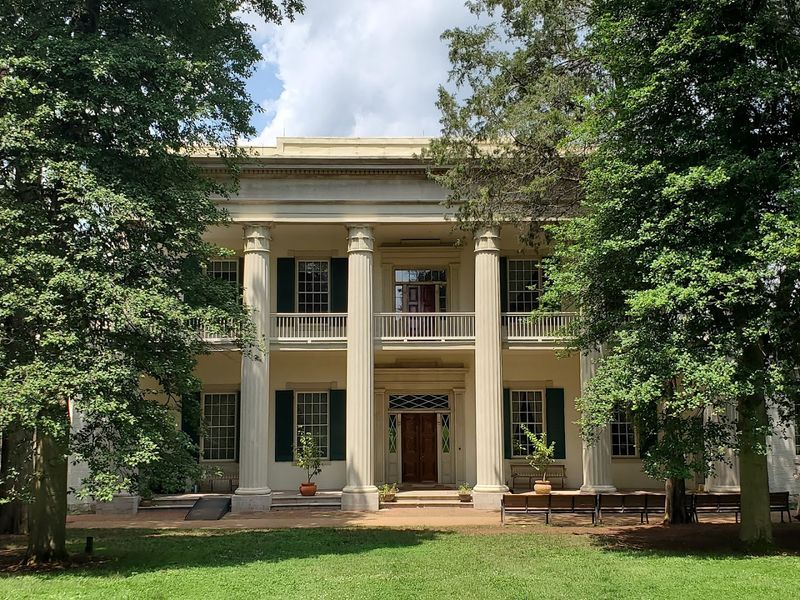
Andrew Jackson’s Hermitage sits on 1,120 acres just outside Nashville, offering a window into the life of America’s seventh president. The main mansion, built in 1821 and remodeled in 1831, showcases Greek Revival architecture with its distinctive white columns and symmetrical design. Jackson lived here with his beloved wife Rachel until his death in 1845, and their story is woven throughout the property.
The mansion’s interior has been meticulously preserved, displaying original furniture, personal belongings, and the wallpaper Jackson himself selected. Walking through the rooms feels like stepping back into the 1830s. The dining room, parlor, and bedrooms all tell stories of both grand political gatherings and intimate family moments.
Beyond the main house, the grounds include several other significant buildings. The original log cabin where Jackson first lived on the property still stands, along with the garden where Rachel Jackson spent countless hours. The tomb where both Andrew and Rachel are buried sits in a peaceful corner of the garden, surrounded by trees they planted together.
4. Union Station Hotel — Nashville
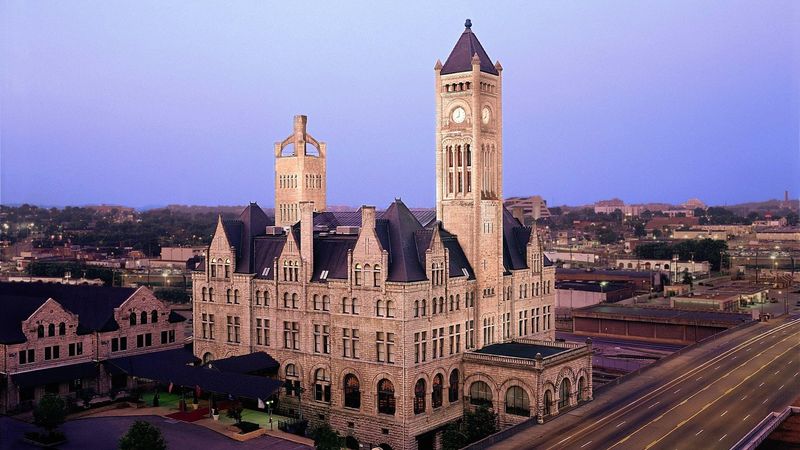
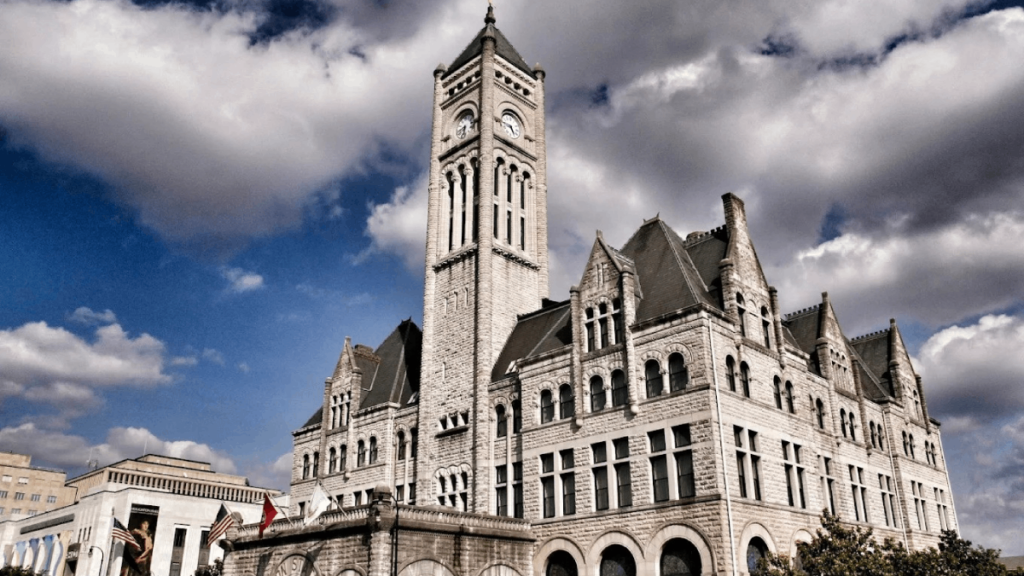
When Union Station opened in 1900, it was the gateway to Nashville for travelers arriving by rail. The building’s Romanesque Revival architecture made it one of the most impressive train stations in the South, with its soaring clock tower visible from across the city. Today, it’s been transformed into a luxury hotel, but the bones of the original station remain gloriously intact.
The most breathtaking feature is the lobby, which occupies the former main waiting room. Vaulted ceilings rise 65 feet overhead, supported by massive stone arches. Stained glass windows cast colorful light across the space, and the original Tennessee marble floors still gleam underfoot.
It’s the kind of space that makes you stop and stare, phone camera at the ready.
The hotel conversion preserved many original architectural details while adding modern luxury. The old ticket windows, wooden benches, and even the station master’s office have been incorporated into the design.
Even if you’re not staying overnight, the lobby bar is open to the public and offers one of Nashville’s most atmospheric settings for a drink.
5. AT&T Building — Nashville
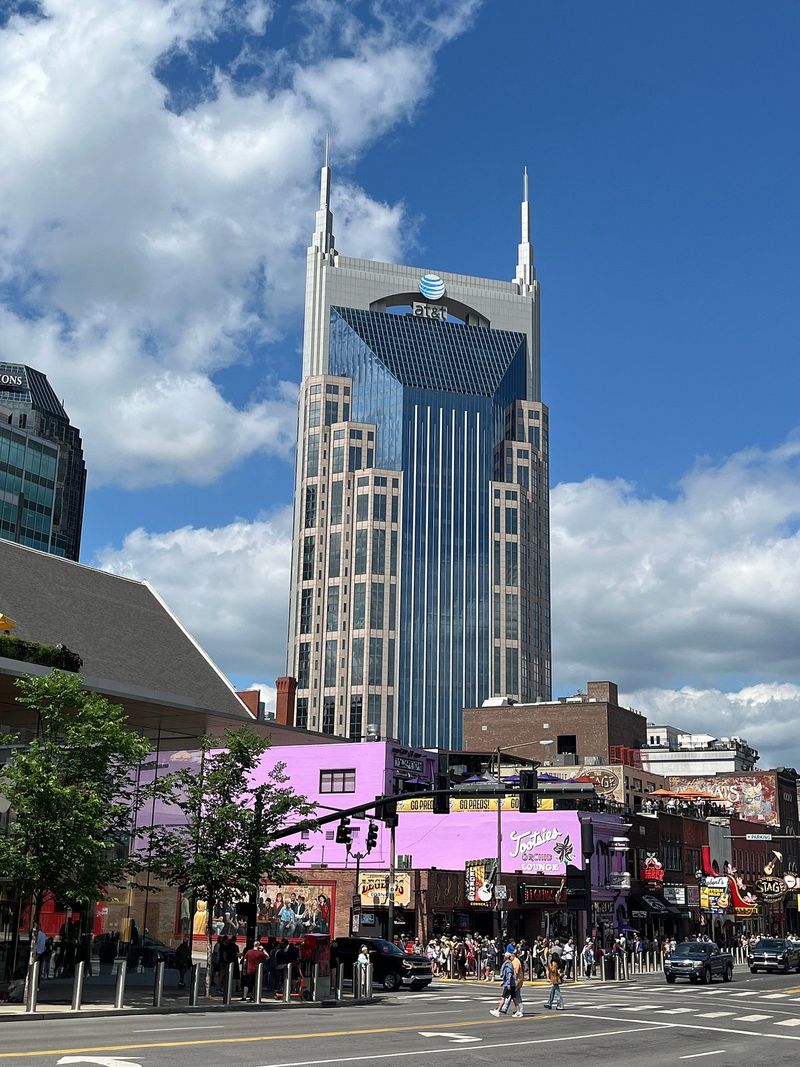
Love it or hate it, the AT&T Building dominates Nashville’s skyline like no other structure. Completed in 1994, this 617-foot skyscraper is instantly recognizable thanks to its twin spires that crown the top. Locals affectionately call it the “Batman Building” because those spires bear an uncanny resemblance to Batman’s pointed ears, especially when lit up at night.
The building’s postmodern design was somewhat controversial when it first appeared, but it has since become an iconic symbol of Nashville.
While the building primarily houses offices and isn’t open for public tours, its presence shapes the city’s identity. It appears in countless photos, TV shows, and movies set in Nashville. The building’s lighting changes for special occasions, glowing in different colors to mark holidays or support local sports teams.
The best views of the Batman Building come from across the Cumberland River or from higher vantage points around the city. At sunset, when the spires catch the golden light, the building transforms into something almost magical. Whether you think it’s beautiful or bizarre, there’s no denying it’s one of Tennessee’s most memorable pieces of modern architecture.
6. Belle Meade Historic Site — Nashville
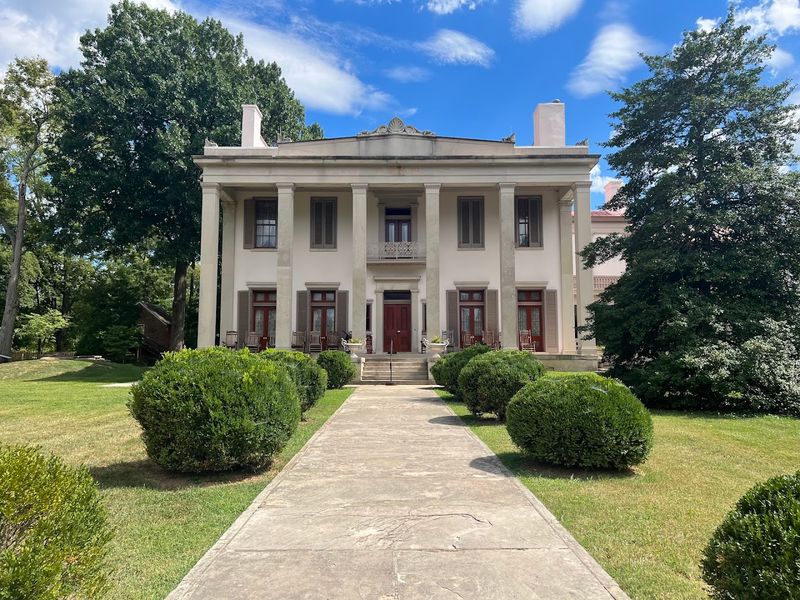
Belle Meade means “beautiful meadow” in French, and this 1853 Greek Revival mansion certainly lives up to its name. Once the centerpiece of a 5,400-acre plantation, the mansion represents the height of antebellum Southern architecture. Six massive Corinthian columns support the front portico, and the symmetrical design embodies the classical ideals that wealthy Southerners admired in the mid-19th century.
The Harding family, who owned Belle Meade, became famous for breeding thoroughbred horses. At its peak, the plantation was known as the finest thoroughbred farm in America, and descendants of Belle Meade horses include Secretariat and Seabiscuit.
Inside the mansion, period furnishings and family heirlooms fill the rooms, offering insight into how wealthy Southerners lived before and after the Civil War. The dining room, parlors, and bedrooms have been restored to reflect different periods of the home’s history.
7. Basilica of Sts. Peter and Paul — Chattanooga
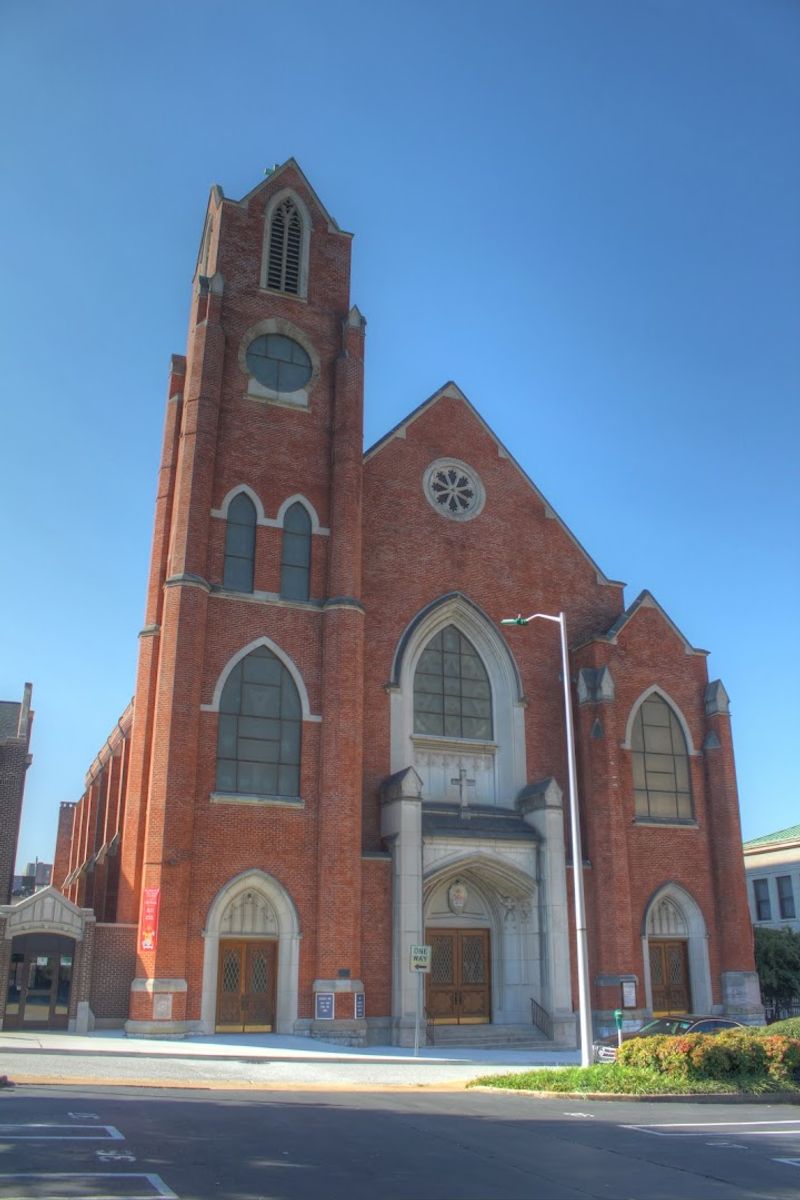
Rising above downtown Chattanooga, the twin spires of the Basilica of Sts. Peter and Paul reach toward the sky like stone prayers. Built between 1885 and 1890, this Gothic Revival masterpiece showcases the craftsmanship and faith of Chattanooga’s 19th-century Catholic community.
The red brick exterior, pointed arches, and elaborate stonework transport you straight to medieval Europe, making it one of Tennessee’s most visually striking religious buildings.
Step inside and you’ll find yourself surrounded by breathtaking beauty. Stained glass windows imported from Germany filter sunlight into rainbow patterns across the floor. The vaulted ceiling soars overhead, drawing your eyes upward to painted decorations and intricate woodwork.
The altar area features marble columns, gilded details, and religious artwork that creates a sense of sacred space unlike anywhere else in the region.
The church earned basilica status from Pope Pius XII in 1950, recognizing its architectural significance and spiritual importance. Only a handful of churches in the United States hold this designation, making it a special destination for both religious pilgrims and architecture enthusiasts.
8. The Peabody Hotel — Memphis
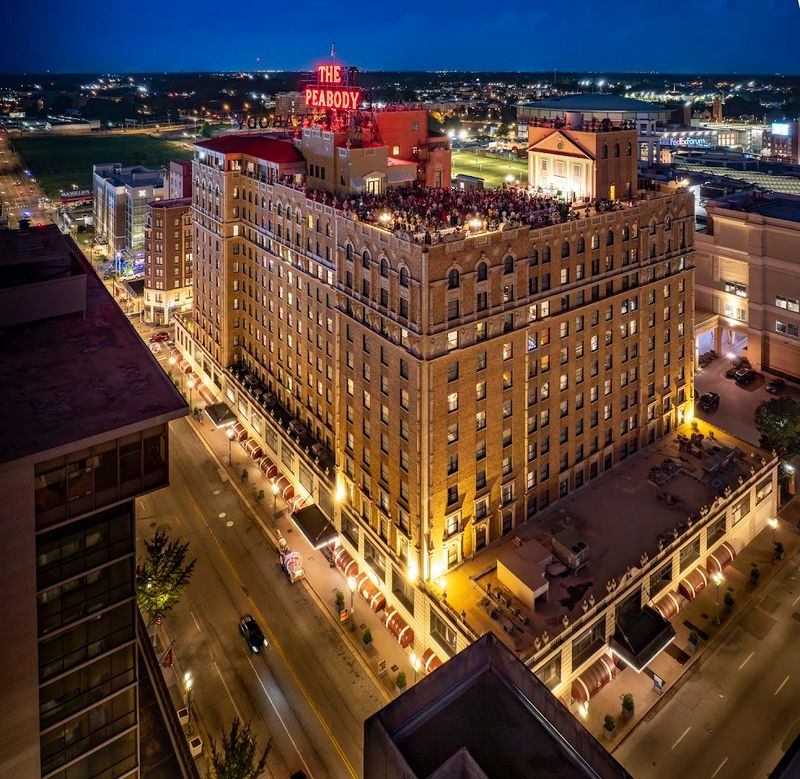
The Peabody Hotel has been the social center of Memphis since 1869, though the current Italian Renaissance Revival building dates to 1925. Its elegant facade and prime downtown location have made it a Memphis institution, but what really sets it apart are the ducks. Yes, ducks.
Every day at 11 a.m., a family of ducks rides the elevator down from their rooftop palace and waddles across a red carpet to the lobby fountain, reversing the journey at 5 p.m.
This quirky tradition started in the 1930s as a prank and became so beloved that it’s now the hotel’s signature attraction. Crowds gather twice daily to watch the Peabody Ducks make their grand entrance and exit, led by the official Duckmaster in full uniform. It’s delightfully absurd and utterly charming, perfectly capturing Memphis’s playful spirit.
Beyond the ducks, the hotel’s interior is stunning. The lobby features a massive stained-glass skylight, ornate moldings, and that famous travertine marble fountain where the ducks spend their days. The mezzanine level offers views down into the lobby, perfect for watching the duck march from above.
Original artwork and period furnishings throughout the building maintain the 1920s elegance.
9. Orpheum Theatre — Memphis
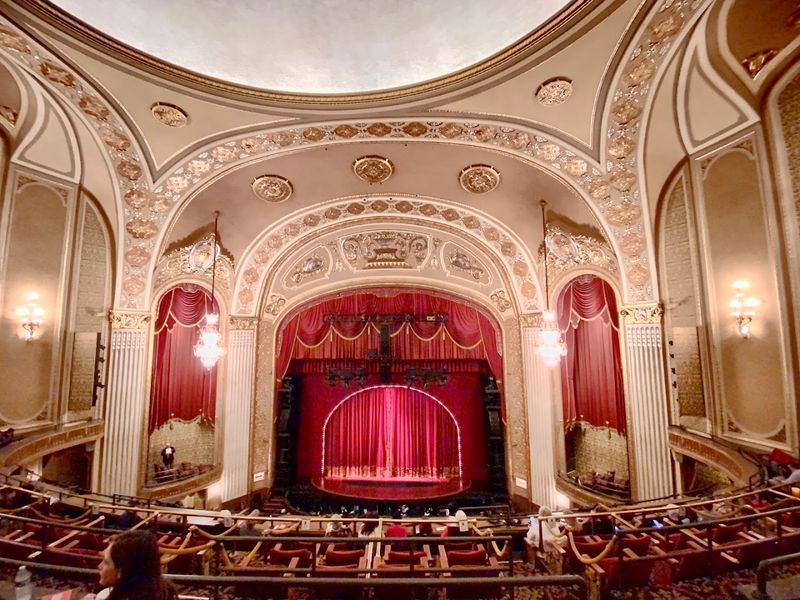
Memphis’s Orpheum Theatre opened in 1928 as a vaudeville and movie palace, and it remains one of the most ornate theaters in the South. The Beaux-Arts exterior hints at the opulence inside, but nothing quite prepares you for the lobby’s crystal chandeliers, gilded moldings, and grand staircases. This is where Memphis came to be dazzled, and that sense of glamour hasn’t faded one bit.
The auditorium seats 2,400 people beneath a ceiling painted to resemble the night sky, complete with twinkling stars. The proscenium arch frames the stage with elaborate plasterwork and decorative details that draw your eye even before the curtain rises. Original light fixtures, restored to their 1920s glory, cast a warm glow over the burgundy seats and carpeted aisles.
What makes the Orpheum special isn’t just its beauty but its versatility. The theater hosts Broadway touring productions, concerts, classic films, and comedy shows. The acoustics work equally well for musical theater and rock bands, making it a favorite venue for performers.
Legend has it the theater is haunted by a friendly ghost named Mary, a young girl who died in the 1920s and now watches performances from her favorite seat. Whether you believe in ghosts or not, the Orpheum’s atmosphere definitely has a magical quality that makes every visit feel special and slightly mysterious.
10. Blount Mansion — Knoxville
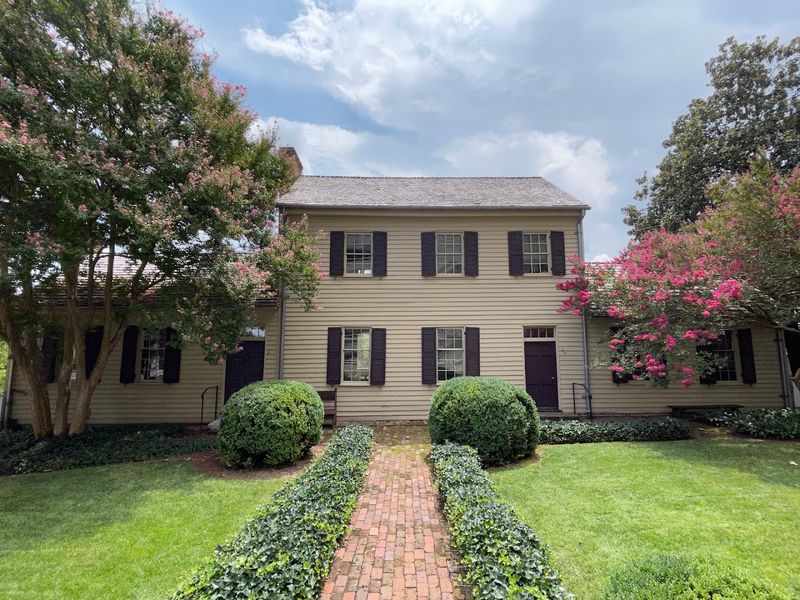
Built in 1792, Blount Mansion holds the distinction of being the only National Historic Landmark in Knoxville. This wood-frame house served as the home and office of William Blount, territorial governor and signer of the U.S. Constitution.
While it might not look as grand as some other buildings on this list, its historical significance is enormous. This is where Tennessee’s path to statehood was planned and where crucial decisions about the young nation’s western expansion were made.
The mansion’s architecture reflects the transition between colonial and federal styles. Clapboard siding, simple lines, and practical design show how frontier leaders lived at the end of the 18th century. The building was actually quite sophisticated for its time and place, featuring glass windows, plastered walls, and separate rooms for different functions when many frontier homes were single-room log cabins.
Inside, period furnishings and artifacts help tell the story of life in territorial Tennessee. The office where Blount conducted government business, the family living spaces, and the kitchen building all provide insight into daily life for wealthy families on the frontier.
Costumed interpreters lead tours that bring the 1790s to life with stories of politics, family life, and the challenges of living on the edge of American settlement.
11. Hunter Museum of American Art — Chattanooga
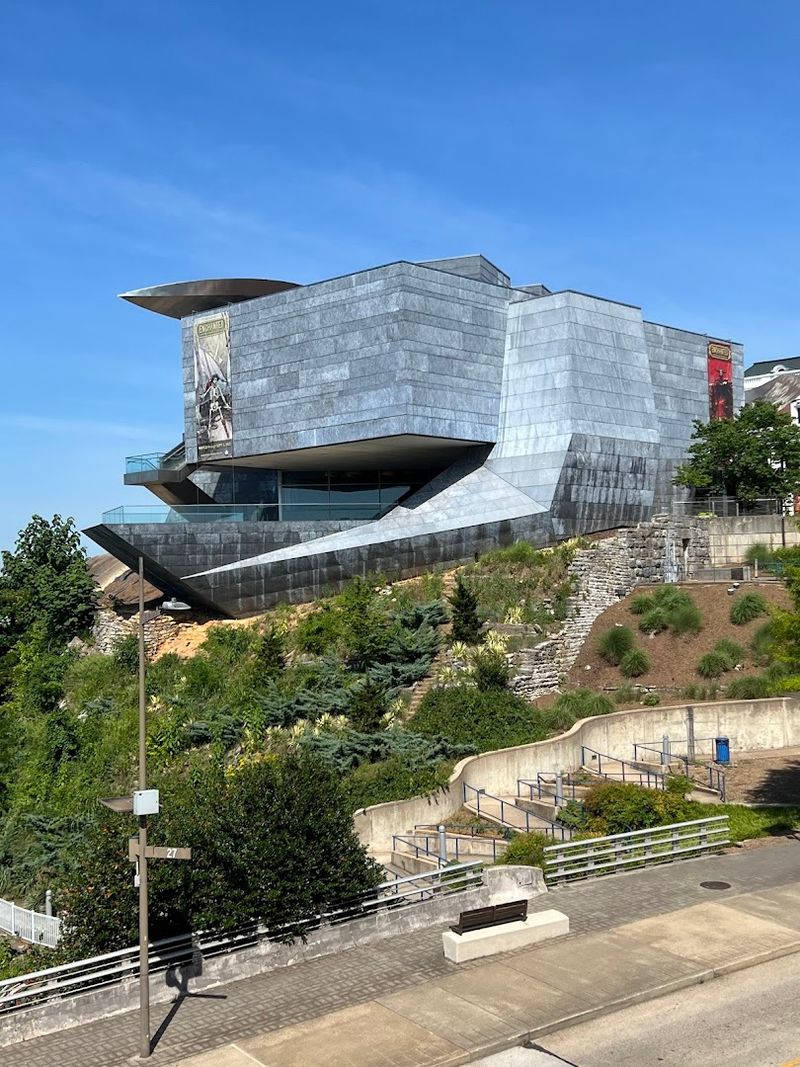
The Hunter Museum of American Art is actually three buildings in one, each representing a different era of architecture. The original 1904 Classical Revival mansion sits on a bluff overlooking the Tennessee River, all white columns and Southern elegance. Connected to it is a brutalist concrete addition from 1975 that boldly contrasts with the historic home.
Most recently, a 2005 glass and steel wing brings contemporary design into the mix, creating a conversation between past and present.
This architectural mashup works surprisingly well. The historic mansion provides intimate gallery spaces perfect for smaller works and period rooms that showcase decorative arts. The brutalist section offers dramatic spaces with soaring ceilings ideal for large-scale contemporary pieces.
The modern wing floods galleries with natural light while offering stunning views of the river and Walnut Street Bridge through floor-to-ceiling windows.
The outdoor sculpture terrace takes advantage of the museum’s dramatic location on the bluff. Sitting out there with art around you and the river flowing by below is one of Chattanooga’s most peaceful experiences and a perfect example of how thoughtful architecture enhances both art and landscape.
12. Castle Gwynn — Arrington
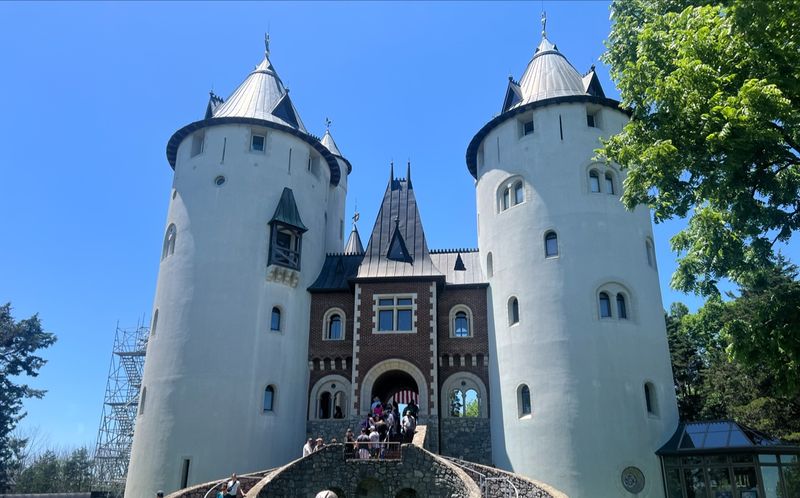
Castle Gwynn might be Tennessee’s most unexpected architectural treasure. Built starting in 1980 by artist Mike Freeman, this medieval-style castle sits on a hilltop in rural Williamson County, looking like it was transported straight from the European countryside. Freeman constructed much of it by hand using traditional methods, creating a genuine castle complete with towers, battlements, and a great hall.
The castle’s stone walls, arched doorways, and heavy wooden doors aren’t just for show. Freeman researched medieval construction techniques and applied them to create an authentic structure that would look at home in 13th-century England.
Walking through Castle Gwynn feels like stepping into a fantasy novel, except everything is real and touchable.
Freeman designed the castle as an event venue and artist’s retreat, and it’s become a popular spot for weddings, Renaissance fairs, and medieval-themed gatherings. The great hall features a massive fireplace, an exposed beam ceiling, and enough space for banquets.
What makes Castle Gwynn truly special is that it’s a working castle still being expanded and refined. Freeman continues to add new sections and details, making each visit potentially different from the last.
It proves that magnificent architecture isn’t limited to historic buildings, and that passion and craftsmanship can create something extraordinary even in modern times.