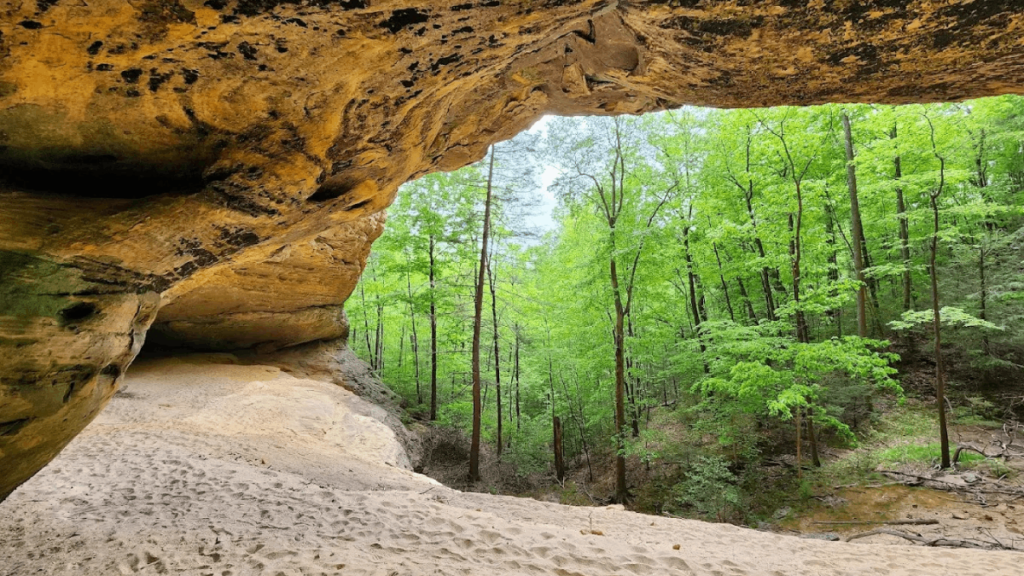
Tennessee’s got a reputation problem. Most visitors stick to Nashville’s honky-tonks, Gatlinburg’s tourist strip, and maybe Memphis if they’re feeling adventurous. But the state’s best-kept secrets hide in plain sight, often just miles from the interstate, waiting for travelers curious enough to take the exit.
These eleven spots prove that Tennessee’s most memorable experiences don’t come with billboards or gift shop crowds—they come from knowing where to look.
1. Pickett CCC Memorial State Park & Pogue Creek Canyon (Jamestown)
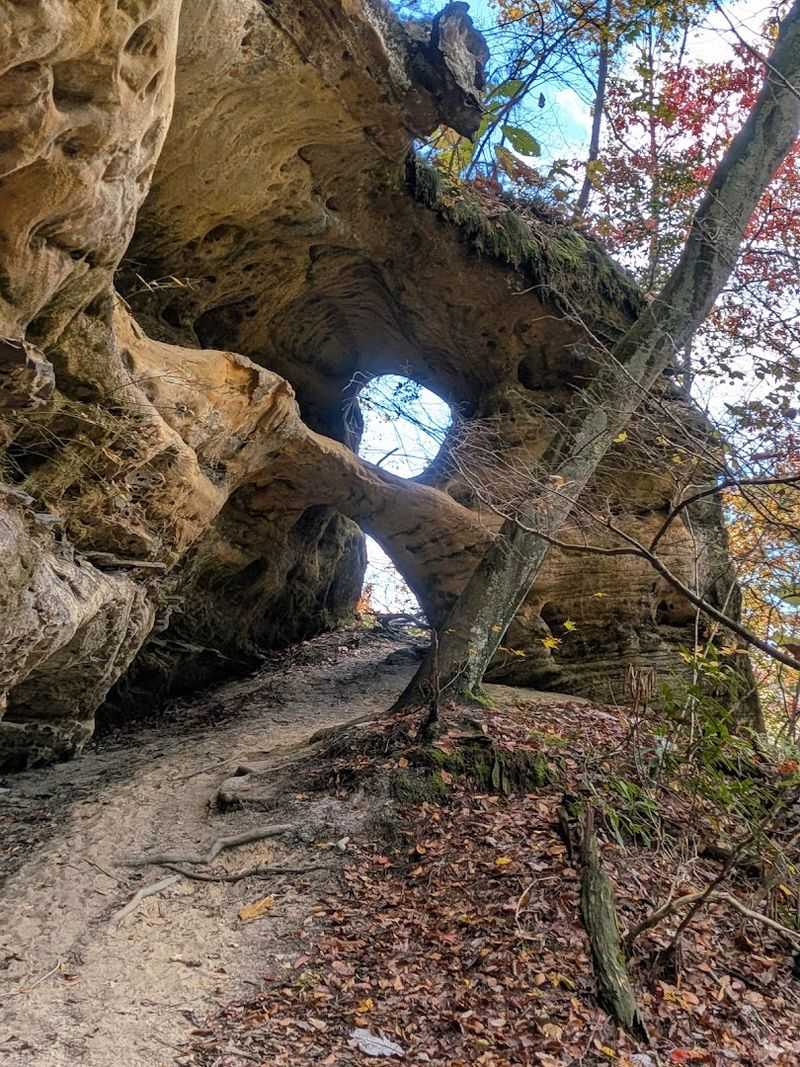
Most people racing toward the Smokies blow right past Jamestown without a second thought. That’s their loss, because Pickett CCC Memorial State Park might be the most underrated outdoor spot in the entire state.
What makes this place genuinely different isn’t just the rugged sandstone bluffs or the hiking trails that wind through old-growth forest. Pickett earned International Dark Sky Park recognition, becoming the first state park in the Southeast to get that designation. Nearby Pogue Creek Canyon shares the same pristine night skies, which means you’re looking at some of the best stargazing east of the Mississippi.
The park feels worlds away from tourist-heavy Tennessee. You can hike, kayak, or just sit by the lake without fighting crowds. The rock formations and natural bridges scattered throughout give the landscape an almost otherworldly vibe, especially when morning mist rolls through the valleys.
If you’re used to Tennessee parks packed with RVs and screaming kids, Pickett will feel like a secret you accidentally stumbled into. It’s quiet, it’s beautiful, and it’s proof that sometimes the best experiences come from places nobody bothers to Google.
2. Historic Rugby
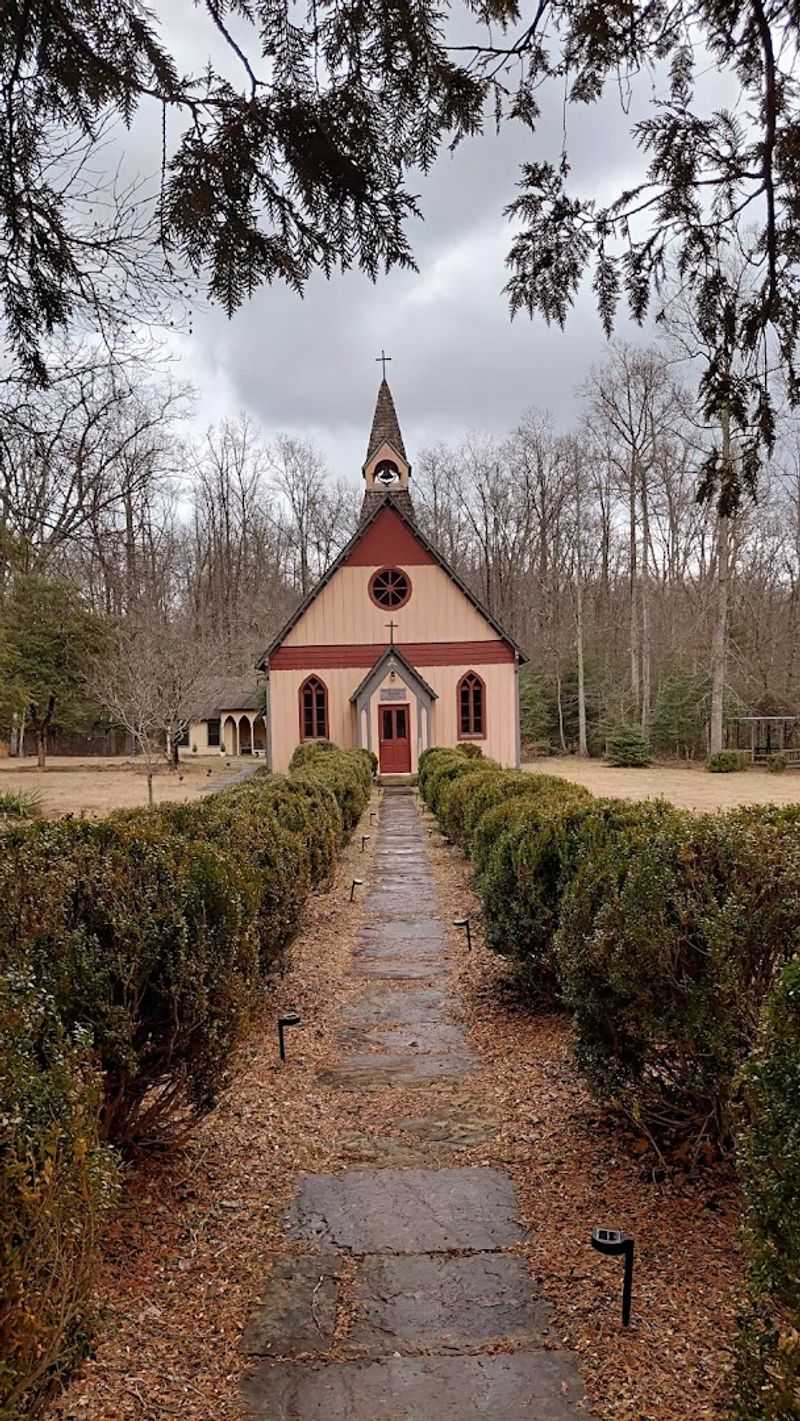
Picture a Victorian English village plopped down in the middle of Tennessee’s Cumberland Plateau. That’s Rugby, and yes, it’s as wonderfully weird as it sounds.
Founded in 1880 by British author Thomas Hughes, Rugby started as a utopian experiment—a place where second sons of English gentry could build new lives without the rigid class system back home. The experiment didn’t last, but the village did, and today it’s one of the most unusual historic sites you’ll find anywhere in the South.
Walking through Rugby feels like stepping into a different century and a completely different country. Original Victorian buildings still stand, including Hughes Public Library, which houses thousands of volumes from the 1800s. The architecture, the history, even the vibe—it all feels totally disconnected from the Tennessee most visitors picture.
You won’t find moonshine tastings or country music here. Instead, you get guided tours through preserved homes, stories about idealistic Brits trying to farm rocky mountain soil, and a landscape that looks more Cotswolds than Appalachia. It’s quirky, it’s educational, and it’s absolutely nothing like Dollywood.
3. The Lost Sea (Sweetwater)
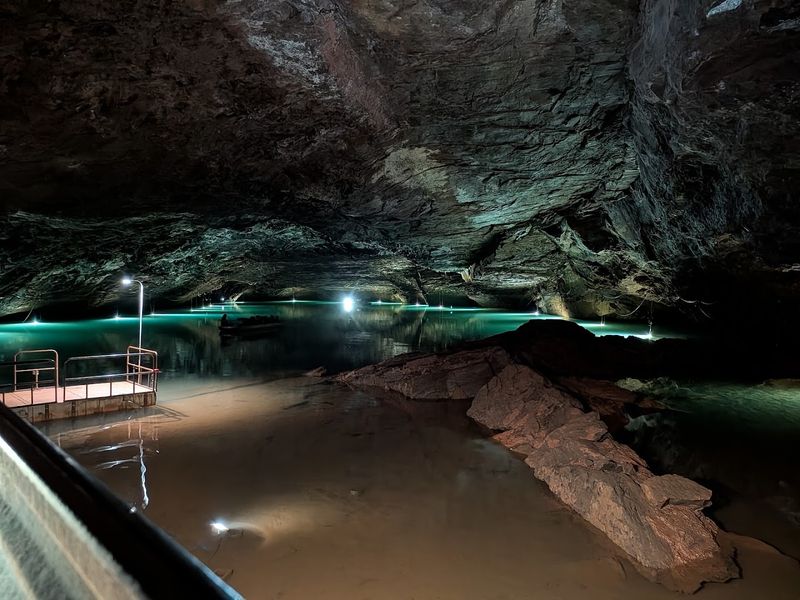
Ruby Falls gets all the attention, but The Lost Sea quietly holds a title Ruby Falls can’t claim: America’s largest underground lake.
Located in Sweetwater, this spot combines two crowd-pleasers—cave exploring and boat rides—into one surprisingly cool experience. Your visit starts with a guided cave tour through rooms filled with the usual stalactites and flowstone formations. Then you reach the lake itself, a massive underground body of water discovered in 1905, and climb aboard a glass-bottom boat for a ride across water that stays a constant 58 degrees year-round.
The lake stretches far beyond what visitors see on tours. Divers have explored over 13 acres of it, but nobody knows exactly how far it extends into the mountain. That mystery adds something extra to the whole experience—you’re floating over water that might go on for miles beneath your feet.
Compared to Ruby Falls’ elevator crowds and gift shop chaos, The Lost Sea feels almost low-key. You still get the underground spectacle, but without quite as many tour buses in the parking lot.
4. Burgess Falls State Park (Sparta)
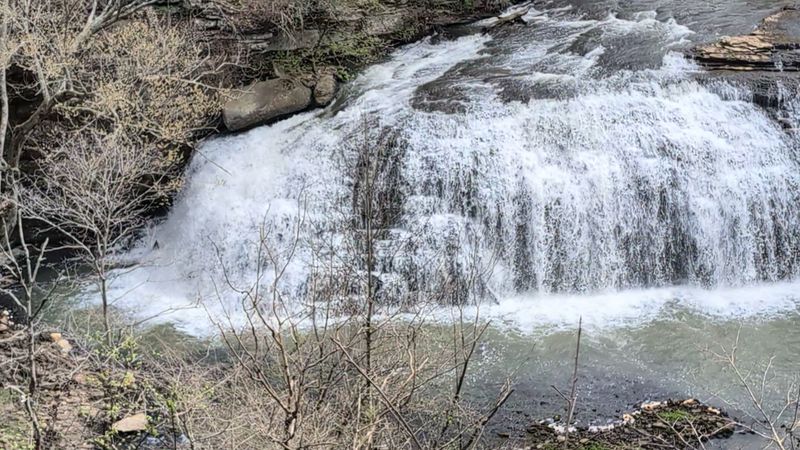
Waterfall chasers in Tennessee tend to make a beeline for the Smokies or Fall Creek Falls. Meanwhile, Burgess Falls sits near Sparta, quietly delivering some of the most dramatic waterfall scenery in the state to a fraction of the visitors.
The park’s main attraction is a 136-foot waterfall that crashes over a rocky cliff into a gorge below. Getting there involves a relatively manageable hike—about a mile and a half from the parking area—which means you earn the view without committing to an all-day trek. Along the way, you’ll pass three other waterfalls, each with its own character and photo opportunities.
What makes Burgess Falls stand out isn’t just the waterfalls themselves, but the whole package. The trail follows the Falling Water River through a gorge lined with bluffs and greenery. Overlook platforms give you different perspectives on the main falls, and if you time it right after heavy rain, the water flow becomes absolutely thunderous.
5. Big Hill Pond State Park (Pocahontas)
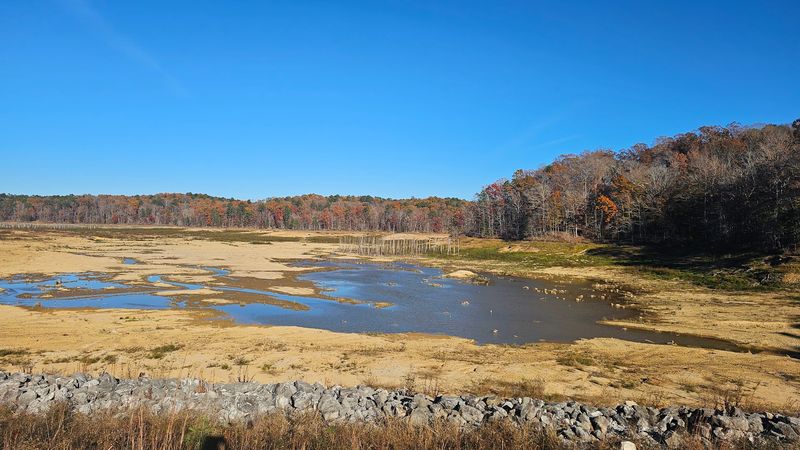
West Tennessee gets ignored by most travelers, who assume all the good stuff happens in the mountains. Big Hill Pond State Park exists to prove them wrong.
Located near Pocahontas in the far western corner of the state, this park offers something you won’t find in the Smokies: a 70-foot observation tower overlooking a landscape that feels more Louisiana than Appalachia. From the top, you get views across wetlands, forests, and the kind of flat, mysterious terrain that defines this often-overlooked region.
The real highlight is the boardwalk through Dismal Swamp. Despite the gloomy name, walking through this cypress-studded wetland feels magical, especially when morning light filters through the trees and mist hangs over the water. It’s completely different from the Rocky Mountain parks that dominate Tennessee’s outdoor reputation.
Big Hill Pond also offers fishing, hiking trails, and a peaceful lake that rarely sees crowds. The park’s official page highlights its unique character, and once you visit, you’ll understand why West Tennessee deserves more attention.
This isn’t just a consolation prize for people who can’t make it to the mountains—it’s a genuinely special place with its own distinct personality.
6. Red Clay State Historic Park (Cleveland)
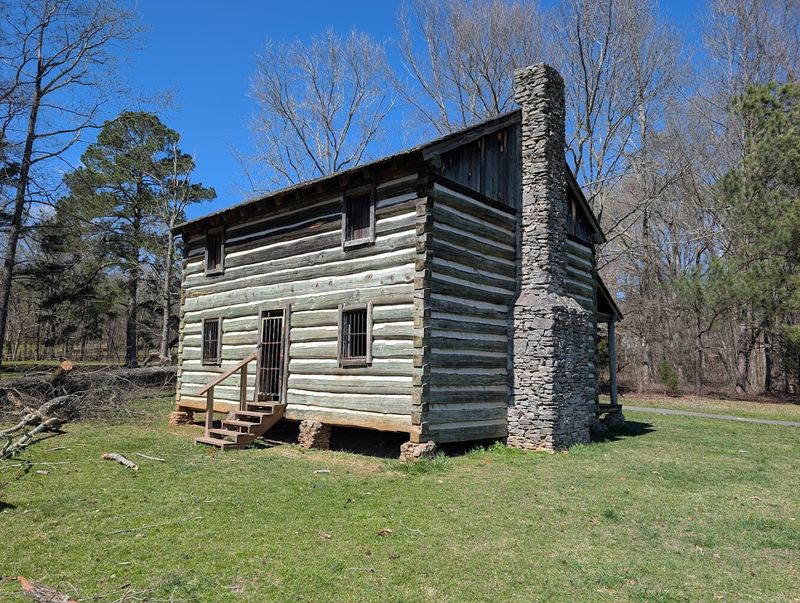
Some historic sites feel like footnotes. Red Clay State Historic Park feels like a chapter that should be required reading, yet somehow stays off most travelers’ radars.
This was the last seat of Cherokee national government before the forced removal of 1838—the event that became the Trail of Tears. Between 1832 and 1838, Cherokee leaders gathered here for council meetings, making decisions that would determine their people’s fate. Walking the grounds today, you can visit the reconstructed council house and imagine thousands of Cherokee citizens assembled for those historic gatherings.
The park also includes Blue Spring Hole, a stunning natural spring that pumps out 600,000 gallons of crystal-clear water daily. The spring’s vibrant blue color creates an almost surreal focal point in the landscape, and it’s been a significant landmark for centuries.
What makes Red Clay especially powerful is how it combines natural beauty with profound historical significance.
7. Dunbar Cave State Park (Clarksville)
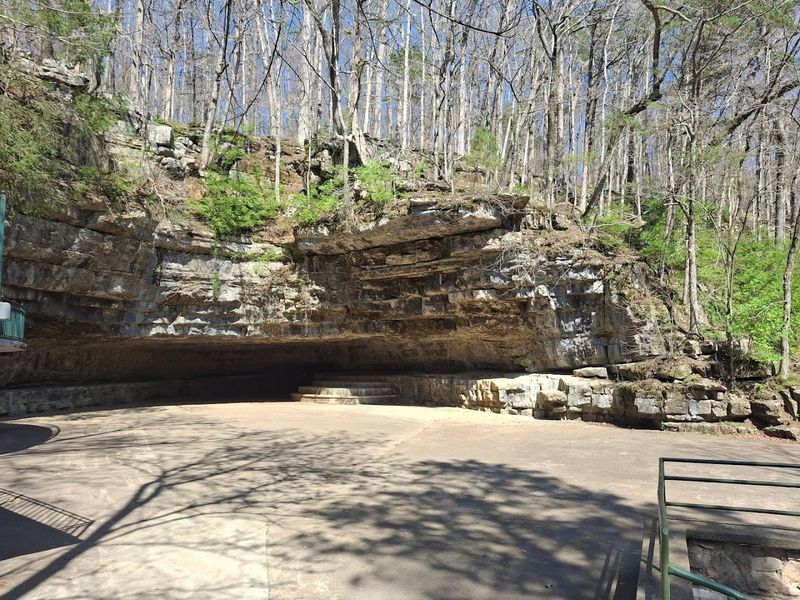
Clarksville doesn’t show up on many Tennessee bucket lists, which means Dunbar Cave State Park flies under the radar for most travelers. That’s unfortunate, because this isn’t your average walk-through-a-cave-and-leave experience.
The cave itself stretches more than eight miles into the hillside, though public tours only cover a portion of that distance. What makes Dunbar Cave genuinely special is what’s inside: significant prehistoric Mississippian Native American cave art dating to the 14th century. These aren’t crude scratches—they’re sophisticated glyphs that offer a window into cultures that thrived here centuries before European contact.
Tours are seasonal, which adds to the exclusivity factor. You can’t just show up any random Tuesday expecting to get in. That seasonal schedule keeps crowds manageable and gives the whole experience a more intentional feel.
Beyond the cave, the park includes hiking trails, a spring-fed lake, and enough natural scenery to make the trip worthwhile even if you can’t catch a tour. It’s the kind of hidden gem that rewards travelers willing to do a little research.
8. Pinson Mounds State Archaeological Park (Pinson)
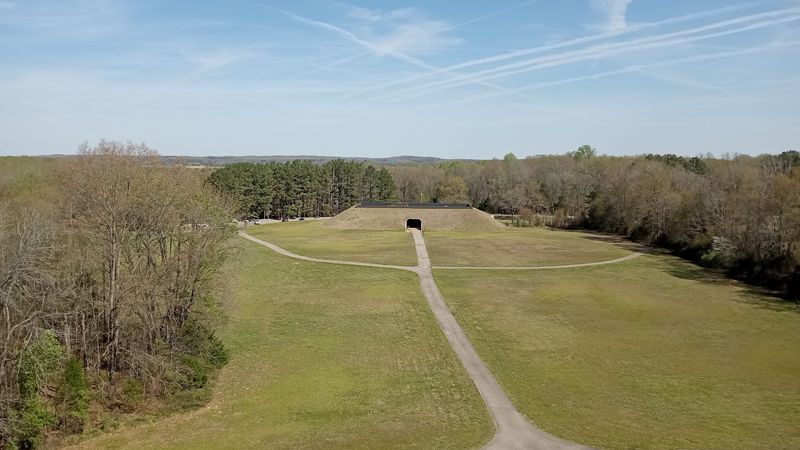
If you want to talk about places frequent travelers miss, Pinson Mounds might be the poster child. This is one of the most significant archaeological sites in the entire United States, and most people driving through West Tennessee have never heard of it.
The park covers more than 1,200 acres and contains at least 15 Native American mounds built by Middle Woodland peoples between roughly 1 and 500 CE. These aren’t small bumps in the ground—Sauls Mound stands 72 feet high, making it the second-tallest surviving ceremonial mound in the country. Walking among these earthworks, you’re literally standing in the footprint of a sophisticated civilization that thrived here 2,000 years ago.
The park includes miles of trails connecting the various mounds, plus a museum that explains the archaeological significance and the cultures that created these structures.
Pinson Mounds offers something rare: a Tennessee experience that’s both deeply historical and surprisingly peaceful. You won’t fight crowds, you won’t pay theme-park prices, and you’ll leave knowing something about Tennessee that 99% of visitors never discover.
9. Savage Gulf State Park (Beersheba Springs)
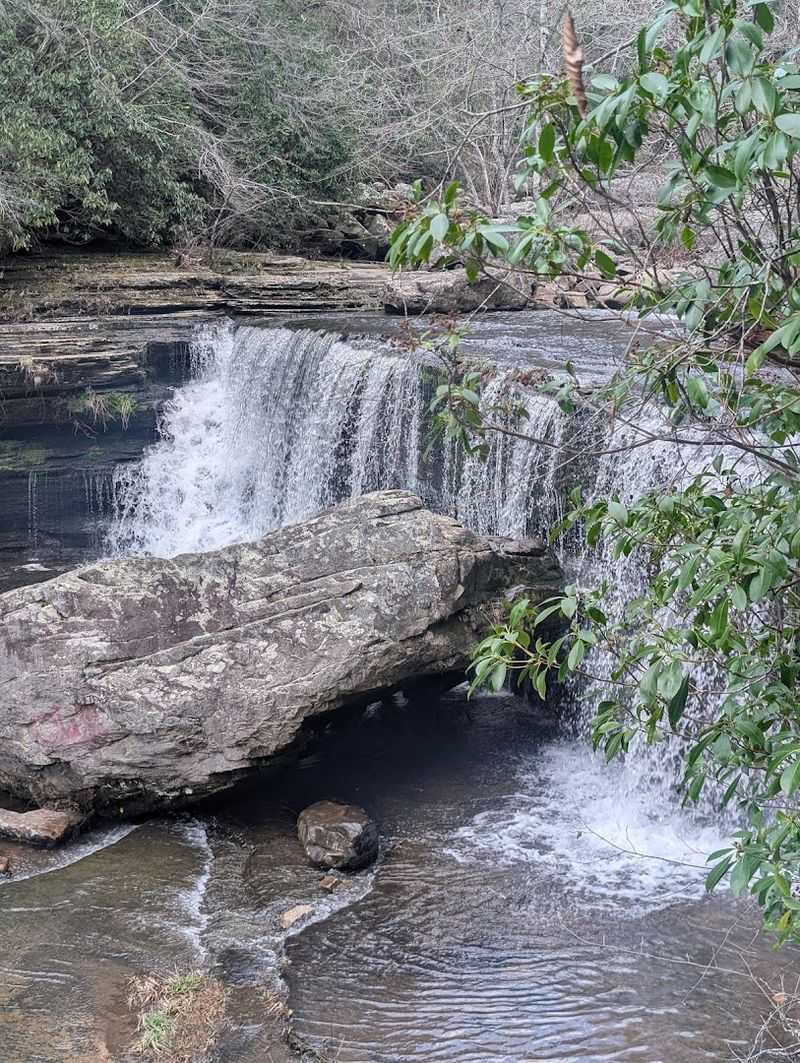
Serious hikers know Savage Gulf. Casual Tennessee travelers? Not so much.
That disconnect is wild, considering this park offers nearly 19,000 acres of scenic wilderness and about 60 miles of trails leading to overlooks, waterfalls, and historic areas that rival anything in the Smokies.
The landscape here feels genuinely wild. Deep gorges cut through the Cumberland Plateau, creating dramatic overlooks where you can stare down hundreds of feet into forested chasms. Waterfalls tumble over rock ledges, and the trail system ranges from easy day hikes to challenging backcountry routes that’ll test your endurance.
Tennessee State Parks highlights Savage Gulf as a premier wilderness destination, but it maintains a low profile compared to more famous parks. That means you can hike to stunning overlooks without elbowing through selfie-stick crowds or waiting in line for parking spots.
The park’s size works in your favor. With 60 miles of trails spread across nearly 19,000 acres, you can disappear into the backcountry and feel genuinely remote. For travelers tired of Tennessee’s tourist circus, Savage Gulf delivers the kind of authentic outdoor experience that’s getting harder to find.
Just bring good boots and be ready for some real hiking.
10. Tennessee River Freshwater Pearl Museum (Camden)
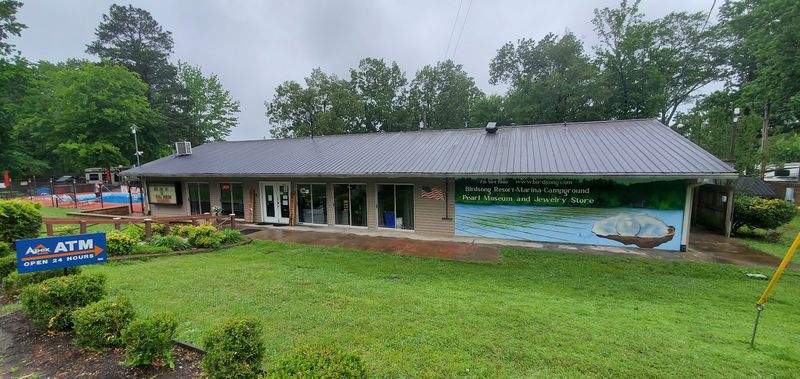
Some hidden gems are off the beaten path because they’re hard to reach. Others are hidden because they’re so specific and unusual that most travelers never think to look for them. The Tennessee River Freshwater Pearl Museum definitely falls into that second category.
Located in Camden, this is the only freshwater pearl culturing farm in the entire United States. Let that sink in for a second—the only one. Tours explain the whole pearl-growing process, from mussel cultivation to harvest, and you get to see the farm operation firsthand.
It’s the kind of hyper-specific attraction that sounds niche until you’re actually there learning about something you never knew existed.
The Tennessee River has a long history of freshwater pearls, and the museum connects that heritage to modern aquaculture techniques. You’ll leave knowing more about mollusks than you ever expected, plus you’ll have seen something genuinely unique to this corner of Tennessee.
It’s not going to take all day, and it’s definitely not going to be crowded. But if you’re the kind of traveler who values weird, one-of-a-kind experiences over generic tourist attractions, this deserves a spot on your itinerary.
11. Narrows of the Harpeth (Kingston Springs)
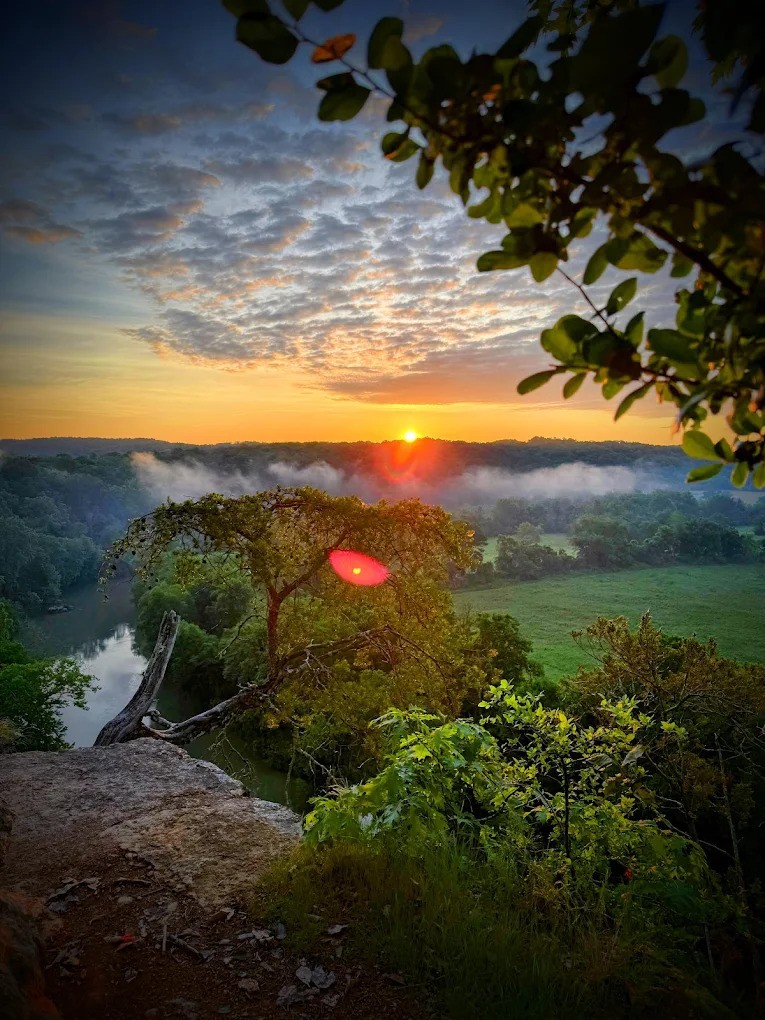
Just west of Nashville, the Harpeth River performs a geographic trick that’s been fascinating people for centuries. At the Narrows of the Harpeth, the river loops around a narrow ridge, traveling five miles to cover what amounts to a few hundred feet as the crow flies.
The result is a dramatic, horseshoe-shaped bend that creates one of Middle Tennessee’s most distinctive landscapes. A short but steep trail takes you to the top of the ridge, where you get panoramic views of the river looping around below you. The perspective makes the whole geological oddity click into place.
Adding to the site’s interest is a hand-carved tunnel through the ridge, created in the early 1800s by Montgomery Bell to power an iron forge. You can walk through the tunnel and imagine the industrial operation that once thrived here, back when this area was frontier country.
The Narrows sits close enough to Nashville that locals use it for quick hikes, but it rarely shows up on tourist itineraries. That’s a miss, because it packs serious scenic punch into a relatively small package. For travelers wanting nature and history without driving hours into the backcountry, this delivers both in a convenient, uncrowded setting.