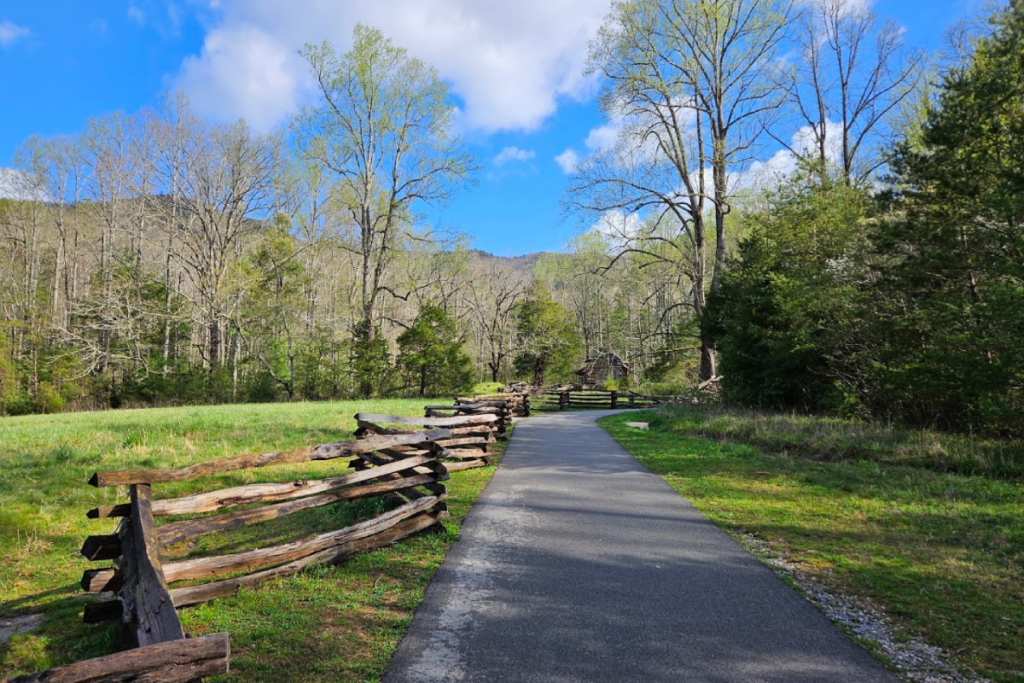
Tucked inside Great Smoky Mountains National Park sits an 11-mile paved loop that wraps around a valley so green and peaceful it hardly seems real. Cades Cove Loop Road isn’t just another scenic drive.
It’s where mountains meet meadows, where black bears wander past old log churches, and where you can slow down enough to feel like you’ve stepped straight into the pages of a storybook.
A Quiet Road Into the Heart of the Smokies
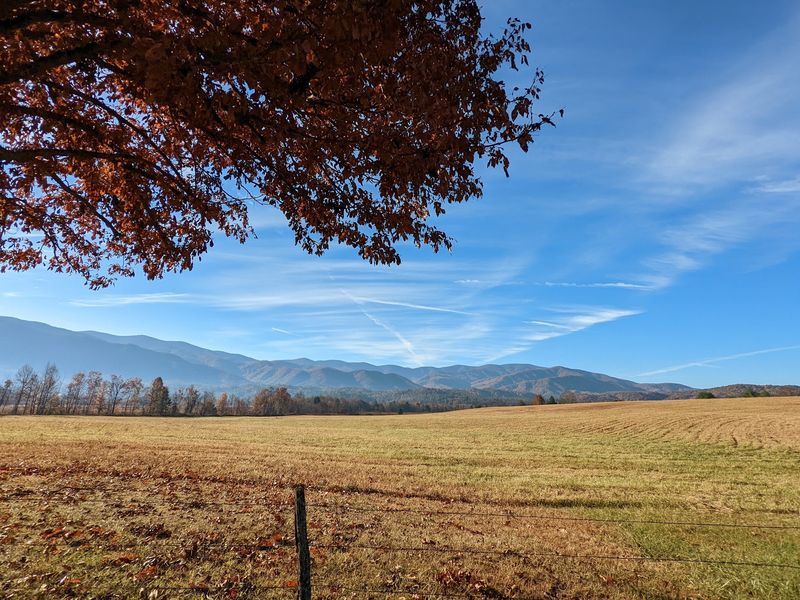
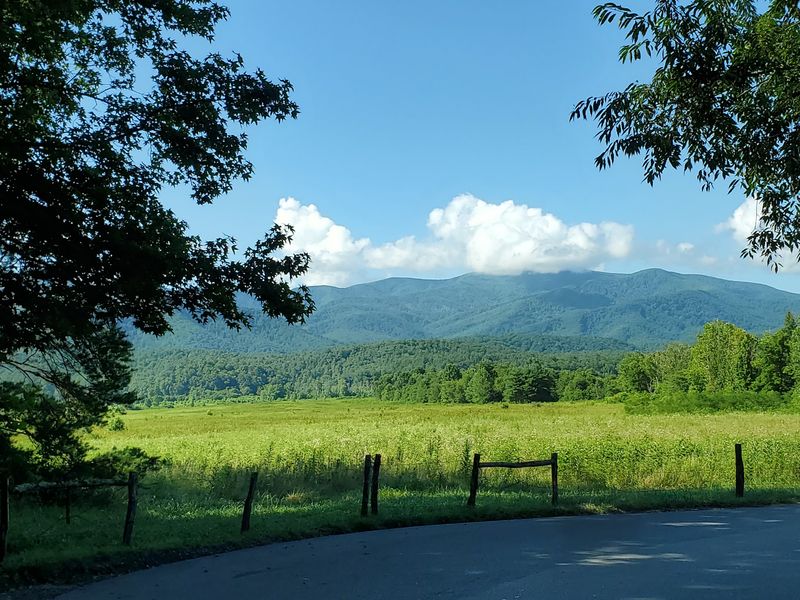
Most mountain drives hug cliffs or twist through dense forest. Cades Cove does something different. It opens up into a wide, flat valley ringed by ridges and peaks, giving you room to breathe and see for miles.
The 11-mile one-way loop sits south of Townsend and feels more like a slow meander than a typical road trip. You’re not racing to a lookout. You’re rolling through a landscape where settlers once farmed, hunted, and built entire lives.
What makes this drive stand out is how it balances beauty with history. Around one bend you’ll see open meadows glowing in morning light. Around the next, a weathered cabin or barn that’s been standing since the 1800s.
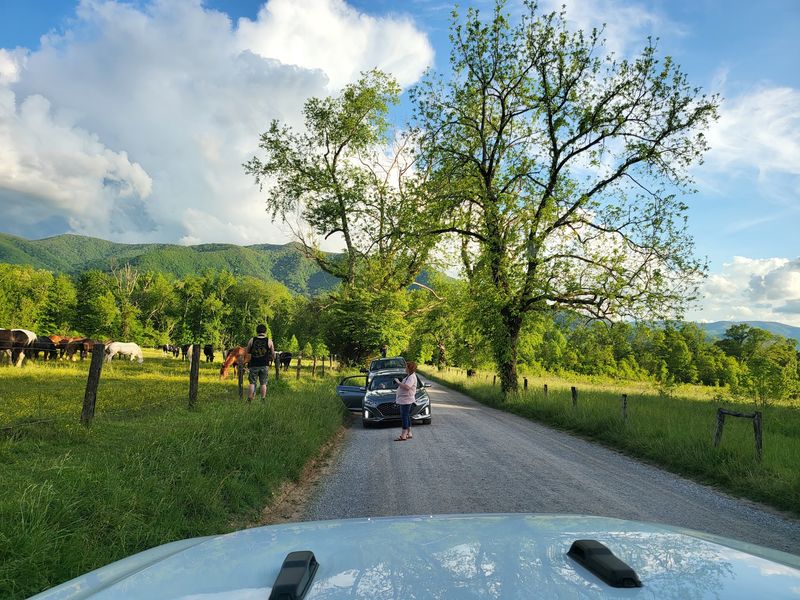
The road itself is paved and easy to navigate, but it’s designed for sightseeing, not speed. Expect to go slow, especially during busy months when cars line up behind wildlife watchers or photographers pulled off at scenic spots.
There’s no rush here, and that’s exactly the point. Cades Cove rewards patience. It asks you to notice the way fog settles into the valley at dawn, or how deer lift their heads when they hear your engine.
This isn’t a drive you finish and forget. It’s one that makes you want to come back in a different season, at a different hour, to see how the light and landscape shift.
Whether you’re here for the views, the history, or just a break from the noise of everyday life, this loop delivers something rare: a chance to slow down and soak it all in without feeling like you’re missing anything.
Every Bend Reveals Another Postcard-Worthy View
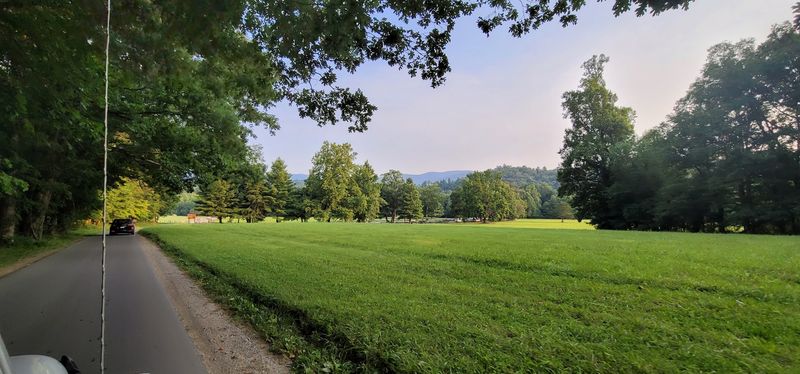
If you’ve ever wanted to know what Tennessee looked like before highways and strip malls, this loop gives you a pretty good idea. Rolling meadows stretch toward tree-covered peaks, and the whole valley feels untouched.
The scenery shifts constantly as you drive. Early morning brings mist that hangs low over the grass and clings to the ridgelines like a soft blanket. By midday, the sun lights up every shade of green you can imagine.
Late afternoon and early evening turn everything golden. Photographers love this time because the light makes the mountains glow and casts long shadows across the fields. It’s the kind of view that stops you mid-sentence.
Spring covers the roadsides and meadows with wildflowers. You’ll spot rhododendrons, trailing arbutus, purple phacelia, butterfly weed, and pink lady slippers depending on when you visit.
The valley practically explodes with color.
Fall brings a different kind of magic. The mountains turn red, orange, and yellow, usually peaking in late October to early November. It’s one of the most popular times to drive the loop, and for good reason.
Pull-offs are scattered all along the road, so you can stop whenever something catches your eye. Some offer wide views of the valley. Others give you a closer look at a creek, a patch of wildflowers, or a group of deer grazing in the distance.
No two trips around the loop look the same. The light, the weather, and the season all change what you see, which is why so many people come back year after year.
Wildlife Makes the Drive Feel Truly Alive
You don’t come to Cades Cove just to look at mountains. You come to see the animals that call this valley home. And if you time it right, you won’t be disappointed.
White-tailed deer are the most common sight. They graze in the meadows, especially during early morning and late afternoon.
Sometimes they’re so close to the road you can see their ears twitch.
Wild turkeys strut across the fields and along the roadside like they own the place. Watching a whole flock move together is oddly entertaining, especially if you’ve never seen them in the wild before.
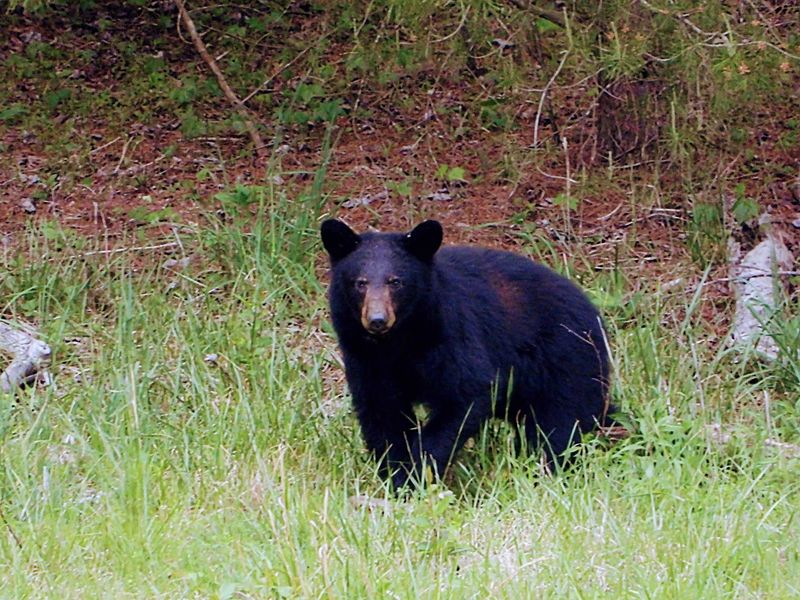
Black bears are the big draw, and Cades Cove is one of the best places in the Smokies to spot them. They’re most active in late summer and fall when they’re fattening up for winter, and again in spring after they wake up from hibernation.
Look up when you’re scanning for bears. They love climbing trees, and it’s easy to miss one lounging in the branches if you’re only looking at ground level.
You might also see coyotes, groundhogs, skunks, raccoons, chipmunks, foxes, and woodchucks. Birdwatchers bring binoculars to catch sight of species that thrive in the mix of open fields and forest edges.
The best wildlife-viewing windows are around 6 to 9 in the morning and 5 to 7 in the evening. That’s when animals are most active and the traffic is often lighter, giving you a better chance to pull over and watch without blocking the road.
Seeing a bear cross the meadow or a deer family browse near your car adds a layer of excitement that no scenic overlook can match.
Historic Cabins and Churches Tell Stories of the Past
Cades Cove isn’t just pretty. It’s a time capsule.
European settlers arrived here in the early 1800s, cleared land, built homes, and raised families in this isolated valley.
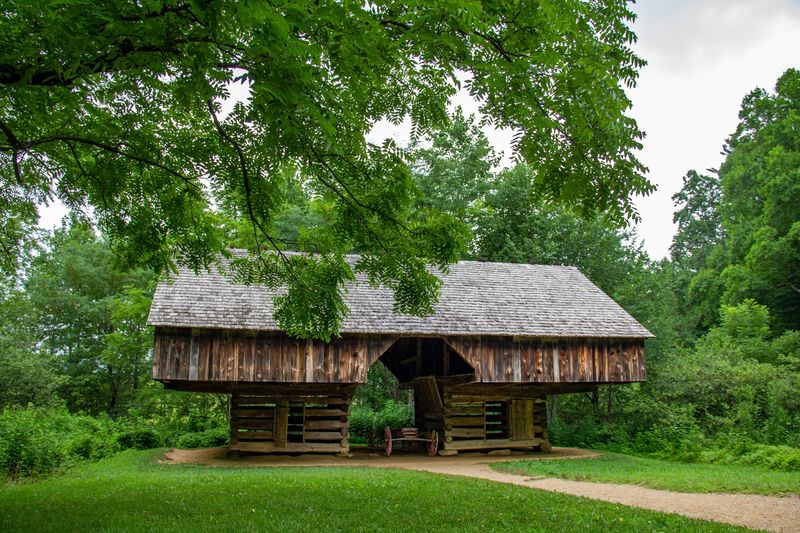
The park has preserved more historic buildings here than anywhere else in the Smokies. As you drive the loop, you’ll pass log cabins, barns, churches, and other structures that show what life was like two centuries ago.
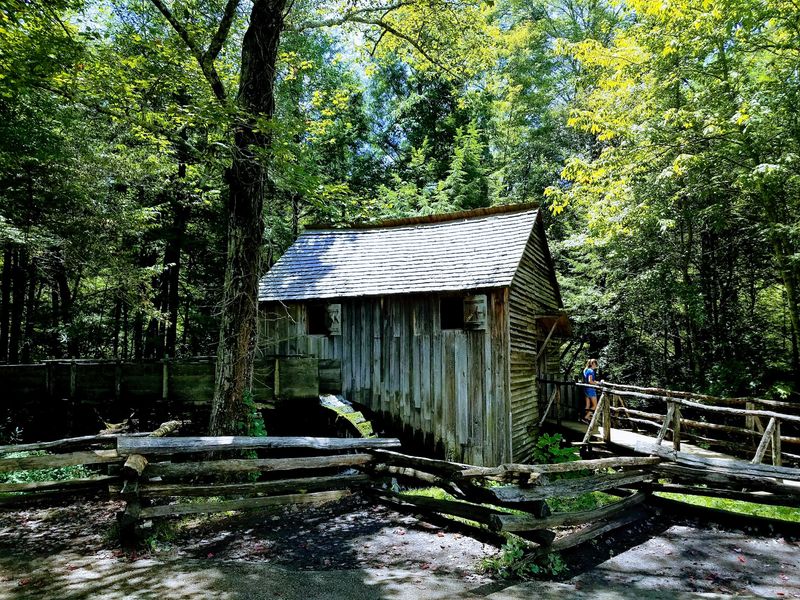
The John Oliver Cabin is one of the oldest, built around 1822 or 1823 without a single nail. It’s small, sturdy, and sits quietly in the woods like it’s been waiting for you to notice it.
A short paved trail leads right to the door.
Three churches still stand along the loop. The Primitive Baptist Church dates back to 1827, the Methodist Church to 1902, and the Missionary Baptist Church to 1915 or 1916. All three are open to walk through, and stepping inside feels like attending a service from another era.
The Cable Mill area is the heart of the historic district. You’ll find a working grist mill from the late 1860s, a blacksmith shop, barns, a corn crib, and a smokehouse.
There’s also a visitor center and restrooms, making it a good place to stretch your legs.
Other homesteads like the Elijah Oliver Place and Henry Whitehead Cabin are scattered around the loop. Some require short walks to reach, but they’re worth it if you want a closer look at how families lived and worked.
These buildings aren’t roped off behind glass. They’re real, weathered, and still standing in the same spots where settlers built them.
That connection to the past is what makes Cades Cove more than just a scenic drive.
The Best Stops Are Worth Leaving the Car For
You can drive the whole loop without stepping out of your car, but you’d be missing the best parts. Some spots practically beg you to park, walk around, and take a closer look.
The Cable Mill Historic Area is the most popular stop. The working grist mill still grinds corn, and watching the water wheel turn feels like stepping back in time.
The blacksmith shop, barns, and other outbuildings give you a full picture of what a working homestead looked like.
The John Oliver Cabin is another must-see. A short paved trail takes you right up to the door of this 200-year-old log home. It’s one of the oldest structures in the park, and it’s amazing how well it’s held up.
If you want to stretch your legs on a longer trail, Abrams Falls is a solid choice. The 5.2 to 5.5-mile roundtrip hike leads to a 20-foot waterfall that’s surprisingly powerful for its height. It’s a moderate trail, so expect some ups and downs.
The Cades Cove Nature Trail is shorter and easier, perfect for families or anyone who just wants a gentle walk through the woods. For a bigger challenge, the 8.5-mile Rich Mountain Loop takes you up for elevated views back into the valley.
Sparks Lane and Hyatt Lane are two gravel roads that cut across the loop. They’re open to foot traffic and bikes, and they offer quieter views away from the main road.
The Cades Cove Picnic Area has 81 sites and restrooms, making it a great place to stop for lunch. Pack a cooler, grab a table, and enjoy your meal with a view of the mountains.
Every stop adds something to the experience, whether it’s history, nature, or just a chance to slow down and soak it all in.
When to Drive Cades Cove Loop Road for the Most Magical Experience
Timing can make or break your Cades Cove experience. Show up at the wrong time and you’ll spend hours stuck in traffic. Show up at the right time and you might feel like you have the whole valley to yourself.
The loop is open daily from sunrise to sunset, weather permitting. If you want the road all to yourself, visit on a Wednesday between May and September.
The road closes to vehicles and opens only to cyclists and pedestrians, giving you a rare chance to walk or bike the loop in total peace.
For the best wildlife viewing, aim for early morning or late afternoon. Animals are most active around 6 to 9 AM and 5 to 7 PM. Arriving before 8 AM on a weekday also helps you avoid the worst of the traffic, especially in summer and fall.
Fall is the most popular season, and for good reason. The mountains light up with reds, oranges, and yellows, usually peaking in late October to early November.
Deer are in breeding season, and bears are actively foraging before winter. Just expect crowds.
Spring brings wildflowers and lush green scenery. April weekdays are often considered the sweet spot for fewer crowds and great weather. Bears emerge from hibernation, and deer become more active.
Summer offers thick tree cover and blooming rhododendrons, but it’s also peak tourist season. If you visit in summer, go early or late in the day.
Winter is the quietest time. Bare trees make wildlife easier to spot, and a snow-covered valley is stunning. November, January, February, and March see the fewest visitors. A quiet January morning can make the cove feel like it’s all yours.
No matter when you go, the loop rewards those who take their time and pay attention to the details.
Why This 11-Mile Tennessee Drive Stays With You
Some drives are beautiful and then you forget them. Cades Cove isn’t one of those. It sticks with you long after you’ve left the park.
Maybe it’s the way the mountains frame the valley like a painting. Maybe it’s the sight of a black bear ambling across a meadow while you sit in your car with the windows down. Maybe it’s the quiet inside one of those old churches, where you can almost hear the echoes of hymns sung a century ago.
The loop combines everything that makes the Smokies special. You get the mountains, the wildlife, the history, and the sense that you’re seeing something rare and worth protecting.
It’s not flashy. There are no gift shops or amusement parks lining the road. Just open fields, old buildings, and animals going about their business like you’re not even there.
That simplicity is part of the magic. In a world that moves fast and demands constant stimulation, Cades Cove asks you to slow down and notice the small things.
The way morning light hits the grass. The sound of a creek running under a bridge. The sight of a turkey crossing the road with her chicks trailing behind.
People come back to Cades Cove year after year because it never gets old. Every season, every time of day, every weather condition changes the way the valley looks and feels.
This 11-mile drive really does feel like a journey through a storybook. It’s a place where the past meets the present, where nature takes center stage, and where you can disconnect from the noise and reconnect with something quieter and more real.
That’s why it stays with you. That’s why it genuinely lives up to the hype.