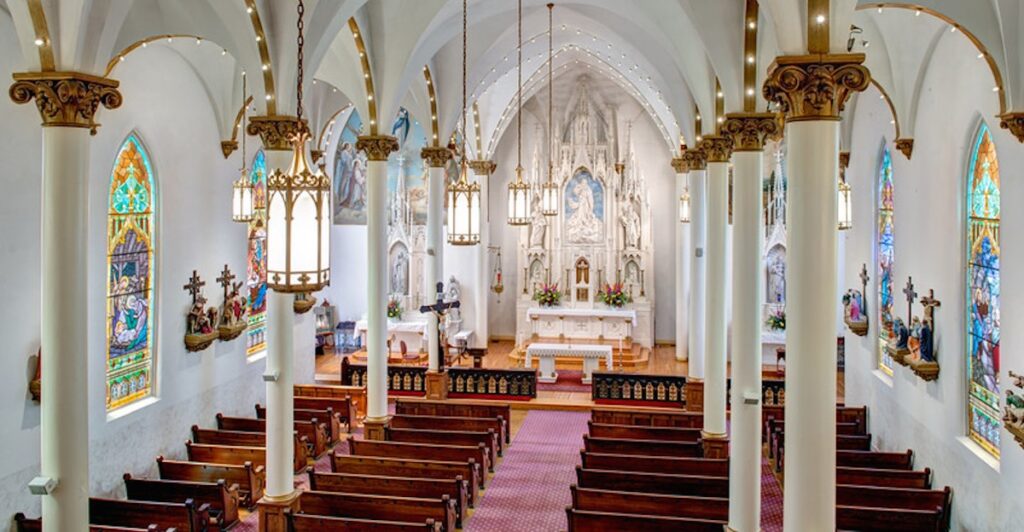
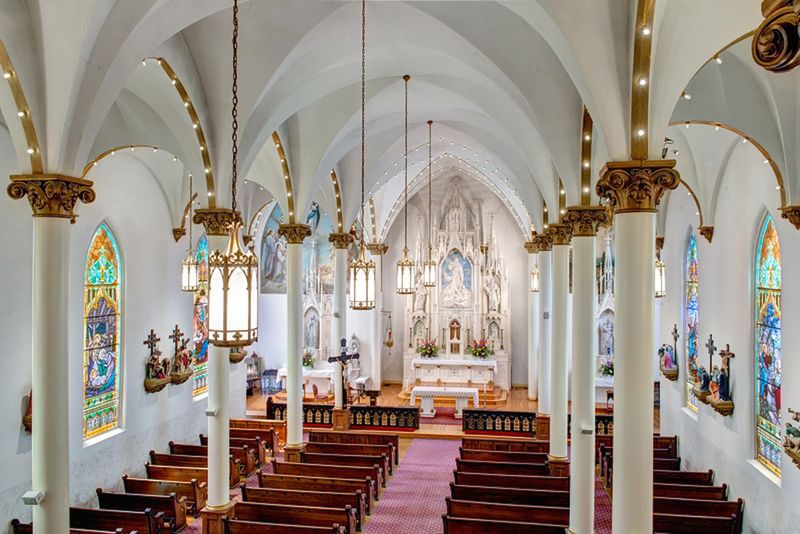
Assumption Church offers a striking glimpse of Nashville history inside one of Germantown’s most treasured landmarks. Dedicated in 1859 and originally built for the neighborhood’s German Catholic community, the church has endured war, economic hardship, and severe tornado damage while remaining an active place of worship. Step inside, and the modest brick exterior gives way to a richly decorated sanctuary.
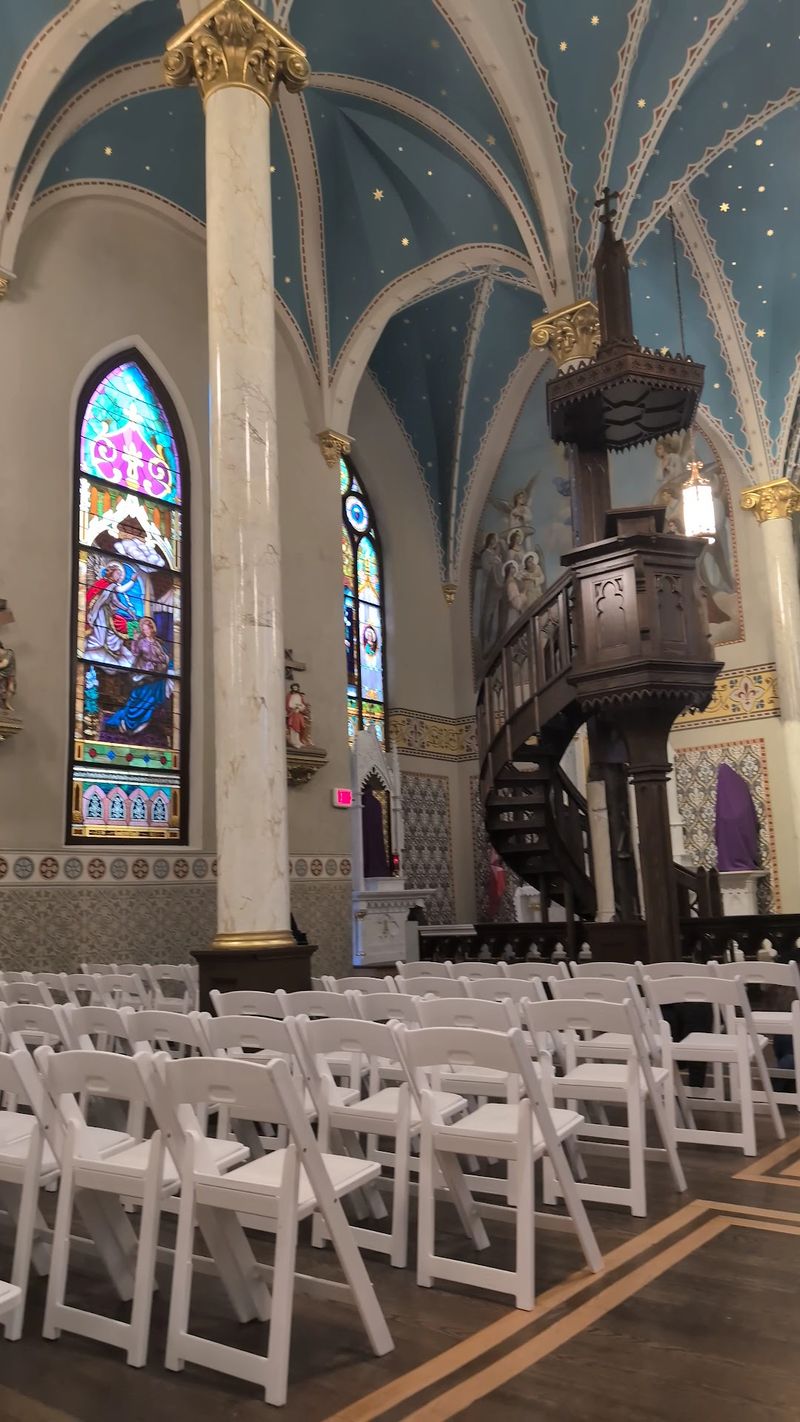
A deep-blue ceiling filled with more than 2,000 gilded stars stretches overhead, while colorful stained-glass windows cast warm light across Gothic details, restored murals, intricate stenciling, and gold-leaf accents. Marian symbols woven throughout the design connect the artwork to the church’s religious heritage. The remarkable interior reflects an extensive restoration completed after the devastating 2020 tornado.
Historic features were carefully repaired while new decorative elements honored the building’s original character. Today, Assumption Church stands as both a spiritual home and an artistic treasure, rewarding respectful visitors with beauty, craftsmanship, and more than 160 years of Nashville history hidden behind its doors.
Breathtaking Hand-Painted Ceilings That Transport You to Europe
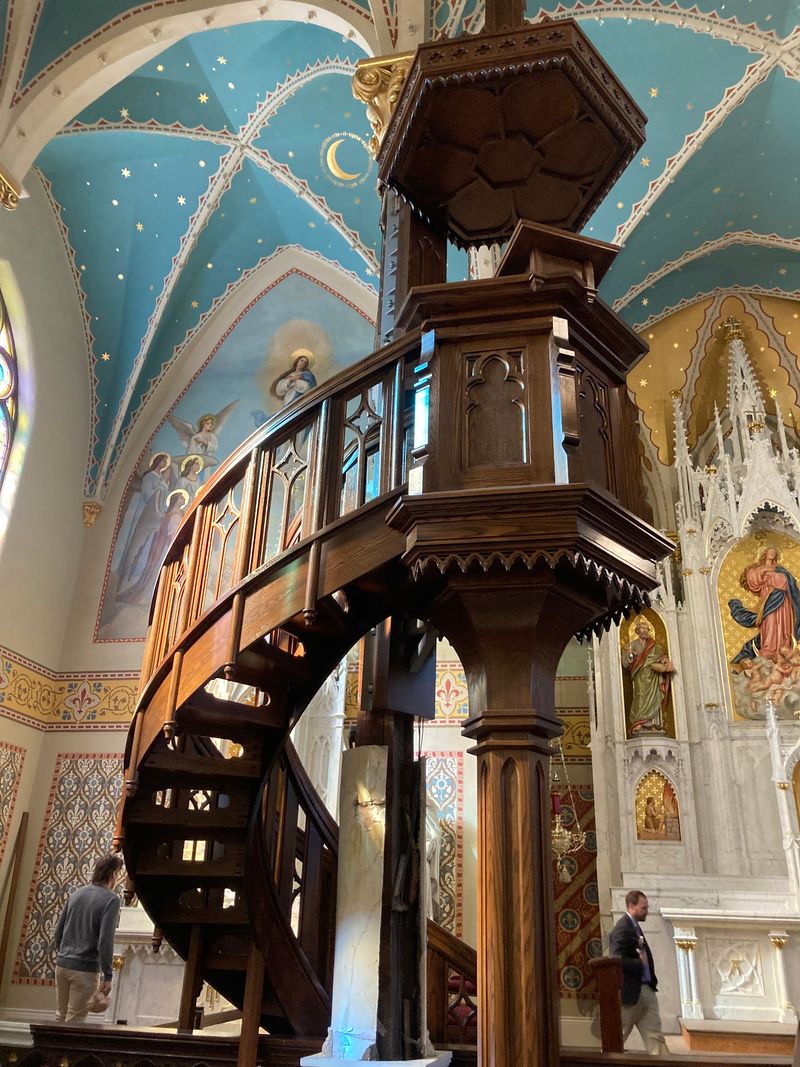
Walking into Assumption Church feels like stepping into a different world entirely. Your eyes naturally drift upward to find yourself face-to-face with elaborate ceiling frescoes that wouldn’t look out of place in a centuries-old European cathedral. These aren’t your standard church decorations, either.
Every inch of the ceiling space has been carefully painted with religious scenes, heavenly figures, and intricate patterns that demonstrate the kind of craftsmanship rarely seen in modern construction.
The artists who created these masterpieces understood something important about sacred spaces. They knew that beauty itself could be a form of prayer, drawing the eye and the spirit upward simultaneously. The color palette shifts from deep blues that evoke the night sky to warm golds that seem to glow even when the light is dim.
Angels float among clouds while saints gaze down with expressions that manage to be both solemn and comforting.
What makes these painted ceilings particularly special is their state of preservation. Despite the church enduring tornado damage in 2020, efforts to restore and protect these artistic treasures have kept them vibrant and accessible. Visitors often spend their first few minutes simply standing in the center aisle, necks craned, trying to absorb all the visual details at once.
The technique used combines traditional fresco methods with skilled hand-painting that creates depth and dimension. Shadows and highlights make flat surfaces appear three-dimensional, a trick of the eye that Renaissance masters would have appreciated. Each panel tells its own story while contributing to the larger narrative woven across the entire ceiling.
For photographers and art enthusiasts, these ceilings present both a challenge and a delight. Capturing their full glory in a single frame proves nearly impossible, but trying becomes part of the experience. The paintings change throughout the day as natural light filters through the stained glass windows, creating an ever-shifting display that rewards multiple visits at different times.
Stunning Stained Glass Windows That Paint the Interior with Color
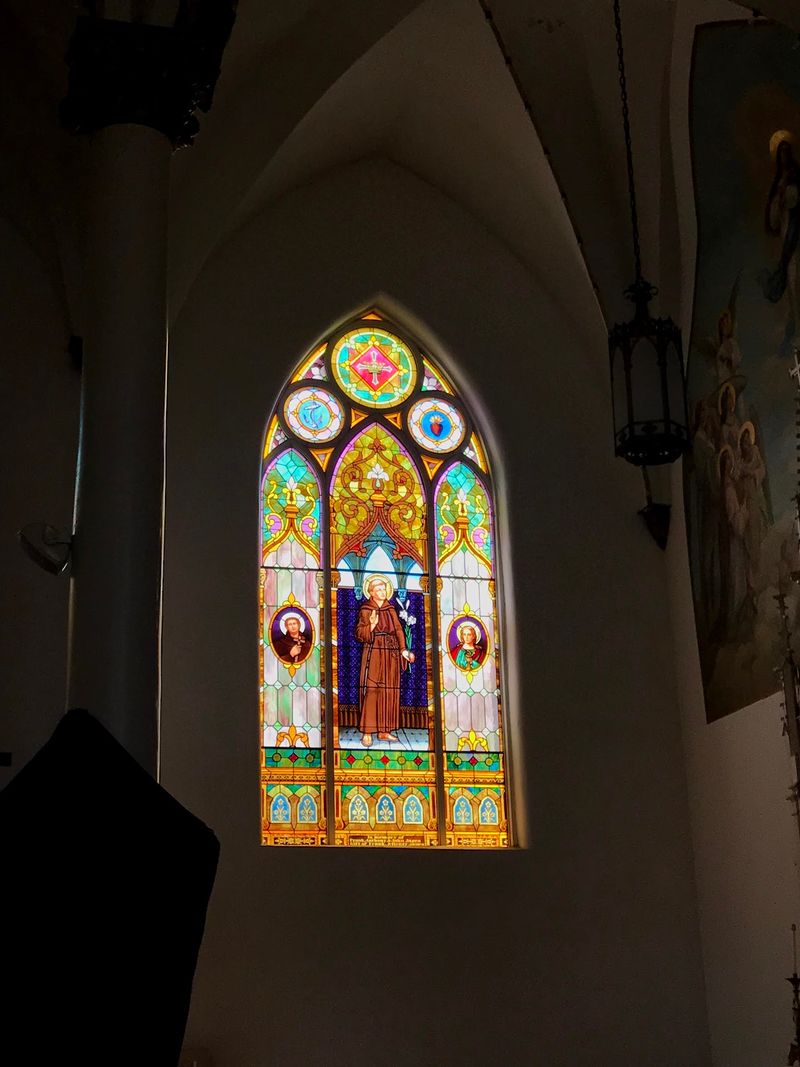
Sunlight becomes something magical when it passes through Assumption Church’s stained glass windows. These aren’t just decorative elements; they’re storytellers crafted from colored glass that transform ordinary daylight into a kaleidoscope of reds, blues, greens, and golds splashing across the pews and floor. Each window depicts different saints, biblical scenes, or religious symbols, rendered in the distinctive style that defined American church architecture in the late 19th and early 20th centuries.
The craftsmanship involved in creating these windows represents a nearly lost art form. Artisans carefully selected each piece of colored glass, cut it to precise specifications, and joined the fragments with lead came to create images that remain vibrant more than a century later. The level of detail is remarkable.
Facial expressions convey emotion, robes flow with realistic folds, and backgrounds include architectural elements and natural settings that give each scene depth and context.
Morning light creates an entirely different atmosphere than afternoon sun. Early visitors might find cool blue tones dominating the interior, creating a serene and contemplative mood perfect for quiet prayer. As the day progresses and the sun shifts position, warmer colors emerge, bathing the sanctuary in amber and crimson hues that feel almost celebratory.
This natural light show happens without any human intervention, a daily reminder of how thoughtfully the church’s builders positioned these windows.
Reviewers frequently mention the stained glass as one of their most memorable impressions of Assumption Church. The windows provide focal points throughout the space, giving your eyes somewhere beautiful to rest during services or personal reflection. They also serve an educational function, illustrating religious stories for generations of parishioners who learned their faith partly through these visual narratives.
Unlike the ceiling paintings, which require looking up, the stained glass windows surround you at eye level and above, creating an immersive experience. Together with the painted ceilings, they establish Assumption Church as a complete work of art where every surface contributes to an atmosphere designed to inspire and uplift.
Traditional Latin Mass That Connects Modern Nashville to Ancient Traditions
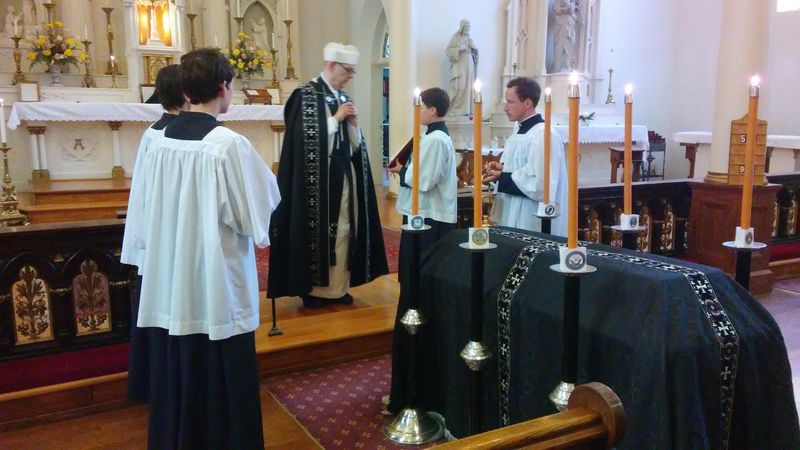
Something remarkable happens at Assumption Church every Sunday morning: a centuries-old ritual unfolds in a language most attendees don’t speak fluently, yet the experience resonates deeply with families who fill the pews week after week. The Traditional Latin Mass, also known as the Extraordinary Form, represents Catholicism as it was practiced before the reforms of the 1960s. For many visitors, attending this service feels like stepping into a living museum where history isn’t just remembered but actively practiced.
The Latin Mass at Assumption isn’t a performance or reenactment. It’s the real deal, celebrated with the same precision and reverence that characterized Catholic worship for hundreds of years. The priest faces the altar rather than the congregation for much of the service, a practice called “ad orientem” that emphasizes the communal focus on worship rather than entertainment.
Altar servers, all young men and boys, move through carefully choreographed responses and actions that require extensive training and practice.
First-time visitors often express surprise at how packed the church becomes, especially for the 10:00 AM High Mass. Families arrive early to secure seating, and it’s not unusual for the service to reach standing-room-only capacity. What’s particularly striking is the age demographic: young couples with small children make up a significant portion of the congregation, challenging assumptions about who seeks out traditional forms of worship in the 21st century.
The sung High Mass elevates the experience even further. Gregorian chant and sacred polyphony fill the church, voices rising toward those painted ceilings in a sound that seems designed specifically for this architectural space. You don’t need to understand Latin to feel the power of these ancient melodies, which have remained essentially unchanged for generations.
The incense, the bells, the silence between prayers create a multisensory experience that engages more than just your hearing.
Many reviewers mention feeling a sense of peace and calm during the Latin Mass, even when they don’t follow every word. The structure and repetition provide comfort, while the beauty of the ritual offers something increasingly rare in our fast-paced world: an hour dedicated entirely to something transcendent and timeless.
Historic Germantown Location With Rich Immigrant Heritage
Assumption Church doesn’t exist in isolation; it’s the beating heart of Nashville’s Germantown neighborhood, a historic district that tells the story of immigrant communities building new lives in Tennessee. When German and Irish Catholics began settling in this area during the mid-1800s, they brought their faith traditions with them and constructed churches that reminded them of home. Assumption Church stands as one of the most visible monuments to that immigrant experience, a physical reminder that Nashville’s identity has always been shaped by people from many backgrounds.
The neighborhood surrounding the church has undergone dramatic transformations over the decades. What was once a working-class immigrant enclave gradually evolved into an area that saw decline and neglect before experiencing the revitalization happening today. Through all these changes, Assumption Church remained constant, its distinctive architecture serving as a landmark that helped define Germantown’s character and boundaries.
The church’s presence influenced the neighborhood’s development and preservation, making it a focal point for community identity.
Location matters when you’re talking about urban churches, and Assumption’s spot in Germantown offers distinct advantages. It’s close enough to downtown Nashville that visitors can easily include it in a day of exploring the city, yet far enough removed to feel like a genuine neighborhood institution rather than a tourist attraction. The Farmers Market sits nearby, along with restaurants, coffee shops, and other businesses that have flourished as Germantown has become increasingly popular with young professionals and families.
Parking can be a consideration, especially for the well-attended Sunday Latin Masses. Reviewers recommend arriving at least 20 minutes early and utilizing the lot directly across the street from the church. The neighborhood’s walkability means you can also explore the surrounding area on foot, grabbing breakfast or lunch at local establishments before or after visiting the church.
The historic campus itself deserves exploration beyond just the main church building. Multiple structures occupy the property, each with its own architectural interest and connection to the parish’s long history. Walking the grounds provides a sense of how Catholic institutions functioned as complete community centers, offering not just worship space but also education, social services, and gathering places for immigrant families building new lives far from their ancestral homes.
Welcoming Community That Embraces Both Visitors and Regular Parishioners
Beauty matters, but people make a church feel like home. Assumption Church has earned consistent praise for the warmth of its congregation, with visitors frequently commenting on how welcomed they felt even as obvious newcomers. This isn’t the kind of parish where everyone knows everyone and outsiders get suspicious glances.
Instead, parishioners seem genuinely happy when new faces appear, often going out of their way to offer guidance, answer questions, or simply share a friendly greeting after Mass.
Father Price, the current pastor, receives specific mentions in numerous reviews for his approachable nature and powerful homilies. He notices newcomers and makes efforts to acknowledge them, even when he doesn’t yet know their names. That kind of personal attention creates an atmosphere where people feel seen and valued rather than anonymous.
Other priests serving the parish also earn praise for their availability, particularly their willingness to hear confessions during Mass and maintain traditional practices that some Catholics struggle to find elsewhere.
The community’s commitment to traditional Catholicism attracts families from across the Nashville area and beyond. Some parishioners drive significant distances to attend Mass at Assumption, drawn by the Latin liturgy and the sense that this parish takes its faith seriously without becoming unwelcoming or judgmental. The presence of so many young families creates a lively atmosphere, with the sounds of children adding energy to services rather than being treated as disturbances.
One particularly notable aspect of Assumption’s community spirit is its openness to serving those experiencing homelessness. Multiple reviewers mention seeing homeless individuals welcomed into Mass, a practice that reflects the church’s commitment to living out gospel values in practical ways. This inclusivity extends across economic and social boundaries, creating a diverse congregation united by shared faith rather than divided by worldly circumstances.
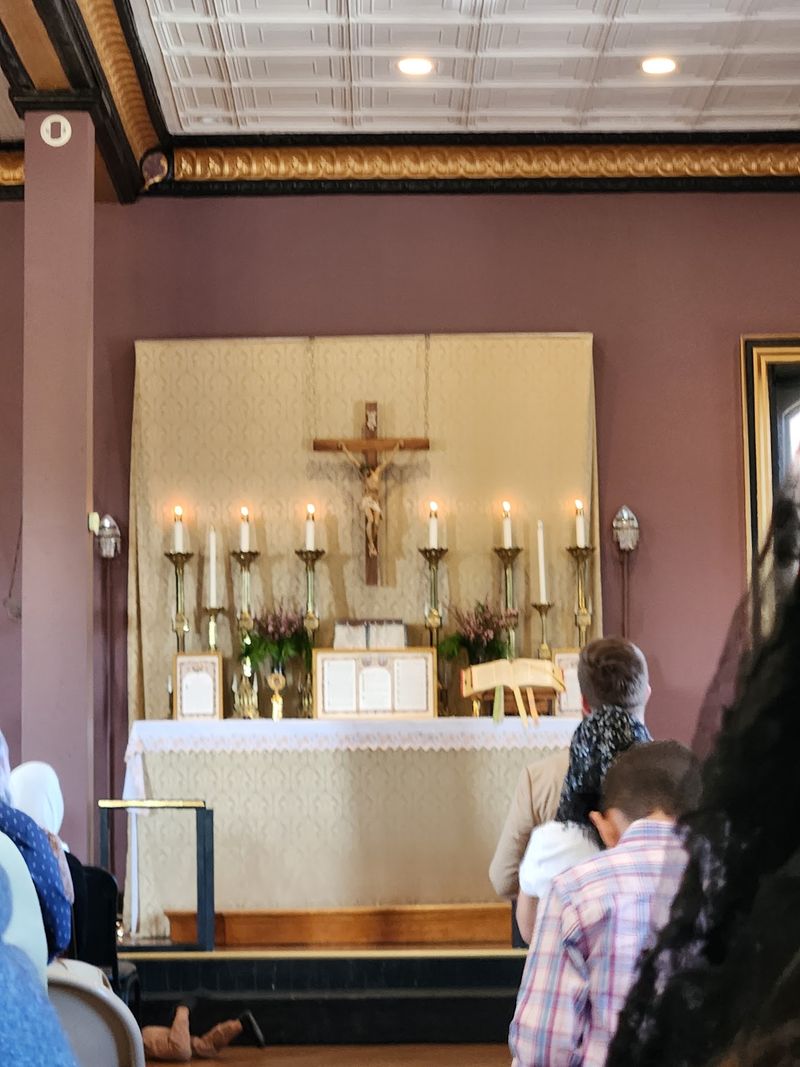
The parish’s response to the 2020 tornado damage demonstrated its community strength. Despite losing access to the historic church building, the congregation adapted by celebrating Mass in temporary spaces while maintaining its full schedule and welcoming spirit. Parishioners rallied together, supporting each other through the disruption and continuing to grow even while awaiting restoration of their beloved church.
That resilience speaks volumes about the bonds that connect this community beyond just shared appreciation for beautiful architecture.
Ornate Altar and Sacred Statuary That Inspire Reverence
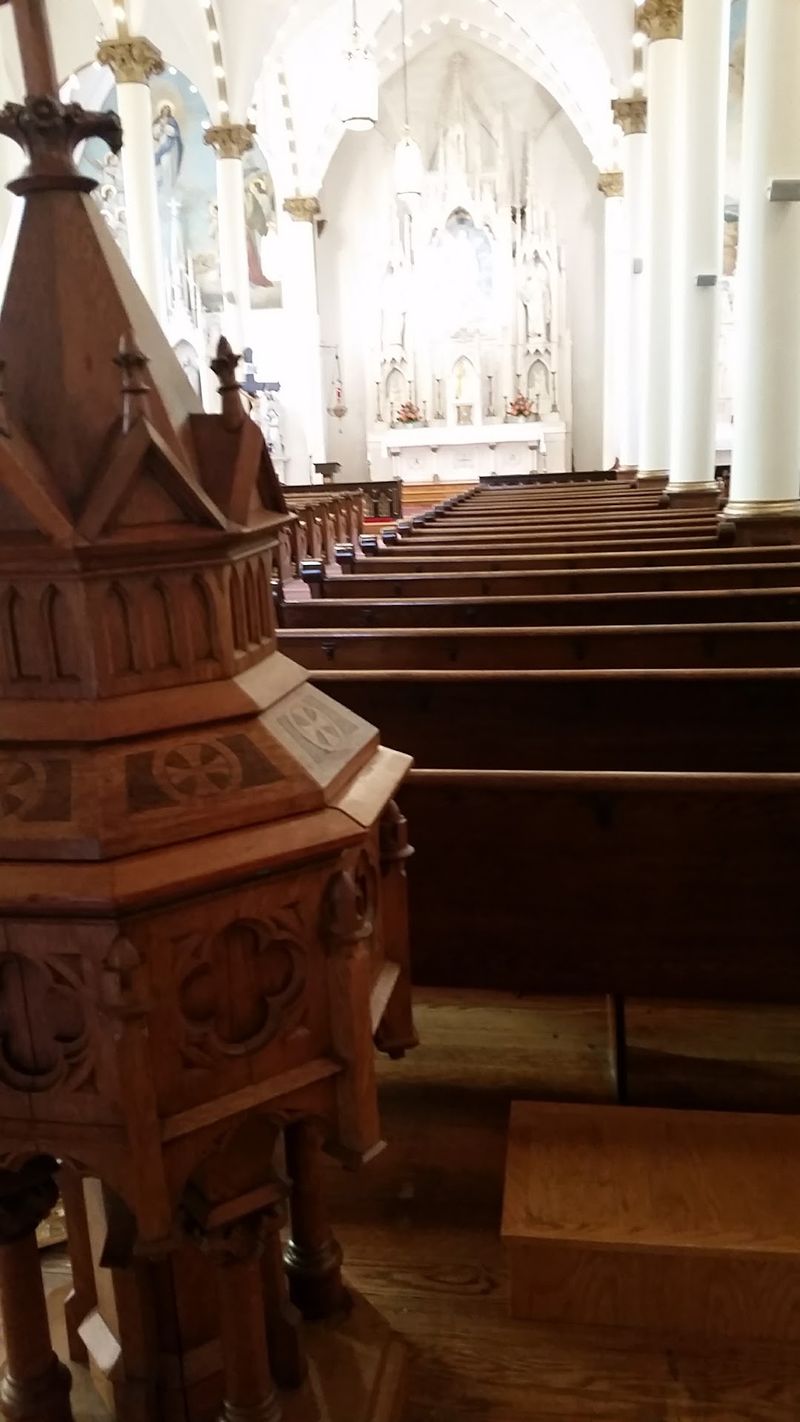
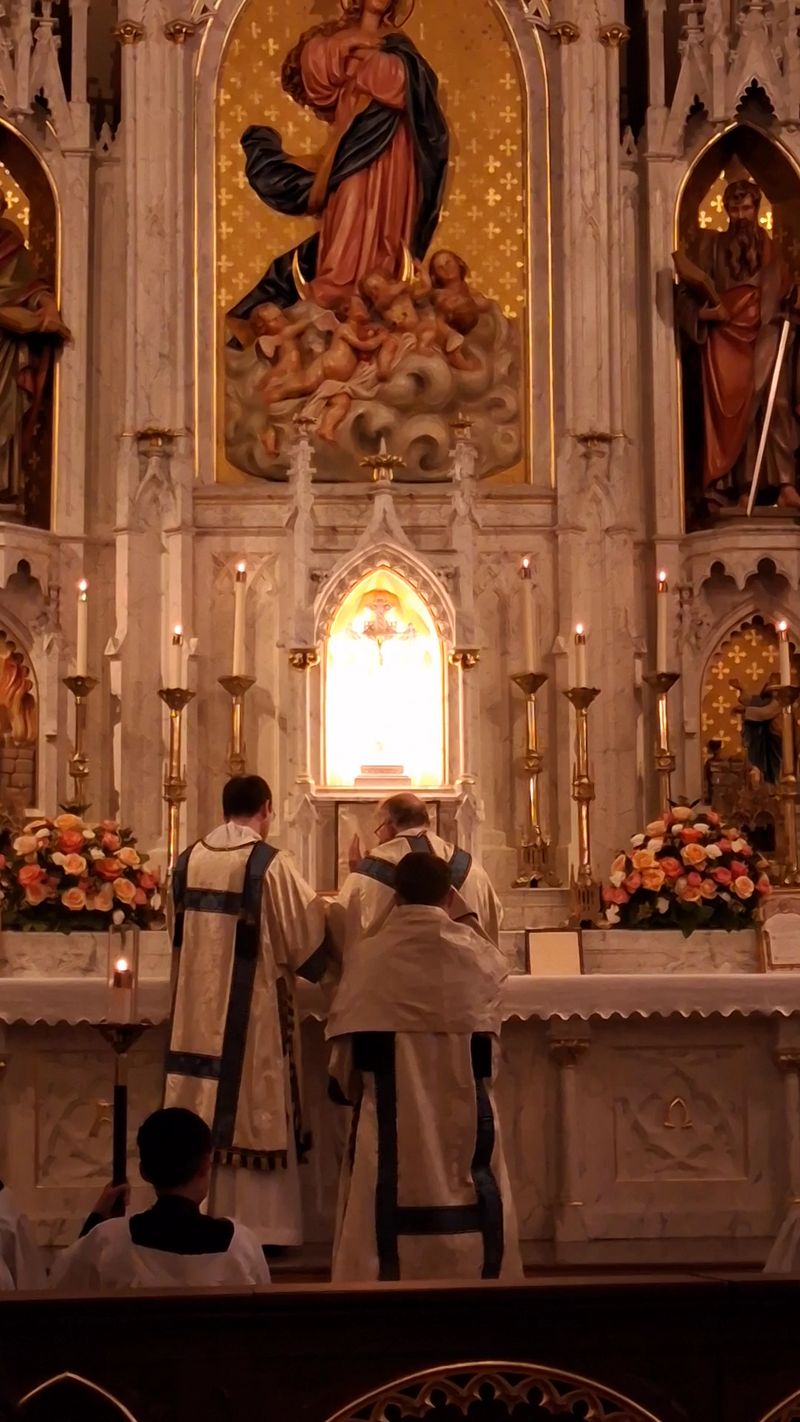
The altar at Assumption Church commands attention the moment you enter the sanctuary. This isn’t minimalist modern design; it’s an elaborate work of religious art that incorporates marble, precious metals, intricate carvings, and symbolic elements that reward close examination. Traditional Catholic altars were designed to be visual sermons, teaching theology through imagery and craftsmanship, and Assumption’s altar fulfills that purpose magnificently.
Every detail carries meaning, from the positioning of candlesticks to the specific saints depicted in relief.
Surrounding the altar, statues of Mary, Jesus, and various saints occupy positions of honor throughout the church. These aren’t mass-produced plaster figures but carefully crafted works that display genuine artistic merit. The expressions on their faces manage to convey both divinity and approachability, inviting prayer and contemplation.
Many of these statues have been part of the church for generations, acquiring their own histories as focal points for countless prayers and devotions.
The European style of these religious images strikes some visitors immediately. The iconography reflects the artistic traditions that German and Irish immigrants brought with them, creating a visual connection to the old-world Catholicism that shaped their spiritual lives. For descendants of those original parishioners, these statues and altar pieces represent tangible links to their ancestors’ faith.
For others, they offer a glimpse into religious art traditions that differ from more contemporary approaches.
Lighting plays a crucial role in how the altar and statuary appear. Candles flicker constantly, their warm glow adding movement and life to the still figures. When combined with the colored light filtering through stained glass windows, the effect creates an atmosphere that feels simultaneously ancient and timeless.
The sanctuary becomes a space set apart from ordinary experience, a threshold between the everyday world and something transcendent.
Maintaining these artistic treasures requires ongoing effort and resources. The tornado damage that affected the church building in 2020 made preservation even more challenging, but the parish’s commitment to restoration ensures that future generations will experience the same sense of awe that current visitors describe. These aren’t just decorations; they’re sacred art that elevates the entire worship experience and reminds everyone who enters that beauty itself can be a form of prayer and praise.
Powerful Organ Music That Fills the Sacred Space
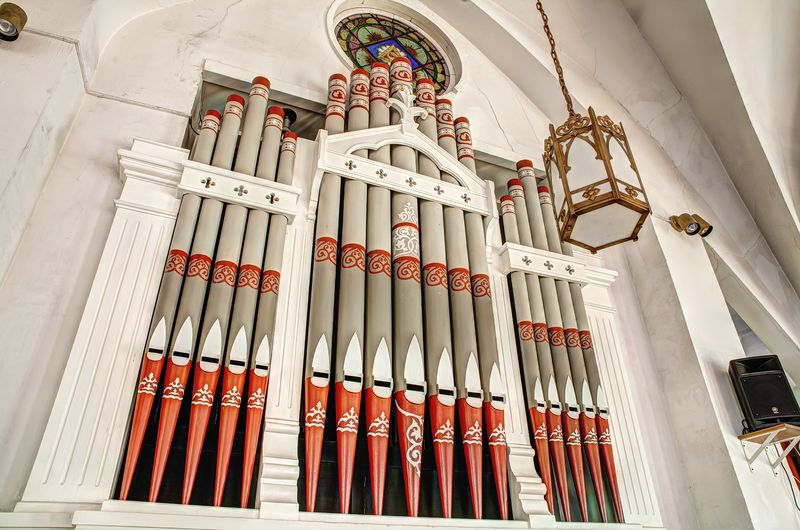
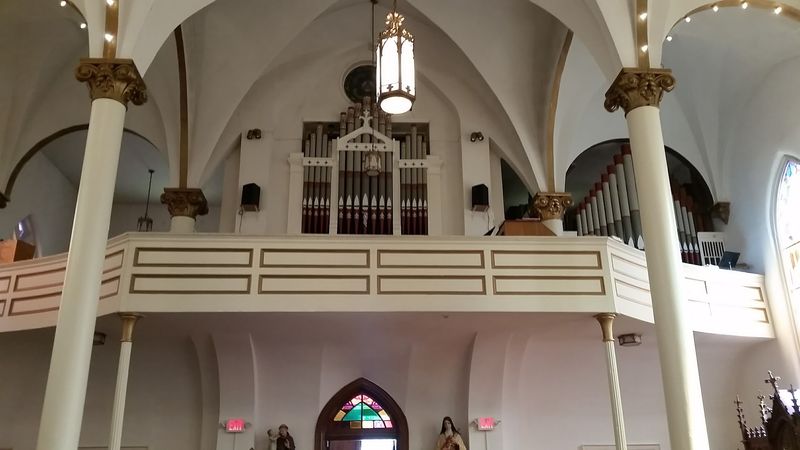
Close your eyes during a service at Assumption Church and let the organ music wash over you. The church’s pipe organ produces sounds that don’t just fill the space; they seem to emanate from the walls themselves, creating an immersive sonic experience that modern sound systems can’t replicate. Pipe organs were specifically designed for church acoustics, and in a building like Assumption with its high ceilings and hard surfaces, the instrument achieves the full resonance its builders intended.
The organist’s skill makes all the difference between pleasant background music and something truly transcendent. Assumption has been fortunate to have talented musicians who understand both the technical demands of the instrument and the liturgical requirements of Catholic worship. During High Mass, the organ accompanies Gregorian chant and sacred polyphony, providing harmonic support that enhances rather than overwhelms the singers.
The result is a unified musical experience where voices and instrument blend seamlessly.
Even outside of formal services, visitors occasionally get lucky and hear the organist practicing. These impromptu concerts offer a different kind of experience, allowing you to focus entirely on the music without the structure of liturgy. The organist might work through challenging passages repeatedly, giving you insight into the technical complexity involved in making those massive pipes sing.
Or they might simply play through favorite pieces, filling the empty church with music that seems to make the stained glass glow brighter.
The organ’s role in creating atmosphere can’t be overstated. There’s something about those deep bass notes resonating through your chest that connects you physically to the worship experience. The highest pipes produce tones so pure and clear they seem to come from somewhere beyond the physical instrument.
Together, the full range creates a sonic palette capable of expressing everything from quiet contemplation to triumphant celebration.
Maintaining a pipe organ requires specialized knowledge and significant resources. These are mechanical marvels with thousands of individual pipes, complex wind systems, and delicate action mechanisms that connect keys to sound. The parish’s commitment to keeping their organ in excellent condition ensures that this aspect of Assumption’s heritage continues enriching worship.
For music lovers and anyone who appreciates how sound shapes sacred space, the organ alone justifies a visit to this remarkable church.
Family-Friendly Atmosphere With Many Young Families and Children
Assumption Church defies the stereotype of traditional Latin Mass parishes as somber gatherings of elderly nostalgics. Walk in on any Sunday and you’ll immediately notice something surprising: children everywhere. Babies in carriers, toddlers in their parents’ arms, elementary-aged kids trying to follow along in missals, teenagers serving as altar boys.
This is emphatically a family parish, and that energy transforms what could feel like a museum into a living, breathing community.
The presence of so many young families raises an interesting question: why are millennials and Gen Z parents choosing a form of worship their own grandparents might have experienced? The answers vary, but common threads emerge. Some appreciate the structure and reverence as an antidote to casual modern culture.
Others find that children respond well to the ritual and ceremony, even when they don’t understand every word. The beauty of the church itself captivates kids who might fidget through services in plainer settings.
Parents consistently mention feeling welcomed rather than judged when their children make noise during Mass. This is a parish that understands that families with young kids come as a package deal, complete with occasional crying, dropped toys, and whispered questions. The community’s tolerance for normal childhood sounds creates an environment where parents can focus on worship rather than spending the entire service anxiously trying to keep their kids perfectly silent.
The sight of so many women veiling catches many first-time visitors’ attention. This traditional practice, where women cover their heads during Mass, has experienced a revival among younger Catholic women who see it as a meaningful expression of reverence. At Assumption, it’s common enough to be unremarkable, yet optional enough that newcomers without veils never feel out of place.
It’s just one more way the parish maintains traditional practices while remaining welcoming to those encountering them for the first time.
For families visiting Nashville, Assumption offers something genuinely different from typical tourist attractions. It’s a chance to show children that faith communities can be beautiful, reverent, and full of people their own age. The experience might even inspire conversations about tradition, beauty, and why some things from the past deserve preservation and celebration in our modern world.
Peaceful Sanctuary for Prayer and Quiet Contemplation
Sometimes you need a break from Nashville’s nonstop energy, and Assumption Church offers exactly that: a quiet refuge where you can sit, breathe, and let the silence settle your thoughts. The church has historically welcomed people throughout the day for personal prayer, providing a space where you don’t need to attend a service or interact with anyone. You can simply be present in a beautiful environment designed specifically to encourage contemplation and spiritual connection.
The architecture itself promotes this sense of peace. High ceilings create a sense of spaciousness that makes you feel small in a comforting rather than intimidating way. The painted frescoes and stained glass give your eyes beautiful things to rest on without demanding active engagement.
Candles flicker near statues, their gentle movement providing just enough visual interest to focus wandering thoughts. The whole space seems designed to slow you down and draw you inward.
One reviewer specifically mentioned stopping in during lunch breaks to pray and light candles, a practice that many urban churches support as a service to their neighborhoods. These brief visits can become anchors in busy days, moments of stillness that help maintain perspective and calm. The ability to walk into a sacred space whenever you need it offers a kind of spiritual accessibility that modern life often lacks.
Some visitors have noted changes in access policies over the years, with doors locked more frequently than in the past. This reflects the unfortunate reality that churches must balance openness with security concerns. When the church is open, though, the opportunity for quiet prayer remains one of its most valuable offerings.
The parish continues to maintain hours when the building is accessible beyond scheduled services, recognizing that spiritual needs don’t always align with Mass times.
The quality of silence in Assumption Church deserves mention. This isn’t just the absence of noise; it’s a particular kind of quiet that feels almost tangible. The thick walls muffle street sounds, creating acoustic separation from the outside world.
Inside, the high ceilings and hard surfaces mean that even small sounds carry and echo slightly, making you naturally inclined to move and speak softly. This acoustic environment encourages the kind of deep quiet where you can actually hear yourself think and pray.
Resilient Parish Community That Persevered Through Tornado Damage
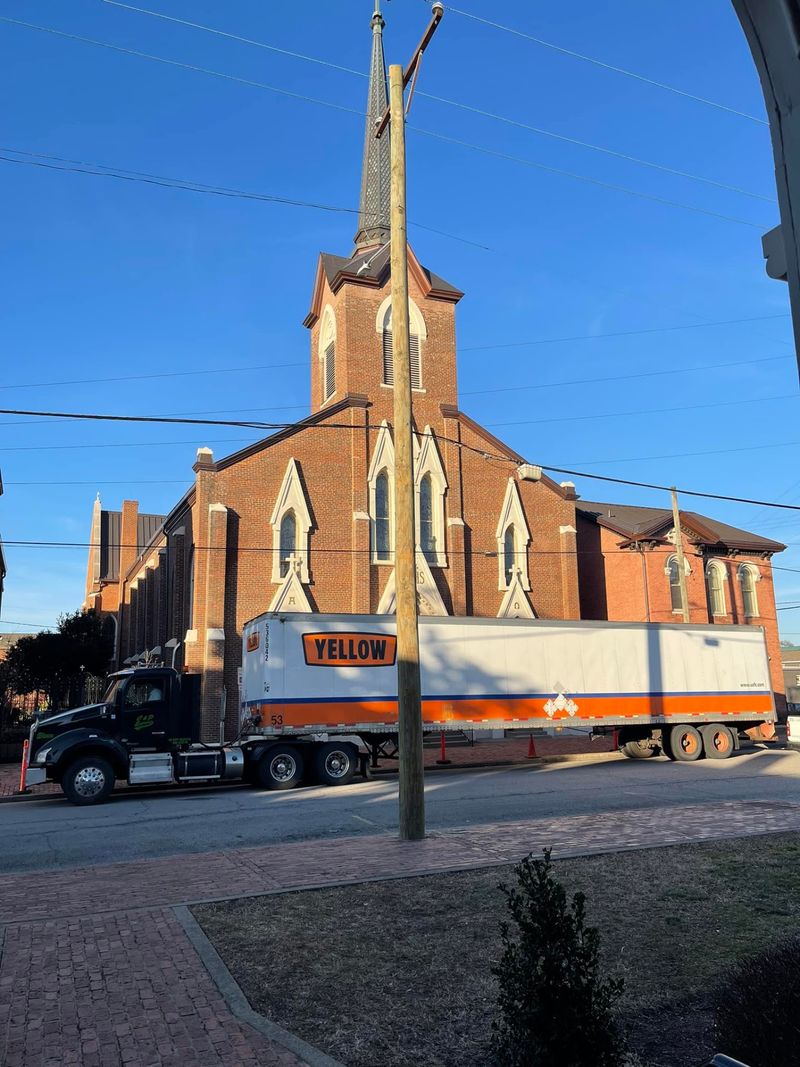
March 3, 2020 brought devastation to Assumption Church when a powerful tornado tore through Nashville, causing significant damage to the historic building. For many parishes, such destruction might have scattered the congregation or ended regular worship indefinitely. Instead, Assumption’s response revealed the true strength of its community.
Within days, the parish had organized temporary worship space and resumed its full schedule of Masses, determined that a damaged building wouldn’t interrupt their spiritual life together.
The makeshift chapel that served the congregation during restoration couldn’t match the beauty of the historic church, but it became its own testament to faith and perseverance. Parishioners packed into the temporary space with the same enthusiasm they’d shown in the main church, often filling it to standing-room-only capacity. The experience actually strengthened community bonds as everyone shared the inconvenience and worked together toward restoration.
Young families continued attending, visitors kept coming, and the Latin Mass continued without interruption.
Reviews from the period following the tornado frequently mention appreciation for the parish’s resilience. People recognized that maintaining normal operations while undertaking major restoration required extraordinary effort from the priests, staff, and volunteer parishioners. The parish’s transparency about the challenges and timeline helped manage expectations while maintaining hope that the historic church would eventually be restored to its former glory.
The restoration process has been lengthy, with the parish sharing updates about progress and anticipated timelines. As of recent communications, there’s hope that the main church building might be available for Mass sometime in 2025. This extended timeline reflects both the extent of the damage and the parish’s commitment to proper restoration that preserves the historic character and artistic treasures that make Assumption Church special.
What makes this story particularly inspiring is how the community grew even during displacement. New families discovered Assumption and decided to stay, drawn by the strength of the community as much as the promise of the beautiful building awaiting restoration. The experience proved that while Assumption Church’s architecture is remarkable, the real treasure is the faith community that gathers there, resilient enough to thrive even when the building itself needs healing.
Reverent Traditional Worship Experience With Ad Orientem Celebration
Ad orientem literally means “toward the east,” and in Catholic liturgical practice, it refers to the priest facing the same direction as the congregation during Mass, toward the altar rather than toward the people. This traditional orientation was standard in Catholic churches for centuries before liturgical reforms in the 1960s turned altars around. At Assumption Church, the ad orientem celebration isn’t a gimmick or affectation; it’s an integral part of how the parish understands worship and the priest’s role within it.
The theological reasoning behind ad orientem celebration emphasizes that priest and people together direct their worship toward God, represented by the altar and the east where the sun rises. The priest isn’t performing for the congregation or leading them as an entertainer might; he’s joining them in communal worship, acting as mediator but not as the focus. This subtle shift in positioning creates a different dynamic than most contemporary Catholic services, one that many parishioners find more conducive to genuine prayer and less prone to personality-driven worship.
For visitors unfamiliar with ad orientem celebration, the initial impression might feel strange or distant. We’re accustomed to worship leaders facing us, making eye contact, and engaging directly. The priest with his back turned can seem cold or disconnected.
But many people report that after a few minutes, the orientation stops feeling strange and starts feeling natural. Your attention shifts from watching what the priest does to participating in what’s happening at the altar, a subtle but meaningful difference.
The practice pairs naturally with the Latin Mass, where much of the liturgy is chanted or spoken in a language most attendees don’t understand fluently. Together, these traditional elements create an experience that’s less about intellectual comprehension and more about mystery, beauty, and transcendence. You’re not meant to understand and analyze everything in real-time; you’re meant to be present to something larger than yourself, allowing the ritual to work on you rather than working to understand every detail.
Critics of traditional worship sometimes characterize it as cold or unwelcoming, but Assumption’s experience suggests otherwise. The reverence and formality of ad orientem celebration and Latin liturgy don’t preclude warmth and community; they simply locate those qualities in different places. The worship itself is formal and traditional, but the fellowship before and after Mass is warm and personal, creating a balance that many parishioners find deeply satisfying.
Accessible Downtown Location Near Nashville Farmers Market
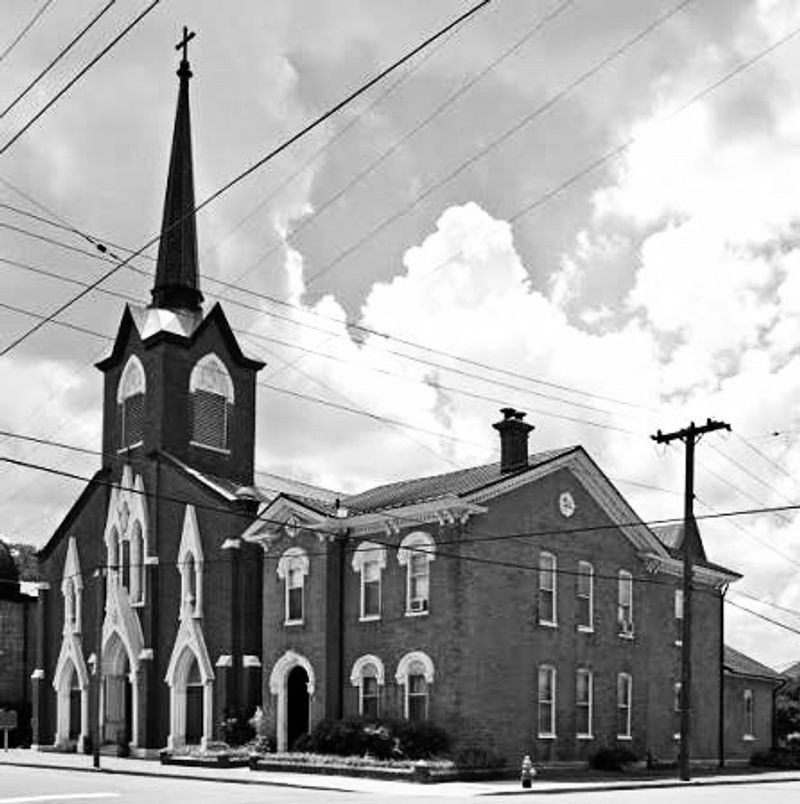
Geography matters when you’re planning to visit a church, especially if you’re combining it with other Nashville activities. Assumption Church’s location in Germantown puts it within easy reach of downtown attractions while maintaining enough separation to feel like a neighborhood institution rather than a tourist trap. The Nashville Farmers Market sits just a short walk away, making it simple to combine a church visit with browsing local produce, artisan goods, and food vendors that showcase Middle Tennessee’s agricultural bounty.
The Germantown neighborhood itself has become increasingly popular with visitors who want to experience Nashville beyond the Broadway honky-tonks. Restaurants ranging from casual to upscale line the streets, along with coffee shops, boutiques, and other businesses that cater to the young professionals and families who’ve revitalized the area. You could easily spend a full day in Germantown, using Assumption Church as an anchor point for exploring the surrounding blocks.
Proximity to downtown means you’re never far from Nashville’s major attractions. The Tennessee State Capitol, Bicentennial Capitol Mall, and various museums are all within reasonable distance, either on foot or via a short drive. This makes Assumption Church an easy addition to a broader Nashville itinerary rather than a special trip requiring significant time or navigation challenges.
Tour groups and individual travelers alike can fit a visit into their schedules without major disruption.
The neighborhood’s walkability deserves emphasis. Unlike many American cities where you must drive between every destination, Germantown rewards pedestrian exploration. Sidewalks are well-maintained, crosswalks are clearly marked, and the street grid is easy to navigate.
If you’re staying in downtown Nashville, you could walk to Assumption Church, attend Mass or simply tour the building, then walk to the Farmers Market for lunch, all without needing a car.
Public transportation and ride-sharing services also serve the area well, providing options for visitors without personal vehicles. The neighborhood’s popularity means you’ll have no trouble finding a rideshare pickup, and the central location keeps fares reasonable. For those driving, the previously mentioned parking lot across the street from the church offers convenient access, though arriving early for popular services remains advisable given the congregation’s size and enthusiasm.