A museum where the rocks glow neon red and green. A county park hiding an abandoned village.
A place called “InfoAge” where visitors can wander among vintage computers, military vehicles, model trains, and space technology. New Jersey has a knack for giving some of its most surprising attractions names that sound almost aggressively sensible.
Look past those plain labels, though, and the experiences become much harder to predict. You can descend into a former zinc mine, meet a 12-foot mastodon, watch mechanical dolls spring to life, or step inside a World War II aircraft hangar packed with historic planes.
Even a destination that sounds like an ordinary farm may put you behind a plow on a working 1900s homestead. These 13 places reward curiosity, particularly from travelers willing to investigate a name that does not immediately demand attention.
Consider this your reminder that in New Jersey, the unassuming sign beside the road may be guarding something wonderfully unexpected.
1. Sterling Hill Mining Museum – Ogdensburg
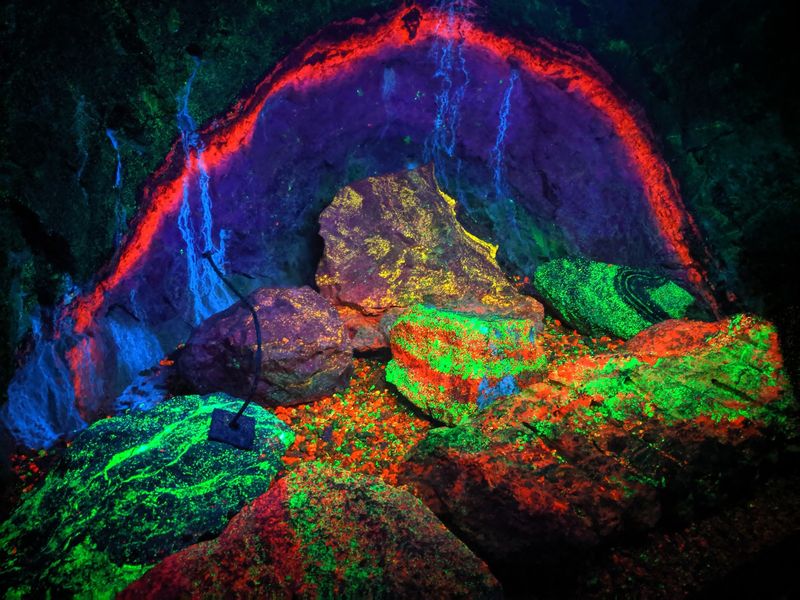
The temperature drops to about 56 degrees as soon as the tour heads underground, making a sweatshirt useful even when Sussex County is sweltering. What follows is no ordinary walk through a museum.
Visitors enter the former Sterling Hill zinc mine, moving through tunnels where miners once drilled, blasted, and hauled ore from one of the world’s richest mineral deposits.
Guides explain the machinery and working conditions without turning the experience into a dry geology lecture, and the physical setting does much of the storytelling.
The headline moment comes in the Rainbow Tunnel, where ultraviolet light transforms seemingly ordinary rock into electric streaks of orange, red, and green. That glow comes from fluorescent minerals, a specialty of the Franklin-Ogdensburg mining district.
The standard guided experience also includes Zobel Hall and the Warren Museum of Fluorescence, so allow roughly two hours rather than treating this as a quick roadside stop. Above ground, old mining equipment gives the property the look of an industrial time capsule.
Visitors can also try sluicing, while serious adult collectors may prefer searching the mine-run dump. Tours are not self-guided, and schedules can change seasonally, so check the current calendar before driving to Ogdensburg.
Wear sturdy shoes, arrive early, and bring that extra layer—the mine keeps its own thermostat.
2. Franklin Mineral Museum – Franklin

Turn off the lights and the room erupts in color. The fluorescent display is the knockout attraction at this compact Franklin museum, with a 32-foot installation of local minerals glowing in rich greens, reds, oranges, yellows, and blues beneath ultraviolet light.
More than 90 fluorescent minerals have been identified in the Franklin-Ogdensburg area, giving this corner of New Jersey geological importance far beyond its size. The collection makes that science immediately understandable: plain-looking stones become spectacular the moment the lighting changes.
There is plenty beyond the glow, including local and worldwide mineral galleries, fossils, Native American artifacts, and a replica mine that introduces visitors to the region’s zinc-mining past. Families should leave time for the outdoor activities.
Depending on availability and weather, guests can search for mineral specimens, pan for gems, or try a fossil dig, turning the visit into something far more hands-on than a circuit of display cases. The museum is especially good for children who insist they are not interested in rocks and then spend the ride home guarding a newly collected specimen.
It operates seasonally, generally from spring into late fall, and outdoor activities close earlier than the indoor galleries. Located close to Sterling Hill, it can anchor a full mineral-themed day in Sussex County, though each attraction offers enough distinctive material to justify its own trip.
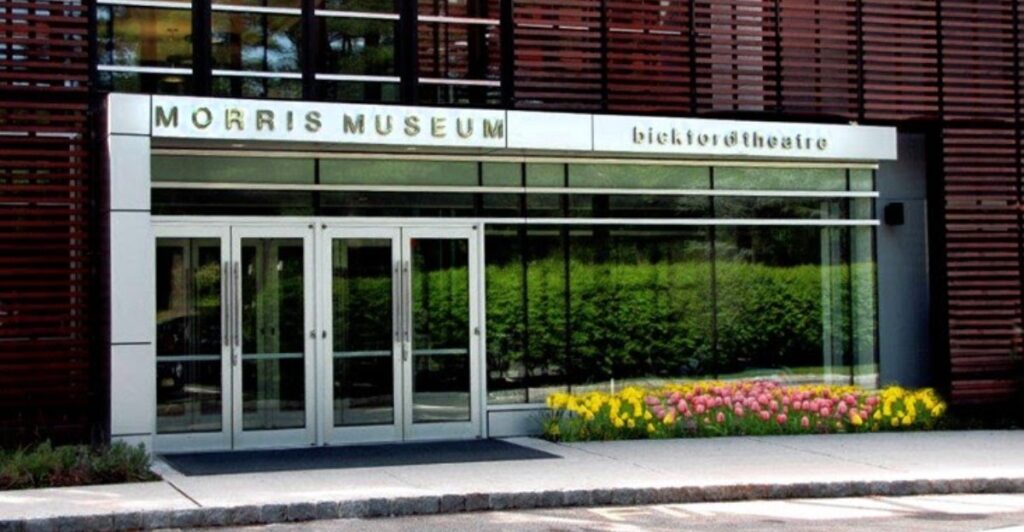
3. Morris Museum – Morristown
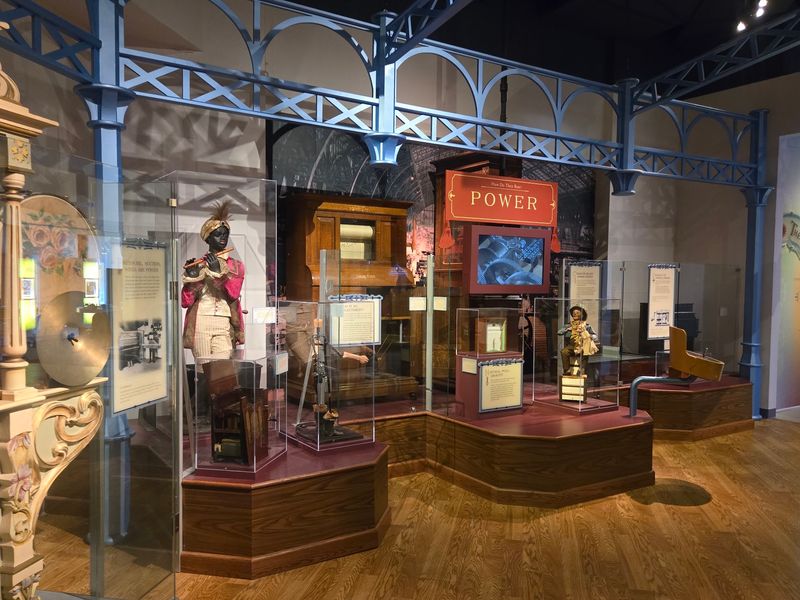
A tiny music box hidden inside an 18-karat gold ring competes for attention with an enormous machine capable of imitating an entire orchestra. Both belong to the Murtogh D.
Guinness Collection, the wonderfully unexpected centerpiece of this Morristown institution. The collection contains hundreds of mechanical musical instruments and automata spanning roughly four centuries, from player pianos and elaborate music boxes to moving figures that write, perform tricks, or stage miniature scenes.
Watching their exposed gears, cylinders, hammers, and levers work is part concert, part engineering lesson, and part old-fashioned magic show. More than 150 pieces are displayed in the permanent exhibition, with additional treasures visible in storage areas.
Live demonstrations are worth planning around because these contraptions become far more memorable once they begin to move and play. Elsewhere, the museum shifts easily between fine art, natural science, local history, and changing exhibitions.
Families can look for hands-on invention activities at Spark!Lab, while performing arts programs give the building another life beyond its galleries. The result feels less like one museum than several curious collections sharing an elegant home.
General admission remains reasonable, and the manageable scale makes it possible to explore without museum fatigue. Give the mechanical music collection priority, but do not rush out afterward; the pleasure here comes from discovering how little the broad name reveals.
4. Historic Smithville Park – Eastampton
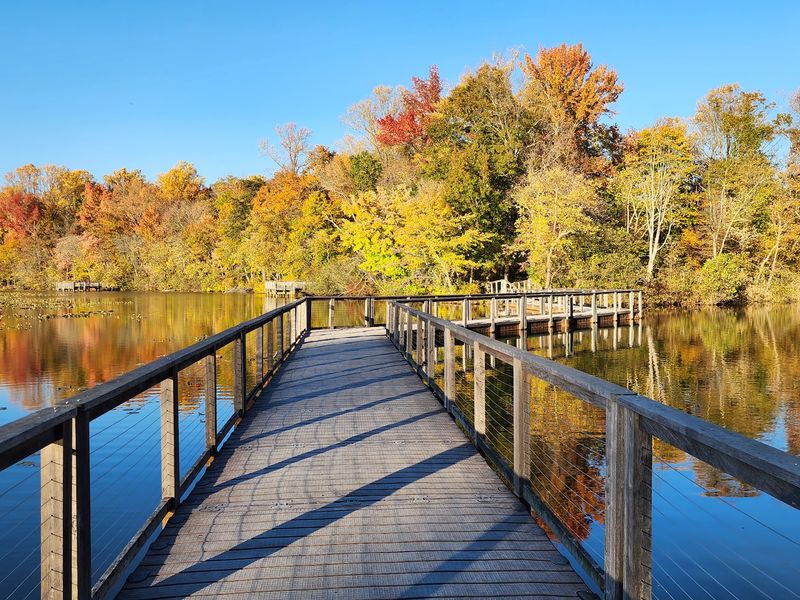
A floating walkway, a Victorian mansion, and the remnants of a model industrial village are not what most people expect from a Burlington County park. Yet this 312-acre property in Eastampton folds all three into a landscape of woods, wetlands, meadows, streams, and lakefront paths.
The village grew around a mill on the Rancocas Creek before becoming a major manufacturing center known for woodworking machinery and the Star high-wheel bicycle. It was also unusually forward-thinking in its approach to worker welfare, education, recreation, and town planning.
That story survives in the Smithville Mansion, workers’ houses, and other historic buildings scattered through the district. A mansion tour adds useful context, but simply walking the grounds reveals how closely the factory community and surrounding landscape were connected.
Outdoors, the trail system welcomes walkers and cyclists, while the 22-acre lake draws anglers and paddlers. The floating walkway is an easy highlight, carrying visitors across the water with open views that shift beautifully through the seasons.
Across the road, Smith’s Woods has picnic areas, a playground, a butterfly garden, and additional trails, making the park easy to adapt for families. Museum access and guided tours may follow limited schedules, so confirm those details beforehand.
Even without entering a building, however, this is an excellent place to combine a history outing with an unhurried walk.
5. Duke Farms – Hillsborough
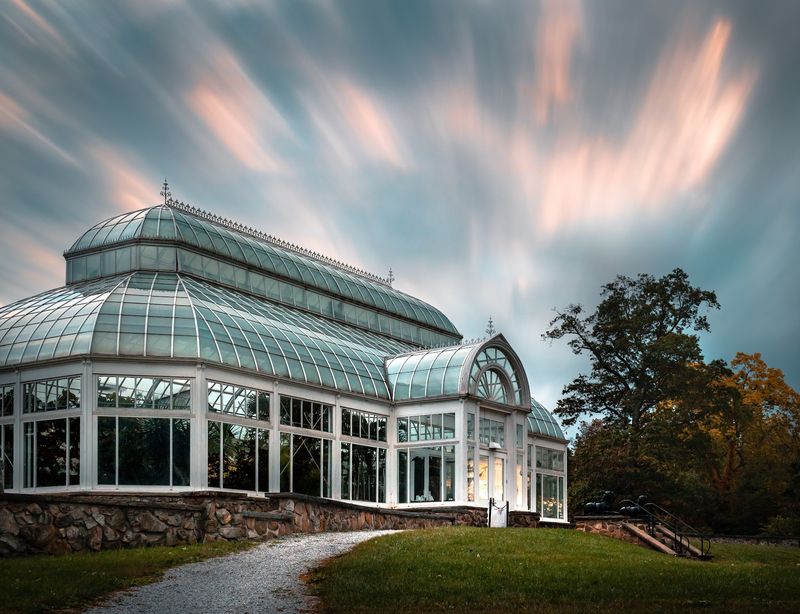
Calling this 2,700-acre Hillsborough property a farm is a little like calling a mansion a house. The former estate of tobacco heiress and philanthropist Doris Duke has evolved into a major conservation center filled with woodlands, meadows, lakes, historic structures, wildlife habitat, and approximately 20 miles of trails.
Visitors can explore on foot or bicycle, following routes past stone bridges, old barns, waterfalls, and quiet stretches where deer and birds are more common than crowds. The Orchid Range supplies the biggest burst of cultivated drama.
Inside the greenhouses, tropical orchids curl, climb, and bloom in colors that seem almost engineered, offering a warm escape when the weather outside turns sharp. Elsewhere, the property functions as a living laboratory for habitat restoration, climate research, sustainable land management, and clean energy.
That serious mission never overwhelms the simple pleasure of roaming the grounds. Begin at the Orientation Center in the historic Farm Barn, where maps help narrow down the sprawling choices.
The nearby café uses ingredients grown on-site or sourced from local producers, making it a sensible stop before a long walk. Duke Farms closes on certain days to give its ecosystems time to recover, and Saturday parking can require advance planning.
Check access details before visiting, bring water, and resist trying to cover every trail in one trip. This is a place designed for repeat wandering.
6. Watchung Reservation – Mountainside
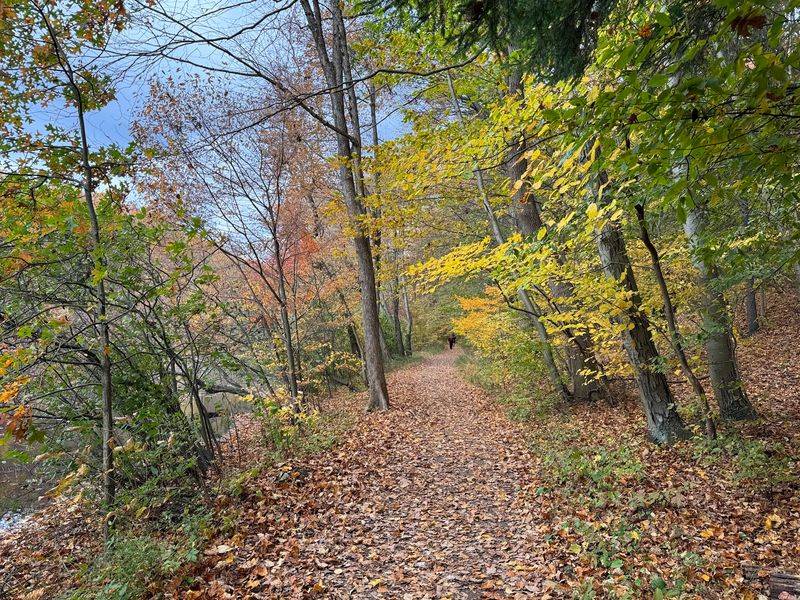
Follow the pink trail markers through the woods and suburban Union County begins to feel surprisingly distant. The six-mile History Trail loops through a preserve of more than 2,000 acres, linking natural scenery with places that reveal how this land was used long before it became a park.
Its most intriguing stop is the Deserted Village of Feltville, where surviving cottages, foundations, and other structures recall a settlement that passed through several identities, including a mill community and a summer resort called Glenside Park.
The empty buildings create an eerie mood, particularly on a gray fall morning, but the village is only one part of the reservation.
Hikers can also encounter Lake Surprise, streams, rocky slopes, small cascades, and forest shaped by the Watchung Mountains’ volcanic geology. Trailside Nature & Science Center makes a useful starting point, especially for families who want exhibits and local wildlife information before heading outdoors.
The reservation includes routes for different ability levels, although rocks, roots, mud, and elevation changes can make even moderate distances feel more substantial after rain. Parking areas near Trailside, the deserted village, and Lake Surprise provide several possible entry points.
Download or photograph a trail map before setting out, since the network has multiple intersections. The practical name may suggest protected acreage and little more, but this is part hike, part geology lesson, and part ghost-town exploration.
7. Rutgers Geology Museum – New Brunswick
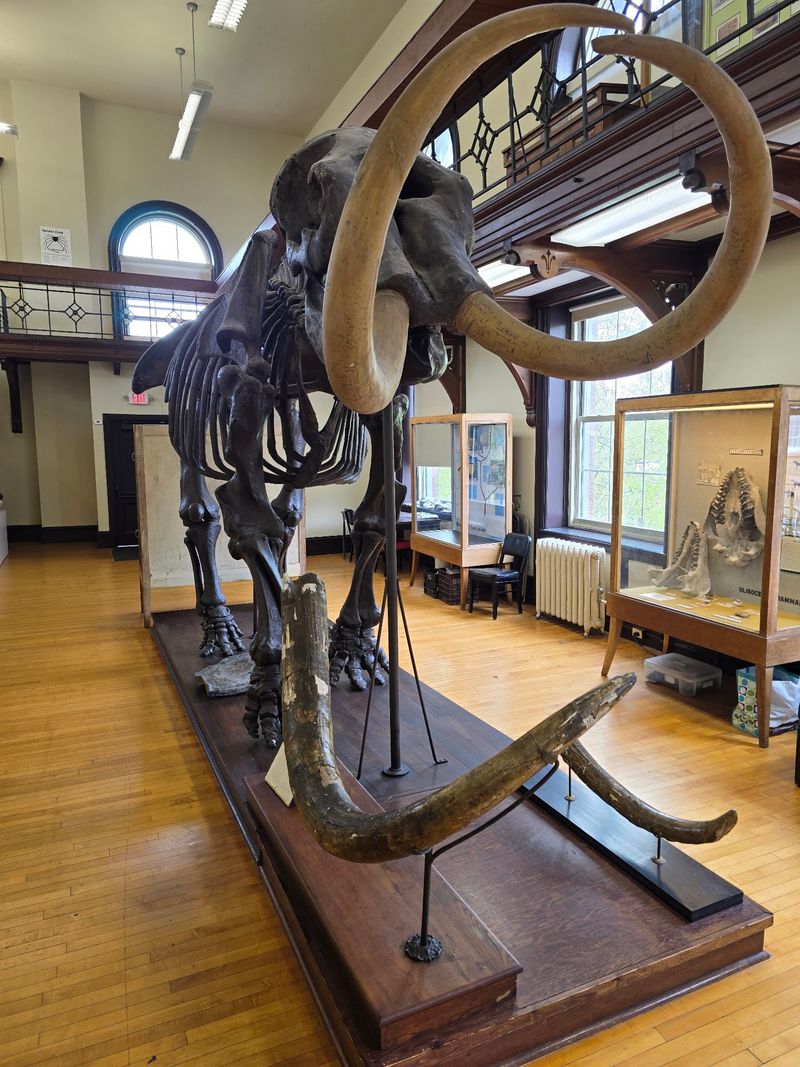
The most imposing resident of Rutgers University’s New Brunswick campus has been dead for thousands of years. Manny, a fully articulated mastodon skeleton standing about 12 feet tall, dominates this free museum inside historic Geology Hall.
His presence instantly lifts the attraction beyond what its academic name might suggest, especially for children who walk in expecting shelves of labeled stones. Founded in 1872, the museum explores Earth’s history through fossils, minerals, rocks, and artifacts connected to New Jersey’s natural past.
Dinosaur tracks provide another crowd-pleaser, while a mummy and other archaeological material broaden the story beyond geology alone. The old university setting is part of the charm: creaking floors, traditional cases, and densely packed specimens make the rooms feel like a classic cabinet of curiosities rather than a polished science center.
That smaller scale works in its favor. Visitors can inspect the details without committing an entire day, making the museum a smart addition to lunch or a walk around downtown New Brunswick.
Admission is free, but operating hours generally follow the university’s academic schedule, with weekday openings and only selected Saturdays. Campus parking can require more forethought than the visit itself, so check nearby public garages or current visitor arrangements.
Once inside, head upstairs for Manny, then slow down. Some of the museum’s best surprises are small enough to overlook on a hurried lap.
8. New Jersey State Museum – Trenton
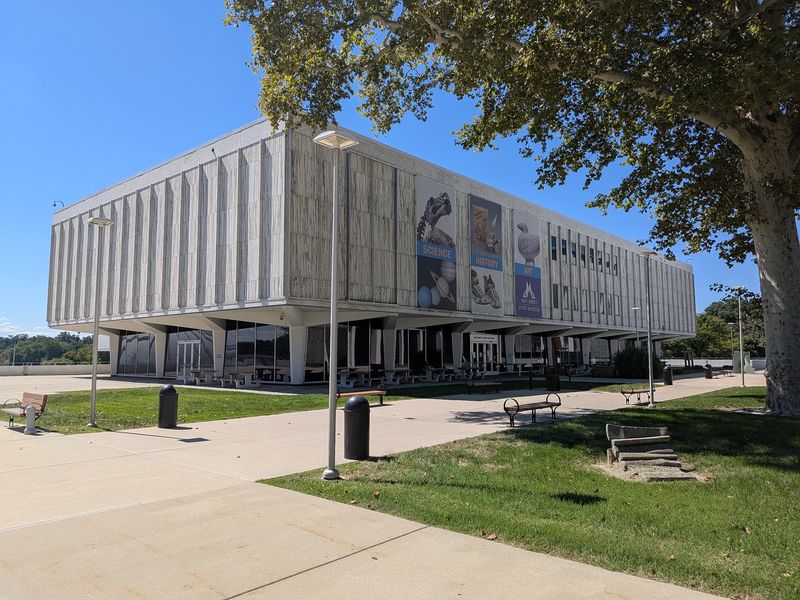
A planetarium sits just a short walk from the State House, but it is only one layer of this unusually broad Trenton museum. Under one roof, visitors move among fine art, archaeology, cultural history, and natural science, making the place feel like several institutions combined.
Fossils and prehistoric creatures tend to pull families toward the natural-history galleries first, while archaeology exhibits trace thousands of years of human life in the region.
The cultural collections show how New Jersey communities, industries, and everyday habits have changed over time, and the art galleries offer a quieter counterpoint to the science displays.
Then there is the planetarium, where a domed theater turns the ceiling into a night sky for programs about planets, stars, space exploration, and seasonal constellations. The main museum generally offers free admission, while planetarium shows may require a modest ticket, making this one of the better-value cultural outings in the state.
Its location within Trenton’s Capitol Complex also makes it easy to pair with other nearby landmarks. Allow at least two hours, and longer if a planetarium show lines up with your visit.
Weekday parking can demand patience, but nearby state lots and garages provide options. The name sounds official, perhaps even dutiful; the experience is much more playful, particularly when a visit moves from ancient fossils to contemporary art and then straight into outer space.
9. InfoAge Science and History Museums – Wall Township
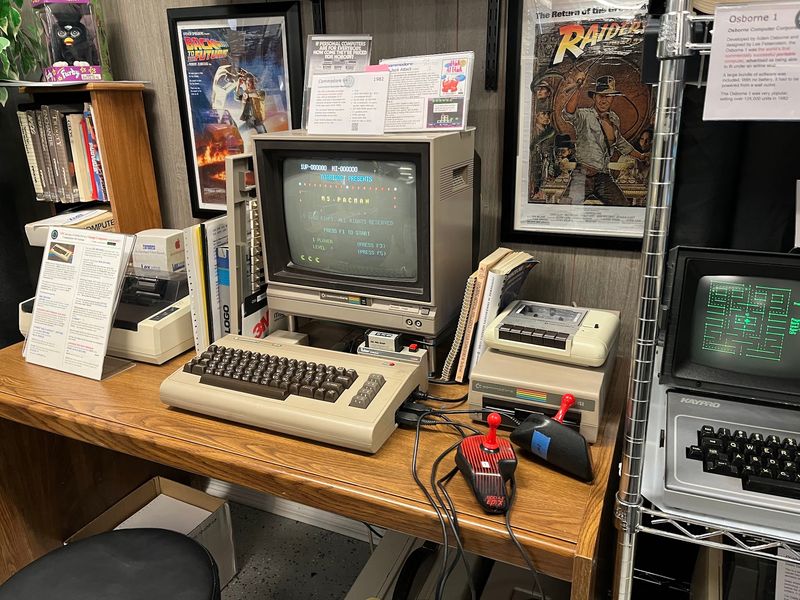
One admission ticket opens the door to more than 20 museums and exhibits spread across six historic buildings. That scale is the first surprise at this Wall Township campus, located on the former Camp Evans site, where groundbreaking military communications and radar research once took place.
The collection does not follow one tidy theme. Instead, visitors can encounter radio technology, World War II history, vintage computers, military vehicles, electronic warfare equipment, model trains, shipwreck artifacts, and space exploration displays during the same afternoon.
It feels less like a conventional museum and more like an entire convention of knowledgeable hobbyists moved into a former military base. That comparison is a compliment.
Many guides are volunteers with deep professional or personal connections to the subjects, and conversations with them often become the highlight of a visit. Children can press buttons and inspect machinery, while adults who remember early home computers or Cold War technology may disappear happily into the displays.
The separate buildings require some outdoor walking, so dress for the weather and pick up a campus map rather than wandering at random. Regular public hours are limited to select days, typically Wednesdays and weekends, and the generous free parking makes arrival easy.
Set aside several hours and accept that seeing everything may be unrealistic. “InfoAge” sounds like a business conference; what waits inside is a sprawling playground for anyone fascinated by machines, signals, trains, or space.
10. Naval Air Station Wildwood Aviation Museum – Lower Township

Historic Hangar No. 1 does not merely contain the museum—it is one of its greatest artifacts. Built during World War II, the vast wooden structure at Cape May Airport once served a naval training station where dive-bomber pilots prepared for combat.
Today, aircraft, engines, military vehicles, photographs, uniforms, and wartime objects fill the cavernous interior. Visitors can get remarkably close to many of the machines, and the hands-on elements make the experience appealing even to people who cannot identify one airplane from another.
Cockpit access and interactive displays turn younger guests into temporary pilots, while the building’s preserved architecture gives the collection a sense of place that a modern gallery could never duplicate. Look up as often as you look forward; the web of heavy timber overhead is a spectacle in itself.
The station’s history also carries a more solemn note, honoring the pilots who trained here and those killed in accidents during its brief but intense wartime operation. The museum is located several miles inland from Cape May’s Victorian core, making it an excellent rainy-day break from beaches and shopping.
Because the hangar is not climate controlled, summer heat and winter cold come inside with you. Dress accordingly and allow at least 90 minutes.
Its formal name is a mouthful, but the experience is immediate: big planes, real history, and one unforgettable building.
11. Howell Living History Farm – Hopewell Township
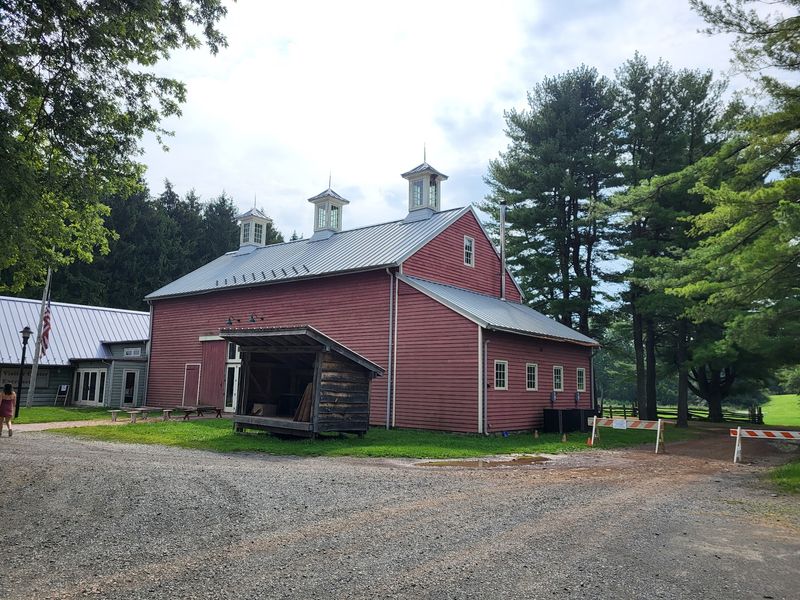
At this working farm, history may arrive behind a team of draft horses. The fields, barns, animals, tools, and seasonal jobs recreate agricultural life in Pleasant Valley between 1890 and 1910, when farming depended on muscle, weather, and carefully timed routines.
Visitors do not simply peer into preserved rooms. They can watch farmers plow, plant, harvest, thresh grain, tap maple trees, shear sheep, make cider, or gather ice, depending on the season and the farm calendar.
Many programs invite guests to lend a hand, which makes the past feel practical rather than theatrical. Children usually head straight for the horses, oxen, chickens, pigs, and sheep, while adults find themselves absorbed by demonstrations of machinery built to solve very specific problems.
Saturday events tend to offer the fullest experience, and the changing agricultural schedule gives each return visit a different focus. Admission and parking are free, although special attractions such as the autumn corn maze may charge a fee.
Everyone checks in at the Visitor Center before continuing to the historic barnyard, and transportation assistance is available for visitors who need it. Picnicking and pets are not permitted, so plan lunch elsewhere and leave the dog at home.
The plain name hides a rare accomplishment: this is not a farm decorated to look old, but a living workplace where the chores themselves tell the story.
12. Paterson Museum – Paterson
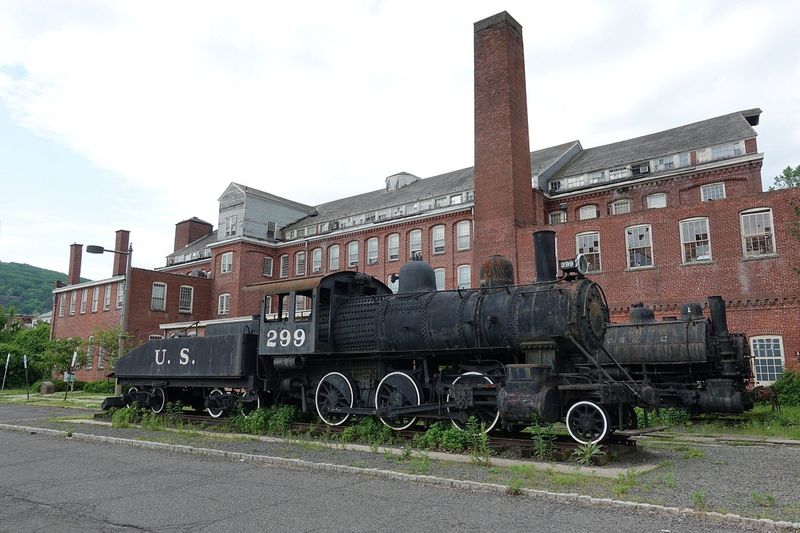
A nineteenth-century locomotive, an early submarine, Colt firearms, silk machinery, and locally built aircraft engines share space inside a former locomotive works. That combination makes this museum an ideal introduction to Paterson, a city whose industrial output once reached far beyond northern New Jersey.
The building stands within the former Rogers Locomotive and Machine Works complex, where thousands of locomotives were manufactured, including engines that helped expand rail travel across the country. One of the signature objects is the Fenian Ram, an experimental submarine designed by Irish-born inventor John Holland.
Nearby exhibits explore Samuel Colt’s Paterson years, the city’s silk industry, and the many inventors and workers who used the power of the Great Falls to build an industrial powerhouse. The museum’s old machinery and densely layered displays give it a satisfying workshop quality; this is a place of iron, gears, prototypes, and ambitious ideas.
It pairs naturally with Paterson Great Falls National Historical Park, located nearby, where the waterfall explains why so much manufacturing gathered here in the first place. Admission policies and public hours can change, so confirm them before making the trip, especially for a weekend visit.
Give yourself time to read beyond the largest artifacts. The name may sound purely local, but the exhibits show how often American transportation, manufacturing, and invention passed directly through Paterson.
13. Deep Cut Gardens – Middletown
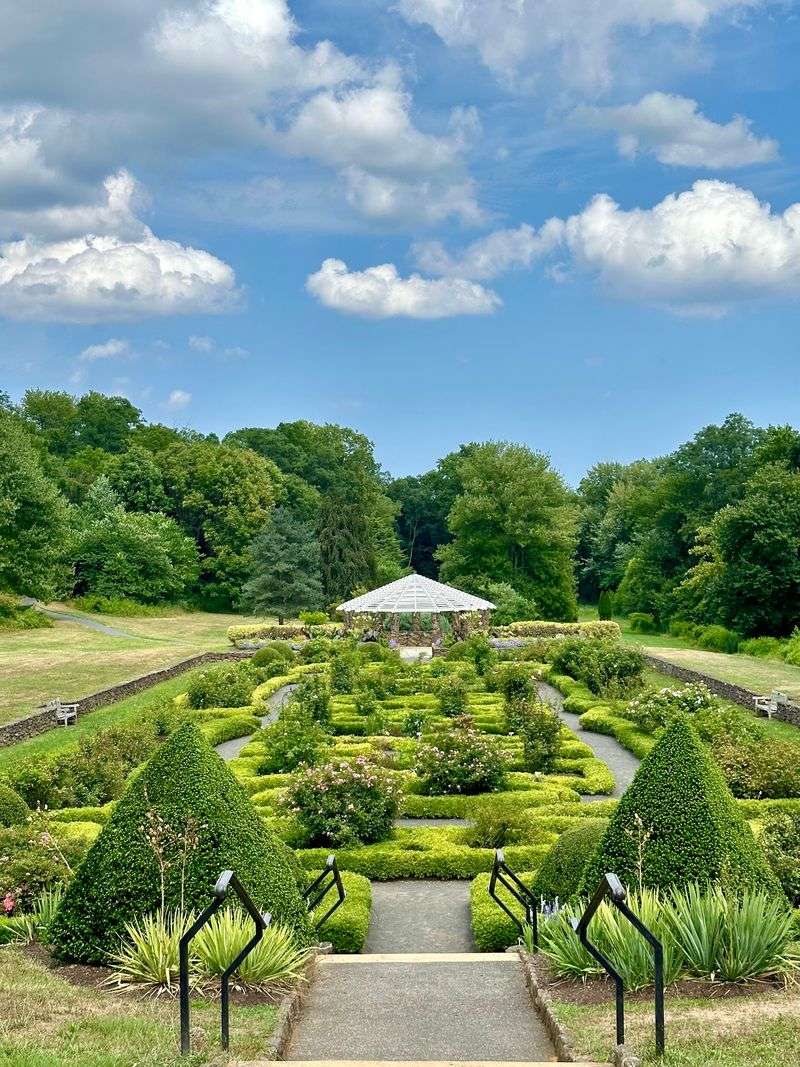
Beyond the slightly ominous name lies a koi pond, a greenhouse, formal beds, and a rose parterre planted with more than 180 bushes. This 54-acre Middletown property is designed as a living catalog for home gardeners, but no horticultural expertise is required to enjoy it.
Paths move through displays of native and cultivated plants chosen to demonstrate how color, texture, shape, and season can work together. The renovated rose garden is the obvious destination when blooms peak, with 52 varieties creating an orderly burst of fragrance and color.
The greenhouse keeps the visit rewarding in cooler weather, while the koi pond supplies a peaceful pause for families and photographers. Serious gardeners can ask staff questions, browse the horticultural reference library, attend classes, or use the seed exchange station.
Families can also borrow Garden Safari backpacks on a first-come basis, turning the grounds into a self-guided nature hunt. Because different plants take over at different points in the year, spring bulbs, summer roses, autumn foliage, and greenhouse displays each create their own version of the park.
Admission is free, and the grounds open daily from morning until dusk, though pets are not allowed. Bring a camera and a notebook if your own yard needs inspiration.
Deep Cut is not a grand botanical garden built for spectacle; it is more intimate, approachable, and full of ideas visitors might actually take home.
Share this story