The scent of smoked kielbasa mingles with fresh bread before you have made it past the first few stalls. Nearby, shoppers inspect apples, load up on Jersey-grown vegetables, and debate whether pie counts as a grocery-list essential.
At the Trenton Farmers Market, the answer is usually yes. This sprawling indoor marketplace on Spruce Street in Lawrence Township has been feeding the region for generations, yet it still feels pleasantly unpredictable.
One visit might revolve around peak-season tomatoes and blueberries; the next could produce homemade pierogi, hickory-smoked brisket, apple cider, or a loaf that barely survives the drive home.
Unlike the seasonal markets that disappear when cold weather arrives, this farmer-owned institution keeps its doors open through winter, spring, summer, and fall.
With longtime farms, specialty butchers, bakeries, lunch counters, and small independent shops gathered beneath one roof, it turns an ordinary food run into the sort of outing that deserves an empty trunk and a healthy appetite.
The Trenton Farmers Market Never Takes a Season Off
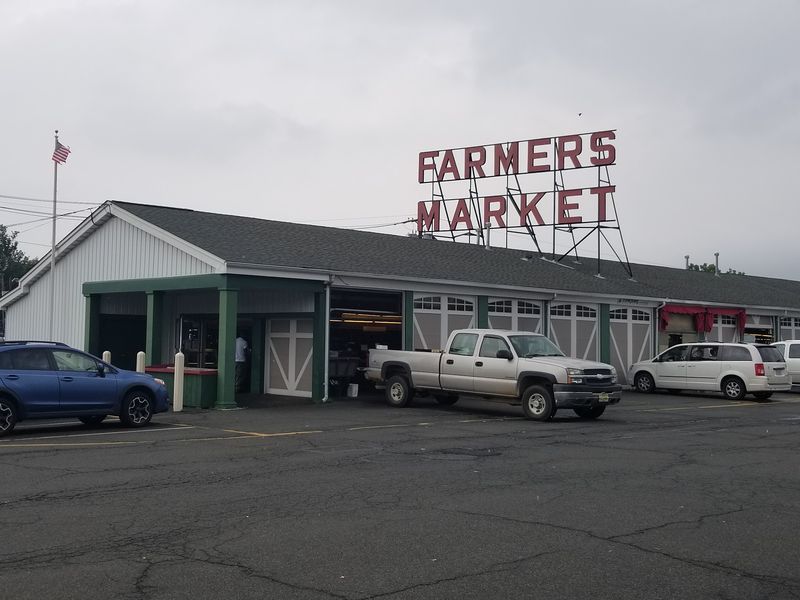
January may strip the color from backyard gardens, but the aisles on Spruce Street do not simply go dark until spring. The Trenton Farmers Market operates year-round, shifting with New Jersey’s growing calendar instead of closing when tomato season ends.
That makes it as useful for a winter pantry restock as it is for a midsummer haul of corn, peaches, and peppers. The building is a big reason the market can maintain that rhythm.
Most of the stalls sit inside a practical, no-frills structure that shields shoppers from rain, sharp winds, and summer heat. When the weather turns pleasant, overhead doors open and give the hall the breezy feel of an outdoor market without forcing anyone to keep one eye on the forecast.
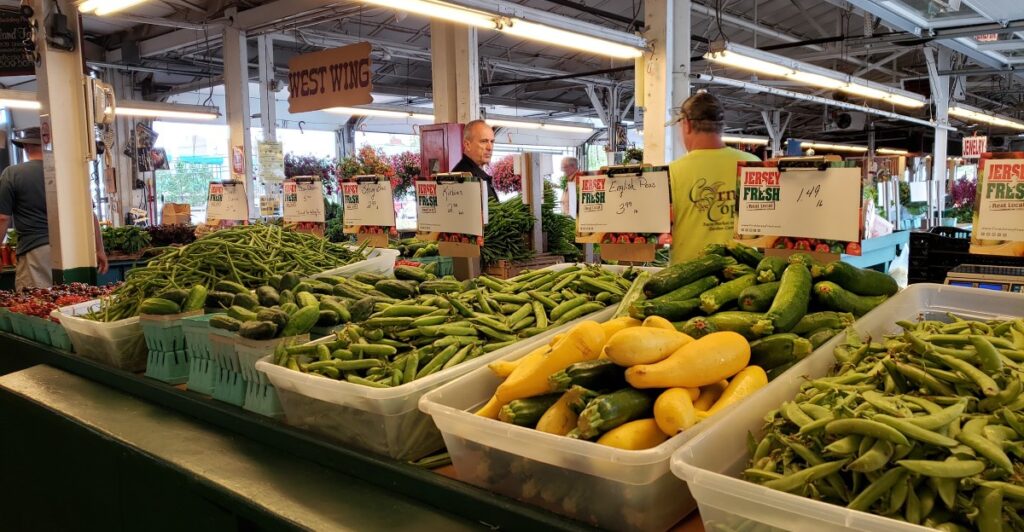
The selection naturally changes from month to month. Summer is the loudest season, with colorful produce spilling across tables and shoppers arriving ready to buy by the bag or basket.
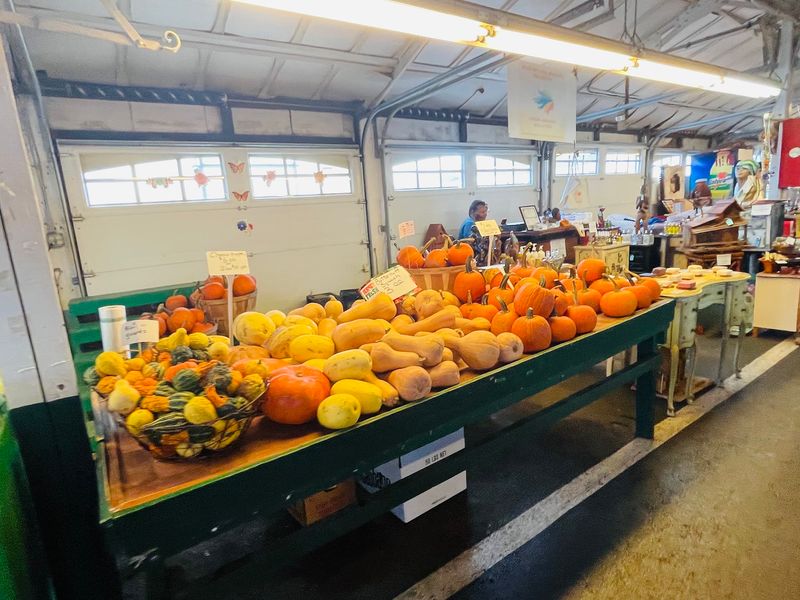
Fall replaces peaches with apples, cider, sweet potatoes, and winter squash. Cold-weather visits lean more heavily on storage crops, greenhouse-grown products, meats, baked goods, and prepared foods.
Spring brings young greens, vegetable plants, flowers, and the first signs that another full growing season is beginning. Not every farmer or pop-up vendor appears on every market day, so the experience is usually livelier toward the weekend.
Even so, the permanent food businesses give the place continuity throughout the year. The result is less like a temporary collection of tents and more like an old-fashioned public market where produce is still the foundation, but dinner, lunch, dessert, and a few unexpected purchases can all happen under the same roof.
The market describes itself as a year-round collection of more than 40 businesses.
More Than 85 Years of Farm Fresh Tradition
Long before shoppers pulled into the Spruce Street parking lot, local growers reached Trenton by horse and carriage.
In the early 1900s, farmers set up near the Lower Trenton Bridge—the one famous for its enormous “Trenton Makes, The World Takes” sign—and sold produce directly to people moving through a city positioned between Philadelphia and New York.
That informal trade eventually grew into something more permanent. The Trenton Market Growers Cooperative Association formed in 1939 when plans for what became Route 29 threatened the market’s original location.
Farmers purchased property on Spruce Street, moved the existing market buildings, and opened there in 1948. The unusual layout still carries evidence of that practical, build-what-you-need history.
Three parallel buildings formed the original market. In 1968, the center building was literally cut in half and attached to another structure, creating the cross-shaped arrangement shoppers encounter today.
Outdoor stands gradually gave way to an indoor facility, although the large overhead doors preserved some of the open-air character during warmer months. The market remains farmer-owned, with cooperative farms represented in both its stalls and leadership.
That detail matters because this is not a modern food hall decorated to imitate agricultural history. It grew out of a system designed to give farmers a direct place to sell what they raised and harvested.
Over time, meats, poultry, bread, prepared meals, plants, clothing, jewelry, and other goods joined the produce, allowing the market to remain useful beyond the growing season. Floors have been worn down by actual grocery shopping, and stall arrangements reflect decades of additions rather than a designer’s master plan.
New Jersey has plenty of historic attractions where visitors look but do not touch. Here, the history is still working, weighing vegetables, slicing meat, wrapping bread, and handing change across the counter.
The farmer-owned cooperative dates to 1939 and has occupied its Spruce Street home since 1948.
Jersey Grown Produce Changes With the Seasons
A flat of blueberries from Hammonton tells you more about the time of year than any calendar hanging on the wall. Produce remains the market’s heartbeat, and the best approach is to shop according to what New Jersey farms are harvesting rather than arriving with an inflexible list.
Pineland Farms, a third-generation operation with more than 100 acres in Hammonton, brings everything from its signature blueberries to apples, sweet potatoes, winter squash, honey, and apple cider. Its summer display expands into the kind of colorful spread that can derail dinner plans in the best way.
Russo’s Fruit and Vegetable Farm of Tabernacle has grown Jersey Fresh crops for more than 75 years, supplying seasonal produce from spring through late fall along with flowering plants and other greenhouse-grown items.
Cedarville Farms in East Windsor is a fourth-generation family farm working roughly 130 acres, while Terhune Orchards, based right in Lawrence Township, operates a preserved 250-acre farm known for fruit, vegetables, cider, baked goods, and wine.
Those names give the stalls a direct connection to fields across central and South Jersey. In spring, shoppers can expect leafy greens, asparagus, herbs, bedding plants, and young vegetable plants destined for backyard gardens.
Blueberries, peaches, zucchini, peppers, tomatoes, and sweet corn take over during summer. Apples, pumpkins, cider, potatoes, sweet potatoes, and squash signal the transition into fall and winter.
Displays and availability vary, which is part of the point; farm shopping follows weather and harvests rather than warehouse schedules. It pays to walk the full market before filling every bag.
Several stands may carry the same crop, but varieties, ripeness, quantity, and price can differ. A second loop allows time to compare, ask what was picked most recently, and learn which tomato is best for sandwiches rather than sauce.
The market’s current farm roster includes Cedarville Farms, Pineland Farms, Russo’s Fruit and Vegetable Farm, Terhune Orchards, and MAAM Got Greens.
Butcher Counters and Bakeries Make This More Than a Produce Stop
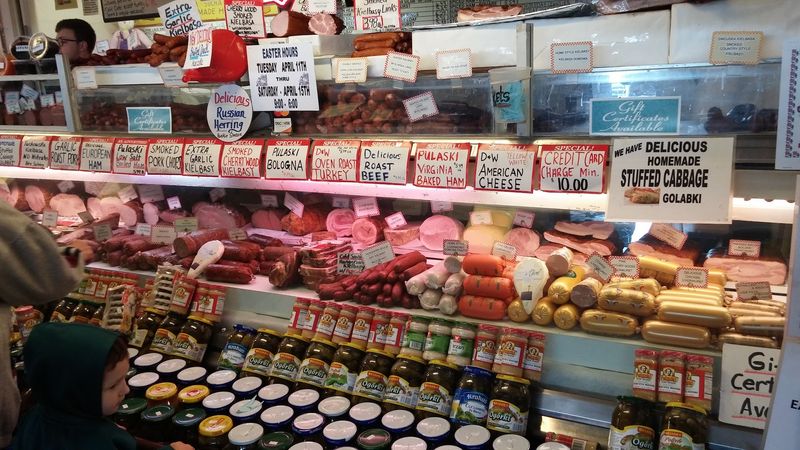
The quickest way to lose control of a sensible shopping list is to encounter fresh rye bread beside a case of smoked kielbasa. Pulaski Meats has been serving market customers for decades with Polish, German, Hungarian, Ukrainian, and Russian specialties.
Its counters are stocked with European-style hams, sausages, smoked kielbasa, homemade stuffed cabbage, and pierogi, while the bakery side adds poppy, nut, cheese, and lekvar strudels, babkas, and fresh rye. Imported chocolates, jams, pickles, tea, and cookies make it dangerously easy to build an entire meal around one stall.
Cartlidge’s Quality Meats offers a different kind of temptation. The family business has more than a century of experience and sells steaks, chops, ground sirloin, free-range chicken, eggs, handmade burgers, sausages, and house-made pork roll.
Cuts are prepared on the premises, so shoppers looking for a particular thickness or portion can talk directly with the people handling the meat. Witherspoon Meat Market widens the selection with 100 percent halal meats, frozen seafood, grass-fed tallow, Jersey Fresh milk, and duck, quail, and heritage chicken eggs.
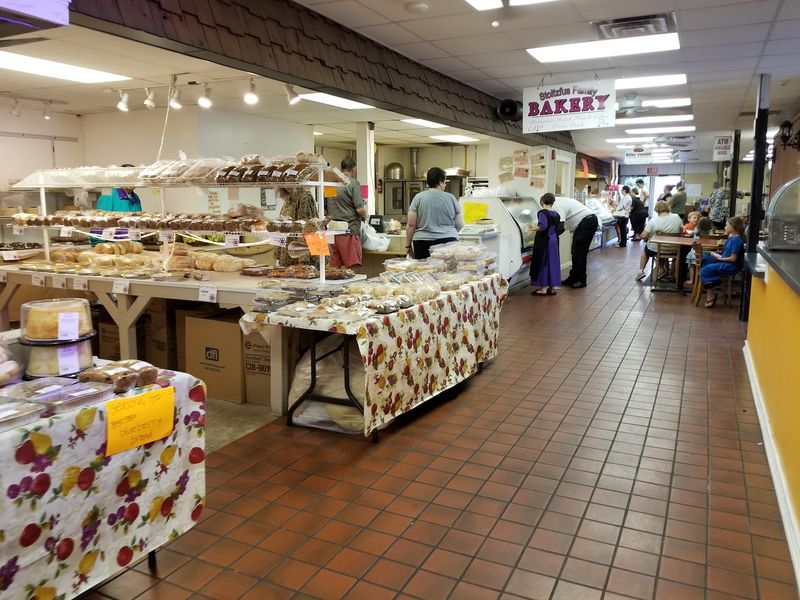
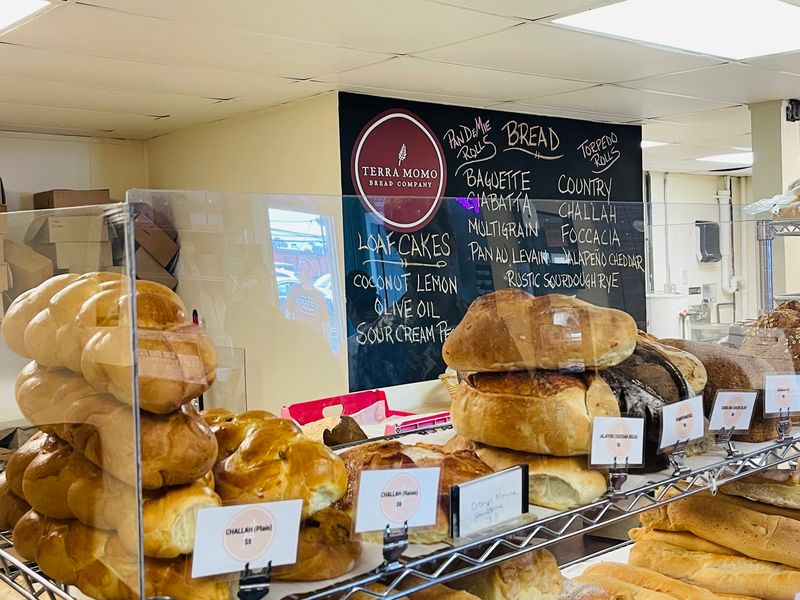
Then there are the bakeries. The Pie’d Piper specializes in homemade doughnuts, pies, cakes, crumb cake, Danish pastries, cookies, and breads, along with fresh rolls from Trenton’s Italian Peoples Bakery.
Its savory side includes prepared meals, salads, meatballs, pierogi, pickles, olives, and stuffed cabbage that is made fresh rather than frozen. Petite Baguette Boulangerie brings another bread stop to the mix, while several farm vendors sell their own baked items and seasonal treats.
Shopping here works best with a cooler bag and a little restraint, though the latter tends to disappear near the pastry cases. Buy delicate bread toward the end of the visit, especially if the market is busy.
Few things are sadder than reaching the car and discovering that a beautiful loaf has spent half an hour beneath potatoes, apples, and an enthusiastic quantity of sausage. The permanent vendor roster includes multiple butchers, bakeries, and specialty food counters.
Come Hungry for a Market Lunch
A ribbon of smoke from The Hambone Opera can rearrange the day’s priorities before grocery shopping has properly begun. This barbecue counter cooks in a Texas-inspired style, using hickory and New Jersey wild cherry wood to smoke brisket, pulled pork, chicken, wings, and several kinds of ribs.
Baby backs, St. Louis-cut ribs, beef short ribs, whole hog, and even turkey tails may appear among the choices, giving serious meat eaters plenty to consider. King Foods keeps things satisfyingly straightforward with fried chicken, whole chickens, smoked ribs, French fries, coleslaw, salads, and desserts made on-site.
Ray’s Market Cafe handles one of New Jersey’s most proudly messy contributions to sandwich culture—the Italian hot dog. Traditionally, that means hot dogs tucked into sturdy pizza bread with fried potatoes, peppers, and onions, creating the kind of lunch that requires two hands and absolutely no white shirt.
Market Street Taqueria adds tacos and Mexican flavors to the mix, while rotating center-table vendors and occasional pop-ups can bring still more choices. Tea-For-All offers a quieter counterpoint to all that smoke and frying.
Founded in 2011, the business is run by certified tea specialists Deborah and Mike Raab and carries a broad selection of teas and tea-related products. It is the sort of place where asking a simple question about black tea can turn into a genuinely useful lesson on origin, brewing time, and water temperature.
The market’s mixture of cultures is especially visible at lunchtime. Barbecue, kielbasa, pierogi, tacos, Italian hot dogs, fried chicken, pastries, and specialty tea all coexist within a short walk, without the calculated sameness of a chain-heavy food court.
Seating and operating hours may vary by business, so flexibility helps. Arriving hungry is sensible; waiting until every bag is full usually leads to hungry shopping decisions and at least one pie purchased under emotional circumstances.
Breakfast and lunch vendors listed by the market include The Hambone Opera, King Foods, Market Street Taqueria, Ray’s Market Cafe, and Tea-For-All.
What to Know Before You Visit
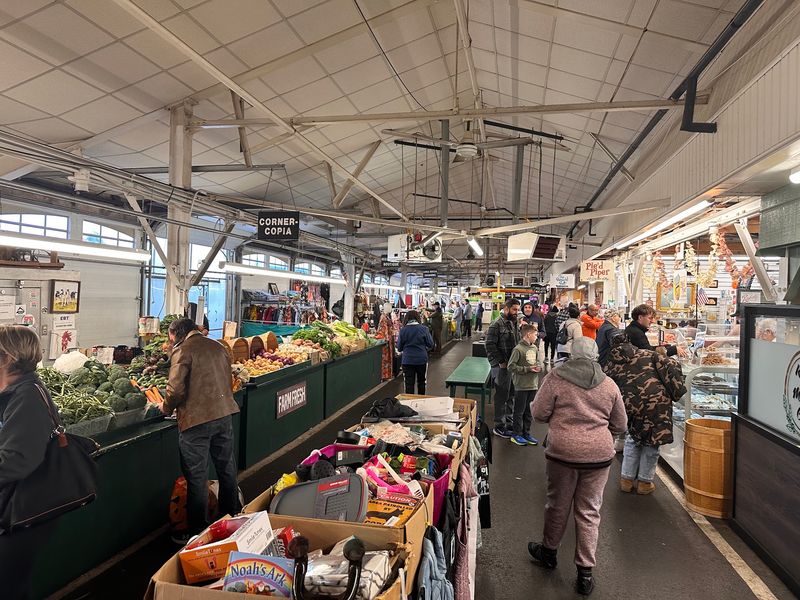
Timing changes the experience more than anything else. The Trenton Farmers Market is located at 960 Spruce Street in Lawrence Township, just outside the Trenton city line, with a large parking area that makes hauling boxes, cooler bags, and overambitious produce purchases relatively painless.
Regular market hours are 9 a.m. to 6 p.m. Wednesday through Saturday and 9 a.m. to 3 p.m. Sunday, with Monday and Tuesday closed. Individual businesses can keep slightly different schedules, and farm attendance changes with the season, weather, and harvest.
Saturday generally offers the broadest selection and most bustle. That is the day for shoppers who want the full public-market experience, complete with busy counters, fuller farm displays, and the highest possibility of leaving with something nowhere near the original list.
A weekday visit is better for taking a slower lap, speaking with vendors, and comparing produce without navigating the weekend crowd. Mornings offer the strongest chance of finding popular baked goods and seasonal items before they sell through.
Bring reusable shopping bags, plus an insulated bag if meat, poultry, dairy, or seafood will be sitting in the car. Carrying some cash is also smart, even though many established vendors accept cards.
Before buying produce, walk through once and see what each farm has brought that day. If lunch is part of the plan, eating early prevents a box of doughnuts from becoming an accidental appetizer.
The market is more functional than polished, which is precisely why it has endured. It serves people stocking kitchens, hunting down familiar foods, chatting with farmers, ordering a specific cut of meat, or picking up Sunday lunch.
Seasons change what fills the tables, but they have never changed the market’s basic purpose. After more than 85 years, Spruce Street remains a place where New Jersey food is grown, sold, cooked, and eaten as part of everyday life.
Share this story