Pennsylvania is full of old places where stone walls, broken tunnels, empty furnaces, and quiet roads still hold pieces of the past. Some were built for travel, mining, iron, cement, or war, but time changed them into strange landmarks with stories that feel both sad and thrilling. Weather, nature, and years of neglect have slowly transformed these sites, leaving behind crumbling buildings, rusted machinery, and traces of the people who once worked there.
Visiting these ruins can help us understand how people lived, worked, struggled, and sometimes faced disaster in earlier days. They also offer a chance to see how industries and communities that once seemed important eventually faded away. If you like history with a spooky edge, these forgotten Pennsylvania sites offer a powerful look at what remains after busy places go silent.
1. Kinzua Viaduct Ruins, Mount Jewett
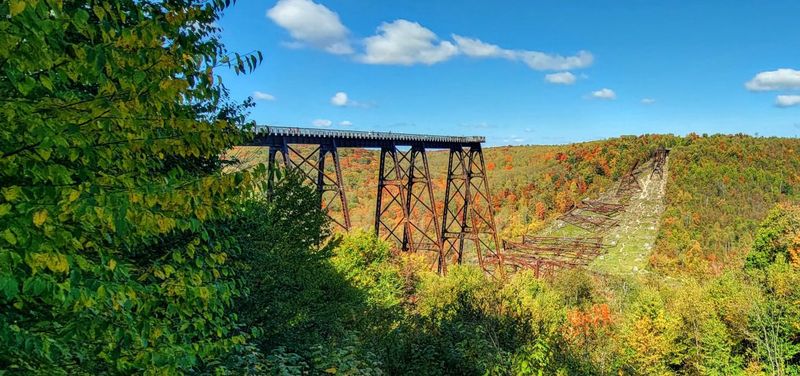
A walk onto the remaining bridge feels like stepping toward the edge of a giant storybook.
Far below, the forest spreads across Kinzua Gorge, while twisted steel towers still rest where a tornado threw them down in 2003.
The Kinzua Viaduct was once one of the tallest railroad bridges in the world.
Built in 1882 and later rebuilt with steel in 1900, it carried trains high above the valley and became a proud sign of engineering skill in northern Pennsylvania.
The eerie part is not only the height.
It is the sudden ending.
Visitors can see where the bridge stops, then look out at the wreckage scattered like fallen bones across the trees.
Today, Kinzua Bridge State Park makes the site safe and easy to explore.
The skywalk has a glass floor section, so brave visitors can look straight down.
Wear sturdy shoes, hold onto hats in strong wind, and stay behind barriers.
The story is a reminder that even strong things are not stronger than nature.
The tornado that destroyed much of the viaduct moved fast, leaving behind a scene that still shocks people who remember old photos of the complete bridge.
For the best visit, stop at the park visitor center first.
Exhibits explain the railroad history, the storm, and the people who built the structure.
At sunset, the ruins can look especially haunting, but also beautiful.
Bring a camera, but also take a quiet minute to listen.
The wind passing through the remaining steel almost sounds like a train that never arrives.
That lonely feeling is what gives the Kinzua Viaduct ruins their unforgettable power.
2. D*ad Man’s Hollow Industrial Ruins, Liberty Borough
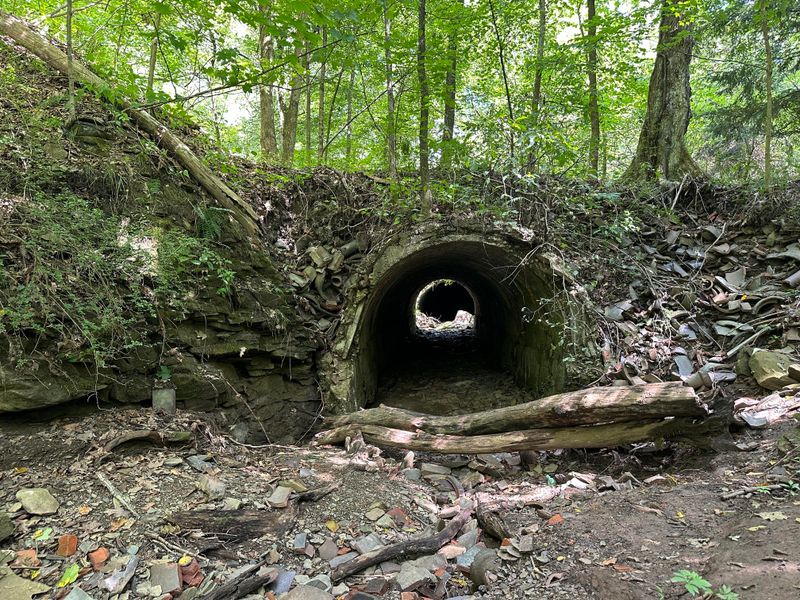
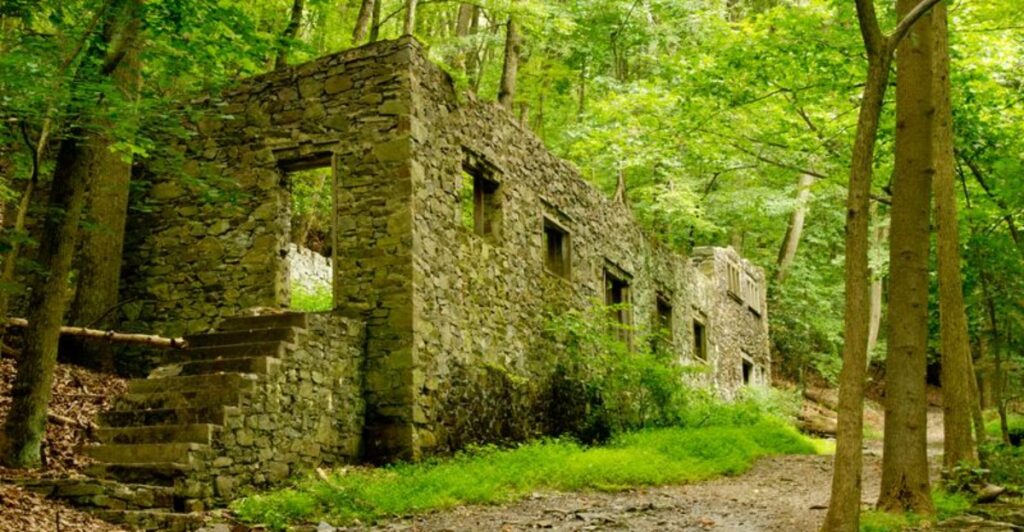
Deep in the woods near Liberty Borough, old stonework hides under vines and leaves like a secret someone tried to forget.
The name alone gives the place a chill, but the history is just as gripping.
D*ad Man’s Hollow is a protected conservation area today, yet it once held busy industry.
In the 1800s and early 1900s, factories, rail lines, and mining work shaped this valley along the Youghiogheny River area.
One of the most talked-about stories involves a murder from the late 1800s, which helped give the hollow its grim name.
Over time, true crime, worker hardship, and abandoned foundations blended into local legend.
Visitors may spot old walls, bridge remains, and traces of industrial activity along the trails.
The woods have taken back much of the land, so ruins can appear suddenly between tree trunks, almost like they are watching you pass.
Because this is a natural area, good trail manners matter.
Stay on marked paths, do not climb unstable remains, and check maps before going.
After rain, muddy stretches and slippery roots can make walking harder than expected.
The hollow also has a quieter lesson.
Places that now seem peaceful were once loud with machines, labor, and danger.
Many workers in Pennsylvania’s industrial past faced long hours and risky conditions just to support their families.
If you enjoy ruins with a mix of nature and mystery, plan a daytime hike and bring water.
The shadows grow fast in the valley, and phone service may be weak.
That small sense of being cut off is part of the eerie mood, but preparation keeps the adventure safe.
3. Austin Dam Ruins, Austin
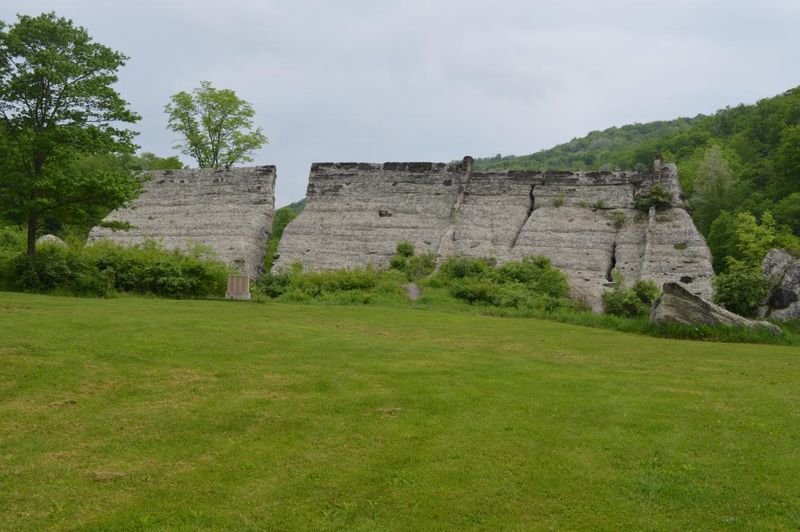
A broken wall in the woods can be more moving than a monument covered in polished stone.
At Austin, the shattered dam still stands as a heavy reminder of one of Pennsylvania’s worst flood disasters.
The Austin Dam was built to hold water for a paper mill.
In 1911, the dam failed, sending a wall of water into the small town below.
Many lives were lost, and homes, businesses, and streets were torn apart in minutes.
What makes the ruins so unsettling is their size.
Huge slabs of concrete remain, cracked and leaning, as if the disaster happened recently instead of more than a century ago.
The silence around them makes the story feel even larger.
The site is now part of Austin Dam Memorial Park, where visitors can walk, reflect, and learn.
Signs and local memorials help explain what happened and why better planning and safety rules matter.
There is practical value in visiting with care.
Do not climb on broken concrete, because old surfaces can crumble or shift.
Bring bug spray in warm months, and watch children closely near uneven ground and water.
The Austin Dam also shows how industrial ambition sometimes raced ahead of caution.
Communities trusted structures that were supposed to protect and support them.
When that trust failed, the cost was heartbreaking.
Still, the park is not only sad.
Concerts and community events sometimes happen there, showing how people can turn a painful place into one of memory, learning, and togetherness.
Stand near the ruins and picture the valley before the flood.
That simple act makes history feel personal.
The dam’s remains do not whisper a ghost story as much as a warning: build wisely, listen carefully, and never forget the people downstream.
4. Wehrum Ruins, Vintondale
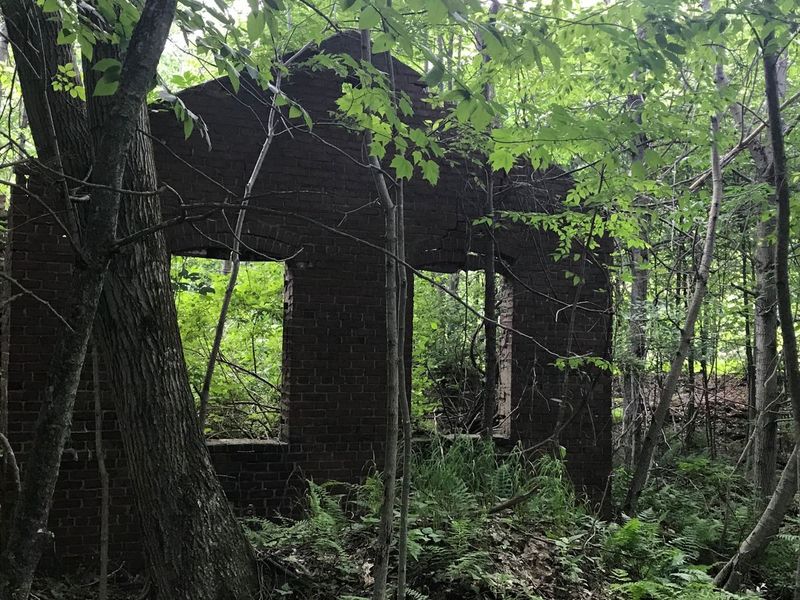
Not every ghost town announces itself with empty houses and leaning porches.
Near Vintondale, Wehrum has mostly faded into forest, leaving stone foundations and quiet paths to tell what coal once built.
Wehrum was a company town created for coal mining in the early 1900s.
Families lived there, children went to school there, and workers spent long days tied to the mine and the company that controlled much of daily life.
At its peak, the town had homes, a hotel, a bank, stores, and a train connection.
Then the coal industry shifted, operations slowed, and people moved away.
By the 1930s, Wehrum was nearly gone.
The eerie feeling comes from absence.
You may see a foundation and realize it was once a kitchen, a front step, or a place where someone waited for a miner to come home.
The forest makes the town feel hidden, not erased.
Visitors should remember that many ghost town sites sit on or near private land, public trails, or protected areas.
Before going, check current access rules and use reliable maps.
Never dig for artifacts or remove bricks, bottles, or metal pieces.
Wehrum is also a good place to think about company towns across Pennsylvania.
They offered housing and community, but they could also limit workers’ choices.
Pay, rent, stores, and jobs were often connected through the same powerful company.
For a respectful visit, go slowly and look for patterns in the ground.
Rows of stones may mark streets or homes.
A quiet imagination can rebuild the town better than any sign.
The ruins do not need scary music to feel haunting.
Their power comes from knowing that a whole community once laughed, worked, worried, and dreamed there, then vanished into green silence.
5. Camp Michaux Ruins, Michaux State Forest
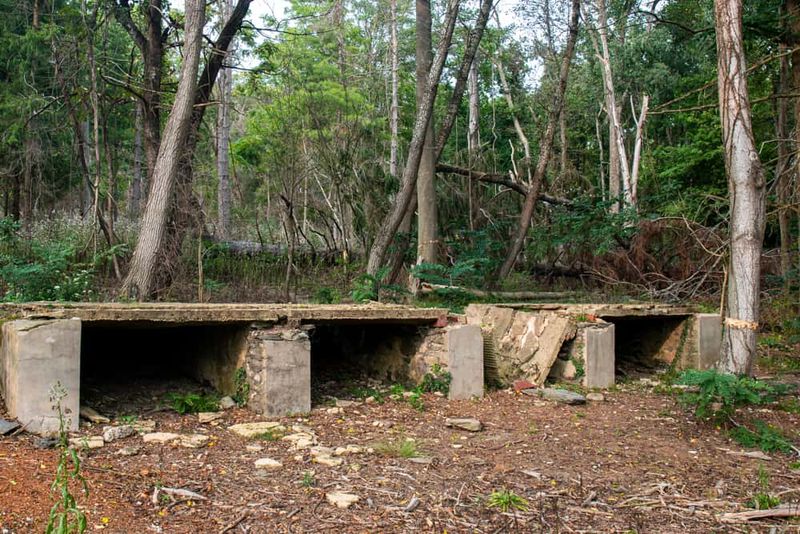
Hidden among trees in Michaux State Forest, a few foundations and old steps point to a place with several lives.
Camp Michaux was not just one thing, which makes its ruins especially strange and layered.
The site began as a farm connected to an iron operation, then became a Civilian Conservation Corps camp during the Great Depression.
Young men lived and worked there, building trails, roads, and forest improvements at a time when many families needed hope.
During World War II, the camp changed again.
It held German and Japanese prisoners of war, turning a quiet Pennsylvania forest into part of a global conflict.
Later, it served as a church camp before being abandoned.
Walking the site today can feel like reading torn pages from different books.
One foundation may suggest hard outdoor labor, while another brings to mind wartime guards, fences, and men far from home.
The ruins are usually explored by trail, and numbered markers or maps may help visitors understand what once stood there.
Go prepared for a forest walk with water, solid shoes, and weather-ready clothing.
Respect is important here.
Camp Michaux is not a playground, even though exploring can feel exciting.
Avoid moving stones, carving names, or stepping into areas that look unstable.
A useful tip is to read a little history before arriving.
Knowing the timeline makes the scattered remains much more meaningful.
Without background, the site may look like random concrete in the woods.
The eerie side of Camp Michaux comes from its many identities.
Few places can say they housed workers, prisoners, worshipers, and campers across different decades.
The forest has softened the edges, but it has not fully covered the past.
6. Concrete City, Nanticoke
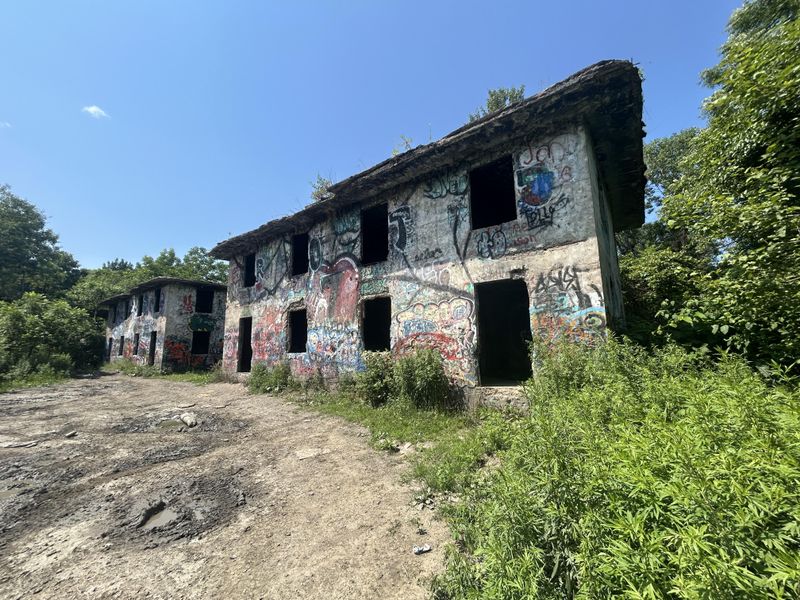
A neighborhood made of concrete sounds practical until you see it empty.
Near Nanticoke, the boxy homes of Concrete City stand like a forgotten experiment that did not quite understand real life.
Built in 1911 for employees of the Delaware, Lackawanna and Western Railroad’s coal operations, the development was considered modern for its time.
The homes were fireproof, sturdy, and arranged in neat rows.
There was one big problem.
The houses were damp, hard to heat, and uncomfortable in Pennsylvania winters.
Families moved out, and the company eventually gave up on the project.
Later, people tried to destroy the buildings, but the concrete was too tough.
Even explosives did not fully erase them.
That failed demolition adds a strange twist, making the site feel stubborn, almost as if it refused to disappear.
Today, Concrete City is famous with photographers, history fans, and people who like abandoned places.
Graffiti covers many walls, and nature grows through the open spaces.
The empty windows give the buildings a watchful look.
Visitors should be careful and check access rules before going.
Abandoned buildings can have broken glass, hidden holes, loose material, and other hazards.
It is smart to admire from safe spots and avoid entering unsafe structures.
The site also raises a simple question: what makes a good home?
Strong walls are not enough if people are cold, wet, or unhappy.
Concrete City shows that design must serve daily comfort, not just company plans.
For the most interesting view, look at the layout as a whole.
Imagine laundry lines, children playing, and miners returning after work.
Then notice the silence.
That contrast between planned community and empty shell is what gives Concrete City its uneasy charm.
7. Abandoned Pennsylvania Turnpike, Breezewood And Fulton County
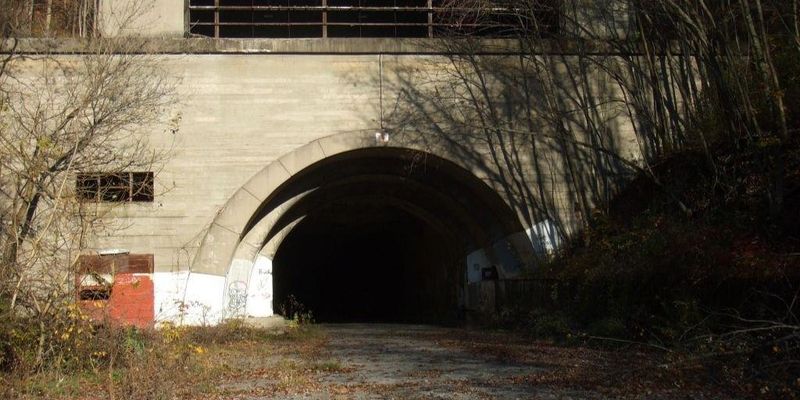
There is something wonderfully odd about walking down a highway with no traffic.
Near Breezewood and in Fulton County, parts of the old Pennsylvania Turnpike sit quiet, cracked, and strangely peaceful.
This abandoned stretch includes old roadway and tunnels that were bypassed when the turnpike was improved.
As traffic grew, officials needed wider lanes and safer routes, so vehicles moved to newer sections and left the old road behind.
The tunnels are the main thrill.
Long, dark, and cool inside, they can make footsteps echo in a way that feels straight out of a mystery film.
Bring a flashlight, because tunnel darkness can be complete in the middle.
Bicyclists and walkers often explore the route where access is allowed.
The pavement is rough in places, and weeds push through cracks.
A helmet, bright clothing, and a repair kit are smart choices for riders.
The eerie story here is not about one sudden disaster.
It is about being replaced.
The road once carried families, truckers, soldiers, vacationers, and workers.
Now it mostly carries wind, dripping water, and curious visitors.
Before visiting, check current ownership, parking, and trail information.
Some areas may have restrictions or changing conditions.
Never block gates, trespass on nearby property, or enter unsafe closed sections.
Pack more water than you think you need, especially in warm weather.
Distances can feel longer on an empty road, and tunnels may be chilly even when the sun is strong outside.
The abandoned turnpike offers a rare chance to stand inside transportation history.
Pennsylvania has always been a state of movement, from canals to railroads to highways.
Here, the movement stopped, and that stillness is what makes the place unforgettable.
8. Colonial Springs Bottling Plant Ruins, Valley Forge
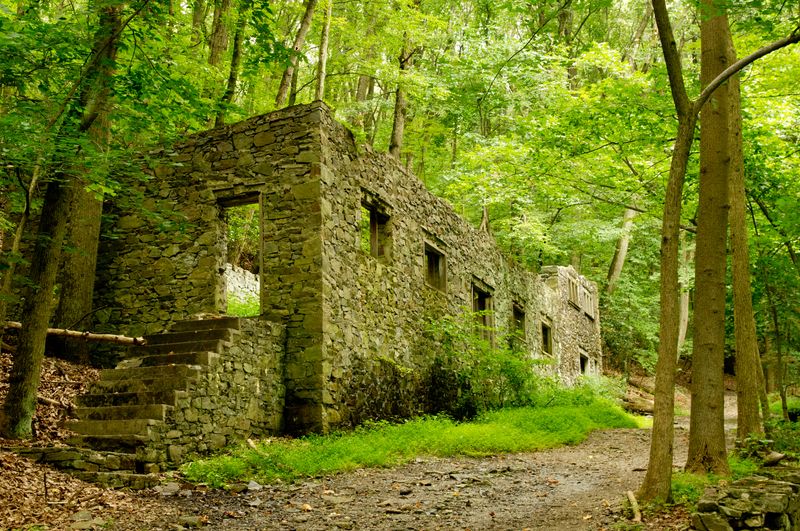
Beside the famous history of Valley Forge, a smaller ruin hides a different kind of story.
The Colonial Springs Bottling Plant reminds visitors that not every old site is about armies and battles.
This area was known for spring water, and businesses once tried to turn that natural resource into profit.
Bottled water may seem modern, but people have valued clean spring water for a very long time.
The remains are modest compared with grand ruins, yet that is part of their appeal.
Low walls, old stonework, and traces of structures can make you slow down and notice details you might otherwise miss.
The eerie feeling comes from the setting.
Valley Forge is already full of memory, with stories of cold, hunger, and endurance from the Revolutionary War.
Finding industrial remains nearby adds another layer to the landscape.
Visitors should treat the area gently.
If ruins are within parkland or near protected natural spaces, stay on approved trails and follow posted rules.
Mossy stones can be slippery, and old edges may not be stable.
A good way to explore is to connect the bottling plant story with the wider history of the region.
People came to this land for water, roads, work, defense, farming, and business.
Each generation left marks.
Because the site is quieter than major Valley Forge landmarks, it rewards patient eyes.
Look for how nature and human work meet.
Roots grip stone, leaves cover old surfaces, and water keeps moving as buildings fade.
For families, this ruin can start a fun conversation.
What everyday businesses from today might become mysterious someday?
The Colonial Springs Bottling Plant shows that even a simple product like water can leave behind a curious and slightly ghostly footprint.
9. Scranton Iron Furnaces, Scranton
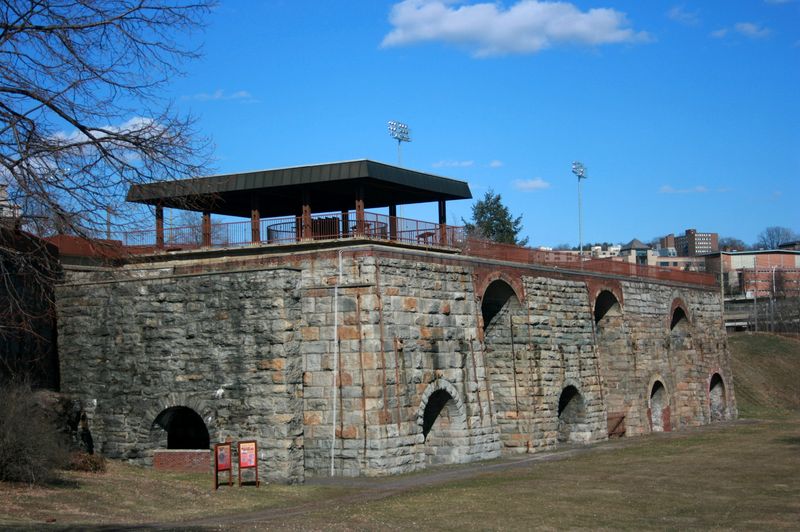
At first glance, the tall stone stacks in Scranton look like ancient towers from another land.
Then the truth becomes even better: they helped build America’s iron age.
The Scranton Iron Furnaces are remains of a major iron-making operation from the 1800s.
The Lackawanna Iron and Coal Company produced rails and other iron goods here, helping fuel railroads and industry across the country.
The furnaces are not hidden deep in the wilderness.
They stand in the city, which gives them a special power.
Modern streets and buildings nearby make the old stone arches feel even more dramatic.
Imagine the site when it was alive with heat, smoke, workers, wagons, and noise.
Iron furnaces were intense places.
The air would have been hot and dirty, and the work demanded strength and courage.
The eerie mood comes after dark or on gray days, when the arched openings look like doorways into the past.
Special events sometimes use the site, but even a normal visit can feel memorable.
Because this is a historic landmark, visitors should not climb on the furnaces or damage the stone.
Read the signs, take photos from safe areas, and notice the size of the structures compared with the people walking nearby.
The ruins also connect to Scranton’s identity.
The city is often linked with coal, railroads, and hard work.
These furnaces show how natural resources and human labor turned northeastern Pennsylvania into an industrial force.
A helpful tip is to pair the visit with other nearby heritage sites, such as railroad or mining museums.
Together, they make the story clearer.
The furnaces may be silent now, but they still speak through stone, shadow, and the memory of fire.
10. Bunkers Of Alvira, West Chillisquaque Township
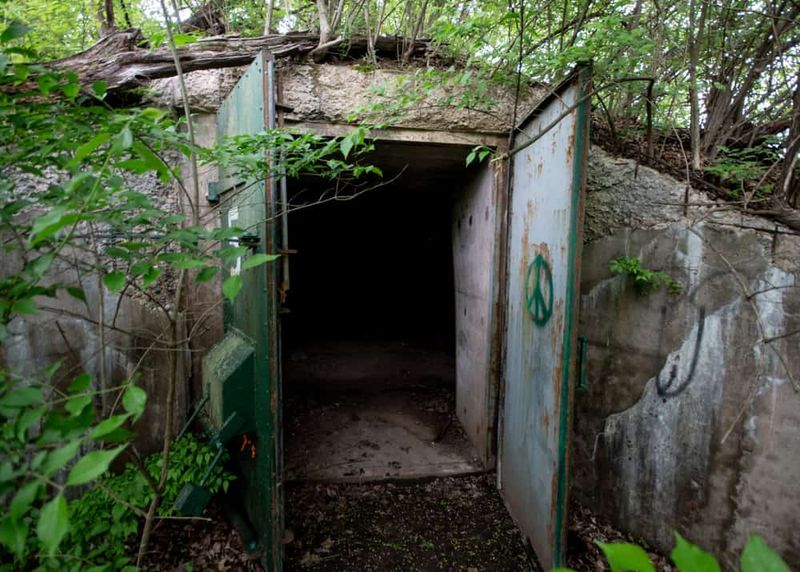
A quiet field dotted with bunker doors can make the past feel oddly close.
In West Chillisquaque Township, the bunkers of Alvira are tied to a town that was changed by war.
During World War II, the federal government took over the village of Alvira and nearby land to create the Pennsylvania Ordnance Works.
The site was used for explosive production and storage, and residents had to leave their homes.
Many of the concrete bunkers still remain, set into the land like low, sleeping creatures.
They were designed to store dangerous materials safely, with earth around them to help contain blasts if something went wrong.
The eerie story is not only military.
It is personal.
Families lost a community, and the village never returned to what it had been.
Roads, homes, and familiar places were replaced by wartime needs.
Today, parts of the area are connected with public land and recreation, but access can vary.
Visitors should check current rules before exploring and respect signs, gates, and restricted zones.
Do not try to force open structures or enter unsafe spaces.
Old military sites can have hidden hazards, from unstable concrete to environmental concerns.
Looking from safe, legal areas is the best choice.
The bunkers are useful reminders that big national events reach small towns.
World War II was fought overseas, but places in Pennsylvania supplied materials, labor, land, and sacrifice.
For a meaningful visit, think about both sides of the story.
The bunkers show planning and urgency during a dangerous time.
They also show the cost paid by ordinary people whose homes stood in the way of history.
That mix of duty and loss gives Alvira its haunting mood.
The doors may be shut, but the questions they raise are wide open.
11. Coplay Cement Company Kilns, Coplay
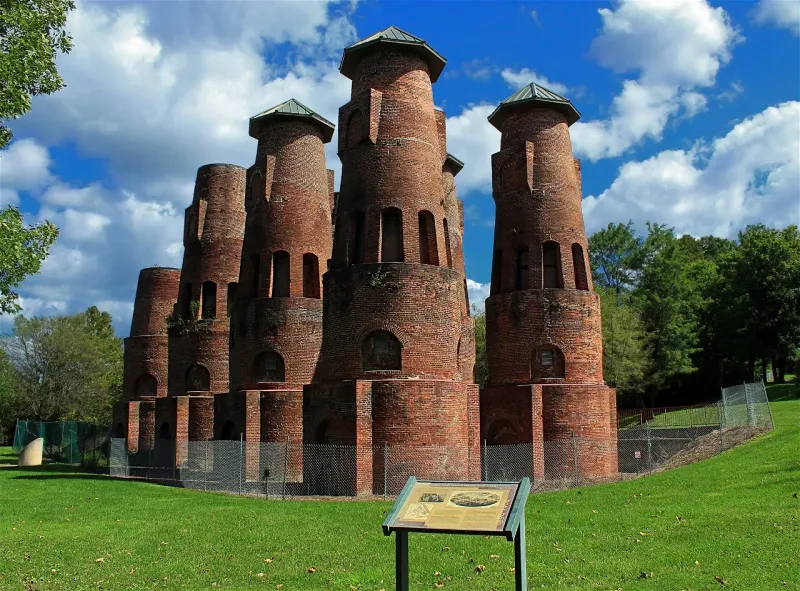
A row of tall kilns in Coplay looks almost like a line of giant chimneys waiting for smoke that will never come.
Their shape is unusual, and their story helped change how America built.
The Coplay Cement Company was a major part of the cement industry in the Lehigh Valley.
In the late 1800s and early 1900s, this region became one of the most important cement-producing areas in the country.
The remaining kilns are called Schoefer kilns, and they show an older way of making Portland cement.
Before modern plants took over, workers used structures like these to heat materials at high temperatures.
What feels eerie here is the stillness after so much heat.
Cement production would have meant smoke, dust, flame, noise, and tough labor.
Now the kilns stand quietly in a preserved historic setting.
Visitors can view the kilns at a local park area, making this one of the easier ruins to appreciate without rough hiking.
Still, treat the structures with respect and stay in allowed areas.
The site is especially good for people who enjoy hidden history in plain sight.
Cement may not sound exciting at first, but it is part of bridges, sidewalks, dams, schools, and homes.
These kilns connect to everyday life in a surprising way.
Bring a camera and look closely at the repeating forms.
The arches, openings, and weathered surfaces create strong patterns.
On cloudy days, the kilns can look especially moody.
A visit also helps explain Pennsylvania’s industrial variety.
Coal and steel get lots of attention, but cement shaped the built world too.
The Coplay kilns are not just old ruins.
They are a reminder that even ordinary materials have dramatic origins, and that progress often leaves strange, beautiful remains behind.
Share this story