
The first surprise is the sound. Just past the quiet water of George Lake, a trail drops into the woods, and the rush of Electric Brook begins to take over.
Follow it downhill, and you reach waterfalls tucked among rocks and trees that turn the whole gorge bright in fall. That is only one side of Schooley’s Mountain County Park.
Elsewhere, a rocky overlook opens onto the fields and hills around Long Valley, while a floating bridge offers a close look at the season’s colors reflected in the lake. You can take on the uneven brookside trail, wander the wooded Grand Loop, or combine them for a longer outing.
The park is large enough to feel like a real escape, but its best sights are close enough to fit into an afternoon. Bring shoes that can handle rocks and leaves underfoot.
You will probably stop more often than you expect.
Schooley’s Mountain County Park Comes Alive in Fall
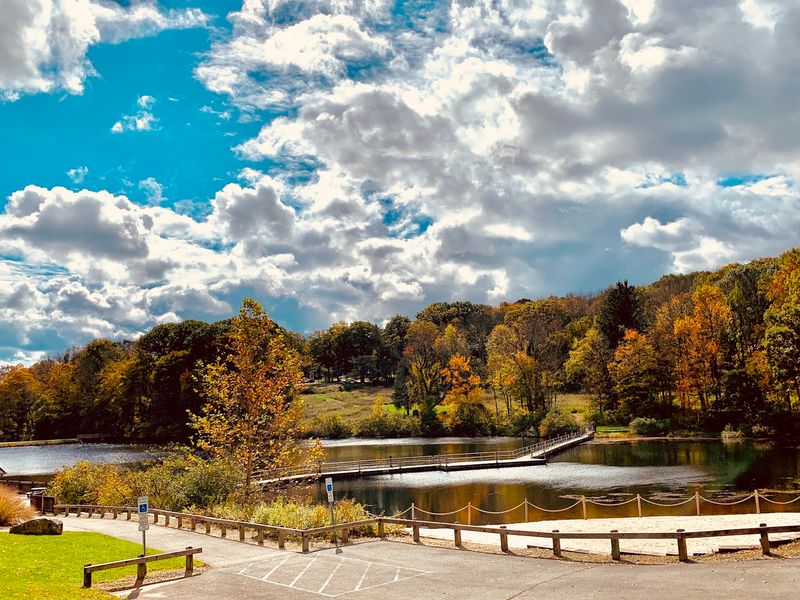
From the main parking area, this western Morris County park can look like a pleasant place for a picnic. There are open fields, a lake, and plenty of room to spread out.
Then you follow a trail into the trees and realize the mountain has a much wilder side. Schooley’s Mountain County Park covers 823 acres in Washington Township.
Its paths wind through the North Jersey Highlands, connecting wooded slopes, a rocky brook, open ground, and overlooks. Fall gives each of those places its own character.
Color gathers around the lake, the woods grow brighter overhead, and the view across Long Valley picks up patches of changing trees among the fields. That variety is what makes the park such a satisfying autumn trip.
You do not have to commit to a strenuous hike to enjoy it, but there is enough uneven ground for anyone who wants a more demanding walk. A family can spend time near George Lake and the picnic areas.
Hikers looking for waterfalls can head down Falling Waters Trail. Those with an afternoon to spare can link several marked trails into a longer route.
The mountain has a human story, too. The county acquired the property from the YMCA of Morristown in 1969 and opened the park to the public in 1974.
The Lodge near the lake is a reminder of that earlier chapter, while the trails quickly leave the developed areas behind. It is an appealing combination in fall: somewhere comfortable to begin, and plenty of woods to disappear into for a while.
Falling Waters Trail Leads to Cascades and Autumn Color
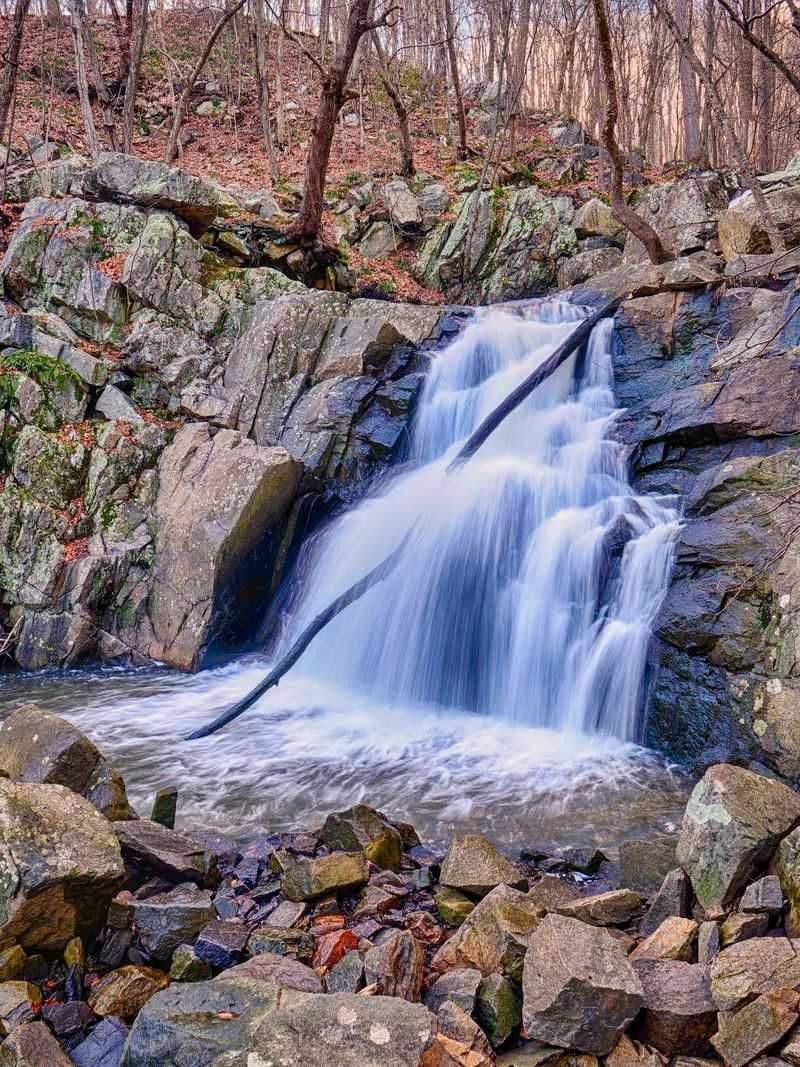
Listen for the water once you pass the far end of George Lake. The blue blazes of Falling Waters Trail lead downhill into the gorge of Electric Brook, where the path turns rocky, and two waterfalls give the hike its name.
In fall, leaves collect along the edges of the stream and stand out against the dark, wet stone. This is the part of the park that asks you to watch your feet.
The county’s trail guide lists the blue trail at 0.68 miles and gives it the most demanding terrain rating on its map. That short distance can feel longer when you are stepping over rocks and making your way through the descent.
Shoes with good grip are worth wearing, especially after rain or when fallen leaves cover the footing. There is no need to hurry through it.
Pause where the trail safely allows, and the small details start to compete with the waterfalls: water slipping between stones, bright leaves caught in a pool, the change in sound as the brook rounds a bend. Remains of an old hydroelectric installation along Electric Brook add an unexpected bit of local history to the walk.
The brook once helped generate power for the surrounding area. The trail is especially rewarding because the scenery changes so quickly.
One moment you are above the water among the trees; the next, you are down beside the cascades. For a longer hike, the New York–New Jersey Trail Conference describes a 3.5-mile loop that pairs Falling Waters with other park trails.
However you connect it, leave time for the rocky stretch. It is the kind of place where an extra ten minutes is easily spent beside the brook.
The Overlook Gives You a Sweeping View of Long Valley
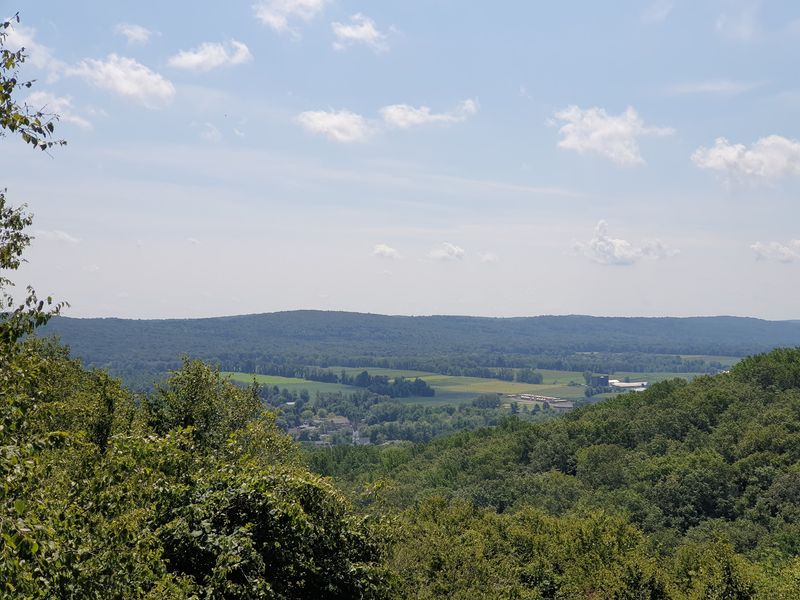
The view makes more sense once you have walked through the woods to reach it. After so much close-up scenery along Electric Brook, the trees suddenly give way at a rocky outcrop, and Long Valley spreads out below.
Fields break up the hillsides, and in fall the changing trees add color across the landscape. It is a different kind of autumn view from the one you get beside the waterfalls.
Down in the gorge, you notice individual leaves and the water moving around them. Up here, you can see how the season is moving across the valley.
Some patches of woodland may already be bright while others still hold on to green. The farms and open land keep the view from becoming one uninterrupted wall of trees.
You can work the overlook into a longer route from Falling Waters Trail. After climbing out of the gorge, the blue trail meets Patriots’ Path and the Highlands Trail.
A short walk brings you to the south-facing rock outcrop. The route is worth checking on a park map before you set off, since several marked trails meet in this part of the mountain.
Give the overlook a little time rather than treating it as a quick photo stop. Find a safe place on the rocks, look back toward the hills, and pick out the lines of fields between the trees.
On a clear day, that open perspective is a fine reward for the climb from the brook. The rock can be uneven, so there is still a reason to mind your footing even after the steepest walking is behind you.
George Lake Reflects the Changing Trees
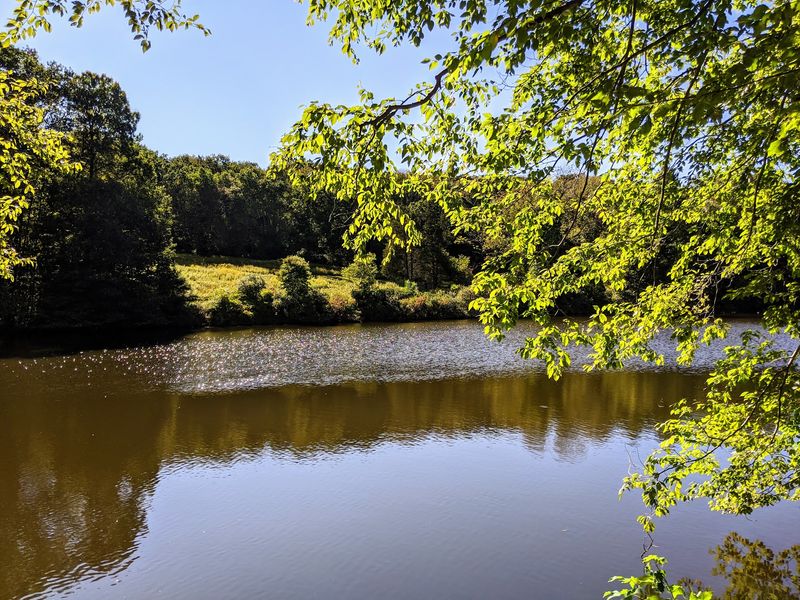
Not every fall highlight at Schooley’s Mountain requires a climb. George Lake sits close to the park’s main facilities, and on a calm day it gives the surrounding trees a second showing in the water.
A breeze breaks the reflection into moving streaks of color; when the surface settles, it is tempting to stand still and watch it form again. The lake is a useful starting point for the day.
It is near the main parking area, with the Boathouse on one side and The Lodge on the other. A 470-foot floating bridge connects them.
Crossing it puts you out over the water, with a different angle on the shoreline than you get from a trail. It also gives anyone who is skipping the rockier hike a memorable piece of the park to enjoy.
There is something pleasant about returning here after Falling Waters Trail. The gorge keeps your attention on every step; the lake lets you slow down again.
Walk the shore, cross the bridge, or find a spot to sit and watch the light change on the trees. The park also has picnic areas, so it is easy to turn the outing into a longer afternoon without planning another stop.
If you are hiking with people who want different levels of effort, the lake makes an obvious place to regroup. Some can explore the nearby paths while others stay around the water.
Fall does much of the work for everyone: you get a generous view of the changing leaves simply by looking across George Lake.
The Grand Loop Offers a Gentler Way to Explore
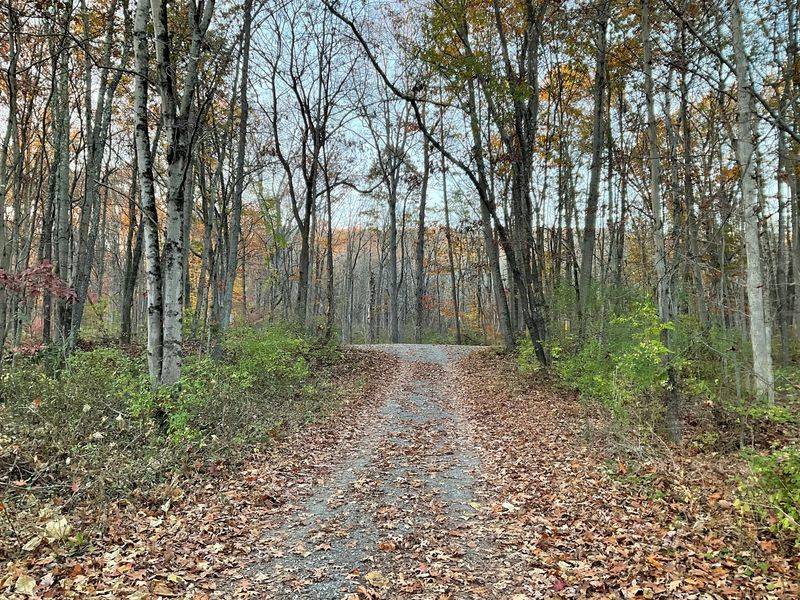
A waterfall hike sounds excellent until somebody in the group sees the rocky descent. The Grand Loop offers another way into the woods.
Its yellow blazes guide you around the mountaintop on a route that is less demanding than Falling Waters Trail, with stretches that let you pay more attention to the trees than to the next foothold. “Gentler” is relative, though.
The county rates the yellow trail’s terrain below the blue trail’s, but it is still a natural-surface walk with uneven areas and changes in elevation.
The trail guide lists the yellow route at 1.7 miles. Bring comfortable walking shoes and keep an eye out for roots hidden beneath fallen leaves.
The loop is a good choice when you want the feeling of a woodland hike without making the waterfalls the whole plan. Trees surround much of the route, so the fall color feels close rather than far off on a hillside.
You can walk at an easy pace, stop where the light reaches through the branches, and enjoy a quieter side of the mountain. It also gives more ambitious hikers options.
Other marked paths meet the Grand Loop, and a longer circuit can connect it with Falling Waters Trail, Patriots’ Path and the Highlands Trail. Those junctions are a reason to carry the current park map instead of assuming every turn leads back to the lot.
If a relaxed walk is the goal, stay with the yellow blazes and give yourself enough daylight to enjoy the woods on the way back.
What to Know Before Your Fall Hike
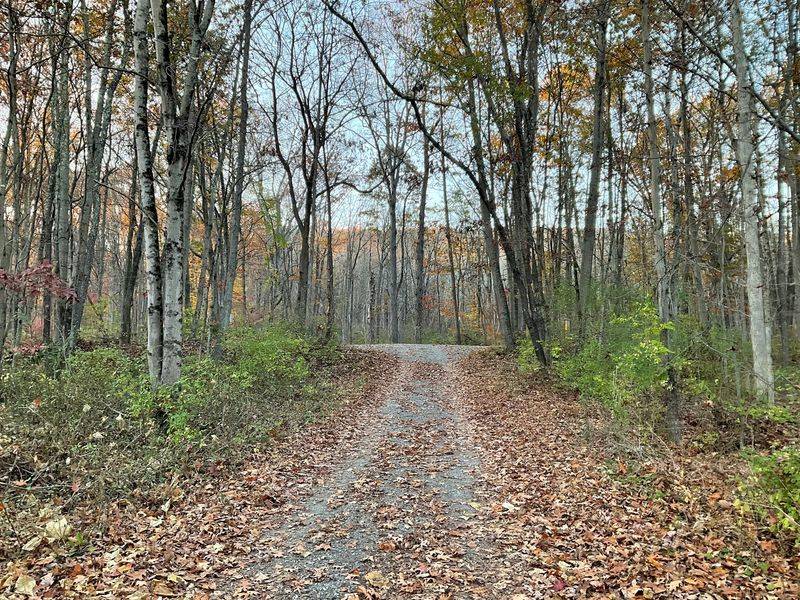
Put 91 East Springtown Road in Washington Township into your directions, and check the park map before leaving home. Schooley’s Mountain County Park is open daily from sunrise to sunset.
Since the trails branch and reconnect in several places, it helps to decide whether you want a short walk near George Lake, a trip down Falling Waters Trail, or a longer loop. Footwear is the most useful thing to get right.
Falling Waters is rocky, and wet leaves can make both stone and roots harder to see. Carry water even if you expect a modest walk, and allow more time than the trail mileage alone suggests.
Stopping at the cascades, finding the overlook, and lingering beside the lake can easily stretch a short hike into most of an afternoon. Fall color shifts with the weather, so there is no single date that guarantees the best view.
An early visit can bring a mix of green and changing leaves; later in the season, the color may be stronger, but the trail can have more leaf cover underfoot. A weekday or an earlier start may give you more room to linger at the popular spots.
The park has picnic areas as well as the trails, lake, and bridge, making lunch an easy addition to the day. Keep the route comfortable for everyone in your group and turn back with enough daylight to spare.
By the time you reach George Lake again, its reflections may look different from when you first passed it.
Share this story