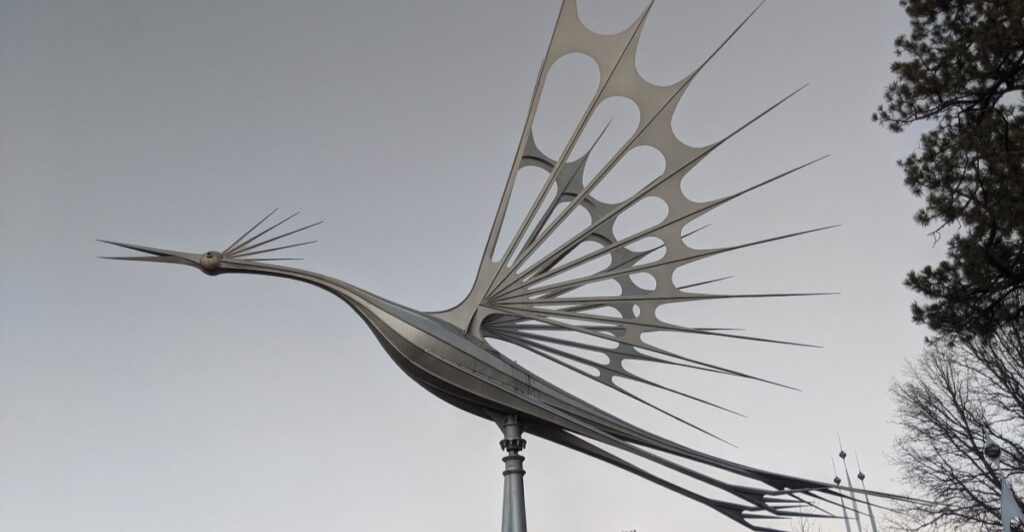
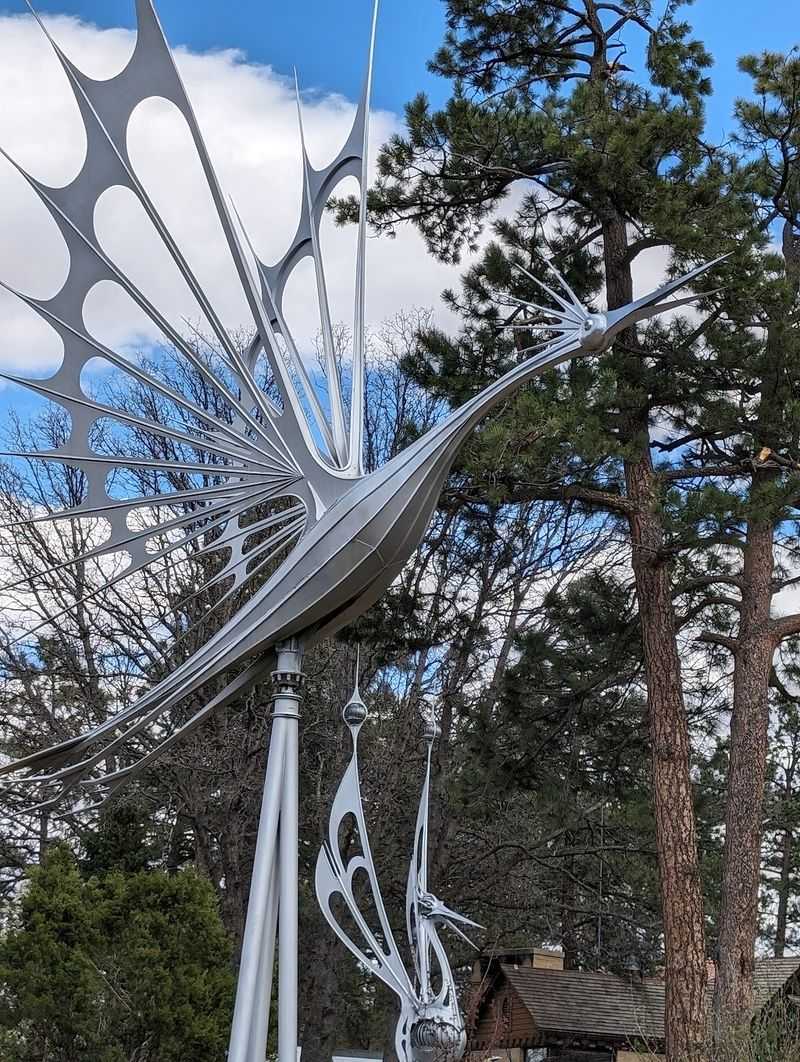
Wait for a gust of wind outside the Starr Kempf Kinetic Sculptures in Colorado Springs, and the artwork suddenly comes alive. Towering steel creations spin, sway, and shift against the foothills near Cheyenne Canyon, transforming an ordinary residential setting into something wonderfully unexpected.
Created by artist Starr Kempf, these intricate sculptures have become a fascinating roadside discovery for anyone who knows where to look. There are no elaborate exhibits or busy museum halls to navigate—just remarkable moving art displayed on the family property. For curious travelers, this unusual Colorado Springs stop proves that memorable art can appear where you least expect it.
Giant Steel Wings Above a Quiet Colorado Springs Street
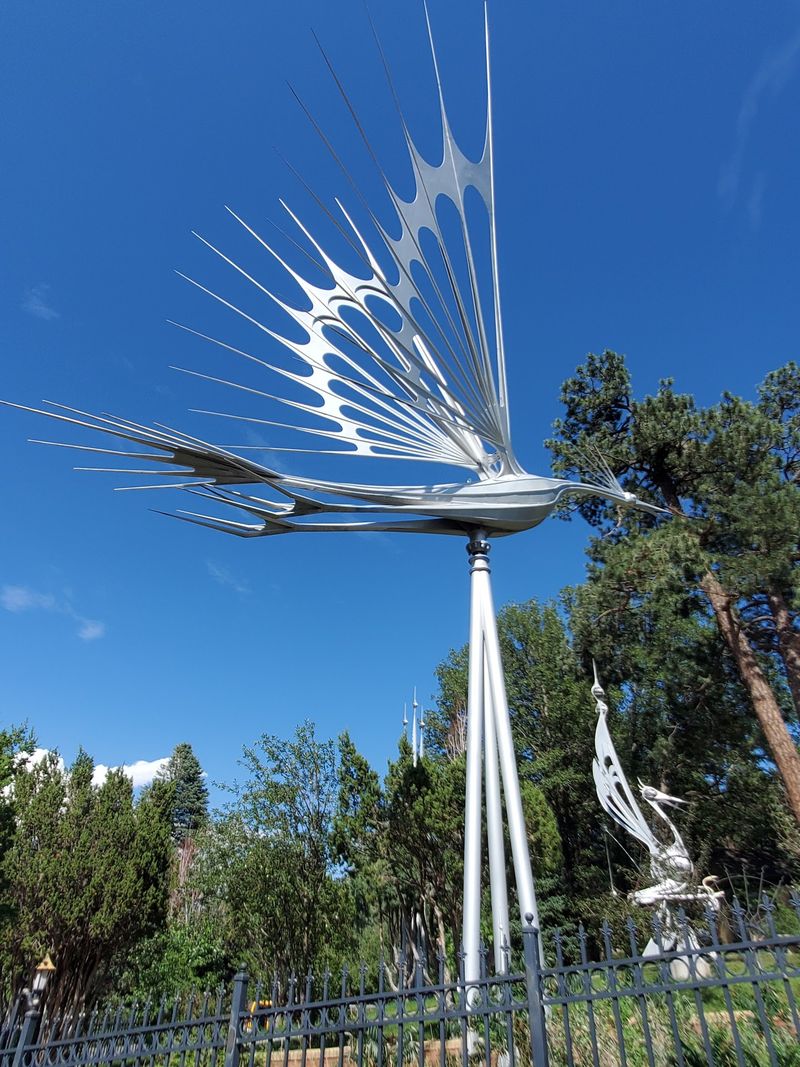
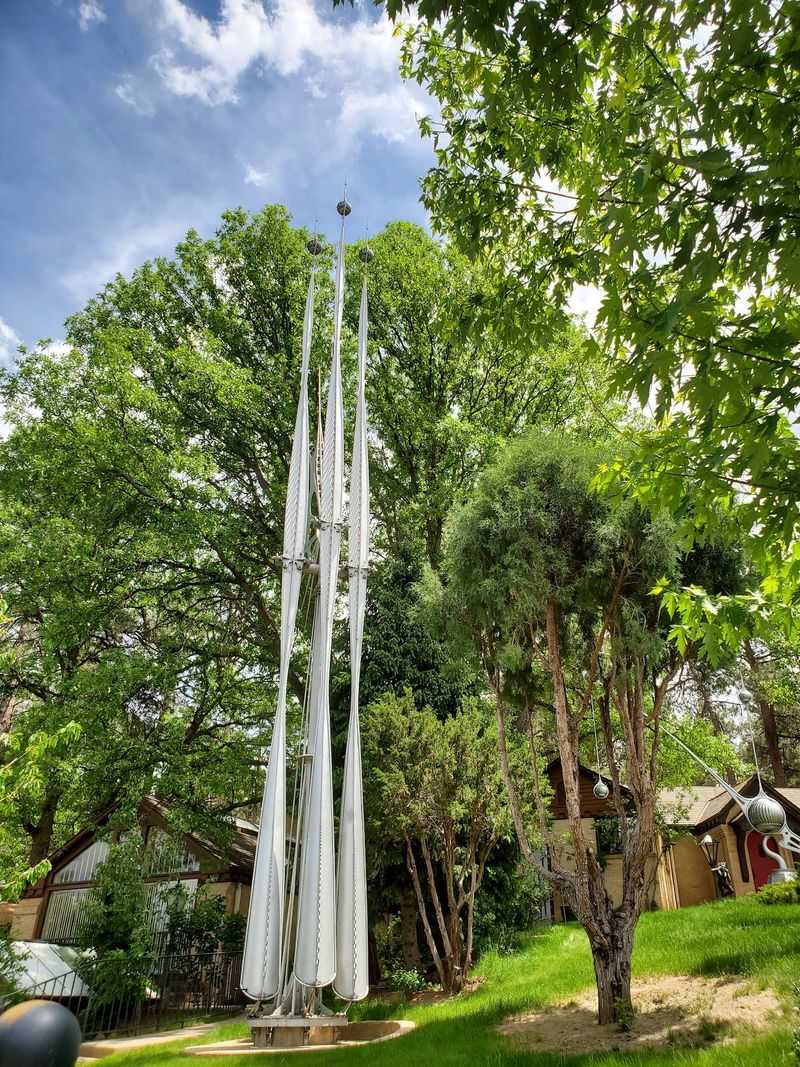
Picture a sleepy street lined with pine trees, mailboxes, and tidy driveways. Then, above the treetops, a set of silver blades slowly turns in the breeze, taller than the house beside it. For first-timers, that sudden sight usually earns a double take.
Starr Kempf’s kinetic sculptures sit on Pine Grove Avenue in southwest Colorado Springs, close to the base of Cheyenne Canyon. There is no big sign, no ticket booth, and no gift shop. The artwork stands in the yard of a private home, which explains why so many drivers roll right past without noticing.
The setting is a big part of the surprise. Scrub oak, tall evergreens, and rocky slopes surround the property, and the mountains rise steeply behind the neighborhood. Against all that green and brown, the polished metal catches sunlight and flashes like a mirror when the pieces swing around.
Size matters here too. These are not garden ornaments or lawn spinners from a hardware store. The largest sculptures rise well above the rooftop, with long arms, curved fins, and pointed tips that seem built for flight rather than a front yard.
Getting there adds to the sense of discovery. The roads twist and climb through hilly terrain, and a GPS is the easiest way to avoid missing the turn. Once the steel shapes come into view, though, the drive suddenly makes sense.
A quick tip for the approach: slow down as the road narrows, since neighbors walk dogs and deer wander across the pavement. Watching the tops of the trees is the best way to spot the first sculpture before the house itself appears.
On a sunny afternoon, the glint often shows up first, a bright wink through the branches. From there, pull over, cut the engine, and let your eyes adjust to how big these things really are.
Wind-Powered Steel That Swings, Glides, and Tilts
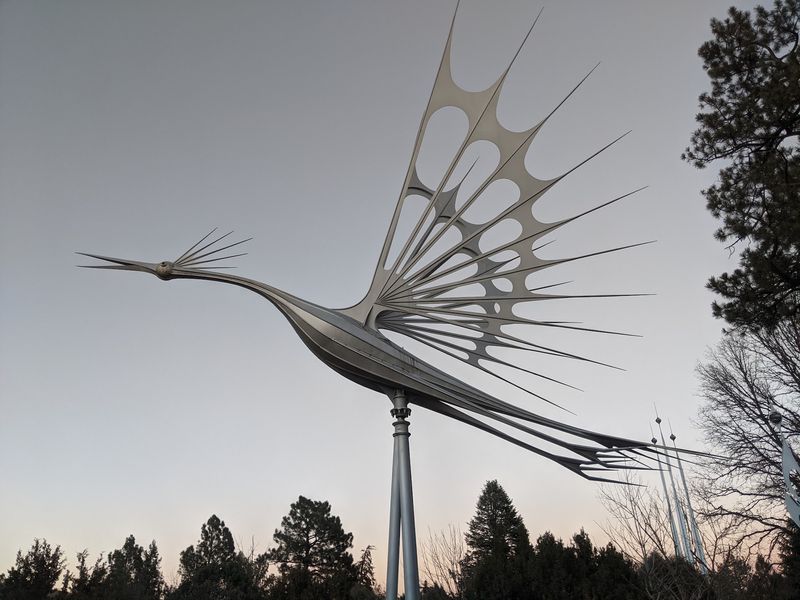
Here is the secret that turns a quick stop into a show: the wind is the real performer. On a calm morning, the sculptures stand still, polished and pretty but quiet. Once a good gust rolls down from the mountains, everything changes.
Kempf designed these pieces to move. Long arms pivot on carefully balanced joints, and curved blades catch the air the way a sail does on a boat. Instead of spinning wildly like a pinwheel, the arms tend to glide, turning in slow, graceful arcs that can reverse direction with a shift in the breeze.
Balance is the hidden trick. A piece of steel this large weighs a lot, yet a moderate wind can push it around smoothly. That tells you how much planning and math went into every bearing, counterweight, and angle.
Watching closely pays off. Each sculpture has its own personality in motion. One might sweep in a wide circle, while another bobs and tilts, its tips tracing loops against the blue sky.
Checking the forecast before heading out is the smartest move. Afternoon winds are common along the foothills, and a breezy day can transform the scene from a still-life painting into a slow-motion dance. Even a light wind can nudge the smaller parts into action.
Keep expectations realistic, though. Not every piece moves every day, and at times one of the tall sculptures may sit frozen because of repairs or wear. That is normal for outdoor art made of metal and moving parts that has faced decades of Colorado weather.
Listen, too. Wind rushing through the pines becomes the soundtrack while the steel turns overhead. Pair that sound with the slow sweep of the blades, and a ten-minute stop can easily stretch into thirty. Bring patience, because the best swings often arrive in sudden bursts after a lull.
Meet Starr Kempf, the Maker Behind the Metal
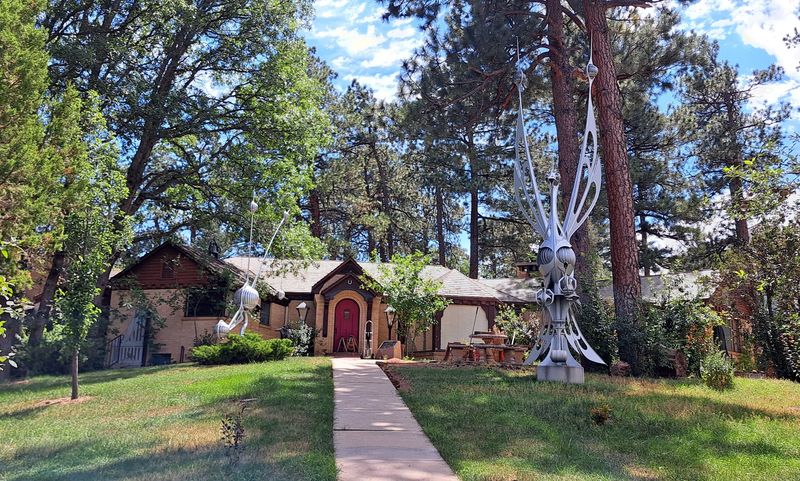
Every great backyard project starts with somebody who refuses to think small. For Starr Kempf, that meant turning his own property in Colorado Springs into an outdoor studio for giant moving art. Local history places the start of his windmill-style sculptures around 1977.
Kempf was more than a hobbyist with a welding torch. His work blended engineering and imagination, pairing sleek shapes with the know-how to make heavy metal respond to air. Pieces like these demand careful thinking about weight, balance, and weather long before the first cut is made.
Over the years, the yard filled with his creations, and they became a well-known sight for local families. Plenty of people in the Springs grew up riding past in the back seat, pointing up at the flashing blades. For some, the drive became a small tradition repeated on every visit home.
The story also carries sadness. Kempf died in 1995, and his passing left the collection in the hands of his family. Relatives have continued living on the property and caring for the remaining sculptures, keeping his name attached to the neighborhood.
His reach goes beyond Pine Grove Avenue, too. Several Kempf sculptures stand in other spots around Colorado Springs, including the downtown area. Spotting them later turns a single stop into a citywide scavenger hunt.
Knowing a little background changes how the art looks. Those curves and angles came from years of trial and error by one determined maker, not a factory. Each weld and pivot point represents a choice he made about how the wind should play with his work.
Fans of origin stories can dig into local newspaper archives or Pikes Peak history books before visiting. The sculptures make more sense once the man behind them comes into focus.
Fewer Sculptures, Bigger Story on Pine Grove Avenue
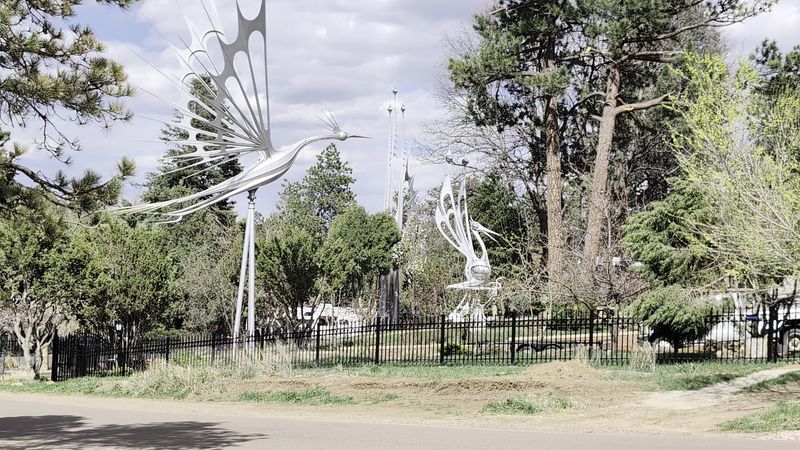
Longtime locals can describe a busier version of this street. Years ago, the yard held more sculptures, and cars often lined the road as curious crowds stopped to stare. Today the scene is calmer, and the number of pieces has shrunk.
Traffic was the sticking point. Neighbors on the narrow, winding road grew frustrated with the steady stream of visitors, and the conflict eventually reached the legal system. Local accounts describe a court decision that led the family to remove some of the sculptures from the property.
What remains is a smaller group, usually around four or five large pieces visible from the street. Some have moved to other locations around town, where they can be enjoyed without crowding a residential lane. The collection is now scattered across Colorado Springs instead of gathered in one yard.
Look closely at the grounds, and signs of age appear. Paint and polish have faded in spots, plants have crept in around the bases, and the old plaque out front is gone. For some visitors, that weathered look adds a quiet, overgrown charm, like stumbling onto a forgotten museum in the woods.
There have also been reports that the family may eventually sell or relocate the remaining pieces for display elsewhere. Nothing about that is guaranteed, but it adds a sense of timing to any visit. The lineup seen today may not look the same a few years from now.
Understanding this history helps set the right mindset. The property is a home first and a viewing spot second, shaped by real debates between art lovers and the people who live nearby. Quiet, quick visits help keep that fragile peace steady.
Roadside Rules for Watching the Show
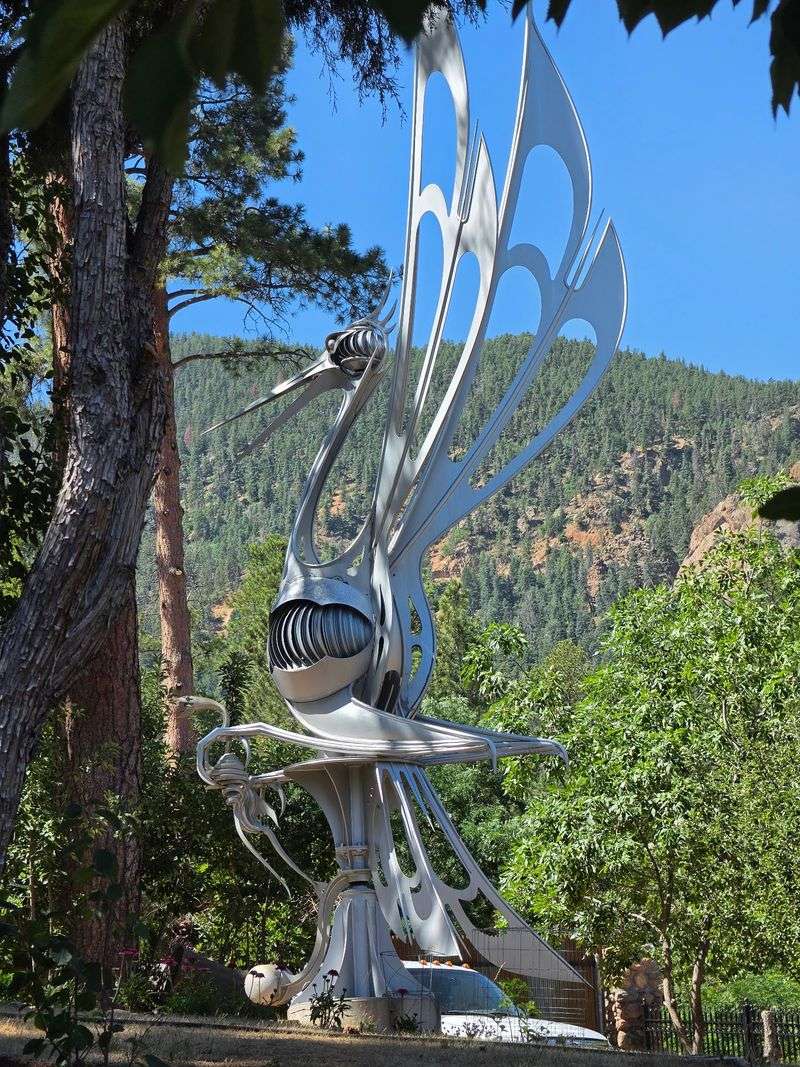
Forget the idea of strolling between the sculptures and touching the steel. An iron fence surrounds the yard, the gate stays locked, and there are no tours. The entire experience happens from the public road, and that is exactly how it should be.
Parking takes a little strategy. There is no spot directly in front of the house, but a pull-off sits across the street, and a small parking area lies a short distance down the road. Use those spaces instead of blocking driveways or squeezing onto the shoulder of the narrow lane.
Staying in the car is a perfectly good option, especially on chilly winter days. The biggest sculptures are easy to see through the windshield, and a lowered window lets in the sound of the wind. Families with little ones can enjoy the view without worrying about kids wandering toward the fence.
Photographers should think about angles. Trees and bushes block parts of the yard, so walking a few steps along the roadside can reveal a cleaner view of the blades against the sky. A zoom lens or phone zoom helps capture the details of joints and tips without getting close.
Slow-motion video is a fun trick, too. Recording a sculpture as it swings makes the motion easier to study later, and kids love replaying it. Try shooting during a gust, then again during a lull, to see how differently the arms behave.
Wildlife often joins the scene. Mule deer are common in this foothills neighborhood, so keep an eye out while crossing the road. Quiet voices and short stays show respect for the family still living on the property. Plan on roughly fifteen to twenty minutes, then head off to explore more of the canyon.
Planning a Breezy Stop Near Cheyenne Canyon, Colorado
Short visits fit best into a bigger day. Most people spend ten to twenty minutes here, which makes the sculptures an easy add-on rather than a full outing. Plan it as a scenic stop between other southwest Colorado Springs adventures.
Listed viewing hours run from 9 AM to 5 PM every day of the week. Daylight makes sense anyway, since the shiny metal looks best when sunlight bounces off it. Evening visits also risk disturbing the neighbors, so aim for mid-morning or afternoon.
Wind is the wild card. Breezy days bring the pieces to life, and spring in the Pikes Peak region is famous for gusty weather. Checking a weather app for wind speed before leaving can mean the difference between a still display and a lively one.
Each season changes the backdrop. Summer surrounds the steel with thick green leaves that can hide parts of the yard, while late fall and winter thin the branches and open up clearer views. A light dusting of snow on the mountains behind the sculptures makes for a striking photo.
Nearby attractions make pairing simple. The Cheyenne Mountain Zoo and North Cheyenne Cañon Park are both a short drive away, and Garden of the Gods sits across town for a longer loop. Downtown, other Kempf sculptures offer a bonus hunt after lunch.
Pack light but smart. A GPS or map app is essential for the twisting roads, sunglasses help with glare off the metal, and a jacket comes in handy since foothill breezes can turn cool quickly.
Snacks can wait for a proper stop, since there are no facilities here. Weekday mornings tend to be the quietest, leaving plenty of room at the pull-off.
Why This Quirky Yard Outshines the Big-Name Stops
Colorado has no shortage of famous stops, from red rock parks to mountain summits packed with tour buses. Kempf’s sculptures offer something those crowded places rarely can: a free, quiet moment with serious art on an ordinary street. No lines, no admission, just steel and sky.
Few places mix engineering, art, and nature this neatly. The sculptures rely completely on mountain air to do their job, so the weather becomes part of the artwork. Two visits on two different days can look totally different.
Kids tend to grasp the idea instantly. Seeing a giant metal shape swing because of invisible wind sparks questions about balance, force, and design, making it a sneaky science lesson disguised as a roadside stop. Parents looking for a quick, low-cost outing with a learning twist will find a lot here.
The site also shows how public art and private life can collide. Here is a place shaped by one artist’s bold vision, a family’s commitment, and neighbors’ concerns, all tangled together on one quiet lane. Seeing it in person adds real texture to that story.
Honesty helps, too. The yard is small, some pieces may be still, and the view comes through trees and a fence. Anyone expecting a big public park will leave confused, while anyone expecting a short, unusual detour will leave grinning.
Timing adds urgency. With pieces already removed and talk of the remaining ones possibly moving someday, the current lineup is not guaranteed to last. Catching it now means seeing a piece of Colorado Springs history in its original home.
So next time the drive heads toward Cheyenne Canyon, watch the treetops. A flash of silver above the pines is the signal to pull over, roll down the window, and wait for the next gust.
Share this story