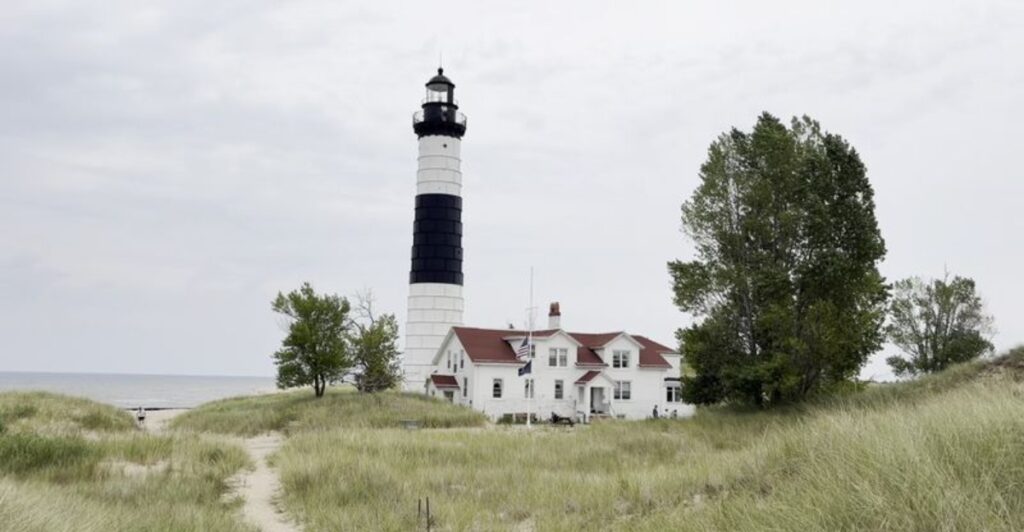
Some Michigan landmarks make you work a little before giving up the view. At Ludington State Park, reaching Big Sable Point Lighthouse means following a long trail through dunes and shoreline scenery before the tower finally comes into sight.
The appeal comes from the journey as much as the destination, with beach, Lake Michigan, and open landscape building the experience along the way. Visitors who climb the tower get an even bigger payoff from above.
For anyone who likes Michigan outings that mix walking, scenery, and a landmark worth earning, Big Sable Point Lighthouse turns the trip itself into part of the adventure.
A Striped Tower Beyond the Dunes
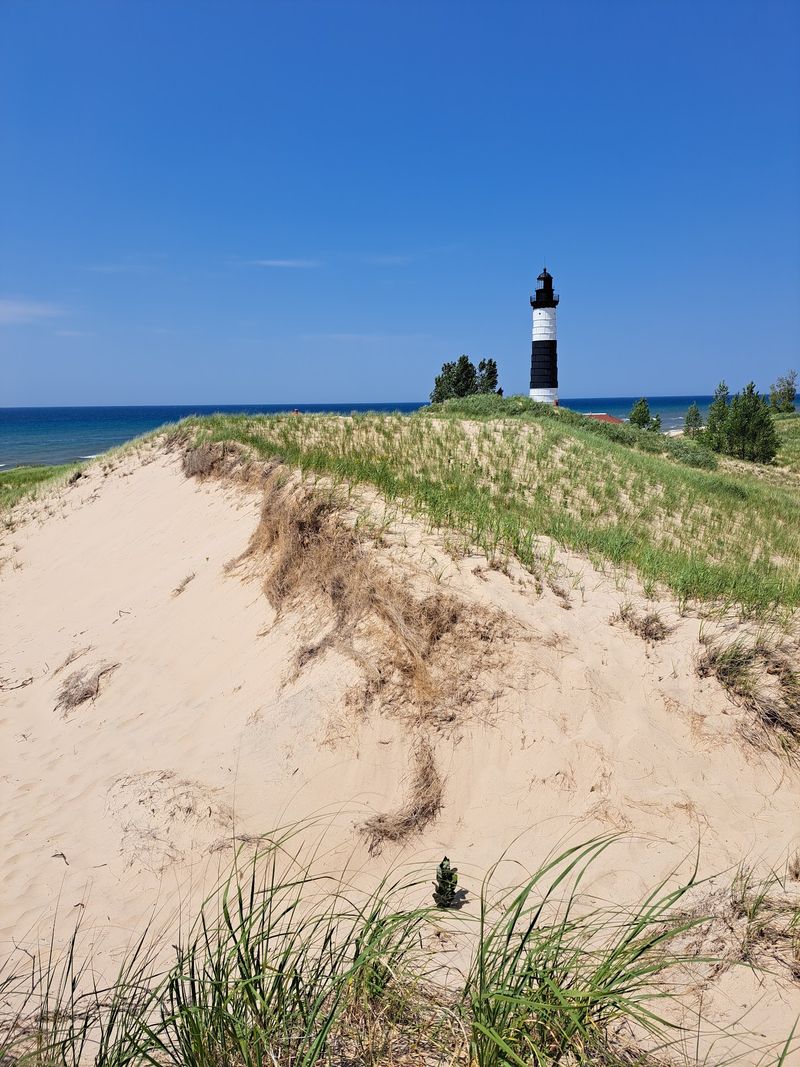
After a stretch of sand and dune grass, the black and white tower comes into view. Big Sable Point Lighthouse looks especially bold against the pale shore and blue water.
Its stripes make it easy to pick out even before you reach the buildings at its base.
The setting is a big part of that first look. The lighthouse stands near Lake Michigan rather than beside a busy street, so you approach it on foot through Ludington State Park.
There is room to watch the scene change as you get closer. A small shape ahead becomes a tall tower, and the beach begins to open around it.
Pause when you first spot the light. That distant view shows how much coastline surrounds the point, while a closer look lets you see the tower and keeper buildings together.
If you enjoy taking pictures, try both instead of rushing straight to the entrance. Sand, grass, and the dark bands of the tower give you clear shapes to work with.
Wind can change the scene quickly. Loose sand may drift across the ground, and lake clouds can soften the light or make the stripes look sharper.
Keep your camera or phone tucked away while walking, then stop somewhere firm for a photo. Looking up and down at the same time on a sandy trail is an easy way to miss your footing.
You do not need a tower ticket to enjoy this arrival. The outside view gives you a strong sense of where the lighthouse stands and why its location mattered to ships on Lake Michigan.
Take a moment to notice the distance you have covered. Then follow the path toward the buildings, where the tall landmark becomes a place you can explore up close.
The Walk Is Part of the Deal
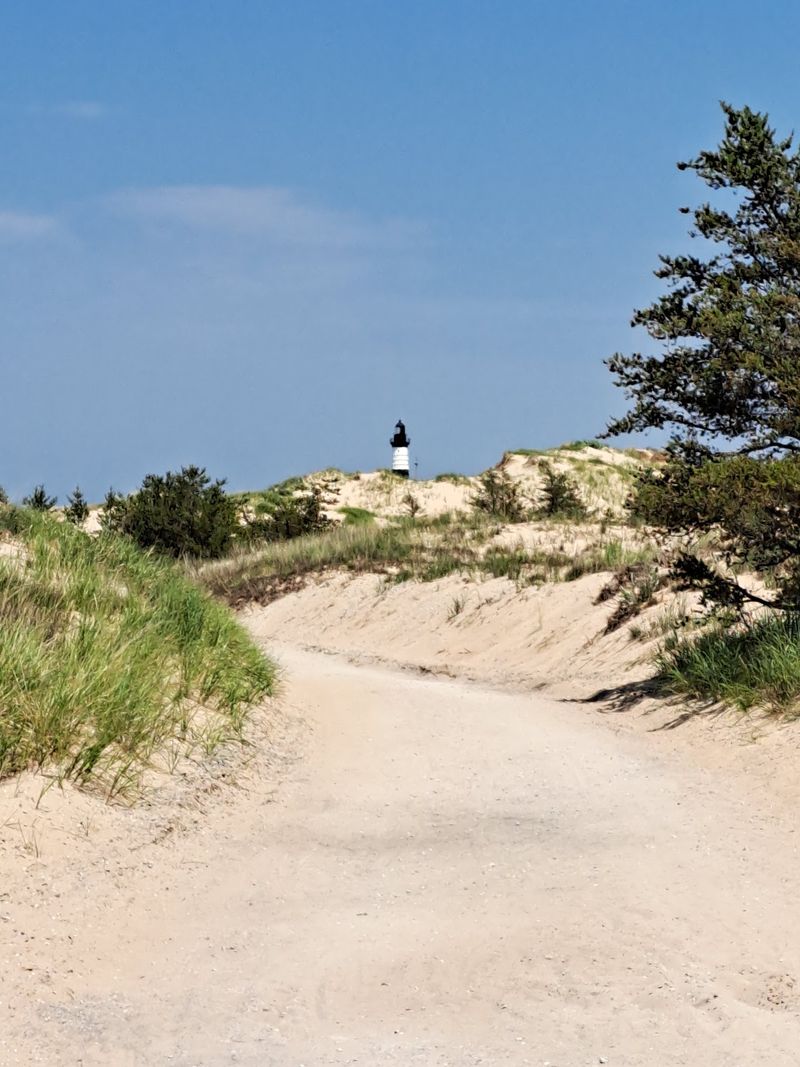
Your shoes get their turn before your eyes do. Reaching Big Sable Point Lighthouse usually means walking about 1.8 miles each way from the park campground area.
That makes the outing more than a quick stop for a picture, so plan for the return trip before you start.
The main route follows a wide path that can include packed dirt, gravel, and stretches of sand. It is generally fairly level, but level does not always mean effortless.
Soft sand asks more from your legs, especially when you have already spent time at the beach or climbed the tower. The amount of loose sand can change with conditions, too.
Wear shoes you can walk in comfortably, not footwear chosen only for the shoreline. Bring drinking water, a hat, and sun protection.
Shade and lake views are not constant along the route, so do not count on a cool breeze or a glimpse of water for the whole walk. On a warm day, starting earlier can make the trip more pleasant.
If you are traveling with young children, think about their energy for both directions. A wide path may look stroller friendly in one spot and turn sandy farther along.
Mobility needs deserve the same honest planning. Ask about current access options before heading out rather than assuming the route will be smooth under wheels.
Bicycles may be an option on the access route, but sandy patches still call for care. Watch for others sharing the path and give any service vehicles room to pass.
However you travel, leave enough time to slow down near the point. The walk is not simply a hurdle before the lighthouse; it sets the scale of this stretch of shore.
Michigan Views From the Top
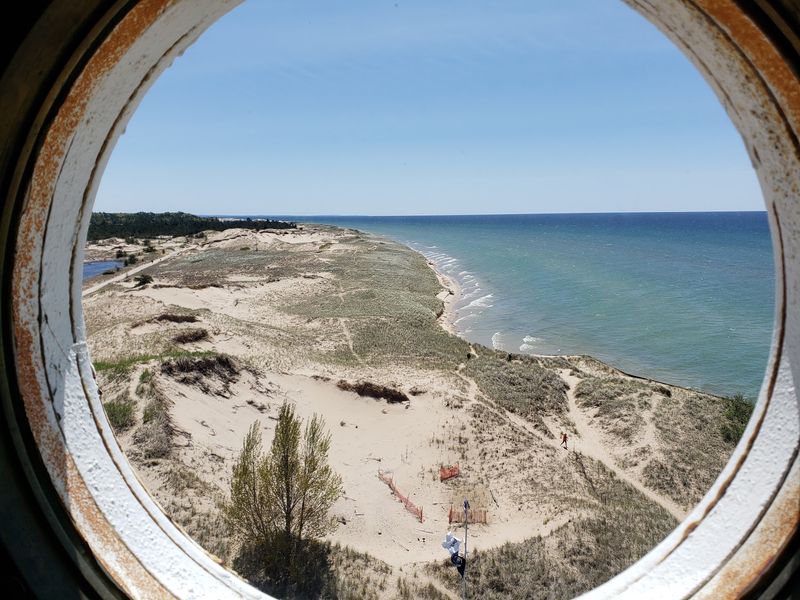
At ground level, the lake fills one side of the scene. From the tower, you can turn and take in much more.
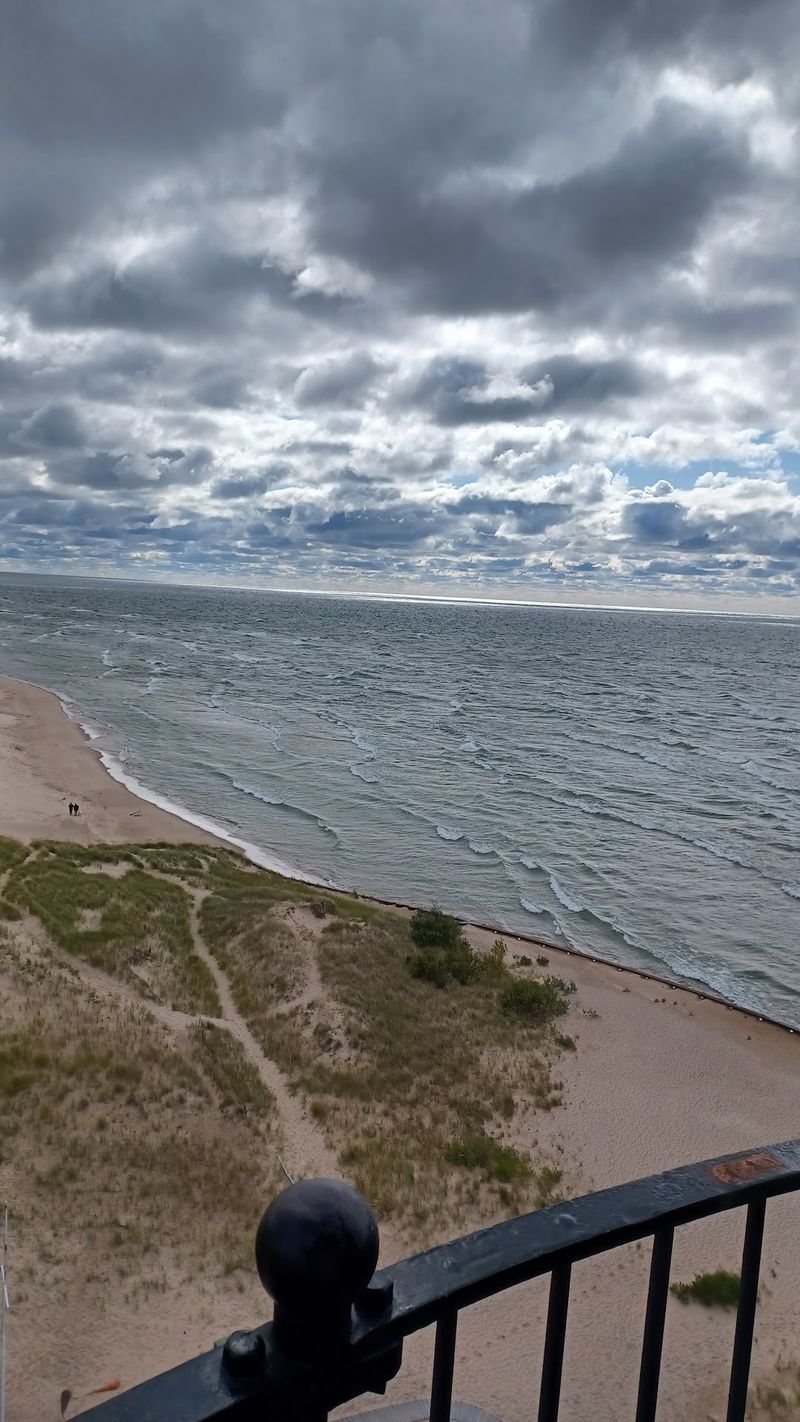
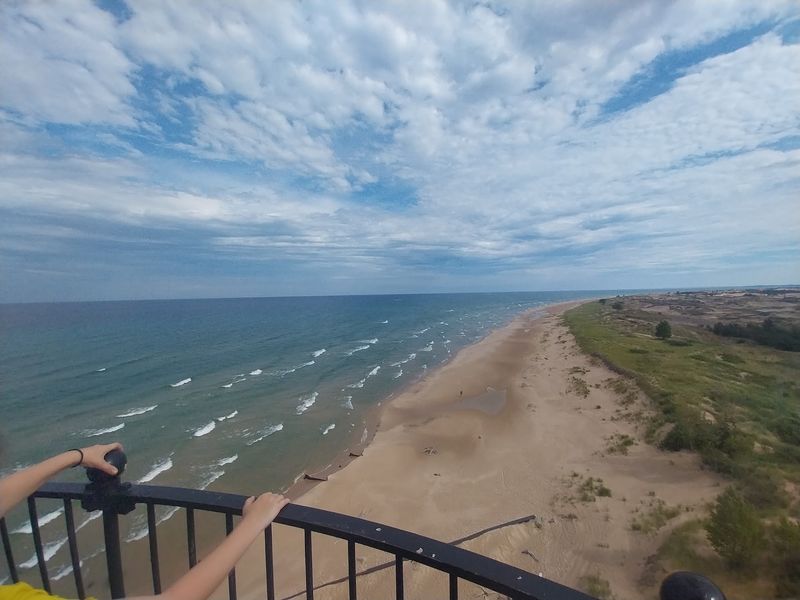
The view from Big Sable Point Lighthouse brings the water, shoreline, dunes, and buildings below into one wide picture. It is the reward that gives the article its title.
Getting there takes another bit of work. The tower climb involves a long, narrow staircase with roughly 120 steps.
Go at a pace that lets you hold the rail and make room for others. If you are uneasy in tight stairways or at heights, it is fine to enjoy the lighthouse from below instead.
At the top, look toward the shore before trying to take a photo. From above, the edge of the beach becomes a clear line between sand and water.
Turn the other way and the dunes show why this point is so different from a lighthouse surrounded by city blocks. On a bright day, the dark tower bands also make a striking frame for pictures taken near the base.
Expect wind on an exposed tower. Secure loose hats and keep a firm hold on your phone.
Space at the top is limited, so you may have to wait for your turn, particularly on busy days. A short pause at the base can be useful: drink some water, check your belongings, and let your legs recover from the walk.
The tower climb has an admission charge separate from park entry. Bring a way to pay, and check current hours and climb rules before making plans around the view.
Weather and staffing can affect access. If the tower is open when you arrive, give yourself time to look in every direction rather than spending the whole visit behind a screen.
The Beach Changes the Pace
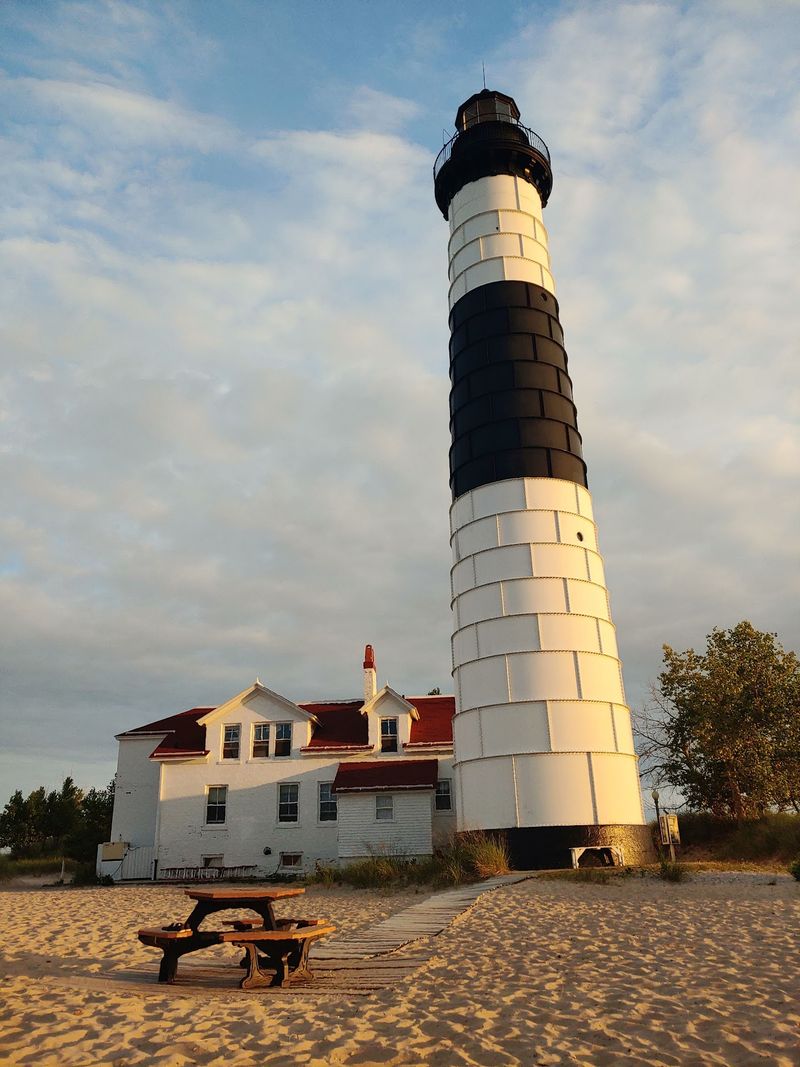
Skip the stairs for a few minutes and head toward the sand. The beach beside Big Sable Point Lighthouse gives you a completely different way to see the tower.
From near the water, its black and white bands rise above the shore while Lake Michigan stretches out in the other direction.
This is a good place to take a break after the walk. Find a spot away from the waterline for a snack, or follow the shore for a new angle on the lighthouse.
The beach also helps if your group has mixed interests. Someone who wants to climb can do that while others spend time outdoors nearby.
Keep an eye on lake conditions rather than treating the water as a fixed backdrop. Waves, wind, and water temperature can change the comfort and safety of a beach visit.
Sand may blow hard enough to sting on a windy day. If you plan to wade or swim, follow posted park guidance and make your choice based on current conditions, not on how calm the lake looked from the trail.
A small bag makes the stop easier. Carry out food wrappers, and keep shoes handy for the walk back across the access path.
If you are taking photographs, try standing farther down the beach so the shoreline leads toward the tower. That angle shows the lighthouse in its setting without needing to climb.
Leave extra time if you want a relaxed shore stop. It is easy to forget that the parking area is still a long walk away.
A look at the clock before settling in can save you from hurrying back with tired legs. Here, the best seat may simply be a patch of sand with a clear view of the tower.
Old Walls, Working Stories
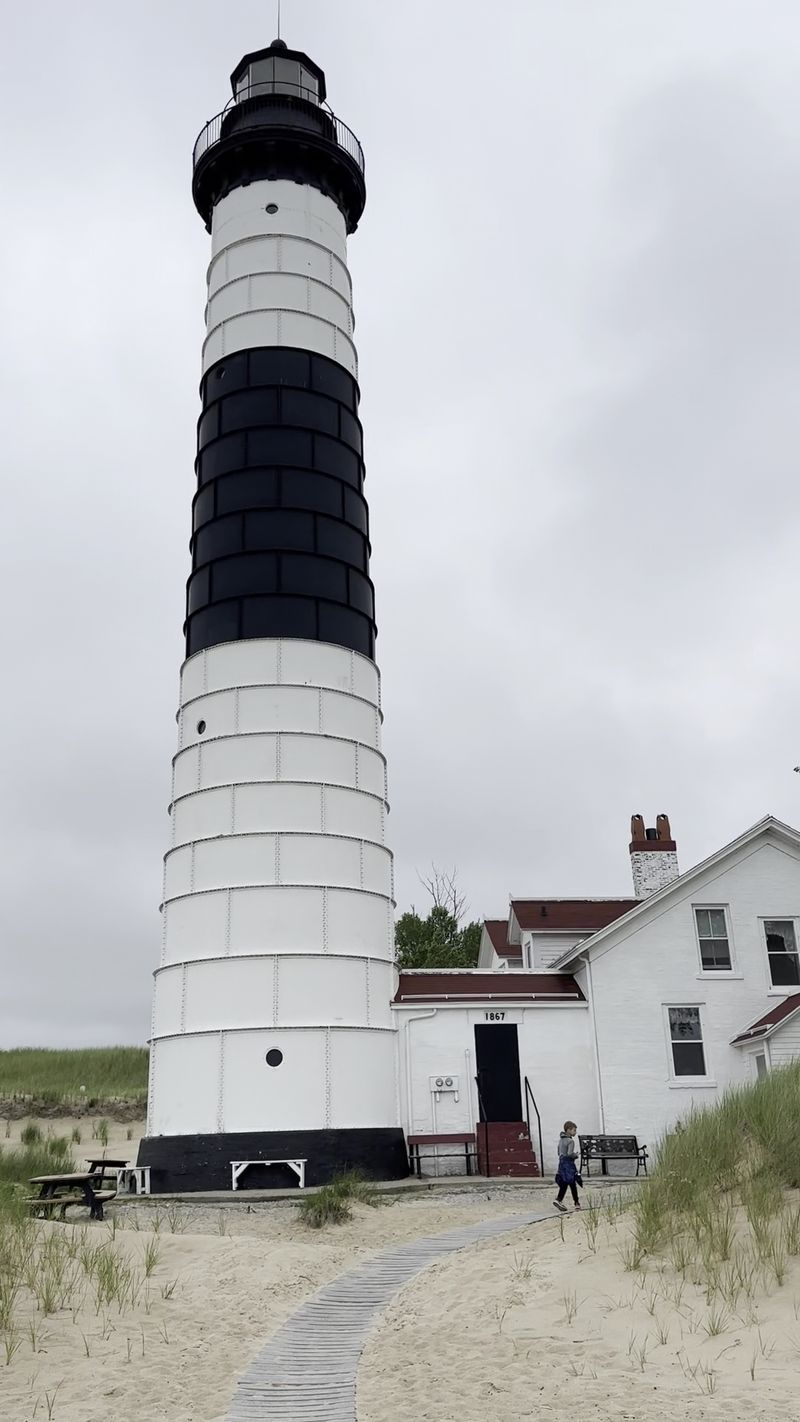
A lighthouse this far out can seem like a lonely landmark. Up close, the buildings at Big Sable Point show that it was also a place where people worked.
The light dates to 1867, when guiding ships on Lake Michigan meant tending equipment and living beside a shore that could turn rough.
Look at the tower and keeper buildings as one site, not separate photo stops. Their layout helps explain the daily work behind the light.
Someone had to care for the station, watch conditions, and keep its purpose in mind through changing seasons. Today, the preserved structures make that job easier to picture than a date on a sign could do alone.
When the lighthouse is open, volunteers can help connect the building to its history. Ask a focused question if you have one: How was the light cared for?
What has changed about the tower? Which parts of the site needed the most attention over time?
A short conversation can add detail without turning your visit into a long lesson.
There is also a gift shop at the site. It gives you a place to look around after the climb and offers a chance to support the lighthouse.
Take care around doors, stairs, and narrow interior spaces. Historic buildings were not designed for the flow of modern crowds, so a little patience makes the visit easier for everyone.
The old purpose of the tower is clearest when you step outside again. Face the open water and imagine trying to pick out a guiding light from a moving boat, rather than spotting the tower from a marked walking trail.
The building has become an attraction, but its location still tells the story of why it was built there.
Plan the Day Before You Park
The trickiest part of some Big Sable visits happens before the hike begins: finding the right starting point. Access is through Ludington State Park, with the usual walking route beginning around the campground area.
Do not expect to drive straight to the lighthouse door just because you have its street address.
Give yourself time to enter the park, locate the trail, and cover the walk in both directions. Park entry may require a Michigan Recreation Passport or another applicable entry payment.
Tower admission is separate, so check both costs when planning your budget. Bring what you need to pay rather than assuming you can sort it out after the hike.
Hours deserve a fresh check, too. Lighthouse opening days can vary by season, and a trail that is available to walk does not guarantee the tower will be open when you arrive.
If climbing matters to you, confirm the current schedule before leaving home. Weather, staffing, and preservation needs can also affect access on a particular day.
Count backward from closing time when choosing your start. The walk takes time, and there may be a wait to enter the tower on a busy afternoon.
Arriving early leaves room for a beach stop or a conversation with volunteers without watching the clock. It also helps you avoid doing the full return walk after you are already worn out.
Pack for an outing rather than a roadside photo stop: water, comfortable shoes, sun protection, and a light layer if the lake wind is cool. Check conditions at the park before setting off, and follow posted directions around the campground.
With the small details handled first, you can spend the trail time looking ahead for the striped tower instead of worrying about what you left in the car.
Make the Return Walk Count
One last look at the tower can tempt you to stay longer. Before you do, remember that the walk back is nearly as long as the walk in.
Big Sable Point Lighthouse rewards an unhurried visit, but the best finish is one you have planned while you still have plenty of daylight and energy.
Turn around and notice what changed. The dunes and trees that guided you toward the lighthouse now frame the path away from it.
If you walked in with your eyes fixed on the tower, the return gives you a better look at the ground and plants along the route. Keep to the established path so the dune landscape is not damaged by shortcuts.
Late light can bring rich color to the sand and tower, making it appealing to wait for photographs. Think through the timing first.
Sunset at the shore may leave you facing a long walk back in fading light, and the lighthouse itself may close well before then. If you choose to stay late, prepare for the conditions and follow park rules.
There is no need to do every part of the visit. You can enjoy the striped tower, walk the beach, and head back without climbing.
You can also make the tower your main goal and keep the shore stop brief. Choose based on your group, the weather, and how the trail feels underfoot that day.
Big Sable stands out because its lake view comes in stages. First you spot the tower beyond the dunes, then you reach the shore, and finally, if access and your legs allow, you look out from above.
Each step shows a different piece of the point. Save enough time to enjoy the last stage too: the walk home through the sand.