Ohio has a way of surprising people. Beneath its rolling farmlands, quiet river towns, and lakeside communities lies a treasure chest of history that most people never get to see.
From ancient earthworks built by civilizations long before European settlers arrived, to small villages that became key stops on the Underground Railroad, the Buckeye State is packed with stories that deserve to be told. Whether you are a history lover, a curious traveler, or simply someone who enjoys exploring places with real meaning, Ohio has something that will stop you in your tracks and make you think differently about the past.
The ten places featured here are not just landmarks on a map. Each one carries the weight of real human experiences, struggles, triumphs, and everyday life from different chapters of American and even pre-American history.
Some of these spots are well known, while others are tucked away in small towns that most people drive right past without a second glance. That is part of what makes them so special.
Visiting these places feels less like a typical tourist trip and more like stepping directly into a living story. You get to walk the same ground where soldiers were held captive, where families escaped to freedom, where ancient peoples shaped the land with nothing but their hands, and where ordinary citizens built extraordinary communities.
Ohio’s historic places are waiting for you, and each one has a story that is absolutely worth discovering. Get ready to see the Buckeye State in a completely new light.
1. Johnson’s Island Civil War Prison (Marblehead)
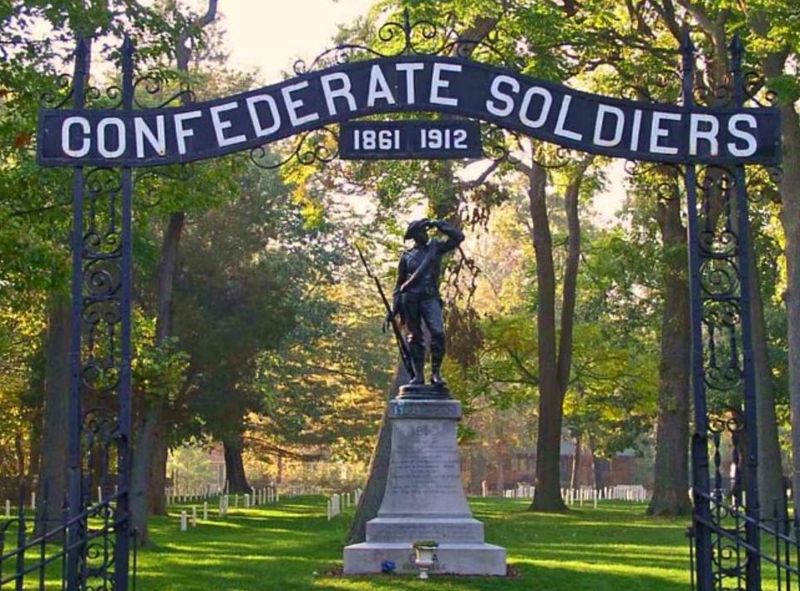
Out on a small island in the cold waters of Lake Erie, a forgotten chapter of the Civil War quietly waits to be remembered. Johnson’s Island served as a Union prison camp specifically designed to hold Confederate officers, making it unusual compared to most Civil War prison facilities.
Between 1862 and 1865, thousands of Southern soldiers lived in wooden barracks on this remote patch of land, enduring brutal Ohio winters far from their homes in the South.
The island was chosen partly because of its isolated location. Officials believed that Lake Erie’s freezing waters would make escape nearly impossible, and for the most part, they were right.
Still, some prisoners did attempt daring escapes, and their stories have become part of the island’s legend. Life on Johnson’s Island was difficult, marked by cold, boredom, and homesickness, though conditions were generally considered better than many other Civil War prison camps on both sides.
Today, visitors can reach Johnson’s Island by crossing a short causeway from Marblehead. The Confederate cemetery on the island holds the graves of 206 soldiers who never made it home, and a cast-iron statue of a Confederate soldier stands guard over the burial ground.
Walking among those graves is a quiet, moving experience that reminds you just how far from home those men truly were.
The island also features earthworks and remnants of the original prison layout that historians and archaeology enthusiasts find fascinating. Local preservation groups have worked hard to protect and interpret the site so that future generations can understand its significance.
Johnson’s Island is not just a piece of Ohio history; it is a piece of American history that rarely gets the attention it deserves.
2. Spring Hill Historic Home (Massillon)
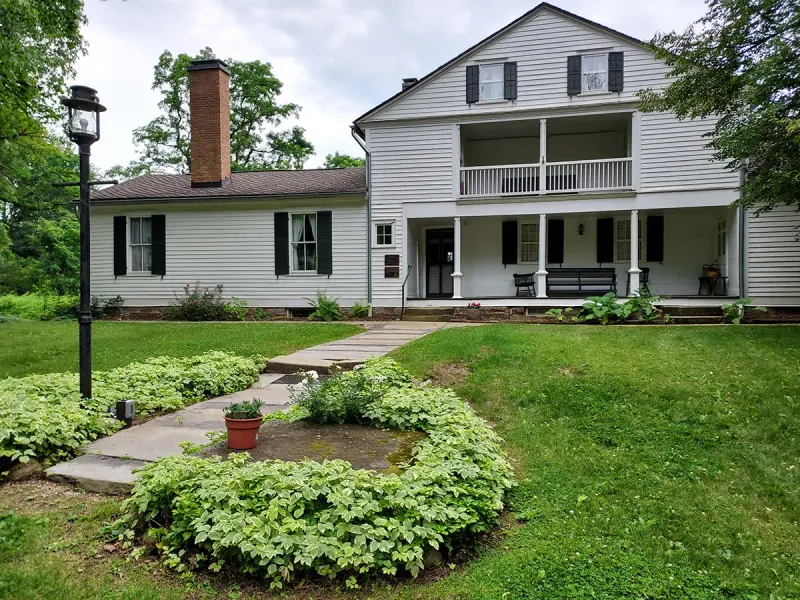
Not every hero carried a weapon or wore a uniform. Some of the bravest people in American history opened their doors in the middle of the night and whispered, “You are safe now.” Spring Hill Historic Home in Massillon is a powerful reminder of that quiet, courageous kind of heroism.
Built in 1821, this elegant Federal-style brick mansion was the home of John and Charity Rotch, Quaker abolitionists who used the property as a stop on the Underground Railroad.
The Rotch family was deeply committed to ending slavery, and their home became a sanctuary for freedom seekers making the dangerous journey north. Hidden spaces within the house helped conceal people from slave catchers, and the property’s location made it a strategic point along the route toward Lake Erie and freedom in Canada.
The courage it took to operate such a station, knowing the legal and personal risks involved, is hard to fully imagine today.
Spring Hill is now managed as a museum and offers guided tours that bring the history of the home and its abolitionist legacy to life. Visitors can walk through the beautifully preserved rooms and hear stories about the real people who passed through those walls seeking freedom.
The guides do an excellent job of making the history feel personal rather than distant.
The surrounding grounds are also lovely, with mature trees and a peaceful atmosphere that makes the visit feel reflective rather than rushed. Spring Hill is the kind of place that stays with you long after you leave.
It asks you to consider what ordinary people are capable of when they choose to stand up for what is right, and that is a question worth sitting with for a while.
3. John Rankin House (Ripley)
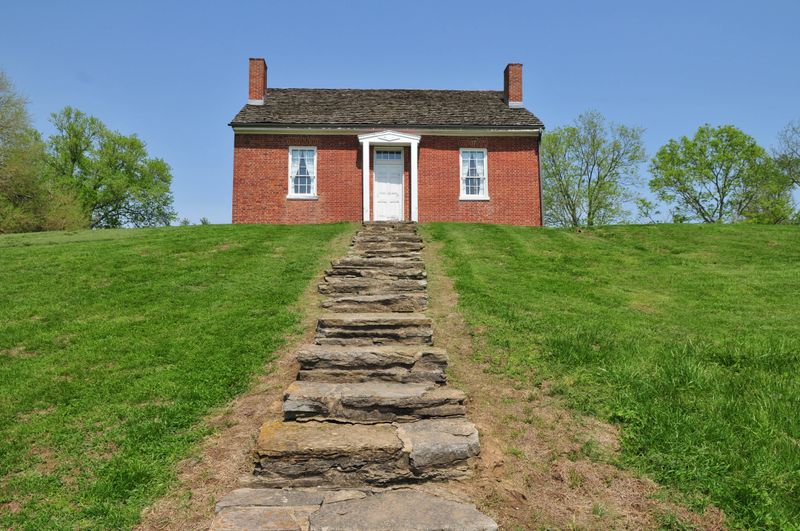
Perched high on a bluff overlooking the Ohio River, one small white house changed thousands of lives. The John Rankin House in Ripley stands at the top of a long, steep staircase, and for decades it served as one of the most important stations on the Underground Railroad in the entire country.
Reverend John Rankin, a Presbyterian minister and fierce abolitionist, used his hilltop home as a beacon of hope for enslaved people crossing the river from Kentucky below.
Rankin and his wife Jean helped more than 2,000 freedom seekers escape to the North over roughly 40 years. They kept a lantern burning in the window at night as a signal to those crossing the dangerous river that safety was close.
The story of a woman named Eliza, who crossed the frozen Ohio River with her infant child to reach Rankin’s door, is said to have directly inspired Harriet Beecher Stowe when she wrote “Uncle Tom’s Cabin.”
Visiting the John Rankin House today means climbing those same steps that so many desperate, hopeful people climbed before you. The view from the top is stunning, with the wide Ohio River stretching out below and the Kentucky hills visible in the distance.
It is easy to imagine what it must have felt like to look up at that light from the cold riverbank and know that help was waiting.
The Ohio History Connection manages the site and offers informative tours that put the Rankin family’s work into clear historical context. The house itself is modest, which somehow makes the story even more powerful.
Big acts of courage do not always come from big places, and the John Rankin House proves that point beautifully.
4. Fort Ancient Earthworks (Oregonia)
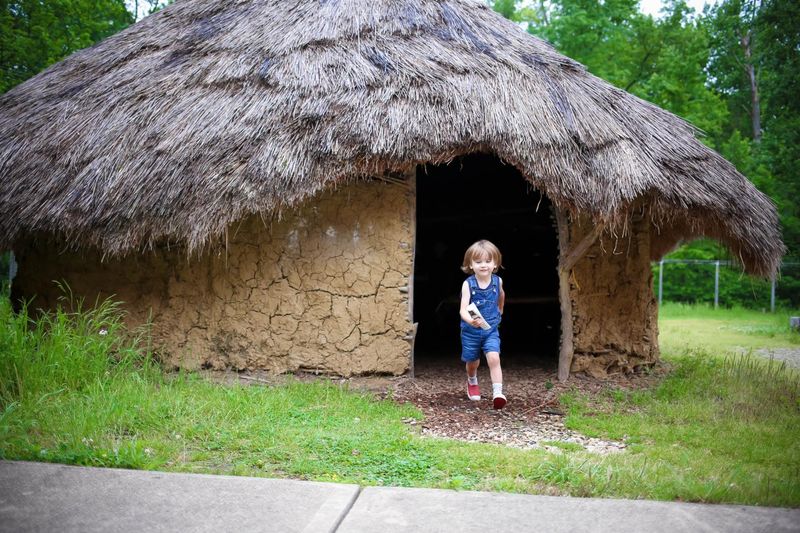
Long before any European explorer set foot in North America, a sophisticated civilization was already reshaping the Ohio landscape in remarkable ways. Fort Ancient Earthworks in Oregonia is one of the most impressive prehistoric sites in the entire United States, and yet many people have never even heard of it.
Built by the Hopewell culture between roughly 100 BCE and 500 CE, these massive earthen walls stretch for more than three miles along a high plateau above the Little Miami River.
The sheer scale of the construction is jaw-dropping when you consider that it was all done by hand, without modern tools or machinery. Archaeologists estimate that the builders moved millions of cubic feet of soil to create the walls, some of which still stand up to 23 feet high.
The site was not a fort in the military sense, despite what early European settlers called it. Researchers now believe it served ceremonial and astronomical purposes, possibly used for large community gatherings tied to seasonal events.
Fort Ancient was designated a National Historic Landmark in 1964, and in 2023 it became part of the Hopewell Ceremonial Earthworks UNESCO World Heritage Site, joining a small group of prehistoric sites recognized as having universal cultural value. That recognition was a long time coming and well deserved.
The on-site museum is excellent, with exhibits that explain the Hopewell culture in an accessible and engaging way. Trails wind along the earthworks themselves, giving visitors a real sense of the site’s enormous scale.
Standing on those ancient walls while looking out over the river valley below is one of those rare experiences that genuinely puts human history in perspective. Fort Ancient is proof that Ohio’s story began long before the history books usually start.
5. Historic Roscoe Village (Coshocton)
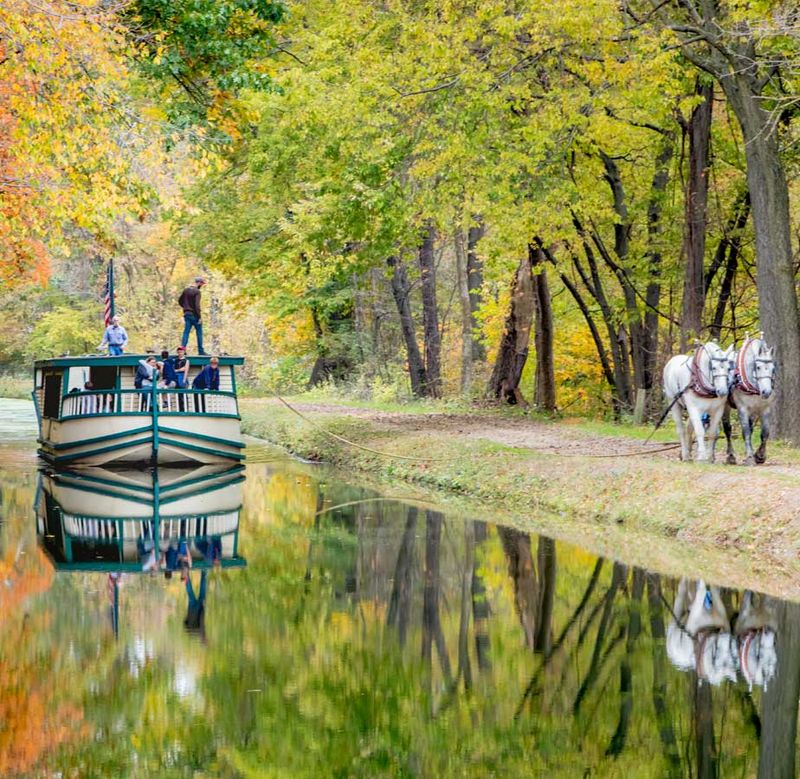
Canal towns have a certain nostalgic charm that is hard to replicate, and Historic Roscoe Village in Coshocton might be the best example of that charm in the entire state. Once a thriving port along the Ohio and Erie Canal in the early 1800s, Roscoe Village was the kind of place where goods, people, and ideas moved constantly through the heart of Ohio.
When the canal era ended and railroads took over, the town slowly faded, but it never disappeared entirely.
In the 1960s, a local couple named Edward and Frances Montgomery began restoring the village to its 1830s appearance, driven by a genuine love for the history of the canal era. Their efforts eventually transformed Roscoe Village into a living history destination where visitors can experience what life looked and felt like during one of Ohio’s most economically important periods.
The restoration was meticulous, and it shows in every brick and storefront.
Today, the village features costumed interpreters who demonstrate crafts, cooking, and trades from the era. A horse-drawn canal boat ride along a restored section of the Ohio and Erie Canal is one of the most popular attractions, giving visitors a hands-on taste of how goods and passengers once traveled across the state.
The experience is both educational and genuinely fun, making it a great stop for families.
Shops, restaurants, and galleries now occupy many of the historic buildings, blending commerce with history in a way that feels natural rather than forced. Seasonal events and festivals bring the village to life throughout the year.
Roscoe Village is the kind of place that makes history feel approachable, not like a dusty textbook but like a real, living, breathing community that simply paused in time.
6. Serpent Mound (Peebles)
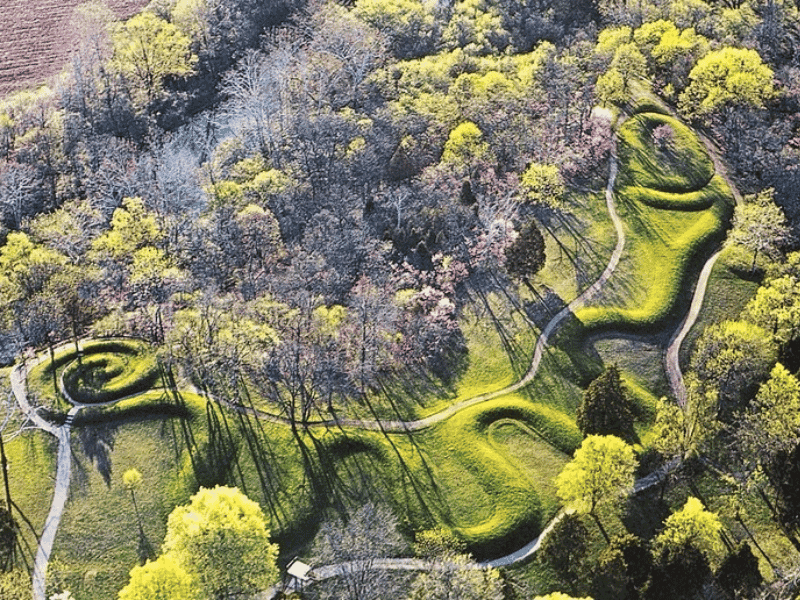
There is nothing quite like Serpent Mound anywhere else in the world. Stretching nearly a quarter mile across a ridge in Adams County, this ancient earthwork is shaped like a giant uncoiling serpent with an oval shape at its head that may represent an open mouth or an egg.
The sheer strangeness and beauty of it from above is enough to take your breath away, and the mystery surrounding who built it and why only adds to the fascination.
Most researchers attribute Serpent Mound to the Fort Ancient culture, built around 1000 CE, though some studies have suggested links to the earlier Adena culture. What makes Serpent Mound particularly intriguing is the way it aligns with astronomical events.
The oval at the head aligns with the summer solstice sunset, while other curves of the body correspond to other solar and lunar events. The precision of that alignment, achieved without modern instruments, is genuinely astonishing.
The site was preserved in the late 1800s thanks largely to the efforts of Frederic Ward Putnam of Harvard University, who raised funds to purchase the land and protect it from development. That early conservation effort means visitors today can still experience the mound in much the same condition it was in when researchers first studied it seriously.
The surrounding park is peaceful and well maintained.
A viewing platform gives visitors an elevated perspective that helps them appreciate the full serpentine form of the mound. The on-site museum provides excellent context about the cultures that may have created it and the ongoing research into its origins.
Serpent Mound also became part of the UNESCO World Heritage Site designation in 2023, cementing its status as one of humanity’s most remarkable prehistoric achievements right here in Ohio.
7. Buffington Island Battlefield Memorial Park (Portland)
Most people know about the major Civil War battles fought in places like Gettysburg or Antietam, but far fewer know that one of the war’s most dramatic cavalry raids ended right here in Ohio. Buffington Island Battlefield Memorial Park in Portland marks the site of the only significant Civil War battle fought on Ohio soil.
On July 19, 1863, Union forces cornered Confederate General John Hunt Morgan and his raiders near the Ohio River, effectively ending the famous Morgan’s Raid.
Morgan’s Raid was one of the most audacious military operations of the entire war. Morgan led roughly 2,400 Confederate cavalry soldiers on a sweeping raid through Indiana and Ohio, covering more than 700 miles in about 25 days.
The raid was intended to disrupt Union supply lines and draw attention away from the South, but Morgan pushed too deep into enemy territory. By the time his men reached the Ohio River near Portland, Union gunboats and pursuing cavalry had them surrounded.
The battle itself was chaotic, with fighting breaking out along the riverbank as Confederate soldiers tried desperately to cross into West Virginia. More than 700 of Morgan’s men were captured that day, and Morgan himself was taken prisoner a few days later further north.
The defeat effectively ended Confederate raiding operations in the Midwest.
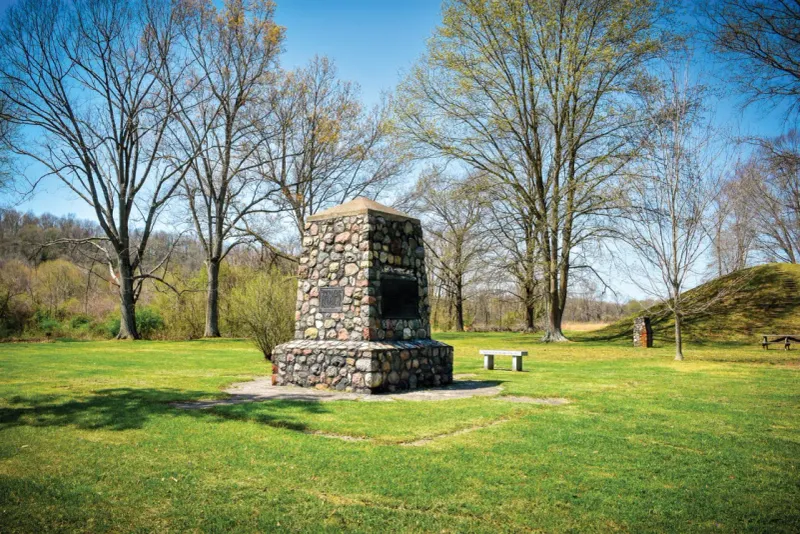
The memorial park today is a quiet, reflective place along the river with historical markers and a stone monument that explain the battle and its significance. It lacks the crowds of more famous Civil War sites, which actually makes it a more personal experience.
Standing by the river where those events unfolded, with the water moving slowly past, you get a rare sense of connection to a moment that most history books barely mention.
8. Hale Farm and Village (Bath)
Some history museums ask you to look but not touch. Hale Farm and Village in Bath does the opposite.
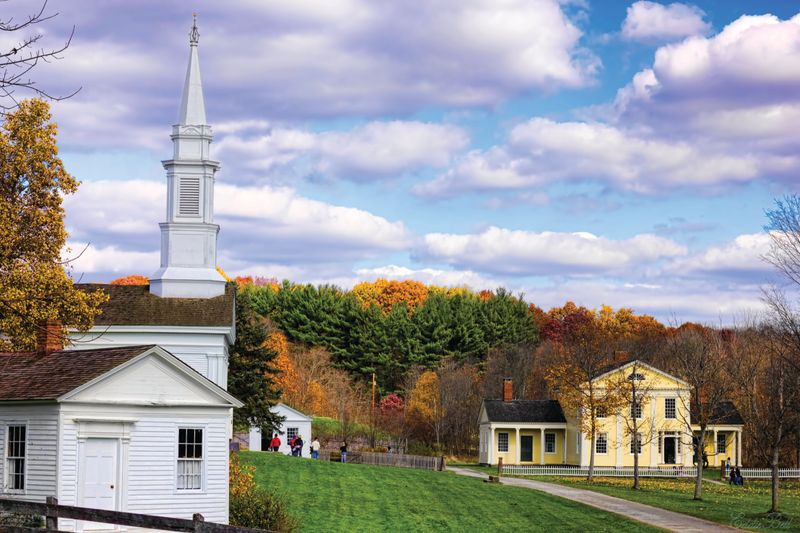
This remarkable living history museum invites visitors to roll up their sleeves and step directly into daily life as it was lived in the Western Reserve region of Ohio during the mid-1800s. Operated by the Western Reserve Historical Society, Hale Farm brings together a collection of historic structures moved from around the region and reassembled into a fully functioning 19th-century village.
The farm itself dates back to Jonathan Hale, a Connecticut native who settled the land in 1810. His original farmhouse still stands on the property and serves as the anchor of the site.
Around it, visitors can explore a working farm, a glassblowing shop, a pottery, a blacksmith shop, a schoolhouse, and a meetinghouse, all staffed by costumed interpreters who demonstrate period crafts and trades with skill and enthusiasm.
What sets Hale Farm apart from many historic sites is its commitment to hands-on engagement. Visitors are often invited to try their hand at period activities like candle dipping, spinning, or butter churning.
Children especially tend to light up when given the chance to participate rather than just observe. The farm animals scattered around the property add to the authentic, lived-in atmosphere.
Located within the Cuyahoga Valley National Park, the setting itself is gorgeous, with rolling hills and mature forests framing the historic buildings beautifully. Seasonal events like harvest festivals and holiday celebrations draw large crowds and offer themed programming throughout the year.
Hale Farm is the kind of place where history stops feeling like something that happened to other people and starts feeling like something you can actually touch, smell, and experience for yourself.
9. Historic Zoar Village (Zoar)
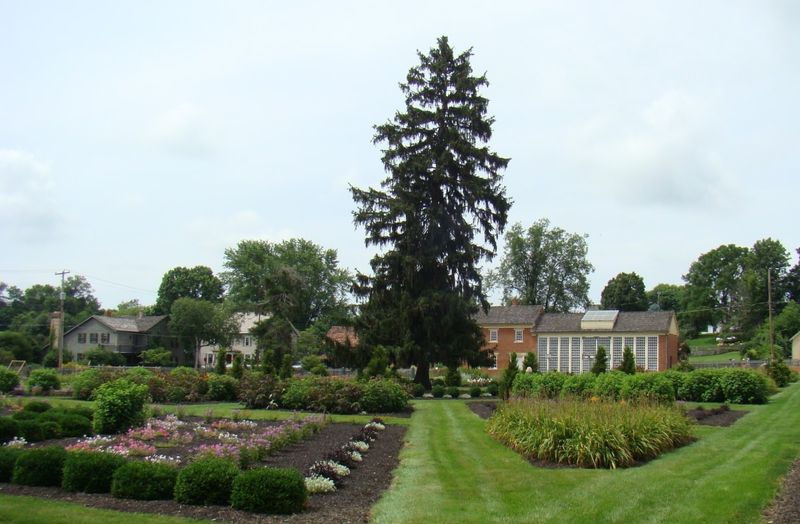
Imagine leaving everything you know, crossing an ocean with a group of like-minded believers, and building an entirely new society from scratch in the middle of the Ohio wilderness. That is exactly what a group of German religious separatists called the Society of Separatists of Zoar did when they arrived in Tuscarawas County in 1817.
What they built over the next several decades became one of the most successful communal experiments in American history.
The Zoarites, as they were known, established a communal economy where all property was shared and decisions were made collectively. Their village became remarkably prosperous, with industries including a hotel, a brewery, a woolen mill, and extensive farmland.
They also played a notable role in building a section of the Ohio and Erie Canal, using the earnings to pay off their land debt years ahead of schedule.
The community eventually dissolved in 1898 after the founders’ generation had passed and younger members showed less interest in communal living. But the village itself survived, and today Historic Zoar Village is a National Historic Landmark.
The Ohio History Connection manages several of the original buildings as a museum complex, including the grand Garden House, a tin shop, and the Number One House where the community’s leader Joseph Bimeler once lived.
The centerpiece of the village is the formal garden, designed as a symbolic representation of the New Jerusalem described in the Book of Revelation. Walking through it feels both peaceful and purposeful.
The surrounding village streets are lined with original 19th-century structures that have been carefully preserved. Zoar is a small town, but the story it holds is enormous, and a visit here genuinely changes the way you think about community, faith, and what it means to build something together.
10. The Dental Museum (Bainbridge)
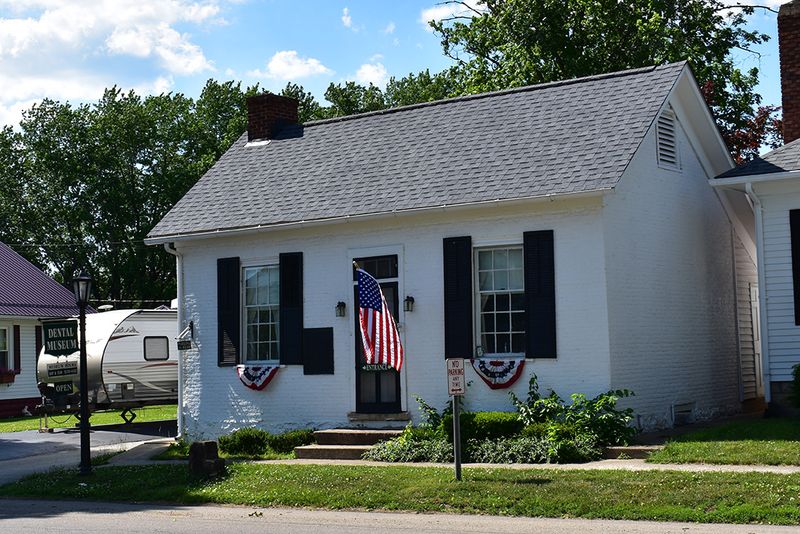
Here is a fun fact that sounds completely made up but is absolutely true: the town of Bainbridge, Ohio, is the birthplace of professional dental education in America. In 1827, a country doctor named John Harris began formally teaching dentistry to students in his small office, creating what is widely recognized as the first dental school in the United States.
That little office still exists, and today it operates as the Dental Museum, a quirky and genuinely fascinating slice of American medical history.
Before Harris started his school, dentistry was not really considered a formal profession. Teeth were pulled by barbers, blacksmiths, and traveling “tooth pullers” who had little to no training.
Harris changed that by insisting that dentistry required real study, real skill, and real standards. His students went on to spread that philosophy, and two of them later founded the Baltimore College of Dental Surgery in 1840, the first institution to grant dental degrees.
The museum is small but packed with personality. Visitors can see a remarkable collection of antique dental instruments that range from fascinating to genuinely terrifying, depending on your relationship with the dentist’s chair.
Early tooth extraction tools, primitive drills, and examples of early dentures made from materials like ivory and actual human teeth are all on display. The exhibits do a great job of explaining how dramatically dental care has improved over the past two centuries.
Bainbridge is a quiet little town, and the Dental Museum is the kind of offbeat attraction that makes a road trip feel special. It is not the most obvious stop on an Ohio history tour, but it might be the one you talk about the most when you get home.
Sometimes the most unexpected places carry the most surprising stories.
Share this story