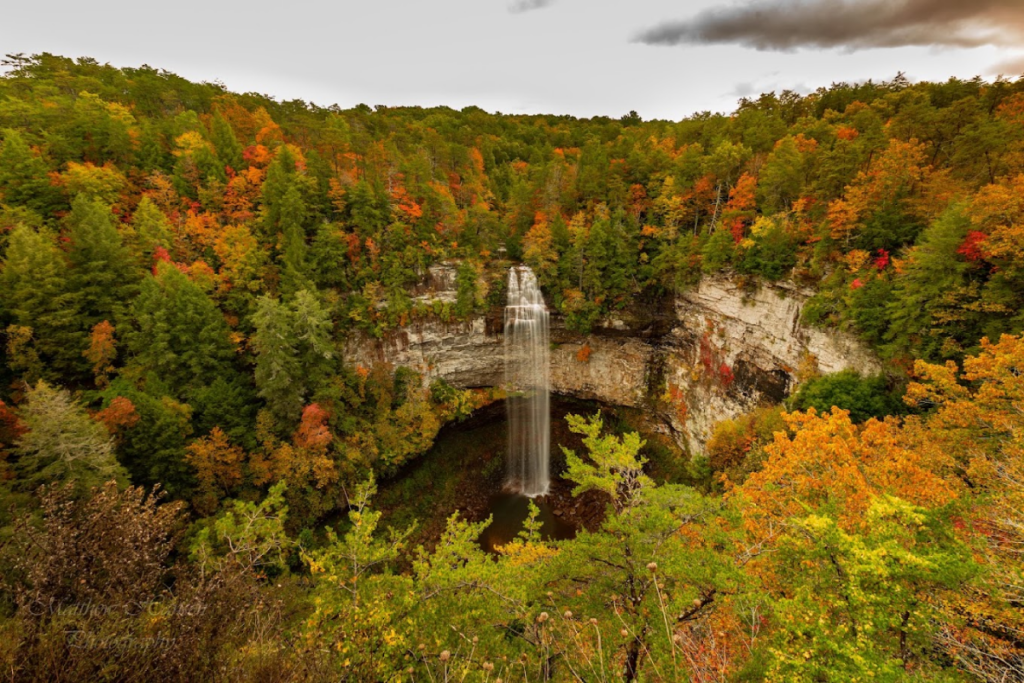
Tennessee transforms into a color explosion every autumn, with hillsides turning fiery orange, deep red, and golden yellow. Whether you’re new to hiking or you’ve been exploring trails for years, fall is the perfect time to lace up your boots and witness nature’s most spectacular show.
From misty mountain peaks to peaceful lakeside paths, these ten hikes will give you front-row seats to the most breathtaking fall scenery the Volunteer State has to offer.
1. Big Hill Pond State Park – Dismal Swamp Boardwalk & Observation Tower, Pocahontas
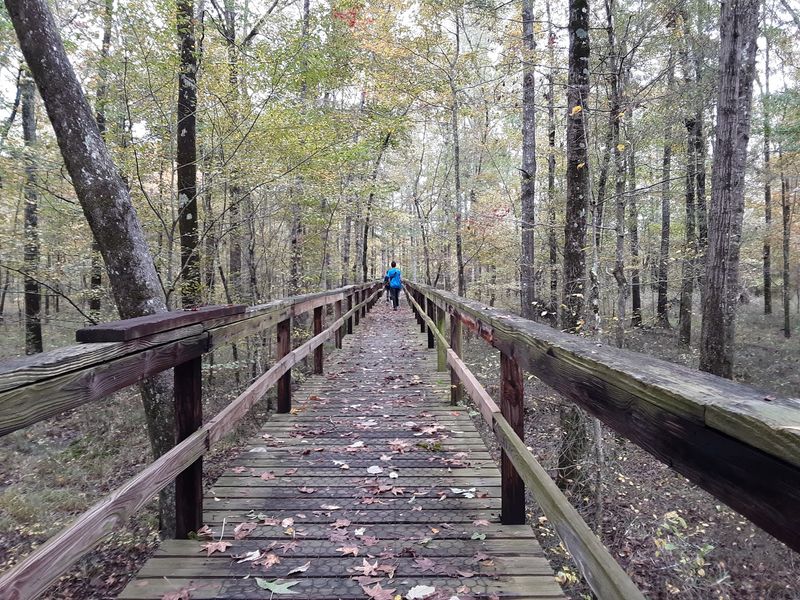
Walking on water might sound impossible, but this elevated boardwalk makes you feel like you’re doing exactly that. The Dismal Swamp trail winds through a stunning cypress forest where the trees seem to grow straight out of the water, their roots creating natural sculptures below.
During fall, the bald cypress needles turn a brilliant rust-orange before dropping, creating a carpet of color on the water’s surface.
The observation tower at the end rewards your easy stroll with panoramic views across the wetland. From up high, you can see the patchwork of colors stretching in every direction, with the swamp looking more like an impressionist painting than an actual place.
Birds love this spot too, so bring binoculars if you have them.
This trail stays pretty flat the whole way, making it perfect for families with younger kids or anyone who wants fall colors without the steep climbs. The boardwalk keeps your feet dry even after rain, which is a huge bonus during unpredictable autumn weather.
You’ll cover about two miles round trip at whatever pace feels comfortable.
Early morning visits offer something magical as mist rises off the water and sunlight filters through the colorful canopy. The swamp ecosystem changes dramatically with the seasons, and fall brings out colors you wouldn’t expect in a wetland.
Photographers absolutely love this trail because the reflections in the still water double the visual impact.
Pack some snacks and plan to spend time at the observation platform just soaking in the view. The combination of water, unique trees, and fall foliage creates scenes you won’t find on typical mountain trails.
This hidden gem in West Tennessee proves you don’t need towering peaks to experience breathtaking autumn beauty.
2. Meeman-Shelby Forest State Park – Woodland Trail, Millington
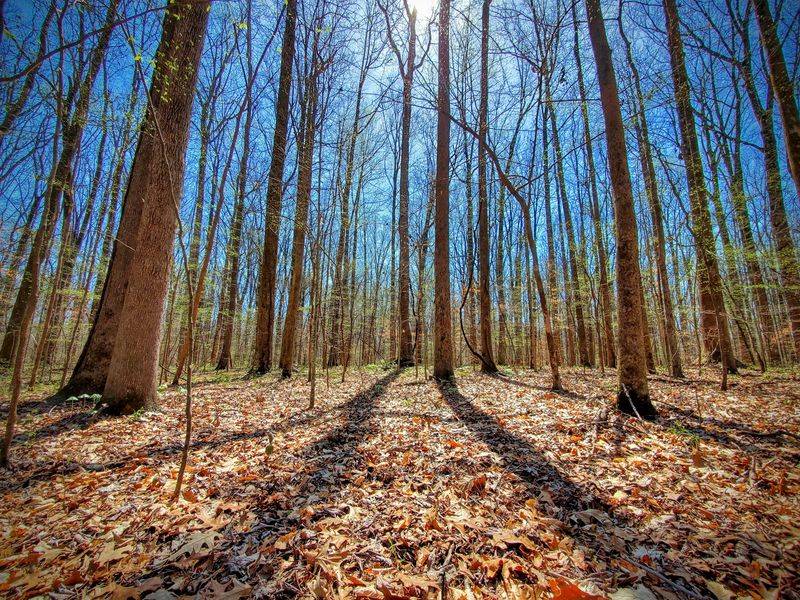
Just outside Memphis sits a forest that feels a million miles from city life. The Woodland Trail loops through dense hardwood forest where oak, hickory, and maple trees put on their annual color show.
Unlike mountain hikes where you see distant views, this trail surrounds you completely with fall foliage, creating an immersive tunnel of color.
The path rolls gently up and down through the landscape, giving your legs a workout without making you gasp for air. Fallen leaves crunch satisfyingly under your boots, and the earthy smell of autumn fills the air.
You might spot deer browsing through the underbrush or hear woodpeckers hammering away at tree trunks.
This four-mile loop takes most people around two hours, but there’s no rush. The forest floor becomes a patchwork quilt of red, yellow, and orange leaves as the season progresses.
Sunlight filtering through the colorful canopy creates constantly changing light patterns on the trail.
What makes this hike special is how the Mississippi River bluffs create unique microclimates within the park. Different tree species peak at different times, which means the colors keep evolving throughout October and into November.
Some sections stay green longer while others blaze with color early on.
Bring a water bottle because there aren’t many facilities once you start hiking. The trail is well-marked but feels wonderfully wild and secluded.
For city dwellers craving a nature escape, this park delivers serious forest vibes without requiring a long drive into the mountains.
The Woodland Trail proves West Tennessee has just as much fall beauty as the eastern mountains. The intimate, enclosed feeling of hiking through a hardwood forest differs completely from open ridge walks, offering a cozy autumn experience that feels like walking through a living kaleidoscope.
3. Natchez Trace State Park – Cub Lake Trail, Wildersville
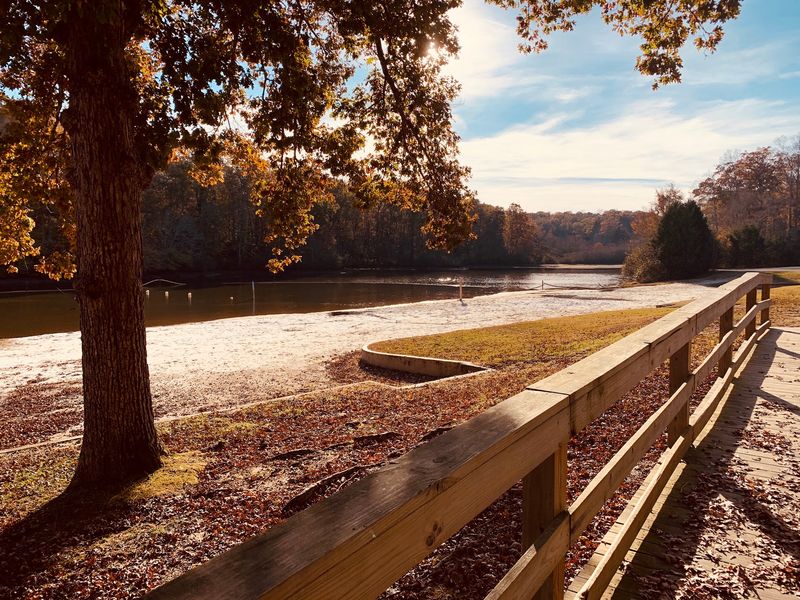
Cub Lake sparkles like a blue jewel surrounded by a frame of autumn fire. This trail hugs the shoreline for most of its length, giving you constant water views paired with incredible fall colors.
The combination of lake reflections and overhead canopy creates double the visual wow factor.
Starting near the park office, the trail immediately plunges into mixed forest where sweetgum, oak, and hickory trees compete to show off their best colors. The path stays relatively level as it follows the lake’s curves and inlets.
Every bend in the trail reveals a new perspective, with peninsulas jutting into the water and small coves creating intimate viewing spots.
Wildlife activity picks up during fall as animals prepare for winter. You’ll likely see turtles sunning on logs, herons fishing in the shallows, and squirrels frantically gathering acorns.
The lake’s calm surface on windless days creates mirror-perfect reflections of the colorful trees, making photographers practically giddy with excitement.
The five-mile loop takes about two and a half hours at a relaxed pace with photo stops. Several spots along the way offer perfect picnic opportunities right at the water’s edge.
Bring lunch and make an afternoon of it, especially on weekdays when you might have whole stretches of trail to yourself.
Fall fishing is popular here too, so don’t be surprised to see anglers casting lines from the shore. The trail surface varies from packed dirt to occasional rocky sections, but nothing too challenging.
Good hiking shoes help, especially after rain when some areas get muddy.
Sunset hikes are particularly stunning as golden hour light sets the fall colors absolutely glowing. The peaceful atmosphere and lakeside setting make this trail feel more like a gentle nature walk than a serious hike, which is exactly what makes it so appealing for a relaxing autumn adventure.
4. Radnor Lake State Natural Area – Ganier Ridge Trail, Nashville
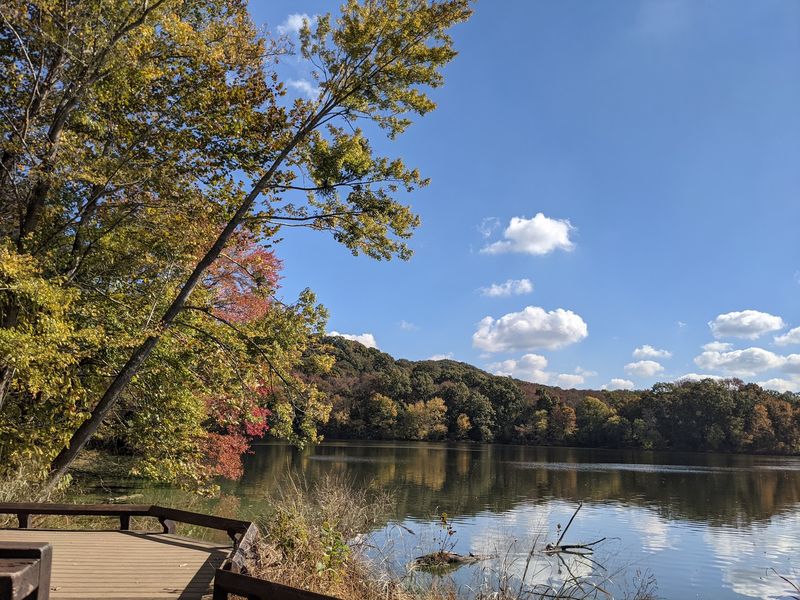
Right in Nashville’s backyard sits a wilderness that feels completely removed from urban life. Ganier Ridge Trail climbs steadily from the lake up to ridgetop views, rewarding your effort with spectacular overlooks of Radnor Lake surrounded by fall color.
This isn’t a casual stroll but rather a legitimate workout that pays dividends in scenery.
The trail gains about 400 feet in elevation as it switchbacks up the hillside. Your heart will pump and your legs will feel it, but the canopy of changing leaves keeps things interesting the whole way up.
Oaks, maples, and hickories create layers of color at different heights, from the forest floor to the treetops.
Once you reach the ridge, the trail levels out and follows the high ground. Several overlook points let you catch your breath while taking in views of the lake below and the surrounding hills painted in autumn hues.
On clear days, you can see for miles across Nashville’s green spaces.
The complete loop runs about six miles and takes most hikers three to four hours. You’ll descend on the other side of the ridge, passing through different forest types that show off varied fall colors.
The diversity of tree species means peak color lasts longer here than in single-species forests.
This natural area stays busy on weekends because of its proximity to Nashville, so arrive early for parking and a quieter experience. The trail can be rocky and root-filled in sections, demanding attention to foot placement.
Trekking poles help on the steeper sections, especially going downhill.
Birdwatchers flock here during fall migration when the ridge acts as a highway for traveling species. The combination of challenging terrain, rewarding views, and easy city access makes Ganier Ridge a favorite for Nashville hikers seeking serious fall foliage without leaving town.
5. Old Stone Fort State Archaeological Park – Enclosure Trail, Manchester
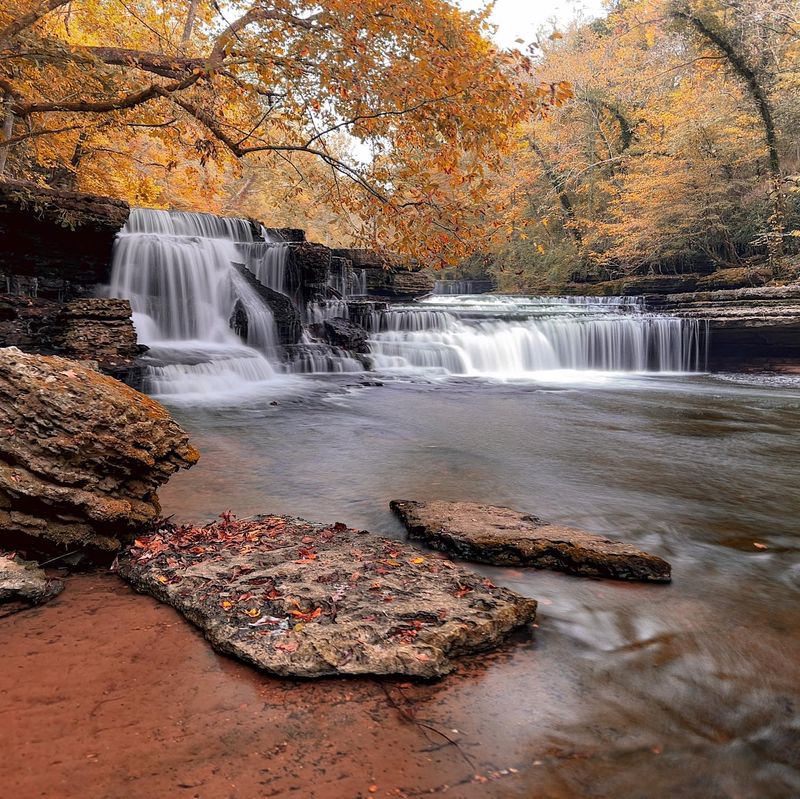
Ancient history meets natural beauty where Native Americans built mysterious stone walls nearly 2,000 years ago. The Enclosure Trail follows these archaeological features through forest ablaze with fall color, creating a unique combination of cultural and natural wonder.
Walking here feels like stepping back in time while nature’s seasonal show unfolds all around.
The stone walls and earthworks form a 50-acre enclosure that archaeologists still study today. Your hike traces the perimeter of this ancient site, with interpretive signs explaining what researchers know and what remains mysterious.
Massive trees now grow from the walls themselves, their roots intertwined with history.
During fall, the overhead canopy transforms into a stained-glass ceiling of red, orange, and gold. The Duck River and its tributaries border the site, adding waterfalls and cascades to the scenery.
Several spots along the trail offer views where water tumbles over limestone ledges surrounded by colorful foliage.
The two-mile loop trail stays relatively easy with gentle elevation changes. Families with curious kids love this hike because it combines nature with the intrigue of ancient ruins.
Imagine the people who built these walls and what the forest looked like to them during autumn centuries ago.
Side trails lead down to the river where you can explore rocky shoals and small waterfalls. The combination of water features, archaeological sites, and fall foliage creates photo opportunities at every turn.
This park sees fewer visitors than some of Tennessee’s bigger destinations, giving it a peaceful, uncrowded feel.
Bring a camera and take your time exploring both the natural and human-made features. The way ancient stonework blends with autumn forest creates scenes that satisfy both history buffs and nature lovers.
This trail proves Tennessee’s fall beauty gets even better when combined with fascinating cultural heritage.
6. Savage Gulf State Park – Stone Door Trail, Beersheba Springs
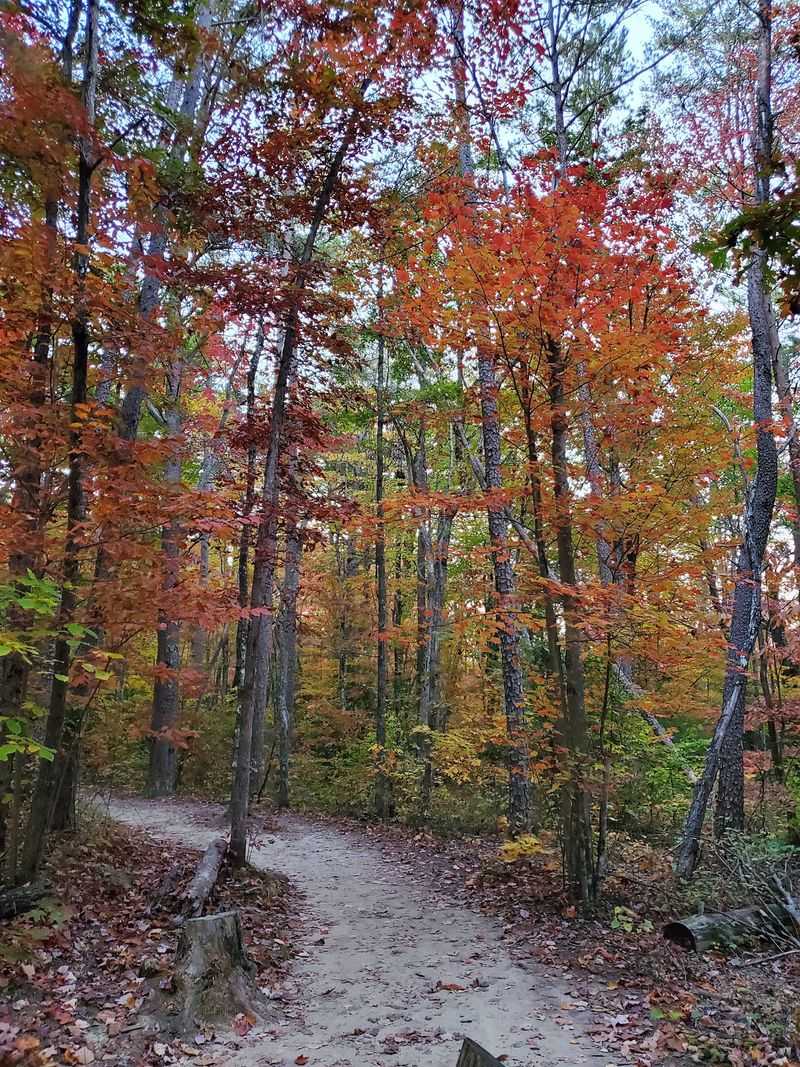
A crack in the earth opens to reveal one of Tennessee’s most jaw-dropping views. The Stone Door is a natural rock formation that creates a narrow passage leading to a massive overlook above Savage Gulf.
When fall colors paint the gorge below, the scene becomes absolutely unforgettable.
The hike to Stone Door covers about one mile each way on relatively flat terrain. The trail winds through forest where the changing leaves create a colorful tunnel effect.
Then suddenly you emerge at the rock formation where the world drops away beneath your feet.
Looking through the Stone Door opening feels like peering through a window into a wilderness paradise. The gulf spreads out below, its slopes covered in countless trees showing every shade of fall color imaginable.
The depth and scale of the gorge take your breath away, especially when autumn haze adds layers of blue-gray atmosphere to the distant ridges.
The overlook area has plenty of room to sit and soak in the view. Many hikers pack lunch and spend an hour just watching the colors shift as clouds move across the sky.
The exposed rock provides natural seating, though the edges drop off dramatically so watch your footing.
Photographers should plan for golden hour when angled sunlight makes the fall colors absolutely glow. The view changes dramatically depending on cloud cover and time of day.
Misty mornings create an ethereal atmosphere as fog fills the gulf below.
This trail gets busy on peak fall weekends because the payoff is so spectacular for relatively little effort. Weekday visits offer more solitude for soaking in the scenery.
The short distance makes this perfect for families or anyone wanting maximum fall foliage impact with minimal hiking.
After enjoying the main overlook, explore the rim trail for additional perspectives. The combination of dramatic geology and explosive fall color makes Stone Door one of Tennessee’s most photographed natural features during autumn.
7. Fall Creek Falls State Park – Woodland Trail to Fall Creek Falls Overlook, Spencer
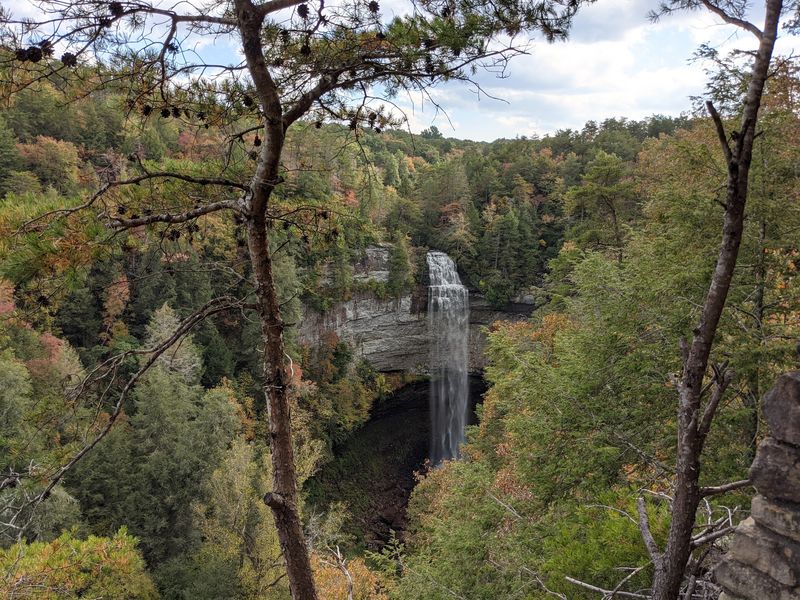
Tennessee’s tallest waterfall becomes even more spectacular when surrounded by fall colors. The Woodland Trail leads through forest painted in autumn hues before delivering you to overlooks of Fall Creek Falls plunging 256 feet into a gorge.
Water and fall foliage combine for sensory overload in the best possible way.
Starting from the nature center, the trail meanders through mixed hardwood forest for about a mile. The path stays well-maintained and relatively level, making it accessible for most fitness levels.
Interpretive signs along the way explain the forest ecology and how seasonal changes affect the ecosystem.
The first overlook appears suddenly as trees give way to open air. The waterfall drops in a silver ribbon against dark rock, framed perfectly by trees showing off their fall colors.
The roar of falling water fills the air, and mist rises from the pool below.
Multiple overlook platforms provide different perspectives of the falls. Each viewpoint offers unique photo opportunities as the surrounding forest creates natural frames of red, orange, and yellow.
The scale of the waterfall impresses everyone, from first-time visitors to seasoned waterfall chasers.
The round-trip hike covers about two miles and takes an hour or so with time for photos and admiration. You can extend your adventure by exploring other trails in this massive state park, which contains several additional waterfalls and scenic overlooks.
The park’s 26,000 acres ensure you’ll find plenty of fall color no matter which direction you wander.
Peak waterfall flow happens after autumn rains, so check recent weather for the most impressive display. The combination of high water volume and peak fall color creates absolutely magical conditions.
Even during drier periods, the falls remain impressive and the surrounding foliage steals the show.
This trail sees heavy traffic during peak fall weekends, so early morning arrival helps with parking and crowd avoidance. The payoff is worth any inconvenience because few Tennessee hikes deliver such dramatic scenery with such easy access.
8. Frozen Head State Park – Lookout Tower Trail, Wartburg
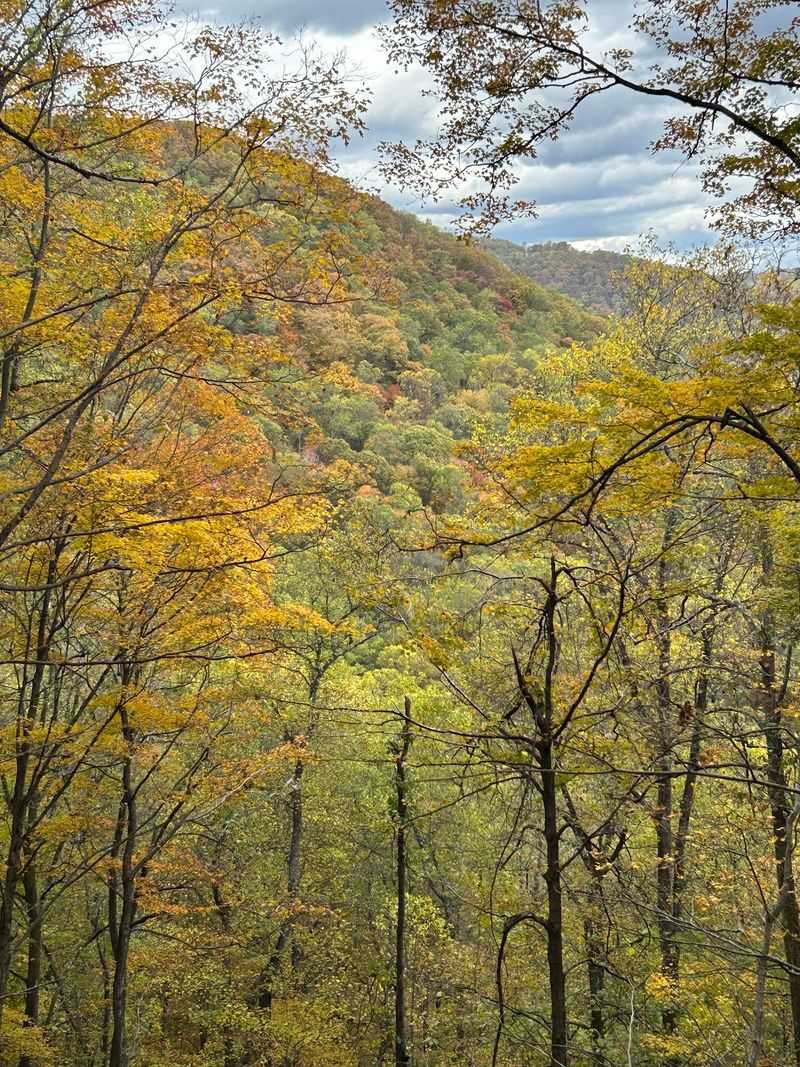
Climbing to a fire tower sounds like work, and honestly, it is. But the 360-degree views of endless fall color from Frozen Head’s Lookout Tower make every step worthwhile.
This challenging hike separates casual strollers from serious hikers, rewarding determination with some of Tennessee’s most expansive autumn vistas.
The trail gains nearly 2,000 feet over about 3.5 miles, making this a legitimate leg-burner. Switchbacks help moderate the grade, but you’ll definitely feel the climb.
The forest around you provides motivation as you ascend through different elevation zones, each showing slightly different fall colors.
Lower slopes feature oaks and hickories turning gold and bronze. As you climb higher, maples add splashes of brilliant red.
The changing composition of tree species at different elevations means the color palette shifts as you gain altitude, keeping the scenery interesting throughout the climb.
The fire tower itself rises above the surrounding treetops, and climbing the final metal stairs adds another hundred feet of elevation. From the top platform, the view spreads out in every direction.
Wave after wave of mountains roll toward the horizon, all covered in the crazy quilt pattern of fall foliage.
On clear days, you can see into multiple counties. The Cumberland Mountains stretch endlessly, their ridges creating layers of blue fading into the distance.
Watching clouds cast shadows across the colored hillsides below creates constantly changing scenery.
This seven-mile round-trip hike takes most people four to five hours. Bring plenty of water and snacks because you’ll burn serious calories.
The descent is easier on your lungs but harder on your knees, so trekking poles help.
The park sees fewer visitors than more famous Tennessee destinations, which means more solitude during your climb. The challenging nature of the hike filters out crowds, so even on nice fall weekends, you won’t feel like you’re in a parade of hikers.
9. Roan Mountain – Appalachian Trail across the Roan Highlands
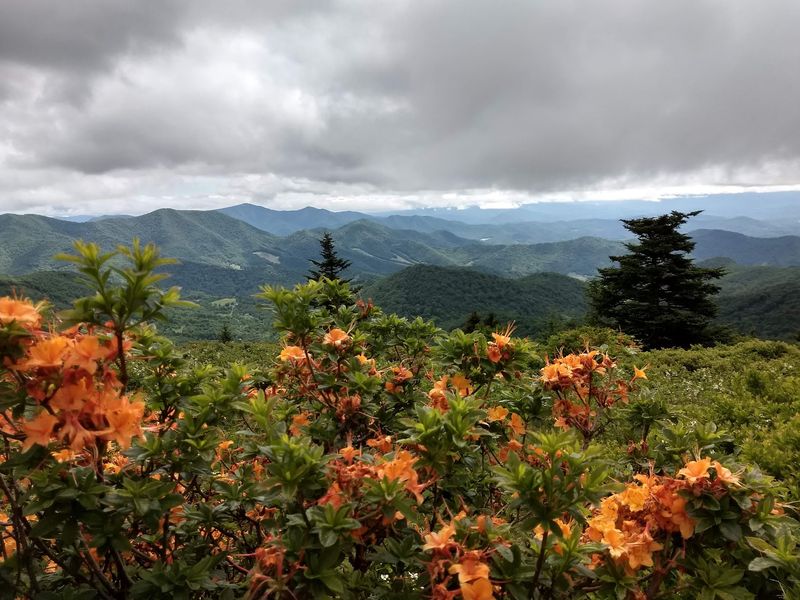
Above 6,000 feet, the world changes completely. The Roan Highlands section of the Appalachian Trail crosses grassy balds and high-elevation forest where fall comes early and hits hard.
This is Tennessee hiking at its most dramatic, with big sky views and colors that seem almost too vibrant to be real.
The highlands straddle the Tennessee-North Carolina border, creating a unique ecosystem found nowhere else in the region. Natural balds alternate with spruce-fir forest and rhododendron thickets.
During fall, the lower-elevation hardwoods blaze with color while the high balds remain green, creating striking contrasts.
You can access this section from Carvers Gap, where parking allows day hikers to explore without committing to the full AT. Heading north toward Round Bald and Jane Bald, the trail rolls across open highlands where views extend for miles.
The sense of space and freedom up here feels intoxicating after climbing out of the forest.
Weather changes rapidly at this elevation, so pack layers even if the valley feels warm. Clouds often roll through the highlands, creating mysterious atmospheres as they swirl around the peaks.
When the sun breaks through, the illuminated fall colors against dark storm clouds create dramatic lighting conditions.
The balds themselves turn golden in fall as the grasses cure. Combined with the surrounding forest showing red and orange, the color palette becomes incredibly rich.
This high-elevation environment supports unique plant species you won’t see lower down, adding botanical interest to the scenic grandeur.
Distances can be deceiving up here because the trail undulates constantly over the rounded peaks. A six-mile hike involves more climbing than you’d expect from looking at the relatively gentle terrain.
Budget five to six hours for a proper Roan Highlands experience. This area represents Tennessee mountain hiking at its finest, with big views, unique ecosystems, and fall colors that justify the effort required to reach them.
10. Great Smoky Mountains National Park – Alum Cave Trail, Gatlinburg
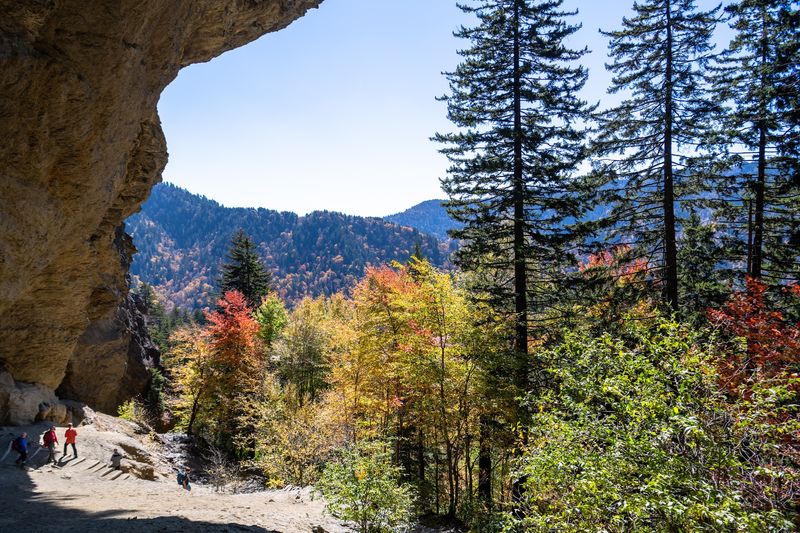
The Smokies’ most famous trail delivers nonstop scenery from the moment you leave the parking lot. Alum Cave Trail climbs steadily through old-growth forest, passes under dramatic rock formations, and offers expanding views as you gain elevation.
During peak fall color, this trail becomes a pilgrimage site for leaf-peepers from across the country.
The first section follows a rushing creek through forest where massive trees tower overhead. Tulip poplars, maples, and birches create a canopy that glows with transmitted sunlight during fall.
The trail is well-maintained but rocky in places, demanding attention to footing as you climb.
About halfway up, you’ll reach Arch Rock, a tunnel blasted through solid stone. Passing through feels adventurous, and the rock stays cool even on warm fall days.
Beyond the arch, the trail becomes more exposed as you climb toward the Alum Cave Bluffs.
The bluffs themselves are actually a massive rock overhang, not a true cave. The concave cliff face creates a natural amphitheater where you can rest and take in views across the valley.
By mid-October, the mountains below showcase every color imaginable, from deep burgundy to bright yellow.
If you’re feeling strong, continue past the bluffs toward Mount LeConte. The trail becomes steeper and more rugged, but the views keep improving.
Most day hikers turn around at the bluffs after about 2.5 miles, making a five-mile round trip.
This trail sees heavy traffic during peak fall color season, with parking lots filling by mid-morning on weekends. Arrive early or consider weekday visits for a better experience.
The National Park Service sometimes implements parking reservations during busy periods, so check current regulations before you go.
Elevation gain totals about 1,400 feet to the bluffs, giving your legs a solid workout. The combination of forest, rock features, creek crossings, and mountain views makes this one of the most varied and rewarding hikes in Tennessee, especially when fall color reaches its peak.